Can You Keep Coleus Alive Through An Ohio Winter?
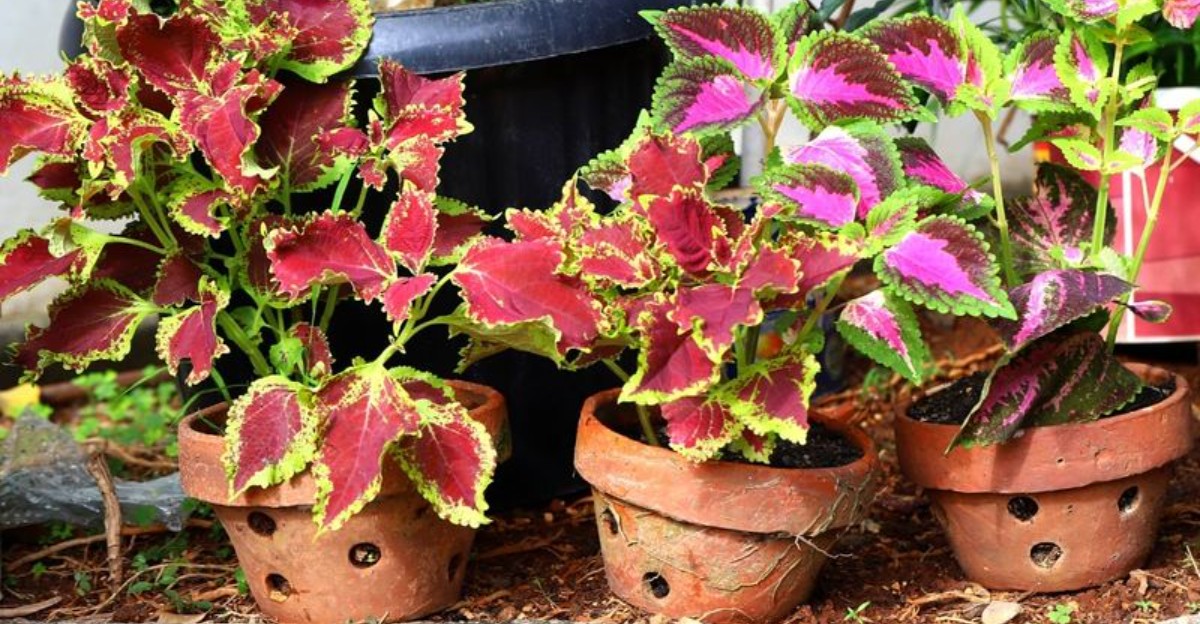
Your coleus doesn’t have to end with the first frost, but keeping it going takes more than dragging the pot inside and hoping for the best.
Ohio winters ask more of this plant than most people expect, and a straight move from outdoor soil to indoor windowsill rarely works the way you’d think.
Light changes everything once it’s inside, and so does a completely different watering rhythm than what kept it thriving all summer.
There’s more than one route to keeping this plant around too, and not every option involves babysitting a full pot through the cold months.
Figure out which approach fits your setup before the temperature forces your hand. Your coleus has a real shot at making it to spring, but only with the right plan behind it.
1. Coleus Needs Indoor Protection From Ohio Cold
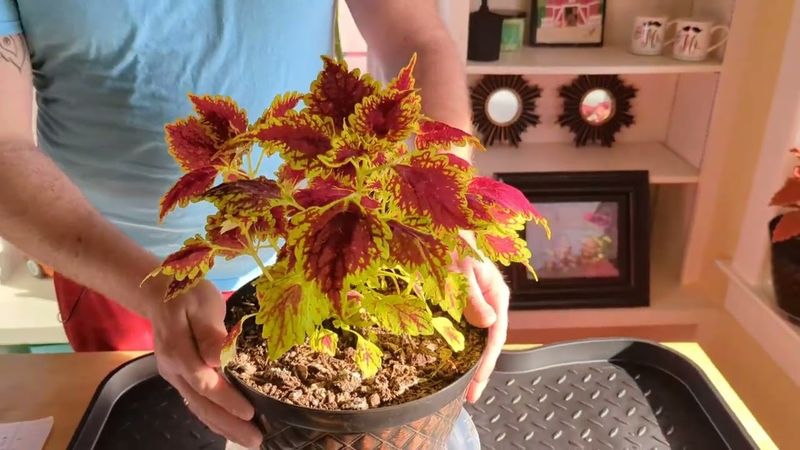
Picture a plant that grew up in the steamy tropics of Southeast Asia and Africa. Now picture it on an Ohio patio in late October, and you can see the problem.
Coleus is a tender perennial, which means it would keep growing for years in a warm climate. Here in the Buckeye State, though, one light frost can turn those bright leaves to mush overnight.
Trouble starts well before the frost arrives. Once nights stay below 50 degrees Fahrenheit, the plant gets stressed, drops leaves, and loses its bold color.
That is your signal to move. Aim to bring pots inside in September or early October, when evening temperatures first dip into the 40s across most of Ohio.
Before you carry anything through the door, check both sides of the leaves and the stems for bugs. Rinse the plant with a hose, and snip off any yellow or spotted leaves.
Why bother with all this work? A healthy coleus saves you money each spring, and it lets you keep a rare or favorite variety that the garden center may not carry next year.
Think of it as a winter vacation for your plant. You provide the warm room and the sunny spot, and it pays you back with color on those long, gray January days.
2. Take Cuttings If The Mother Plant Is Too Large
Your coleus grew as big as a beach ball this summer, and your living room is not that roomy. Luckily, a few small pieces can carry it through winter.
Cuttings are one of the easiest ways to save this plant. Late summer or early fall, before the first frost, is the sweet spot for snipping.
Choose a healthy stem and cut a tip about 3 to 6 inches long. Pull off the lower leaves so only a small tuft stays on top.
Now pick your rooting method. You can drop the stems in a jar of water or poke them into a light mix of half potting soil and half perlite.
Set them in a warm spot with bright but indirect light. In about one to two weeks, you should spot tiny white roots reaching out like little threads.
Your Ohio Garden Changes Every Week. Your Plan Should Too.
Gardening in Ohio changes quickly throughout the season. Every Friday you’ll receive a simple weekly plan showing exactly what to plant, prune, fertilize, harvest, and protect so you never miss the right timing.
Once the roots are an inch or so long, move each cutting into its own small pot with drainage holes. Water it well and let it settle in for a few days.
Here is a fun bonus for curious gardeners. Coleus belongs to the mint family, which explains its square stems and its eager habit of rooting almost anywhere.
A single mother plant can give you a whole windowsill of babies. Share extras with friends, and you just became the neighborhood coleus hero.
3. Give Indoor Coleus Bright Filtered Light
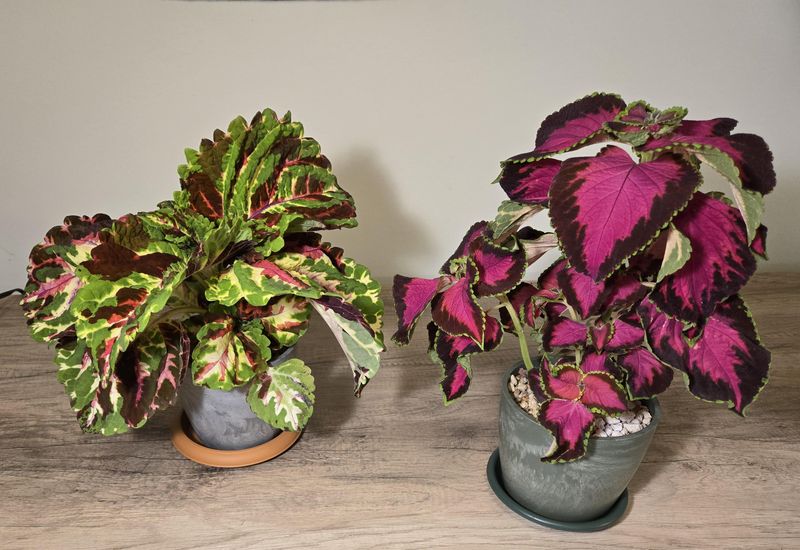
Sunlight is the fuel behind every splash of pink, gold, and burgundy on a coleus leaf. When winter days shrink to about nine hours, that fuel supply gets pretty thin.
Your job is to find the brightest spot in the house without roasting the plant. An east-facing window with nothing blocking it is the top choice for many growers.
A south-facing window works too, as long as you set the pot a few feet back. That small gap softens the strong midday rays that can scorch tender leaves.
Sheer curtains are another handy trick for filtering harsh light. They act like sunglasses for your plant, taking the edge off without dimming the room.
So how can you tell if the light is not enough? Watch for faded colors, stretched stems, and leaves dropping from the bottom of the plant.
If your home is on the darker side, a full-spectrum LED grow light helps a lot. Keep it about 6 to 12 inches above the plant and run it 12 to 14 hours daily.
A simple outlet timer makes this easy to manage. You will not have to remember to flip the switch each morning and night.
Give the pot a quarter turn every week, too. That keeps the plant growing straight instead of leaning toward the glass like a nosy neighbor.
4. Expect Growth To Slow During Winter
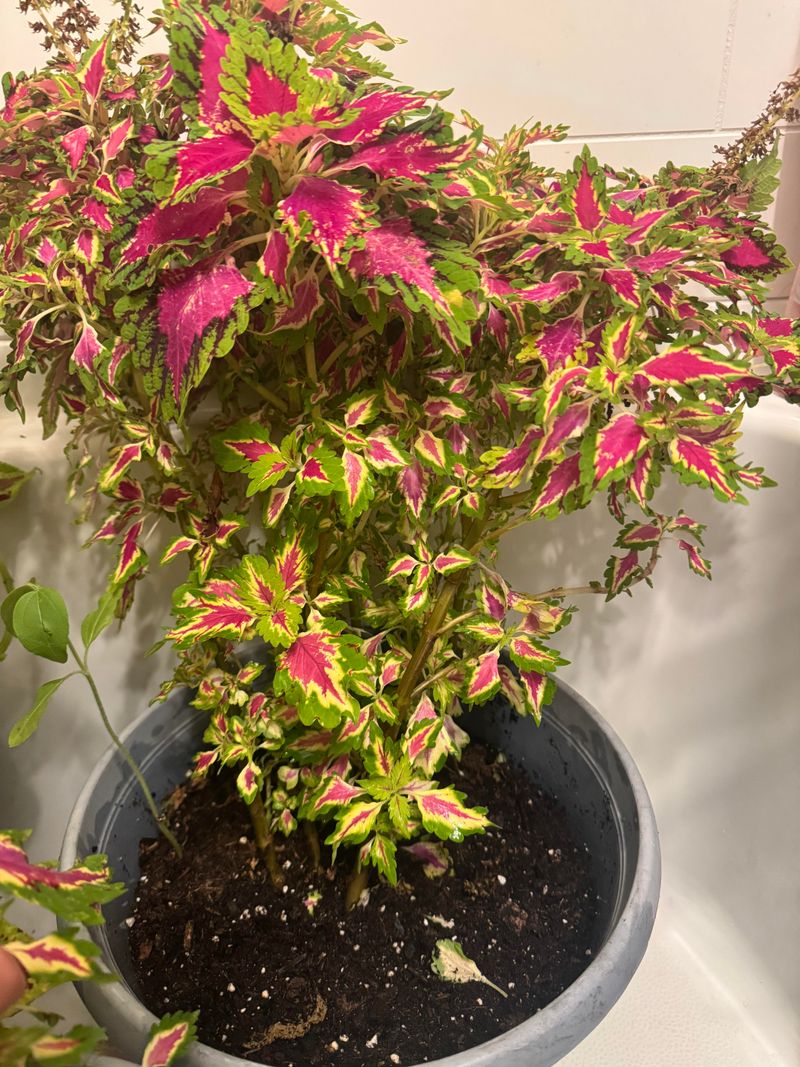
Many first-time winter gardeners panic in December when their coleus seems frozen in time. Relax, because that slowdown is exactly what should happen.
Short days and weaker sunlight tell the plant to take a breather. It shifts into a resting mode, a bit like a bear settling in for a long nap.
During this quiet stretch, new leaves may appear only once in a while. Stems stay about the same length, and the plant looks like it is simply waiting.
A resting plant uses far less water than a summer one. Check the soil often, but expect to reach for the watering can less frequently.
Skip the fertilizer until spring, too. Feeding a sleepy plant can lead to salt buildup in the soil and weak, floppy growth.
There is one exception to this rule. If your coleus lives under a grow light and keeps pushing out fresh leaves, a light dose of diluted fertilizer once a month is fine.
Think of winter as a holding pattern rather than a growing season. Your main goal is to keep the plant healthy and colorful until warmer weather returns.
Once March brings longer days, you will notice fresh buds waking up along the stems. That is your cue to slowly bring back regular watering and feeding.
5. Trim Leggy Stems To Keep Plants Compact
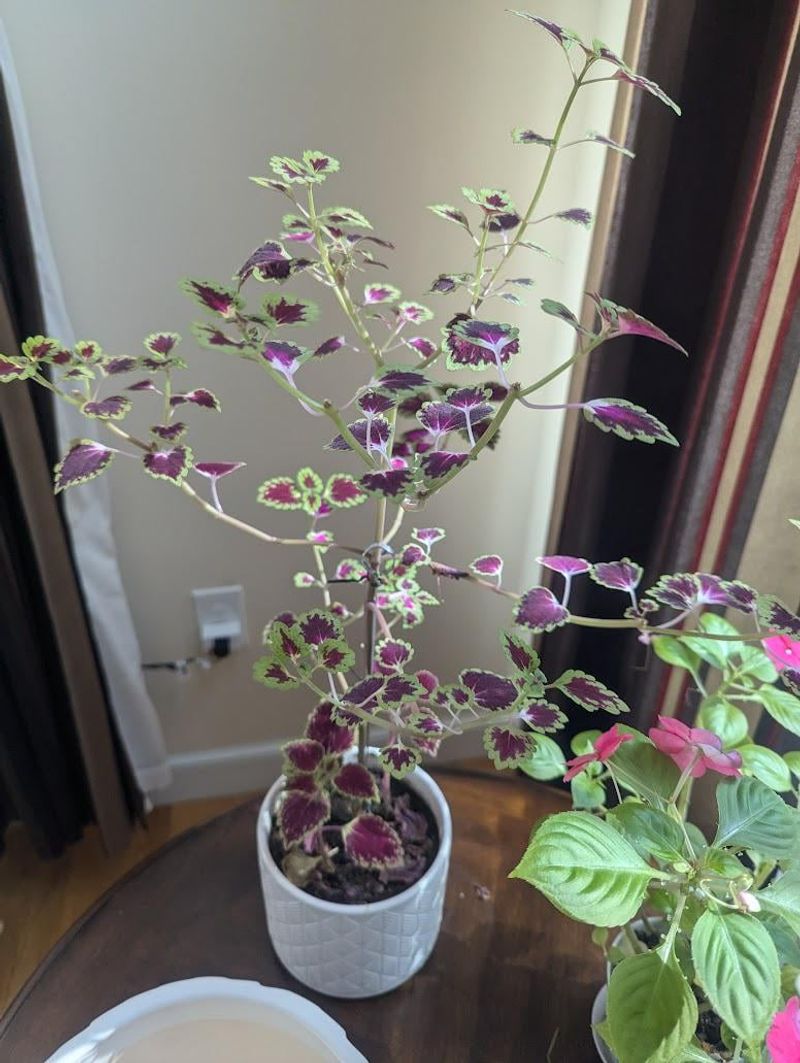
Somewhere around February, many indoor coleus start looking like they are stretching for a basketball. Long, bare stems with a few leaves on top are a common winter look.
Gardeners call this legginess, and it happens when a plant reaches for more light. Luckily, a quick trim can bring back that full, bushy shape.
Grab clean scissors or your fingertips and look for a leaf node. That is the small bump on the stem where a pair of leaves grows out.
Cut just above the node, and two new shoots will usually sprout from that spot. One stem turns into two, and your plant gets fuller with each snip.
Try not to remove more than one-third of the plant at once. Taking too much can stress it, especially in winter when growth is already slow.
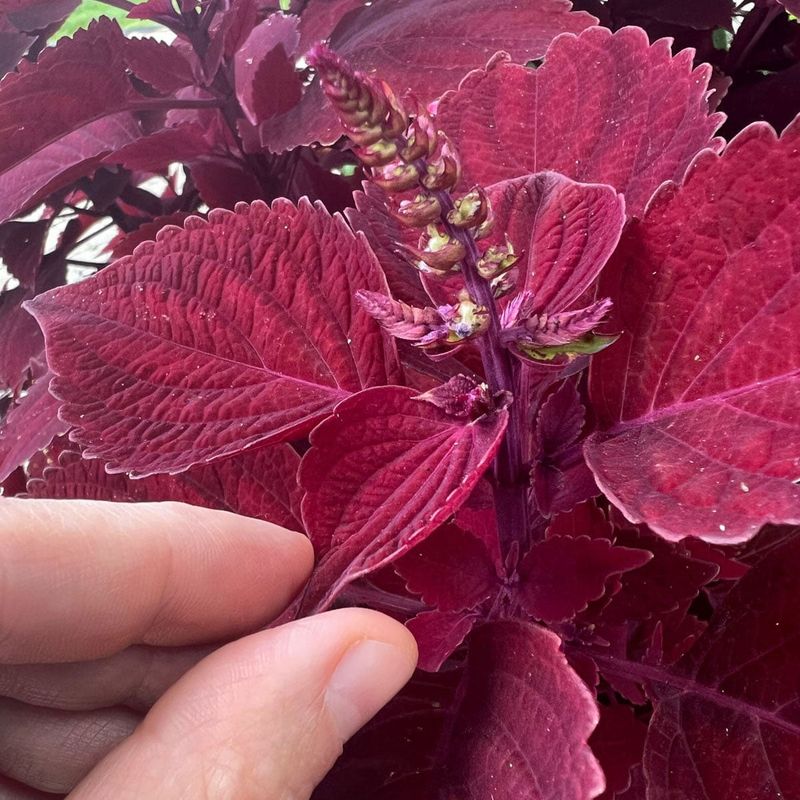
Keep an eye out for flower spikes, too. Those skinny purple or blue stalks look sweet, but they pull energy away from the colorful leaves you love.
Pinch them off as soon as you see them. Regular pinching of the growing tips also keeps young plants tidy, round, and full of branches.
Do not toss those trimmings in the trash just yet! Pop them in water, and you may have a brand new batch of plants by spring.
6. Watch For Spider Mites And Aphids
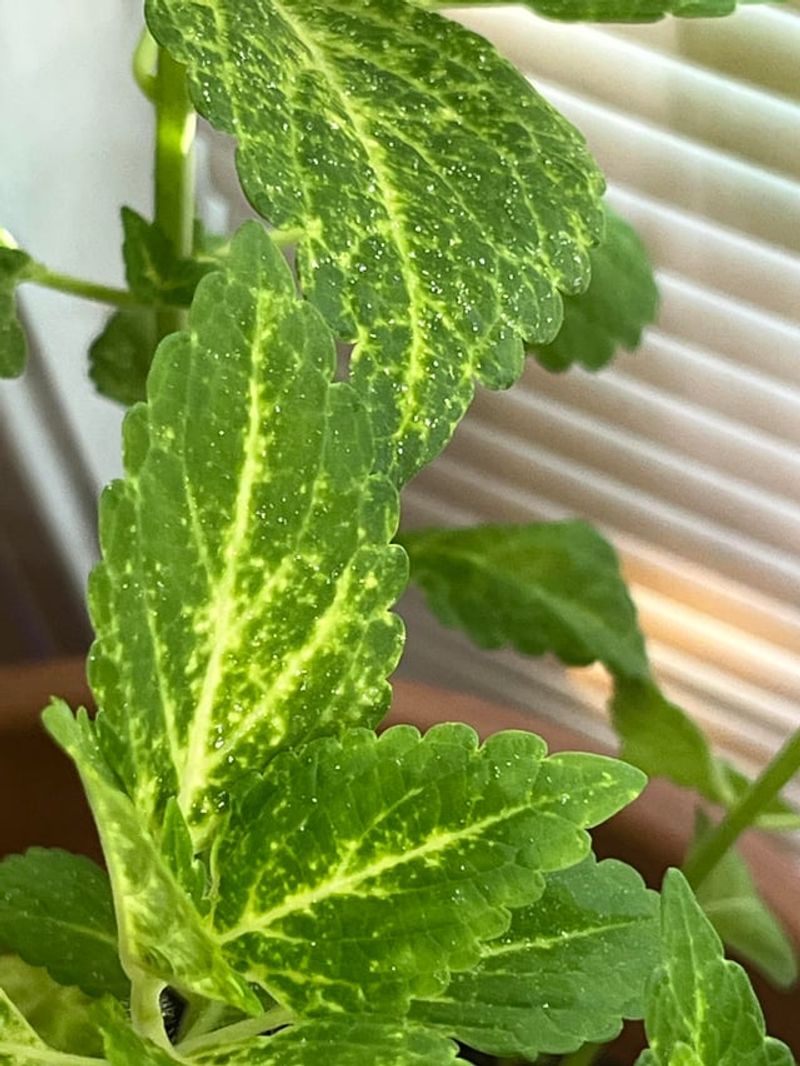
Bringing a plant indoors can mean bringing a few sneaky hitchhikers along with it. Dry winter air makes Ohio living rooms a cozy hideout for tiny pests.
Spider mites are the top troublemakers. Look for tiny pale speckles on the leaves and fine webbing, often tucked on the undersides.
Mites love low humidity, which is common once the furnace kicks on. A strong spray of water in the sink or shower can knock many of them off.
Aphids are the other usual suspects. They gather in crowded clusters on new growth, leaving curled leaves and a sticky coating called honeydew.
You can rinse aphids away with water or wipe them off with a damp cloth. For stubborn groups, insecticidal soap works well and is gentle on most houseplants.
Mealybugs and whiteflies sometimes show up too. Mealybugs look like bits of cotton, while whiteflies flutter up in a small cloud when you brush the plant.
Play detective once a week with a flashlight or magnifying glass. Flip the leaves over, since that is where most pests like to hide.
Raising humidity also helps keep mites away. A small humidifier nearby makes the space far less welcoming for them.
Catching problems early makes treatment much easier. A few minutes of snooping can save your whole collection.
7. Let The Soil Dry Slightly Between Waterings
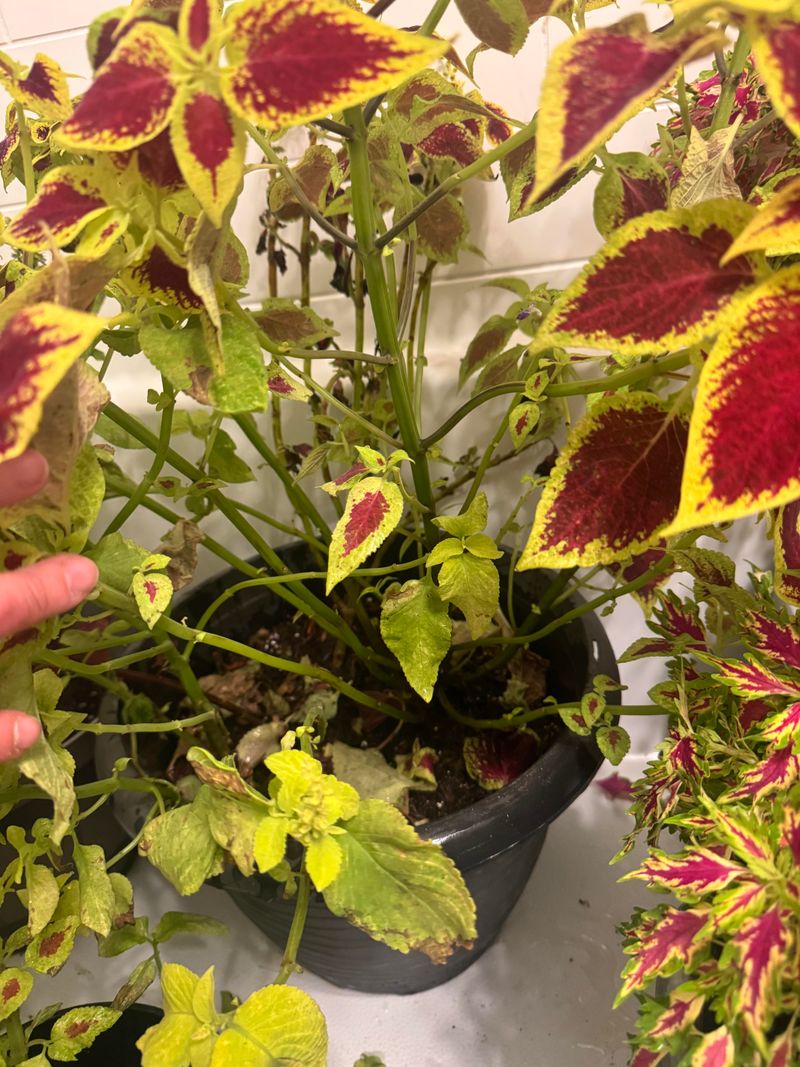
More indoor coleus plants suffer from too much love than too little. In winter, an overflowing watering can is often the biggest threat to their health.
Coleus likes soil that stays evenly moist in summer. Once growth slows in the cold months, though, the roots drink much less.
The easiest test is sitting right at the end of your hand. Push a finger into the soil up to the second knuckle, about one to two inches deep.
If it feels dry, go ahead and water. If it still feels damp, wait a few more days and check again.
When you do water, soak the pot until water runs out the bottom. Then empty the saucer so the roots are not sitting in a puddle.
Drainage holes are a must for any container. Without them, water collects at the bottom and the roots can start to rot.
Watch the leaves for clues, too. Droopy, yellow leaves on wet soil usually mean too much water, while crispy edges on dry soil point to thirst.
Room-temperature water is kinder than cold tap water straight from the faucet. Let a jug sit out overnight, and your plant will thank you.
A light, fluffy potting mix helps as well. Mixes with some perlite let extra water escape quickly.
8. Keep Coleus Away From Cold Windows
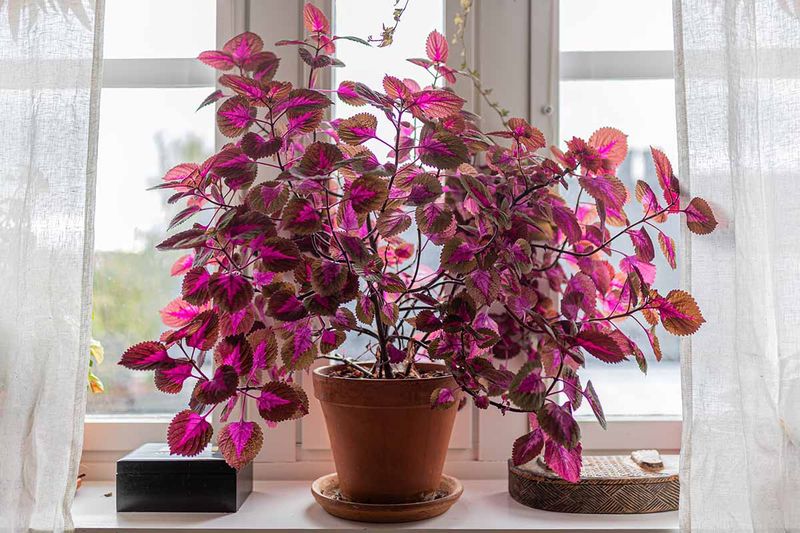
On a January night, the glass in an Ohio window can feel as cold as an ice cube tray. Leaves pressed against it can turn dark, limp, and spotted by morning.
Coleus prefers a steady room temperature between 60 and 75 degrees. Sudden swings, even for just a few hours, can make it drop leaves in protest.
Leave a few inches of space between the leaves and the windowpane. At night, you can slide the pot back or close a curtain behind it for extra insulation.
Drafty spots cause trouble as well. Keep plants away from exterior doors that swing open often during snowy weather, letting in icy blasts.
Heat can be just as rough as cold. Radiators, space heaters, and forced-air vents dry out leaves fast and stress the roots.
Winter air indoors often feels as dry as a desert. Set the pot on a tray filled with pebbles and water to add a bit of moisture around the leaves.
Just make sure the bottom of the pot sits above the waterline. Grouping several plants together also creates a small pocket of extra humidity.
A cheap indoor thermometer placed near your plant can reveal a lot about your setup. You might be surprised how chilly a windowsill gets after sunset.
9. Acclimate Plants Before Returning Them Outdoors
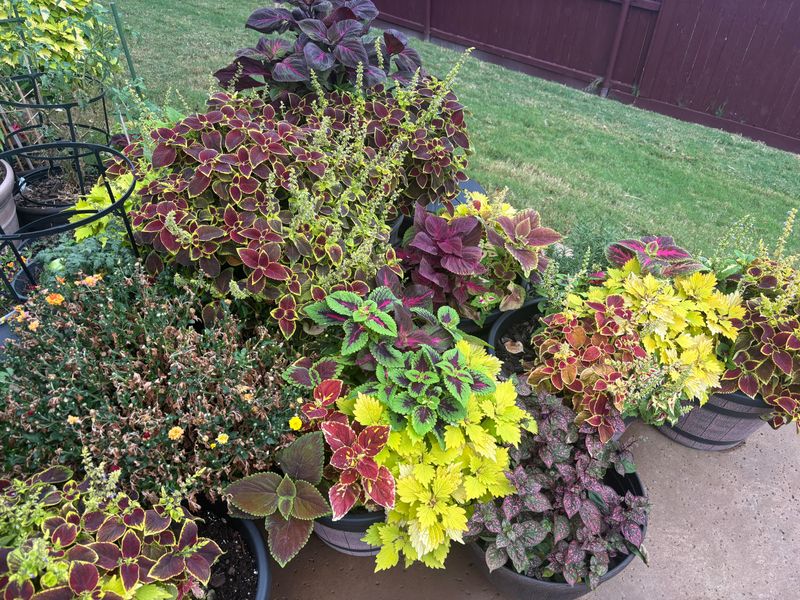
Spring fever hits hard in Ohio, and the first warm afternoon makes everyone want to haul plants outside. Hold that thought for just a little longer.
After months in a cozy living room, coleus is soft and not ready for wind, bright sun, or chilly nights. Moving it straight into the garden can cause scorched leaves and serious shock.
The fix is a process called hardening off. It means slowly getting your plant used to the outdoors over about a week or two.
Start by setting the pot in a shady, sheltered spot for an hour or two. Each day, leave it out a little longer and give it a bit more sun.
Bring it back inside if nights turn cold. Coleus prefers overnight lows that stay above 50 degrees, not just above freezing.
In much of Ohio, that means waiting until late May or early June. This is often a few weeks after the average last frost date.
Once your plant has adjusted, pick its summer home and plant it with fresh soil. A little slow-release fertilizer gives it a strong start.
Take a moment to celebrate, because you just carried a tropical plant through a Midwest winter. That is a win worth bragging about at the next garden club meeting.