Carpenter Bee Holes In Your Kentucky Porch Are Sending You A Message
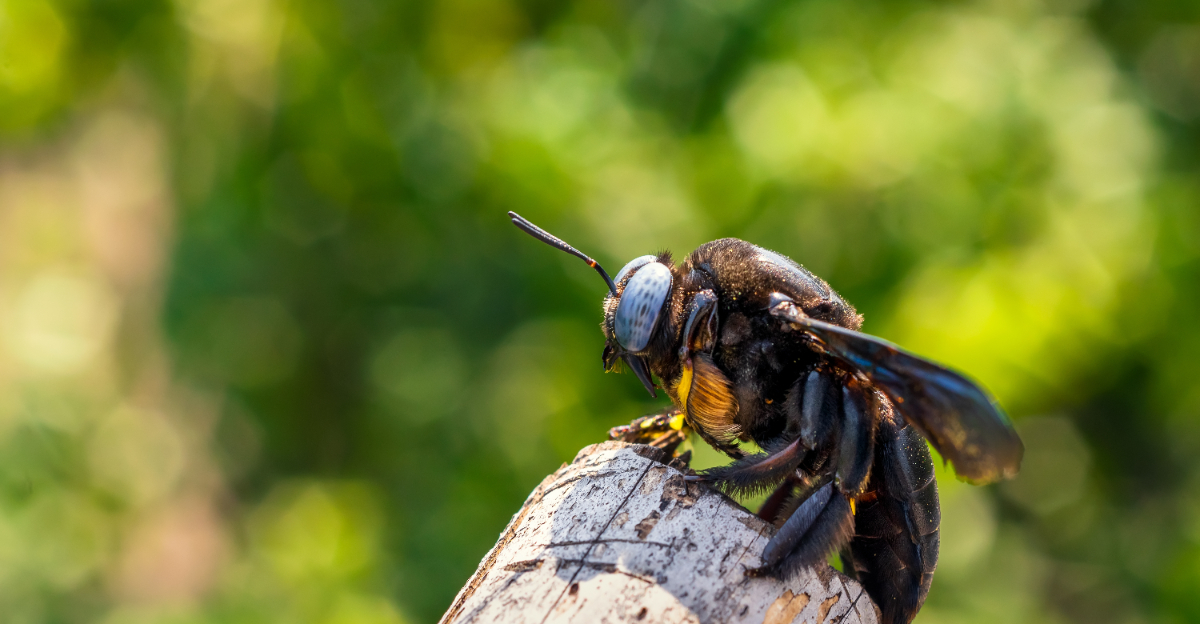
Those perfectly round holes in your porch railing did not appear by accident. Carpenter bees are deliberate, and your Kentucky porch just became their preferred address.
The sawdust collecting on the floorboards, the yellowish staining around the entry point, the low hum near the eaves on a warm afternoon, each of these details is part of the same story.
A bee found your wood, liked what it found, and moved in. Kentucky’s warm springs and humid summers make this more common than most homeowners expect, and the problem rarely stops at a single hole.
Carpenter bees return to the same sites season after season, expanding what was once minor damage into something far more serious. Those entry points are not just an eyesore.
They are a signal that something is actively happening inside your wood right now, and the earlier you pay attention, the better your chances of keeping it under control.
Those Perfect Round Holes Mean Carpenter Bees Have Moved In
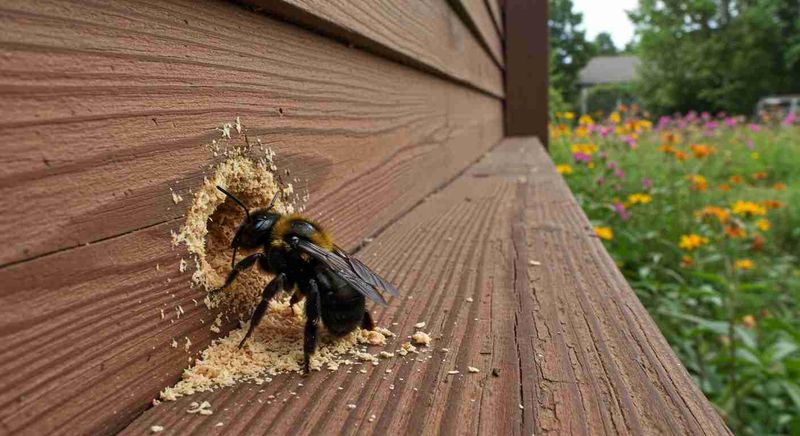
You spot a hole, smooth and perfectly round, bored straight into your porch wood. That is the calling card of a carpenter bee, and it is unmistakable once you know what to look for.
Carpenter bee holes are almost exactly half an inch wide. They look machine-drilled because these insects are surprisingly precise engineers.
Unlike termites, carpenter bees do not eat the wood they remove. They excavate it to build tunnels called galleries, where they lay eggs and raise young.
Each new tunnel typically runs four to six inches deep, though reused galleries can extend considerably further over successive seasons. Over time, multiple tunnels weaken the structural integrity of your boards.
Female bees do all the drilling work. Males hover aggressively near the entrance but lack a stinger, so their intimidating patrol is mostly just noise.
The holes you see on the surface are just entry points. Inside, the tunnel turns sharply and runs with the wood grain for several inches.
Carpenter bee holes in your Kentucky porch often appear in unpainted or weathered wood first. Painted surfaces offer meaningful resistance and are far less likely to be targeted.
Spotting one hole early gives you a real advantage. Act quickly, and you can prevent a single bee from becoming a full colony of seasonal visitors.
Why Kentucky Porches Are A Prime Target For Carpenter Bees
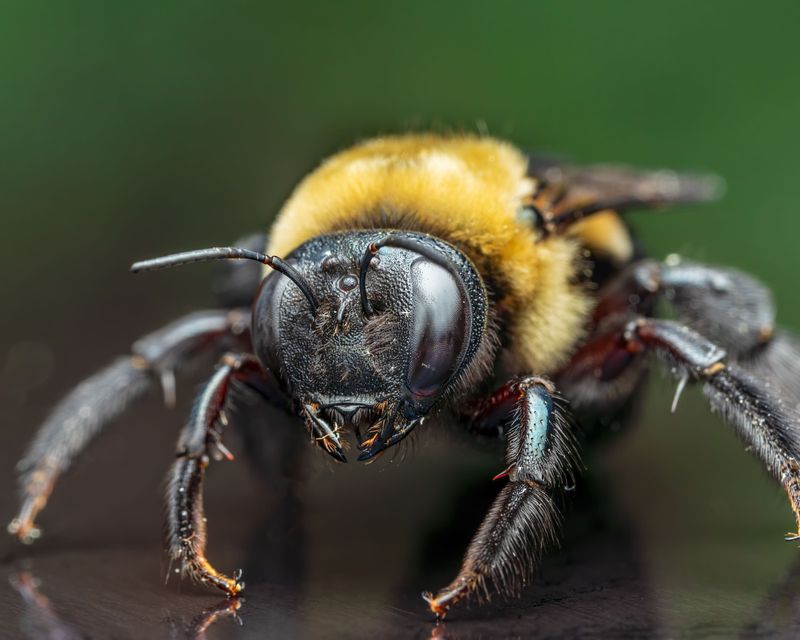
Kentucky porches were practically designed for carpenter bees, though not on purpose. The warm climate, abundant softwood lumber, and long spring seasons create a perfect storm for infestation.
Carpenter bees love soft, dry, untreated wood. Pine, cedar, cypress, and redwood are among their preferred targets, and those are exactly the woods most Kentucky porches are built from.
Much of the state sits in a humid subtropical climate zone. That means warm springs arrive early, giving bees more time to scout and settle before summer heat peaks.
Older homes throughout the Bluegrass region often have weathered, unpainted trim. That aged wood is an open invitation, soft and easy to drill through.
Your Kentucky Garden Changes Every Week. Your Plan Should Too.
Gardening in Kentucky changes quickly throughout the season. Every Friday you’ll receive a simple weekly plan showing exactly what to plant, prune, fertilize, harvest, and protect so you never miss the right timing.
Porches with south or east-facing exposures get the most morning sun. Carpenter bees prefer sun-warmed wood surfaces because they speed up the nesting process.
Overhangs, fascia boards, and decorative railings are especially vulnerable. These areas often go unnoticed during routine home inspections, letting bees work undisturbed for months.
Rural properties with barns, sheds, and fences nearby face compounding risk. More available wood means more nesting sites and larger local bee populations each season.
Understanding your porch’s appeal helps you protect it more strategically. Knowing what draws these insects in is the first step toward keeping them out for good.
What The Sawdust And Staining Around The Holes Tell You
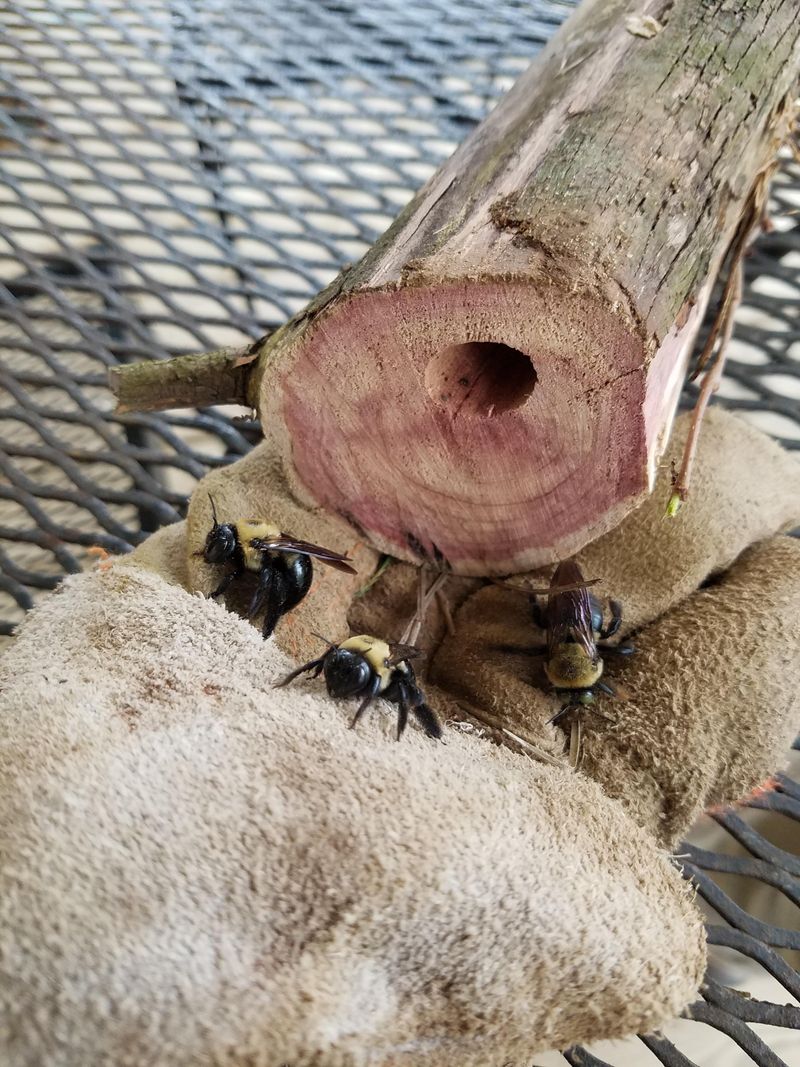
Look below any active carpenter bee hole and you will almost always find a small pile of pale yellow sawdust. That fine debris is called frass, and it is a real-time activity report.
Fresh frass means a bee is actively drilling right now. Old, scattered frass that has blown around suggests older activity that may have slowed or stopped.
Below the frass, you might notice dark brown or yellowish staining on the wood. That discoloration comes from bee waste and pollen deposits inside the tunnel.
The staining is not just ugly, it signals that the tunnel is being actively used for nesting. Bees return to the same galleries year after year if left undisturbed.
A single hole with light staining might mean a lone scout bee. Multiple holes with heavy staining and fresh sawdust suggest an established and growing population.
Pollen staining appears in a drip pattern directly below the hole. Bees carry pollen inside to feed larvae, and some of it spills out during the process.
Checking these visual clues takes less than five minutes. A quick monthly walkthrough of your porch during spring can reveal problems before they escalate dramatically.
The message in that sawdust and staining is simple: something is living in your wood. Reading those signs correctly puts you in control of what happens next.
The Difference Between Minor Activity And A Serious Infestation
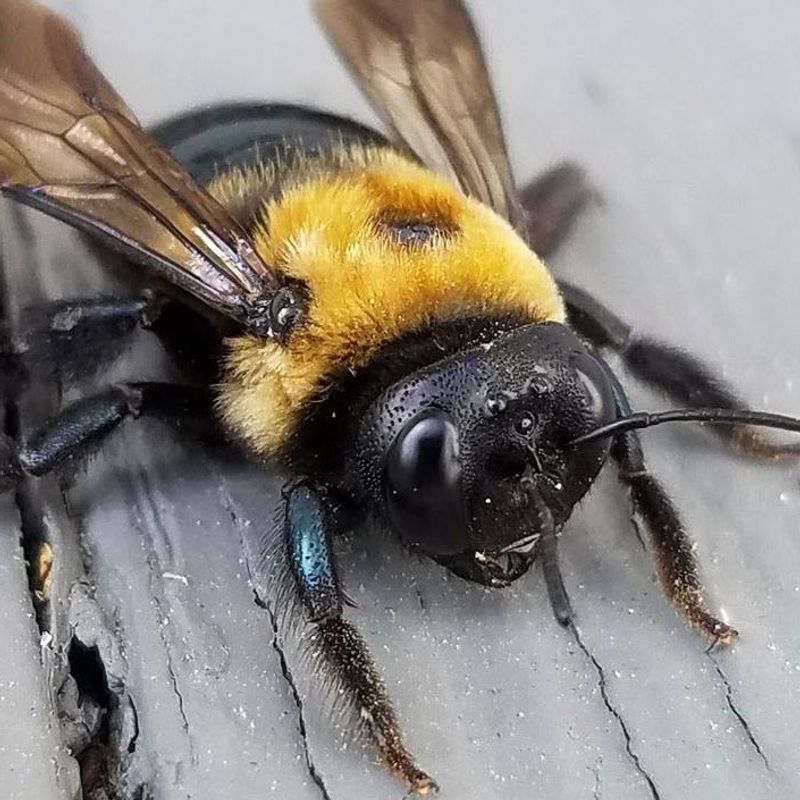
Not every carpenter bee hole signals a crisis, but not every hole should be ignored either. Learning to tell the difference saves you money and unnecessary stress.
Minor activity usually looks like one or two fresh holes in a single board. You might see one bee hovering nearby, investigating the site without committing to full nesting.
A serious situation looks very different. Multiple holes clustered together, heavy frass buildup, and visible wood splitting are signs that bees have been working for more than one season.
Galleries from previous years get reused and extended each spring. What started as a two-inch tunnel can become a foot-long network of chambers over several seasons.
Woodpeckers are a surprising secondary indicator of heavy infestation. They peck aggressively into wood to reach bee larvae, causing damage far beyond what the bees alone created.
Boards that feel soft or hollow when tapped often have extensive internal tunneling. That hollowness means structural support has been compromised and replacement may be necessary.
Checking multiple boards at once gives you a clearer picture. One affected board is manageable, but five or six signals a colony-level problem needing a different response.
The sooner you classify what you are dealing with, the better your options become. Early-stage problems respond well to simple fixes, while advanced damage demands professional assessment.
How Kentucky’s Seasons Affect Carpenter Bee Behavior On Porches
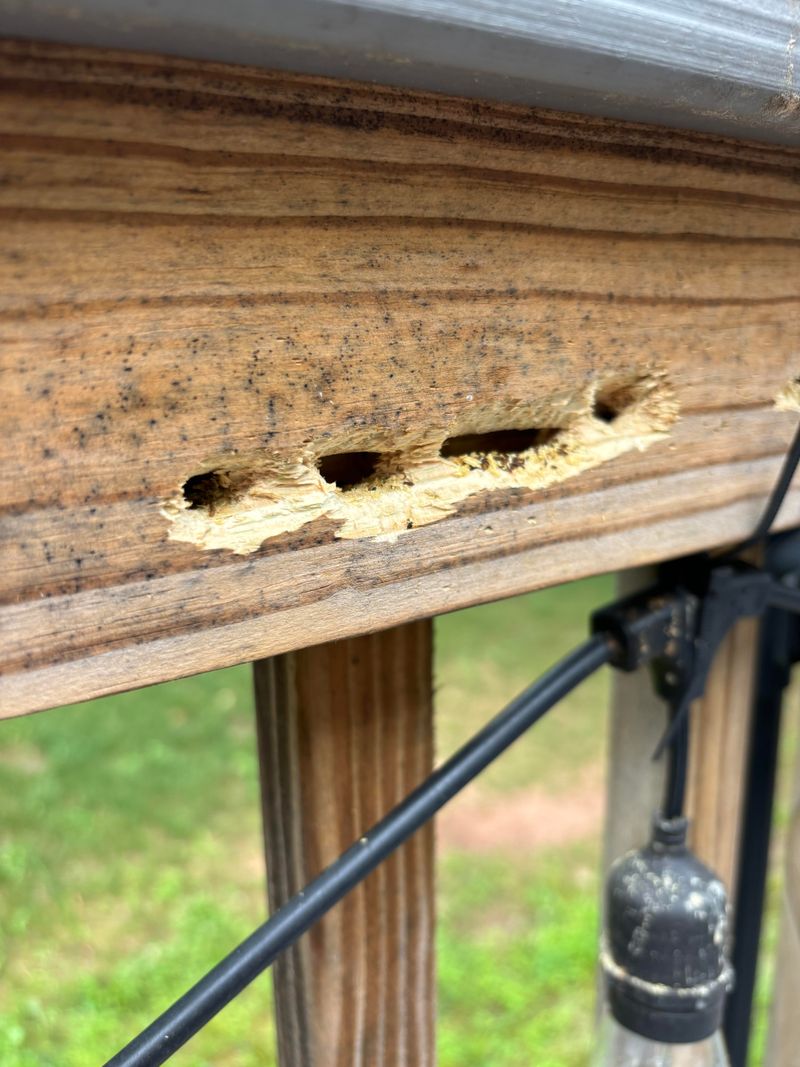
Carpenter bees follow a predictable seasonal rhythm, and knowing that rhythm gives you a real advantage. Timing your response to match their cycle makes every effort more effective.
Spring is the most active period, typically starting in mid-March across most of the state. Females emerge from overwintering sites and immediately begin searching for nesting locations.
April and May are prime drilling months. This is when fresh holes appear fastest and the most visible damage accumulates on exposed porch surfaces.
By early summer, females have laid eggs and sealed chambers with pollen. The buzzing activity near holes slows noticeably as nesting duties shift to incubation.
Late summer brings a new generation of young bees to the surface. These juveniles are less focused on drilling and more focused on feeding before the cold arrives.
Fall signals a retreat. Both old and new bees begin seeking sheltered spots to overwinter, often retreating back into the same tunnels they or their parents created.
Winter is the quietest period but not one to waste. Sealing holes and treating wood during these cold months prevents spring re-entry before bees even wake up.
Working with the seasons rather than against them is the smartest approach. A treatment applied in February costs far less effort than one scrambled together during peak April activity.
What You Can Do Before The Damage Gets Worse
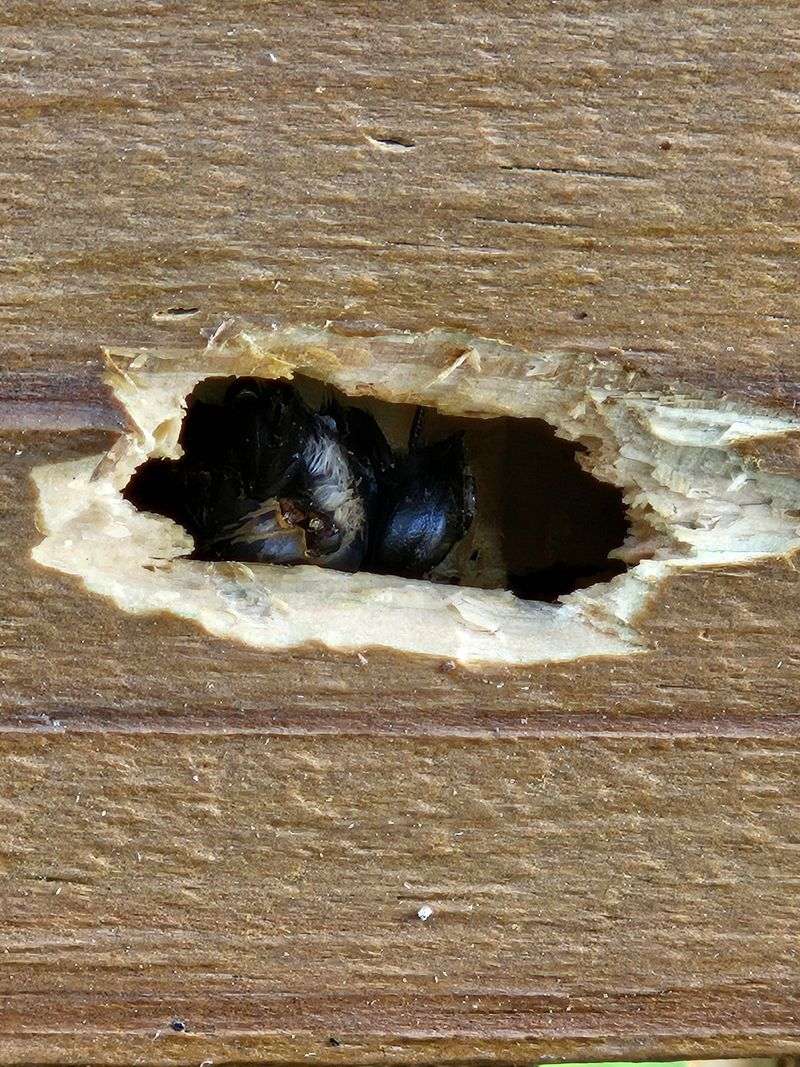
Good news: you have real options here, and most of them do not require a professional on the first visit. A few targeted steps taken early can stop the problem from growing.
Start by filling active holes with steel wool or a wood plug. Bees struggle to chew through steel wool, and plugging tunnels discourages re-entry effectively.
After plugging, seal the surface with a quality exterior paint or wood stain. Painted and sealed wood is significantly less attractive to nesting females looking for soft entry points.
Almond oil and citrus-based sprays applied around holes act as natural deterrents. Carpenter bees dislike strong scents and will often scout elsewhere when treated surfaces smell unfamiliar.
Steel wool works as a first line of defence, but the finish you apply over it matters just as much. Untreated or weathered surfaces invite repeat activity, so any repaired board should be painted or stained before the next spring season.
Replacing heavily damaged boards entirely removes the problem at its source. New, treated lumber installed correctly gives bees nothing easy to work with and gives you a fresh start.
Carpenter bee holes in your Kentucky porch are a message worth answering with action. Respond early, respond smart, and your porch will stay beautiful and structurally sound for seasons to come.