The Florida Flowers You Should Fertilize In April For Better Blooms
April is when a lot of Florida gardens start showing their true colors, but it is also when some flowers need a little backup to keep the show going strong.
A plant can be full of buds one week and look a bit tired the next, especially once the heat starts building and spring rolls toward summer.
That is where smart timing comes in. A well-timed feeding in April can help certain flowering plants push out more buds, hold onto their color longer, and put on a much better performance in the weeks ahead.
Of course, not every flower wants the same treatment, and too much fertilizer can backfire fast in Florida’s climate. Still, for the right plants, April is a golden window.
Catch it at the right moment, and you can set the stage for fuller, brighter, more rewarding blooms just when the garden starts to hit its stride.
1. Roses Need An April Feeding To Keep Blooming Strong
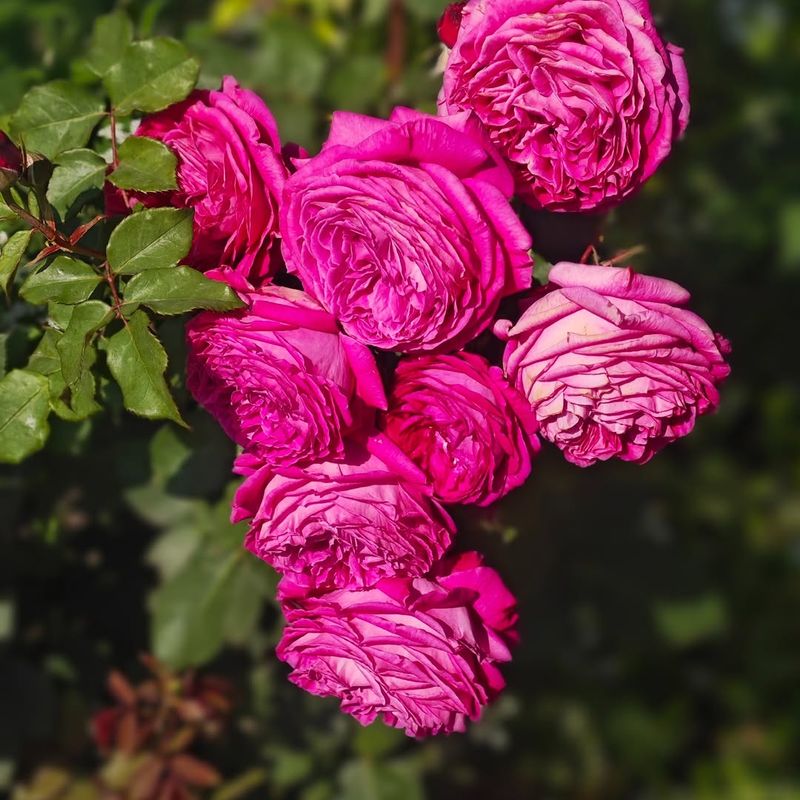
Few things in a Florida yard feel as rewarding as a rose bush loaded with blooms, and April is exactly when you need to step in with fresh nutrients to keep that show going.
Roses are heavy feeders, and after pushing out early spring growth, they need a refuel to stay productive through the warmer months ahead.
UF/IFAS recommends feeding roses with a balanced fertilizer, and a 6-6-6 formula is a commonly cited option for Florida gardens. Apply it every four to six weeks during active growth, and always follow the label directions to avoid burning the roots.
Water the plant thoroughly before and after fertilizing to help nutrients move down into the root zone.
One mistake Florida gardeners make is skipping the April feeding because the roses already look fine. Looking fine and blooming strong are two different things.
That mid-spring feeding is what helps set up the next round of flower buds. Without it, roses tend to slow down and produce fewer, smaller blooms as summer heat builds.
April is not the time to wait and see.
2. Hibiscus Responds Fast To A Spring Nutrient Boost
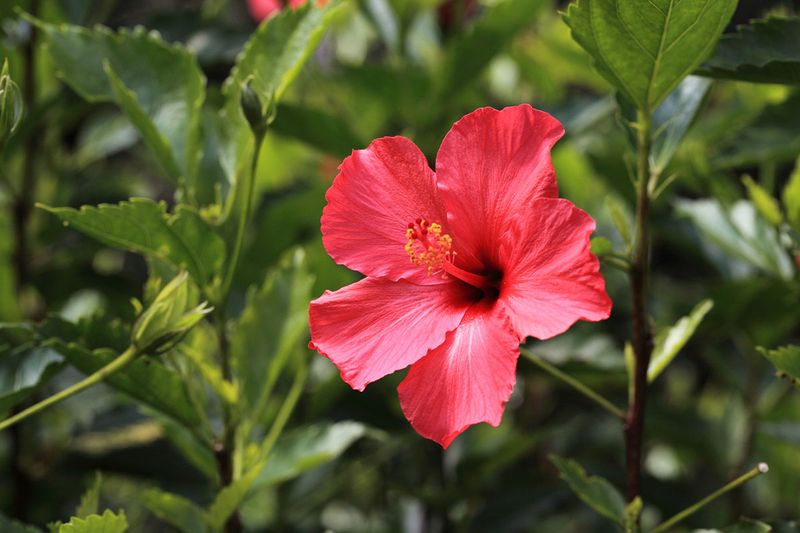
Walk past a well-fed hibiscus in April and you will notice something right away. The leaves are a deep, rich green, the stems are thick and branching, and flowers seem to pop open faster than you can count them.
Hibiscus is one of the most popular flowering plants in Florida, and it has the appetite to match.
Tropical hibiscus thrives in Florida’s warm climate and blooms heavily when it gets consistent nutrition. According to UF/IFAS, hibiscus benefits from regular fertilizing during its active growing season, which in Florida runs from spring through fall.
A balanced slow-release fertilizer works well for in-ground plants, while container-grown hibiscus may need more frequent feeding since nutrients flush out with watering.
The key mistake to avoid is using a fertilizer too high in phosphorus. Hibiscus generally needs less phosphorus than nitrogen and potassium, so look for a formula with a lower middle number.
Your Florida Garden Changes Every Week. Your Plan Should Too.
Gardening in Florida changes quickly throughout the season. Every Friday you’ll receive a simple weekly plan showing exactly what to plant, prune, fertilize, harvest, and protect so you never miss the right timing.
April is the right moment to get ahead of the summer bloom cycle because the plant is already pushing hard with new growth. Give it the nutrients it needs now, and it will reward you with flowers through the hottest months of the year.
3. Pentas Bloom Better With A Timely April Feeding
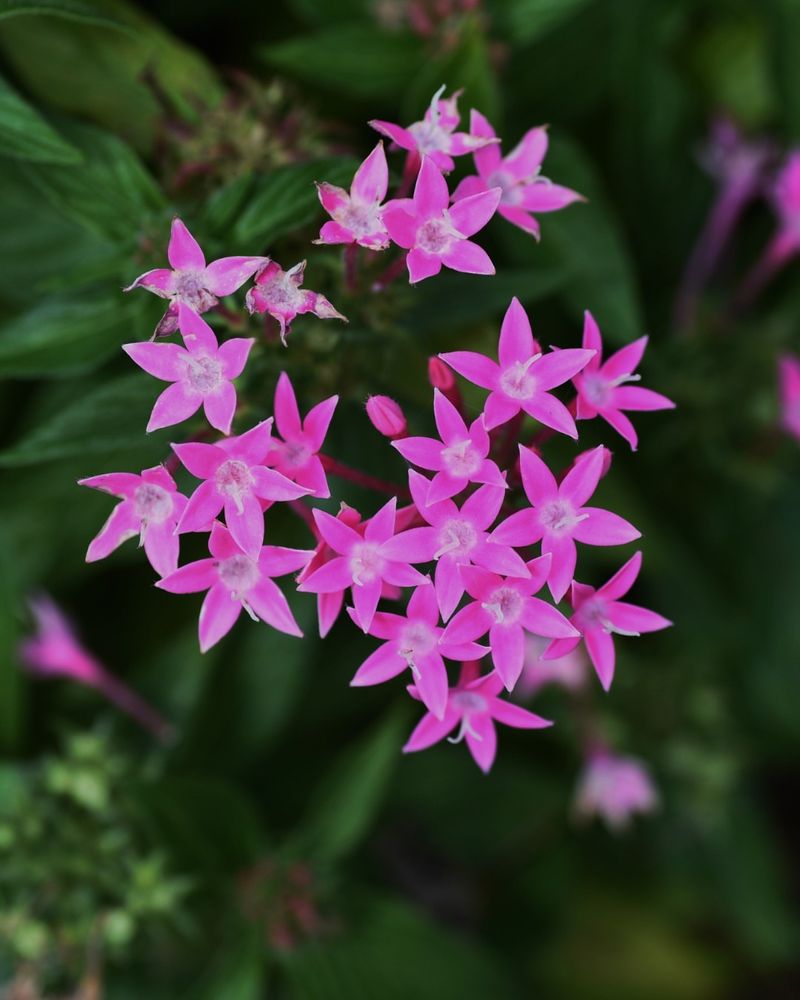
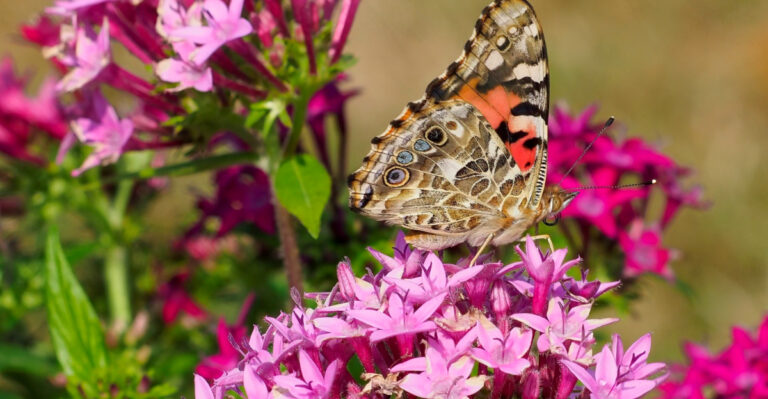
Pentas might be one of the most underrated flowers in Florida. It handles heat without flinching, attracts butterflies and hummingbirds all season long, and keeps blooming even when other plants give up.
But to really perform at its best, pentas needs a little help from you in April before summer arrives.
A light feeding in early to mid-April gives pentas the nutrients it needs to branch out, fill in, and produce more flower clusters throughout the season. UF/IFAS lists pentas as a Florida-friendly annual that performs well in full sun to partial shade.
Because it grows quickly in warm weather, the soil can get depleted fast, especially in containers or sandy garden beds.
Use a balanced granular fertilizer or a slow-release formula and apply it lightly. Pentas does not need heavy feeding, and too much nitrogen can push leafy growth at the expense of flowers.
The goal is steady, supported growth that keeps the blooms coming. April is the sweet spot because the plant is actively growing but the extreme heat has not yet arrived.
A well-timed feeding now sets pentas up for months of reliable color without a lot of extra effort on your part.
4. Angelonia Stays Fuller And More Floriferous With Spring Fertilizer
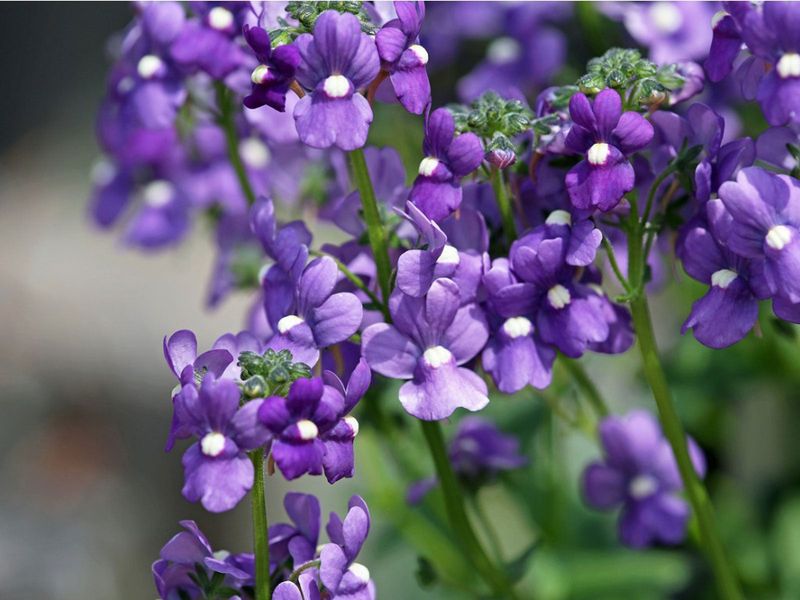
Angelonia is sometimes called the summer snapdragon, and once you grow it through a Florida summer, you understand why gardeners keep coming back to it.
It handles heat and humidity without skipping a beat, and the tall spikes of small flowers keep producing for months.
The catch is that it performs noticeably better when it gets some nutritional support early in the season.
Feeding angelonia in April helps the plant build a stronger root system and fuller branching before the most intense heat arrives. A slow-release balanced fertilizer worked into the soil at planting or applied around established plants is a practical approach.
In containers, a water-soluble fertilizer applied every couple of weeks can help maintain steady growth and consistent flowering.
Angelonia works well in both garden beds and containers, and it fits nicely along borders where you want height and color that lasts. The common mistake with this plant is treating it like it needs no care at all.
It is tough, but it is not indestructible. Skipping spring fertilizing often results in thinner stems, fewer flower spikes, and a plant that looks tired by midsummer.
A simple April feeding makes a real difference in how full and floriferous it stays all the way through fall.
5. Gerbera Daisy Needs Fresh Nutrients To Keep Flowers Coming
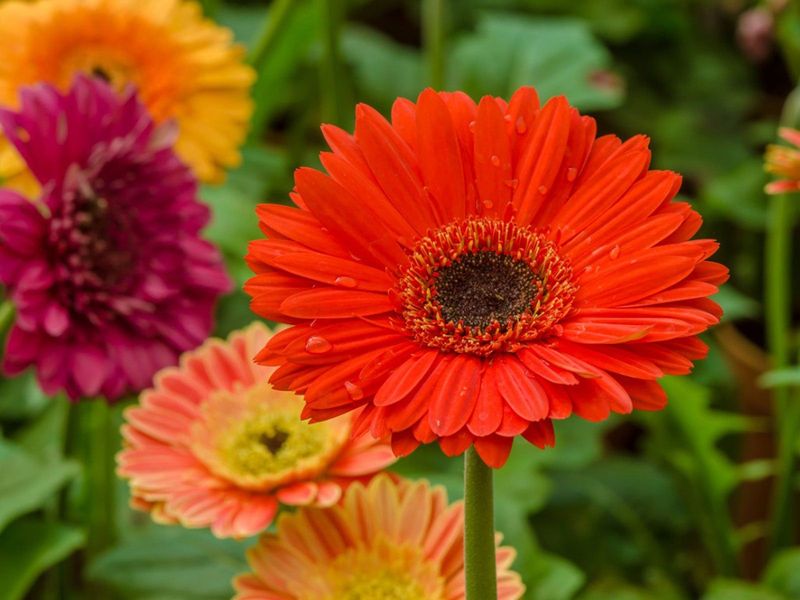
There is something cheerful about a gerbera daisy that is hard to ignore. The bold, round blooms in shades of orange, yellow, red, and pink have a way of making a garden feel lively.
But in Florida, gerberas can wear out quickly if the soil is not refreshed, and April is the right time to give them a nutritional reset.
Gerbera daisies are heavy bloomers that pull a lot of nutrients from the soil. According to UF/IFAS, they grow best in Florida as cool-season to warm-season annuals, depending on the region, and they respond well to light, consistent fertilizing.
A balanced fertilizer with equal or slightly higher potassium supports flower production without pushing excessive leafy growth.
The most important mistake to avoid with gerberas is overfeeding. Too much nitrogen leads to large, lush leaves with fewer flowers, which is the opposite of what you want.
A light application of a balanced slow-release granular fertilizer in April, followed by consistent watering, helps gerberas push out a strong second flush of blooms. Make sure the planting area has good drainage, since gerberas are sensitive to soggy roots.
Get those two things right, and the flowers will keep coming well into the warmer months.
6. Ixora Benefits From The Right April Feeding In Florida
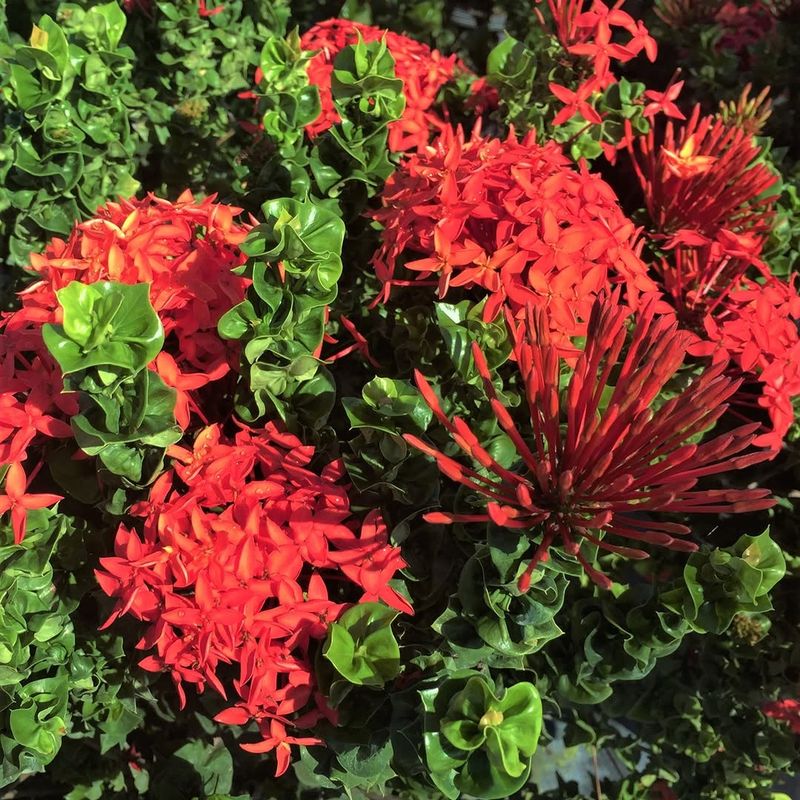
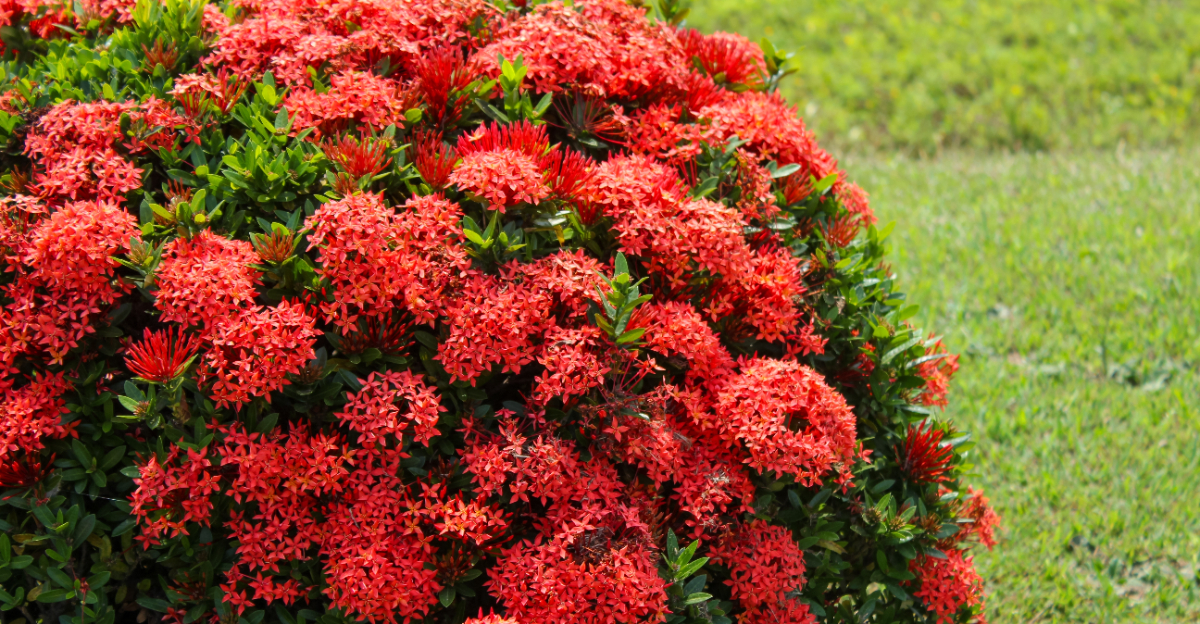
Ixora is a Florida garden staple that shows up in yards, commercial landscapes, and roadside plantings all across the state. The clusters of tiny tubular flowers in shades of red, orange, yellow, and pink are hard to miss.
But ixora is also one of those plants that responds badly to the wrong fertilizer, and that is worth knowing before you reach for the bag in April.
Ixora prefers acidic soil, and Florida’s naturally alkaline or neutral soils can cause nutrient deficiencies that show up as yellowing leaves and poor flowering.
UF/IFAS recommends using a fertilizer formulated for acid-loving plants, similar to those used for gardenias or azaleas, to support healthy leaf color and consistent bloom production.
Applying the right formula in April, as the plant enters its peak growing season, helps correct minor deficiencies before they become visible problems.
Avoid using high-phosphorus fertilizers on ixora, and skip the lawn fertilizer entirely since those formulas are not designed for flowering shrubs with pH sensitivity.
A slow-release granular fertilizer designed for acid-loving plants, applied carefully around the drip line of the shrub, is the safest approach.
Consistent spring feeding sets ixora up for a season full of dense, colorful flower clusters.
7. Mandevilla Pushes Out Better Color With Spring Nutrition
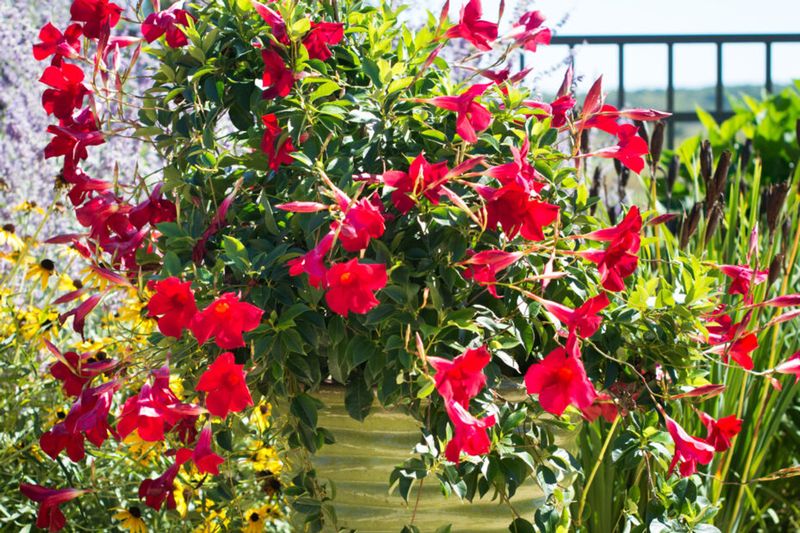
Once mandevilla gets going in Florida’s spring warmth, it almost seems like you can watch it grow. The vines reach out fast, the glossy leaves unfurl quickly, and those trumpet-shaped flowers in hot pink, red, or white start opening in clusters.
That kind of fast, showy growth demands a solid nutritional foundation, and April is the right time to provide it.
Mandevilla is a tropical vine that thrives in Florida’s warm climate and blooms most heavily during spring and summer. Whether it is climbing a trellis, spilling out of a large container, or trained along a fence, it benefits from regular feeding during its active growing season.
A balanced fertilizer or one slightly higher in phosphorus and potassium supports flower production over leafy growth.
Container-grown mandevilla needs more frequent feeding than in-ground plants because nutrients wash out with every watering. A water-soluble fertilizer applied every two weeks works well for pots.
For landscape plants, a slow-release granular fertilizer in April gives the vine a steady supply of nutrients as it pushes out new growth. The mistake many gardeners make is only fertilizing once and then walking away.
Consistent feeding throughout spring and summer is what keeps mandevilla blooming at its peak for the longest stretch of the season.
8. Zinnias Grow Faster And Bloom Better With A Light Early Feed
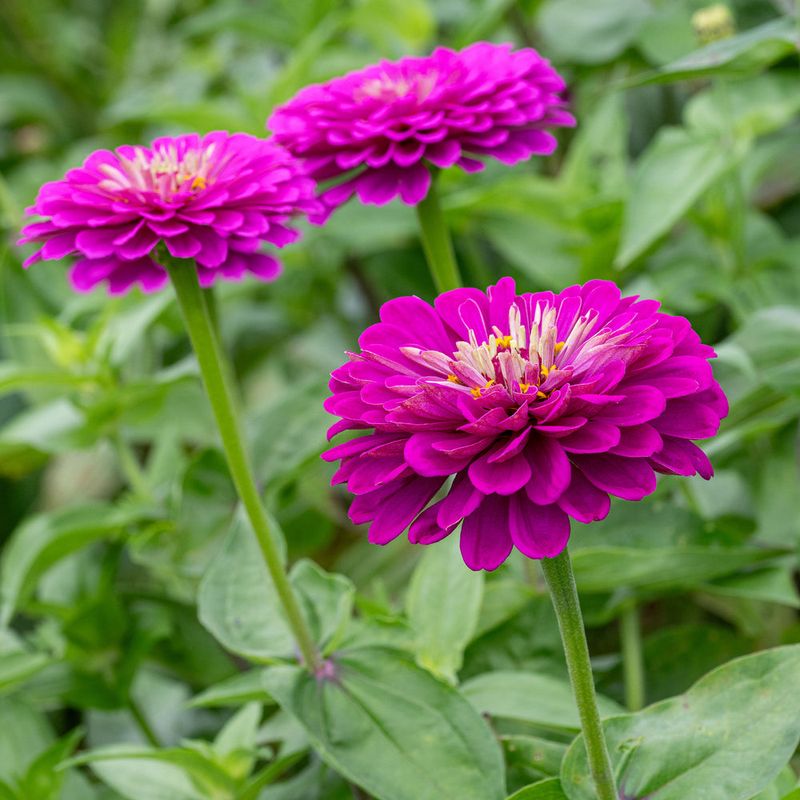
Zinnias are one of the fastest and most rewarding flowers you can grow in Florida, and they are especially satisfying in spring when they go from seed to full bloom in just a few weeks.
Plant them in April, give them a little nutrition to get started, and they will fill a bed with color faster than almost anything else you can grow this time of year.
A light application of a balanced fertilizer at planting or shortly after seedlings get established helps zinnias build a stronger root system and branch out more fully.
The goal is not to push massive growth but to support steady, healthy development that leads to more flower stems.
Too much nitrogen can result in tall, floppy plants with fewer blooms, so keep the feeding light and balanced.
Zinnias grow best in full sun with well-drained soil, both of which Florida has plenty of in spring. UF/IFAS notes that zinnias are warm-season annuals that perform well across Florida when planted after the last frost risk has passed.
One feeding at the start and another mid-season is usually enough to keep them productive. They are not demanding plants, but that early April boost makes a clear difference in how quickly they fill in and how long the blooms keep coming.