Climbing Plants That Turn Impossible Walls Into Living Green Screens
That stretch of chain-link fence at the back of your yard isn’t a problem. It’s an opportunity nobody’s cashed in on yet. Vertical space gets ignored in most gardens, even though it’s often a wide-open canvas that never gets used.
A climbing vine doesn’t just decorate a wall, it transforms it, turning empty space into something alive and breathing within a single growing season. Some vines will claw their way up brick without help. Others need a trellis, a wire, a nudge in the right direction.
Either way, the payoff is the same: shade where there was glare, birds where there was silence, flowers where there was nothing but gray. Pick the wrong vine for your climate or light, though, and you’ll end up with a tangled mess instead of a showpiece.
The seven climbers ahead cover every scenario, sun-baked southern walls, shady northern corners, and everything competing for space in between.
1. Crossvine
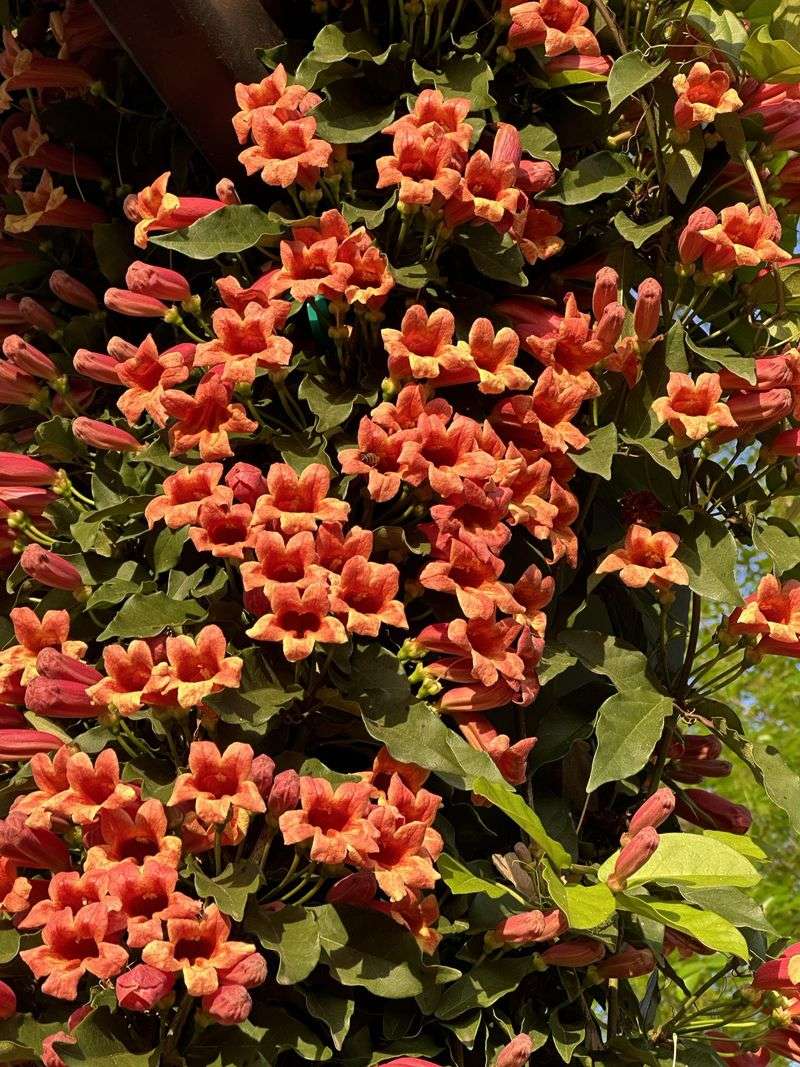
Crossvine earns its spot on any tough wall by doing what most plants refuse to do. It clings directly to brick, wood, and stone using tiny adhesive discs that grip like a gecko.
Native to the southeastern United States, Crossvine blooms in early spring with bold orange-red trumpet flowers. Hummingbirds flock to those blooms like they have a standing appointment.
The name comes from a cross-shaped pattern visible when you cut the stem. That small detail makes gardeners feel like they have discovered a secret.
Crossvine is semi-evergreen in warmer zones, meaning it holds its leaves through mild winters. In colder areas, it drops its foliage but bounces back hard each spring.
Plant it in full sun for the best flower show, though it tolerates partial shade without complaint. Give it a sturdy surface and it will cover twelve to thirty feet of wall over time.
Bees and other early pollinators treat Crossvine as one of the first nectar sources available each season. A wall covered in blooms becomes a busy stop long before most other plants wake up.
One of the biggest advantages is drought tolerance once established. After the first season, Crossvine rarely needs extra watering, making it ideal for busy homeowners.
Pruning right after bloom keeps the plant tidy and encourages fresh growth. Skip the pruning and you get a wilder, more textured look that suits naturalistic gardens perfectly.
Zone 6 through 9 gardeners get a vine that asks for very little and delivers a great deal in return.
2. Trumpet Honeysuckle / Coral Honeysuckle
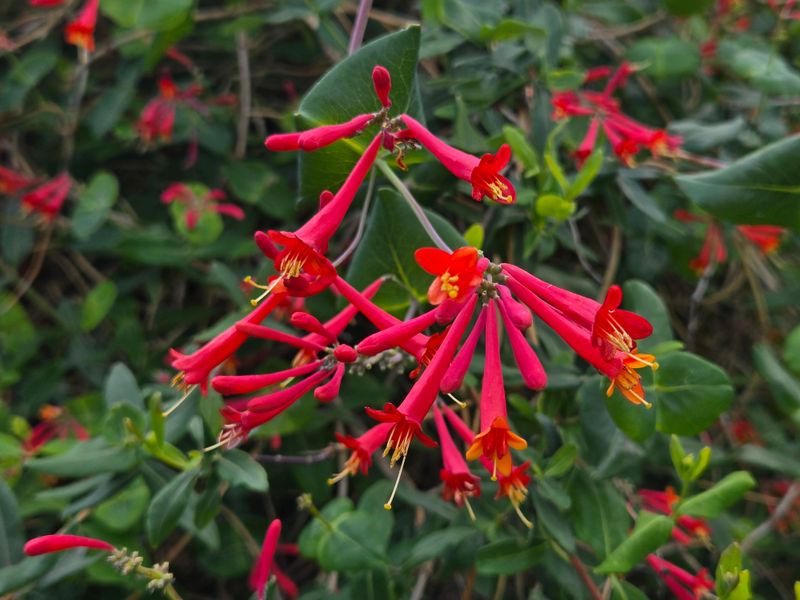
Coral Honeysuckle is the well-behaved cousin of the invasive Japanese Honeysuckle that gardeners have been warned about for years. This native beauty stays where you put it and rarely spreads beyond where it’s planted.
The flowers are long, slender tubes in shades of coral red with a soft yellow interior. Hummingbirds treat this vine like a favorite diner, returning again and again from spring through fall.
Lonicera sempervirens is semi-evergreen in the South and deciduous in the North. Either way, the foliage has a cool blue-green tone that looks fresh even without flowers.
It grows best in full sun but handles partial shade with grace. On a fence, trellis, or arbor, it can reach six to fifteen feet without becoming a problem.
One thing gardeners love is the long bloom season. Unlike plants that flower for two weeks and disappear, Coral Honeysuckle keeps producing color for months.
Established plants handle drought well, which makes them low-maintenance once settled in. Water regularly in the first year, then step back and let the vine do its thing.
Birds eat the small red berries that follow the flowers, adding another layer of wildlife value. A single vine becomes a tiny ecosystem on your wall.
Plant one, and the hummingbirds will tell all their friends.
3. Carolina Jessamine
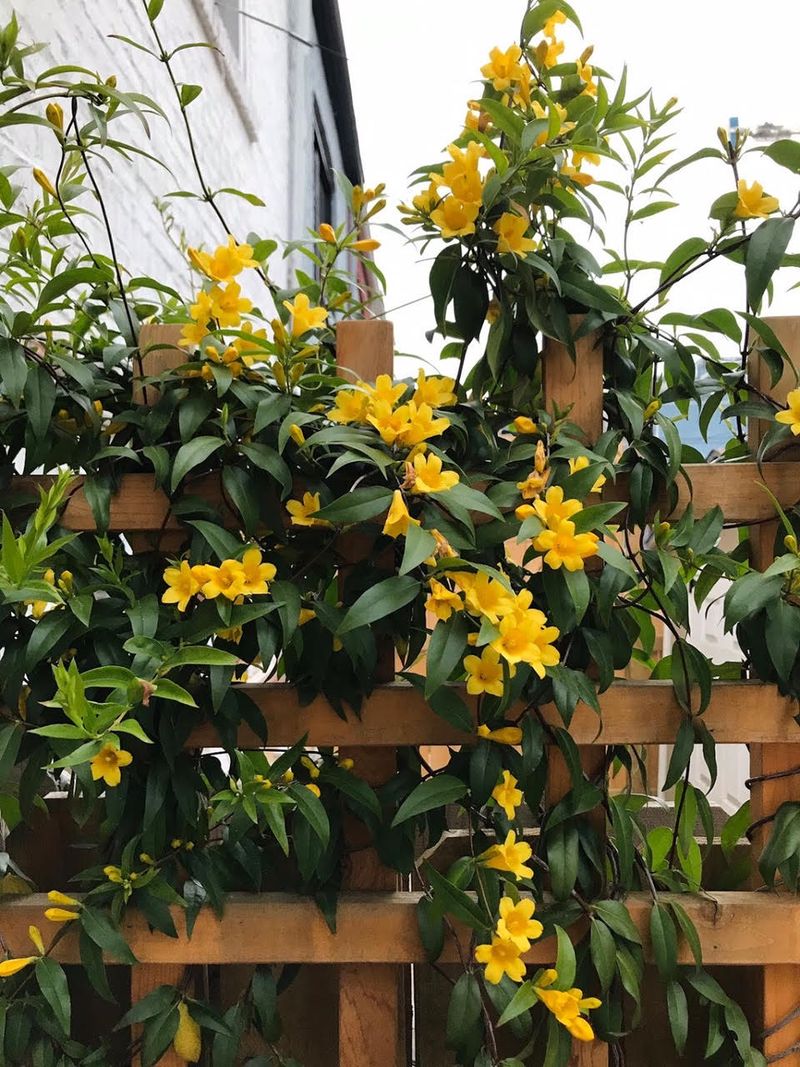
Walk past a Carolina Jessamine in late winter and the fragrance hits you before you even see the flowers. That sweet, honey-like scent is a genuine surprise when the rest of the garden is still half-asleep.
Bright yellow trumpet blooms appear as early as February in warmer zones. That early color is pure gold when everything else is still brown and bare.
Carolina Jessamine is the official state flower of South Carolina, which tells you something about how beloved it is in Southern gardens. It has been charming front porches and mailbox posts for generations.
The vine is evergreen, keeping its glossy dark green leaves through winter. That year-round coverage makes it a top choice for privacy screens on fences and walls.
It grows vigorously in full sun to partial shade, reaching ten to twenty feet at maturity. A strong trellis or chain-link fence gives it the perfect structure to climb.
One caution worth knowing: all parts of the plant are toxic if ingested. Keep it away from areas where small children or pets might chew on the stems or flowers.
Pruning after bloom keeps the plant from getting too heavy or tangled. A light trim shapes it beautifully without reducing next season’s flower display.
Once that first February bloom hits, you’ll wonder how any wall survived without it.
4. Climbing Hydrangea
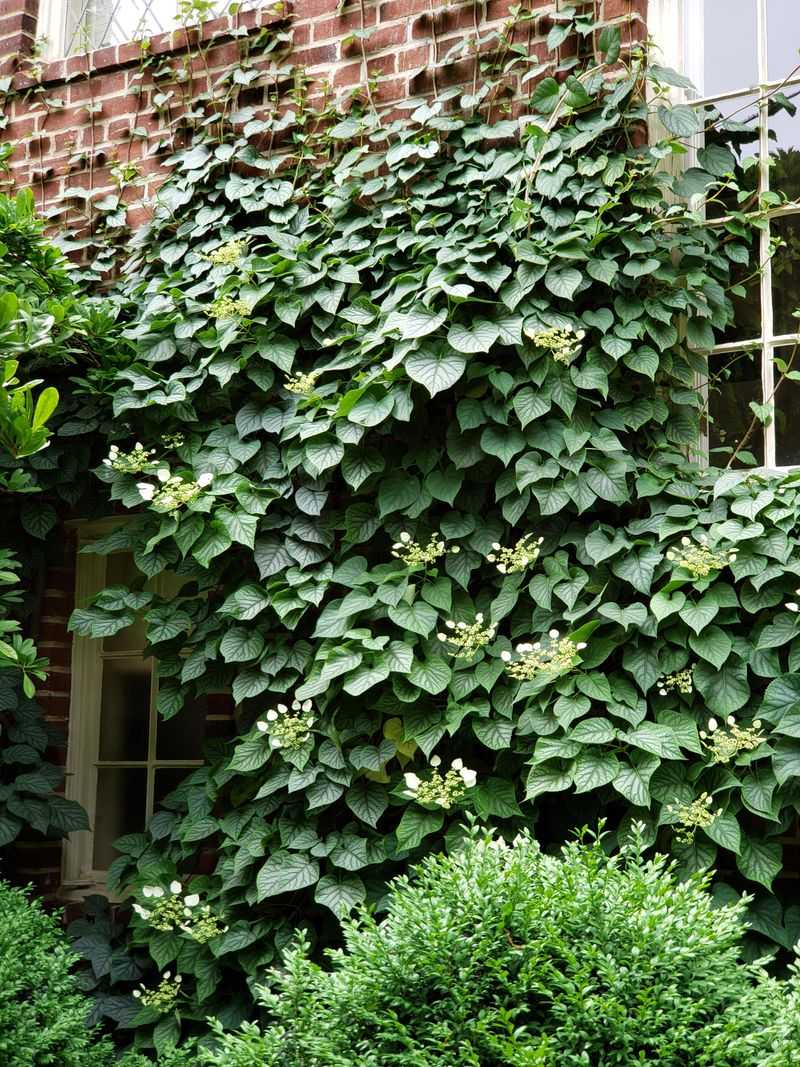
Shady walls stump most gardeners, but Climbing Hydrangea was practically built for low-light situations. It is one of the few vines that actually thrives on the north side of a building.
The flowers are large, flat-topped clusters of white blooms that look like lacecap hydrangeas floating against the wall. When they open in early summer, the effect is genuinely breathtaking.
This vine attaches itself using aerial rootlets that grip surfaces gently, though older wood or soft mortar can wear over time. Over time, it builds a layered, textured facade that looks like it belongs on a European manor house.
Growth in the first two or three years is slow, which frustrates impatient gardeners. Stick with it, because once established, Climbing Hydrangea takes off and covers large surfaces quickly.
Mature plants can reach thirty to forty feet, making them ideal for tall walls and multi-story structures. The rich green summer foliage turns buttery yellow in autumn before dropping cleanly.
Even in winter, the exfoliating cinnamon-brown bark adds texture and visual interest. A bare wall becomes a sculpture when this vine is fully established on it.
Minimal pruning is needed unless the vine outgrows its space. Remove wayward stems in late winter before new growth begins to keep things manageable.
Patience is the only price of admission, and the wall pays it back many times over.
5. American Wisteria
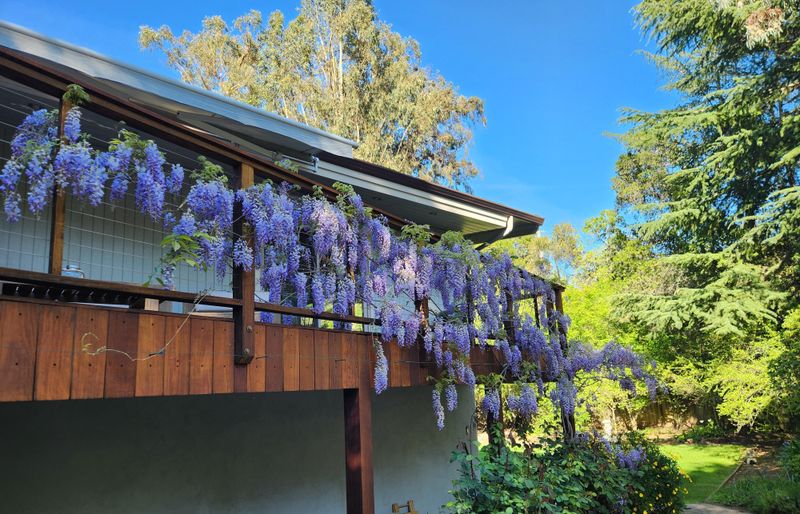
American Wisteria is the responsible choice for gardeners who have always dreamed of those cascading purple blooms without the headache that comes with Asian Wisteria. It gives you the drama without the destruction.
Native to the southeastern United States, Wisteria frutescens blooms in late spring with dense clusters of fragrant violet-blue flowers. The scent is soft and sweet, not overwhelming.
Unlike its aggressive Asian relatives, American Wisteria stays manageable with basic annual pruning. It’s far less likely to overtake your garage or overwhelm nearby trees if you give it occasional attention.
The vine grows fifteen to thirty feet, making it perfect for pergolas, sturdy fences, and large arbors. Give it a strong support structure because mature plants get heavy.
Two popular cultivars are worth knowing by name. ‘Amethyst Falls’ blooms at a young age and reblooms in summer, while ‘Nivea’ produces white flower clusters for a softer, romantic look.
Full sun produces the most flowers, though partial shade is tolerated. Plant it where you can enjoy the fragrance from a patio or open window.
Established plants handle drought and poor soil with surprising toughness. Once it settles in, American Wisteria rewards neglect with even more blooms the following season.
As a showstopping entry among climbing plants for living green screens, American Wisteria earns every bit of its reputation.
6. Star Jasmine
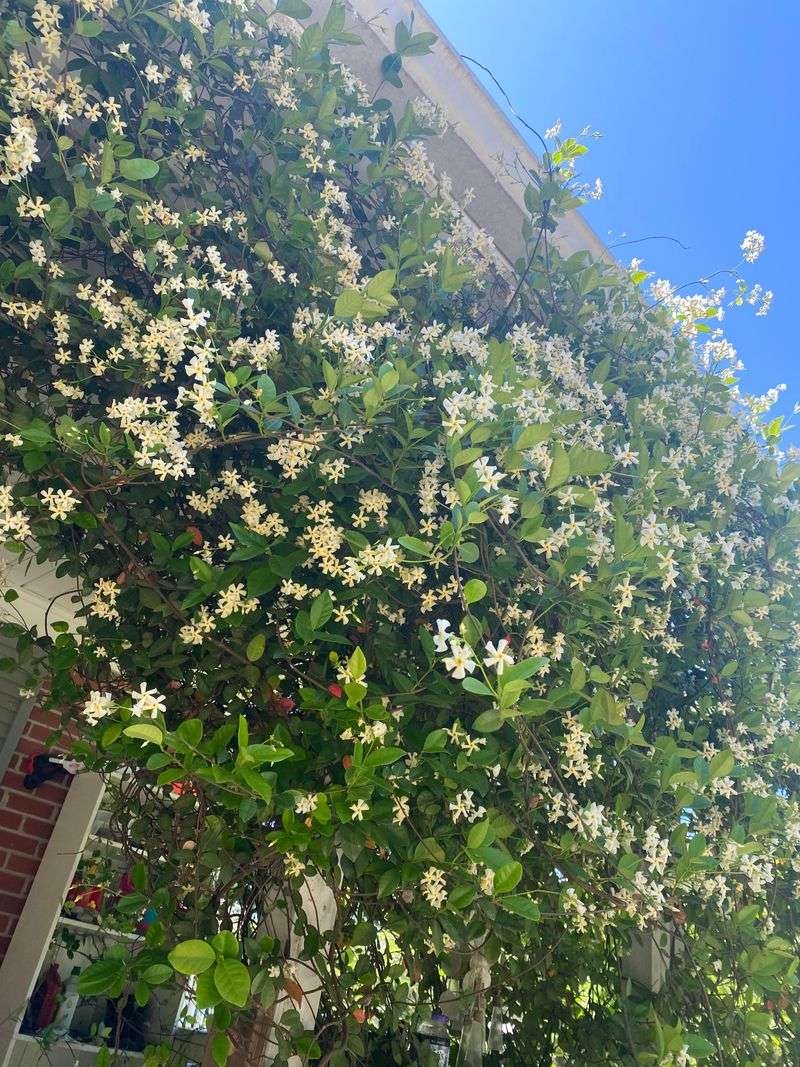
Star Jasmine is the vine that makes people slow down and take notice. When it blooms in late spring, the fragrance carries well beyond the yard and down the sidewalk.
The flowers are small, white, and shaped like pinwheels, but they appear in such huge numbers that the effect is bold and lush. Dark, glossy evergreen leaves make a perfect backdrop for those blooms.
Despite the name, Star Jasmine is not a true jasmine at all. It belongs to the dogbane family, but nobody holds that against it once they smell the flowers.
Growth rate is moderate, reaching fifteen to twenty feet over several years. On a wall, fence, or trellis, it builds a dense, weed-suppressing mat of foliage that looks intentional and polished.
Star Jasmine handles full sun and partial shade, adapting to a wide range of garden conditions. In hotter climates, afternoon shade actually helps it stay looking fresh through summer.
The plant is also used as a ground cover, but it truly shines when trained vertically. A wire grid or wooden trellis gives the stems easy purchase to climb.
Pruning after bloom keeps the plant dense and tidy rather than leggy. A hard cut every few years rejuvenates older plants and triggers a flush of fresh growth.
For fragrant, evergreen coverage on climbing plants for living green screens, Star Jasmine is a top-tier pick.
7. Virginia Creeper
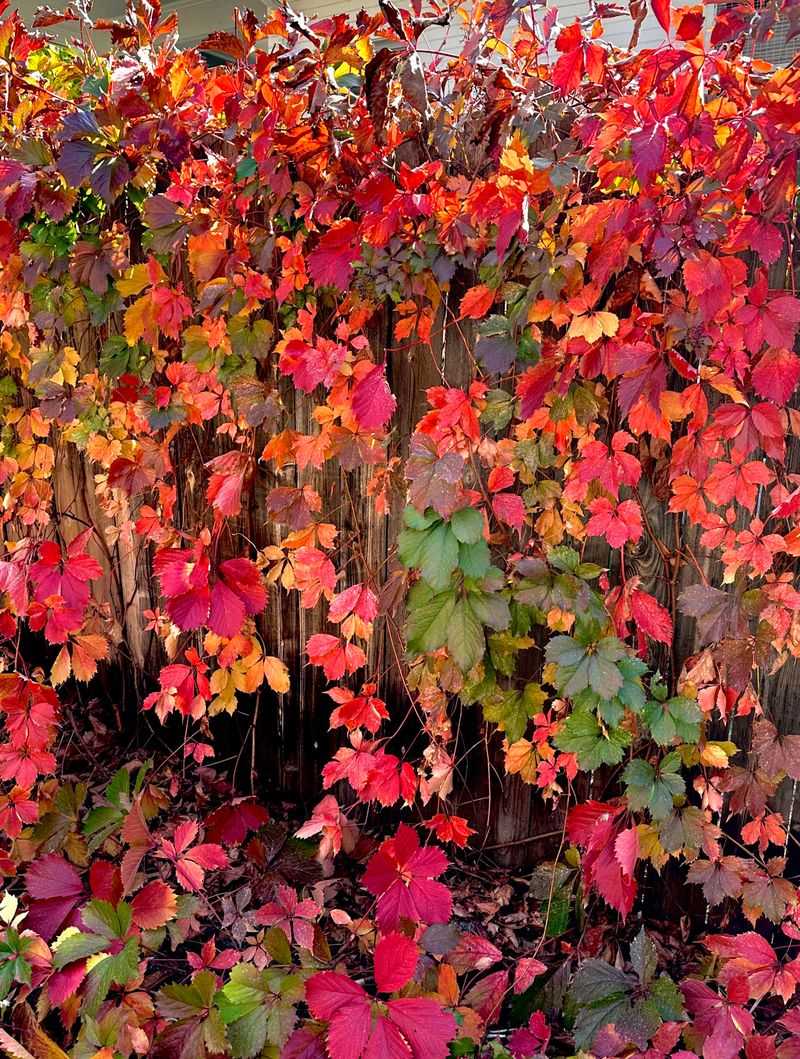
Few plants put on a fall color show as jaw-dropping as Virginia Creeper. When October arrives, this vine transforms from quiet green to blazing scarlet within a couple of weeks.
The five-pointed leaflets are the giveaway that separates Virginia Creeper from Poison Ivy, which has only three leaflets. Memorize that difference and you will never confuse the two again.
Virginia Creeper attaches to surfaces using adhesive pads at the tips of its tendrils. It grips brick, stone, wood, and concrete without needing wires or supports of any kind.
Growth is fast and vigorous, covering large walls in just a few seasons. A single plant can spread thirty to fifty feet, making it one of the most efficient green screen solutions available.
Beyond the fall fireworks, the summer foliage is a rich, cooling green that lowers surface temperatures on sun-baked walls. Vine-covered walls tend to stay noticeably cooler in summer heat than bare ones.
Small dark berries appear in autumn and feed dozens of bird species through winter. Plant this vine and you essentially hang a bird feeder on your wall for free.
Virginia Creeper is remarkably tough, tolerating drought, poor soil, deep shade, and full sun. It grows across most of the continental United States without complaint.
Few walls are too rough, too shaded, or too far gone for this one to take on.
8. Clematis
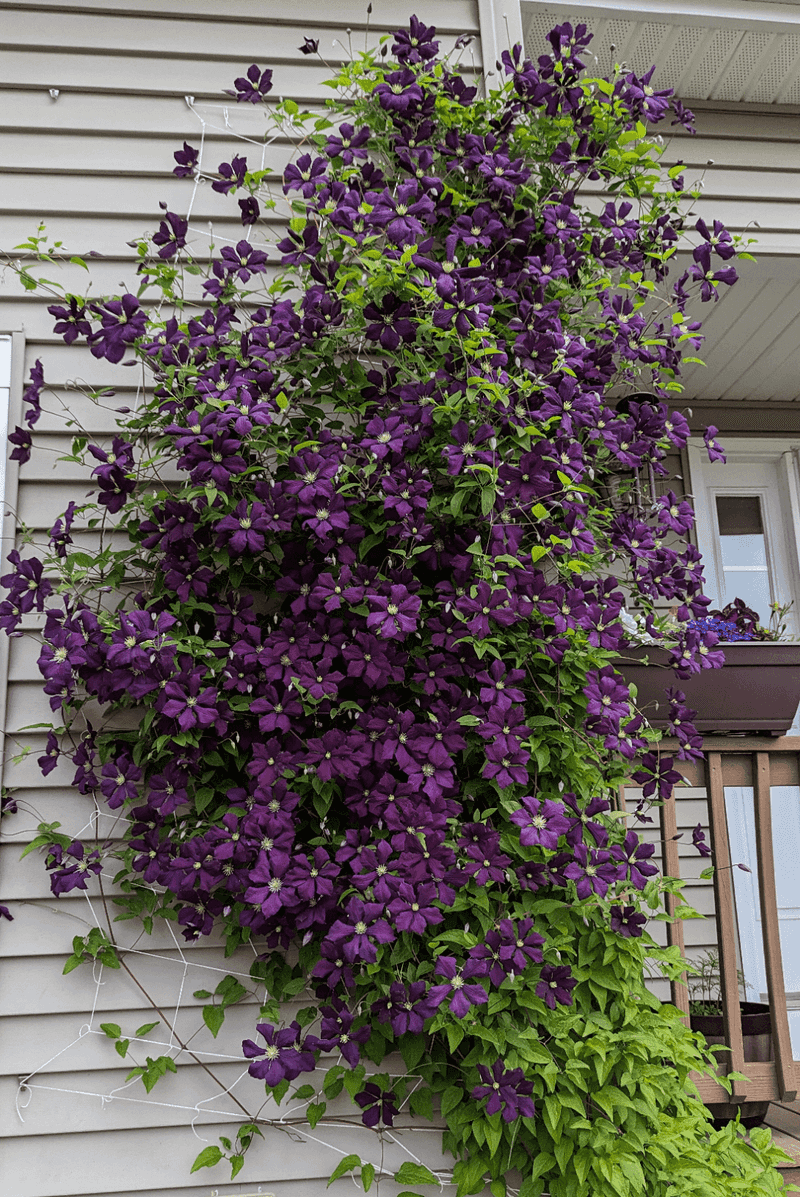
Few vines offer as many colors and shapes as Clematis. From deep purple to soft pink, there is a variety for nearly any palette.
This perennial climber uses twisting leaf stalks to grip trellises and wires. It needs something thin to wrap around, so chicken wire or a wooden lattice works better than a flat wall.
Bloom time varies widely by variety. Some flower in late spring, others wait until midsummer, and a few even rebloom into fall.
Clematis flowers range from small starbursts to dinner-plate-sized blooms. That range makes it easy to match the vine to the scale of your fence or wall.
The old gardening rule for Clematis is simple: cool roots, warm top. Shade the base with mulch or low plants while letting the vine climb into full sun.
Deer and rabbits mostly leave Clematis alone, a rare bonus in yards where everything else gets nibbled. That resistance makes it a safer bet near vegetable gardens and open fence lines.
Growth speed depends on the variety, but most reach six to twelve feet in a season. Sturdy pruning each year keeps the plant blooming heavily instead of turning woody.
Clematis tolerates a wide range of soils as long as drainage is decent. Standing water at the roots is the fastest way to lose a healthy plant.
Most gardeners plant Clematis alongside a shrub or small tree, letting the vine climb through the branches for support. The combination looks layered and intentional rather than staged.
Give it something to climb, and it will turn a plain fence into a color chart.