The Most Underrated North Carolina Native That Helps Keep Stink Bugs Out Of Tomato Beds
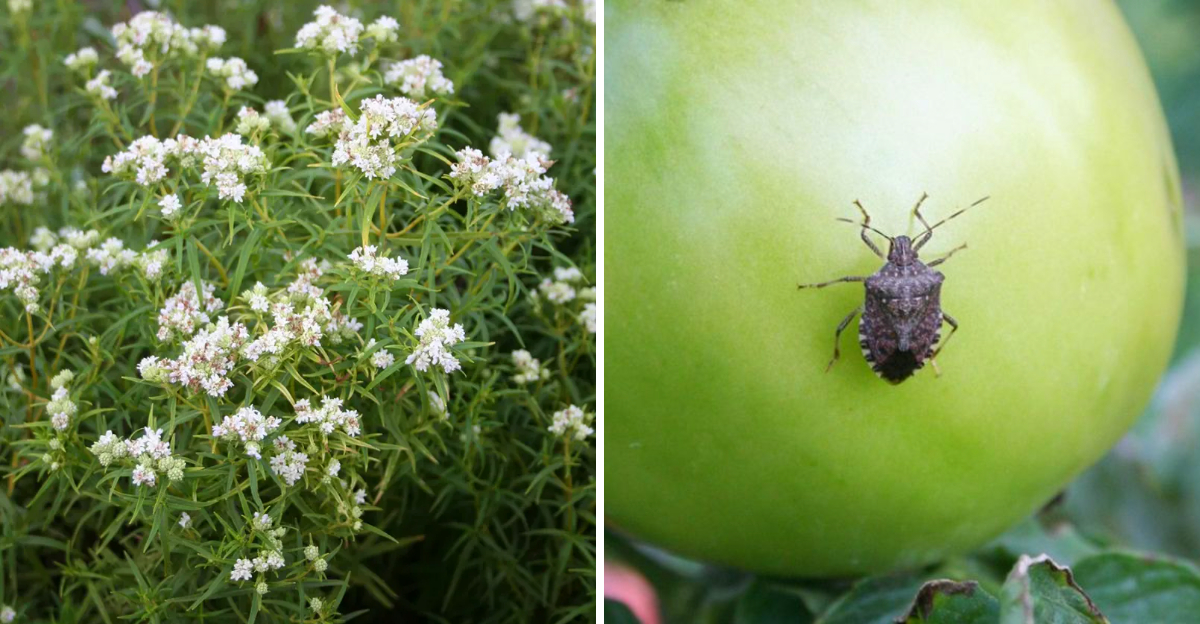
Stink bugs and North Carolina tomato beds are a frustratingly familiar combination, and if you have watched these pests work their way through a summer harvest you worked hard for, you already know how aggravating that can be.
Here is something worth adding to your garden strategy though: Narrowleaf Mountain Mint is a native perennial that has been quietly catching the attention of gardeners who want to bring more beneficial insects into their vegetable beds naturally.
Those tiny nectar-rich flowers pull in helpful wasps, predatory insects, and pollinators in numbers that can genuinely surprise you. Is it a guaranteed stink bug solution?
Absolutely not, and anyone telling you otherwise is overselling it. But as a way to support the natural enemies that already work hard in North Carolina gardens, this plant is worth taking seriously.
1. Narrowleaf Mountain Mint Supports Beneficial Insects
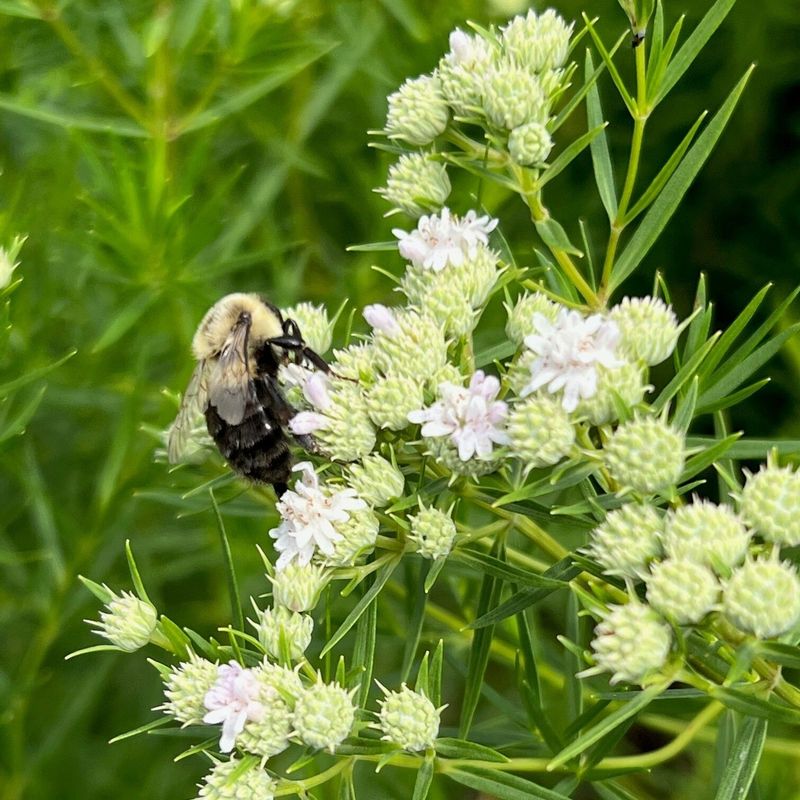
Walking along a sunny garden edge in late summer, you might notice clouds of small insects hovering over a low, silvery-leafed plant tucked beside a tomato bed.
That plant is often Narrowleaf Mountain Mint, a North Carolina native perennial that has a quiet but impressive ability to pull in a wide range of beneficial insects throughout the growing season.
Pycnanthemum tenuifolium, as it is known botanically, produces clusters of tiny white flowers that bloom from midsummer into early fall. Those small blooms are packed with accessible nectar, making them easy for many insects to use.
Beneficial wasps, predatory flies, and other helpful garden visitors are regularly spotted moving across the flower clusters.
For North Carolina gardeners managing backyard tomato beds or raised vegetable gardens, having plants nearby that attract beneficial insects can be a meaningful part of a balanced approach.
Narrowleaf Mountain Mint fits naturally into a sunny native border or pollinator strip without taking up much space.
It spreads gradually over time, filling in gaps and creating a steady insect habitat through the hottest months of the year.
The plant is low maintenance once established, which makes it especially appealing for homeowners who want to support garden biodiversity without adding a lot of extra work to their summer routine.
2. Stink Bug Control Starts With Natural Enemies
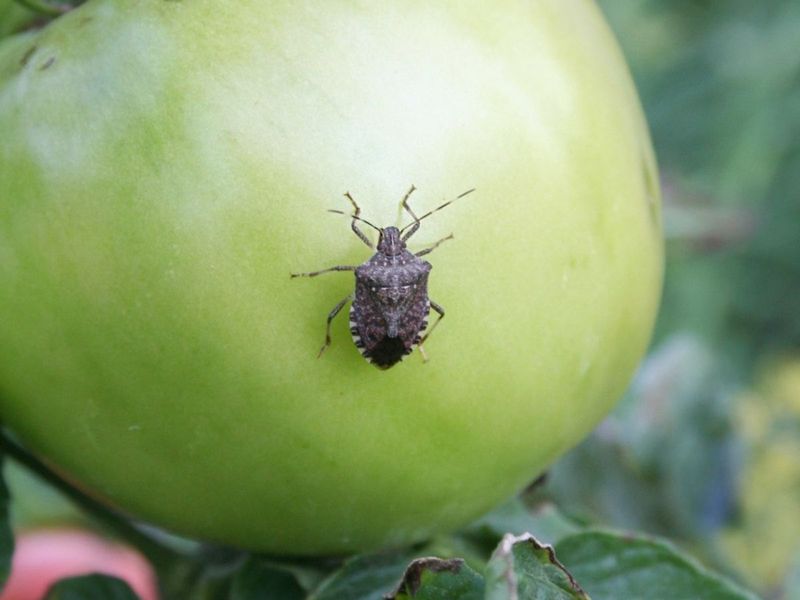
Feeding marks on ripe tomatoes can be one of the most frustrating sights in a North Carolina vegetable garden.
Brown marmorated stink bugs are among the most common culprits, and they have become a serious seasonal nuisance for home gardeners across the state since spreading into the region over the past two decades.
Managing stink bugs without relying heavily on sprays often comes down to understanding their natural enemies. Parasitoid wasps, predatory insects, and certain flies are among the organisms that can affect stink bug populations in natural settings.
These natural enemies do not eliminate stink bug pressure on their own, but supporting their presence near tomato beds can be one piece of a broader pest management approach.
Insectary plants, which are flowering plants grown specifically to attract and support beneficial insects, play a role in this kind of strategy. Narrowleaf Mountain Mint is one North Carolina native that fits this category well.
Your North Carolina Garden Changes Every Week. Your Plan Should Too.
Gardening in North Carolina changes quickly throughout the season. Every Friday you’ll receive a simple weekly plan showing exactly what to plant, prune, fertilize, harvest, and protect so you never miss the right timing.
Its blooms attract many of the same insect groups that researchers associate with stink bug natural enemies.
Gardeners who add insectary plantings near vegetable beds are not creating a barrier, but they may be creating conditions that encourage a more diverse and active insect community.
Regular scouting, row covers during peak pressure, and hand removal are still important tools for protecting North Carolina tomatoes from stink bug feeding.
3. Tiny Flowers Bring Helpful Wasps Close
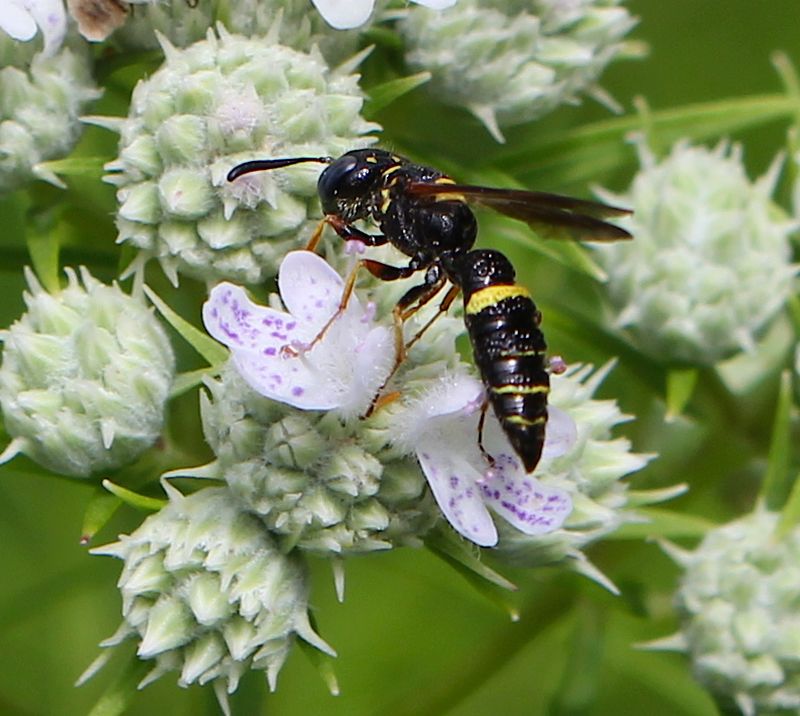
Small flowers often do the heaviest lifting in a pollinator or insectary planting. Many of the most useful wasps and beneficial flies have short mouthparts, which means they can only reach nectar in open, shallow flowers.
Narrowleaf Mountain Mint produces exactly that kind of bloom, and it does so in large quantities from midsummer through early fall.
Parasitoid wasps are among the insects most commonly observed on Narrowleaf Mountain Mint flowers. These wasps are tiny, often overlooked, and rarely bother humans.
They spend part of their time nectaring on flowers and part of their time searching for host insects to parasitize.
Some species in this group are known to target true bugs, including stink bugs and their relatives, making their presence near tomato beds a potentially useful thing for North Carolina gardeners to encourage.
Predatory wasps and hover flies also visit the blooms regularly. Hover fly larvae feed on aphids, while some predatory wasps hunt caterpillars and other soft-bodied insects.
The overall activity around a blooming patch of Narrowleaf Mountain Mint can be quite lively, especially on warm afternoons.
Planting it along a sunny border near your tomato bed gives these insects a reliable nectar source close to the area where you most want their presence.
Even a small clump of three to five plants can make a noticeable difference in the variety of beneficial insects moving through your garden space.
4. Sand Wasps Have A Stink Bug Connection
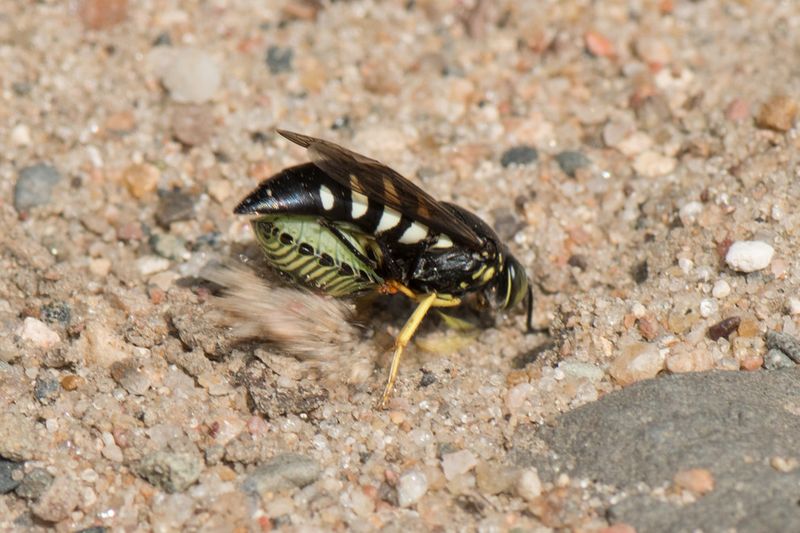
Among the many wasps that visit Narrowleaf Mountain Mint, sand wasps are some of the most intriguing for tomato gardeners to learn about.
These ground-nesting wasps are solitary hunters that provision their underground nests with paralyzed prey to feed their developing larvae.
What makes them especially interesting is the type of prey they sometimes choose.
Certain sand wasp species are known to hunt true bugs, a group that includes stink bugs. Research has documented sand wasps in the genus Bicyrtes capturing stink bugs and related insects to stock their nests.
While this does not mean that sand wasps will clear your tomato bed of stink bugs, their presence in and around the garden is a sign of a healthy, active insect community.
Sand wasps tend to nest in bare or sandy soil near open areas, which is something worth keeping in mind when managing North Carolina garden beds.
Narrowleaf Mountain Mint may attract sand wasps as a nectar source, and gardeners who leave some bare ground near their native plant borders may find that these wasps set up nests nearby.
Avoiding thick mulch right up to the edge of native plant strips can help.
Sand wasps are not aggressive and are generally safe to have around children and pets. Their role as hunters of true bugs makes them a welcome and underappreciated part of the natural garden community in North Carolina residential landscapes.
5. Tomato Beds Still Need Regular Scouting
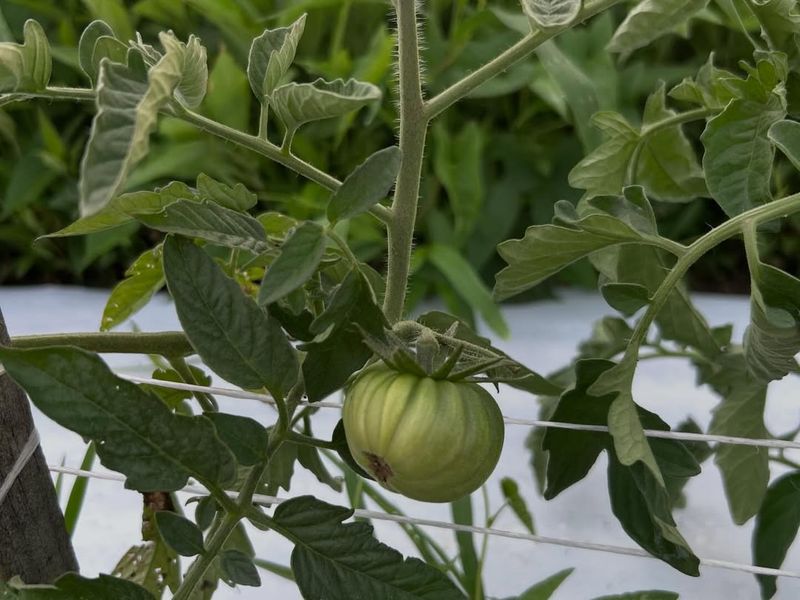
Even with a beautiful native plant border full of beneficial insects, stink bug pressure on North Carolina tomato beds does not go away on its own.
Scouting, which means regularly checking plants for pest activity and feeding damage, remains one of the most reliable tools a home gardener has for catching problems early and responding before they get worse.
Stink bugs tend to move into gardens from wooded edges and weedy areas, especially as temperatures rise in late summer.
Checking the undersides of tomato leaves for egg masses, looking at fruit for the cloudy, corky spots that signal stink bug feeding, and walking the bed a few times each week can help you catch an infestation before it causes major losses.
Early detection gives you more options for managing the problem with less intervention.
Physical removal by hand, using a container of soapy water to collect bugs, is one of the most practical approaches for backyard tomato growers in North Carolina. Row covers can protect plants during peak stink bug pressure if applied carefully.
Insectary plantings like Narrowleaf Mountain Mint support the broader insect community, but they work best as one part of a layered approach rather than a standalone solution.
Gardeners who combine regular scouting with native plant support and physical controls tend to report more manageable pest pressure over the course of the growing season.
6. Flowers Work Better As Insectary Plants
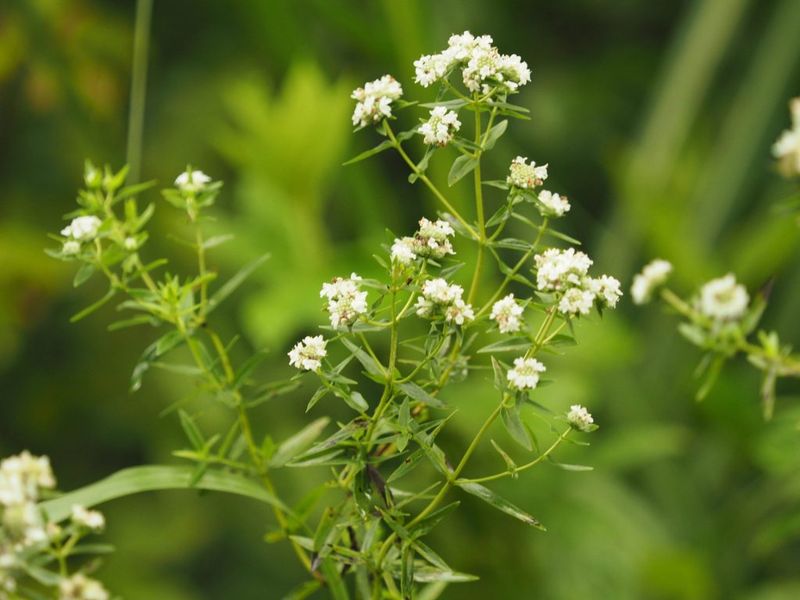
One of the most common misunderstandings in garden pest management is the idea that certain plants repel specific pests.
Gardeners sometimes plant companion flowers hoping to push insects away from vegetables, but the science behind true repellent effects is often thin.
Narrowleaf Mountain Mint works very differently, and understanding that difference helps you get the most out of planting it near your tomatoes.
Rather than pushing pests away, insectary plants pull beneficial insects in. Narrowleaf Mountain Mint does this exceptionally well because its flowers are abundant, long-blooming, and easy for many insect types to access.
The goal is not to create a wall between your tomatoes and stink bugs, but to make your garden a more attractive place for the insects that naturally hunt or parasitize pest species.
Over time, a garden that consistently supports beneficial insects may experience a more balanced pest dynamic.
North Carolina gardeners who treat Narrowleaf Mountain Mint as an insectary plant rather than a repellent tend to have more realistic expectations and better outcomes.
Placing it along the sunny edge of a vegetable bed, mixing it with other native bloomers like goldenrod or wild bergamot, and letting it naturalize over a few seasons can build a more diverse beneficial insect community.
The plant thrives in full sun and adapts well to the clay and loam soils common across much of North Carolina, making it a practical and low-effort addition to most backyard vegetable gardens.
7. A Native Border Can Support Garden Balance
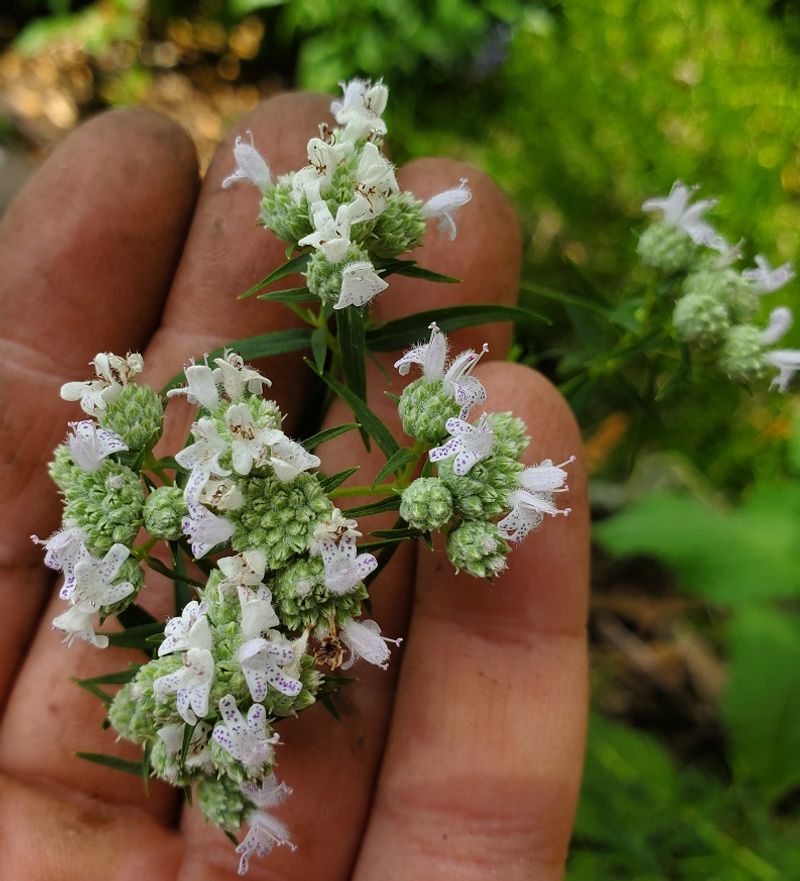
Buzzing garden edges filled with native plants can feel like a completely different world from a bare lawn or a mulched border with a few ornamental shrubs.
When North Carolina gardeners plant a strip of native perennials along the sunny side of a vegetable bed, they create a kind of living habitat that supports many kinds of insects throughout the growing season.
Narrowleaf Mountain Mint pairs well with other North Carolina natives in a mixed border. Goldenrod, wild bergamot, purple coneflower, and black-eyed Susan all bloom at different times and attract overlapping but distinct groups of beneficial insects.
A diverse native border provides nectar and habitat from spring through fall, which means beneficial insects have reasons to stay close to your garden rather than moving on when one plant finishes blooming.
For homeowners with small yards or raised bed gardens, even a narrow strip of native plants along one edge of the bed can make a meaningful contribution.
Native borders do not require heavy maintenance once established, and they tend to improve over time as the plants spread and fill in naturally.
Supporting a balanced insect community is a long-term investment rather than a quick fix, but North Carolina gardeners who commit to it often notice more predatory insects, more pollinators, and a greater sense of activity and life in the garden space overall.
Narrowleaf Mountain Mint is a strong starting point for building that kind of living border.
8. This Plant Supports Helpers, Not Repellent Control
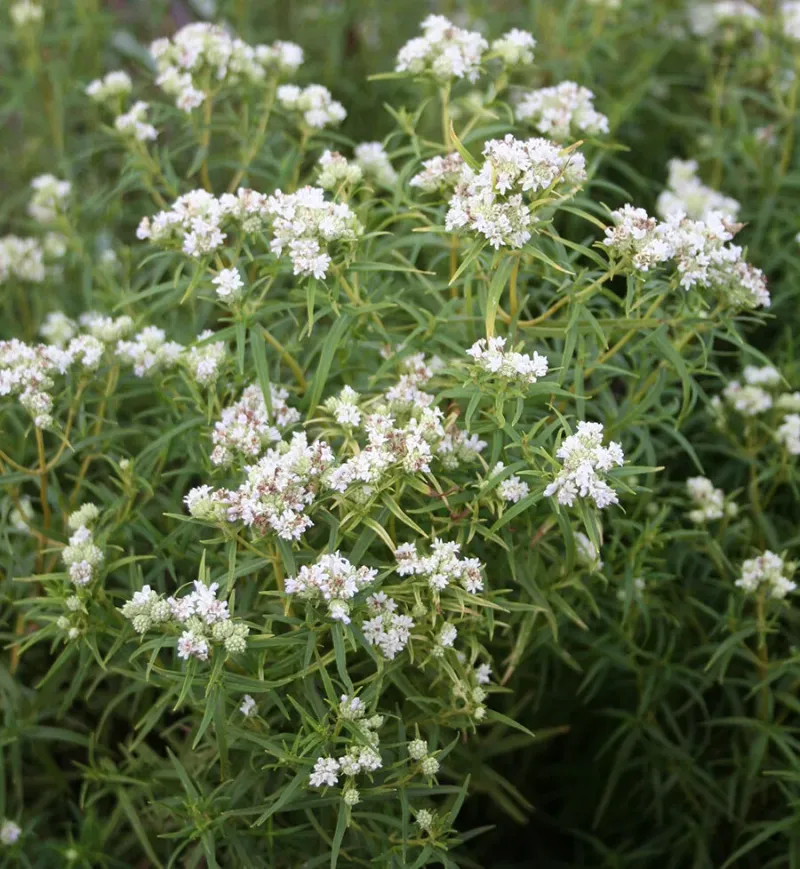
Narrowleaf mountain mint is useful near tomato beds because it supports helpful insects, not because it forms a shield around your plants.
Stink bugs can still find tomatoes, especially during warm North Carolina summers when fruit is sizing up and garden edges are full of activity.
The value of this native perennial is more subtle. Its small clustered flowers attract many pollinators and beneficial insects, including bees and wasps, and those insects are part of a healthier garden system.
NC State notes that stink bug management can involve natural helpers such as predators and parasitoids, while its plant database lists narrowleaf mountain mint as attractive to native bees, bumblebees, and honey bees.
That means the plant works best as part of an insectary border, not as a quick fix. Place it near the edge of a sunny tomato bed where it has good drainage and enough room to settle in.
Let the flowers do their work, but keep scouting your tomatoes for feeding marks, egg clusters, and young bugs. If you see stink bugs, remove them by hand when practical and protect plants with other sound garden practices.
Mountain mint can support the helpers, but the gardener still needs to stay involved.