Common Backyard Mushrooms Every Oregon Homeowner Should Know Before Touching Them
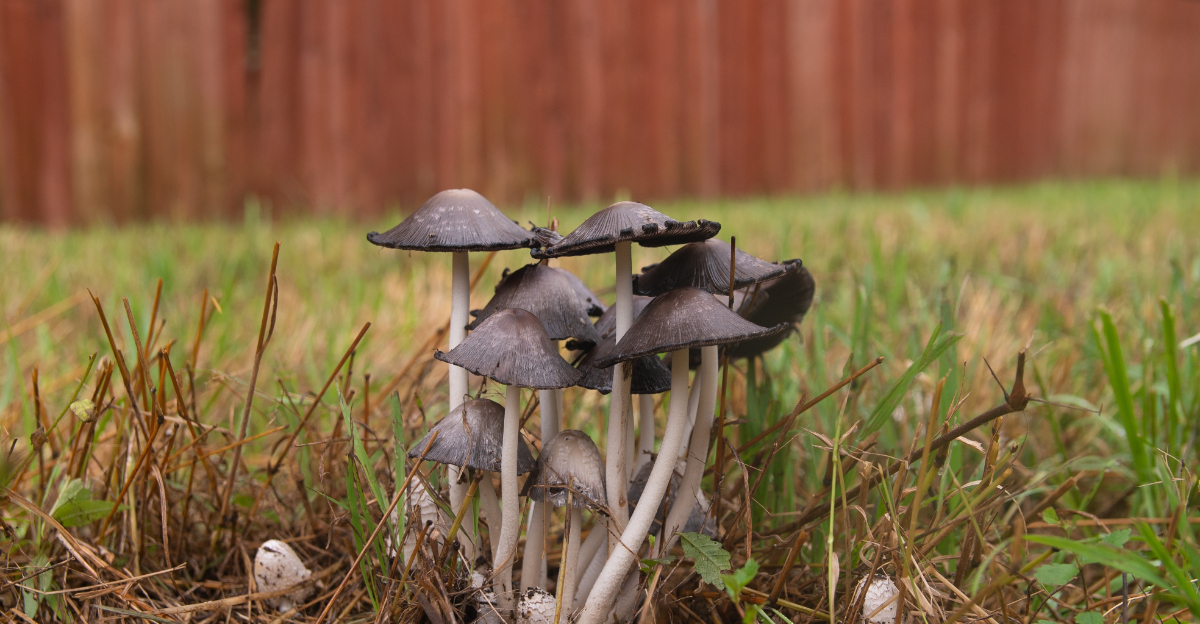
Backyard mushrooms can appear after rain with almost no warning. A bare patch of soil suddenly hosts strange caps that look harmless, curious, or straight out of a fairy tale.
That last impression can be misleading. Oregon’s damp conditions support many kinds of fungi, and several common species look remarkably similar at first glance. Color alone rarely settles the question.
Even experienced gardeners can pause before they reach for one. The safest response is simple: admire first, identify second, and keep bare hands out of the experiment. Pets and children make that caution even more important.
Some mushrooms play a useful role beneath the surface, while others deserve a much wider berth.
Knowing the common backyard types can help homeowners react without panic and avoid a careless touch that turns an interesting discovery into a dangerous mistake.
1. Lawn Mushrooms Are Not Automatically Safe
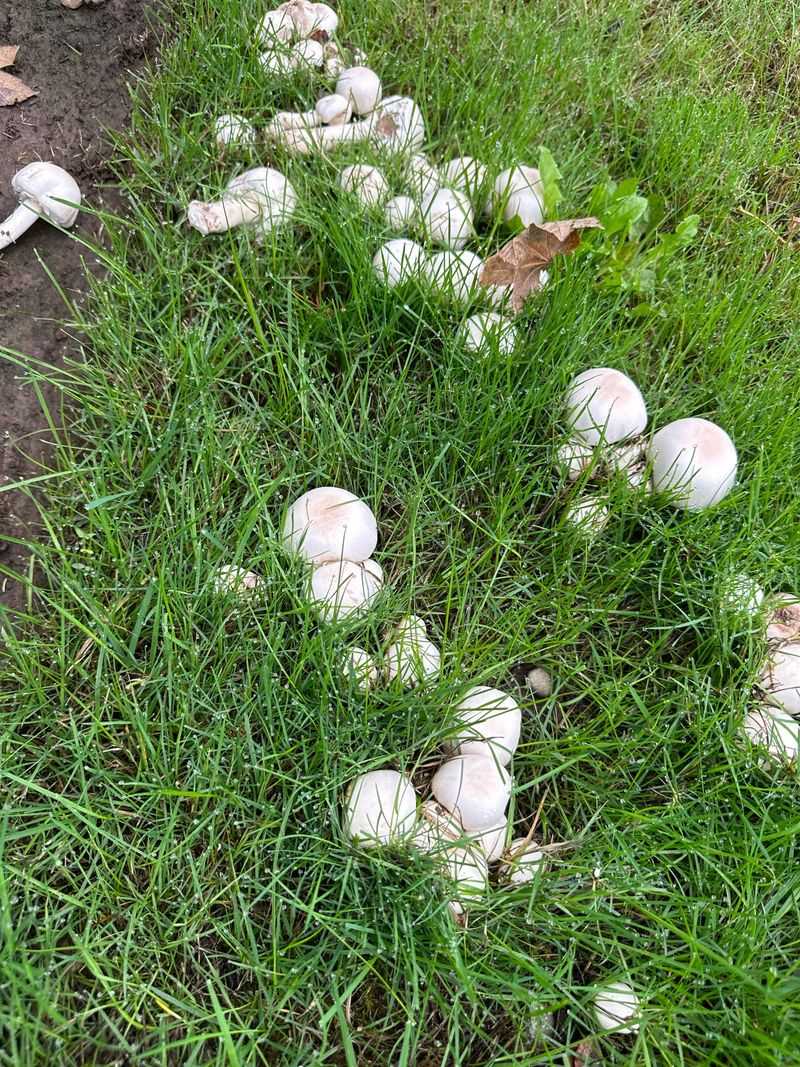
Finding mushrooms scattered across your grass after a rainy week is one of the most common yard surprises in the Pacific Northwest. Many homeowners assume that if a mushroom is growing in the lawn, it must be harmless.
That assumption can lead to real trouble, especially for young children and pets who explore with their hands and mouths.
Lawn mushrooms come in dozens of shapes and colors. Some are edible species that foragers actually seek out.
Others, however, contain toxins that can cause stomach pain, vomiting, or worse reactions. The tricky part is that many harmful species look almost identical to safe ones at first glance.
Even experienced foragers sometimes make mistakes.
Your best starting point is to never let kids or pets near any mushroom you have not confidently identified. Take a photo and compare it to a reliable field guide or app.
Local mycological societies in Oregon often hold free identification events, which can be a great resource. If you want to remove lawn mushrooms, wear gloves and dispose of them in a sealed bag.
Pulling them out does not stop future growth since the fungal network lives underground. To reduce mushroom growth long-term, improve lawn drainage, rake up organic debris regularly, and avoid overwatering.
Mushrooms are a sign that your soil is doing something right, but that does not mean you have to leave them there.
2. Little Brown Mushrooms Deserve Extra Caution
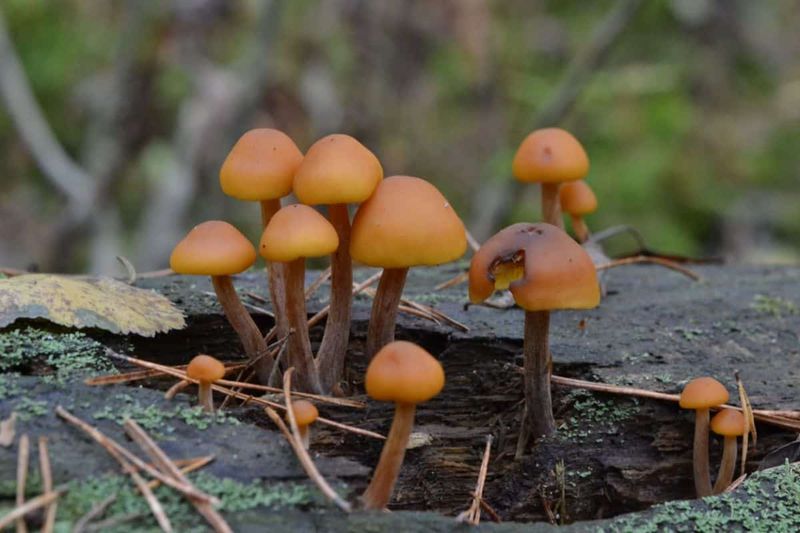
Mycologists have a nickname for a whole group of species that confuse even the pros: LBMs, which stands for Little Brown Mushrooms. These small, nondescript fungi show up in lawns, garden beds, and wooded edges across Oregon.
They are among the hardest mushrooms to identify correctly, even with a field guide in hand.
What makes LBMs so tricky is that they all look remarkably similar. They tend to have brown caps, slender stems, and gills underneath.
The differences between a harmless species and a toxic one can come down to tiny details like gill color, spore print shade, or the texture of the cap surface. Without close examination and real expertise, telling them apart is nearly impossible for most people.
Your Oregon Garden Changes Every Week. Your Plan Should Too.
Gardening in Oregon changes quickly throughout the season. Every Friday you’ll receive a simple weekly plan showing exactly what to plant, prune, fertilize, harvest, and protect so you never miss the right timing.
Some LBMs belong to the Galerina genus, which contains species known to be seriously harmful. These can grow right alongside harmless brown mushrooms, making casual identification a risky game.
Never taste or handle an unfamiliar small brown mushroom to test it. The safest rule is simple: if it is small, brown, and unidentified, leave it alone completely.
If you have children who play in areas where these mushrooms grow, consider removing them with gloves and checking that spot regularly after wet weather.
Keeping a close eye on these overlooked fungi is one of the smartest habits a homeowner in this region can build.
3. Ink Caps Appear Fast After Rain
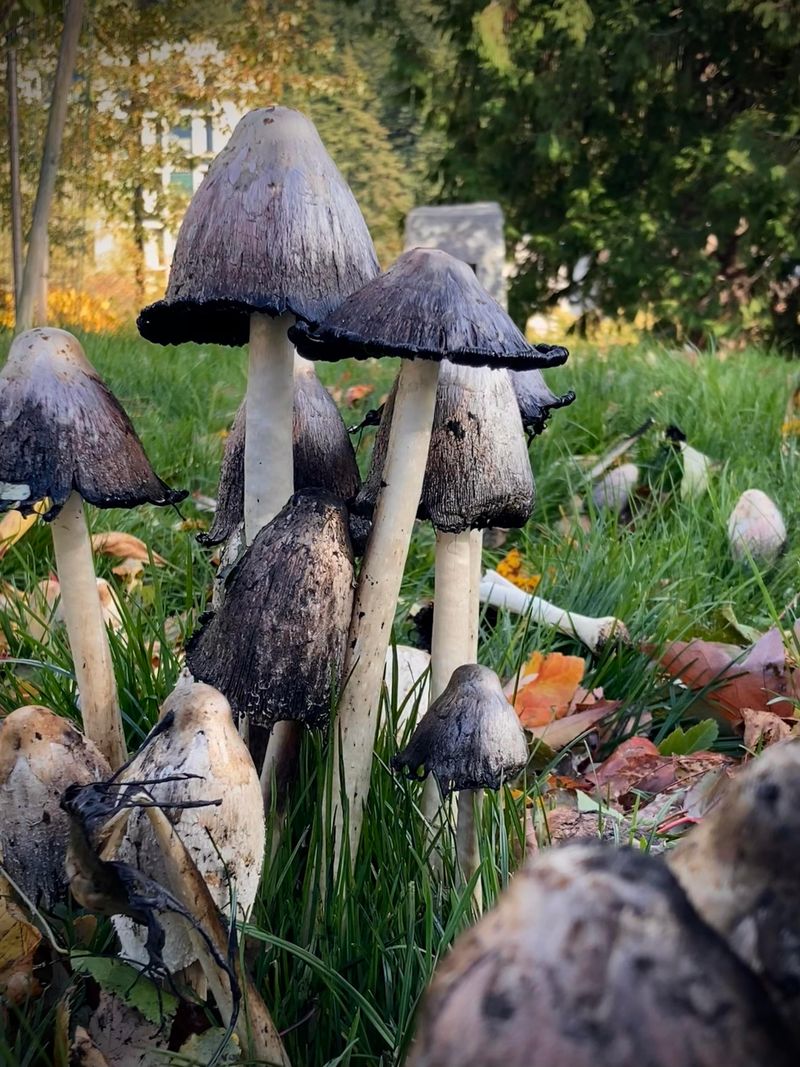
Few mushrooms appear and vanish as dramatically as ink caps. After a good rain, these fungi can push up through lawns and garden edges almost overnight.
Within just a day or two, their caps begin to liquefy from the edges inward, turning into a dark, inky fluid. It is one of the most striking and unusual things you will see growing in your yard.
Ink caps belong to a group called Coprinoid mushrooms. Several species in this group grow commonly in residential yards.
The shaggy mane, one of the most recognized ink caps, has a tall white cap that looks a bit like a closed umbrella.
It is actually considered edible by many foragers, but only when harvested very young before the dissolving process begins.
Here is something important to know about ink caps: certain species in this group contain a compound that reacts badly with alcohol. Eating them and then drinking alcohol within a couple of days can cause unpleasant physical reactions.
This reaction does not happen with all ink cap species, but it is common enough to take seriously.
For homeowners who are not experienced foragers, the smartest move is to admire ink caps from a distance and skip the idea of eating them.
They are fascinating to watch but complicated enough to warrant real caution. Remove them if pets or children are nearby, and always use gloves when handling any unfamiliar mushroom.
4. Amanitas Are The Ones To Respect Most
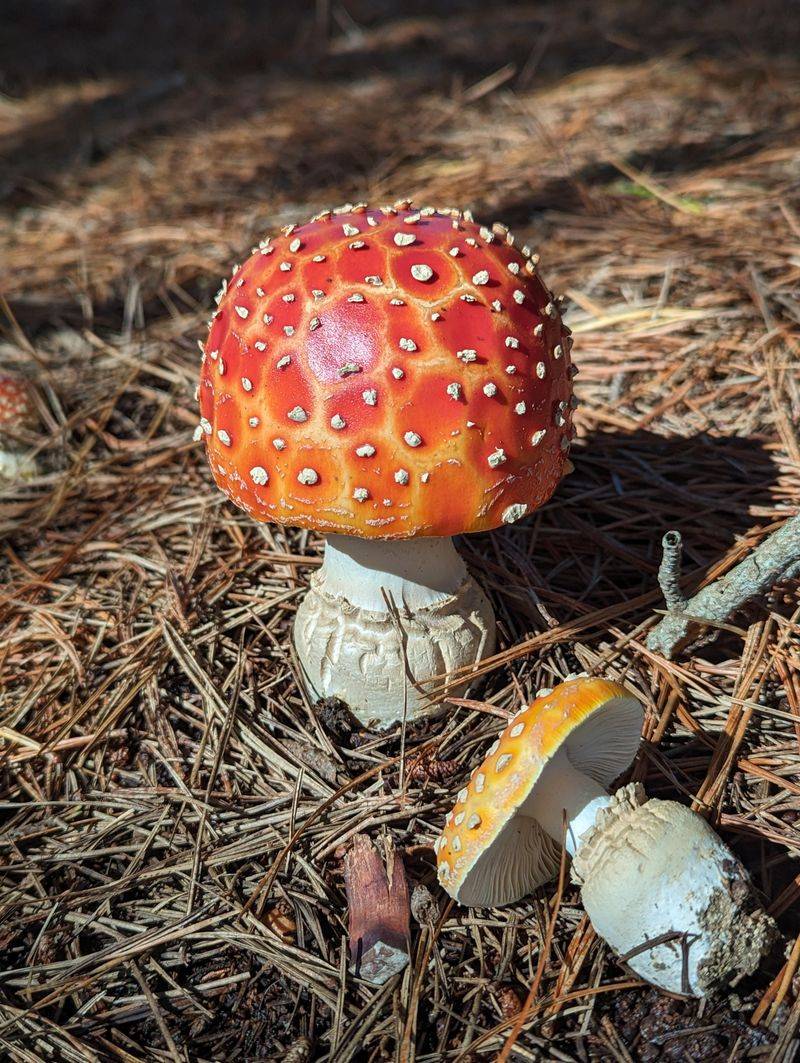
If there is one mushroom group that every homeowner in this region should learn to recognize, it is the Amanitas.
This genus includes some of the most beautiful and also most hazardous mushrooms found in North American yards and forests.
Learning to spot the key features of an Amanita could make a serious difference for your household.
Amanitas have a distinctive look once you know what to search for. Many have a ring around the upper part of the stem, called an annulus.
At the base of the stem, there is often a cup-like structure called a volva, which sits just below or at the soil line. The cap can range from pure white to yellow, green, or brown depending on the species.
Some Amanitas are completely harmless, but others are among the most toxic fungi known to science.
The destroying angel, which is white and elegant-looking, and the Amanita phalloides, which can have a greenish-yellow cap, are both Amanita species found in parts of the Pacific Northwest.
They look innocent, even attractive, which is exactly why they catch people off guard.
Never pick a white or pale mushroom from your yard without expert confirmation. Even touching the gills or flesh and then rubbing your eyes or mouth can transfer harmful compounds.
Teach children to stay away from any mushroom with a ring on the stem. When in doubt, photograph it and contact a local mycological society for identification help.
5. Puffballs Need More Than A Quick Look
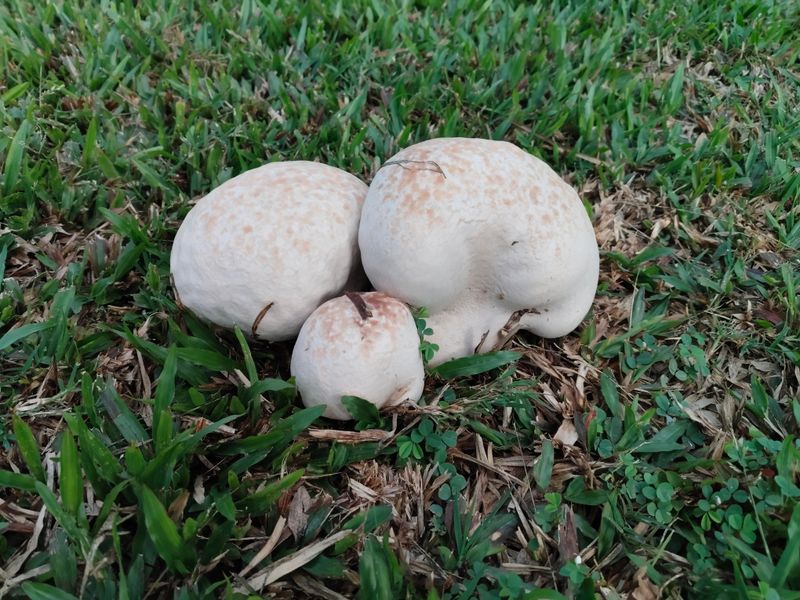
Puffballs have a fun, round appearance that makes them seem totally harmless. Kids especially love to stomp on mature ones and watch the brown spore cloud puff out.
But before anyone picks or eats a puffball from the yard, there are a couple of important checks that absolutely need to happen first.
True puffballs, when sliced in half from top to bottom, should be completely pure white and solid inside. That solid white interior is the key sign that it is a genuine puffball and not something else.
If you cut it open and see any outline of a cap, gills, or a yellow or purple tint, stop immediately.
That could be a button-stage Amanita, which looks like a small egg underground before it opens up into a full mushroom.
Mistaking an immature Amanita for a puffball is one of the most common and serious errors backyard foragers make.
Even experienced foragers always cut puffballs open before consuming them, every single time, without exception.
Puffballs also vary in size from marble-sized to as big as a basketball. Giant puffballs, which can grow quite large, are found in open areas and meadows across Oregon.
If you are not completely certain about what you have found, do not eat it. Enjoy puffballs for their quirky appearance, take photos, and leave the foraging decisions to people with real hands-on training in mushroom identification.
6. Stinkhorns Look Alarming But Break Down Fast
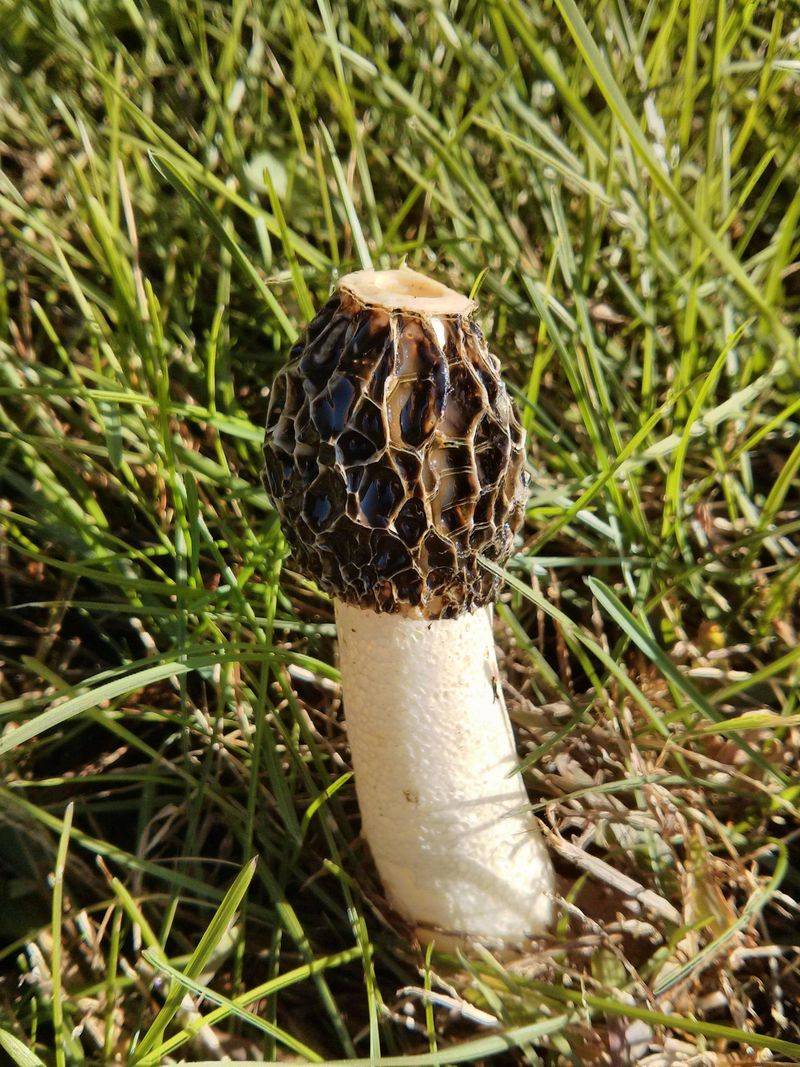
The first time most homeowners see a stinkhorn mushroom, they do a double take. These fungi have some of the most unusual shapes in the mushroom world, and they come with a powerful, unpleasant smell that is hard to ignore.
Despite how alarming they look and smell, stinkhorns are not harmful to touch, and they break down quickly on their own.
Stinkhorns use their foul odor as a clever strategy. The smell attracts flies and other insects, which land on the sticky spore mass at the top of the mushroom.
The insects pick up spores on their bodies and carry them elsewhere, spreading the fungus to new locations. It is a very effective system, even if it makes your garden smell unpleasant for a day or two.
Common stinkhorn species found in residential yards include the latticed stinkhorn and the common stinkhorn. They often start as small white eggs just below the soil surface in mulched beds or near rotting wood.
You can remove them at the egg stage by digging them out with a gloved hand, which will spare you the smell.
Once they have fully opened, they tend to collapse and decompose within a day or two on their own.
There is no need to treat your soil or panic when stinkhorns appear. They are temporary visitors that signal healthy decomposition happening underground, which is actually a good sign for your garden.
7. Shelf Fungi Mean Wood Is Decaying
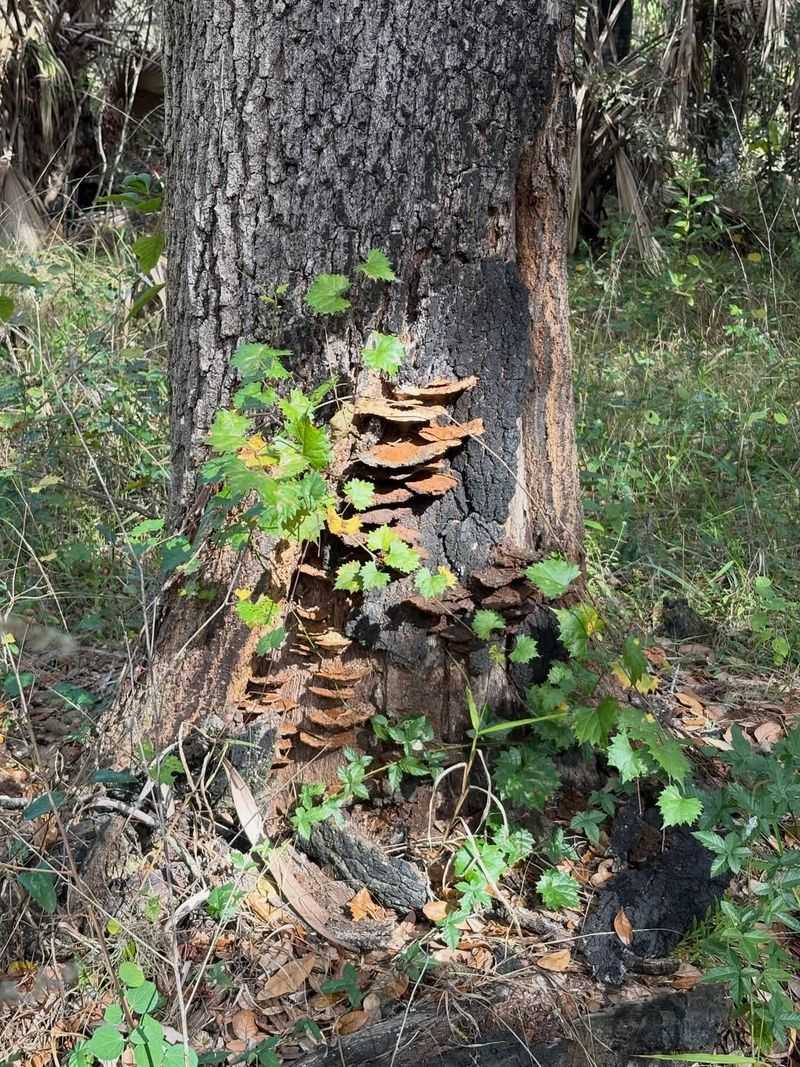
Walk around the trees in your yard after a wet season and you might spot something unexpected: flat, layered growths jutting out from the bark like little shelves.
These are called shelf fungi, or bracket fungi, and they are a reliable sign that the wood beneath them is breaking down.
Finding them on a tree you care about is worth paying attention to.
Shelf fungi do not start the decay process themselves. By the time you see them on a tree, the wood inside has usually already been decomposing for some time.
The visible bracket is just the fruiting body of a much larger fungal network that has been working through the wood for months or even years.
Some species cause white rot, others cause brown rot, and each type affects wood differently.
For homeowners, the real concern is structural safety. A tree with significant shelf fungus growth may have internal wood that is soft, hollow, or unstable.
This can become a hazard, especially in windstorms, which are common in northern and coastal regions of Oregon.
It is a smart move to have a certified arborist assess any tree showing bracket fungus growth, particularly if it is near your home, a fence, or a play area.
On logs and stumps, shelf fungi are completely normal and harmless. They are actually doing important work by breaking down withered wood and returning nutrients to the soil over time.
8. Mushrooms In Mulch Signal Hidden Moisture
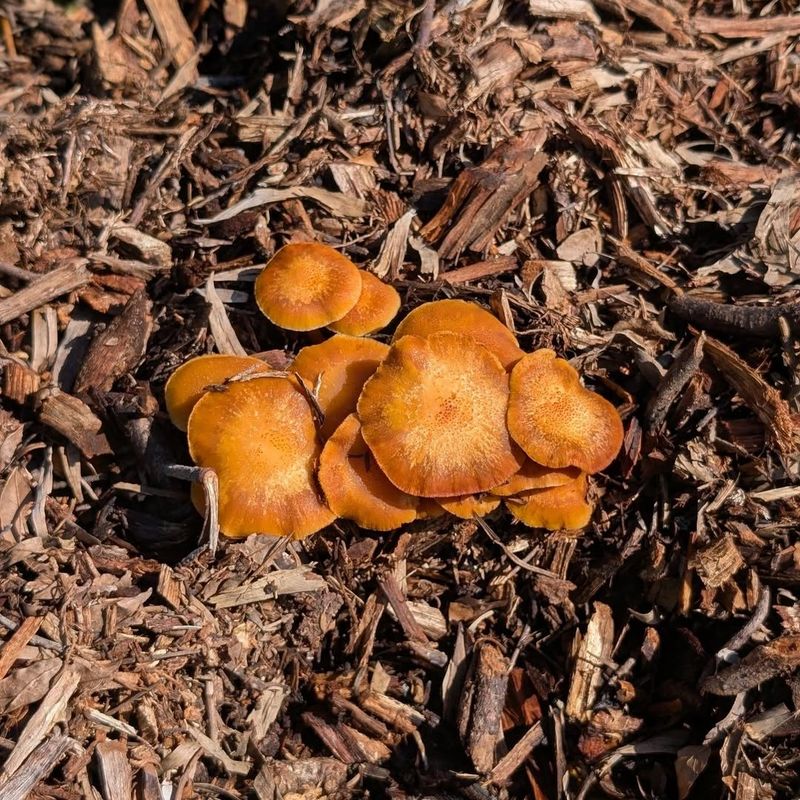
Freshly mulched garden beds are one of the most common places to find unexpected mushroom growth in residential yards.
If you have recently laid down wood chip mulch and noticed clusters of mushrooms popping up, you are definitely not alone.
Mulch provides exactly the kind of moist, organic-rich environment that fungi thrive in.
The fungi growing in your mulch are usually decomposers doing useful work. They break down the wood chips and other organic material, which eventually enriches the soil beneath.
Most mulch mushrooms are not considered harmful to the garden itself. In fact, the fungal activity helps speed up the composting process and adds beneficial structure to the soil over time.
That said, the mushrooms themselves can still be a concern if children or pets are around.
Artillery fungus is one notable mulch species that causes problems, not because it is toxic, but because it shoots tiny sticky spore masses onto nearby surfaces like siding, cars, and windows.
These dark specks are very difficult to remove once they dry. To reduce mushroom growth in mulch, turn the mulch regularly to disrupt the fungal network and allow it to dry out.
Avoid piling mulch too thick, and keep it away from your home’s foundation where moisture tends to collect.
Switching to a different mulch type, like rubber or gravel, in high-problem areas can also help reduce the recurring growth you see season after season.
9. Fairy Rings Can Mark Fungal Growth Below
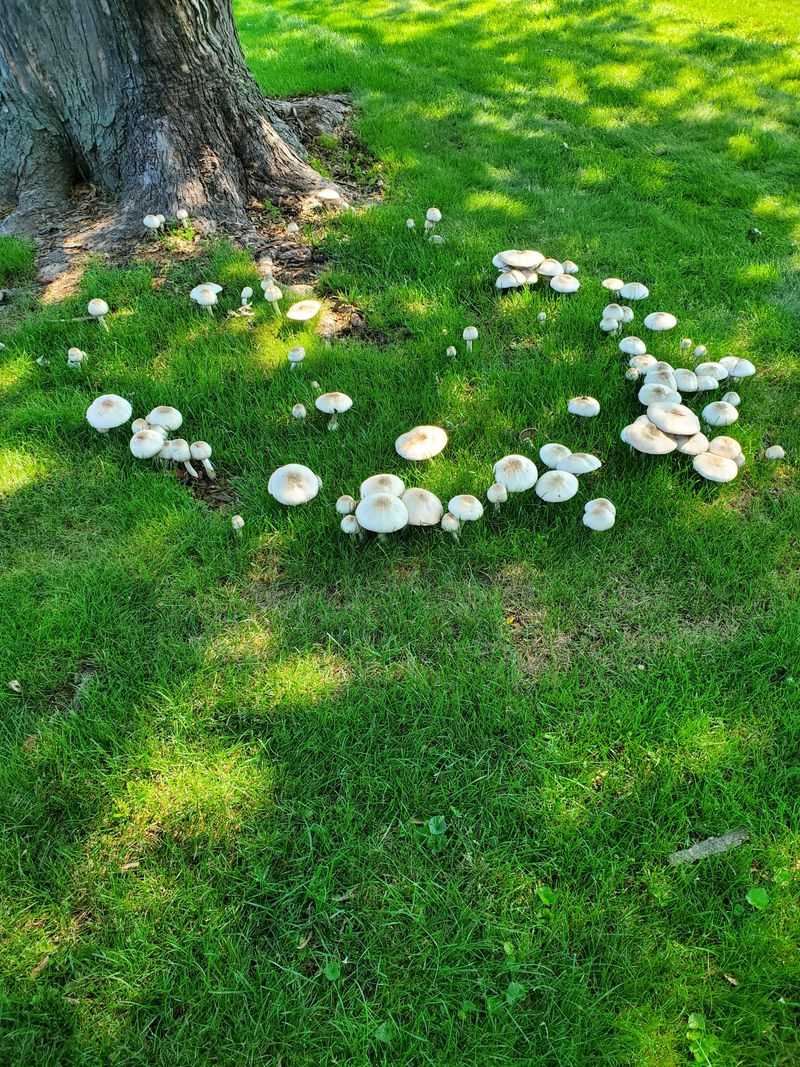
One of the most visually striking things you can spot in a lawn is a perfect circle of mushrooms or a ring of darker, greener grass. These are called fairy rings, and they have inspired folklore for centuries across many cultures.
In reality, they are the visible result of a fungal colony expanding outward underground in all directions from a central point.
Fairy rings form when a single fungal organism spreads through the soil in a circular pattern. As it grows outward, the edges of the circle produce mushrooms each season.
The grass inside or along the ring often looks greener and thicker because the fungal activity breaks down organic matter and releases nitrogen into the soil.
Sometimes the grass just inside or outside the ring turns brown and thin because the fungus is pulling moisture away from the roots.
Fairy rings can be tricky to get rid of completely. Because the fungal network lives deep in the soil, surface treatments rarely reach the source.
Aerating the lawn and improving drainage can help slow the spread. Watering deeply and consistently may reduce the brown patch effect on the grass.
The mushrooms that appear along the ring should be removed promptly, especially if children or pets use the lawn regularly.
Many fairy ring mushrooms are harmless, but some species that form rings can cause stomach upset if eaten.
When a ring appears, treat it as a signal that something active is happening well beneath the surface of your yard.