The Flower Combos North Carolina Gardeners Plant At The Mailbox To Make The Whole Front Yard Look Polished
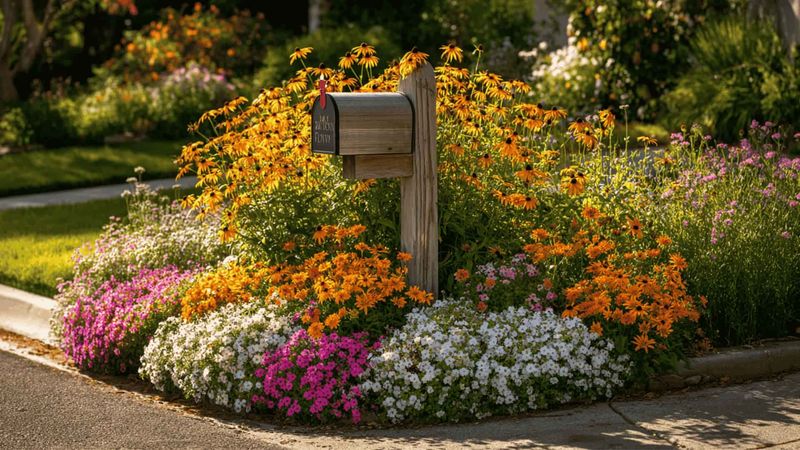
You pull into the driveway after work, headlights sweeping across the yard, and the one thing that catches your eye is the mailbox post. Right now it is bare, or maybe wrapped in one sad clump of something that quit blooming in June. Here is the good news. In North Carolina, a smart pairing of two or three plants around that post can pull the whole front yard together, and most of these combos shrug off our muggy summers and surprise cold snaps.
Below are the flower combinations Piedmont and Coastal Plain gardeners lean on to make the entrance look finished, feed a few pollinators, and skip the constant fussing.
1. Purple Coneflower And Black-Eyed Susan

Drive through any Piedmont neighborhood in July and you will spot this pair holding down a mailbox like it owns the corner. Purple coneflower (Echinacea purpurea) throws up daisy-shaped blooms with a copper cone center, and black-eyed susan (Rudbeckia hirta) answers with gold petals right beside it. The purple and yellow sit across the color wheel from each other, so they pop instead of blend.
What surprises folks is how tough both are once rooted. They handle red clay, they laugh at August heat, and they keep going with almost no water after the first few weeks. NC State Extension lists both as reliable natives for our zones 7a through 8a.
Plant three coneflowers and three susans in a loose ring about 18 inches out from the post, spacing each plant 12 to 15 inches apart. Do this in spring after the last frost, usually mid-April in the Piedmont. Both stand knee to hip high, so they hide the ugly post base without swallowing the mailbox door.
Leave the seed heads standing into fall. Goldfinches genuinely work them over all winter, and you get a little bird show from the porch. Two plants, one polished corner, and a snack bar for the neighborhood finches.
2. Daylilies With Creeping Phlox At The Base
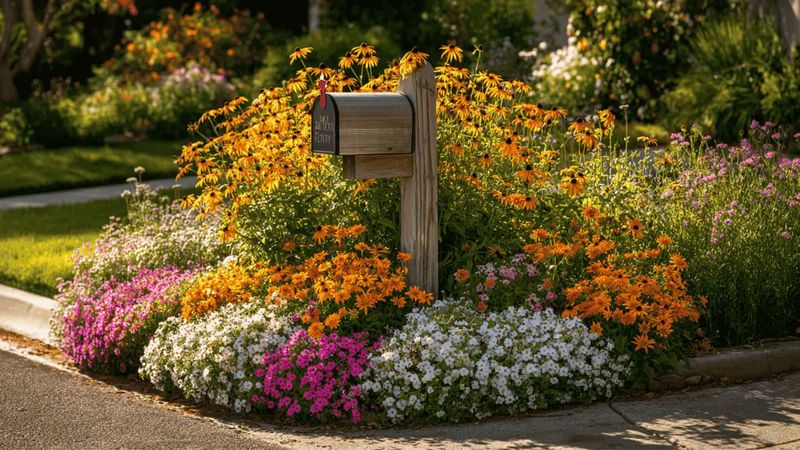
Picture the mailbox in April, then again in June, and imagine color both times without lifting a finger between. That is the trick this layered combo pulls off. Creeping phlox (Phlox subulata) forms a low mat that explodes into pink or lavender flowers in early spring, then daylilies (Hemerocallis) rise above it and bloom hard through summer.
The reason this works so well is timing. Phlox peaks in March and April while the daylily foliage is still short, so the base stays covered. Then daylilies take the spotlight from May into July when the phlox has faded to plain green groundcover.
Set daylilies about 18 to 24 inches apart in a half-circle behind the post, then tuck phlox plugs 10 inches apart across the front edge where they can spill toward the road. Both take our clay and both handle full sun, which most mailbox spots get in spades.
Reblooming daylily types like Stella d’Oro keep flowering into September if you snap off spent blooms once a week. And the phlox mat crowds out weeds, so you spend less time on your knees pulling crabgrass by the curb.
Your North Carolina Garden Changes Every Week. Your Plan Should Too.
Gardening in North Carolina changes quickly throughout the season. Every Friday you’ll receive a simple weekly plan showing exactly what to plant, prune, fertilize, harvest, and protect so you never miss the right timing.
3. Lantana Paired With Trailing Sweet Potato Vine
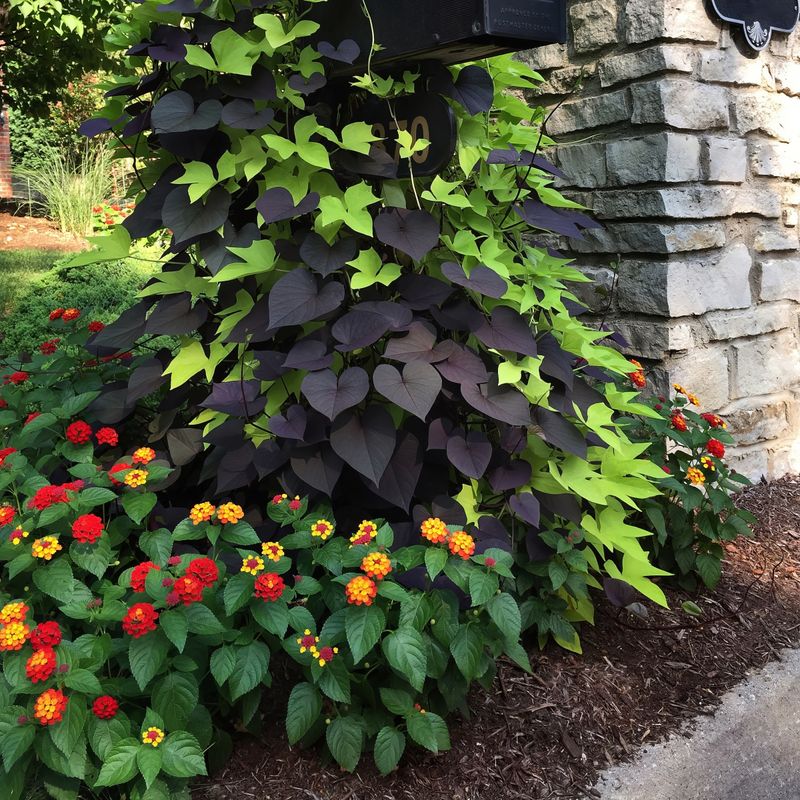
Flea beetles and Japanese beetles chew through half the yard by July, but they mostly leave this duo alone. Lantana (Lantana camara) puts out clusters of tiny flowers in fire-orange, yellow, or hot pink, and it does not flinch when the thermometer hits 95 degrees. Sweet potato vine (Ipomoea batatas) trails below it in chartreuse or deep purple leaves, softening the hard line of the post.
Heat is the whole story here. Coastal Plain gardeners with sandy soil and brutal afternoon sun rely on lantana because it blooms harder the hotter it gets, and it barely sips water once established. Butterflies and hummingbirds work it constantly, so the mailbox turns into a little pollinator stop.
Plant one lantana per side of the post, spacing them 24 inches apart, and add two sweet potato vines at the front to cascade toward the mulch. Wait until soil warms past 65 degrees, usually early May, since both sulk in cold ground.
Most lantana here dies back in a cold snap but returns from the roots by late spring in zones 7b and warmer. It is not a magic solution for a frozen winter, so treat it as a bold summer show. Come August, it is still going strong while everything else looks tired.
4. Knock Out Roses Underplanted With Catmint
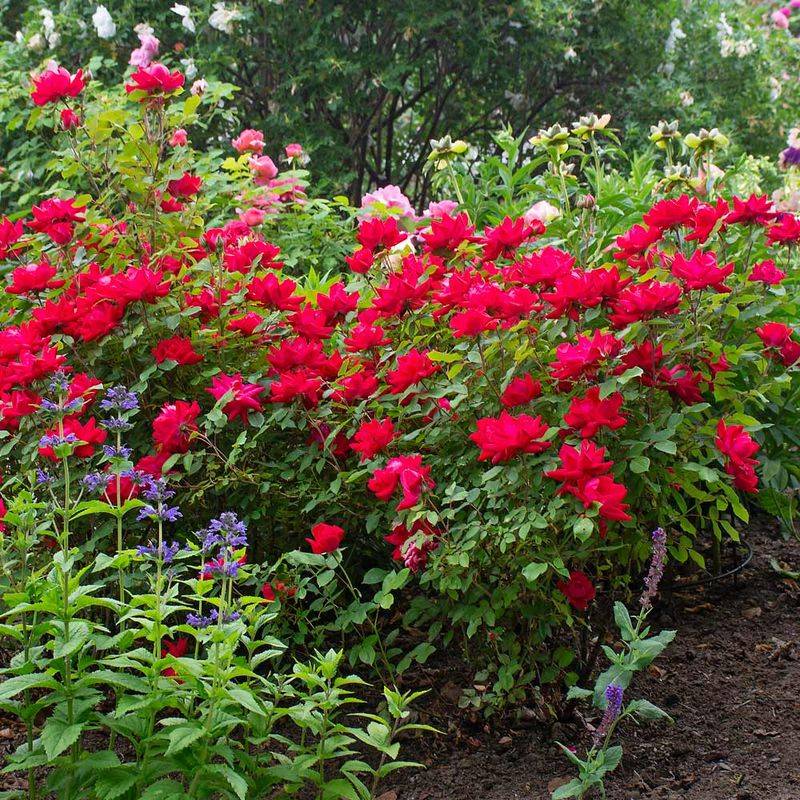
You want the mailbox to look like someone actually cares, without spraying roses every weekend. Knock Out roses (Rosa Radrazz) deliver that, blooming in waves from April clear to frost with almost no disease fuss. Underneath, catmint (Nepeta faassenii) sends up a haze of soft purple-blue spikes that cools down all that red or pink.
Here is where it gets easy. Old-fashioned roses beg for pruning and fungicide, but Knock Outs shrug off blackspot that plagues NC humidity. Catmint fills the awkward gap at the base where soil shows, and it repels a few nibbling pests with its minty oils.
Set one Knock Out about 2 feet behind the post so it does not block the door, then ring the front with three catmint plants spaced 15 inches apart. Both want full sun and drain well, so amend heavy clay with a couple inches of compost at planting.
Shear the catmint back by half after its first bloom in June and it flushes again by July. The rose asks for one hard prune in late February, cut to about knee height. That is the whole chore list, and the corner reads polished from the road all season.
5. Salvia And Coreopsis For Nonstop Color
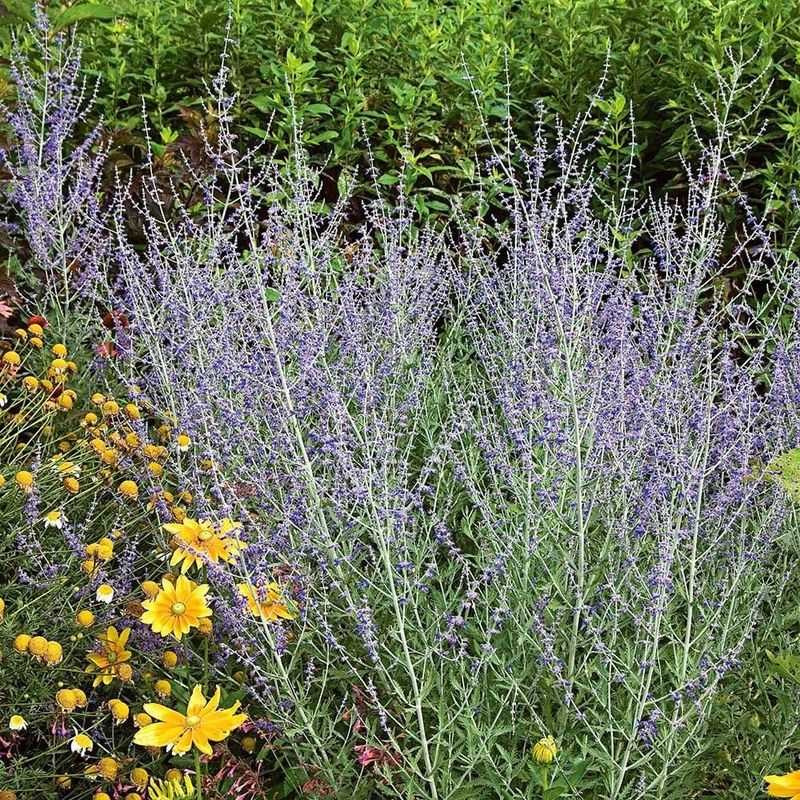
Some mailbox beds run out of steam by midsummer, going all green and dull right when company comes over. Pairing salvia with coreopsis keeps the color flag flying from spring into fall. Perennial salvia (Salvia nemorosa) sends up spiky purple wands, and threadleaf coreopsis (Coreopsis verticillata) scatters little gold stars through fine, ferny leaves.
The contrast is what makes it read as designed rather than accidental. Tall purple spikes against low mounds of yellow give the eye a rhythm, and both are drought-tough natives or near-natives that thrive across the Piedmont and Sandhills.
Plant salvia in a back row spaced 18 inches apart, then a front row of coreopsis 15 inches apart so the gold spills forward over the mulch edge. Do this in April, and water twice a week the first month while roots settle into our clay.
Cut both back by a third after the first flush and they rebloom within two weeks. Bumblebees genuinely swarm the salvia, so pause a second before you reach in the mailbox on a warm morning. The reward is a corner that never goes quiet from May to October.
6. Annual Vinca Ringed With Sweet Alyssum
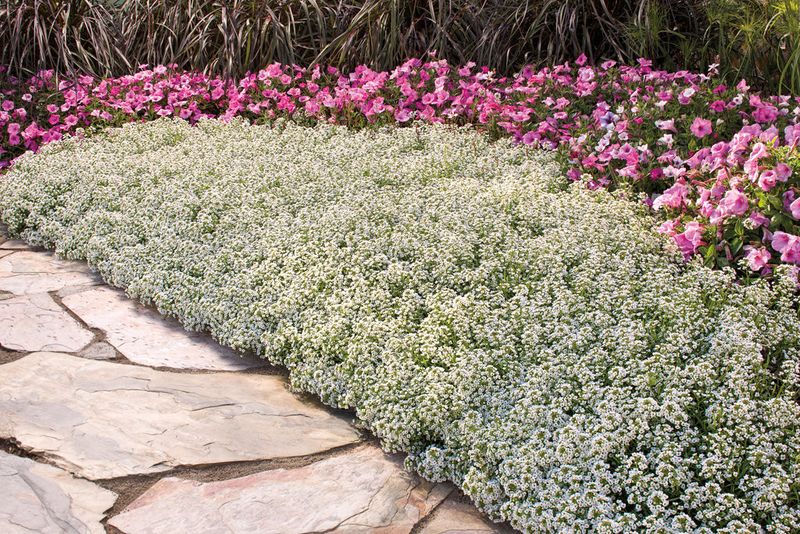
When the July sun bakes the curb and half your annuals crisp up, vinca just keeps grinning. Annual vinca (Catharanthus roseus) blooms in white, pink, and red through the worst heat and humidity North Carolina can throw, and it never asks for much water. Sweet alyssum (Lobularia maritima) frames it below with a lacy white or purple carpet that smells faintly of honey.
Reliability is the appeal. Coastal gardeners battling salt air and sandy soil love vinca because it does not rot in wet spells the way impatiens does. The alyssum knits the edge together and softens where mulch meets pavement.
Wait until nights stay above 60 degrees, usually mid-May, before planting, since vinca hates cold, damp ground and will stall. Space vinca 10 inches apart in a tight cluster at the post, then tuck alyssum plugs 6 inches apart around the outer ring.
Pinch nothing and deadhead nothing. Both self-clean, dropping spent blooms on their own, which is the closest thing to a hands-off mailbox you will find. By Labor Day cookout, the corner still looks fresh while the neighbor’s petunias have long since fried.
7. Ornamental Grass With Sedum Sedge
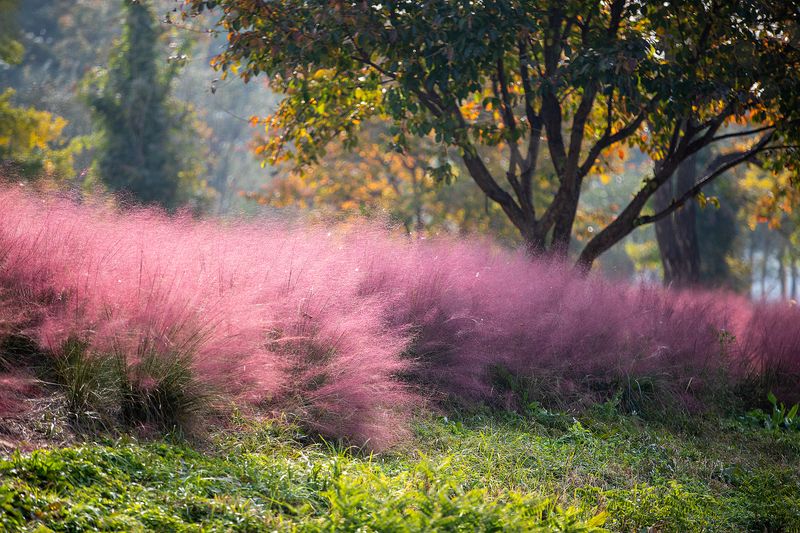
Fall arrives and most mailbox flowers give up, but this combo hits its stride exactly when everything else fades. Muhly grass (Muhlenbergia capillaris) sends up a pink haze of seed plumes in October that looks like cotton candy caught the light. Below it, autumn sedum (Hylotelephium Autumn Joy) forms sturdy mounds that shift from green to dusty rose as the season turns.
Texture is the secret weapon. Wispy grass against the fat, succulent flower heads of sedum gives the corner depth long after the summer blooms quit. Both are famously low-maintenance and drought-proof once rooted, which suits the Sandhills and Piedmont alike.
Set one muhly grass clump behind the post, then flank it with three sedum spaced 18 inches apart across the front. Plant in spring so roots establish before winter, and give each a couple inches of compost mixed into the clay.
Leave the grass plumes and sedum heads standing through winter. They catch frost and morning light, and pollinators feed on the late sedum flowers before first frost, which lands late October to November in the Piedmont. One planting, four seasons of interest, and almost nothing to do.
8. Milkweed Beside Joe Pye Weed
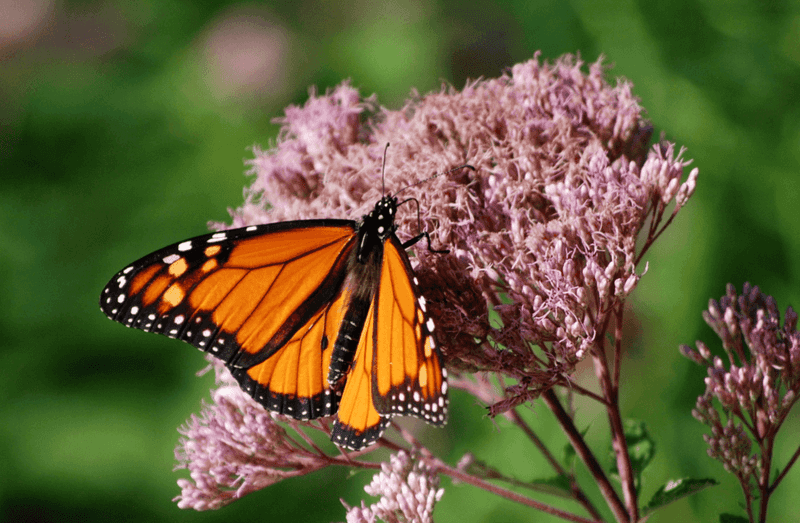
Late summer, a monarch drifts down the road and lands on your mailbox corner, and that is no accident if you plant this pair. Butterfly weed (Asclepias tuberosa), a well-behaved native milkweed, glows orange while the monarch caterpillars feed on its leaves. Behind it, Joe Pye weed (Eutrochium purpureum) rises tall with dusty-mauve flower heads that draw every butterfly in the neighborhood.
Feeding wildlife is the whole point here, and it turns a plain mailbox into a working piece of the yard’s ecosystem. Fall monarchs passing through North Carolina on their way south genuinely depend on milkweed and late nectar, and NC State Extension recommends both natives for pollinator support.
Give Joe Pye weed the back position since it can reach 5 feet, spacing plants 24 inches apart, and set butterfly weed 15 inches apart in front where its orange shows. Plant in spring, and be patient, milkweed is slow to wake but comes back stronger each year.
Skip the pesticides entirely on this bed or you defeat the purpose. Leave stems standing over winter for overwintering insects, then cut back in early spring. It is one small corner doing real work, and it makes the whole entrance feel alive.
9. Climbing Clematis On The Post Itself
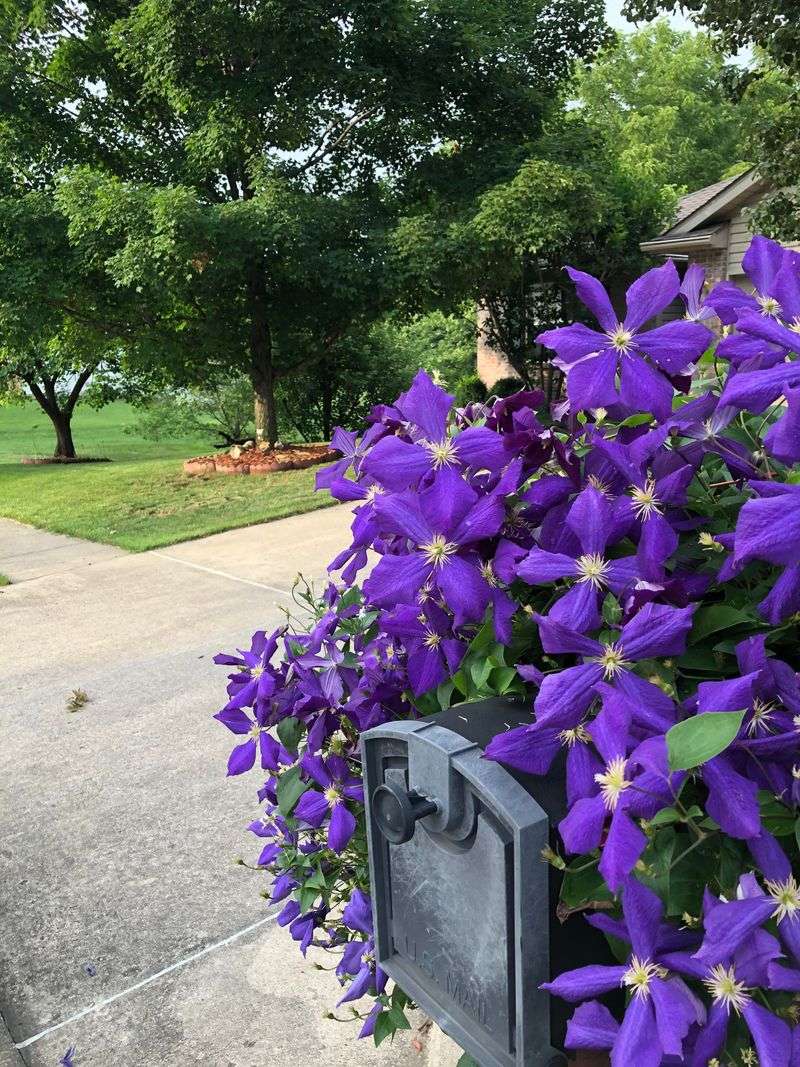
The post is not just something to plant around, it is a trellis waiting for a job. Clematis (Clematis jackmanii) climbs right up the mailbox stand and covers plain pressure-treated wood in saucer-sized purple flowers by early summer. Pair it with a low front skirt of dwarf mondo grass or a few daylilies and the whole structure disappears into flowers.
Vertical color is what sets this one apart from every mounding combo above. Instead of a ring at your feet, you get a wall of bloom at eye level, which draws the gaze from the road and makes even a builder-grade mailbox look intentional.
Attach a simple wire or twine grid to the post first, then plant one clematis at the base on the north side so its roots stay cool and shaded. Mulch heavy, water deep once a week the first summer, and space any base plantings 12 inches out.
Old gardener wisdom fits here, clematis likes its head in the sun and its feet in the shade. Prune this hard-pruning type back to about 12 inches in late February and it returns fuller. Come June, your mailbox wears a crown, and you did the least work of anyone on the street.