14 Common Weeds In Michigan And How To Identify Them
Gardens and yards across Michigan are full of surprises, though some of them are definitely less welcome than others.
Weeds have a way of popping up everywhere from perfectly manicured lawns to your favorite vegetable patches, and they can take over fast if you aren’t paying attention.
Being able to spot these plants early gives you a huge advantage in keeping your outdoor space healthy and thriving. The unique climate of Michigan provides the perfect home for a wide variety of stubborn growers that love to compete with your flowers.
Identifying these invaders is the first step toward reclaiming your landscape and making it look like a professional masterpiece again.
We have put together a clear guide to help you recognize 14 of the most common weeds found in Michigan so you can handle them with total confidence.
Your backyard will stay beautiful and productive all season long with these simple identification tips.
1. Dandelion (Taraxacum Officinale)
Few plants are as instantly recognizable as the dandelion, yet many Michigan homeowners are still caught off guard when their lawn turns yellow overnight.
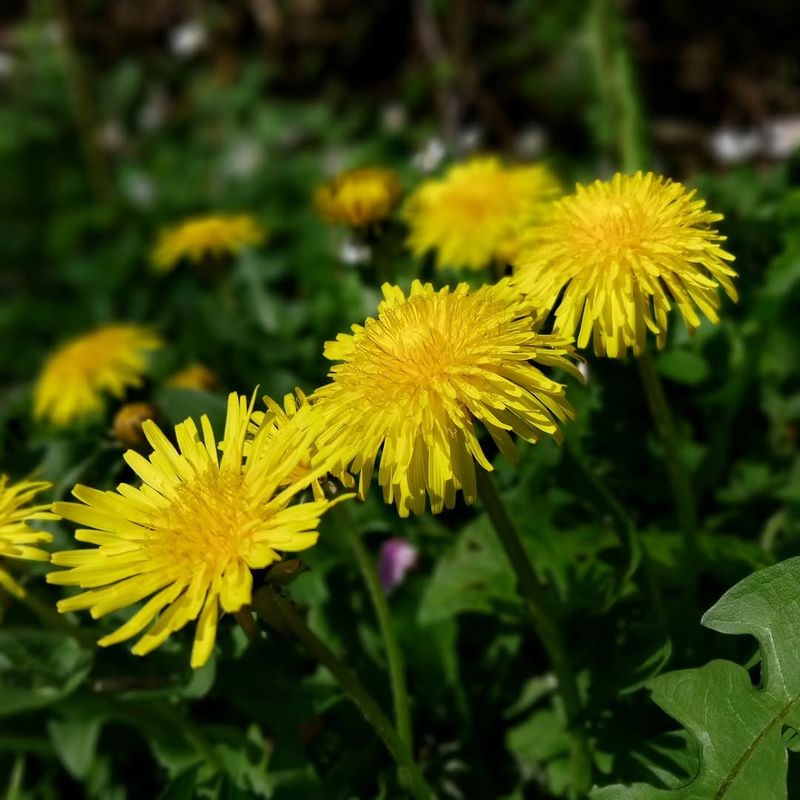
The dandelion grows from a basal rosette of deeply lobed, jagged-edged leaves that lie close to the ground.
Those leaves are one of the easiest identification clues you can find in any Michigan yard.
When the plant blooms, it sends up a hollow stem that produces a single bright yellow flower. Break that stem and you will notice a milky white sap oozing out, which is another reliable identification marker.
The flower eventually transforms into the iconic white puffball that children love to blow on, scattering seeds across your entire yard in seconds.
Dandelions bloom from early spring all the way through late summer, making them a nearly year-round presence in Michigan gardens. They thrive in lawns, garden beds, and any patch of disturbed soil they can find.
Their deep taproot stores energy and allows the plant to regrow quickly after being pulled. Hand-pulling works best when the soil is moist, and removing the full taproot is key.
Regular lawn maintenance and keeping grass healthy and thick can help prevent dandelions from taking over your outdoor space.
2. Clover (Trifolium Spp.)
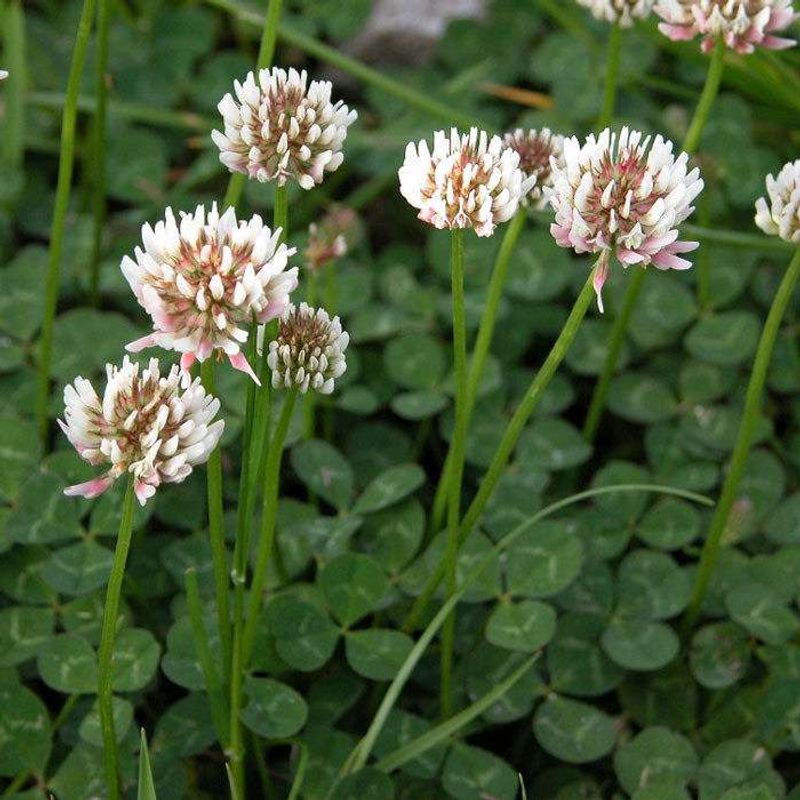
Clover has a way of sneaking into Michigan lawns so quietly that many homeowners do not even notice it until it has already spread across a large patch of grass. The most obvious identification feature is the leaf structure.
Each stem carries three round leaflets, and some varieties even display a faint chevron or lighter-colored marking across each leaflet.
The flowers are small and grow in tight, rounded clusters. Depending on the species, you might see white, pink, or red blooms.
White clover is by far the most common type found in Michigan yards and gardens. The flowers are a favorite of bees, so spotting pollinators buzzing low to the ground is often a clue that clover is nearby.
Clover stays low to the ground and spreads by creeping stems called stolons, which root at the nodes as they travel across the soil. It actually thrives in nutrient-poor soils, which is why it often appears in areas where grass struggles to grow well.
Your Michigan Garden Changes Every Week. Your Plan Should Too.
Gardening in Michigan changes quickly throughout the season. Every Friday you’ll receive a simple weekly plan showing exactly what to plant, prune, fertilize, harvest, and protect so you never miss the right timing.
Shady spots and areas with compacted soil are also popular clover territory across Michigan.
One interesting fact: clover can fix nitrogen from the air into the soil, which is why some gardeners actually plant it on purpose as a cover crop or lawn alternative.
3. Crabgrass (Digitaria Sanguinalis)
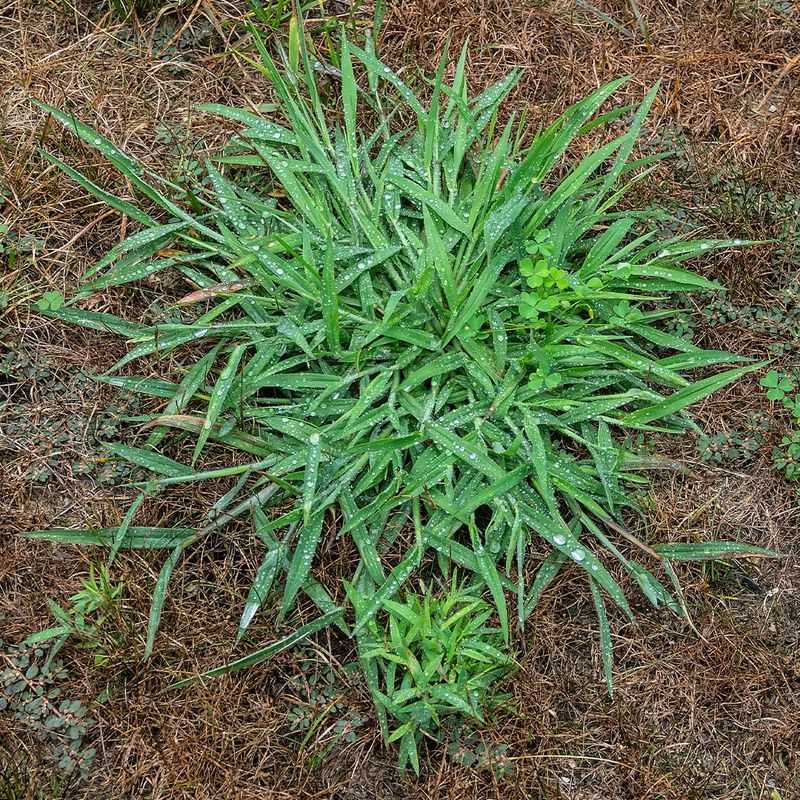
Walk across a Michigan lawn on a hot July afternoon and there is a good chance you will step right on a patch of crabgrass without even knowing it.
This weed has a sneaky way of blending in with regular grass early in the season, only revealing itself once the summer heat kicks in and it starts to spread aggressively outward from a central point.
Crabgrass grows flat against the ground in a star-like pattern, with wide, flat leaves that are noticeably broader than typical lawn grass. The leaves have a slightly rough texture and can sometimes show a purplish tint near the base of the stem.
As the plant matures, it sends up finger-like seed spikes that fan out from the top, giving it a very distinct and bushy appearance.
Hot, sunny conditions are where crabgrass truly thrives, and Michigan summers provide exactly that. It tends to take over thin or bare patches in lawns where regular grass is struggling.
The plant is an annual, meaning it completes its full life cycle in one season, but it produces thousands of seeds that lie dormant over winter and sprout again the following spring.
Keeping your lawn thick and well-maintained is one of the most effective ways to prevent crabgrass from spreading across your Michigan yard.
4. Plantain (Plantago Spp.)
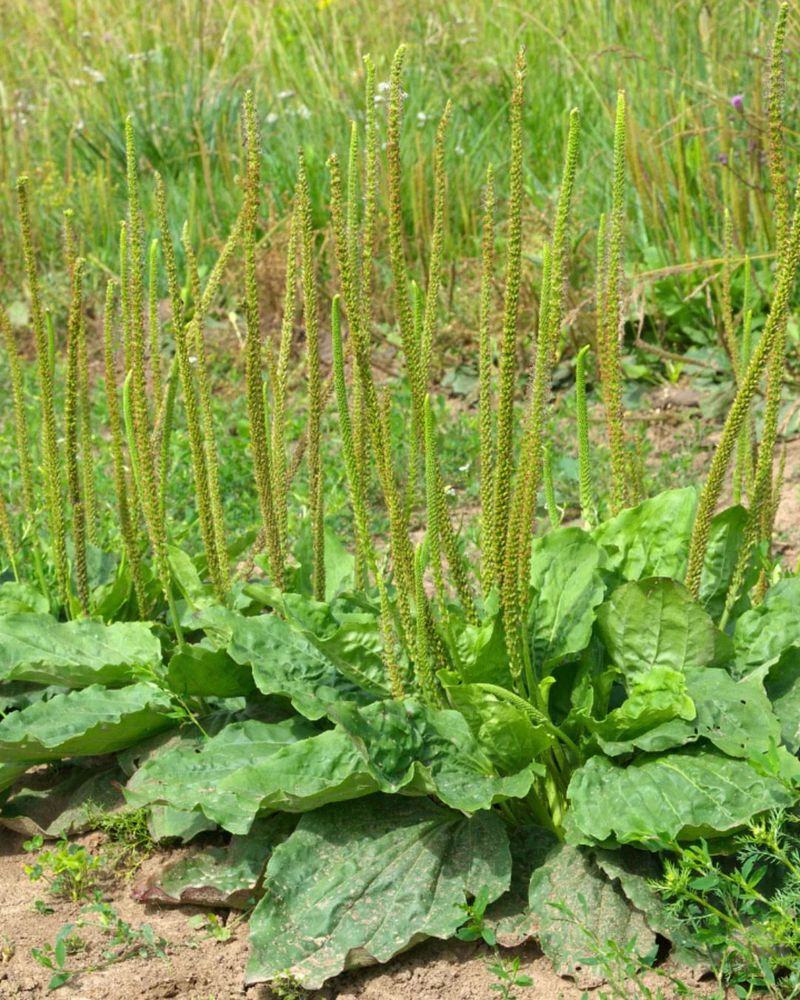
Plantain is one of those weeds that seems to appear in the most inconvenient spots, right in the middle of a walkway, along garden borders, or spreading through a lawn that gets heavy foot traffic.
Despite its humble appearance, this plant is incredibly tough and well-adapted to survive in conditions that would challenge most other plants.
The leaves are broad and oval-shaped with very prominent, parallel veins running lengthwise from base to tip. They form a flat rosette at ground level, which helps the plant avoid being mowed off.
Broadleaf plantain leaves are smooth on top and can feel slightly waxy, while another common type called narrow-leaf plantain has much thinner, lance-shaped leaves.
Both varieties produce tall, slender flower spikes that rise above the leaf rosette. These spikes are green or brownish and covered in tiny flowers that eventually produce small seeds.
Plantain is extremely common throughout Michigan and is almost always found in compacted or disturbed soils where water has difficulty soaking in.
Improving soil compaction through aeration can reduce how often it appears in your lawn.
The plant is also surprisingly edible, with young leaves used in herbal remedies for centuries, though that is more of a fun fact than a reason to let it take over your Michigan garden beds.
5. Thistle (Cirsium Spp.)
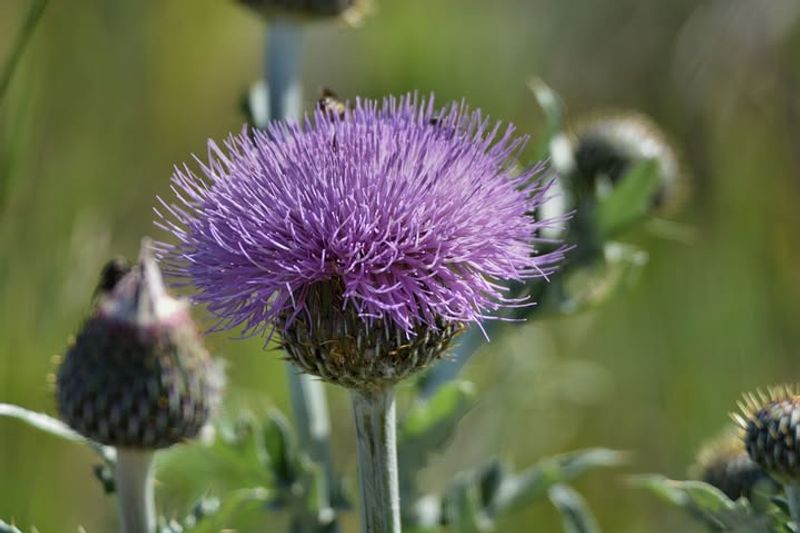
Reach into your garden bed without looking and you will know right away if thistle has moved in.
Those sharp, spiny leaf edges are impossible to miss and make thistle one of the most physically recognizable weeds growing across Michigan fields, roadsides, and garden spaces.
Thistle leaves are deeply lobed and covered in stiff, sharp spines along the margins. The plant can grow quite tall, sometimes reaching several feet in height depending on the species and growing conditions.
At the top of each stem, it produces a striking purple or pink flower that is surrounded by a bristly, spiky base called the involucre.
The flowers are actually quite beautiful up close, which is a bit ironic given how unwelcome the plant usually is.
Once the flowers fade, thistle produces cottony, white seed heads similar to dandelions. The wind catches these fluffy seeds and carries them far and wide across Michigan, which is how thistle spreads so effectively from field to garden and beyond.
Canada thistle is the most invasive species in Michigan and spreads aggressively through an underground root system in addition to seed dispersal.
Removing thistle requires persistence because the roots can regenerate from small fragments left in the soil.
Wearing gloves is an absolute must whenever you handle this plant, as the spines can easily puncture skin.
6. Chickweed (Stellaria Media)
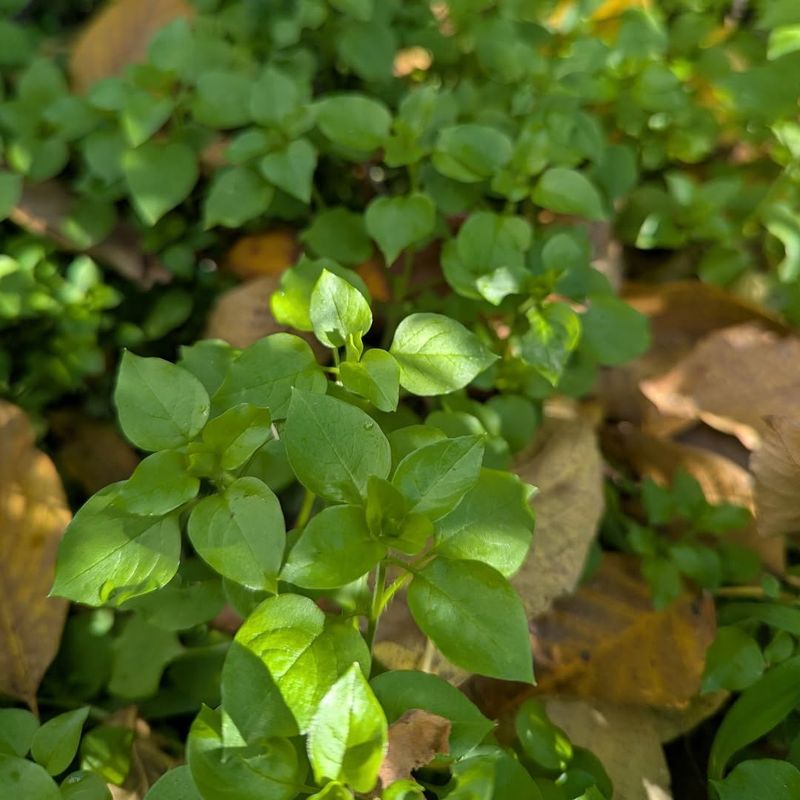
Chickweed has a reputation for being one of the sneakiest cool-season weeds in Michigan, quietly spreading across garden beds and lawns during the mild temperatures of early spring and fall when gardeners are least expecting it.
By the time many people notice it, it has already formed a thick, tangled mat across the soil surface.
The leaves are small, smooth, and oval-shaped, growing in opposite pairs along delicate, branching stems. One reliable way to identify chickweed is to look at the stem closely.
There is a single line of fine hairs running along one side of the stem, which is a unique feature that sets it apart from similar-looking plants.
The flowers are tiny and white with five petals, but each petal is so deeply notched that the flower appears to have ten petals at first glance.
Chickweed thrives in cool, moist environments and is especially fond of shaded garden areas across Michigan. It can form very dense mats that compete with vegetable seedlings and ornamental plants for moisture and nutrients.
The good news is that chickweed has shallow roots and pulls out of moist soil with very little effort. Removing it before it flowers and sets seed is the most effective approach.
Mulching garden beds heavily in fall helps reduce how much chickweed manages to establish itself the following season.
7. Bindweed (Convolvulus Arvensis)
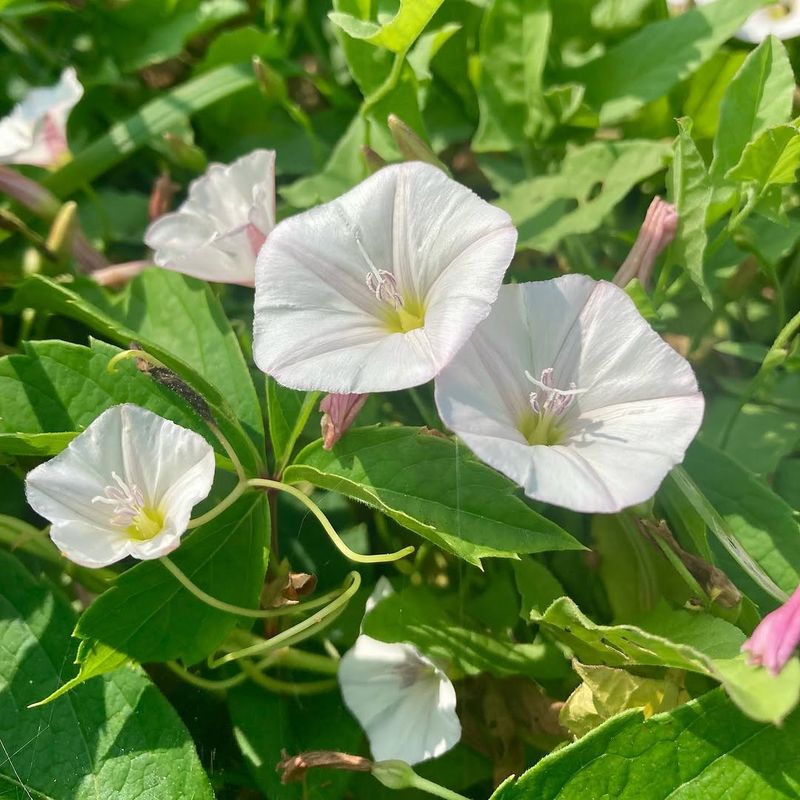
There is something almost impressive about bindweed, even if it is not a compliment. This determined plant can wrap itself around fences, garden stakes, and neighboring plants so efficiently that it earns its name every single time.
Michigan gardeners who have dealt with bindweed know all too well how quickly it can take over a well-tended garden space.
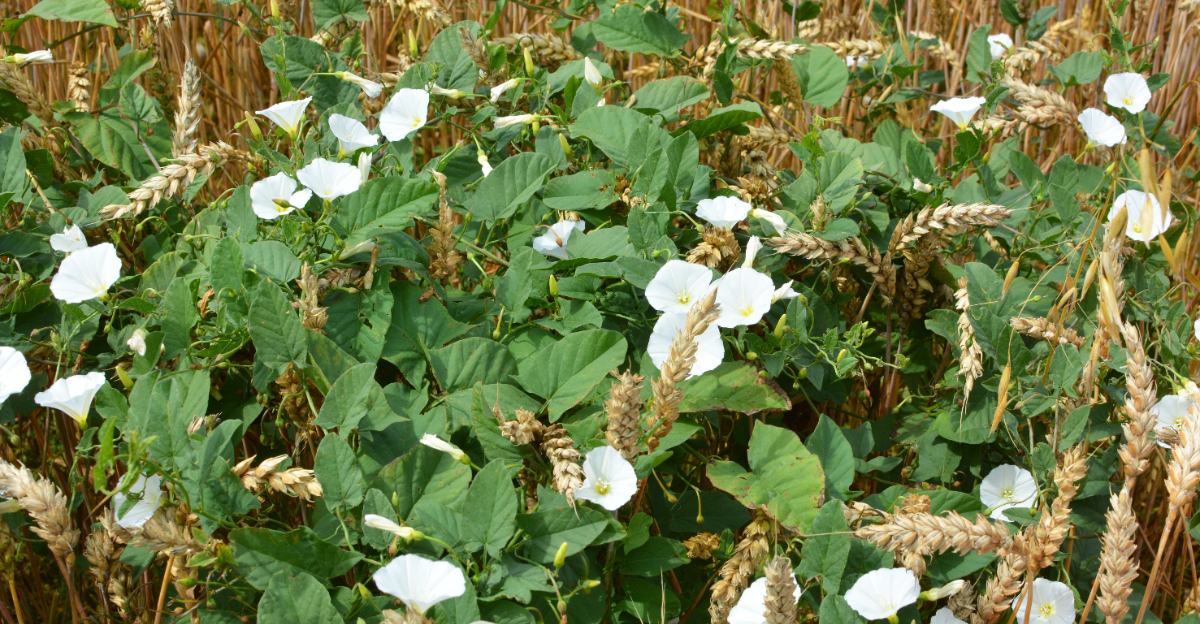
Bindweed leaves are shaped like arrowheads or hearts, with two pointed lobes at the base of each leaf. The vines are slender and twine around any vertical support they can find, climbing upward as the season progresses.
The flowers are one of the most attractive features of this otherwise troublesome plant. They are shaped like small trumpets or morning glory blooms and come in white or pale pink, often with faint pink stripes radiating from the center.
What makes bindweed so persistent across Michigan gardens is its root system. The roots can extend several feet deep into the soil and spread laterally underground, making complete removal very difficult.
Even small root fragments left behind can produce new growth. Consistent removal of vines before they can flower and set seed is the best long-term strategy.
Covering affected areas with mulch or dense ground covers can also help suppress regrowth over time. Patience and persistence are absolutely necessary when managing bindweed in any Michigan yard or garden.
8. Ground Ivy (Glechoma Hederacea)
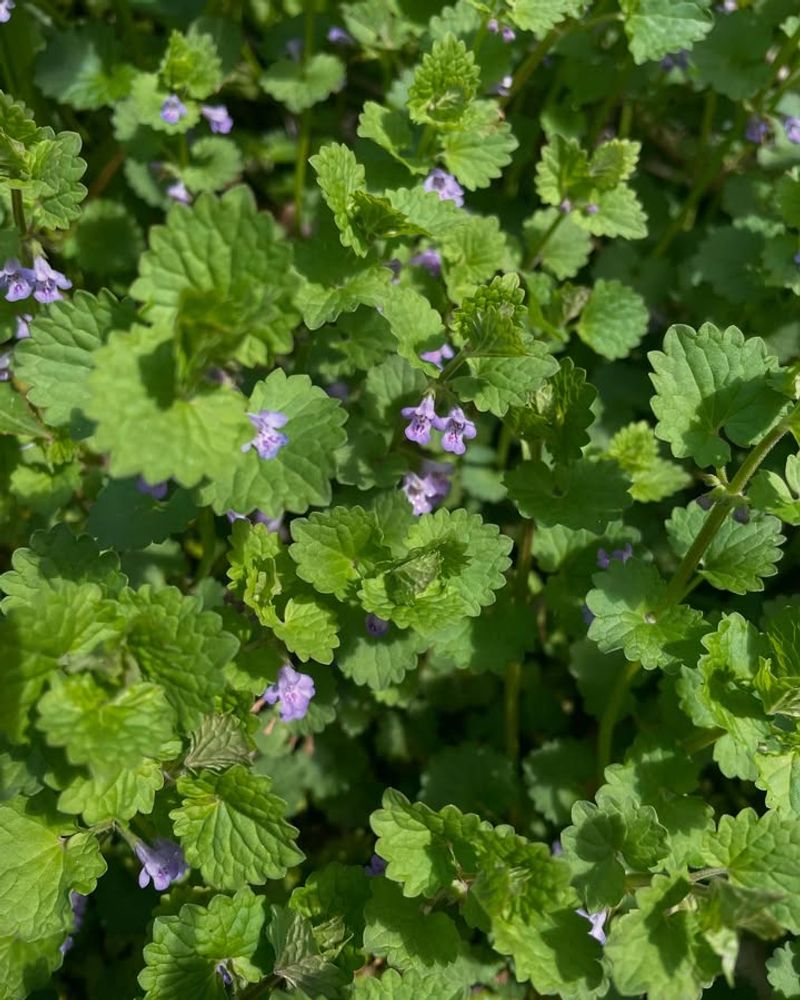
Crush a leaf of ground ivy between your fingers and you will immediately notice a sharp, minty aroma that is both distinctive and surprisingly pleasant.
That scent is one of the quickest ways to confirm you are dealing with this particular creeping weed, which spreads aggressively through Michigan lawns and shaded garden areas every spring.
Ground ivy, sometimes called creeping Charlie, has round leaves with scalloped or wavy edges that grow in opposite pairs along square stems. The square stem is a classic giveaway that the plant belongs to the mint family.
Small purple or violet tubular flowers appear in clusters along the stems during spring, giving affected areas a faint but noticeable purple tint when the plant is in full bloom.
This weed loves shaded, moist conditions, which makes it especially problematic under trees and along the north-facing sides of Michigan homes where grass struggles to grow thickly.
It spreads by creeping stems that root at the nodes wherever they touch moist soil, allowing it to cover large areas very quickly.
Hand-pulling works well when the soil is soft and moist, and removing the entire creeping stem network is important to prevent regrowth.
Improving drainage, increasing sunlight, and growing dense shade-tolerant grass varieties can all help reduce ground ivy’s ability to establish itself in your Michigan lawn.
9. Purslane (Portulaca Oleracea)
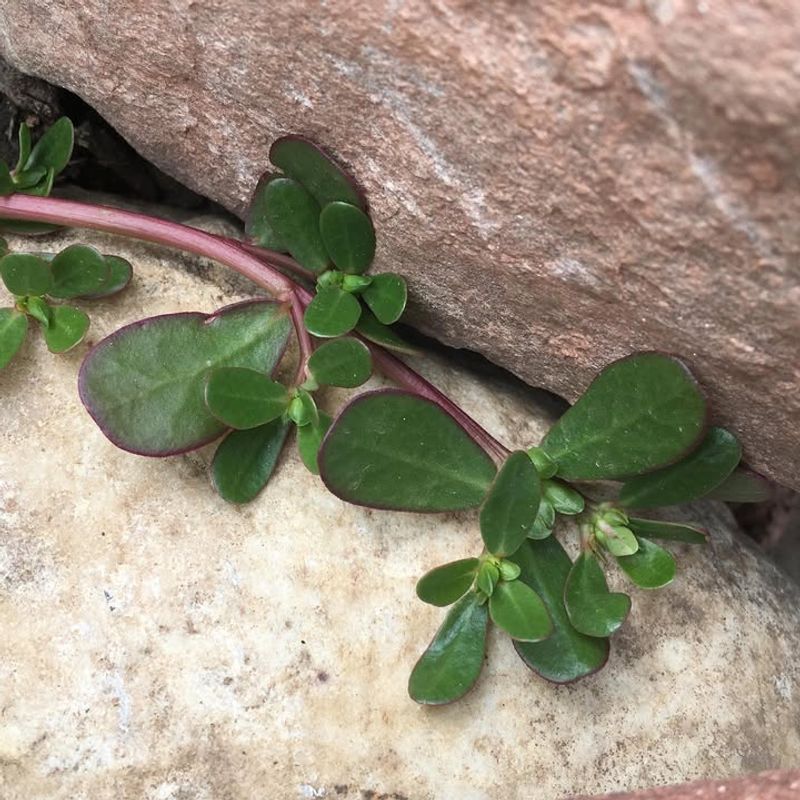
Purslane is the kind of weed that thrives exactly when your garden is already stressed from summer heat.
While other plants wilt and struggle during dry Michigan summers, purslane quietly spreads across bare soil in vegetable gardens, flower beds, and even between pavement cracks, looking completely unbothered by the heat.
The leaves are small, thick, and fleshy, almost like a succulent, which makes sense because purslane stores water in its leaves and stems to survive dry conditions. The stems are reddish or pinkish and grow low and wide, forming a flat mat across the soil.
Small yellow flowers appear at the tips of the stems, but they only open fully in bright sunlight, so overcast days can make the plant look like it is not blooming at all.
Purslane is an annual weed that spreads entirely by seed, and a single plant can produce thousands of seeds in one season.
One surprising fact worth knowing is that purslane is actually edible and is considered a nutritious plant in many cultures around the world, containing omega-3 fatty acids and vitamins.
That said, most Michigan gardeners would rather keep their vegetable beds purslane-free. Pulling plants out by hand before they flower is the most effective removal method.
Avoid leaving pulled plants on the soil surface because they can re-root in moist conditions quite easily.
10. Mullein (Verbascum Thapsus)
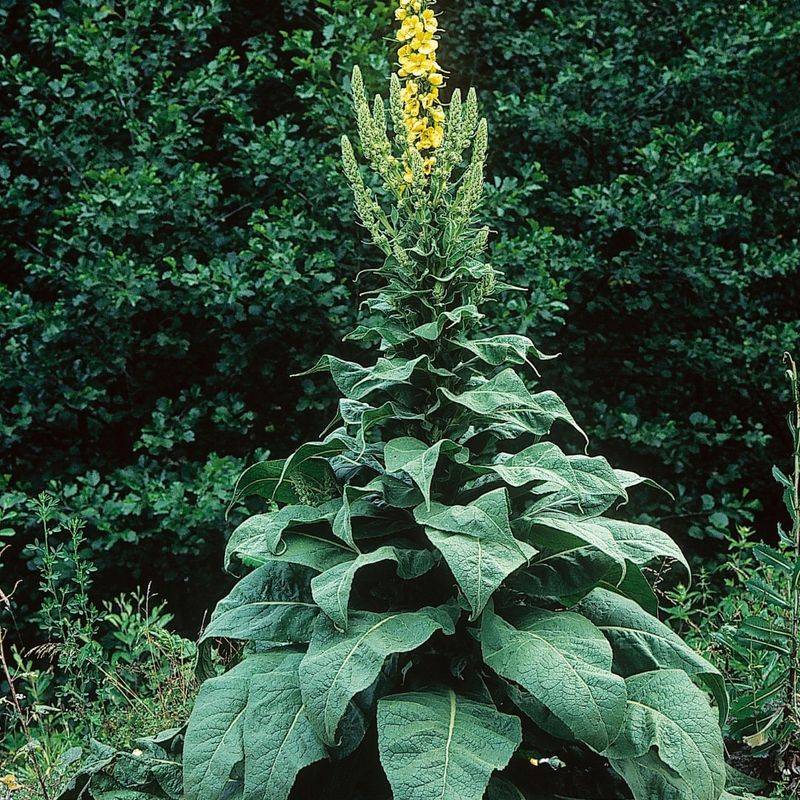
Mullein is one of those plants that actually looks quite dramatic once you know what it is.
Spotting a tall, torch-like spike covered in yellow flowers rising several feet above the ground is a sure sign that mullein has found a comfortable spot somewhere in a Michigan field, roadside, or disturbed garden area.
In its first year, mullein grows as a low rosette of very large, soft, woolly leaves that feel almost like velvet or thick felt when you touch them. The leaves are gray-green and can be quite large, sometimes reaching over a foot in length.
This soft, fuzzy texture is one of the most memorable and reliable identification features of the plant at any stage of growth.
The dramatic flowering spike appears in the plant’s second year, rising straight and tall from the center of the rosette. Yellow flowers open progressively from the bottom of the spike to the top throughout summer.
Mullein thrives in disturbed soils, gravel, roadsides, and open sunny areas across Michigan. It is a biennial plant, meaning it takes two full years to complete its life cycle from seed to flower to seed again.
Because it relies heavily on bare, open soil to germinate successfully, keeping garden beds mulched and lawns dense is one of the most practical ways to prevent it from establishing in your outdoor spaces.
11. Nutsedge (Cyperus Spp.)
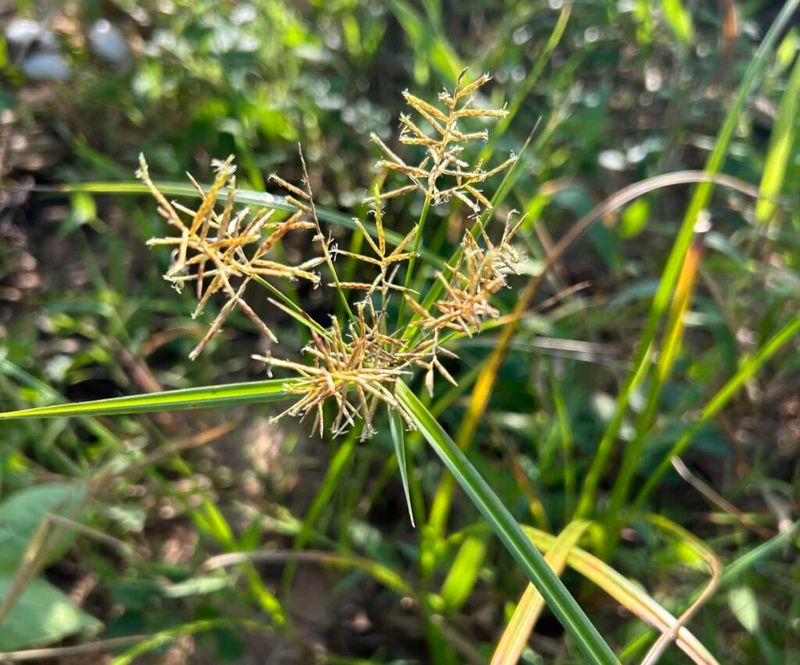
Nutsedge is the weed that makes many Michigan lawn owners do a double take. At first glance it looks just like regular grass, but something about it seems slightly off.
Look more carefully and you will notice that nutsedge grows noticeably faster than the surrounding grass and has a brighter, more yellowish-green color that makes it stand out even from a distance.
The stems of nutsedge are the key identification feature. Unlike true grasses, which have round or flat stems, nutsedge stems are triangular in cross-section.
You can actually feel this by rolling the stem between your fingers. The leaves are stiff, upright, and arranged in sets of three at the base of the plant, giving it a very distinct look compared to regular lawn grasses.
Flower clusters appear at the top of the stems and form in groups of spikelets.
Nutsedge thrives in wet, poorly drained areas, so it often signals a drainage problem in Michigan lawns and garden beds.
It spreads underground through small tubers called nutlets, which is why it is so difficult to remove completely.
Pulling the plant by hand removes the visible growth but usually leaves the nutlets behind to sprout again. Improving soil drainage is one of the most effective long-term strategies for reducing nutsedge pressure in Michigan yards.
Addressing wet spots and low areas in your lawn can make a significant difference over time.
12. Foxtail Grass (Setaria Spp.)
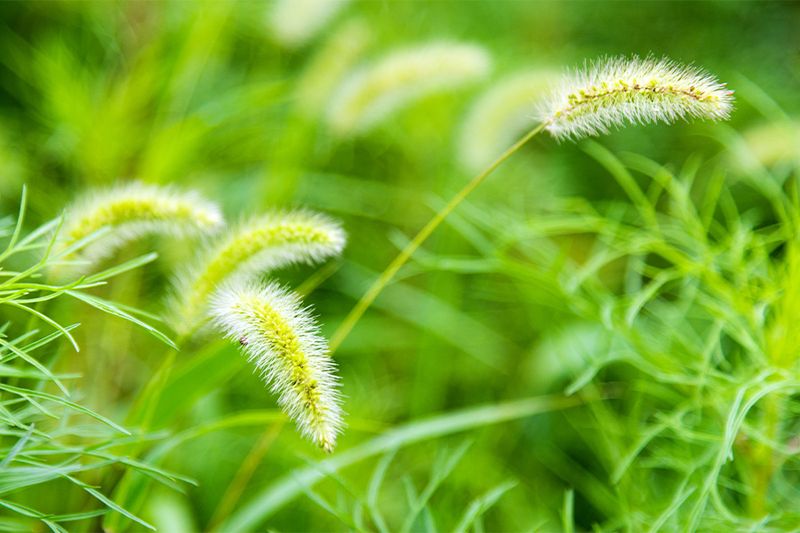
Foxtail grass is one of those weeds that gets its name exactly right. The seed heads are dense, cylindrical, and covered in bristly fibers that look remarkably like the bushy tail of a fox.
Once you see one nodding in a summer breeze along a Michigan roadside or garden edge, the name makes perfect sense and you will never forget what this weed looks like again.
The leaves are long and narrow with a slightly rough texture, similar to many common lawn grasses. Young foxtail plants blend in easily with surrounding turf, which is why early identification can be tricky.
As the plant matures, the distinctive seed head emerges and makes identification straightforward.
Giant foxtail, yellow foxtail, and green foxtail are the three most common species found throughout Michigan, and all three share the same recognizable brushy seed head shape.
Foxtail is a warm-season annual that germinates in late spring when soil temperatures warm up. It thrives in disturbed soil, thin lawns, and open fields across Michigan.
Each plant produces a large number of seeds that remain viable in the soil for several years, making repeated management necessary. Mowing regularly before seed heads mature can help reduce seed spread across your property.
Keeping lawn grass thick and healthy through proper fertilization and watering is one of the best defenses against foxtail establishing itself in Michigan turf.
13. Common Milkweed (Asclepias Syriaca)
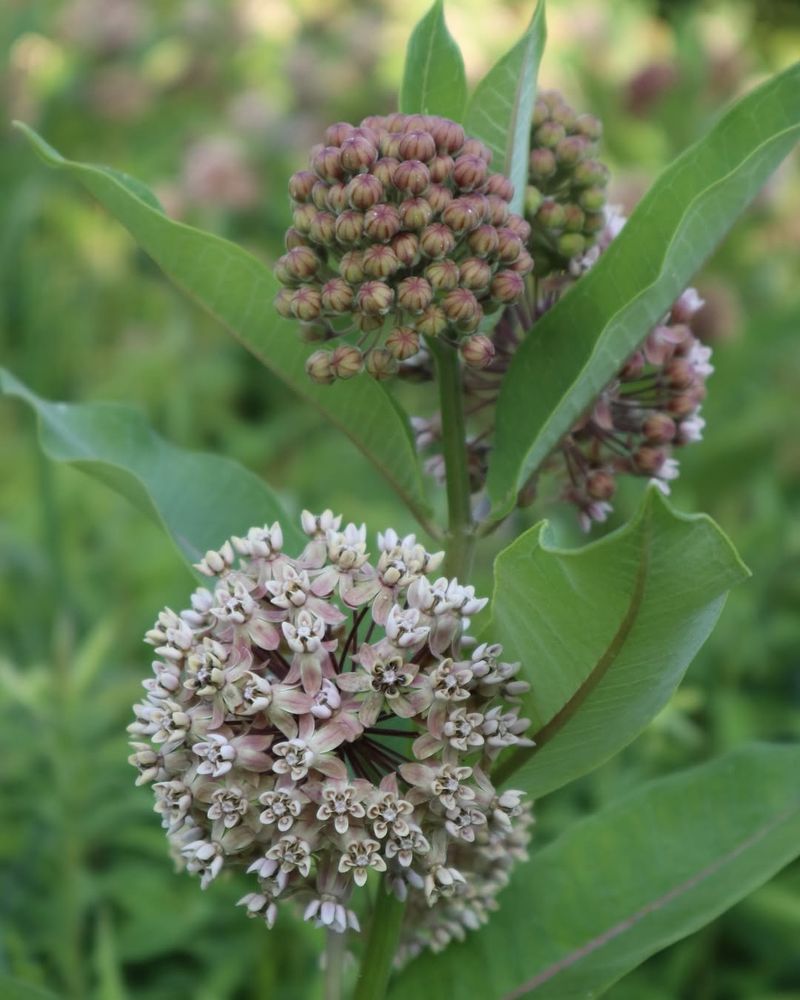
Common milkweed holds a special place in the hearts of many Michigan nature lovers because of its famous relationship with monarch butterflies. Monarch caterpillars feed exclusively on milkweed leaves, making this plant a critical part of the monarch’s life cycle.
That ecological value is worth appreciating, even if the plant itself can become quite aggressive in a garden setting.
Milkweed is easy to identify once you know what to look for. The leaves are large, broad, and lance-shaped with a thick, leathery texture and a prominent midrib running down the center.
When any part of the plant is broken, it releases a thick white milky sap that gives the plant its common name.
The flowers are one of its most beautiful features, growing in large, rounded clusters of small pink to mauve blooms that produce a sweet, pleasant fragrance during summer.
After flowering, milkweed produces large, bumpy seed pods that eventually split open to release silky-tufted seeds that float on the wind across Michigan landscapes.
The plant spreads both by seed and through an underground rhizome system, which allows it to expand steadily into new areas of a garden if left unchecked.
For gardeners who want to support pollinators but keep growth contained, planting milkweed in raised beds or using root barriers can be very effective strategies for managing its spread in Michigan garden spaces.
14. Japanese Knotweed (Fallopia Japonica)
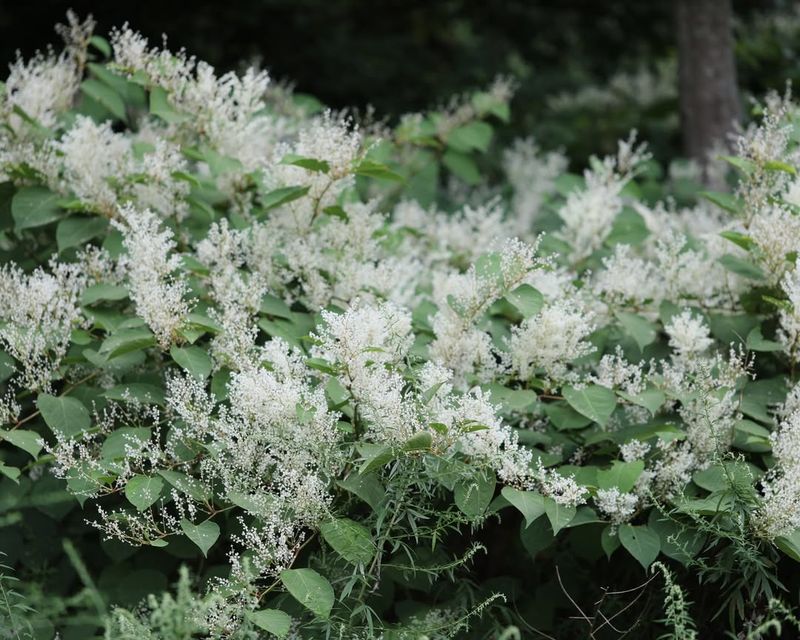
Japanese knotweed is widely considered one of the most aggressive invasive plants in the entire state of Michigan, and for very good reason.
Once it establishes itself in a location, removing it completely takes serious dedication, repeated effort, and a well-planned approach.
Even small fragments of the root left in the soil can sprout into a new plant.
The stems are hollow, jointed, and look remarkably similar to bamboo, which sometimes causes confusion. They can grow extremely tall in a single season, sometimes reaching over ten feet in height under favorable conditions.
The leaves are large, broad, and roughly shovel-shaped with a flat or slightly indented base where the leaf meets the stem.
In late summer, the plant produces small clusters of creamy white flowers along arching branches near the tops of the stems.
Japanese knotweed thrives in wetlands, stream banks, roadsides, and disturbed areas across Michigan. It forms such dense stands that it shades out nearly all other plant life growing nearby.
The underground root system, called a rhizome, can extend many feet in all directions and reach several feet deep into the soil.
Because of how challenging this plant is to manage, Michigan residents are encouraged to report new infestations to local authorities.
Early action when patches are still small is far more manageable than trying to address a large, well-established stand of Japanese knotweed in your yard.