8 Companion Plants That Grow Beautifully With Hydrangeas In Georgia
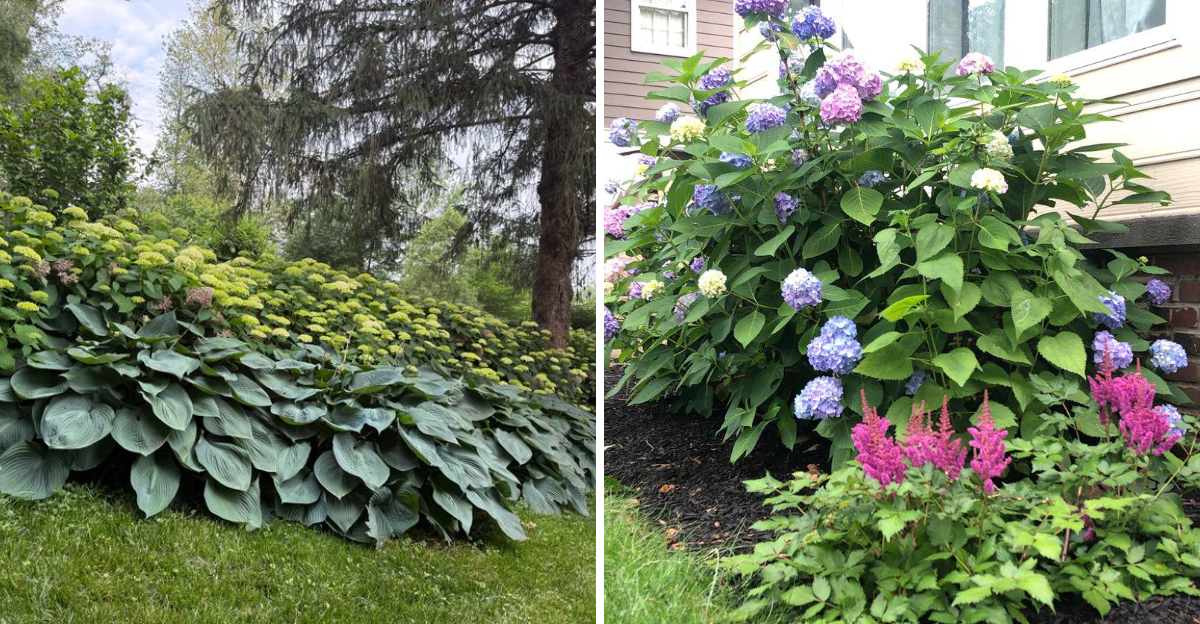
Hydrangeas draw attention fast in Georgia yards once those huge blooms start opening. Garden beds instantly feel fuller and more colorful.
Empty areas around the shrubs still become noticeable though, especially once the rest of the yard starts filling in for the season.
Companion plants help hydrangeas look even better without stealing the spotlight. Different foliage, extra texture, and softer color around the shrubs can completely change how the garden feels.
Shaded beds also start looking more balanced instead of flat or overcrowded.
Georgia weather makes plant pairings more important than many gardeners expect. Heat, humidity, and heavy summer growth can either improve the look or make beds feel messy very quickly.
Good combinations help hydrangea gardens stay attractive much longer through the season.
1. Hostas Fill In Bare Areas Beneath Large Hydrangea Blooms
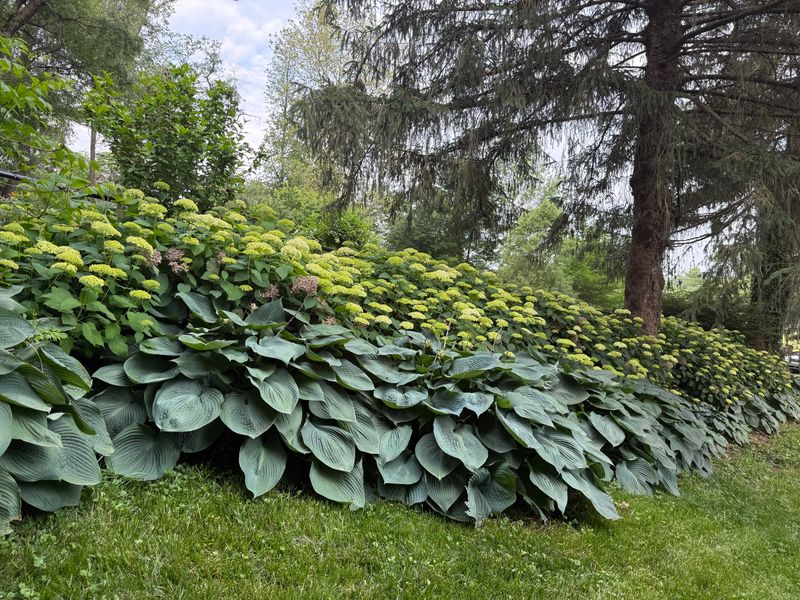
Nothing fills in a bare garden floor quite like hostas. When hydrangeas grow tall and leafy, they often leave a shadowy, empty space underneath that looks unfinished.
Hostas step right into that gap and turn it into something worth looking at.
In Georgia, hostas perform well in shaded and partially shaded spots, which is exactly the kind of environment a large hydrangea creates beneath its canopy.
Varieties like Sum and Substance or Halcyon handle the heat better than some others, though consistent moisture is key during Georgia’s dry summer stretches.
Mulching around the base helps keep soil temperatures manageable.
The broad, textured leaves of hostas create a visual contrast against the soft, rounded hydrangea blooms above. You get layers of interest without any of it feeling crowded or competing.
Colors range from deep green to blue-green to variegated cream and white, so there is plenty of room to get creative with combinations.
Hostas are also low maintenance once established, which gardeners across Georgia tend to appreciate. They come back reliably each spring, spread slowly over time, and rarely cause problems.
Slugs can be an occasional nuisance in wetter seasons, but overall, hostas are one of the most dependable choices for building out a hydrangea bed from the ground up.
Morning sun with afternoon shade usually gives hostas the best appearance in Georgia, especially during long periods of summer heat and humidity.
2. Ferns Bring Soft Texture To Shadier Garden Beds
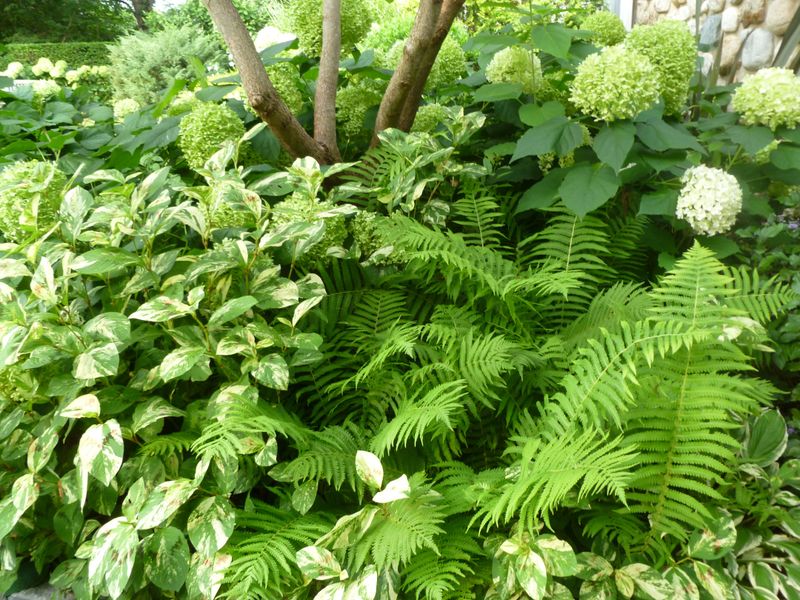
Feathery and full, ferns have a way of softening everything around them. Planted alongside hydrangeas in a shady Georgia garden bed, they add a natural, woodland feel that makes the space look effortlessly put together.
Southern shield ferns and autumn ferns are two solid choices for Georgia gardeners. Both handle the region’s humidity well and stay relatively evergreen through mild winters, which means your garden bed does not look bare when hydrangeas lose their leaves in late fall.
Cinnamon ferns are another option if you want some height and structure.
Ferns and hydrangeas share a love of moist, well-drained soil and filtered light, so they naturally thrive under the same conditions without much extra effort from you.
That said, ferns do appreciate consistent watering during dry spells, especially in their first season getting established.
Your Georgia Garden Changes Every Week. Your Plan Should Too.
Gardening in Georgia changes quickly throughout the season. Every Friday you’ll receive a simple weekly plan showing exactly what to plant, prune, fertilize, harvest, and protect so you never miss the right timing.
One thing gardeners in Georgia notice quickly is how well ferns hold up under tree canopies where other plants struggle. Alongside a bigleaf or oakleaf hydrangea, ferns create a layered, lush backdrop that feels almost like a private woodland garden.
The contrast between the bold hydrangea blooms and the fine-textured fern fronds is genuinely striking. It is a combination that looks intentional without requiring a lot of planning or complicated maintenance to pull off.
A layer of shredded leaf mulch works especially well around both ferns and hydrangeas because it helps the soil stay cooler and holds moisture longer during Georgia heat.
3. Coral Bells Add Long Lasting Color Around Hydrangeas
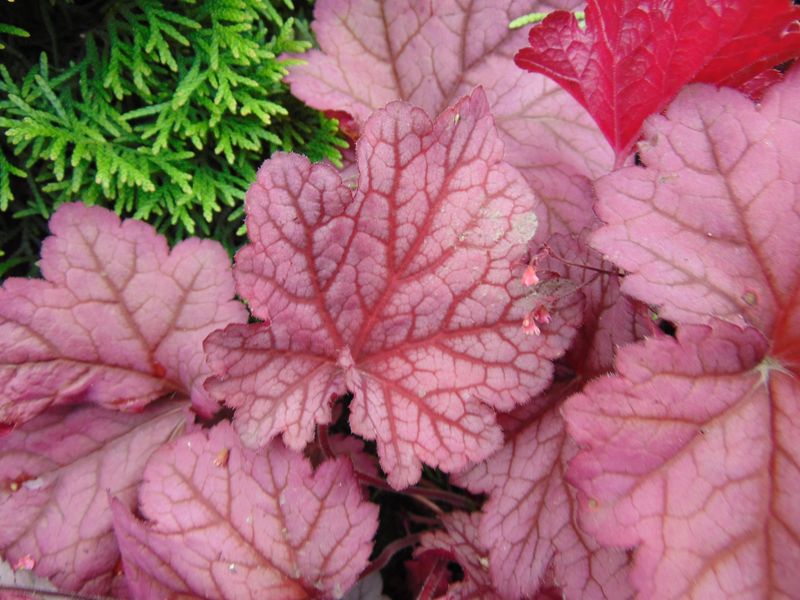
Coral bells might be small, but their impact on a garden bed is anything but subtle.
Known botanically as Heuchera, these plants bring some of the most eye-catching foliage colors available, ranging from deep burgundy and chocolate to bright lime green and silvery purple.
What makes coral bells especially useful around hydrangeas in Georgia is that the foliage looks great all season long, even when the hydrangeas are between bloom cycles. You always have something interesting to look at in the bed.
The delicate, wiry flower stems that shoot up in late spring also add a nice vertical element without taking over.
Georgia summers can be tough on coral bells, particularly in spots with afternoon sun. Pairing them on the shadier side of hydrangea groupings gives them the protection they need to stay looking sharp through July and August.
Good drainage matters too, since sitting in soggy soil during rainy stretches can cause root problems.
Varieties like Palace Purple, Caramel, and Lime Rickey have shown strong performance in the Southeast. Coral bells are perennials, so once you plant them, they come back each year and slowly expand into fuller clumps.
Alongside the big, rounded blooms of a hydrangea, the ruffled leaves of coral bells create a layered, polished look that holds up through the entire growing season across Georgia.
4. Astilbes Bloom At The Same Time In Moist Soil
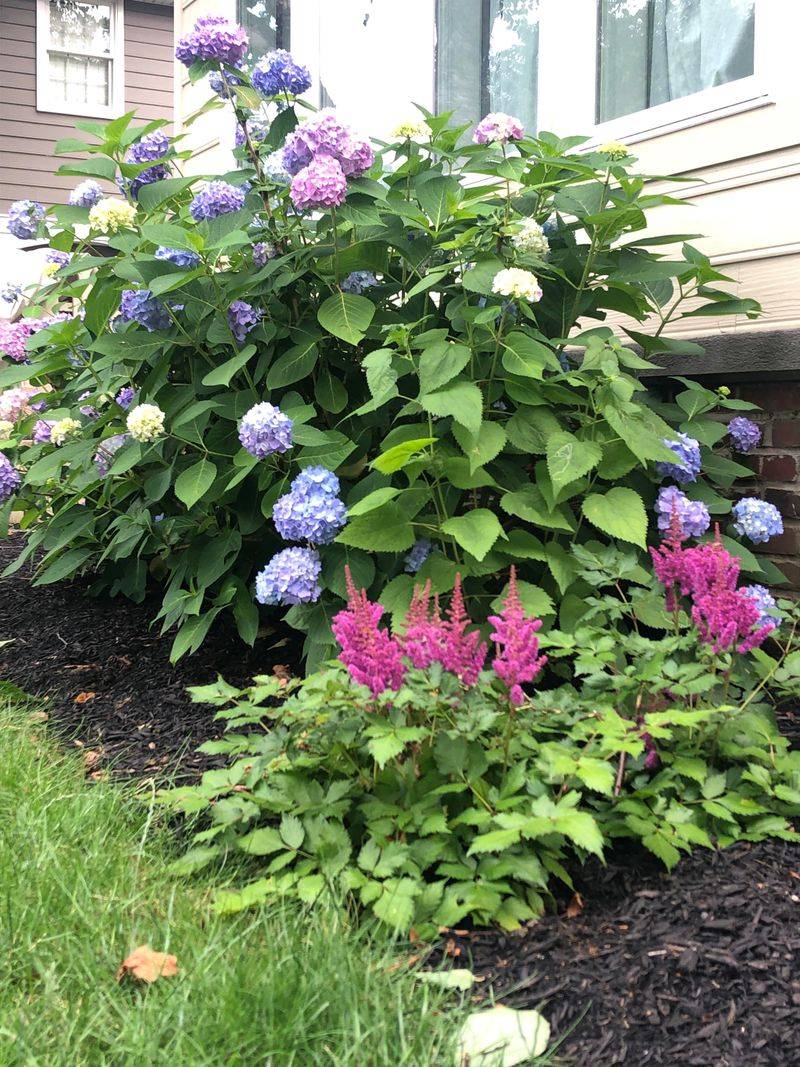
Timing is everything in a garden, and astilbes have it figured out. Their feathery plumes rise up in late spring and early summer, right when many hydrangeas are hitting their peak bloom, creating a layered display of color that feels almost too good to be accidental.
Astilbes love moisture, which makes them a natural fit in Georgia gardens where hydrangeas are already getting regular water. Shaded or partially shaded spots work best, particularly in the warmer parts of the state where afternoon heat can stress plants that lack protection.
Rich, organic soil gives astilbes the best shot at thriving season after season.
Colors range from white and pale pink to deep red and lavender, so mixing a few varieties around a single hydrangea grouping creates a really layered, almost cottage-style look.
The feathery texture of astilbe plumes stands in sharp contrast to the big round flower heads of hydrangeas, and that contrast is a big part of what makes the pairing work so well visually.
After blooming, astilbe seed heads turn a warm russet brown and actually look quite attractive through fall and into winter. Georgia gardeners who leave them standing through the colder months get extended visual interest in the bed.
Astilbes are reliable perennials that come back stronger each year when planted in the right conditions, making them a genuinely rewarding long-term investment for any hydrangea bed.
5. Gardenias Pair Well With Similar Growing Conditions
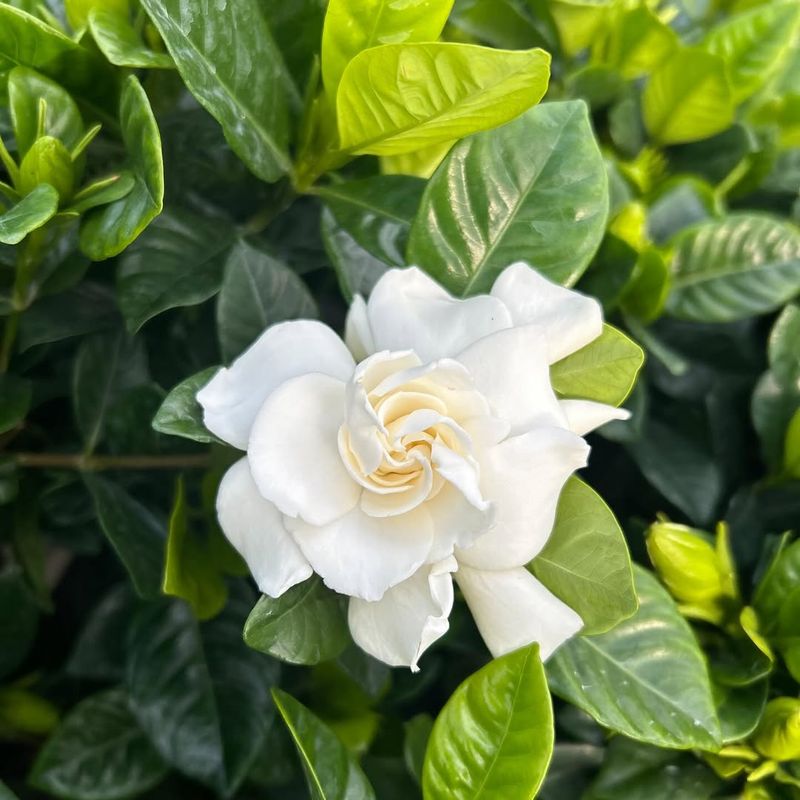
Gardenias and hydrangeas feel like they belong together, and in Georgia, they practically grow up side by side.
Both plants prefer acidic soil, moderate moisture, and protection from harsh afternoon sun, which means once you find the right spot for one, you have likely found the right spot for both.
The fragrance gardenias bring to a garden bed is something no other plant quite replicates. Planting them near a seating area alongside hydrangeas gives you both visual beauty and a scent that makes spending time outdoors genuinely pleasant through late spring and summer.
In Georgia’s climate, gardenias are reliably hardy across most of the state, though they can struggle during unusually cold winters in northern areas. Varieties like Kleim’s Hardy and August Beauty have shown strong performance across a range of Georgia growing zones.
Consistent moisture and well-draining, amended soil give gardenias the best start.
One thing to keep in mind is that gardenias can be a bit finicky about transplanting, so placing them thoughtfully from the beginning saves a lot of frustration. Once established, though, they settle in and bloom reliably.
The contrast between the glossy, deep green gardenia leaves and the softer, more open hydrangea foliage creates a textural richness in the garden bed that looks intentional and polished. It is a classic Southern pairing for good reason.
6. Japanese Forest Grass Softens The Look Of Hydrangea Borders
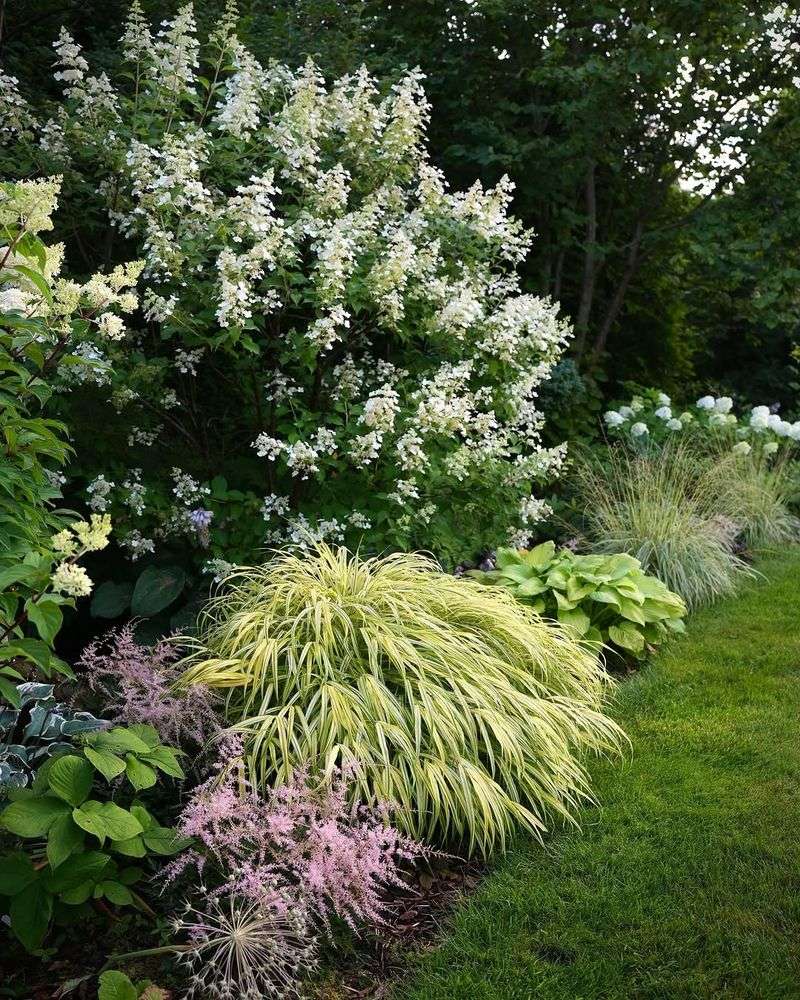
Not every plant in a garden needs to bloom to earn its place, and Japanese forest grass proves that beautifully.
Known by its botanical name Hakonechloa macra, this ornamental grass forms soft, arching mounds of golden or variegated foliage that spill gently along garden borders like something out of a Japanese landscape painting.
Along hydrangea borders in Georgia, Japanese forest grass works as a softening edge that keeps the bed from looking too stiff or boxy. The flowing, cascading habit of the grass creates movement and lightness, especially when a breeze moves through the yard.
Aureola is the most popular variety, with bright golden stripes that catch light beautifully even on overcast days.
Partial to full shade suits this grass best, which aligns well with the conditions many hydrangeas prefer in Georgia’s warmer regions. Consistent moisture matters, particularly through summer.
In very hot, exposed spots, the foliage can scorch, so placing it on the shaded side of a hydrangea grouping offers some natural protection.
Japanese forest grass spreads slowly and never becomes aggressive or invasive, which makes it easy to manage over time. In fall, the foliage picks up warm amber and orange tones that extend the visual interest of the bed well past the hydrangea season.
For Georgia gardeners looking to add a refined, almost sculptural quality to their hydrangea plantings, this grass is genuinely one of the best options available.
7. Camellias Keep Garden Beds Colorful Beyond Hydrangea Season
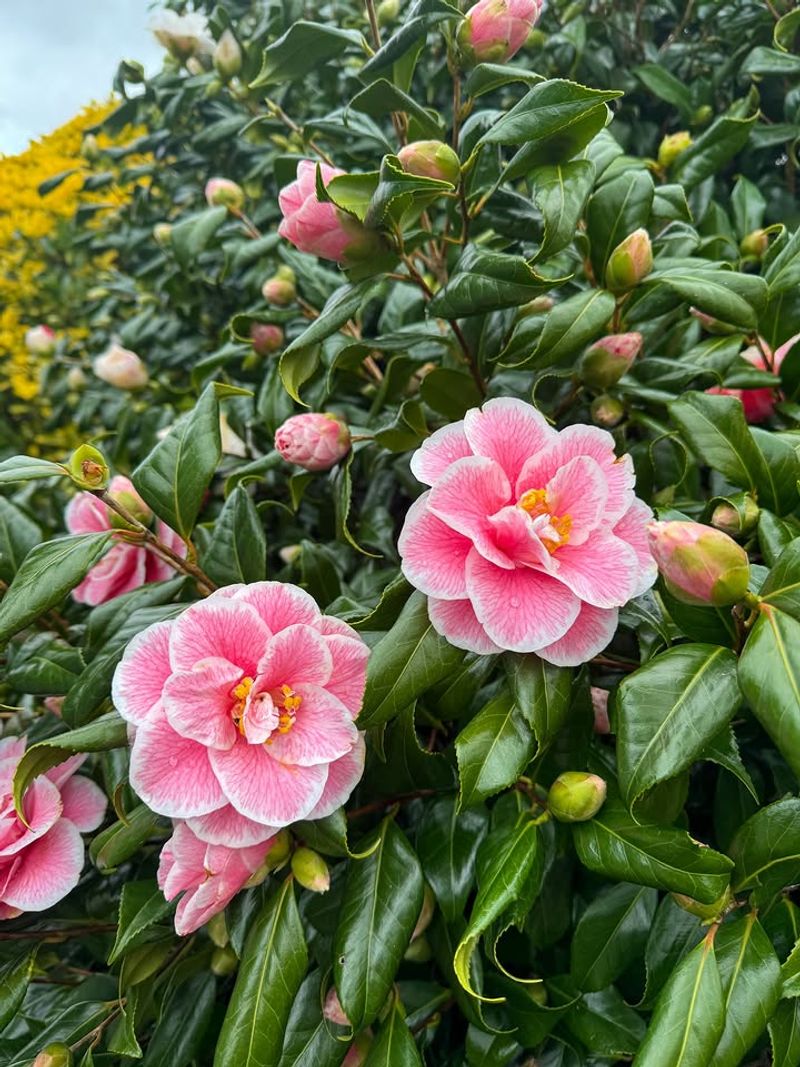
Hydrangeas put on a spectacular show from late spring through summer, but when fall arrives and the blooms fade, a lot of garden beds start looking flat. Camellias solve that problem without any fuss.
Their blooms come in right when hydrangeas step back, carrying color through fall and into winter across much of Georgia.
Sasanqua camellias typically bloom from October through December, while Japonica varieties can carry blooms from late winter into early spring.
Layering both types around hydrangeas means a garden bed in Georgia has something interesting happening in almost every season, which is a genuinely satisfying result.
Both camellias and hydrangeas prefer similar soil conditions, including slightly acidic pH and good organic matter. They both appreciate morning sun and afternoon shade in Georgia’s warmer regions, so sharing a bed makes practical sense.
Spacing matters, since camellias can grow quite large over time, but giving each plant room to breathe prevents competition issues.
Camellia foliage is also worth mentioning. The deep, glossy green leaves stay attractive year-round and provide a rich, structured backdrop that makes hydrangea blooms look even more vibrant during summer.
Georgia gardeners have grown camellias for generations, and their proven track record in the region means you are not taking much of a risk planting them. They are sturdy, beautiful, and genuinely complement hydrangeas across every season.
8. Bleeding Hearts Grow Well In Cooler Shaded Spaces
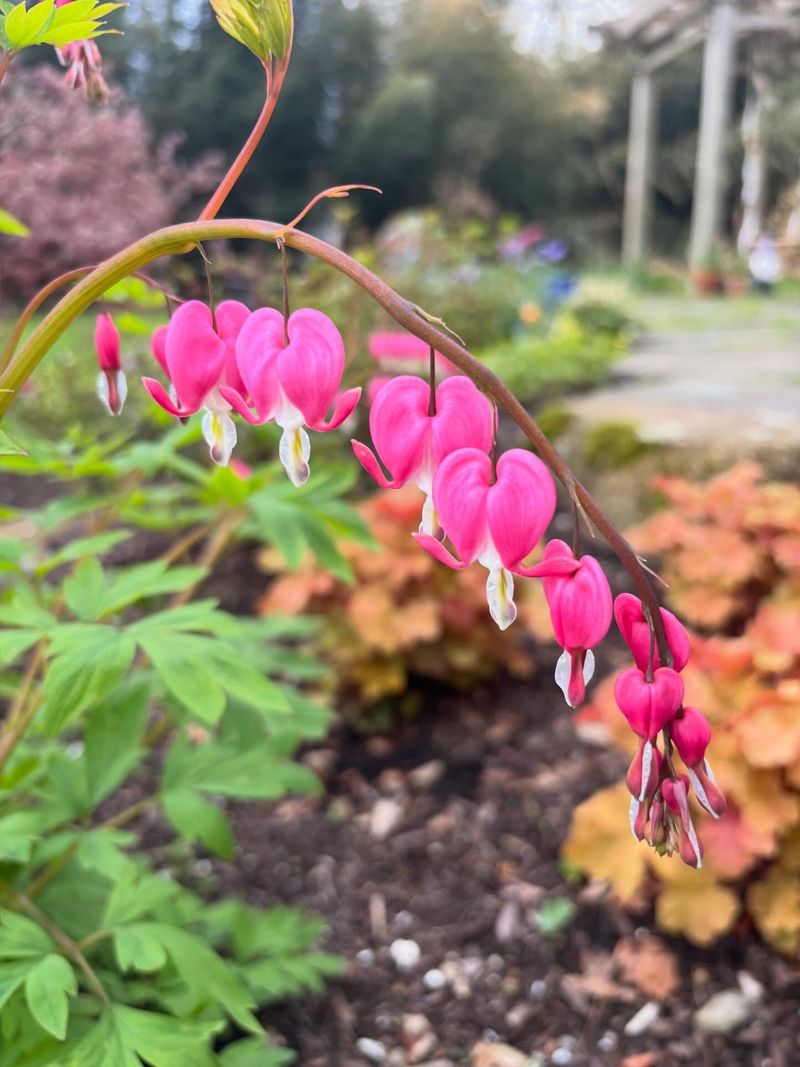
Bleeding hearts have a quiet elegance that is hard to match. Those arching stems lined with dangling, heart-shaped flowers in pink or white create a look that feels almost romantic, and in a shaded Georgia garden bed, they settle right in alongside hydrangeas without demanding much attention.
Spring is when bleeding hearts shine brightest, sending up their signature blooms before Georgia’s heat really kicks in.
Planting them in the same bed as hydrangeas works well because they occupy the early-season spotlight, then gradually go dormant as summer temperatures rise and hydrangeas take over the visual show.
It is a natural relay of color and interest.
Shade and consistent moisture are the two biggest needs for bleeding hearts in Georgia. Deep, organic-rich soil helps them establish well and come back reliably each spring.
In the northern parts of the state where winters are cooler, bleeding hearts tend to perform especially well. In warmer, southern Georgia areas, finding a consistently shaded, moist spot makes a meaningful difference in how well they establish.
Fringed bleeding heart, or Dicentra eximia, tends to have a longer bloom period than the common variety and handles Georgia’s climate a bit more gracefully.
Pairing it with hostas and hydrangeas in a shaded corner creates a layered, woodland-style planting that looks completely natural and effortless.
It is a combination that rewards patient gardeners who take time to plan the space thoughtfully.