Crowded Zucchini Plants Struggle More Than Gardeners Realize
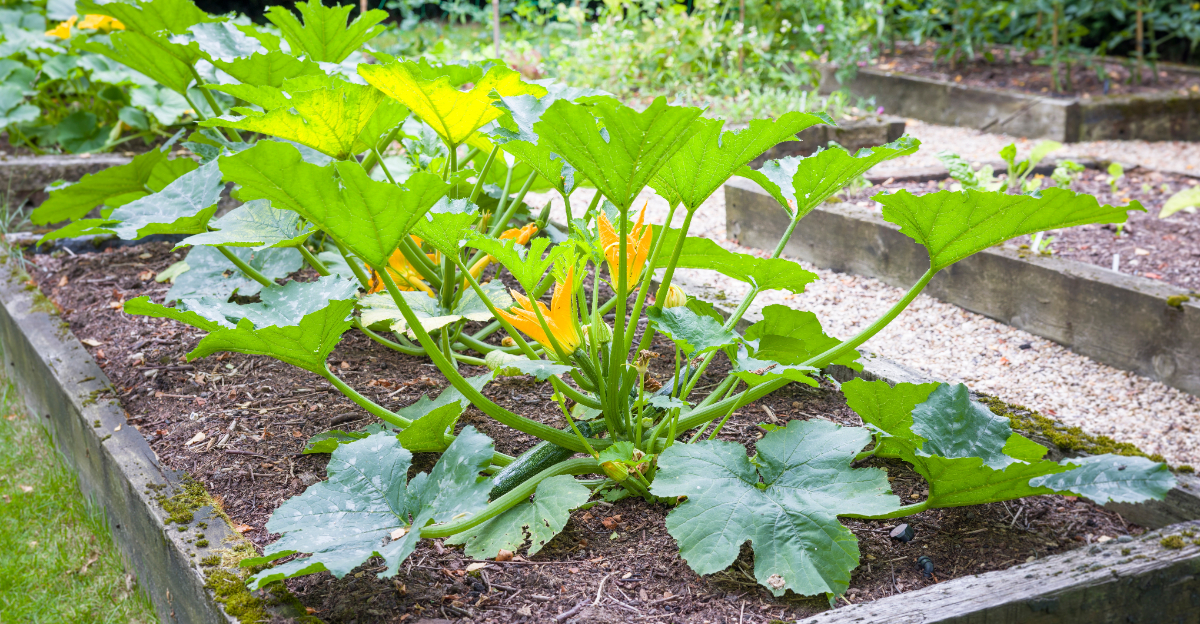
Every zucchini bed starts out looking like a success story. Then the leaves start touching, the stems disappear under a canopy that never lets air through, and the whole patch turns into a tangle nobody planned for.
Fungal spots creep in first, quiet and easy to dismiss, until entire leaves turn yellow and drop. Fruit hides under the mess, growing lopsided or rotting before anyone spots it.
Pollinators skip the tangle too, since bees have trouble finding flowers buried under overlapping leaves. What looks like a thriving patch from the porch often hides a plant fighting for light, space, and airflow just a few feet away.
Crowding does not just slow a zucchini plant down. It quietly decides how the whole season ends.
Overlapping Leaves Trap Humidity Inside The Canopy
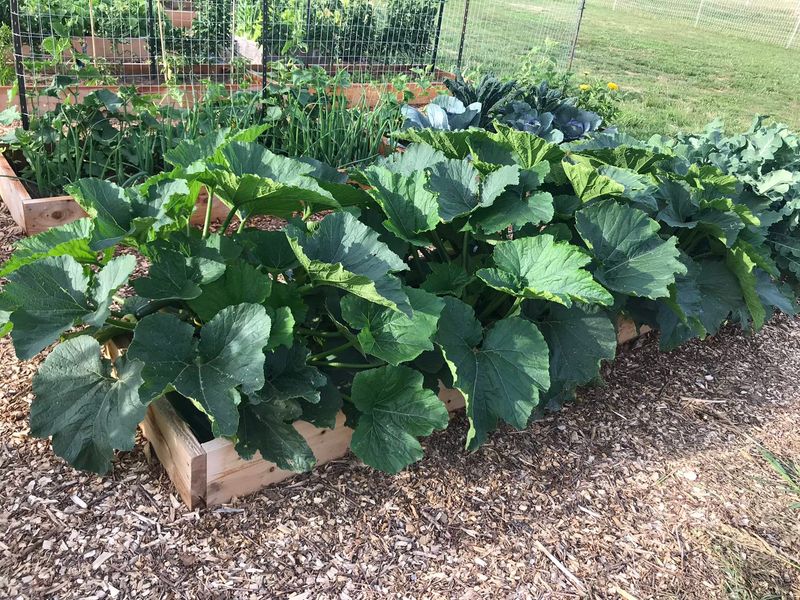
Picture a pile of wet towels that never dry. That is basically what happens when zucchini leaves overlap and create a sealed-off canopy.
Moisture from rain and watering gets caught underneath the leaves. Without airflow, that humidity just sits there with nowhere to go.
Crowded zucchini plants struggle to breathe in these conditions. The dense canopy blocks the gentle movement of air that keeps leaf surfaces dry and healthy.
Wet leaves stay wet for hours longer than they should. That extended dampness creates a perfect environment for all kinds of trouble to begin.
Experienced gardeners know that air circulation is just as important as sunlight or water. When leaves overlap, you lose that circulation almost completely.
The canopy acts like a greenhouse inside a greenhouse. Temperatures and humidity spike in the center, stressing the plant from the inside out.
Stems near the base of the plant also suffer. Trapped moisture softens tissue and makes the plant more vulnerable to rot and infection.
Fixing this starts with giving each plant enough room to spread without touching its neighbor. Proper spacing allows air to move freely through every layer of foliage.
You can also hand-prune a few of the lower, larger leaves. Removing just two or three leaves opens the canopy dramatically and improves conditions fast.
A little space between plants changes everything about how the canopy behaves. Good airflow is your first and strongest defense.
Powdery Mildew Thrives In These Still, Damp Pockets
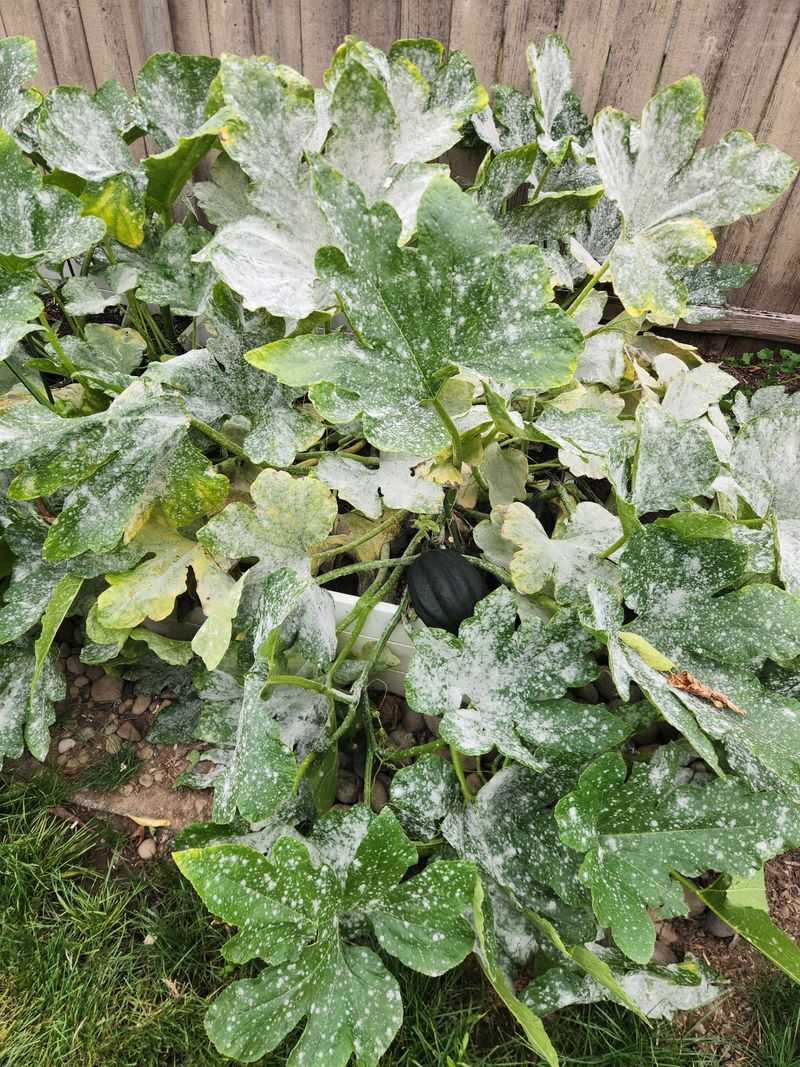
That chalky white coating on your zucchini leaves is not dust. It is powdery mildew, and it loves nothing more than a still, damp pocket of air.
Powdery mildew spreads through spores that float through the air. When plants are packed together, those spores land on moist leaves and take hold almost instantly.
The fungus does not even need standing water to spread. High humidity alone is enough to trigger an outbreak in overcrowded beds.
Once it appears on one leaf, it moves quickly across the plant. Neighboring plants catch it fast when leaves are already touching.
Most gardeners notice powdery mildew late, after it has already spread across several plants. By then, the infestation is much harder to manage.
Crowded zucchini plants struggle most in the afternoon heat, when humidity spikes and air movement slows. That combination creates ideal conditions for the fungus to explode.
Organic sprays like diluted baking soda or neem oil can slow the spread. But without better airflow, treatments only buy a little time.
The real fix is prevention through smart planting. Giving each plant at least three feet of open space on every side reduces humidity buildup significantly.
Morning watering also helps, since leaves dry faster during the day. Avoid wetting the foliage whenever possible and aim water at the soil instead.
Powdery mildew is a symptom of a crowding problem. Solve the spacing issue, and the fungus loses its favorite hiding spot for good.
Sunlight Struggles To Reach The Lower Leaves

Zucchini is a sun-hungry plant that expects full light all day long. When plants crowd together, the lower leaves get left in the dark.
Upper leaves grab all the sunlight first and cast heavy shade below. The leaves underneath slowly weaken because they cannot photosynthesize enough to stay healthy.
Weak lower leaves turn yellow and drop off faster than they should. Losing them early stresses the plant and reduces its overall energy output.
Less energy means slower fruit production and smaller harvests. A plant spending resources on struggling leaves cannot focus on growing the zucchini you actually want.
Shaded conditions near the base also stay wetter longer after rain. That combination of shade and moisture creates a second humidity problem below the canopy.
Crowded zucchini plants struggle with this layered light problem throughout the season. It gets worse as the plants grow larger and block even more sun.
Some gardeners try to fix this by staking or training their plants upward. While that helps a little, it does not replace the benefit of proper spacing from the start.
Raised beds lift plants slightly, but overcrowding still causes the same airflow and light problems as growing in the ground.
Sunlight reaching every leaf means the whole plant stays productive longer. A well-lit plant holds its lower leaves and keeps generating energy well into fall.
Think of light as food for the leaves. Every leaf that gets blocked is a leaf that slowly stops contributing to your harvest.
Pollinators Have A Harder Time Finding The Flowers
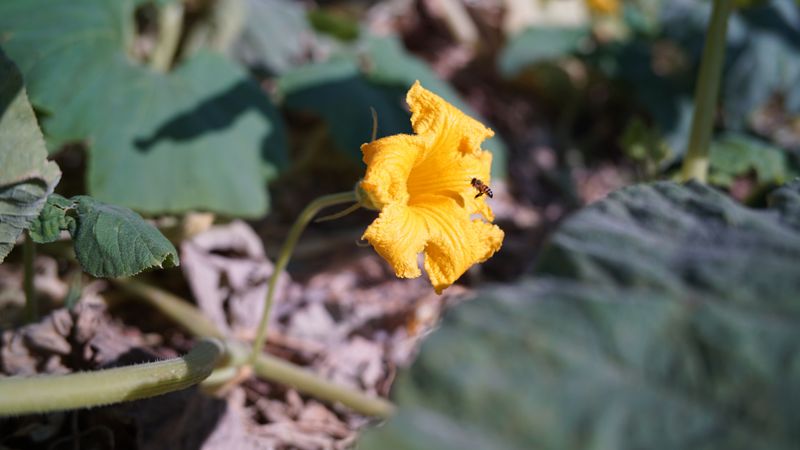
Zucchini needs bees to produce fruit. Without a pollinator visiting the male and female flowers, you end up with beautiful plants and almost no zucchini.
When plants are packed tightly, the flowers get buried under layers of foliage. Bees are attracted to open, visible blooms, not hidden ones tucked beneath a leafy jungle.
A bee cruising through your garden will skip a flower it cannot easily see or land on. Accessibility matters just as much as the flower itself.
Crowded zucchini plants struggle with pollination more than most gardeners expect. The flowers are there, but they might as well be invisible to passing pollinators.
Female flowers only stay open for one morning. If a bee does not find it during that narrow window, the fruit will not set.
Missing that window means the small zucchini behind the flower shrivels and drops off. Gardeners often blame the plant when the real issue is flower access.
Hand pollination is one workaround when bees cannot get through. Use a small paintbrush to transfer pollen from a male flower to a female flower early in the morning.
It works, but it is extra work you should not have to do every day. Better spacing lets bees do their job without any help from you.
Planting flowers like marigolds or borage nearby also draws more pollinators into the area. More bees in the garden means better odds of every flower getting visited.
Give your blooms room to shine, and pollinators will find them on their own.
Roots Compete For The Same Limited Nutrients

What happens above the soil is only half the story. Beneath the surface, crowded zucchini roots are locked in a quiet, constant competition.
Each plant sends out roots in every direction, searching for water and nutrients. When two plants are too close, their root systems overlap and pull from the same zone.
Nitrogen, phosphorus, and potassium all get drawn down faster in crowded beds. The soil gets depleted before the season ends, leaving plants hungry and stressed.
A stressed plant produces smaller fruit and becomes more vulnerable to pests. The connection between root competition and harvest size is direct and measurable.
Crowded zucchini plants struggle underground even when the soil looks rich and healthy. You cannot see the competition happening, but the plants absolutely feel it.
Adding fertilizer helps temporarily, but it does not fix the root crowding problem. The plants will still compete over whatever nutrients are available in that shared zone.
Zucchini roots can spread two to three feet from the base of the plant. Planting them too close creates unavoidable overlap no matter how well you feed the soil.
Raised beds with rich compost help buffer the competition somewhat. But even the best soil gets depleted quickly when roots are pulling from the same small area.
Spacing plants at least three feet apart gives each root system its own territory. That separation allows each plant to access a full share of the nutrients it needs.
Healthy roots produce healthy plants, and healthy plants produce the harvest you were hoping for all along.
Proper Spacing Solves Most Of These Problems At Once
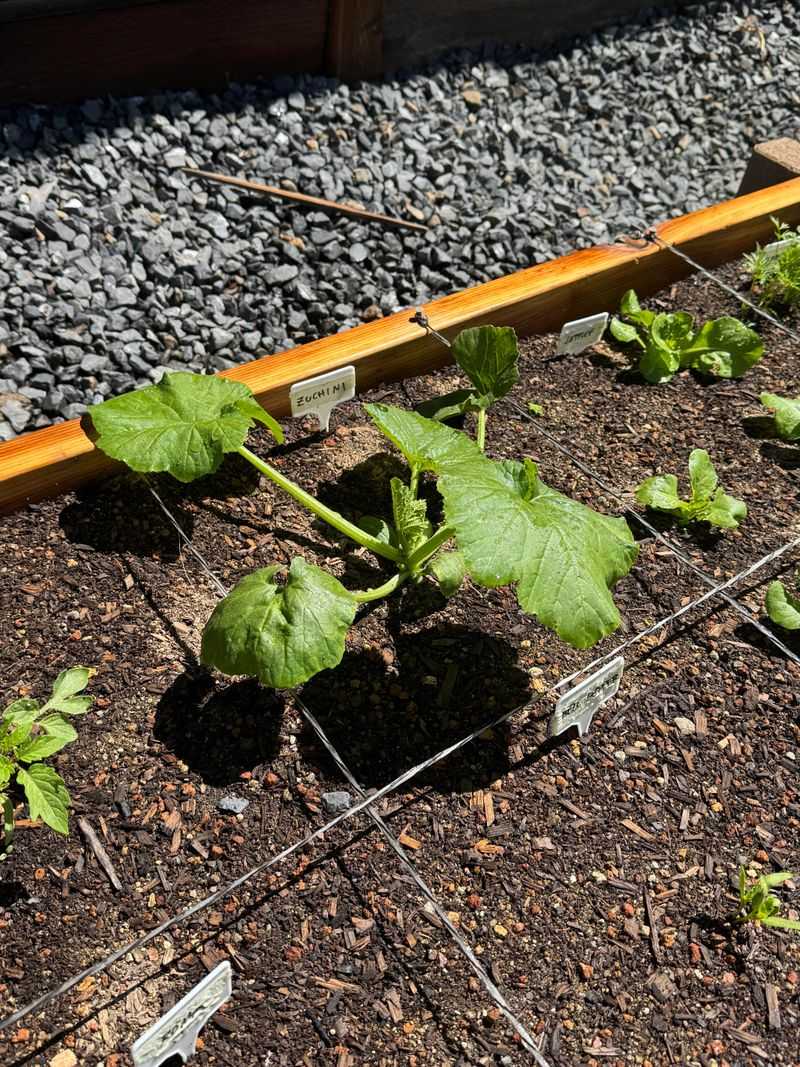
One simple change fixes nearly everything on this list. Giving each zucchini plant enough space transforms how the entire garden performs.
Most experts recommend planting zucchini at least three feet apart in rows spaced four feet wide. That might feel like a lot of empty ground early in the season.
But by midsummer, those plants will fill every inch of that space. Starting with room to grow means they fill it with healthy, productive foliage instead of stressed, tangled leaves.
Better spacing improves airflow immediately, which reduces humidity and lowers the risk of powdery mildew. Sunlight reaches lower leaves, keeping the whole plant energized and productive.
Pollinators can spot and access the flowers easily when plants are not hiding them. Bees land, pollinate, and move on, and your harvest reflects that efficiency.
Underground, each plant gets its own nutrient zone without competition. The roots spread freely and pull from soil that has not been depleted by a neighbor.
Crowded zucchini plants struggle because gardeners underestimate how big these plants get. A seedling the size of your hand becomes a sprawling plant three feet across.
Planning for that final size at planting time saves weeks of frustration later. Resist the urge to squeeze in one more plant at the edge of the bed.
Fewer, well-spaced plants consistently outperform a crowded group competing for the same resources. Quality of space beats quantity of plants in the zucchini patch.