Do you get just as excited over baby veggies as I do? Here’s why that first tiny cucumber feels like a win
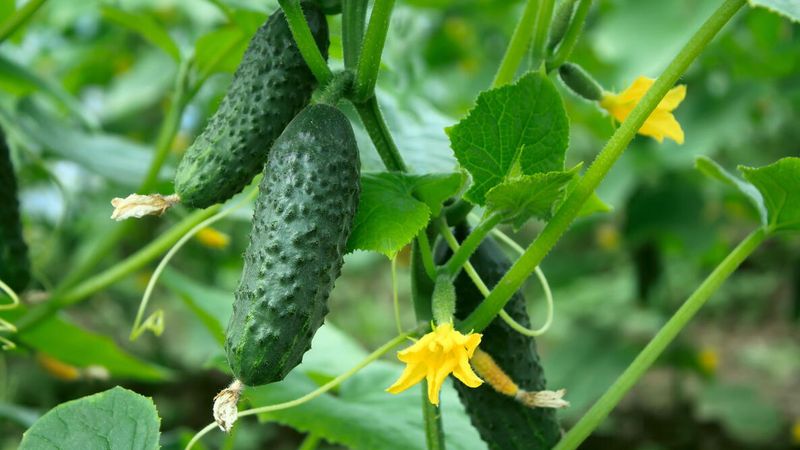
Spotting that first tiny cucumber clinging to the vine is one of those quiet garden moments that can stop you in your tracks. For many home growers in Oregon, it feels like proof that all the soil-amending, watering, and waiting actually meant something.
But that little green nub is also the beginning of a story that isn’t finished yet, and understanding what it really represents can help you cheer it on more effectively.
That Tiny Cucumber Is a Female Flower’s Promise
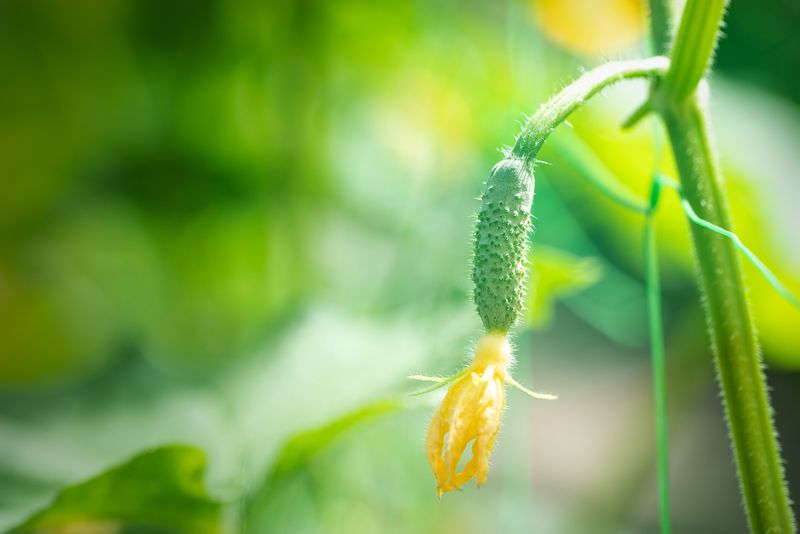
Look closely at the base of that bright yellow cucumber blossom and you will find a small, ridged, green structure that looks exactly like a miniature cucumber. That is not a coincidence.
OSU Extension’s cucumber guide explains that a female flower carries an immature ovary at its base, and that ovary is what you are seeing. Male flowers, which appear earlier and in greater numbers, lack that little swell entirely.
The moment you can tell the difference between a male and a female flower on your vine is a genuine skill unlock. Many first-year cucumber growers spend a week puzzling over why they see blossoms but no fruit before they realize the early flowers were all male.
Spotting that first female flower with its tiny fruit-in-waiting feels different, and for good reason: you are looking at the plant’s biological potential made visible in a way that a flower alone cannot show you.
That said, the word “promise” carries some weight here. The ovary is real, the potential is real, and the excitement makes complete sense.
What the tiny structure cannot tell you on its own is whether pollination has happened or whether the fruit will keep growing. Illinois Extension’s cucumber profile notes that fruit development in standard varieties depends on what happens next, not just on the ovary’s appearance.
Celebrate the milestone, absolutely. Just know the vine still has more work to do before that tiny nub becomes anything you can slice for a salad.
The Vine Is Not Making a Guarantee Yet
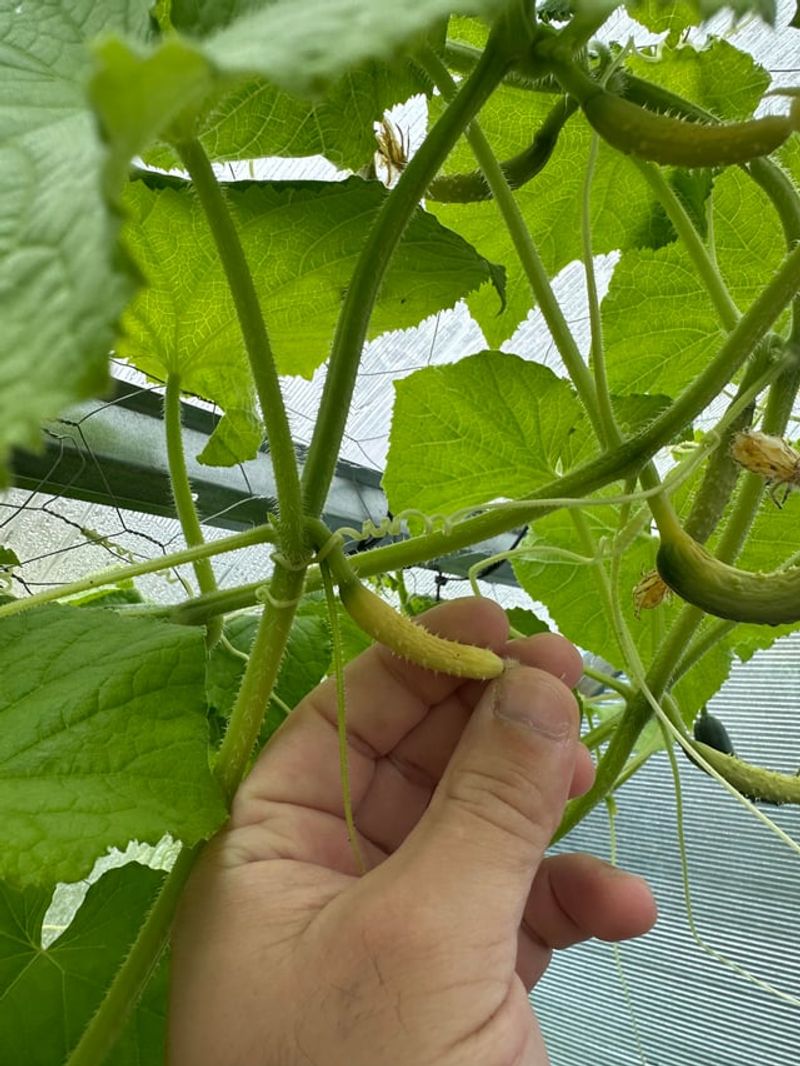
Seeing a tiny cucumber and assuming you are about to harvest a bowlful is a very human thing to do. The vine, unfortunately, has not committed to anything yet.
That small ovary can grow into a full, edible cucumber if everything goes well, but it can also yellow, shrivel, and drop before it gets anywhere close to your kitchen counter.
Fruit abortion, which is the technical term for a developing cucumber stopping and falling off, happens for a range of reasons. According to Penn State Extension’s high-tunnel cucumber guide, inadequate pollination, heat stress, poor light, moisture problems, and other plant stresses can all contribute to small fruit failing to develop fully.
The vine is essentially making ongoing decisions about where to put its resources, and a fruit that does not have the conditions it needs may simply be abandoned.
Here is the part worth remembering when it happens: a dropped baby cucumber is not a report card on your gardening. Plants abort fruit even in well-tended gardens, especially early in the season when conditions are still settling.
Your Oregon Garden Changes Every Week. Your Plan Should Too.
Gardening in Oregon changes quickly throughout the season. Every Friday you’ll receive a simple weekly plan showing exactly what to plant, prune, fertilize, harvest, and protect so you never miss the right timing.
The first few attempts often do not make it, and that is normal enough that experienced growers expect some loss and do not take it personally.
Replacing all-or-nothing thinking with a more open-ended sense of possibility actually makes the whole process more enjoyable. You spotted the female flower, you noticed the ovary forming, and now you are watching to see what the vine does next.
That watchfulness is part of what gardening actually is, and each tiny cucumber that does make it through will feel that much more earned.
Pollination Turns Possibility Into a Growing Fruit
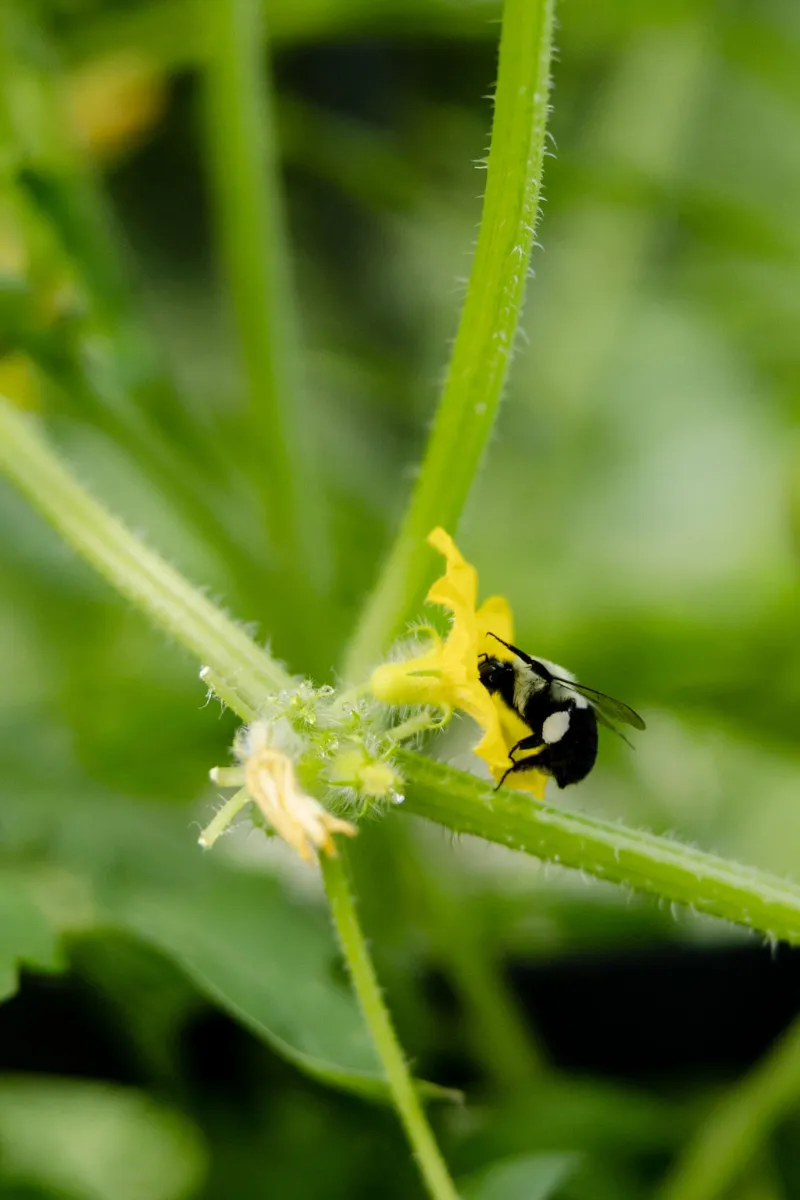
For most cucumber varieties grown in Oregon home gardens, a bee or other insect has to physically carry pollen from a male flower to a female flower before that little ovary can develop into an actual cucumber. The process sounds simple, but it requires the right flowers to be open at the same time, an insect willing to visit both, and conditions that make foraging worthwhile.
When all of that lines up, the fertilized ovary begins to swell. When it does not, the fruit stalls.
Standard cucumber varieties are monoecious, meaning each plant produces separate male and female flowers. OSU Extension describes how bees and other insects move between those flowers, picking up pollen on one visit and depositing it on another.
The male flowers tend to show up first and in larger numbers, which can feel discouraging before the females arrive, but that timing is intentional. The plant is essentially setting up a pollen supply before the female flowers open.
There is an important exception worth knowing before you conclude that every baby cucumber needs a bee to survive. Some cucumber varieties, called parthenocarpic hybrids, can produce fruit without pollination at all.
Illinois Extension notes that these varieties often produce seedless cucumbers and are sometimes chosen specifically for growing in enclosed spaces like greenhouses where insect access is limited.
Checking your seed packet or plant tag is worth the thirty seconds it takes. If your variety is a standard slicer or a traditional pickling type, insect activity around your plants is doing real work.
If it is labeled as a parthenocarpic or seedless type, the rules are different. Either way, understanding which kind you are growing helps you interpret what that first tiny fruit actually means.
Oregon Weather Can Change the Odds
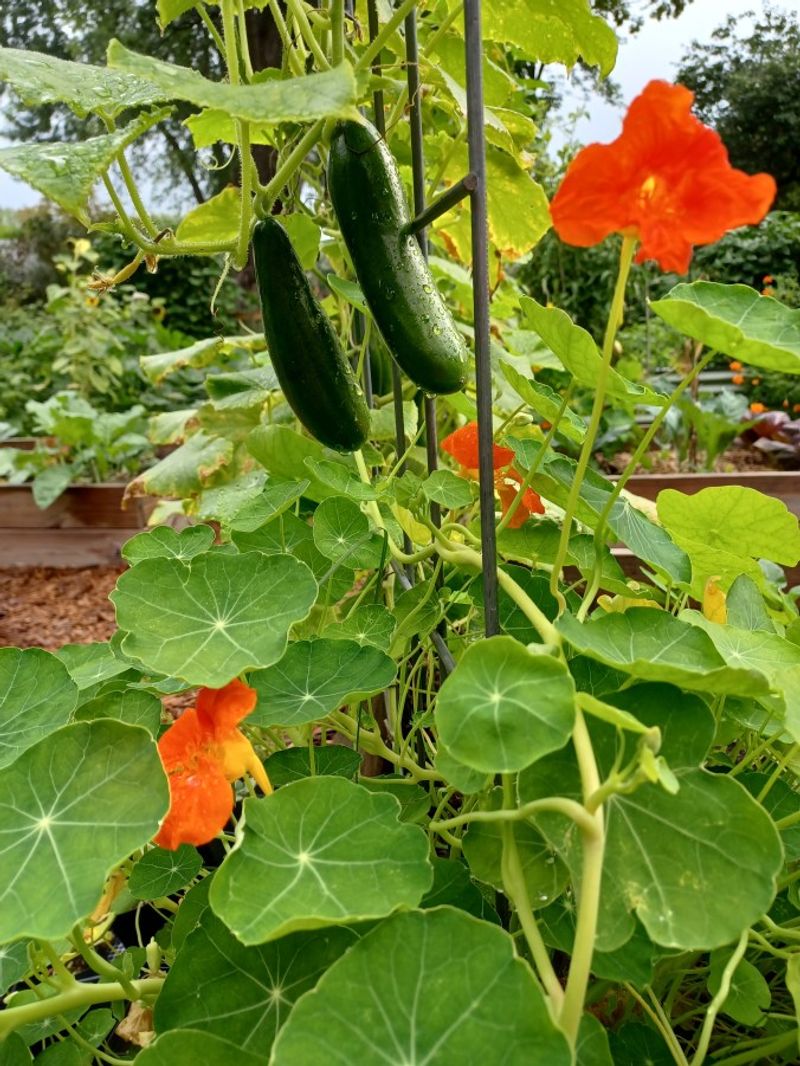
Oregon is not one climate, and cucumbers do not behave the same way from the coast to the Cascades to the high desert east of Bend. Treating the whole state as a single planting window is one of the fastest ways to set yourself up for disappointment.
Cucumbers are warm-season crops that are sensitive to frost, and getting the timing right depends heavily on where you live in the state.
West of the Cascades in the Willamette Valley and along the coast, spring arrives with rain and cool temperatures that can linger well into what the calendar calls summer. OSU Extension specifically notes that temperatures below 50 degrees Fahrenheit and rainy weather can reduce bee activity and pollination efficiency.
A stretch of gray, drizzly days during bloom time may not doom every flower, but it can noticeably reduce the number of fruits that set.
Central Oregon and other higher-elevation or high-desert areas face a different challenge. Cool evenings can persist even in midsummer, slowing growth and reducing pollination and yield.
OSU’s guide for growing vegetables in Central Oregon recommends late May to early June transplanting for that region, and it emphasizes the value of warm microclimates and season-extension tools like row covers and walls of water for heat-loving crops.
Wherever you garden in Oregon, the practical move is to give cucumbers the warmest, sunniest, most protected spot you have. South-facing beds, dark-colored containers that absorb heat, and walls or fences that block cold wind can all extend the window of conditions favorable for pollination and fruit development.
The weather will do what it does, but you can tilt the odds in your favor.
Steady Care Gives the Baby Fruit a Fair Chance
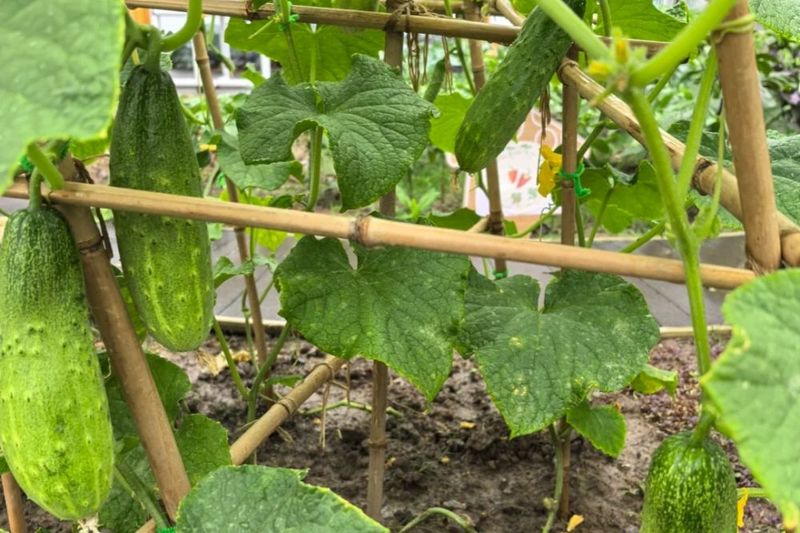
Once a tiny cucumber has formed and pollination has occurred, the fruit still depends on consistent conditions to keep growing. Plants under stress, whether from heat, drought, erratic watering, poor light, or disease, can redirect resources away from developing fruit and toward survival.
That reallocation often shows up as small cucumbers that stall, misshapen fruit, or cucumbers that start growing and then stop.
Even moisture is one of the most reliable things you can offer. OSU’s Central Oregon vegetable guide identifies flowering and fruiting as particularly critical periods for water demand in warm-season crops.
Letting the soil swing between bone-dry and waterlogged during those stages can contribute to problems like bitterness, cracking, or misshapen cucumbers. A consistent watering schedule, adjusted for Oregon’s dry summers, matters more during fruit development than at almost any other growth stage.
Light and warmth are equally important. OSU Extension describes cucumbers as needing warm temperatures and adequate water to thrive, and plants that are shaded, crowded, or struggling with disease are less likely to carry developing fruit to harvest.
Penn State Extension also connects plant stress from heat, poor light, and moisture inconsistency to fruit abortion in cucumber crops.
None of this means you need a perfect garden. It means that the care you put in during the weeks after that first baby cucumber appears is when it counts most.
Good habits during flowering and fruiting, steady water, adequate sun, and keeping an eye out for disease or pest pressure, improve the odds without guaranteeing any particular outcome. The vine will still make its own decisions, but you will have given it the best possible conditions to say yes.
Protect the Pollinators Doing the Quiet Work
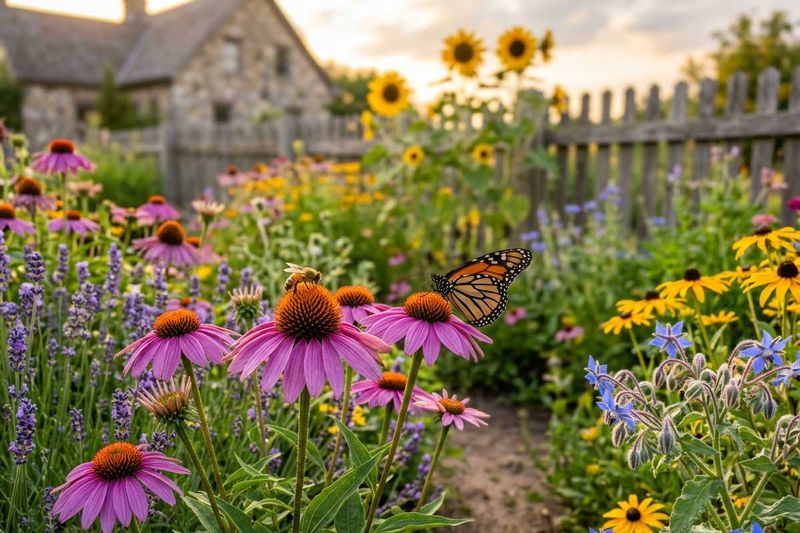
Bees and other beneficial insects are doing real, consequential work every time they visit a cucumber flower, and the easiest thing most Oregon gardeners can do to support fruit set is simply to avoid disrupting them. That does not mean you need a beehive in the backyard or a formal pollinator garden.
It means being thoughtful about what you spray, when you spray it, and what else is blooming nearby.
If pest pressure becomes a problem on your cucumber plants, the first step is identifying what you are actually dealing with before reaching for a product. OSU Extension’s guidance on pesticides and pollinators emphasizes following product labels closely, respecting bloom restrictions, and avoiding applications on flowering plants or when bees and other beneficial insects are actively foraging.
Even products considered low-risk can cause harm if they are applied at the wrong time or in the wrong conditions.
Beyond pesticide timing, simple habitat choices help. Letting some herbs or flowering plants grow near your vegetable beds can attract and support the insects that will visit your cucumber flowers.
University of Minnesota Extension notes that cucumbers benefit from insect pollination, and maintaining a garden that welcomes foragers throughout the season supports that process.
Pollinators are not a feature you add to a garden. They are participants who show up when conditions are welcoming and stay away when they are not.
Treating them as partners rather than background characters is one of the quieter, more rewarding shifts a gardener can make.
Let the Variety Decide When Small Is Ready
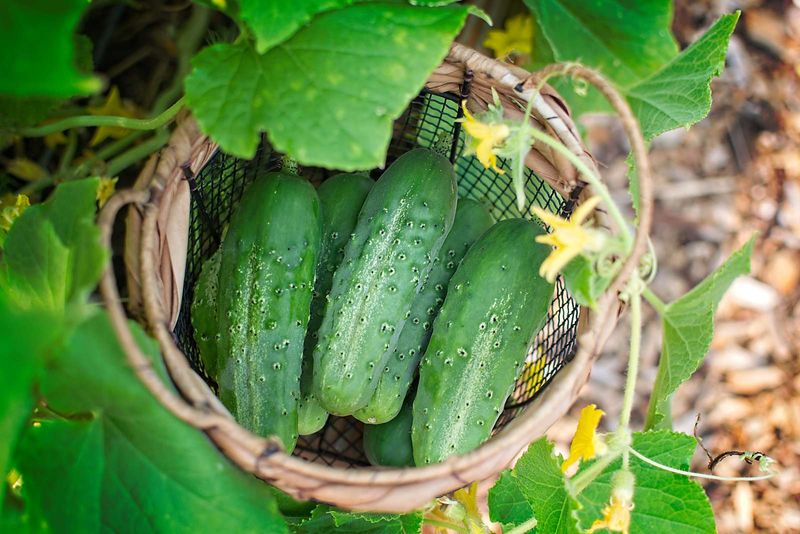
Cucumbers are generally harvested while they are still immature, before the skin toughens, the seeds harden, and the flesh turns bitter. But “immature” covers a lot of ground, and what counts as the right size to pick depends entirely on the variety you are growing and what you plan to do with it.
OSU Extension gives approximate harvest ranges of 2.5 to 6 inches for pickling cucumbers and 6 to 10 inches for slicing types, and those ranges exist for good reasons. A pickling cucumber harvested at 3 inches is doing exactly what it is supposed to do.
A slicing cucumber pulled at 3 inches is not a gourmet baby vegetable; it is just an unfinished slicer. The variety’s intended purpose sets the target, not the gardener’s enthusiasm for tiny things.
Frequent harvesting genuinely helps keep production going through the season. OSU recommends checking plants about every other day once cucumbers start coming in, because fruit left on the vine past its prime signals the plant to slow down fruit production.
The goal is to harvest fruit that has reached the right size for its type, not to pull every developing ovary the moment it appears.
Consistent watering during this stage also matters for quality. Drought, uneven moisture, temperature swings, and over-maturity can all contribute to bitterness or misshapen fruit.
One additional note worth keeping in mind: if you grow cucumbers near volunteer squash or other cucurbits of unknown origin, and a cucumber tastes intensely, unusually bitter, OSU warns that such fruit from potentially crossed or volunteer plants can contain high levels of cucurbitacins. Extreme bitterness is a reason not to eat the fruit, not a problem that peeling will necessarily fix.
Celebrate the Sign, Then Keep Watching
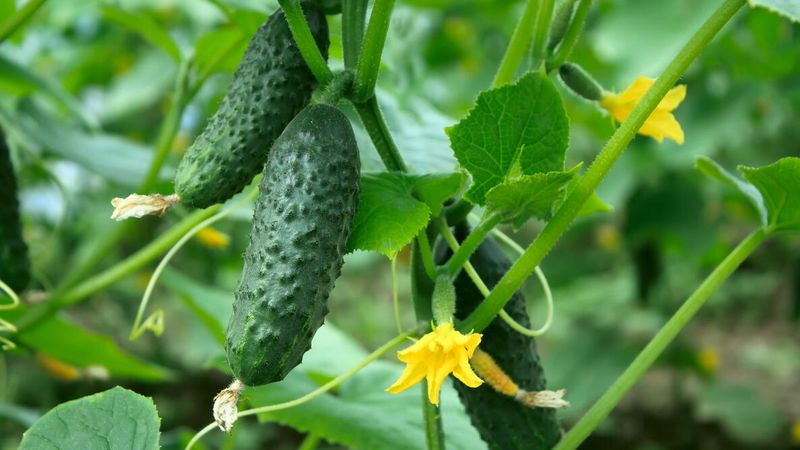
That first tiny cucumber deserves every bit of the excitement it generates. Seeing the plant’s potential shift from abstract hope to something you can actually see and almost touch is a real moment in the growing season, one that many gardeners remember more vividly than the eventual harvest.
What OSU Extension’s guidance makes clear is that the celebration and the careful watching are not in conflict. Warmth, steady moisture, pollinator-friendly habits, and a little patience can improve the odds that the tiny cucumber keeps growing.
None of those things guarantee it, because the vine is making its own ongoing calculations about resources, stress, and conditions.
The gardener’s job at this point is to keep providing good conditions and stay curious. Some of those baby cucumbers will make it.
Some will not, and that is not a failure. The milestone was real either way.
Seeing the female flower, noticing the ovary, watching it swell a little more each day: that is the garden working, and you are paying close enough attention to see it happen.
A tiny cucumber is a sign worth celebrating. Just keep watching to find out what it becomes.