Why Sedums Flop Open In Oregon Gardens And How To Keep Them Compact

Every September, something strange happens in Oregon flower beds. A plant that stood proud and tidy in June suddenly splits down the middle like a badly packed suitcase.
The stems lean outward, the centers open up, and the whole clump looks like it gave up halfway through a stretch. Gardeners blame the rain, the soil, the neighbor’s cat.
The truth is far less mysterious, and it starts long before the flopping shows up. It has to do with how much comfort a plant receives during our soft, drizzly spring.
With the timing in view, you can fix the problem with nothing more than a pair of scissors and a little restraint. Let’s look at what is really going on out there.
Heavy Flower Heads Meet Stems Too Weak To Hold Them
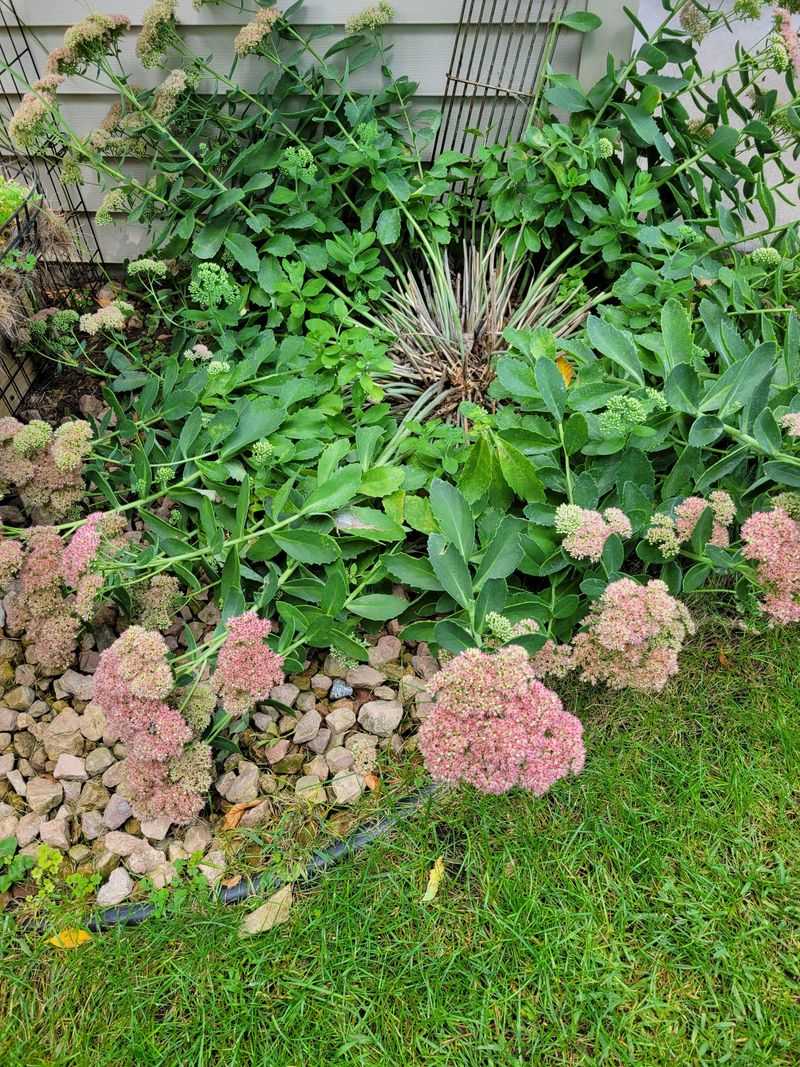
Flopping is almost never a disease problem. It is a growth problem, and it traces back to stems that grew faster than they grew strong.
Think of a plant stem like a drinking straw. Fill it with water quickly and it stretches long and thin, with soft walls that bend under any load.
Oregon springs hand out exactly that recipe. Steady moisture, mild temperatures, and low light from weeks of cloud cover push stems upward in a hurry.
By the time the flower heads form, those heads are heavy while the stems below are still soft and stretched. Add one summer rainstorm and gravity finishes the job.
The center opens first because inner stems get the least light and grow the leanest. Outer stems have more support from neighbors and lean rather than collapse.
Rich soil makes it worse. Garden beds amended with compost every year hold nutrients and water that encourage lush, watery growth instead of dense, sturdy growth.
Gardeners often respond by staking, which hides the issue without solving it. The stems stay weak, and next year brings the same lopsided mess.
This plant responds fast to changes in care. Cut back on comfort, add light, and shorten the stems at the right moment, and the mound holds together.
It really does come down to timing. Get that right and the rest takes care of itself.
Tall Border Sedums And Their Soft Spring Growth
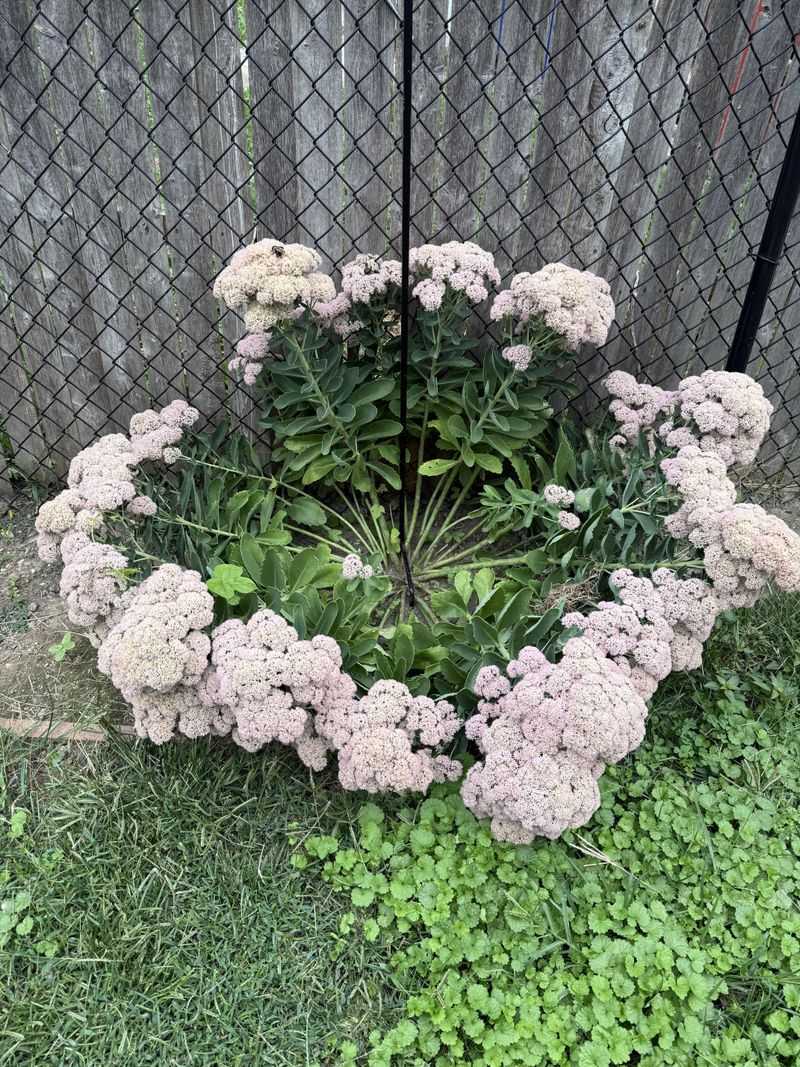
Time to name names. The floppers are the tall border sedums, now often labeled Hylotelephium, including old favorites like Autumn Joy, Matrona, and Brilliant.
These are not the low creeping types that hug rock walls. Tall sedums send up thick fleshy stems that reach eighteen to twenty-four inches before topping off with broccoli-shaped flower clusters.
Their fleshy build is the whole problem. Stems and leaves store water, so a well-fed plant becomes surprisingly heavy by September.
Here is a bit of history worth knowing. Autumn Joy is a garden hybrid bred in Europe, selected for big flower heads rather than for strong posture.
Breeders have since released shorter, sturdier picks such as Thundercloud, Munstead Dark Red, and the compact Rock N Grow series. Those hold up much better west of the Cascades.
Your Oregon Garden Changes Every Week. Your Plan Should Too.
Gardening in Oregon changes quickly throughout the season. Every Friday you’ll receive a simple weekly plan showing exactly what to plant, prune, fertilize, harvest, and protect so you never miss the right timing.
Where you plant matters just as much. Sedums evolved on dry slopes and rocky ledges, soaking up full sun and shrugging off drought.
Willamette Valley clay holds spring moisture for weeks, which is roughly the opposite of a rocky ledge. Roots stay wet, growth stays soft, and posture suffers.
Watch your own plants in May. If new stems feel squishy and snap easily between your fingers, they are already headed for a summer sprawl.
Firm, slightly rubbery stems that resist bending are a sign you are on the right track. Recognizing that difference early gives you weeks to correct course.
Oregon’s Gray Spring Sets Up The September Collapse

Ask any gardener from Eugene to Portland about April and you will hear the same word: gray. That gray is exactly what sedums dislike.
Plants stretch toward light when light runs short. With weeks of overcast skies, stem cells elongate, spacing leaves farther apart and thinning the walls that provide support.
Meanwhile the rain keeps coming. Roots pull up plenty of water, feeding that stretchy growth instead of slowing it down.
Then July arrives and the sky finally clears. By then the stem structure is already set, and sunshine alone won’t thicken what has already hardened in place.
East of the Cascades the story shifts. Bend and Pendleton gardeners get stronger light and drier soil, so their sedums usually stand straighter with less fuss.
Coastal gardens face the toughest version. Fog, cool nights, and salt-heavy air combine into a recipe for long, lazy stems.
Understanding the local pattern helps you plan. If your spring runs wet and dim, assume your sedums need intervention rather than hoping for a lucky year.
Shade from trees and buildings stacks onto the problem. A spot that gets six hours of sun in July may only get two hours in April when the sun sits low.
Track the shade in early spring, not midsummer. Choosing a genuinely bright spot removes half the flopping problem before you plant anything.
Raised beds and south-facing slopes drain faster and warm sooner, which helps enormously in our climate.
Well-Meant Care That Works Against Sedums
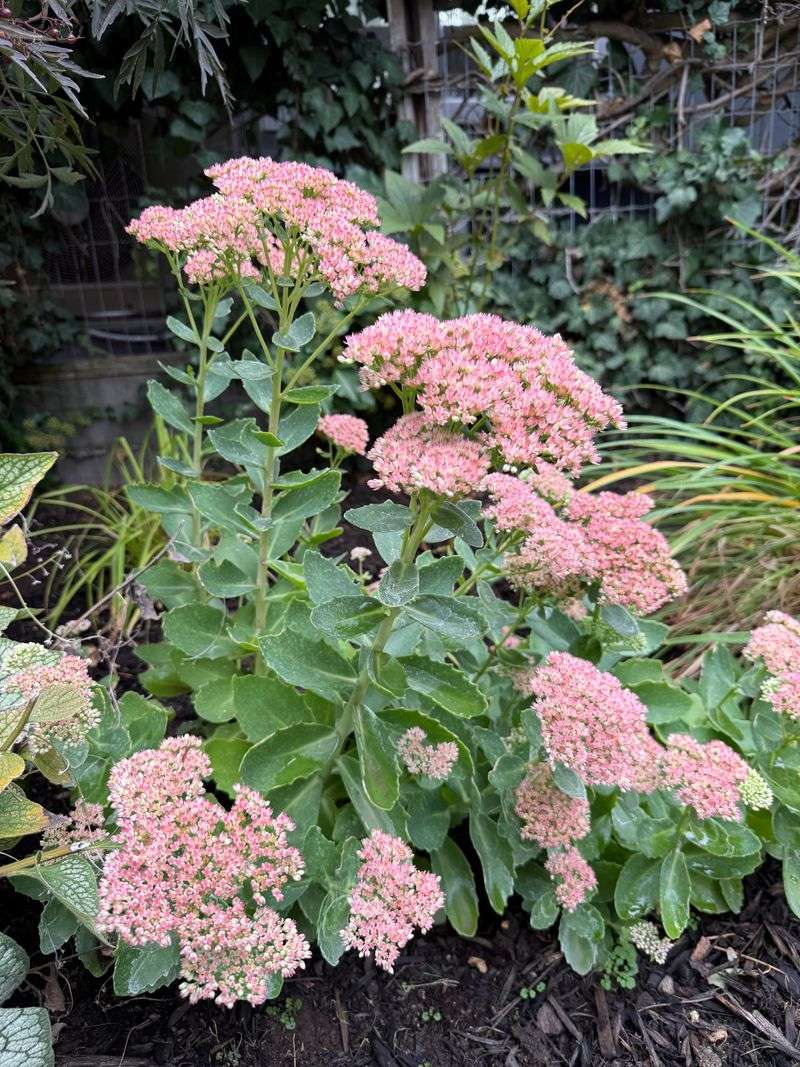
Some plants sprawl because they were neglected. Sedums sprawl because they were pampered.
Weekly summer watering tops the list of well-meant mistakes. Established tall sedums can go two or three weeks between drinks once their roots settle in.
Compost is the second trap. A yearly inch of rich organic matter suits most perennials, but for sedums it fuels soft, floppy growth.
Lawn fertilizer that drifts into the border does similar damage. High nitrogen tells stems to stretch instead of stiffen.
Crowding sneaks up more slowly. After four or five years, a clump grows wide with a woody, tired middle that produces the weakest stems of all.
Those inner stems shade each other, stretch harder, and become the first section to fold outward. Dividing every three years resets the whole plant.
Mulching too heavily also plays a part. A thick blanket right against the crown traps moisture and keeps the base soggy through spring.
Pull mulch back a few inches from the stems and use gravel or coarse grit near the base instead. The crown stays drier and firmer.
What about mixing sedums with thirsty neighbors? Planting them beside hostas or astilbes means they receive water meant for somebody else.
Group them with lavender, yarrow, ornamental grasses, and echinacea. Everybody in that neighborhood appreciates lean soil and dry feet, so your watering habits stop working against you.
Less generosity produces a tighter, stronger plant. It feels wrong, and it works.
One Well-Timed Trim Changes Everything
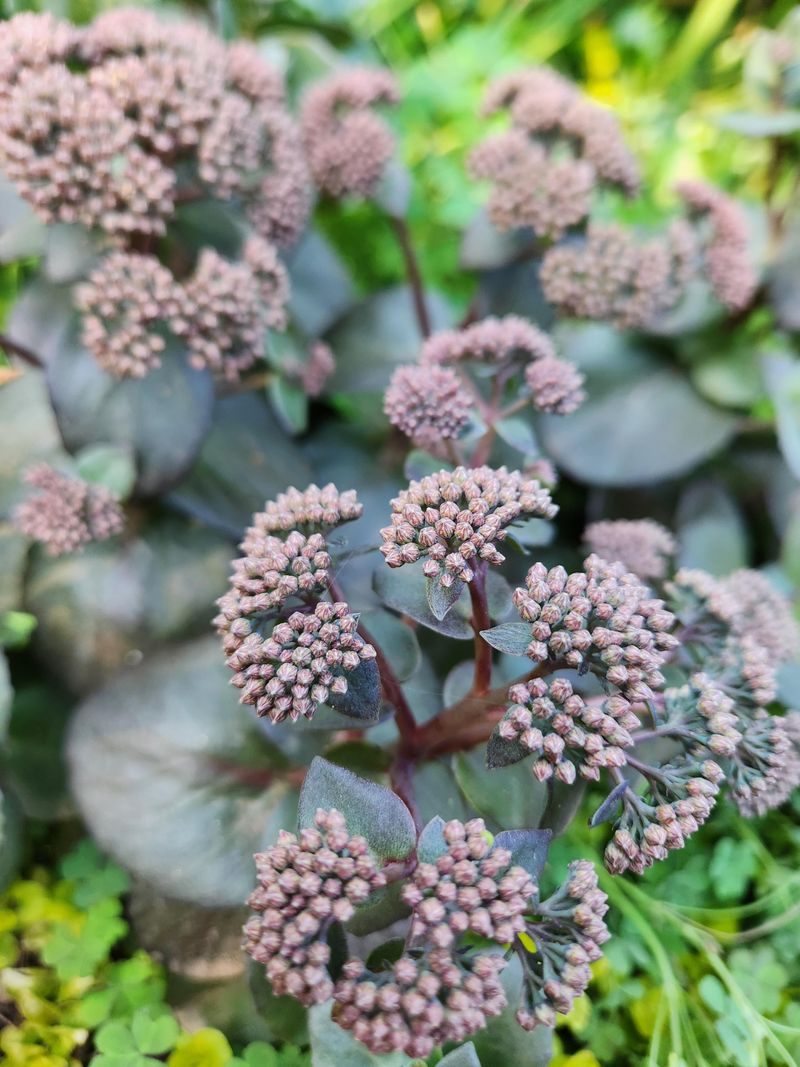
British gardeners named this trick after the Chelsea Flower Show, which lands in late May. The timing is the entire secret.
Around Memorial Day, when your sedum stands roughly eight to ten inches tall, cut every stem back by about half. Clean shears or even scissors work fine.
It looks rough for about ten days. Then each cut stem branches into two or three shorter, thicker stems that carry flowers on sturdy frames.
Flower heads come out smaller and more numerous, which actually improves the look. Bees seem just as happy with the arrangement.
Timing errors cause most disappointments. Cut in April and the plant simply regrows tall, cut in July and you may lose flowers entirely.
For very floppy clumps, try a two-step version. Trim by a third in mid-May, then pinch the tips again in mid-June for extra branching.
Another option suits gardeners who dislike cutting flowers. Remove only the inner third of the stems, leaving the outer ring to bloom normally while the center fills in with shorter growth.
Save your prunings if you like free plants. Sedum cuttings root in damp potting mix within a few weeks with almost no effort.
One trim in late spring often solves what staking cannot. Mark your calendar now.
A Well-Managed Sedum Through Fall And Winter

Picture October in a garden where the sedums behaved. Stems stand at knee height, the mound holds a rounded shape, and rust-colored flower heads sit level like a tabletop.
Bees and late butterflies work those heads through the first cool weeks. Once frost arrives, the flowers dry into copper-brown domes that hold their shape for months.
Leave them standing through winter. Frost outlines every seed head, birds pick at them, and the garden keeps structure when everything else has gone flat.
Cut the old stems down in late February or early March, just as new rosettes appear at the base. That timing gives you winter interest without smothering the fresh growth.
Watch those spring rosettes closely. Tight, low clusters with short spacing between leaves signal a plant on track for a strong summer.
If the rosettes stretch upward quickly, plan on a late-May trim and hold back the hose. Small corrections early beat rescue missions in September.
Every third spring, lift the clump with a spade and split it into pieces the size of your fist. Replant the vigorous outer sections and compost the woody middle.
Divisions establish quickly and give you plants to share with neighbors who are still staking theirs.
The payoff is a perennial that asks for almost nothing. Lean soil, honest sunshine, occasional water, one spring haircut, and a division now and then.
Handled that way, tall sedums hold their posture and reward you long after the rest of the border fades.