12 Easy Houseplants That Do Well In Low Light North Carolina Homes
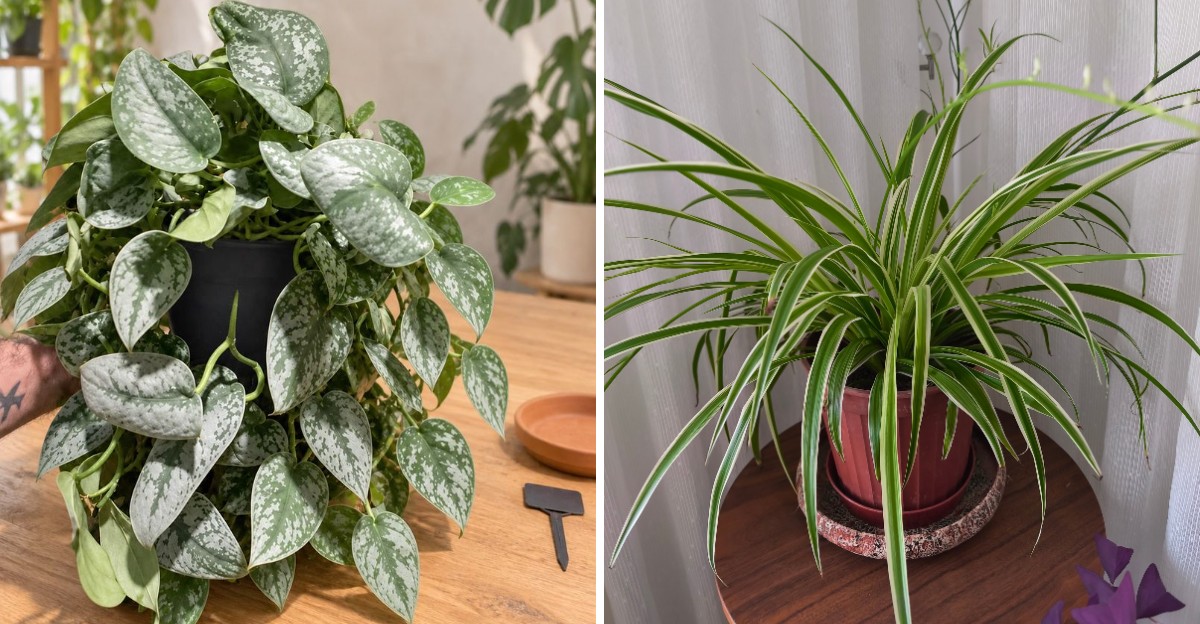
Not every North Carolina home comes with the bright, sunny windows that most houseplant care guides seem to assume, leaving plenty of rooms that look perpetually dim no matter the time of day.
Certain houseplant varieties have adapted specifically to low-light forest floor conditions in their native environments, making them naturally suited to interior spaces that receive only filtered or indirect light throughout the day.
These plants typically grow more slowly than their sun-loving counterparts, but that reduced pace often translates into lower overall maintenance and less frequent watering needs.
Because low light doesn’t mean no light, understanding roughly how much brightness a specific spot actually receives helps match the right plant to the right corner of a room.
For anyone convinced their home is simply too dark for houseplants, these twelve varieties prove otherwise.
1. Snake Plant Handles Dim Corners And Missed Waterings
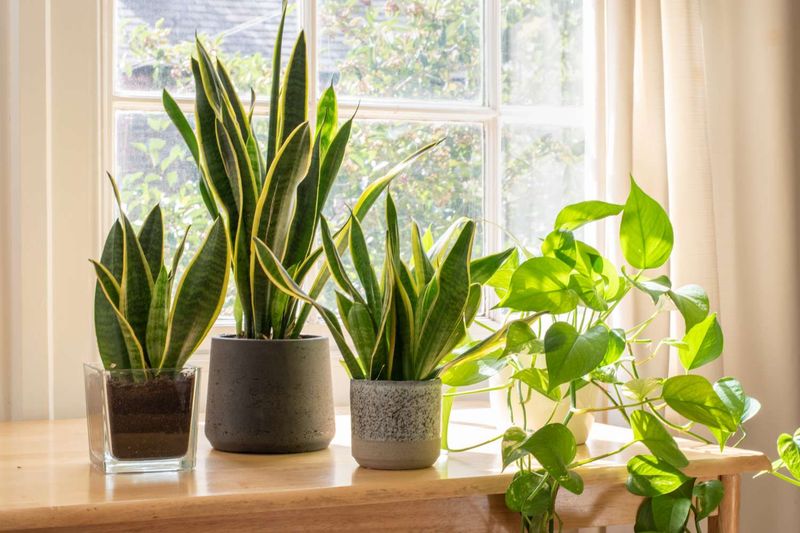
Some plants sulk the moment the sun disappears, but the snake plant barely notices. Known by the scientific name Dracaena trifasciata, it grows stiff, sword-shaped leaves that point straight up like a green fence.
Many people know it by its old nickname, mother-in-law’s tongue. Its secret is water storage.
The thick leaves hold moisture like a canteen, so the plant can go weeks without a drink. In a dim spot, it simply grows slower instead of falling apart, which is why beginners love it so much.
You can place a snake plant almost anywhere, from a shadowy corner to a spot with bright indirect light. Let the soil dry out completely before you water again. In winter, water even less, sometimes only once a month.
Too much water is the biggest problem this plant faces, since soggy soil causes the roots to rot.
For the best start, use a fast-draining potting mix, such as one made for cactus and succulents. Always choose a pot with drainage holes so extra water can escape. A heavy clay or ceramic pot also helps keep tall plants from tipping over.
North Carolina homes often sit under tall loblolly pines or behind wide, shady front porches. Those features keep houses cooler in summer, but they also block a lot of natural light. A snake plant shrugs that off and stays sharp and upright all year.
If you travel often or forget about watering, this is the plant to try first. It rewards a little neglect better than almost anything else on the shelf.
2. ZZ Plant Stays Glossy With Very Little Light
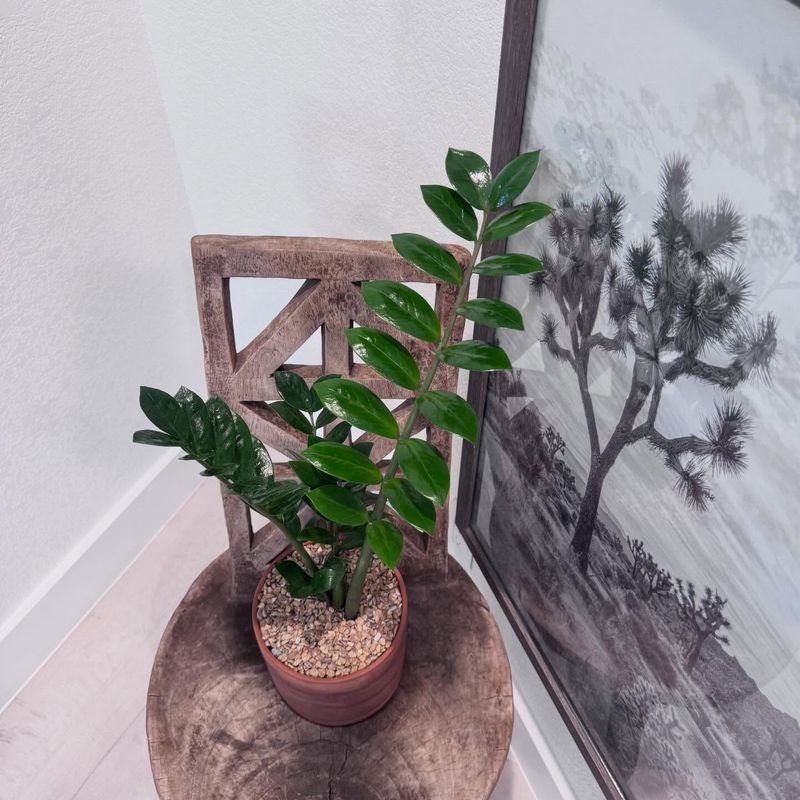
Shiny leaves that look almost polished give the ZZ plant a fancy look, yet it asks for very little. Its full name is Zamioculcas zamiifolia, which is why nearly everyone just calls it ZZ. The plant comes from eastern Africa, where it learned to handle long dry spells.
Below the soil, thick potato-like rhizomes store water. Those hidden storage tanks let the plant survive low light and long gaps between waterings better than almost any other houseplant.
Many office workers keep one under fluorescent lights for that very reason. Keep your ZZ in low to medium indirect light.
Water only when the soil feels completely dry, which may be every two to four weeks. Soggy soil is its enemy, so dump any water that collects in the saucer. Yellow leaves usually mean the plant got too much water, not too little.
Safety matters with this one. All parts of the ZZ plant are toxic if eaten, so place it on a high shelf or in a room pets and small children do not visit. Wearing gloves while repotting is also a smart idea, since the sap can bother sensitive skin.
Busy North Carolina families juggle school, sports, church events, and weekend trips to the beach or mountains. A forgiving plant fits right into that kind of life. Shaded rooms that would frustrate fussier plants suit the ZZ just fine.
Give it time, and new stems will slowly push up from the soil, each one glossy and fresh. Patience is the only real skill you need here.
3. Pothos Grows Well Even Away From Windows
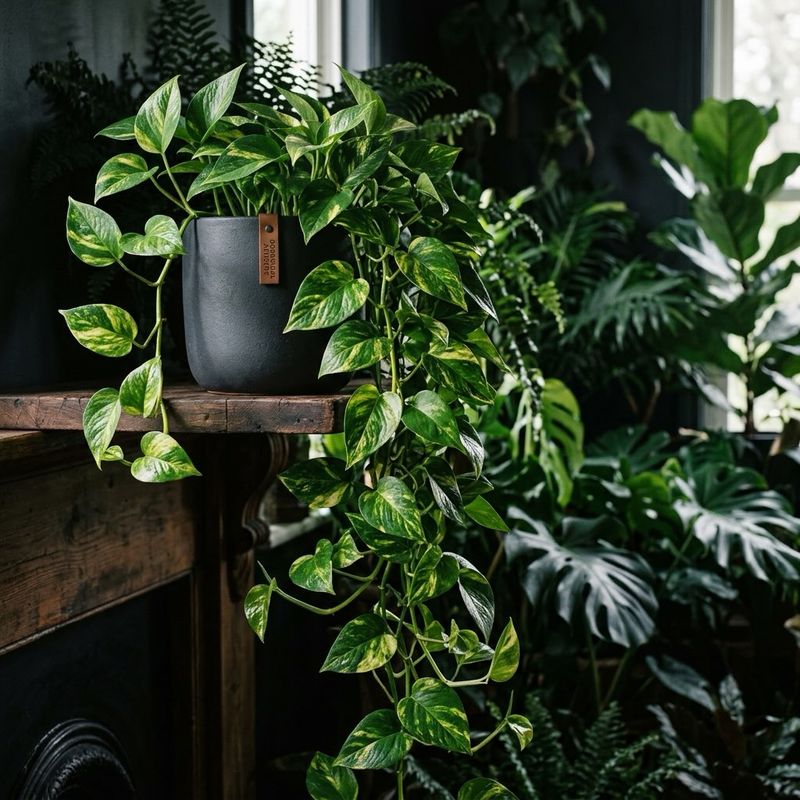
Ask a group of plant lovers which houseplant got them hooked, and many will say pothos. Epipremnum aureum is a trailing vine with heart-shaped leaves, sometimes solid green and sometimes streaked with gold, white, or cream.
It is often the very first plant people grow successfully. Part of its charm is flexibility. You can let it spill over the edge of a bookshelf, hang it in a basket, or train it up a moss pole. It also handles low light, so it can live in rooms far from a window.
Place pothos in low to bright indirect light. Variegated types like Marble Queen may lose some of their pale streaks in very dim spots, while all-green types hold up best. Water when the top inch or two of soil feels dry.
Limp, droopy leaves are a sign it needs a drink. Long vines can start to look thin near the pot. Trim them back with clean scissors, and the plant will send out fuller growth. Those cuttings will root in a glass of water within a few weeks.
Keep pothos away from cats and dogs, since it is toxic if chewed. North Carolina weather swings from sticky, humid summers to dry indoor air once the heat kicks on in winter. Pothos adapts to both without much fuss.
A quick mist is nice in January, but not required. For anyone nervous about starting a plant collection, pothos builds confidence fast and fills a room with green in no time.
4. Heartleaf Philodendron Trails With Little Effort
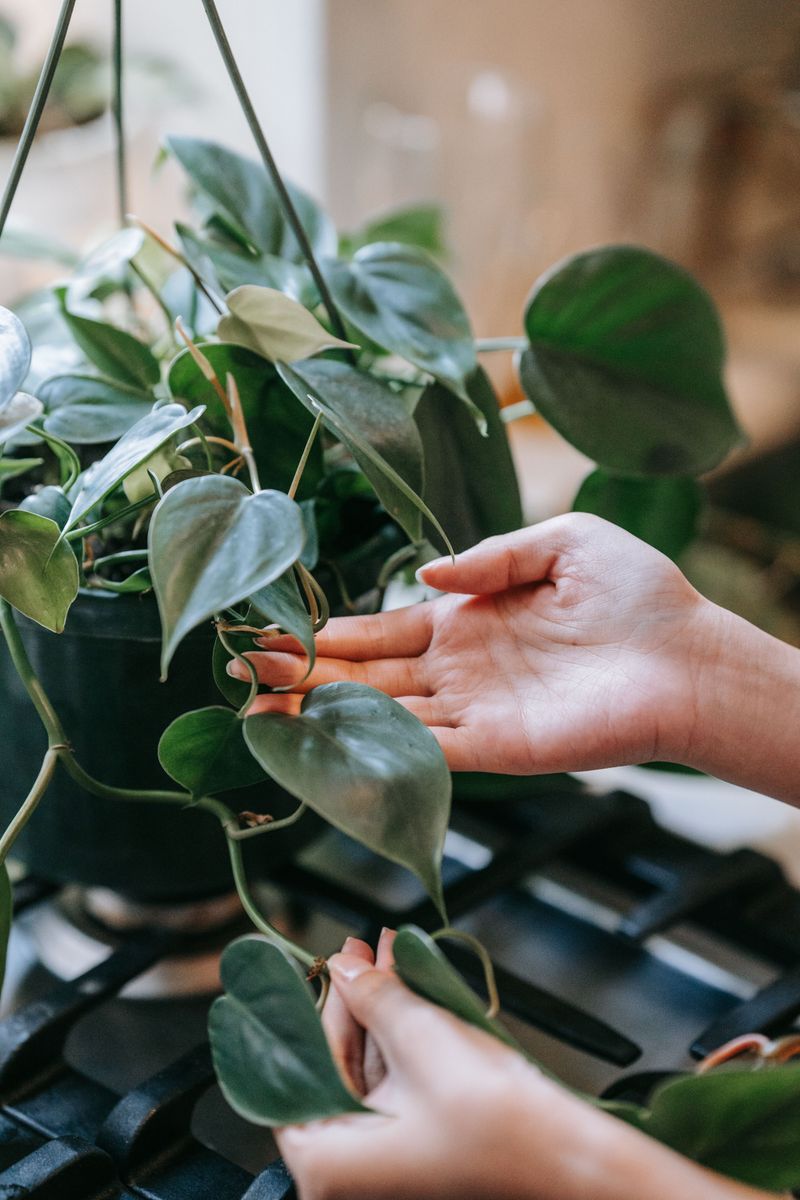
Grandmothers across the South have kept heartleaf philodendrons on kitchen windowsills for decades, and for good reason. Philodendron hederaceum grows soft, heart-shaped leaves on long, trailing stems.
At first glance it looks a lot like pothos, but its leaves are thinner, smoother, and more delicate.
Low light does not slow it down much. The vine grows steadily, adding new leaves every few weeks during warm months. Even better, cuttings root easily in water, so you can share starts with friends or tuck them back into the pot for a fuller look.
Grow your philodendron in low to medium indirect light. Water when the top inch of soil is dry to the touch. Pinch off the tips of stems now and then to encourage bushier growth instead of a few long, stringy vines.
A small pinch goes a long way. Like many popular houseplants, this one is toxic if eaten. Hang it up high or keep it in a room where curious cats and dogs cannot nibble the leaves. That makes hanging baskets a smart and pretty choice.
Spring and summer in North Carolina bring plenty of natural humidity, even indoors. Heartleaf philodendron soaks that up happily and often puts on its best growth from April through September. In winter, it slows down, so water a little less.
Warm, easy, and a bit nostalgic, this vine feels like a plant with family history. Pass a cutting to a neighbor, and you may start a tradition of your own.
5. Cast Iron Plant Lives Up To Its Name
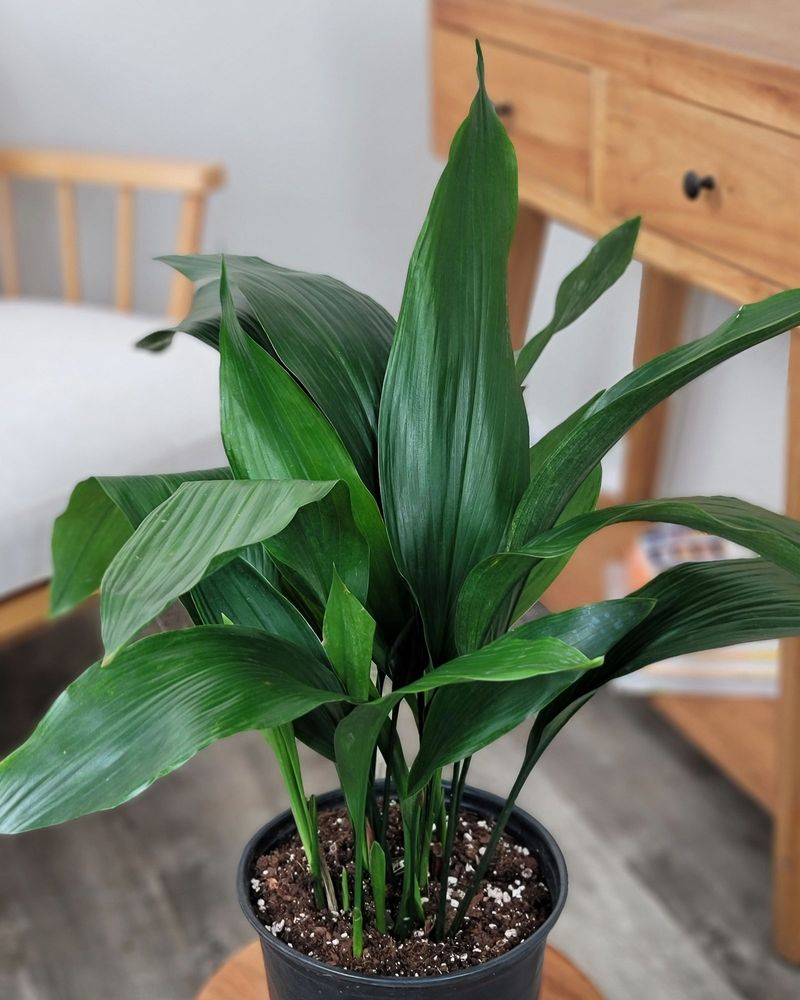
Victorian homes in England were dark, smoky, and chilly, yet one plant kept thriving in their parlors. That plant earned the nickname cast iron plant, and the name stuck. Aspidistra elatior grows long, dark green leaves that rise straight from the soil on short stems.
Toughness is its whole personality. It handles deep shade, irregular watering, and swings in temperature that would upset most houseplants. On top of that, it is considered non-toxic to cats and dogs, which makes it a relief for pet owners.
Place it in low light, away from direct sun. Strong rays can scorch the leaves and leave pale, burned patches. Water when the top couple of inches of soil feel dry, and do not worry if you miss a week.
Growth is slow, so repotting every few years is plenty. The broad leaves collect dust over time. Wipe them with a damp cloth once in a while to keep them shiny and help the plant use the light it gets. It is a simple task that takes about five minutes.
Here is a neat twist for North Carolina gardeners. Cast iron plant is also a well-known shade plant outdoors in Piedmont and Coastal Plain gardens, where it grows under oaks and along shady foundations.
Many local nurseries carry it for both indoor and outdoor use. If a dark hallway or entryway has defeated every plant you tried, give this one a shot. It has a reputation to protect.
6. Chinese Evergreen Adds Color To Shady Rooms
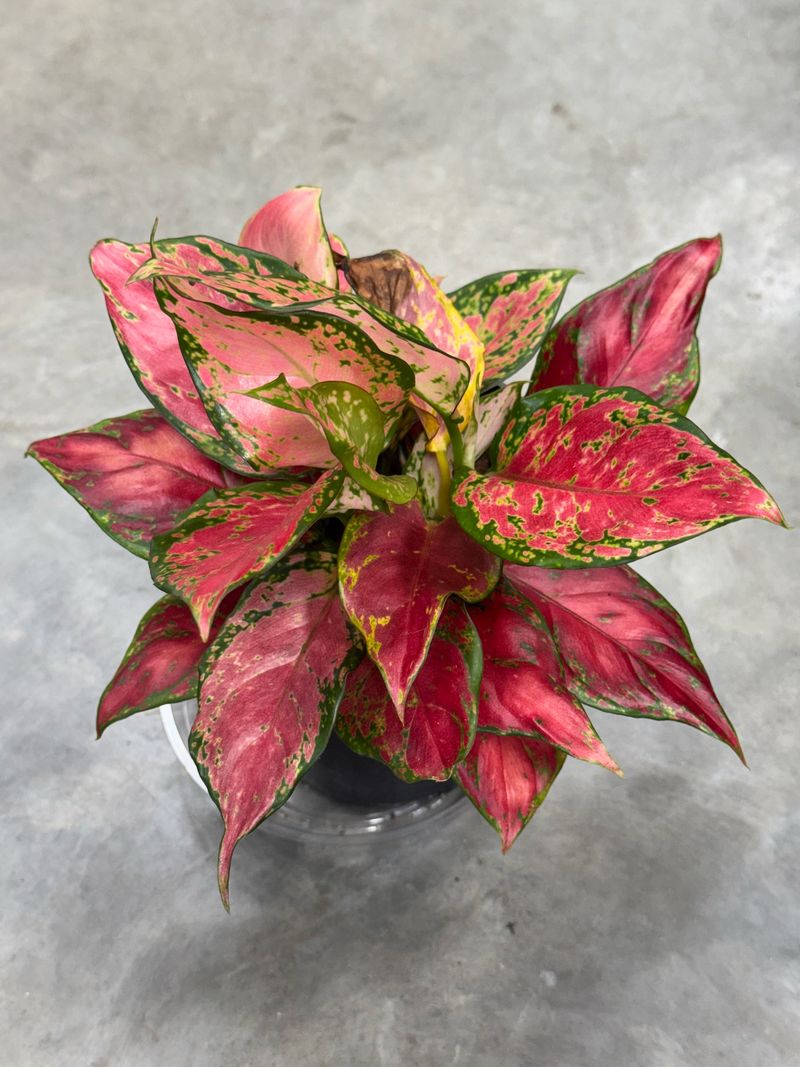
Low light plants have a reputation for being plain and green. Chinese evergreen breaks that rule with style. Aglaonema grows patterned leaves in shades of green, silver, pink, and even bright red, so it brings real color to rooms without much sun.
Few colorful houseplants tolerate low light this well. Chinese evergreen also grows slowly, which means you will not need to repot it every year. A single plant can look tidy and full on a side table for a long time.
Grow it in low to medium indirect light. Keep in mind that darker green varieties handle dim spots best, while pink and red types usually want a bit more brightness to keep their bold colors. Water when the top inch or two of soil is dry.
Too much water can cause yellow lower leaves. Cold drafts are a real problem for this tropical plant. Keep it away from drafty doors, air conditioning vents, and chilly windows in winter. Temperatures below about 60 degrees can damage the leaves.
Also keep it away from pets, since it is toxic if eaten. Most North Carolina homes stay warm year round, with air conditioning in summer and heat pumps in winter.
Chinese evergreen feels right at home in those steady indoor temperatures. That comfort helps it keep its leaves looking bright and healthy.
Want to add a pop of color to a guest room or office that faces north? A pink or silver Aglaonema can do what flowers struggle to do in the shade.
7. Peace Lily Blooms In Low Light
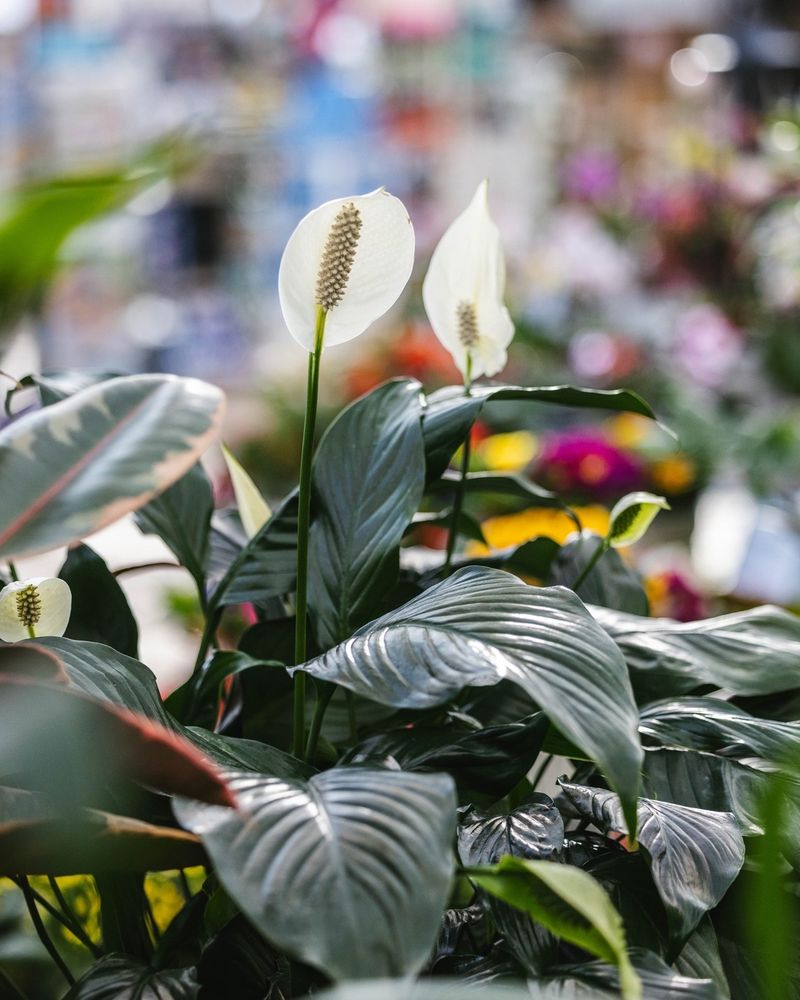
Flowers in a shady room sound like wishful thinking, yet the peace lily makes it happen. Spathiphyllum has glossy, dark green leaves and white, hood-shaped blooms that rise above the foliage on slim stems.
The white part is actually a special leaf called a spathe that wraps around the true tiny flowers. Most flowering houseplants need plenty of sun to bloom.
Peace lilies can flower in much lower light, though a bit more brightness brings more blooms. They also have a helpful habit. When thirsty, the leaves droop dramatically, almost like the plant is fainting.
That droop makes watering easy to judge. Keep the soil evenly moist but never soggy, and water when the leaves start to sag slightly. The plant usually perks back up within a few hours.
Try not to wait until it flops completely, since repeated stress can brown the leaf edges.
Place it in low to medium indirect light. Wipe the wide leaves with a damp cloth to remove dust. Keep it away from cats and dogs, since it is toxic if chewed.
In North Carolina, peace lilies enjoy the natural humidity of spring and summer. Once the heat runs in winter and indoor air dries out, they need a little extra care. Grouping plants together or setting the pot on a tray of wet pebbles helps a lot.
For a bedroom, reading nook, or office, few plants offer this much beauty for so little sunlight. Those white blooms feel calm and fresh every time.
8. Parlor Palm Brings A Tropical Look To Dim Spaces
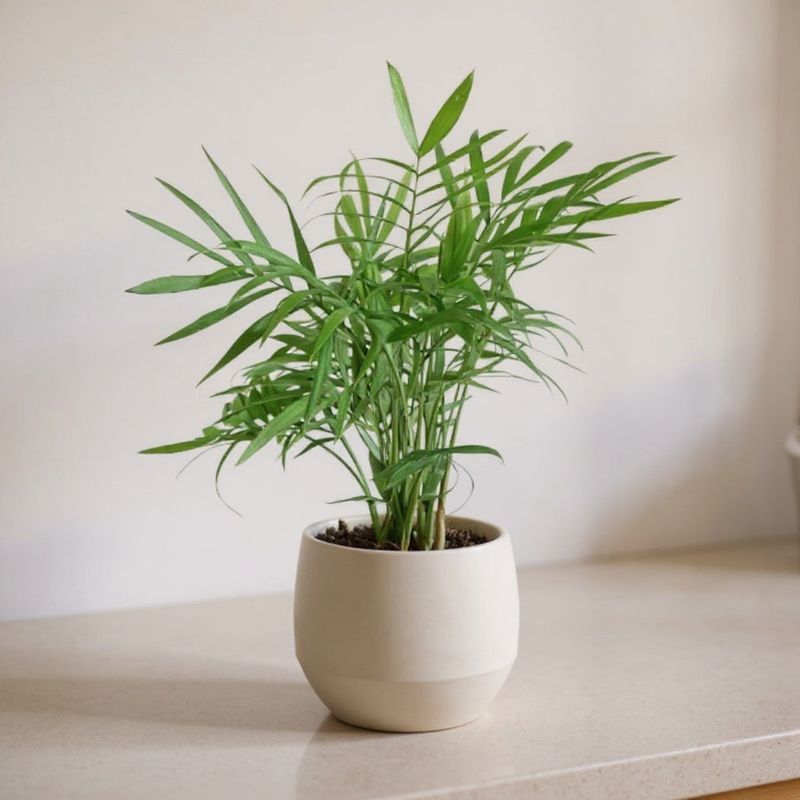
Back in the 1800s, a palm in the parlor was a sign of a stylish home. The parlor palm, Chamaedorea elegans, earned its name during that era and has stayed popular ever since. Its feathery, arching fronds give any room a soft, tropical feel.
Most palms want lots of bright light. Parlor palm is different and tolerates low light better than nearly all its relatives. It also stays small indoors, usually reaching only a few feet tall.
Pet owners will be glad to know it is considered non-toxic to cats and dogs.
Set it in low to medium indirect light. Keep the soil lightly moist but not soggy, and do not let it dry out completely. A good rhythm is watering when the surface just starts to feel dry. Brown frond tips can signal dry air or uneven watering.
Winter brings one pest to watch for. Spider mites love dry indoor air and can hide on the undersides of the fronds. Check for tiny specks or fine webbing, and rinse the plant in the shower if you spot any. Regular checks catch problems early.
North Carolina summers already feel tropical outdoors, so why not carry that mood inside? A parlor palm fits well with average household temperatures and adds a relaxed, beachy touch, even in a Raleigh apartment or a mountain cabin.
Place one beside a reading chair or in a bathroom with a small window. It brings vacation vibes without the drive to the coast.
9. Janet Craig Dracaena Tolerates Low Light Well
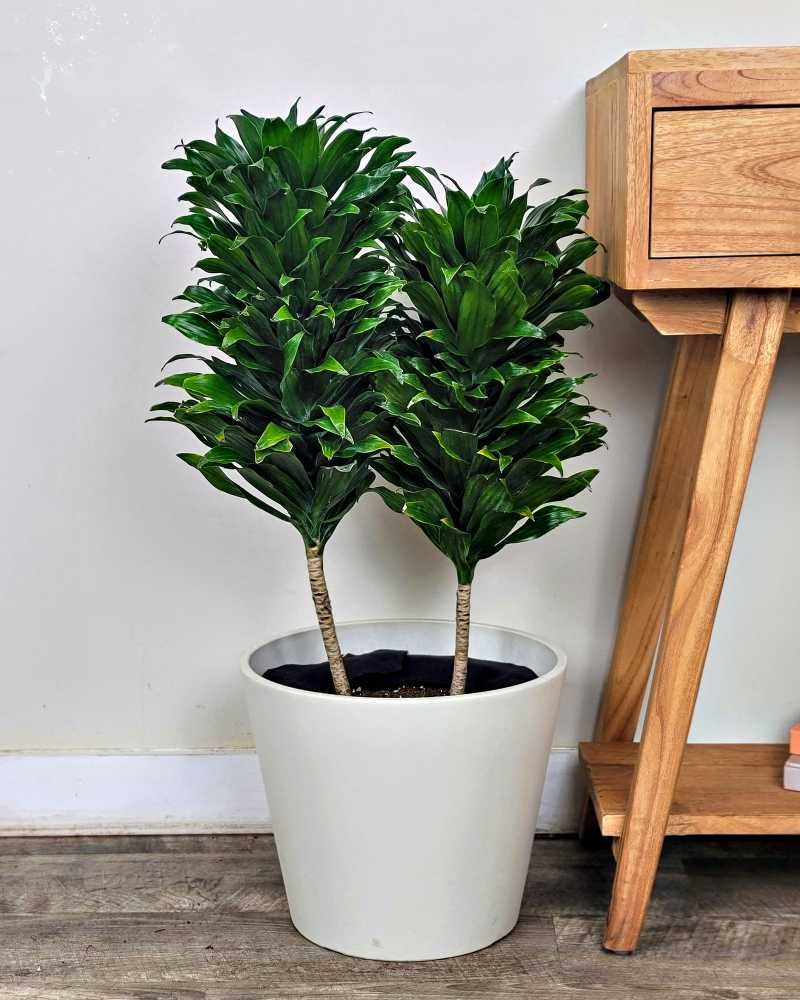
Tall, leafy, and calm, the Janet Craig dracaena is the kind of plant that makes an empty corner feel finished.
Dracaena fragrans ‘Janet Craig’ grows long, glossy, dark green leaves that arch gently from sturdy canes. Office buildings have used it for years because it looks good under plain indoor lighting.
Among all the dracaenas, this variety is one of the best for low light. It grows slowly, but over time it becomes a tall, full plant. That upright shape works well in corners, beside bookcases, or near a door where floor space is tight.
Grow it in low to medium indirect light. Water when the top couple of inches of soil are dry. Brown leaf tips are a common complaint, and water is often the cause.
Dracaenas are sensitive to fluoride and other additives found in tap water, so switch to filtered or distilled water if tips start to brown.
You can trim brown tips with clean scissors, following the natural shape of the leaf. Dust the leaves now and then to keep them shiny. Keep it away from pets, since it is toxic if eaten.
Many North Carolina homes have shaded living spaces, whether from mature hardwoods, wide porches, or windows facing north. Janet Craig fits that setting nicely because it does not need direct sun to stay green.
Think of it as a living piece of furniture. Once it settles in, it quietly adds height and life to your room for years.
10. Spider Plant Adapts To Lower Light
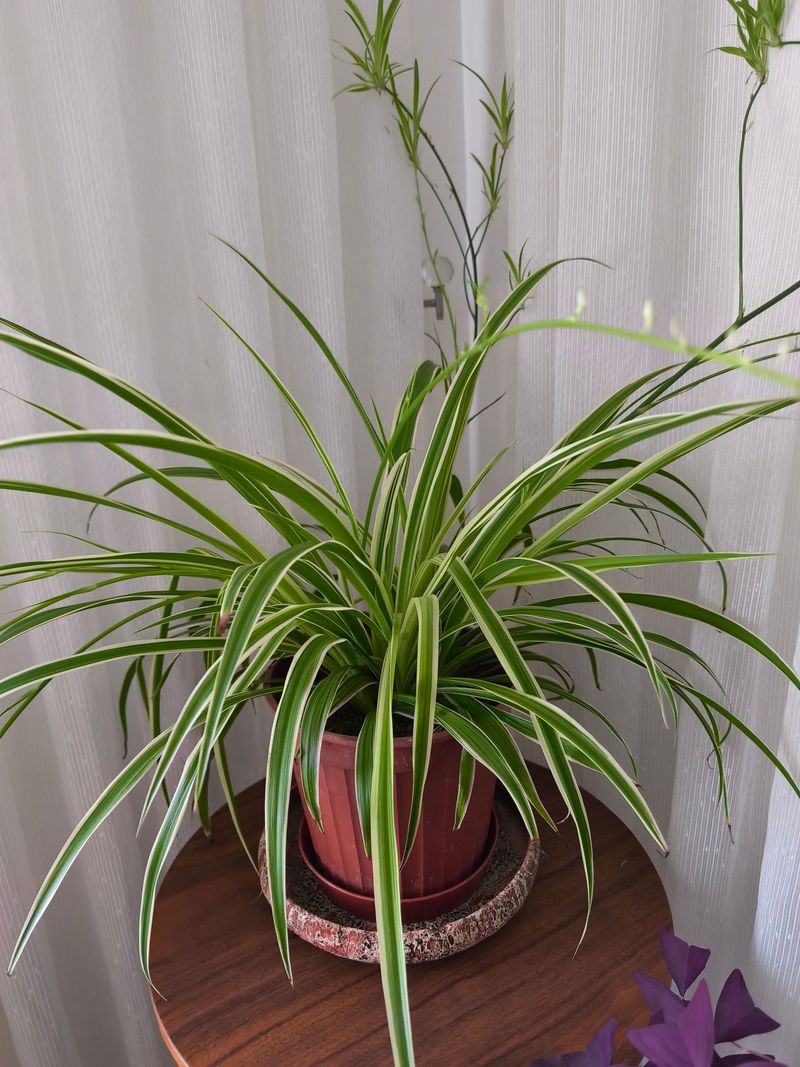
Babies are the best part of owning a spider plant. Chlorophytum comosum grows arching green or striped leaves, then sends out long stems with tiny plantlets dangling from the ends. They look like little spiders hanging from threads, which explains the name.
This plant adapts to a wide range of light, from dim rooms to bright spots. Brighter light does bring more plantlets and bolder stripes, but it still grows well with less.
It grows quickly and is considered non-toxic to cats and dogs, though cats sometimes enjoy batting at the dangling babies.
Keep your spider plant in low to bright indirect light. Water when the top inch of soil is dry. Brown leaf tips are common and usually harmless, so just snip them off with clean scissors. Using rainwater or filtered water can help reduce browning.
Making new plants is simple. Press a plantlet into a small pot of soil while it is still attached to the parent, or cut it off and set it in water until roots form. Within a few weeks, you have a brand new plant.
North Carolina summers bring humid air that spider plants enjoy, and they often grow fast during warm months. They also make wonderful gifts. Share potted babies with neighbors, teachers, or friends at church, and you spread a little green around town.
Kids especially love watching the plantlets grow, which makes this a great family plant. It is cheerful, easygoing, and always giving something back.
11. Arrowhead Plant Grows In Shade With Colorful Leaves
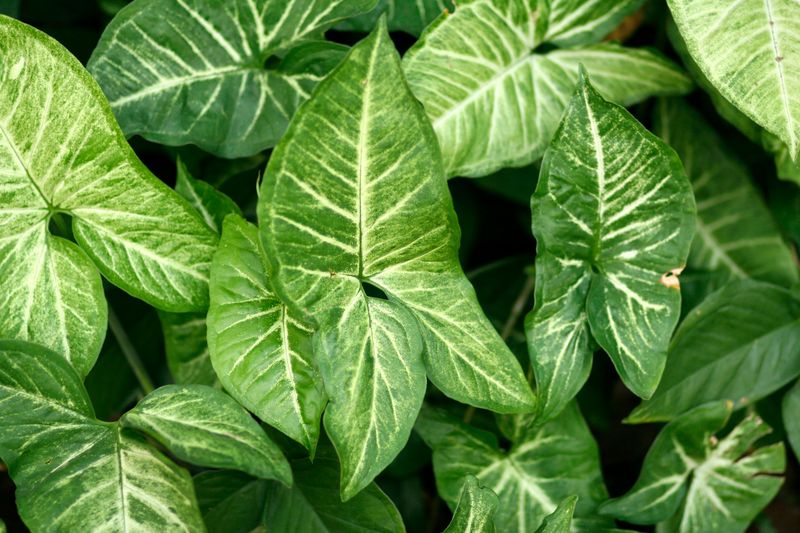
Look closely at an arrowhead plant and you will see leaves shaped just like the tip of an arrow. Syngonium podophyllum comes in many colors, including plain green, creamy white, soft pink, and warm bronze. Some varieties mix several shades on a single leaf.
Young plants stay compact, but as they age, the stems grow longer and start to climb or trail. You get to choose the look. Trim it to keep a tidy, bushy shape, or let it spill from a hanging basket.
It tolerates low light and grows quickly, so results come fast. Place it in low to medium indirect light. Pink and bronze types keep their color best with a little more brightness. Keep the soil lightly moist, watering when the surface starts to dry.
It does not like to dry out completely for long. Regular trimming keeps the plant full and neat. Cut long stems just above a leaf, and new growth will branch out from there. The cuttings root easily in water.
Keep it away from pets, since it is toxic if eaten, and wash your hands after pruning because the sap can irritate skin.
North Carolina offers naturally humid indoor air through much of the year, and arrowhead plants love that. Kitchens and bathrooms with small windows are especially good spots, since they tend to hold extra moisture.
Playful and colorful, this plant adds a splash of fun to shady corners. It proves that low light does not have to mean boring.
12. Satin Pothos Handles Lower Light With Silvery Leaves
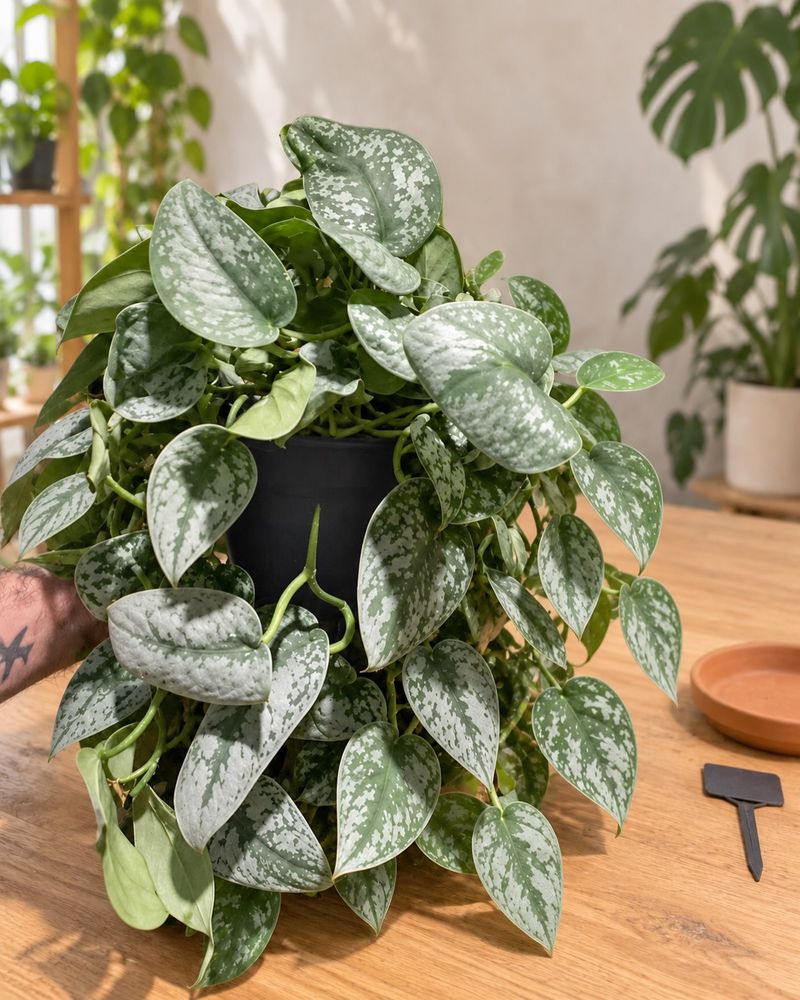
Silver speckles make satin pothos look like it was dusted with glitter. Scindapsus pictus has heart-shaped, matte green leaves splashed with silvery spots that shimmer when light hits them.
Despite the common name, it is not a true pothos, just a close cousin in the same plant family. Those silver markings do more than look pretty. They seem to catch and reflect what little light is in a room, which helps brighten dim spaces.
The plant tolerates lower light than many trailing vines and grows at a steady, manageable pace, so it will not take over your shelf overnight.
Grow it in low to medium indirect light. Let the top inch or two of soil dry between waterings. The leaves give a helpful clue, since they curl slightly inward when the plant is thirsty. Once watered, they flatten out again.
Trim stems now and then to keep the plant full instead of leggy. Cuttings root well in water or moist soil. Keep it away from cats and dogs, since it is toxic if chewed.
In North Carolina homes, satin pothos enjoys warm indoor temperatures and the humid air of spring and summer. During winter, keep it away from cold windows and blasting heat vents. A steady spot makes it happiest.
Hang it in a hallway, drape it over a bookshelf, or set it on a desk. Wherever it lands, those silvery leaves add a quiet sparkle that makes a shady room feel a little brighter every day.