7 Fast Growing Arizona Vines That Create Shade Before Peak Summer
Arizona doesn’t really do a slow, gentle warm-up. One week it’s pleasant, and the next you’re questioning every life choice that led you to stand on a sun-baked patio at noon in June.
If you’ve been putting off dealing with that exposed pergola, bare block wall, or shadeless seating area, May is genuinely your last good window to do something about it before the brutal heat settles in for good.
And here’s the fun part, vines are basically nature’s fastest fix.
They grow up instead of out, they cover hard surfaces surprisingly quickly, and they add serious color without eating up your precious ground space. Plant the right one now and you could have real, meaningful shade rolling in just in time.
Your patio furniture will be very grateful.
1. Queen’s Wreath Covers Arbors With Fast Summer Growth
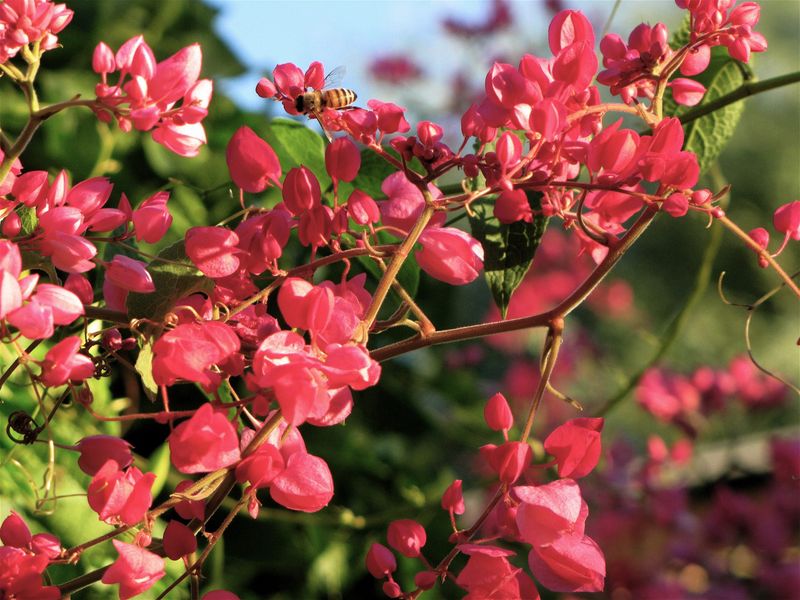
Few vines match the visual impact of Queen’s Wreath when it starts climbing over an Arizona arbor in late spring. Known botanically as Antigonon leptopus, this vine is native to Mexico and has adapted exceptionally well to the low desert climate.
It responds to Arizona heat by pushing out long, heart-shaped leaves and cascading clusters of pink or coral flowers that attract bees and hummingbirds alike.
Queen’s Wreath grows aggressively once soil temperatures warm up, which makes it a strong candidate for gardeners trying to get shade coverage before July arrives.
It uses tendrils to attach itself to trellises, wire fencing, arbors, and pergola beams without much help.
Providing a sturdy support structure from the beginning allows the vine to spread broadly rather than bunching up in one area.
In most Arizona low desert gardens, this vine will go dormant after hard frosts and return reliably from its tuberous roots each spring. Established plants need very little supplemental irrigation once they are rooted in well-draining soil.
Gardeners who want fast summer coverage over a patio seating area or along a block wall will find Queen’s Wreath one of the most rewarding options available in the region.
2. Bougainvillea Adds Bold Color In Reflected Heat
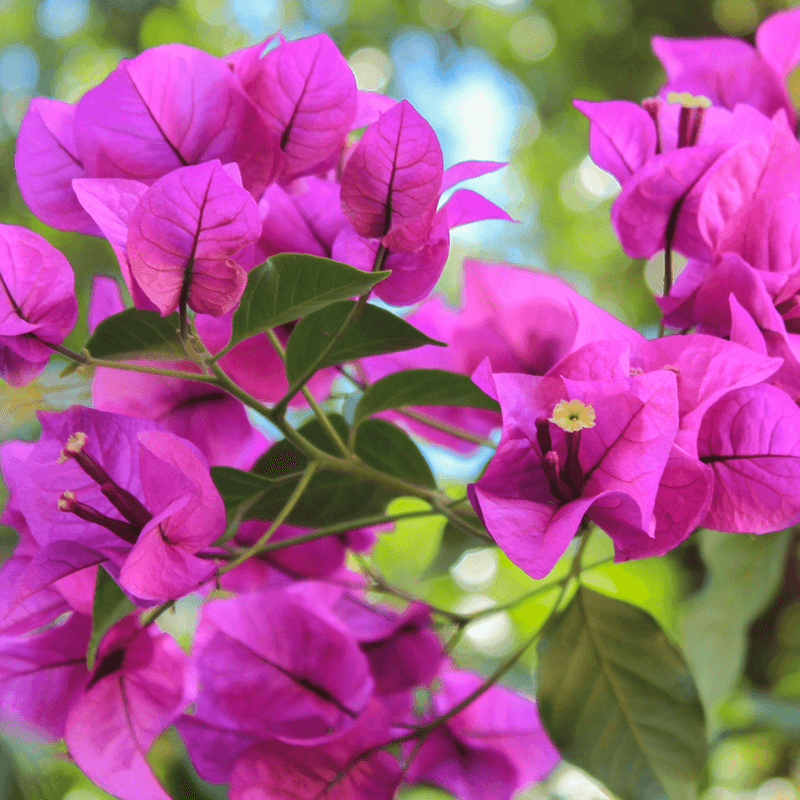
Hot block walls and south-facing fences that most plants struggle against are exactly where bougainvillea thrives.
This vine has become one of the most recognizable plants in Arizona landscapes because it handles intense reflected heat, dry conditions, and bright sun without much complaint.
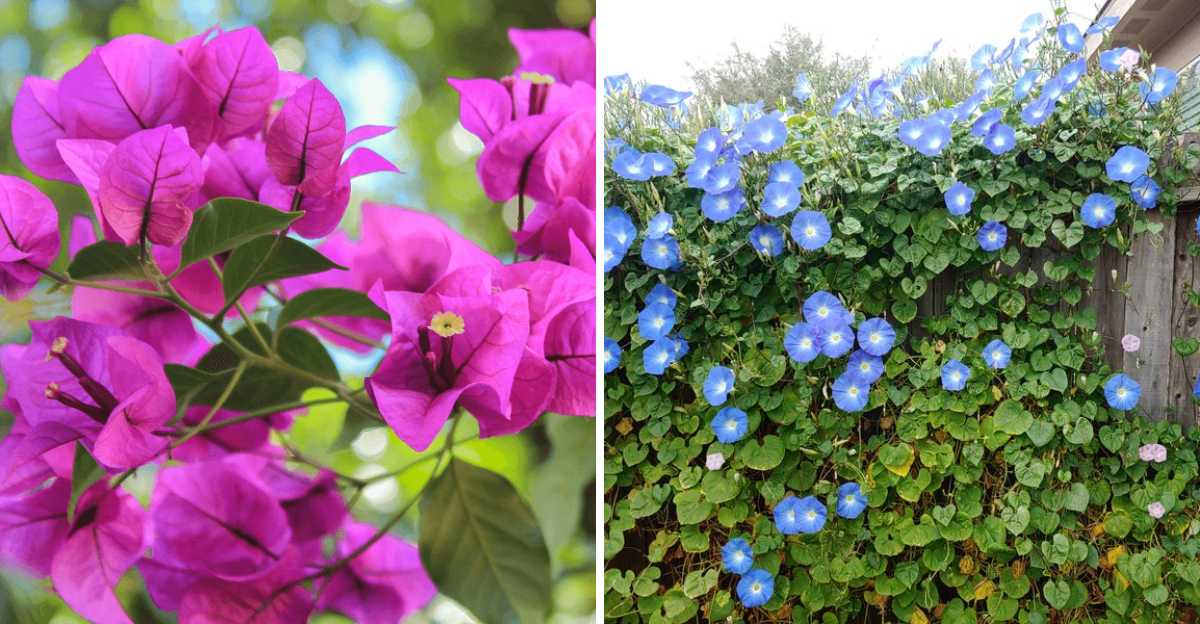
The colorful parts most people notice are actually modified leaves called bracts, which come in shades of magenta, orange, red, white, and coral depending on the variety.
Bougainvillea grows vigorously when it receives full sun and is watered deeply but infrequently. Overwatering tends to push leafy green growth at the expense of blooms, so letting the soil dry out between waterings encourages better color production.
Gardeners planting along a patio wall or over a pergola should choose a variety suited to their space, since some cultivars can reach 20 feet or more while others stay more compact.
Because bougainvillea has sharp thorns along its stems, placement near high-traffic walkways requires some thought.
Your Arizona Garden Changes Every Week. Your Plan Should Too.
Gardening in Arizona changes quickly throughout the season. Every Friday you’ll receive a simple weekly plan showing exactly what to plant, prune, fertilize, harvest, and protect so you never miss the right timing.
Training the stems onto a trellis or wire frame early in the season helps direct growth upward and outward rather than sprawling across pathways.
In frost-free parts of Arizona, bougainvillea may hold its color through winter, while in colder elevations it may need some protection during brief cold snaps.
3. Arizona Grape Ivy Drapes Naturally Over Walls
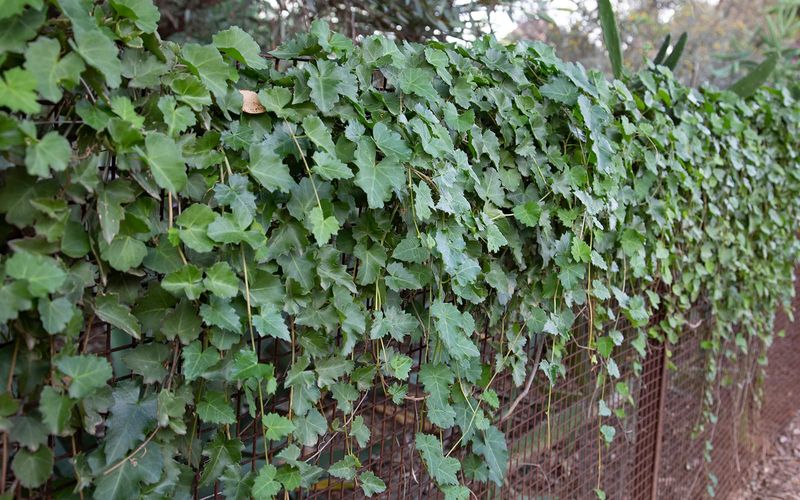
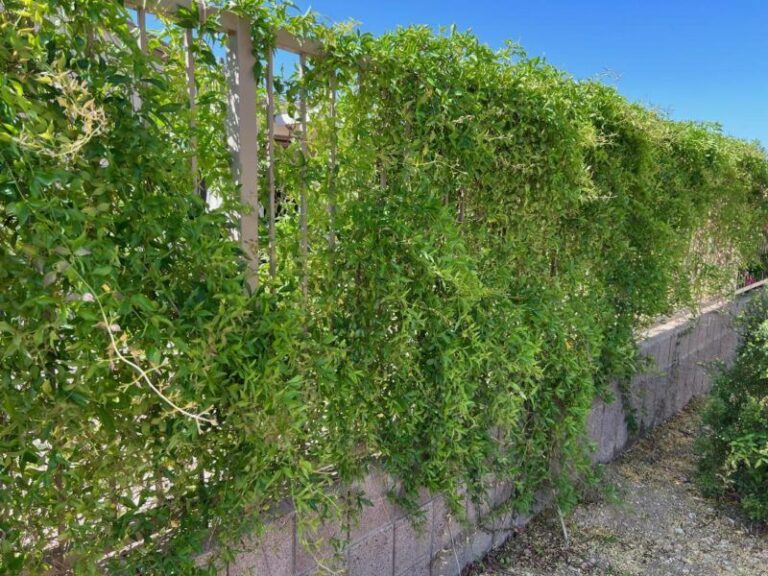
There is something quietly satisfying about watching a grape ivy vine slowly fill in along a rough block wall, softening hard edges and creating a layered, natural look.
Cissus trifoliata, commonly called Arizona grape ivy or sorrelvine, is a native vine that grows throughout the Sonoran Desert region and handles summer heat with impressive resilience.
Its small, three-lobed leaves create a fine-textured screen that filters light without completely blocking airflow.
Unlike some of the more aggressive vines in Arizona gardens, this one tends to grow at a moderate pace, which gives gardeners more control over where it spreads.
It climbs by producing small tendrils that grip onto rough surfaces, wire mesh, and chain-link fencing without damaging masonry when managed properly.
Placing it along a courtyard wall or raised bed border allows it to build coverage gradually over a season.
One practical benefit of Arizona grape ivy is its low water requirement once established. It naturally goes dormant during cold months and leafs back out when temperatures rise in spring, which aligns well with the Arizona growing calendar.
Gardeners looking for a native option that provides seasonal screening and a soft, green texture along fences or patio edges will find this vine a reliable and low-maintenance choice throughout the warmer months.
4. Hyacinth Bean Vine Climbs Quickly On Sunny Trellises
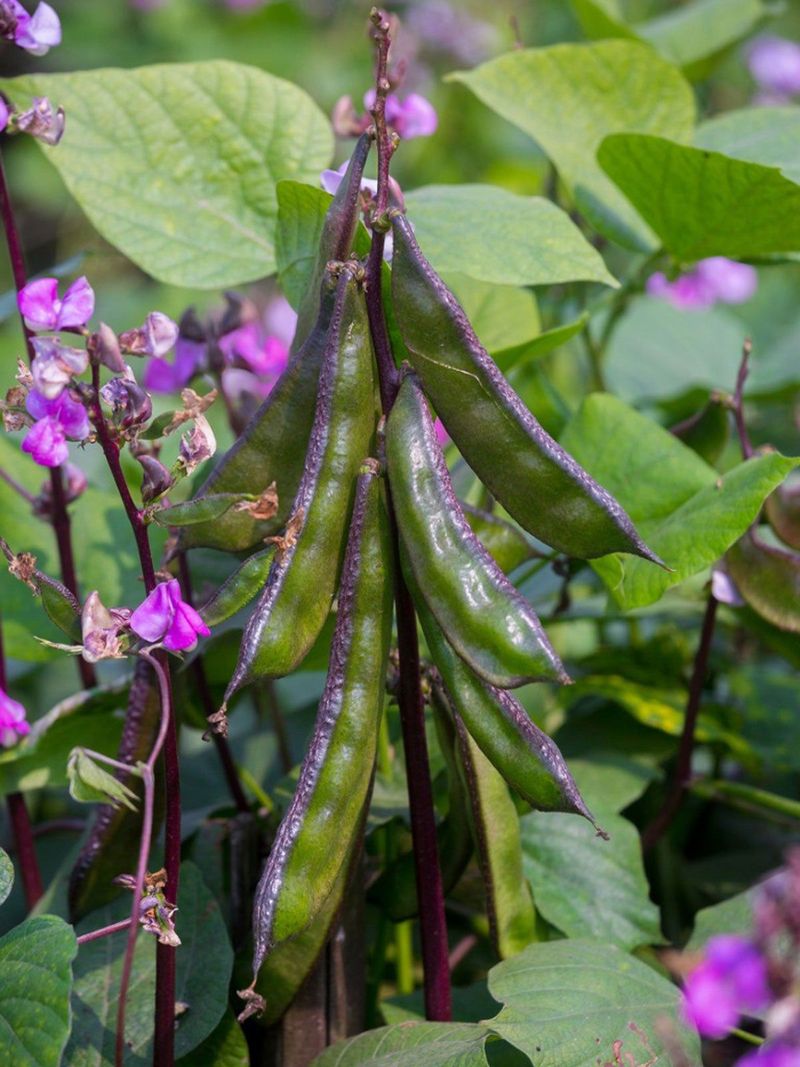
Colorful, fast-moving, and surprisingly easy to grow from seed, hyacinth bean vine earns its place on Arizona trellises with very little effort.
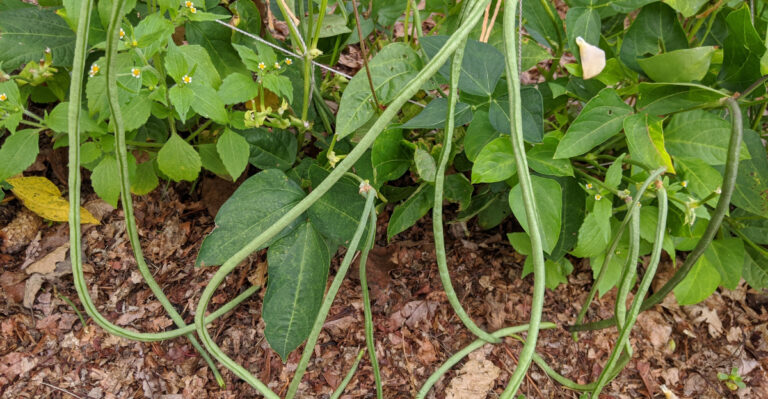
Lablab purpureus produces purple flower spikes, deep green leaves with reddish-purple undersides, and glossy dark seed pods that add visual interest from multiple angles.
The combination of foliage color and blooms makes it one of the more ornamental annual vines available to Arizona gardeners.
Starting seeds directly in the ground after the last frost date gives this vine a solid head start before summer heat intensifies.
It climbs by twining around trellis wires, bamboo poles, and fence posts as it grows, reaching 10 to 15 feet in a single season under favorable conditions.
Placing it on a trellis attached to a south or west-facing patio wall gives it the full sun it prefers while also positioning it to create useful afternoon shade.
Watering consistently during the establishment phase helps hyacinth bean vine build strong root mass before hot weather sets in. Once established, it handles Arizona summers fairly well with regular drip irrigation and good drainage.
Gardeners should note that the seeds and pods of this plant are not safe to eat without special preparation, so households with curious children or pets may want to keep that in mind when choosing a planting location.
5. Baja Passion Vine Brings Flowers And Butterfly Appeal
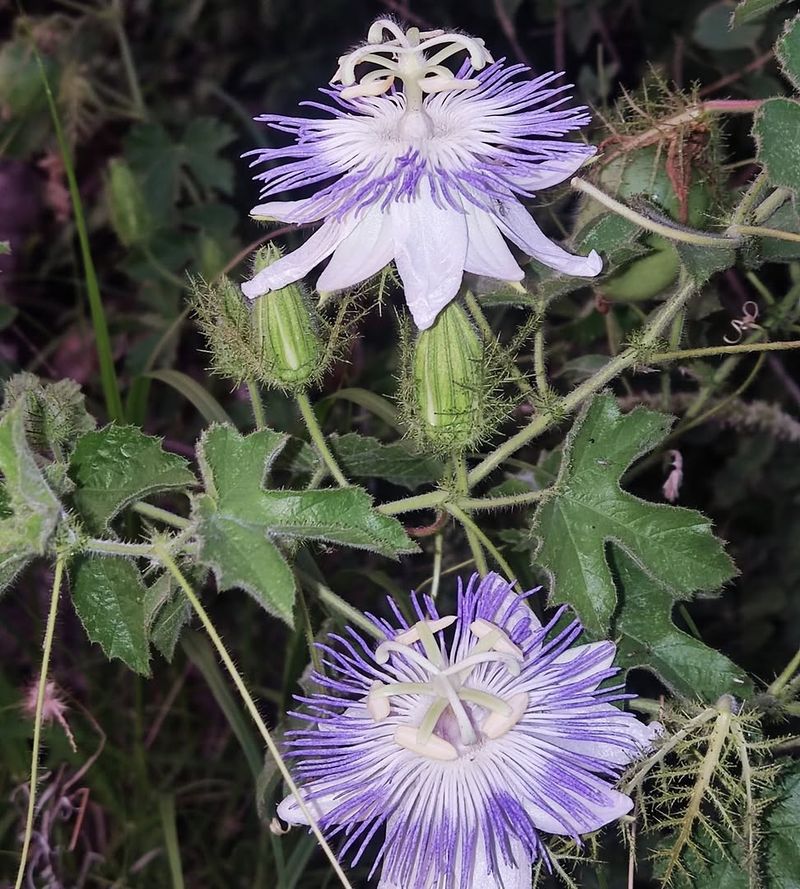
Walking past a trellis covered in Baja passion vine on a warm Arizona morning feels a bit like discovering something unexpected in the desert.
Passiflora mexicana and related low-desert-adapted passion vine species produce striking, intricate flowers in shades of orange, red, and coral that stand out dramatically against the muted tones of a typical Arizona landscape.
Beyond the visual appeal, these vines serve as host plants for several native butterfly species, including the Gulf Fritillary.
Baja passion vine grows well in full sun to partial shade and handles the low desert heat better than many tropical passion flower varieties. It climbs by producing coiling tendrils that attach to wire trellises, lattice panels, and open fencing with ease.
Gardeners who want to support local pollinators while also adding vertical color to a pergola or courtyard wall will find this vine earns its space on multiple levels.
Irrigation needs are moderate, and the vine benefits from deep watering spaced out over several days rather than frequent shallow watering.
Planting near a drip emitter positioned at the root zone helps maintain consistent moisture without wetting the foliage, which can reduce the risk of fungal issues during humid monsoon periods.
In frost-sensitive areas of Arizona, protecting the root zone with mulch helps the vine return reliably each spring.
6. Native Morning Glory Vines Need Careful Selection
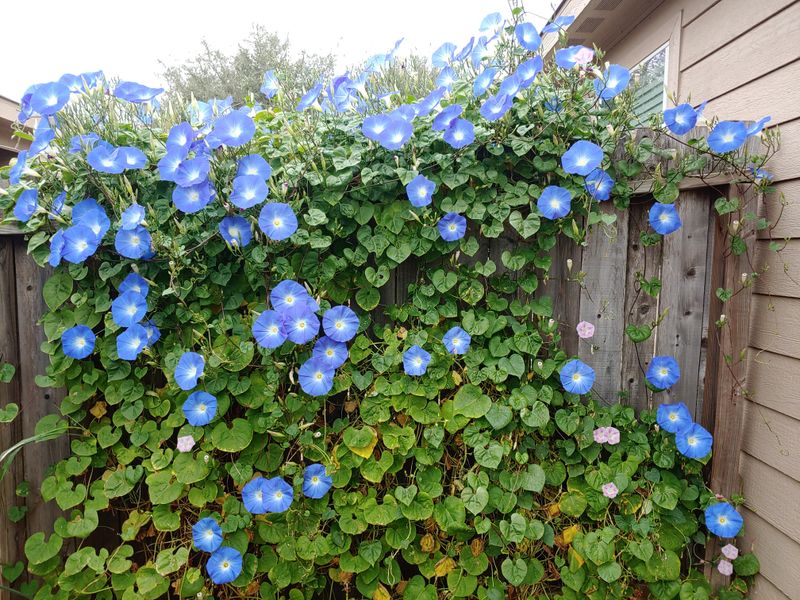
Not all morning glories are created equal, and in Arizona that distinction matters quite a bit.
The term morning glory covers a wide range of species, and while some are well-behaved native plants suited to desert gardens, others are classified as invasive in certain regions and can spread aggressively into natural areas.
Ipomoea hederacea and some introduced ornamental varieties fall into the problematic category, while native species like Ipomoea barbatisepala are better choices for responsible Arizona gardeners.
Native morning glory vines produce the classic funnel-shaped flowers in blue, purple, or pink that many gardeners love, and they tend to grow quickly once summer monsoon moisture arrives.
They climb by twining around any available support, including wire fences, chain-link, wooden trellises, and even other plants.
Positioning them where they can be monitored and trimmed back helps prevent them from spreading beyond their intended area.
For gardeners who want a fast-climbing vine with bright seasonal color on a sunny fence or trellis, selecting a regionally appropriate species makes the experience more rewarding and more responsible.
Consulting with a local native plant nursery before purchasing helps ensure the right species ends up in your garden.
Morning glories generally prefer full sun and warm soil, which makes Arizona summers a natural fit for their growth cycle.
7. Yellow Orchid Vine Adds Low-Water Color To Trellises
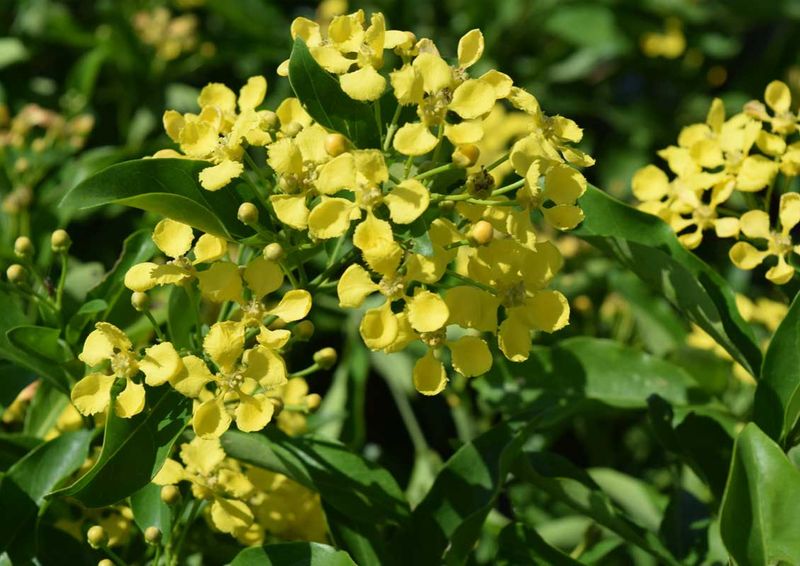
Bright yellow flowers cascading down a sun-baked trellis in the middle of an Arizona summer might sound like wishful thinking, but yellow orchid vine makes it a reality.
Mascagnia macroptera, sometimes called butterfly vine due to its distinctive winged seed pods, is a semi-woody vine that handles low desert heat and drought with remarkable ease.
The clusters of small yellow blooms appear in summer and are followed by papery tan seed pods that add textural interest even after blooming ends.
This vine is especially well-suited to xeriscaped gardens, low-water courtyards, and dry landscape areas where irrigation is minimal. It grows at a moderate to fast pace once established and clings to trellises and wire frames using twining stems.
Placing it along a west-facing patio fence or over a metal arbor gives it the full sun exposure it thrives in while providing filtered shade to the space below.
Yellow orchid vine is semi-evergreen in frost-free parts of Arizona and may drop leaves during cold winters in higher elevation areas, returning from established roots when temperatures warm in spring.
Pruning after the blooming period helps maintain a tidy shape and encourages fresh growth the following season.
Gardeners looking for a low-maintenance, drought-adapted vine with genuine visual appeal will find this species one of the more underused gems in Arizona horticulture.