12 Fast-Growing Shrubs That Fill Bare Spots Fast
That empty corner keeps staring back at you every morning. You feel it before you even notice yourself moving. Silence sits there like a quiet question you cannot ignore.
Summer heat moves fast, and you must move faster. Waiting only invites weeds, erosion, and wasted potential for you. Nothing gives you space back faster than the right shrub.
Growth this rapid will surprise you within just weeks. Roots dig in fast, and branches follow you without delay. Rich garden soil rewards you when urgency replaces patience.
Momentum matters more to you than perfection ever will. Color returns quickly, and density builds around you weekly. Structure forms almost overnight, giving you real visible proof fast.
Choosing wisely now saves you months of standing still. Confidence grows in you with every new leaf and branch.
Every day you delay costs progress you could gain. Turning away now costs you everything ahead.
1. Spirea
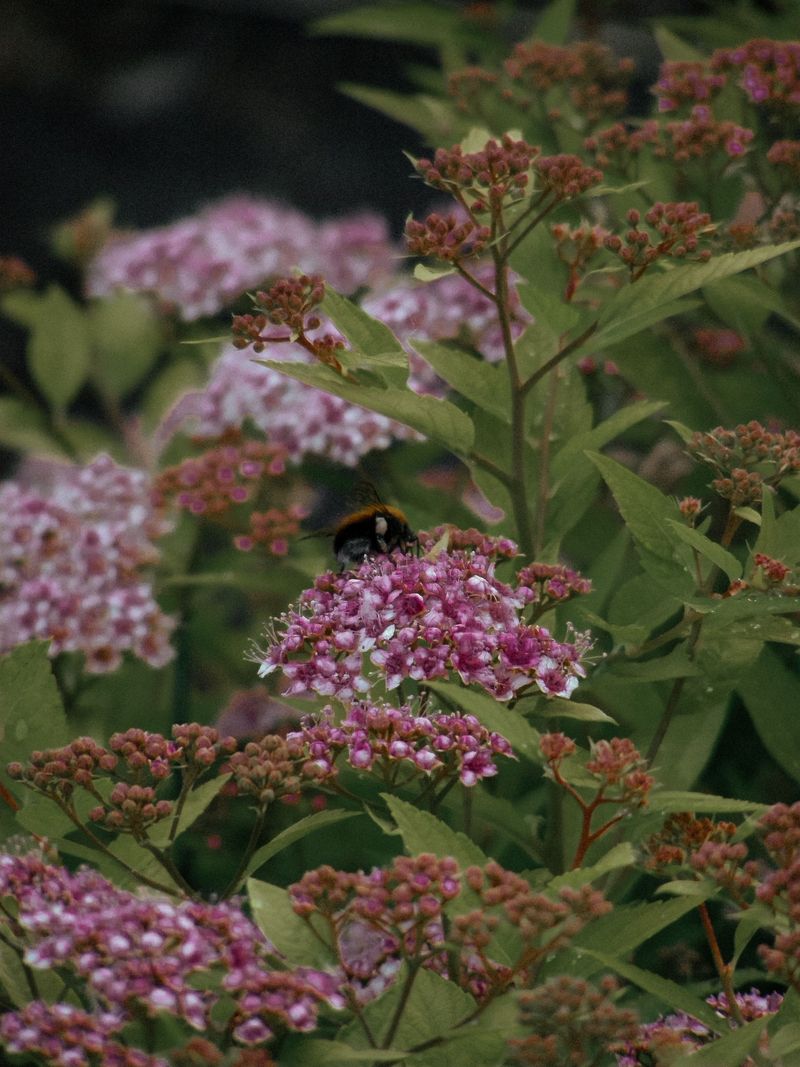
Few shrubs put on a show quite like Spirea. This tough, cheerful plant bursts into bloom in spring and often flowers again in late summer.
Spirea can grow up to 6 feet tall and wide, spreading quickly to cover bare ground. It thrives in full sun and adapts to almost any well-drained soil without much fuss.
Trimming it back after each bloom cycle keeps the plant tidy and encourages more flowers. Even beginners find Spirea forgiving and rewarding to grow.
The foliage ranges from green to golden-yellow depending on the variety, adding color even when blooms are gone. Goldflame and Little Princess are two fan favorites worth planting this season.
Birds love nesting in its dense branches, giving your yard extra life. If you want fast results with low effort, Spirea delivers every single time.
2. Ninebark
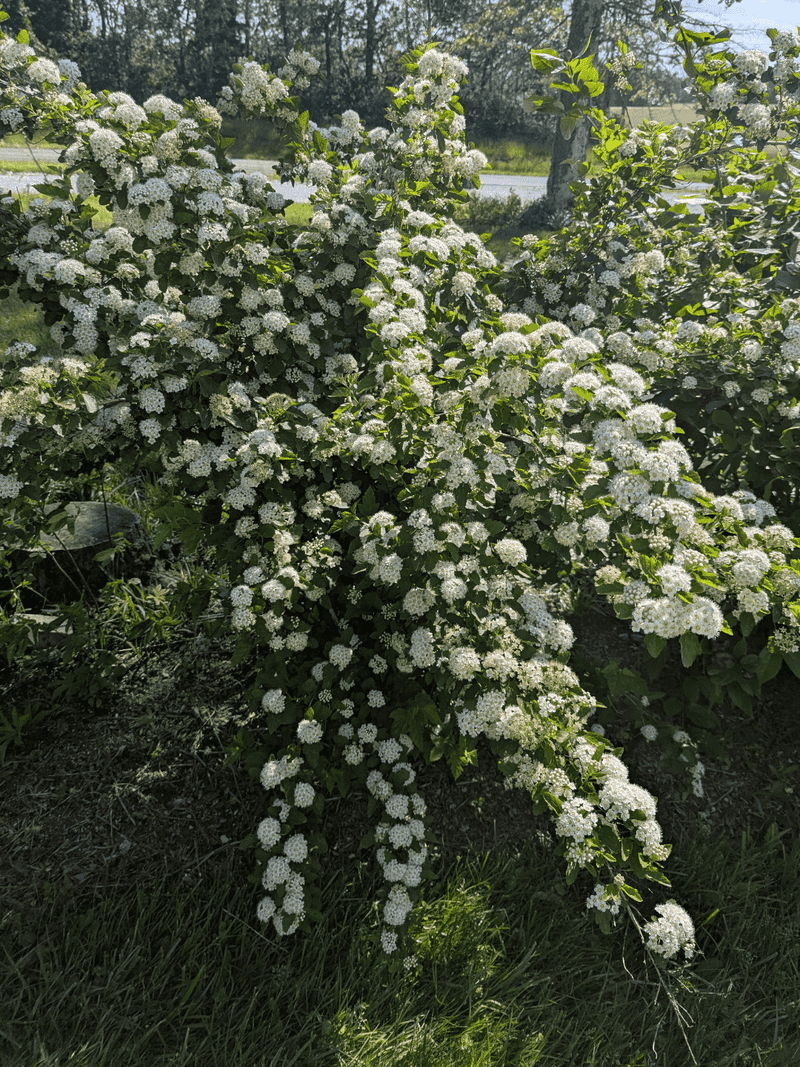
Ninebark is one of those plants that makes you look like a gardening expert without much effort. Its peeling, layered bark gives it a wild, sculptural look that stands out year-round.
This native shrub grows 5 to 10 feet tall and spreads fast, making it perfect for filling large bare spots quickly. It handles drought, poor soil, and even some shade with impressive resilience.
Varieties like Diablo and Summer Wine offer rich purple-red foliage that acts like a paint stroke against green lawns. The contrast it creates is bold and hard to ignore.
Small white or pink flower clusters appear in late spring, attracting pollinators by the dozen. After blooms fade, reddish seed pods keep the visual interest going through fall.
Ninebark is also less appealing to deer than many shrubs, which can be a plus for gardeners in rural areas. Fast-growing shrubs that fill bare spots rarely come with this many built-in advantages.
3. Red Twig Dogwood
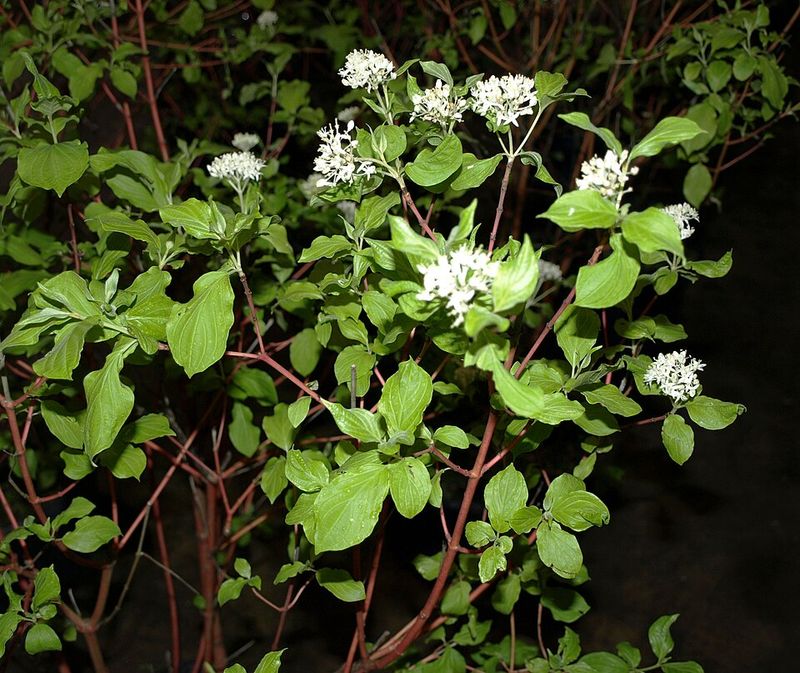
Winter gardens can feel bleak, but Red Twig Dogwood refuses to disappear into the background. Its fiery red stems glow like embers against snow and gray skies.
This shrub grows 6 to 9 feet tall and spreads generously, filling bare spots along fence lines or pond edges with ease. It loves moisture and performs especially well near low-lying areas where other plants struggle.
In spring and summer, creamy white flower clusters appear above bright green leaves, giving it a totally different look. Then fall brings a stunning blaze of red and orange foliage before the leaves drop.
The trick to keeping those stems vibrant is cutting one-third of the oldest branches back each spring. New growth produces the brightest red color, so regular pruning rewards you with the best display.
Wildlife adores this shrub for its berries and dense cover. It is a four-season performer that earns its spot in any yard, no matter the climate.
4. Weigela
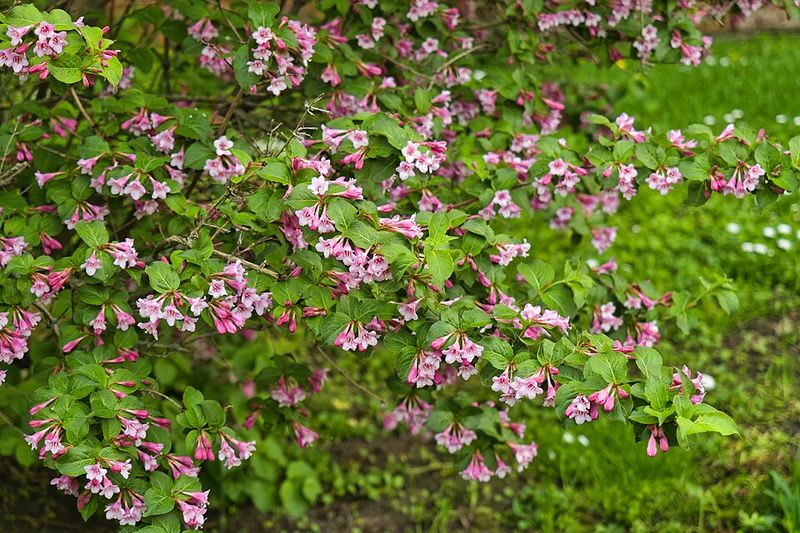
Weigela is the shrub that makes your neighbors slow down and stare. Its trumpet-shaped flowers in pink, red, or white burst open in late spring and often rebloom through summer.
Growing 6 to 10 feet tall depending on the variety, Weigela fills bare spots with speed and style. It adapts well to most soils and thrives in full sun to partial shade without skipping a beat.
Compact varieties like Spilled Wine and My Monet work perfectly in smaller spaces. Larger types like Red Prince create dramatic backdrops along property lines or mixed borders.
Hummingbirds are absolutely obsessed with Weigela blooms, so expect some tiny, buzzing visitors all season long. Planting it near a window gives you a front-row seat to the action.
Pruning right after the main bloom period keeps the plant shapely and promotes fresh growth. With its fast pace and stunning flowers, Weigela is a standout that earns its space in any garden.
5. American Beautyberry
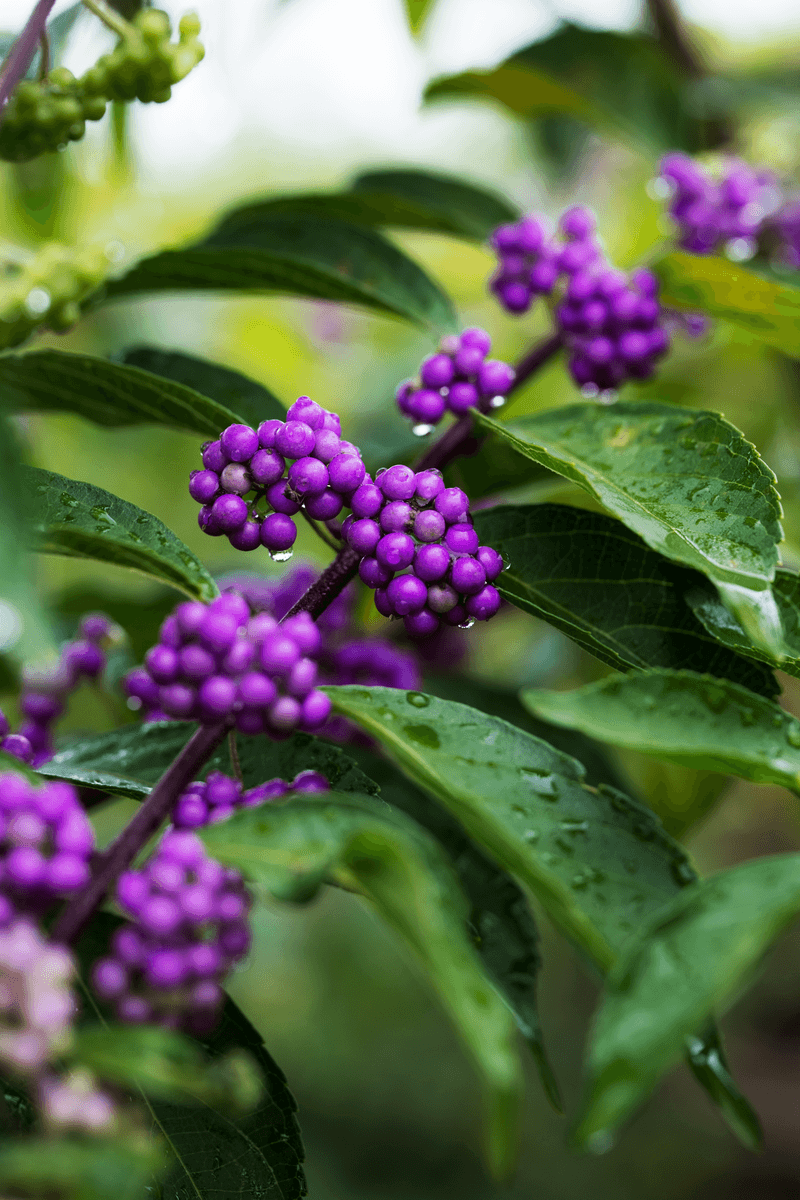
Nothing in the fall garden turns heads quite like American Beautyberry. Its clusters of electric purple berries line every arching stem in vivid, eye-catching rows.
This native shrub grows 4 to 8 feet tall and spreads just as wide, filling bare spots in woodland gardens or along natural edges. It tolerates part shade beautifully, making it useful where sun is limited.
The berries emerge in late summer and hold strong through fall, providing food for birds like mockingbirds, robins, and cedar waxwings. Watching wildlife feed on them adds another layer of interest to the plant.
In spring, tiny lavender flowers appear along the stems, subtle but charming in their own way. The plant grows quickly from a young start and rarely needs much attention once established.
Cut it back hard in late winter and it bounces back with enthusiasm each spring. American Beautyberry is proof that native plants can be just as eye-catching as any exotic garden specimen.
6. Summersweet
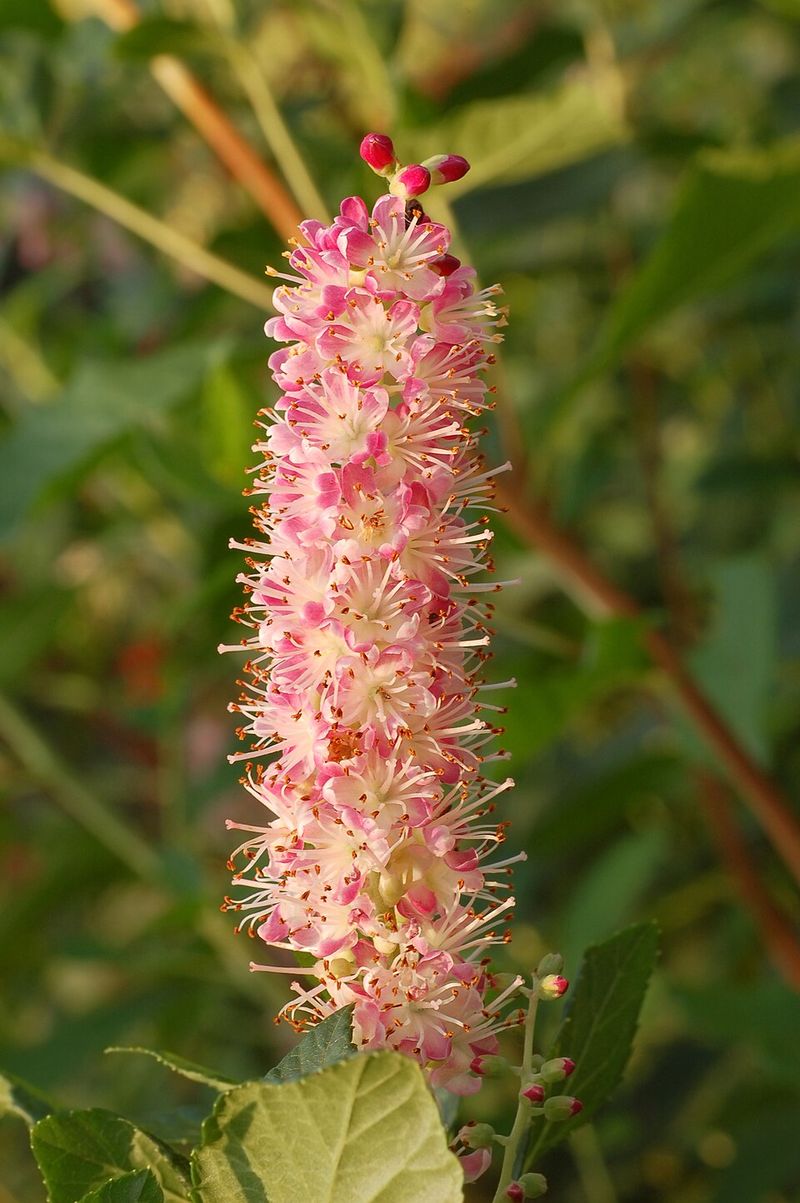
If your yard has a shady, damp corner that nothing seems to love, Summersweet was made for that spot. Its fragrant white or pink flower spikes perfume the air in midsummer when most other shrubs have finished blooming.
Growing 3 to 8 feet tall, this native shrub spreads steadily through root suckers, forming a lush colony over time. It thrives in moist, acidic soil and handles both full shade and full sun with equal ease.
The sweet fragrance attracts butterflies and bees from surprising distances. Planting it near a patio or walkway lets you enjoy that scent every time you pass by.
Fall color is a bonus, with leaves turning golden yellow before dropping cleanly. Varieties like Hummingbird and Ruby Spice are popular choices that stay on the compact side.
Summersweet rarely needs pruning and resists most pests and diseases. It is a low-maintenance shrub that rewards patience with years of reliable beauty in spots other plants abandon.
7. Fothergilla
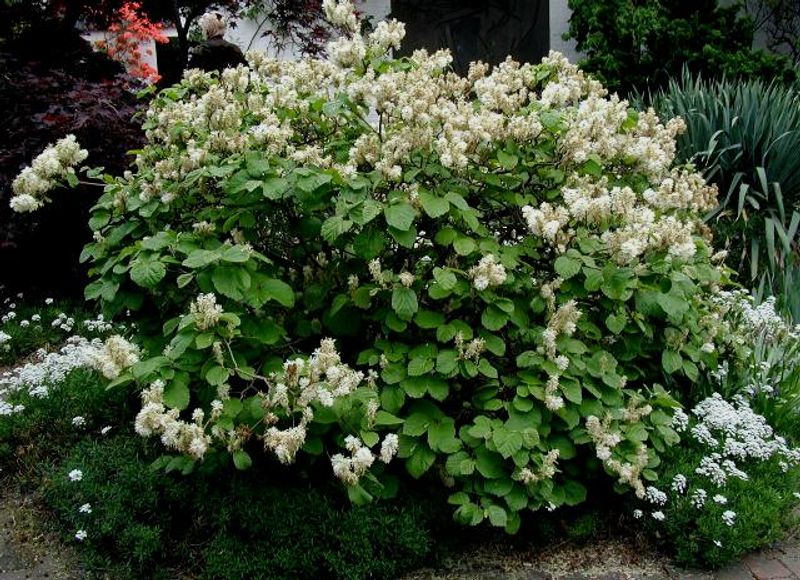
Fothergilla is a native shrub with a lot of personality packed into a compact frame. Its fluffy white flower spikes appear in early spring, often before the leaves even open, creating a ghostly and beautiful display.
Growing 2 to 10 feet tall depending on the species, it fits neatly into borders or naturalized areas that need filling. The plant prefers moist, acidic soil and grows happily in part shade to full sun.
Come fall, Fothergilla puts on one of the more vivid color displays in the landscape. Leaves shift through yellow, orange, and red simultaneously, sometimes all on the same branch.
It is also a magnet for early pollinators who emerge when food sources are scarce. Planting it near the front of a border ensures you catch every stage of its seasonal transformation.
Fothergilla pairs beautifully with azaleas, blueberries, and other acid-loving plants. Fast-growing shrubs that fill bare spots rarely offer this much visual drama across three full seasons.
8. Virginia Sweetspire
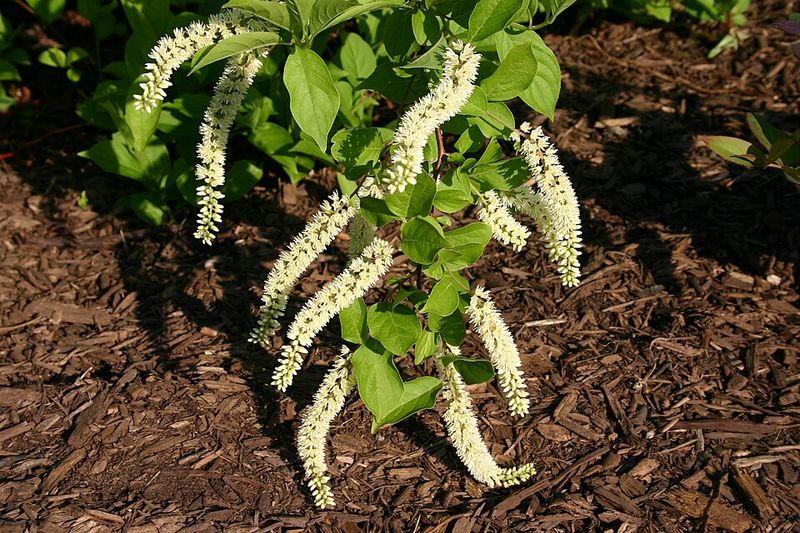
Virginia Sweetspire is one of those underrated native shrubs that deserves far more attention than it gets. Its drooping white flower clusters are elegant in early summer, and its fall foliage is strikingly vivid.
This adaptable shrub grows 3 to 5 feet tall and spreads slowly by suckers, creating a natural groundcover effect over time. It handles wet soil, dry spells, deep shade, and full sun without complaining once.
The fall color ranges from crimson to burgundy and orange, often lingering well into late autumn. Its color holds longer than many other shrubs, making it a standout when other plants have gone dull.
Henry’s Garnet is a widely grown variety and earns that popularity with its rich, dependable foliage display. It works beautifully as a mass planting along slopes or stream banks where erosion is a concern.
Maintenance is minimal once established, needing only occasional shaping. Gardeners who plant Virginia Sweetspire once rarely want to stop adding more of it to their landscape.
9. Shrubby Cinquefoil
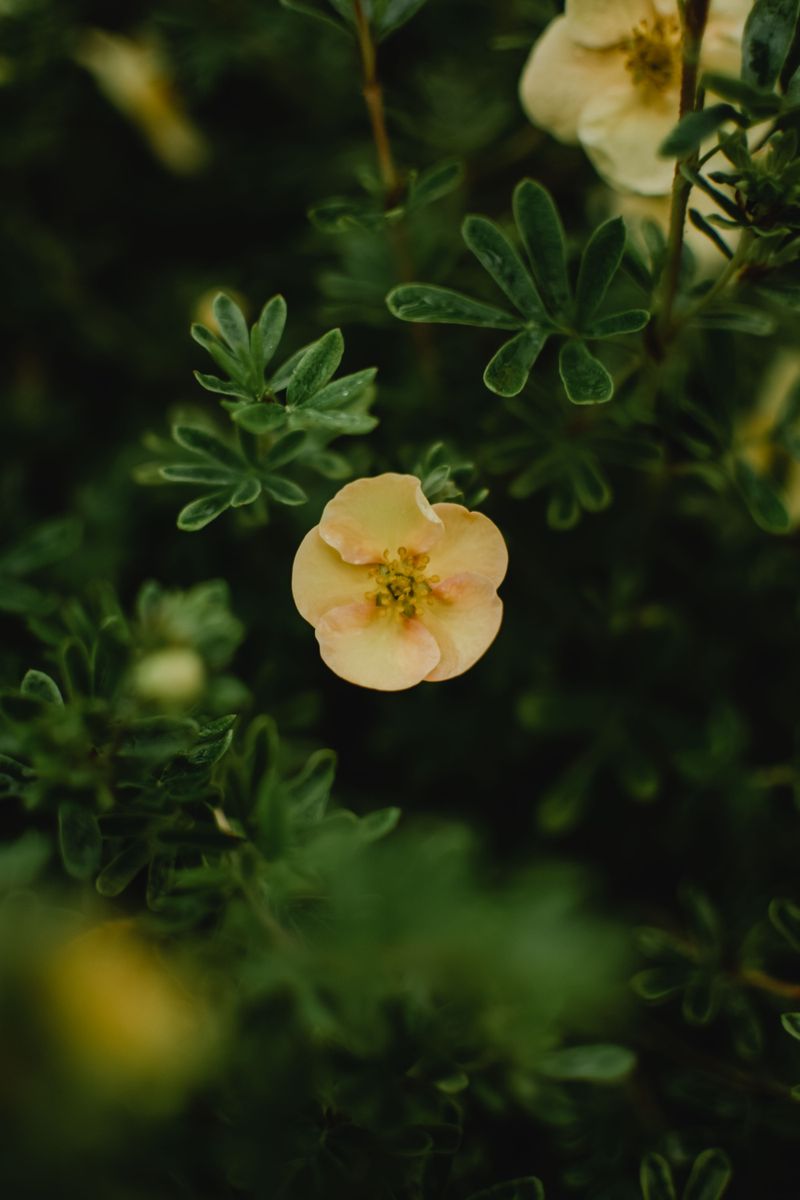
Shrubby Cinquefoil is a steady, reliable bloomer in the shrub world. It blooms from late spring all the way through frost, pumping out cheerful yellow, white, or pink flowers without a break.
Staying compact at 1 to 4 feet tall, it is ideal for filling smaller bare patches or edging along paths and driveways. It thrives in full sun and handles poor, rocky soil that would defeat most other plants.
Deer tend to leave it alone, which makes it a smart pick for properties near wooded areas. It is also drought-tolerant once established, cutting down on watering chores significantly.
The fine-textured foliage looks tidy all season without any pruning needed. A light trim in early spring keeps it dense and encourages the heaviest bloom set of the year.
Native bees and butterflies visit the flowers consistently throughout the growing season. If you want a shrub that works hard without demanding much in return, Shrubby Cinquefoil is a reliable and cheerful choice.
10. Arrowwood Viburnum
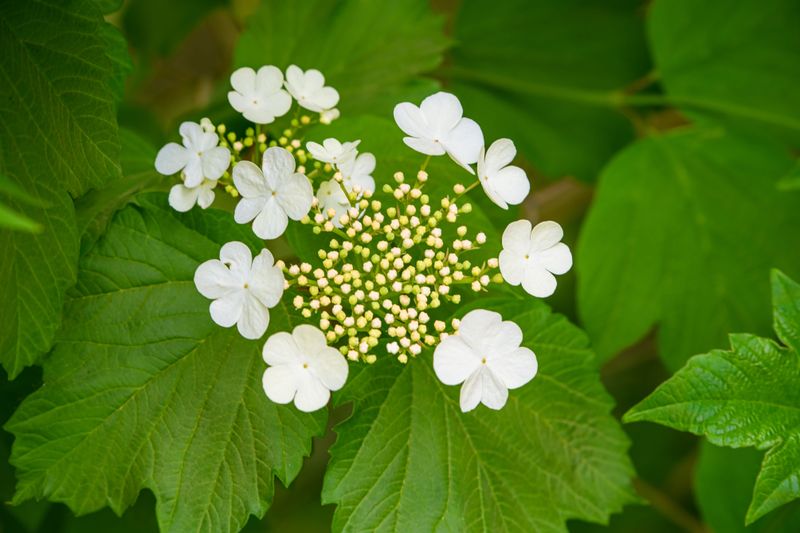
Arrowwood Viburnum is the kind of shrub that makes a landscape feel complete. It grows with purpose, filling space quickly while offering something beautiful in every season of the year.
Reaching 6 to 10 feet tall and wide, it is built for covering ground in a hurry. Flat-topped clusters of white flowers appear in late spring, followed by blue-black berries that birds absolutely love through fall.
The glossy green leaves turn shades of red and purple in autumn, adding one more layer of seasonal interest. This shrub earns its keep from the first warm day of spring to the last cold snap of fall.
It tolerates a wide range of soil types and moisture levels, making it one of the more adaptable native shrubs available. Plant it in sun or part shade and it performs reliably without much intervention.
Arrowwood Viburnum also makes an excellent privacy screen when planted in a row. For gardeners who want fast-growing shrubs that fill bare spots and support wildlife, this one checks every box.
11. Chokeberry
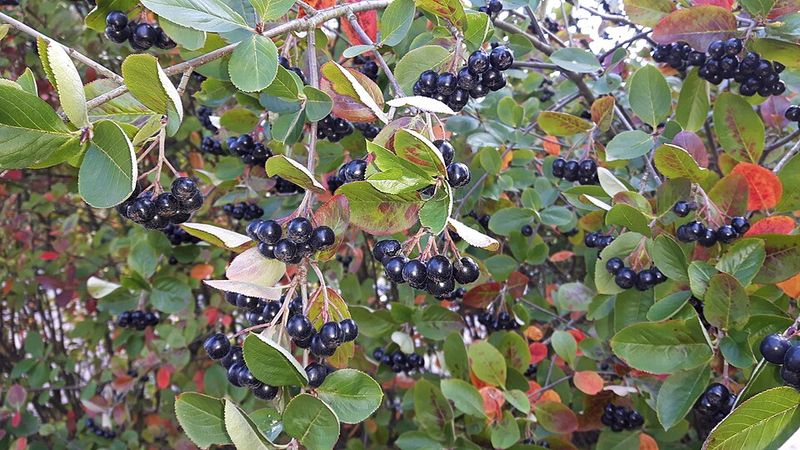
Chokeberry, or Aronia, might have an unflattering name but a stunning personality. This tough native shrub earns admiration with white spring flowers, glossy summer berries, and fiery fall foliage all in one package.
Growing 3 to 8 feet tall depending on the species, it fills bare spots in moist or average soils with impressive speed. Red Chokeberry and Black Chokeberry are the two most popular types, each offering slightly different looks.
The berries are technically edible but intensely tart, which is why birds tend to wait until deep winter to eat them. That delay means you get months of ornamental interest before the branches go bare.
Fall color is one of Chokeberry’s strongest selling points, with leaves turning brilliant scarlet and orange. This level of autumn color is uncommon in shrubs that also tolerate wet, poorly drained areas.
It spreads naturally by suckers, forming dense colonies that suppress weeds over time. Chokeberry is a workhorse shrub that rewards low-maintenance gardeners with a high-impact landscape display.
12. Japanese Kerria
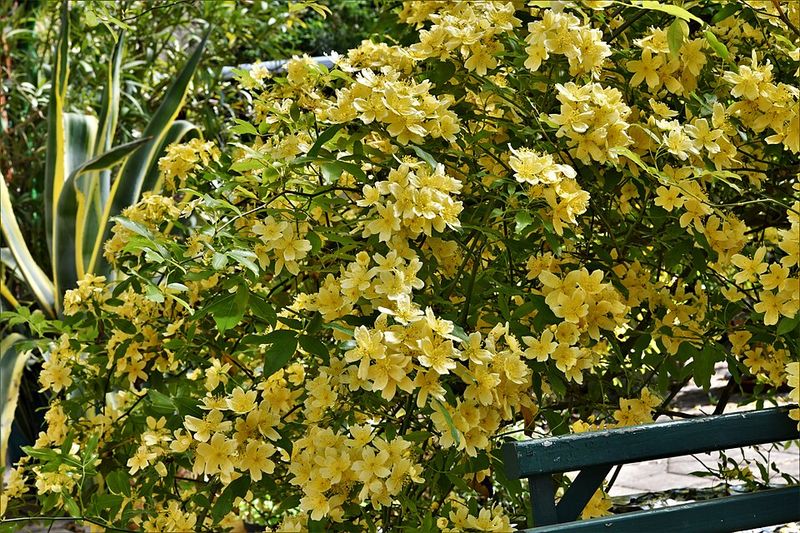
Japanese Kerria is a shade garden hero that most people walk right past at the nursery. Once you see it in full bloom, though, those bright golden-yellow flowers stop you in your tracks.
Growing 3 to 6 feet tall with arching, bright green stems, it fills shaded bare spots where few other flowering shrubs dare to grow. The double-flowered form, Pleniflora, is especially lush and eye-catching in spring borders.
After the main flush of spring blooms, scattered flowers often reappear throughout summer and fall. The green stems stay colorful through winter, giving the plant a fresh look even after the leaves drop.
Kerria spreads by underground runners, gradually forming a colony that crowds out weeds naturally. A little thinning every few years keeps it from getting too dense or unruly.
It handles clay soil and dry shade better than most shrubs in its class. For gardeners struggling with fast-growing shrubs that fill bare spots under trees, Japanese Kerria is often the answer they have been searching for.