Feeding Mistakes That Keep Calibrachoa From Trailing Properly
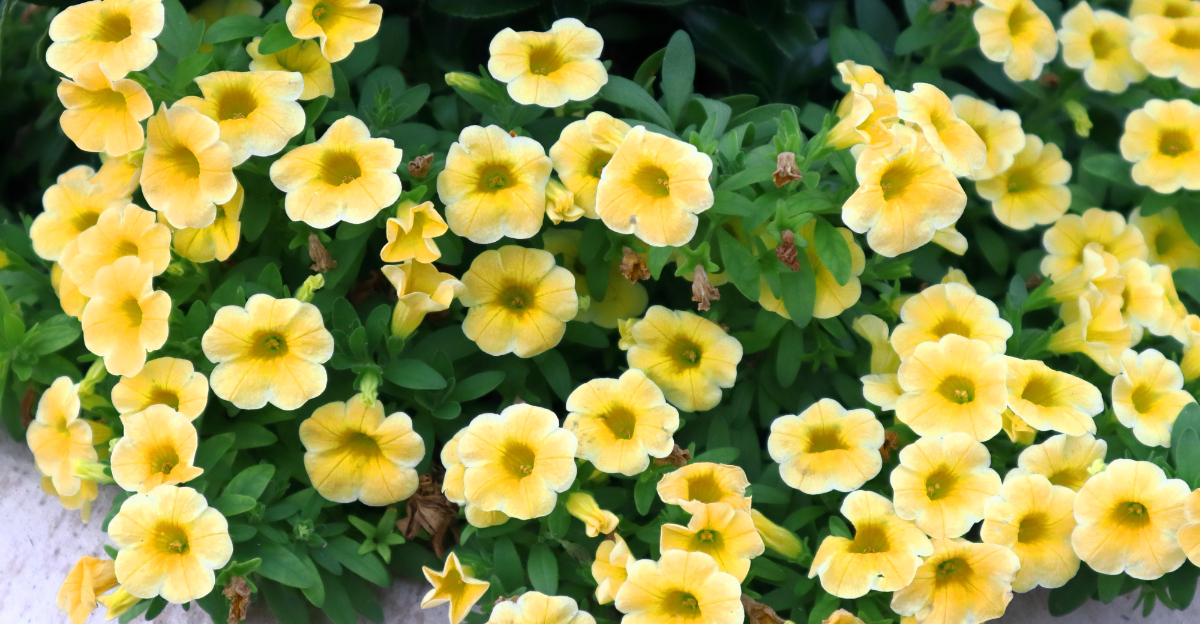
Some plants seem born for hanging baskets, as if trailing were written into their genetics. Tiny blooms, packed shoulder to shoulder, spill over the rim in a genuine waterfall of color.
But what if yours refuses to cooperate, no matter how much sun or attention you throw at it? Instead of cascading, it stays tight and stubborn, more like a compact little bush that never got the memo about lengthening.
Chances are, you’ve already blamed the pot size, the sunlight, maybe even the weather. But the real answer is usually much closer to home, sitting quietly in your feeding routine where nobody thinks to look.
There are eight sneaky habits hiding in that routine, each one capable of holding those blooms back and keeping your plant stuck in place. Spot the right one, and the transformation happens faster than you’d expect.
1. Excess Nitrogen Favors Leaves Over Length
Nitrogen is seductive. You add it and suddenly your calibrachoa looks lush, green, and almost proud of itself.
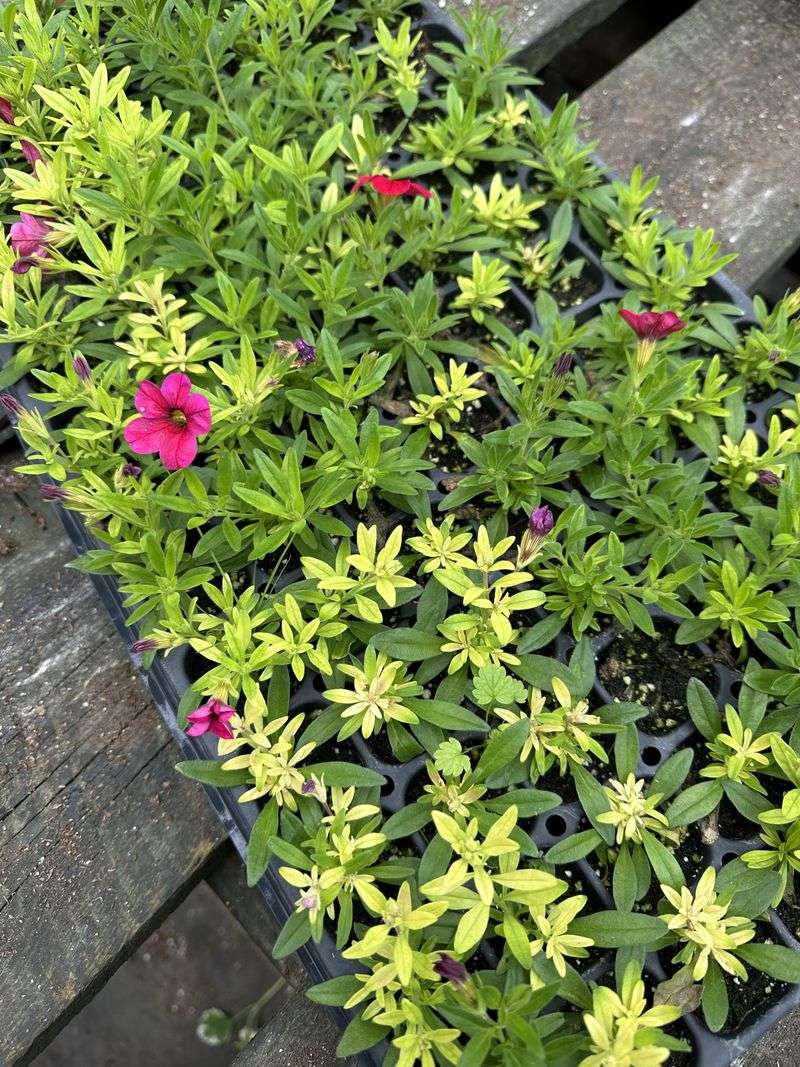
The problem is that too much nitrogen sends energy straight to leaf production. Your plant gets bushy, not trailing.
This is often where the trouble begins. Gardeners grab an all-purpose fertilizer and go heavy, not knowing it’s mostly nitrogen.
The plant responds by pushing out thick foliage instead of long, cascading stems. Blooms become sparse and the trailing habit you paid for disappears fast.
Calibrachoa needs a balanced diet, not a nitrogen feast. Look for fertilizers where the middle and last numbers on the label match or beat the first.
A ratio like 10-10-10 or even 7-9-5 works far better than a high-nitrogen blend. The goal is to encourage stem extension and flower production, not just green growth.
If your plant already looks too leafy, flush the container with plain water to push out excess nutrients. Then switch to a bloom-booster formula to redirect the plant’s energy.
Check your stems before your leaves to catch this early. Long, spaced-out internodes mean healthy stretching, while short, crowded ones signal nitrogen overload.
Think of nitrogen like sugar for a kid. A little is fine, but too much and things go sideways fast. Calibrachoa performs best when nutrients are in balance, and trailing length is your reward for getting it right.
2. Skipping Phosphorus And Potassium In The Mix
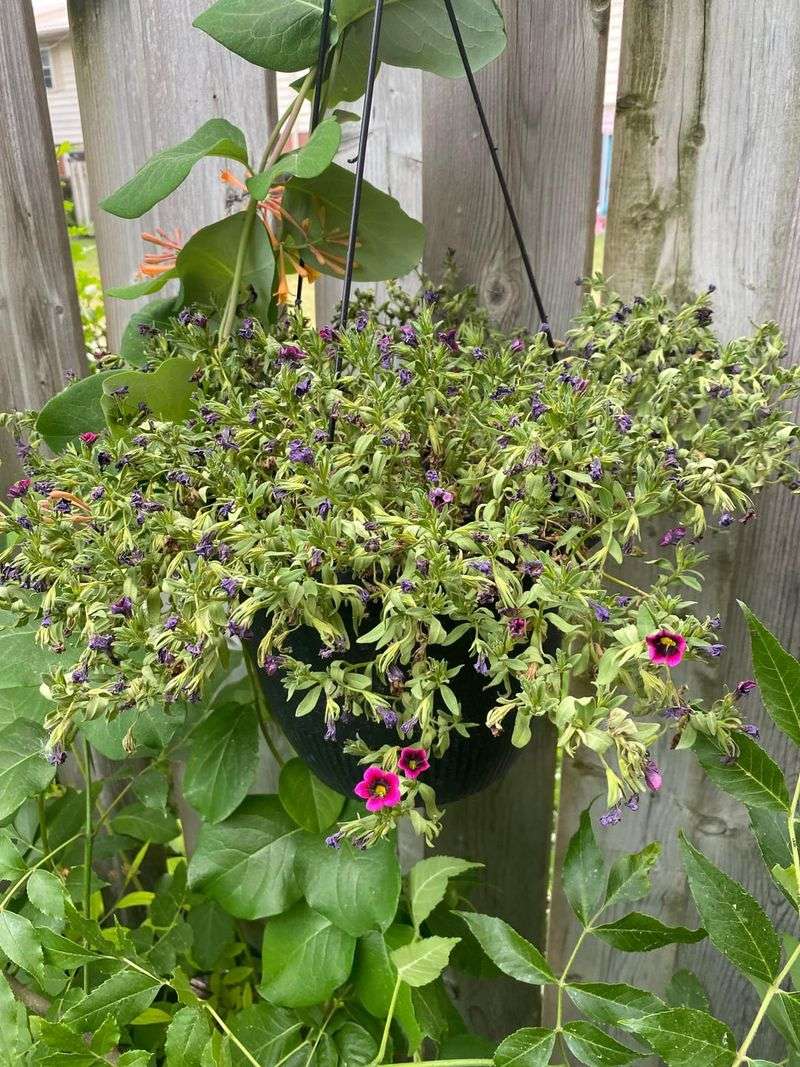
Phosphorus and potassium are the unsung heroes of a trailing calibrachoa. Most gardeners focus on nitrogen and completely overlook these two.
Phosphorus supports strong root development and encourages flower bud formation. Without it, your plant sits still instead of reaching outward and downward.
Potassium strengthens stems and helps the plant move water efficiently through its tissue. Weak stems mean weak trailing, plain and simple.
When you skip both, you end up with a plant that has no structural foundation to trail from. It might survive, but it won’t thrive the way it should.
A lot of stalled growth traces back to an incomplete fertilizer choice. A single nutrient formula just won’t cut it for this plant.
Choose a fertilizer specifically formulated for flowering annuals or hanging baskets. These blends tend to include higher phosphorus and potassium levels to support blooming and stem strength.
Look for labels that say “bloom booster” or check for an NPK ratio where P and K are elevated. Something like 15-30-15 is a solid choice for encouraging trail and flower production together.
Apply according to package directions and watch your plant start reaching. Good potassium and phosphorus support is like giving your calibrachoa a structural backbone. Once those nutrients are flowing, the trailing you were hoping for starts showing up in a matter of weeks.
3. Feeding On A Rigid Schedule Instead Of Watching Growth
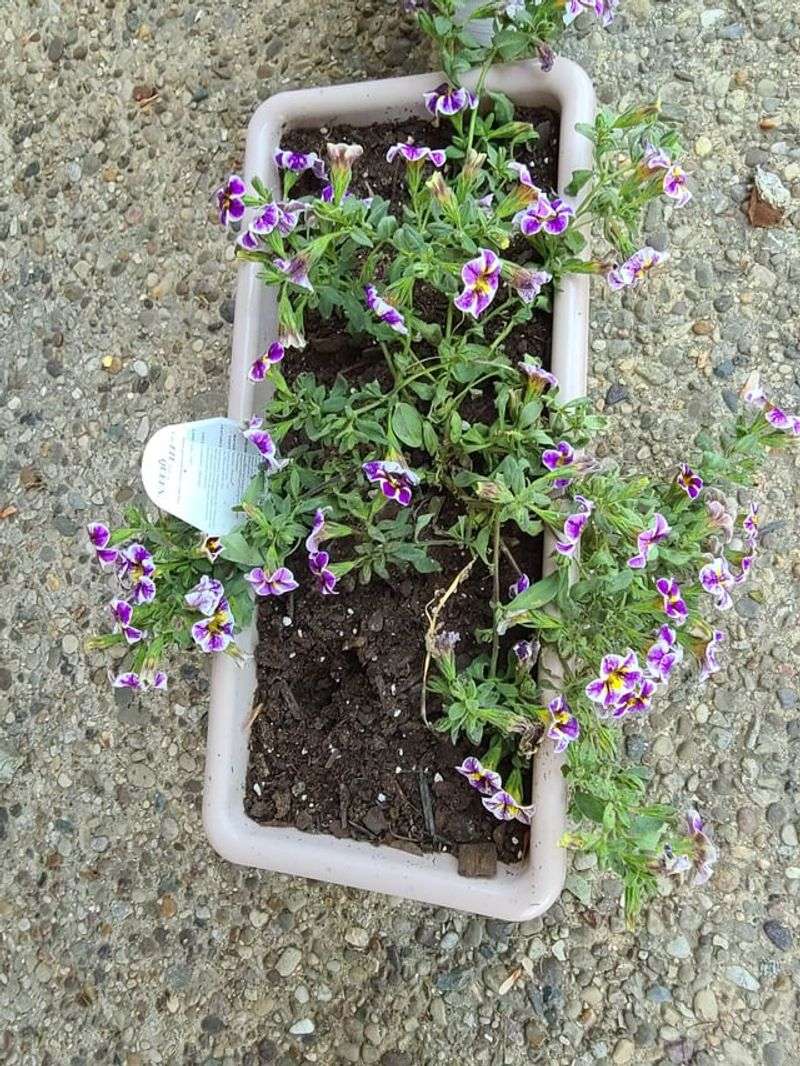
Calendars are great for dentist appointments. They are not always great for feeding calibrachoa.
Plants don’t grow on a fixed schedule. They respond to temperature, light, rain, and their own internal rhythms.
When you feed on a rigid weekly or biweekly schedule without observing the plant, you either overfeed during slow periods or underfeed during growth surges. Both outcomes hurt trailing performance.
A calibrachoa pushing hard in July heat needs more support than one sitting in cool May weather. Treating both moments the same is a missed opportunity.
This kind of autopilot feeding is easy to fall into. Your plant gives you signals if you pay attention to them.
Pale leaves often mean nutrient deficiency. Dark, overly thick stems with few flowers can signal overfeeding. Slow stem extension usually means something is missing from the feeding plan.
Instead of following a strict schedule, observe your plant twice a week. Look at stem length, leaf color, and flower output before deciding whether to feed.
During active growth, you might feed every ten days. During a heat wave when growth slows, you might back off to every two weeks. Let the plant guide the timing rather than the calendar.
Responsive feeding keeps your calibrachoa in its best trailing rhythm. Plants that get what they need when they need it simply perform better than those on a fixed routine.
4. Fertilizing Dry Soil Instead Of Moist Roots
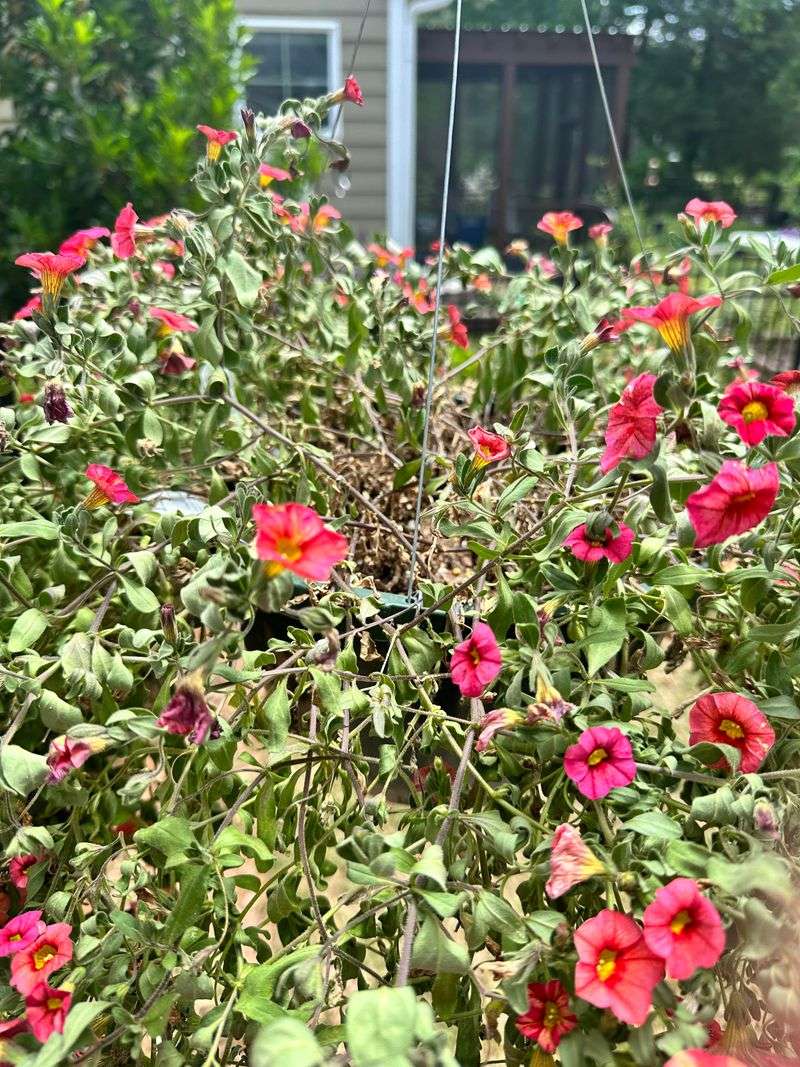
Pouring fertilizer onto dry soil is one of the fastest ways to stress your calibrachoa. Dry roots can’t absorb nutrients efficiently, and concentrated fertilizer salts can scorch tender root tips.
When roots are stressed, the plant shifts into survival mode. Trailing growth stops because the plant is focused on staying alive rather than expanding.
This mistake is incredibly common in summer when containers dry out fast. Gardeners water and feed at the same time, but if the soil was already bone dry, damage can happen before nutrients even reach the roots.
Water your calibrachoa thoroughly before applying any liquid or granular fertilizer. Let the soil absorb that moisture for at least fifteen to twenty minutes before feeding.
Moist roots are receptive roots. They pull in nutrients efficiently and send them where the plant needs them most, including into those trailing stems.
Sometimes the fix really is this straightforward. Timing matters as much as the product you choose.
If you use a liquid fertilizer, mix it with water as directed and apply it after the soil is already damp. This dilutes the concentration and protects roots from salt burn.
Think of it like eating a meal. Your body absorbs food better when you’re hydrated. Your calibrachoa works the same way, and moist soil sets the stage for every nutrient to do its job.
5. Ignoring Iron And Micronutrient Needs
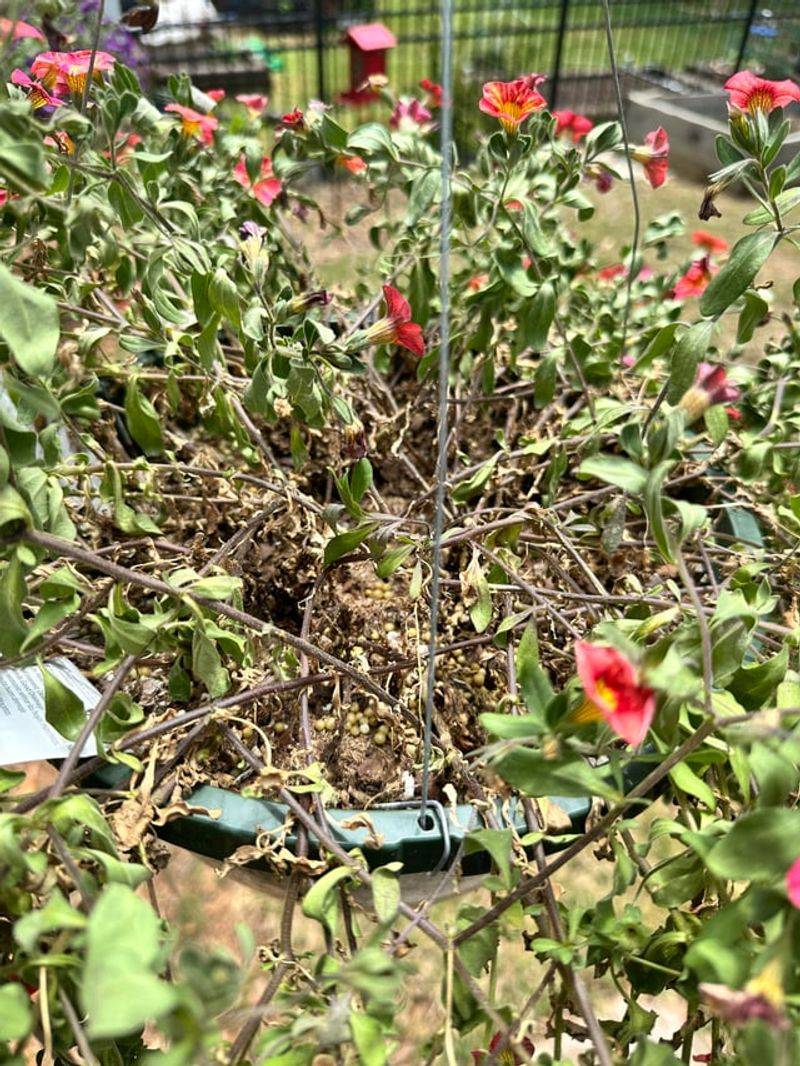
Yellow leaves with green veins are your calibrachoa waving a red flag. That pattern is a classic sign of iron deficiency, and it’s more common than most people expect.
Calibrachoa is particularly sensitive to iron levels. Without enough iron, chlorophyll production slows and the plant loses its ability to photosynthesize efficiently.
When photosynthesis suffers, energy for trailing stem growth drops off fast. Your plant starts to look tired and compact instead of lush and cascading.
Iron isn’t the only micronutrient that matters here. Magnesium, manganese, and zinc all play supporting roles in keeping calibrachoa healthy and actively trailing.
A basic fertilizer with no micronutrient support is usually the root of it. Most standard formulas skip these entirely.
Look for fertilizers labeled as “complete” or those that specifically list iron, magnesium, and other trace elements on the ingredient panel. Chelated iron is especially effective because it stays available to roots even at a range of soil pH levels.
You can also apply a foliar iron spray directly onto leaves for a faster correction. Mix according to label directions and mist both sides of the foliage on a cool morning.
Results usually appear within a week. New growth should emerge green and strong. Micronutrients are the quiet workers behind every long, blooming trail of calibrachoa, and leaving them out of the plan is a costly oversight.
6. Overfeeding Builds Up Salt In The Container
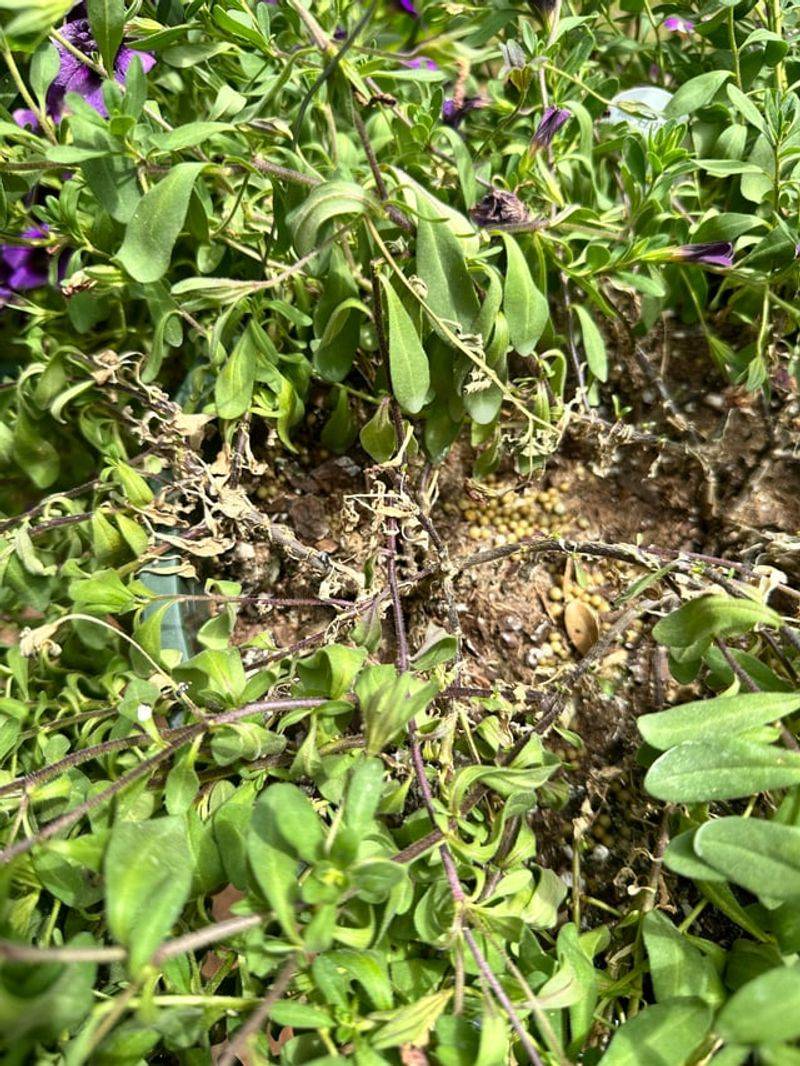
More fertilizer does not mean more flowers. With calibrachoa, overfeeding is just as damaging as not feeding at all.
When you apply too much fertilizer too often, mineral salts accumulate in the potting mix. These salts pull moisture away from roots through a process called osmotic stress.
Stressed roots struggle to take up water and nutrients even when both are present. The plant responds by slowing growth, dropping flowers, and producing shorter, weaker stems.
You might even see a white crust forming on the soil surface or around the pot rim. That crust is a visible sign of salt accumulation and a warning that overfeeding has been happening.
The fix is straightforward. Flush the container by running plain water through it slowly for several minutes. This pushes accumulated salts out through the drainage holes.
After flushing, wait about a week before resuming fertilizer application. When you restart, follow package directions carefully and resist the urge to add extra for good measure.
Calibrachoa in containers already lives in a limited space with limited buffering capacity. The potting mix can only hold so much before it becomes toxic to roots.
Feeding with precision and patience gets you farther than feeding with enthusiasm. Your plant will respond with exactly the trailing, blooming performance you were hoping to see.
7. Wrong Soil pH Locks Out Key Nutrients
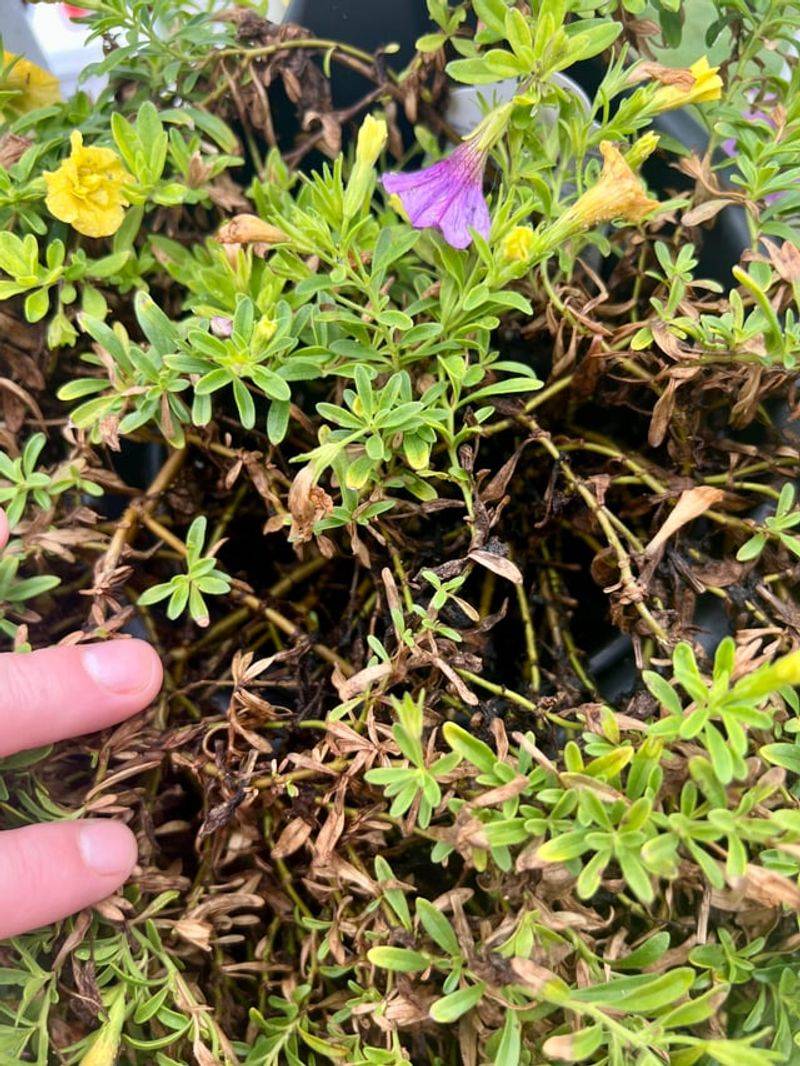
You can feed your calibrachoa perfectly and still get poor results. If the soil pH is off, nutrients can become chemically unavailable to roots regardless of how much you apply.
Calibrachoa prefers a slightly acidic pH between 5.5 and 6.2. Outside that range, key nutrients like iron, phosphorus, and manganese get locked into forms the plant simply cannot absorb.
High pH is the most common problem in containers. Tap water with high alkalinity, certain potting mixes, and lime-based amendments can all push pH upward over time.
When pH climbs above 6.5, iron becomes unavailable almost immediately. That’s why you see those telltale yellow leaves even after applying iron-containing fertilizer.
Sometimes it’s not about the fertilizer at all. It’s about the environment surrounding the roots.
Test your container soil with an inexpensive pH meter or test strips. These are available at most garden centers and give you a result in seconds.
If pH is too high, use an acidifying fertilizer formulated for acid-loving plants. Products containing ammonium sulfate can help bring pH down gradually and safely.
You can also water with a diluted acidic solution using a small amount of white vinegar mixed into your watering can. Adjust slowly and retest after a week.
Correcting pH unlocks the nutrients already present in your soil. That single change can transform a struggling, stubby plant into the trailing beauty you imagined when you first brought it home.
8. Neglecting To Pair Feeding With Regular Trimming
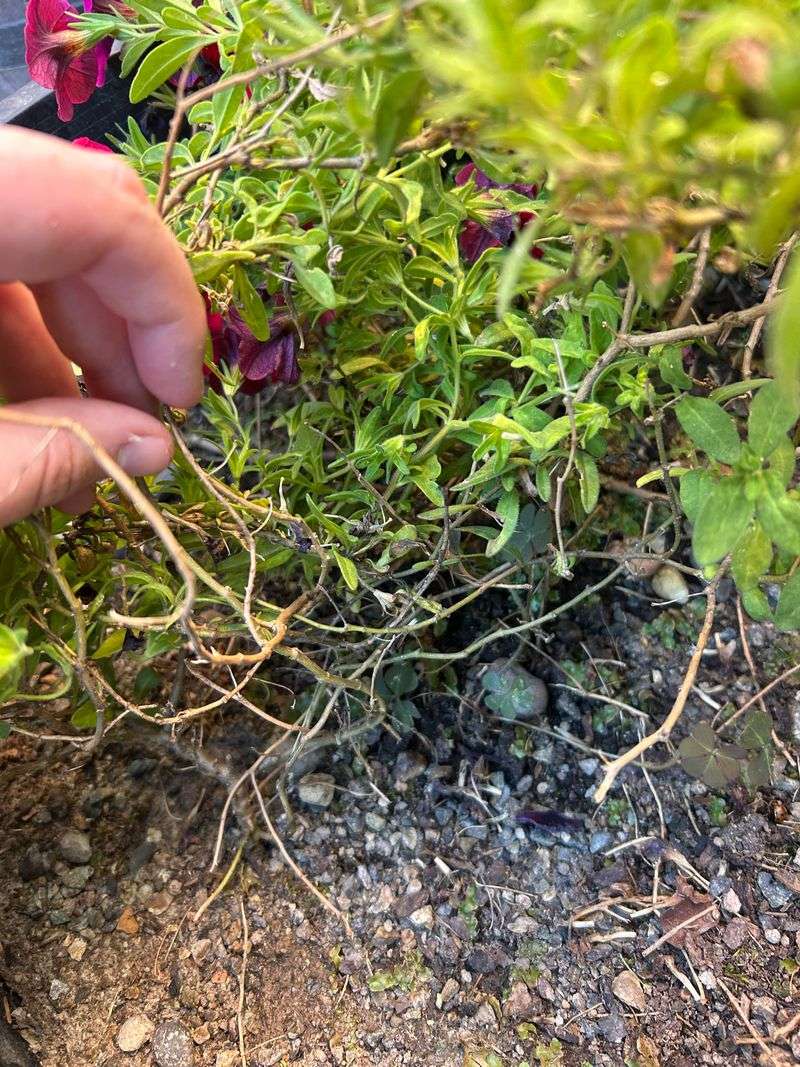
Feeding and trimming are partners in the world of calibrachoa care. You can’t do one well without the other and expect great trailing results.
When old, spent stems pile up without being cut back, the plant puts energy into maintaining aging tissue instead of pushing new trailing growth. Nutrients get directed toward the wrong places.
Regular trimming signals the plant to produce fresh stems. Those new stems are the ones that trail, bloom, and create that cascading waterfall effect everyone loves about this plant.
Great fertilizer paired with zero trimming is a common combo. The plant gets fuel but no direction for where to send it.
After trimming, your calibrachoa is primed to absorb and use nutrients efficiently. That’s the ideal moment to apply a bloom-boosting fertilizer and let the plant surge forward.
Trim back about one-third of the plant every three to four weeks during the growing season. Focus on cutting stems that have finished blooming or look leggy and weak.
Trim with clean, sharp scissors to avoid introducing infection to fresh cuts. Wipe blades with a plant-safe disinfectant between plants if you have multiple containers.
Within ten to fourteen days of trimming and feeding together, you’ll see new stems emerging and reaching outward. The combination is more powerful than either practice done alone.
Feeding your calibrachoa without trimming is like filling a car with gas but never steering it. Direction matters just as much as fuel when you want real trailing results.