Finding A Box Turtle In Your North Carolina Yard May Mean Your Garden Is Healthier
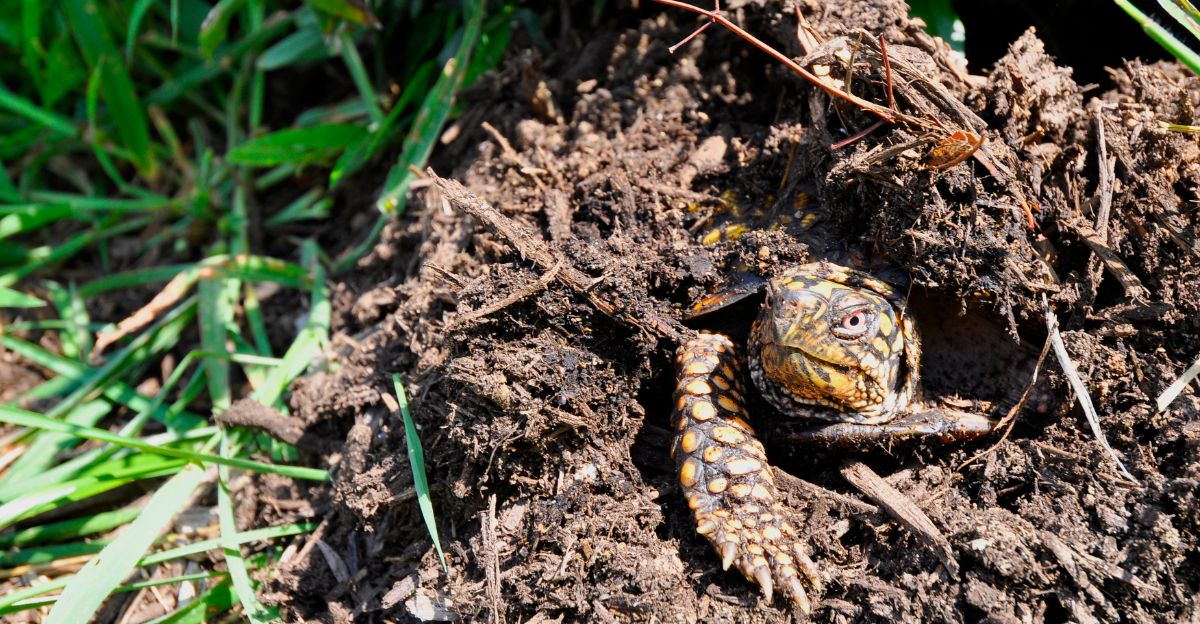
Spotting a box turtle in your North Carolina yard is often a strong indicator that your garden supports a genuinely healthy, balanced ecosystem.
These reptiles require consistent access to food, shelter, and moisture, making their presence a sign that all three exist in reasonable supply nearby.
Box turtles feed on slugs, insects, and fallen fruit, quietly providing natural pest control throughout the growing season.
Their reliance on leaf litter and undisturbed ground cover means reduced yard cleanup often benefits both turtles and overall soil health.
Avoiding pesticide use protects these sensitive creatures from unintended harm while they forage through garden beds.
Box turtles also tend to stick around the same territory for years, meaning repeated sightings suggest a stable, welcoming habitat.
Leaving fallen leaves and brush piles in corners of the yard supports their continued presence. Their quiet visits say more about garden health than almost any other visible sign.
1. A Box Turtle Can Signal Useful Backyard Habitat
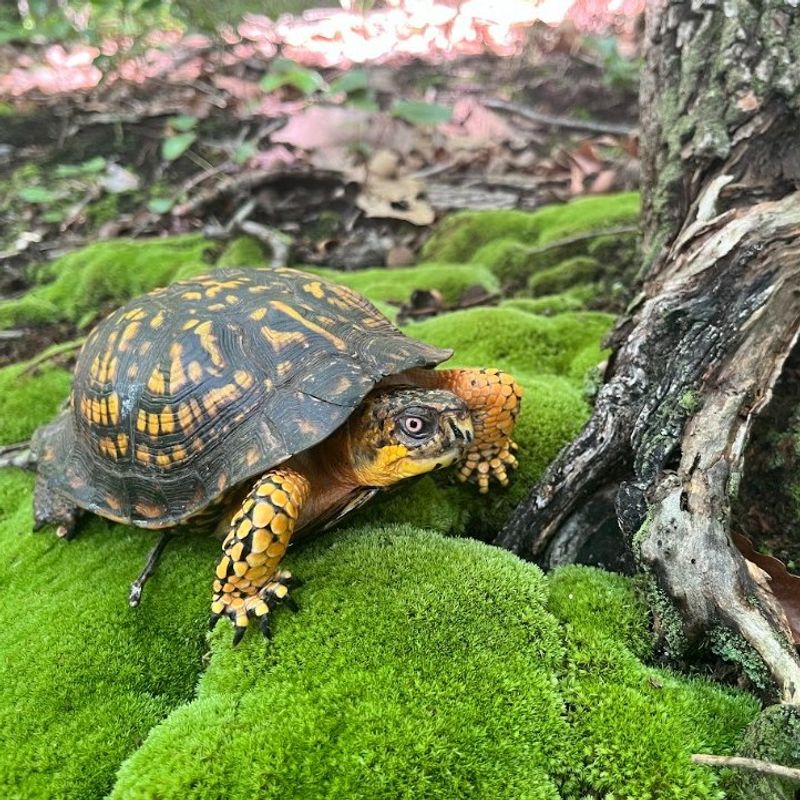
Imagine stepping outside on a quiet morning and finding a box turtle slowly crossing your garden path. That little moment is actually worth paying attention to.
Box turtles are selective about where they spend their time, and a yard that attracts one is likely offering something valuable.
Eastern box turtles, the species most common across North Carolina, need a mix of food, shelter, moisture, and nearby cover to thrive.
They eat a wide variety of things, from wild berries and mushrooms to earthworms and slugs.
A yard with diverse plantings, shaded corners, and moist soil naturally provides these resources in ways that a plain, flat lawn simply cannot.
Box turtles also have relatively small home ranges, often just a few acres, and they tend to stay in familiar territory for most of their lives.
When one shows up in your yard, there is a good chance it has been moving through or living nearby for years. Your garden may be part of its regular route.
Shrubs, groundcovers, leaf piles, and garden beds all contribute to the kind of layered, textured environment that supports not just turtles but a whole web of wildlife.
A yard rich enough in resources to attract a box turtle is often also supporting birds, beneficial insects, and other creatures that help keep a garden balanced and healthy.
The turtle is not just a visitor. It is a small but meaningful sign that your outdoor space is doing something right.
2. Leaf Litter And Ground Cover Give Turtles Shelter
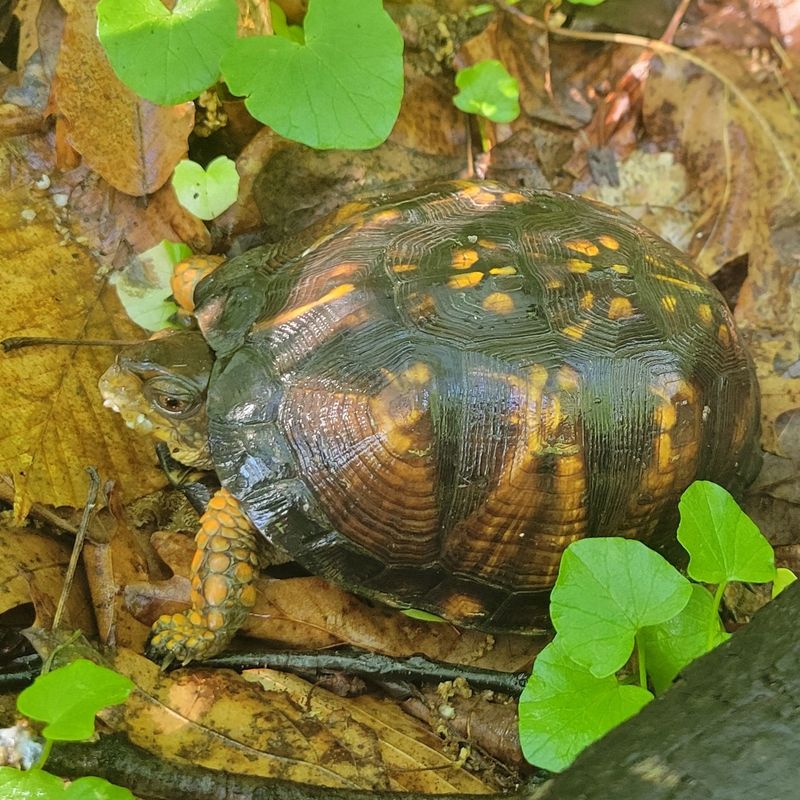
Most gardeners rake up every leaf and clear away fallen branches without a second thought.
But from a box turtle’s perspective, that leaf litter and those rotting logs are basically prime real estate. A yard that holds onto some of its natural messiness is a yard that wildlife can actually use.
Box turtles rely heavily on leaf piles, woody debris, dense groundcover plants, and shaded hiding spots.
These features give them places to rest safely during the heat of the day, escape from predators, and even settle in for cooler stretches of weather.
Your North Carolina Garden Changes Every Week. Your Plan Should Too.
Gardening in North Carolina changes quickly throughout the season. Every Friday you’ll receive a simple weekly plan showing exactly what to plant, prune, fertilize, harvest, and protect so you never miss the right timing.
Without this kind of cover, a yard becomes difficult to navigate and uncomfortable to stay in.
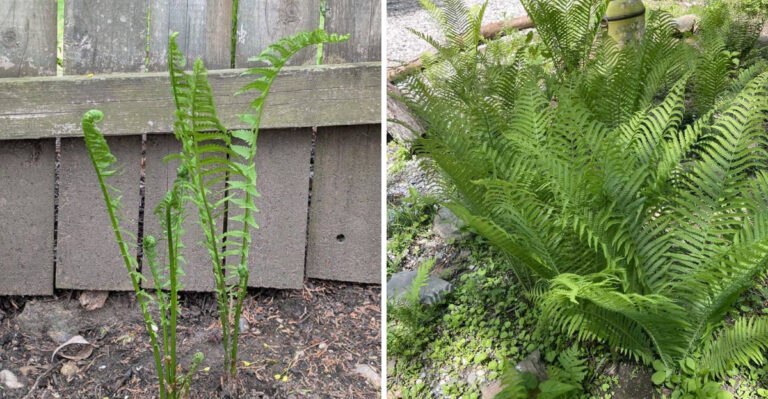
Groundcover plants like wild ginger, ferns, and native violets create the kind of low, sheltered layer that turtles appreciate.
These plants also hold moisture in the soil beneath them, which matters a lot during North Carolina’s hot summers.
A shaded, plant-covered garden floor is genuinely more inviting to a box turtle than a wide-open, sun-baked patch of bare dirt.
Leaving a dedicated area of your yard a little wilder, with some unraked leaves, a few logs, and dense low plants, costs you almost nothing in terms of effort. What you gain is a much richer environment for wildlife.
Box turtles that find reliable shelter in a yard tend to return to it regularly, and their presence is a good indicator that your garden’s ground-level structure is working well for the creatures that depend on it.
3. Moist Areas Can Make A Yard More Appealing
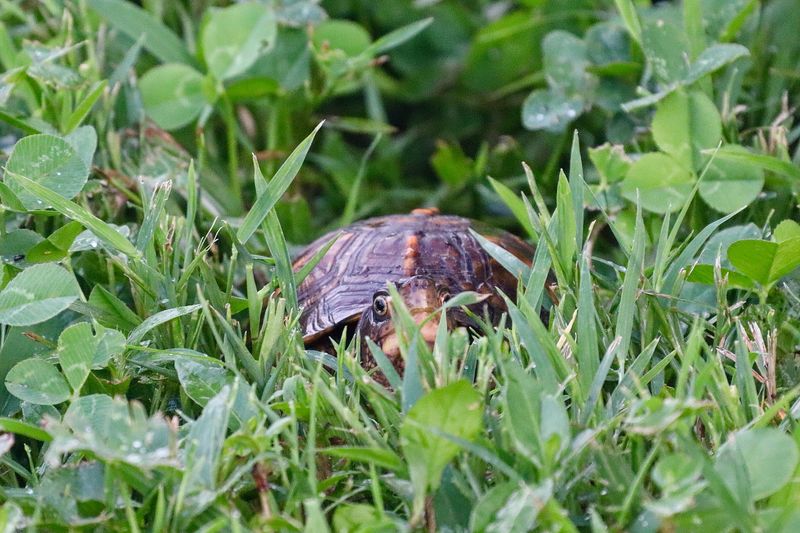
North Carolina summers can be brutally hot and dry, and box turtles feel that heat just as much as any gardener does.
When temperatures climb and the ground dries out, turtles actively seek out places where moisture lingers. A yard that holds onto some dampness becomes a genuinely attractive destination.
Box turtles are not aquatic, but they do enjoy shallow puddles, muddy patches, and damp vegetation.
They sometimes soak in very shallow water to rehydrate, and they often burrow into moist soil or leaf piles during the hottest parts of summer days.
Yards with rain gardens, low-lying areas that stay damp, or dense plantings that shade the soil tend to hold moisture much better than open, grassy spaces.
Rain barrels and drip irrigation systems that keep garden beds consistently moist can also make a yard more appealing to a box turtle passing through.
Even a small water feature, like a shallow birdbath or a garden pond with a gently sloped edge, can provide the kind of moisture access these reptiles look for during dry spells.
A garden that manages water well enough to stay relatively moist during dry stretches is also better for your plants.
Good moisture retention means healthier roots, more beneficial soil organisms, and stronger plant growth overall.
So when a box turtle shows up near a moist corner of your yard, it is responding to the same conditions that also benefit your vegetable beds, flower borders, and native plantings.
That is a pretty good sign that your water management is working.
4. A Diverse Garden Can Provide More Food
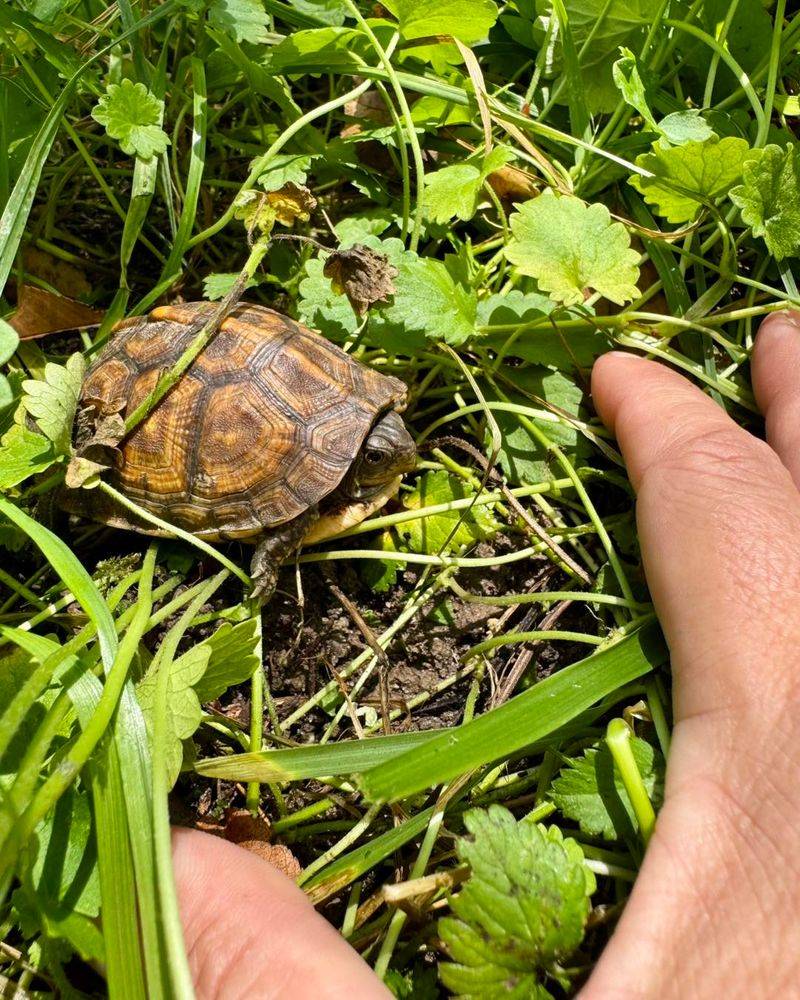
Box turtles are genuinely impressive eaters. Their diet is surprisingly varied, and it shifts with the seasons and with whatever happens to be available in their environment.
A garden that offers a wide range of food sources is naturally more attractive to them than a yard with just one or two plant types. Berries are a particular favorite.
Wild strawberries, blackberries, pokeweed berries, and the fruits of native plants like viburnums and dogwoods are all part of a box turtle’s regular menu.
Mushrooms, especially those that grow near logs or in shaded, moist areas, are also eagerly eaten.
Beyond plant foods, box turtles are active hunters of slugs, snails, earthworms, beetles, and other small invertebrates that live in garden soil and leaf litter.
A garden with diverse native plantings, a healthy layer of organic mulch, and minimal pesticide use is much more likely to support the kind of invertebrate life that feeds a box turtle.
Slug populations, which most gardeners view as pure nuisances, actually become a food source in a yard where a turtle is present. That is a natural, chemical-free form of pest management.
When you grow a variety of plants, especially native species that produce fruit, seeds, and flowers across different seasons, you create a layered food web. Box turtles fit naturally into that web.
Their presence suggests your garden is diverse enough to support multiple levels of wildlife, from the smallest soil organisms all the way up to a reptile that has been navigating North Carolina landscapes for millions of years.
5. Less Lawn Can Create Better Wildlife Habitat
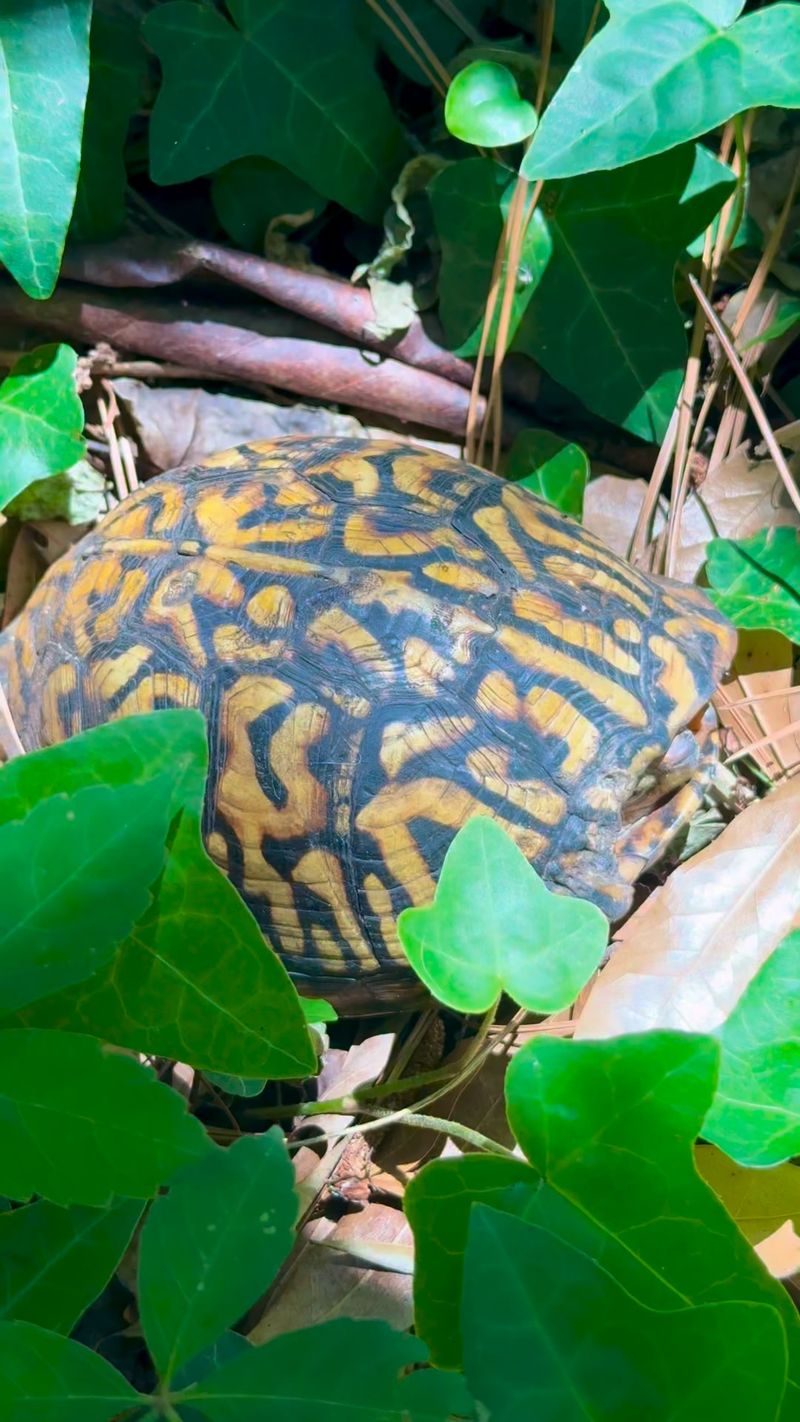
A perfectly manicured, wall-to-wall lawn might look tidy, but for most wildlife, it offers very little.
Grass monocultures provide minimal food, almost no shelter, and very poor moisture retention.
Box turtles, along with most other backyard wildlife, tend to avoid large open lawn areas because they are exposed and resource-poor.
Replacing even a portion of your lawn with native plants makes a significant difference. Native shrubs like beautyberry, spicebush, and native blueberries produce fruit that box turtles and birds both enjoy.
Wildflower patches attract insects, and those insects attract the kinds of small invertebrates that turtles hunt.
A yard that transitions from a flat monoculture to a layered, multi-species planting is a yard that suddenly becomes useful to a much wider range of creatures.
Layered vegetation, meaning groundcovers at the base, shrubs in the middle, and trees above, creates the kind of structural complexity that wildlife thrives in. Each layer provides different resources.
The canopy offers shade and fruit, the shrub layer provides berries and cover, and the groundcover layer supports insects and holds moisture.
A box turtle moving through this kind of space finds food, shelter, and comfortable conditions all in one place.
Reducing lawn area also cuts down on the need for mowing, fertilizers, and pesticides, all of which can harm wildlife.
Fewer chemical inputs mean healthier soil organisms, which in turn support the food chain that turtles depend on.
A yard with less lawn and more native plantings is simply a richer, more functional ecosystem, and box turtles recognize that quickly.
6. One Turtle Does Not Prove The Garden Is Healthy
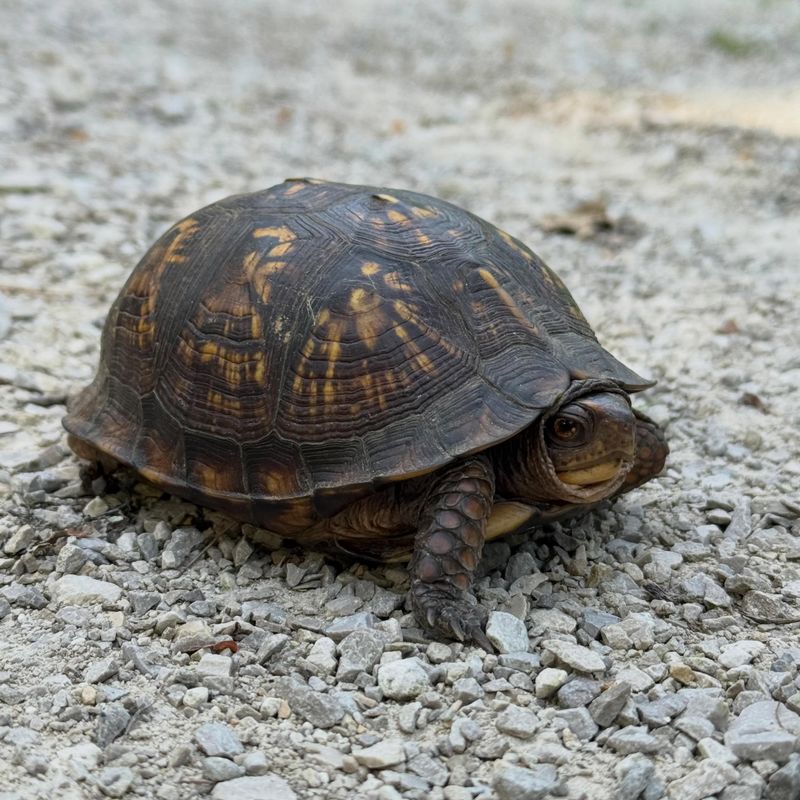
Seeing a box turtle in your yard is genuinely exciting, and it can feel like a stamp of approval for all your gardening efforts.
But before you declare your garden a certified wildlife sanctuary, it is worth keeping a realistic perspective. One turtle sighting alone does not confirm that your yard is ecologically thriving.
Box turtles have home ranges that can stretch across multiple properties, sometimes covering several acres.
A single turtle moving through your yard might simply be traveling its usual route, crossing from one patch of habitat to another.
It may have spent most of its life in a nearby wooded area, a neighbor’s yard, or a strip of natural land close to your property. Your garden might just happen to fall along its regular path.
Environmental conditions also affect turtle movement in ways that have nothing to do with garden quality. Heavy rain can encourage turtles to move more actively. Seasonal shifts in temperature cause them to search for new basking spots or food sources.
A turtle crossing your yard in mid-summer might be responding to drought conditions elsewhere rather than choosing your space because it is ideal.
Consistent sightings over multiple seasons are a much stronger signal that your yard provides reliable habitat.
A turtle that shows up year after year, especially if it is the same individual, suggests your garden genuinely meets its needs.
One visit is a promising start and a reason to keep improving your yard. Just hold off on drawing big conclusions from a single encounter, and keep watching over time.
7. Leave A Visiting Box Turtle Where It Is
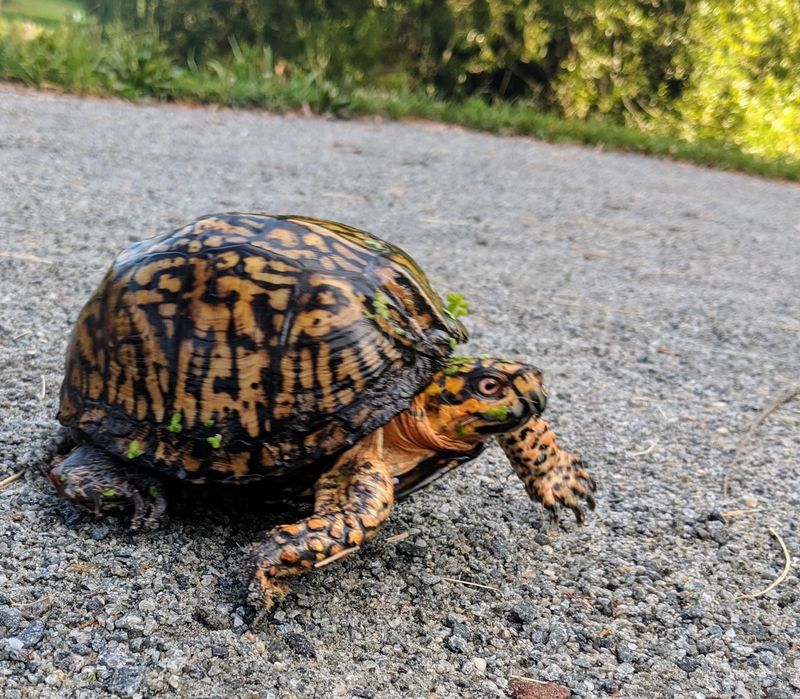
Finding a box turtle in your yard can trigger a strong urge to pick it up, move it somewhere safer, or relocate it to what seems like a better spot.
That instinct comes from a good place, but acting on it can actually cause real harm to the turtle.
The best thing you can do is simply leave it alone. Box turtles have remarkably strong homing instincts.
Studies have shown that when turtles are moved even short distances from their home range, they often spend enormous amounts of energy trying to return to familiar territory.
During that journey back, they cross roads, encounter predators, and face all kinds of hazards they would not otherwise face.
Many relocated turtles never successfully return, and the stress of displacement can seriously affect their health.
North Carolina also has specific wildlife regulations worth being aware of. Wild box turtles are protected under state law, and collecting them from the wild is not permitted.
Even well-meaning relocation can put both the turtle and the person moving it in a difficult situation. A healthy box turtle in your yard does not need your help.
It knows where it is going, it understands its territory, and it is fully capable of finding what it needs.
If a turtle appears to be in a genuinely dangerous spot, like the middle of a driveway, gently moving it a short distance in the direction it was already heading is acceptable.
Beyond that, watch from a respectful distance, enjoy the moment, and let the turtle carry on with its day.
8. Make The Yard Safer For A Returning Turtle
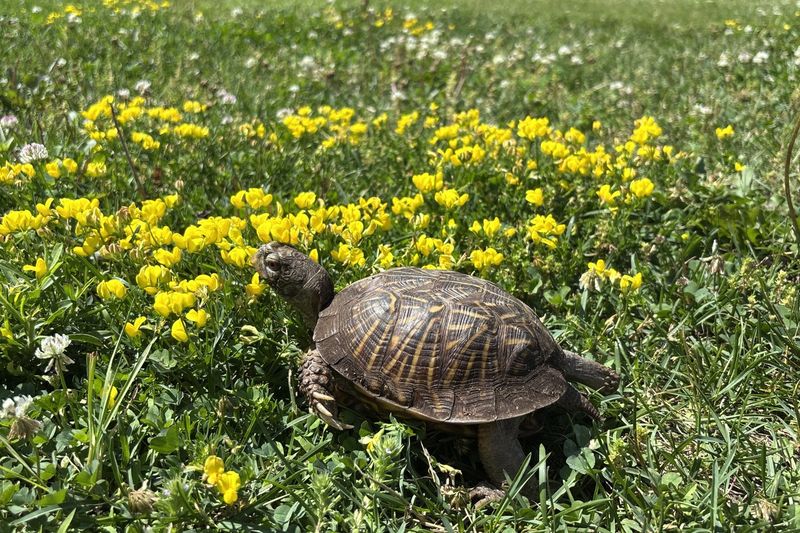
Once you realize that a box turtle may be visiting your yard regularly, it is natural to want to do more to support it. The good news is that making your yard turtle-friendly does not require a major overhaul.
A few thoughtful adjustments can make a meaningful difference for any turtle that passes through.
Start by preserving or expanding the features that likely attracted the turtle in the first place.
Keep some leaf litter in shaded corners, leave a few logs or brush piles in low-traffic areas, and avoid raking every inch of the yard bare in the fall.
These small choices maintain the kind of ground-level cover that turtles depend on for resting and shelter throughout the year. Reducing or eliminating pesticide and herbicide use is another important step.
Chemicals applied to lawns and gardens can affect the invertebrates that box turtles eat, and turtles that consume poisoned prey can accumulate those toxins over time.
Choosing organic or integrated pest management approaches protects the whole food web, not just the turtle.
Pets are worth thinking about too. Dogs and outdoor cats can seriously injure a box turtle, even without meaning to.
Supervising pets when they are outside, especially during the warmer months when turtles are most active, helps prevent accidental encounters.
Finally, be careful with lawn equipment. Turtles resting in tall grass or leaf piles can be harmed by mowers and string trimmers.
A quick walk-through before mowing is a simple habit that can protect any wildlife sheltering in your yard.