Florida Garden Pests That Show Up In April And How To Stop Them
April in Florida feels like a fresh start for every gardener. The days grow longer, the air warms up, and your favorite plants seem to double in size overnight.
But that same humid spring breeze carries a signal to some very unwelcome visitors. These near-ideal conditions create a playground for pests that can quietly take hold before you even notice the damage.
A beautiful garden can turn into a buffet for insects in just a few days. If you want to keep your landscape lush, you have to stay one step ahead of the curve.
Here is how to spot the early warning signs and protect your Florida garden before the spring surge begins.
1. Aphids Gather On Tender New Growth In Early Spring
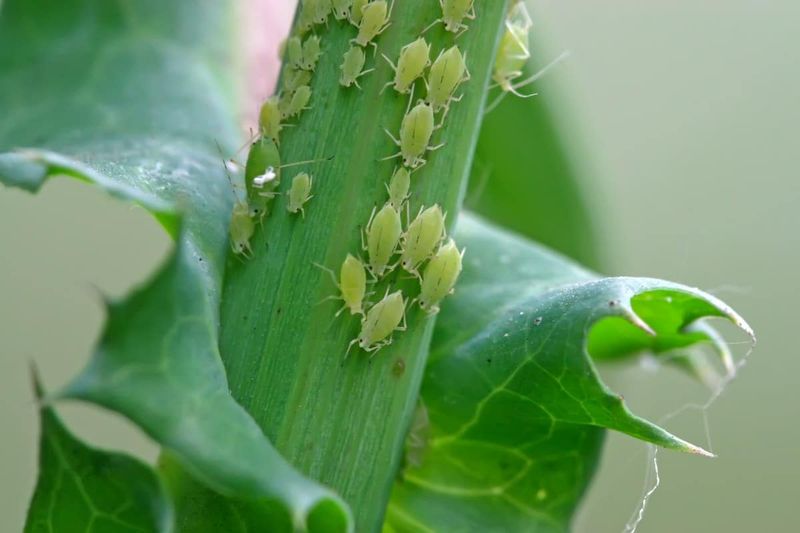
Walk through a Florida garden in early April and you might spot tiny clusters of soft-bodied insects crowding the tips of your newest plant growth.
Aphids are among the first pests to show up each spring, drawn almost magnetically to the soft, nutrient-rich shoots that emerge as temperatures rise.
They feed by piercing plant tissue and sucking out sap, which can cause leaves to curl, yellow, or look puckered and distorted over time.
One of the sneakier things about aphids is how fast their populations build up. A small group can multiply into a large infestation within just a couple of weeks in Florida’s warm spring conditions.
They also excrete a sticky substance called honeydew, which coats leaves and encourages the growth of a dark sooty mold.
Fortunately, aphids respond well to several practical control methods. A firm spray of water from the garden hose can knock them off stems and reduce numbers quickly.
Insecticidal soap or neem oil applied directly to affected areas works well for heavier infestations. Encouraging beneficial insects like ladybugs and lacewings in your garden provides natural, ongoing pressure against aphid populations.
Checking your plants every few days during April gives you the best chance of catching an infestation early, before it has time to spread and weaken your plants significantly.
2. Whiteflies Linger Under Leaves And Multiply Quickly
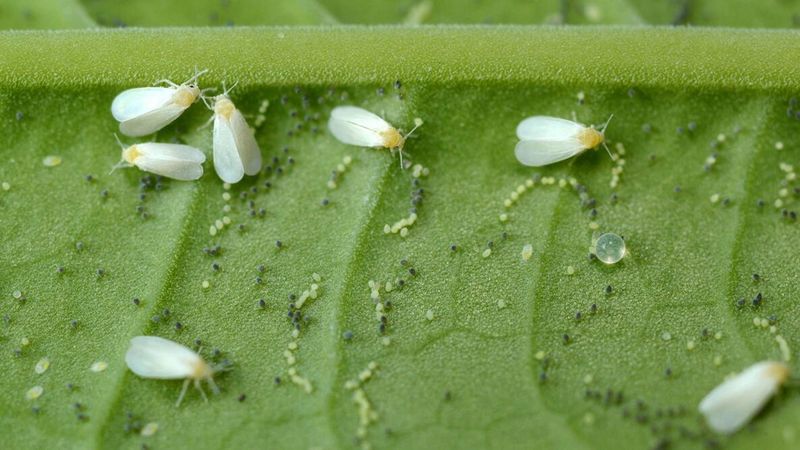
Flip over a leaf on your tomato plant or hibiscus in April, and you might find a cloud of tiny white insects lifting into the air. Whiteflies are a persistent problem in Florida gardens, and spring is when their populations really start to surge.
These small, winged insects feed on the undersides of leaves, draining plant sap and causing foliage to yellow and weaken. Because they tend to stay hidden beneath the leaf surface, it is easy to miss them until the damage is already noticeable.
Florida’s warm, humid spring climate suits whiteflies remarkably well. Populations can double within a short period under favorable conditions, making early detection genuinely important.
Beyond the direct feeding damage, whiteflies can also spread plant viruses, which adds another layer of concern for vegetable gardeners in particular.
Yellow sticky traps placed near affected plants can help monitor and reduce adult populations. Reflective mulch around transplants can confuse and discourage whiteflies from settling.
Your Florida Garden Changes Every Week. Your Plan Should Too.
Gardening in Florida changes quickly throughout the season. Every Friday you’ll receive a simple weekly plan showing exactly what to plant, prune, fertilize, harvest, and protect so you never miss the right timing.
For active infestations, insecticidal soap or neem oil applied to the undersides of leaves tends to give good results when used consistently. Natural predators such as parasitic wasps and ladybugs can also help keep populations in check over time.
Checking the undersides of leaves during your regular garden walk is one of the most effective habits you can build during Florida’s spring growing season.
3. Spider Mites Thrive As Conditions Turn Warmer And Drier
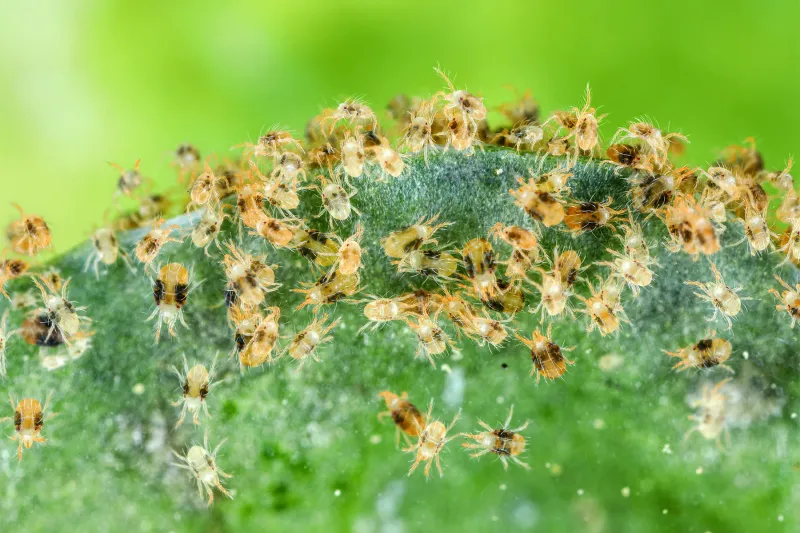
Tiny enough to be nearly invisible without a magnifying lens, spider mites can cause surprisingly dramatic damage to Florida garden plants as April temperatures begin climbing. These pests are not insects but rather arachnids, closely related to spiders.
They feed by piercing individual leaf cells and extracting the contents, which leaves foliage looking dusty, stippled, or bronzed. On closer inspection, fine webbing stretched across leaf surfaces and stems is a telltale sign of a spider mite problem.
Spider mites tend to flourish when conditions turn warm and dry, which makes the drier spells that sometimes occur in Florida’s April weather particularly favorable for them.
Stressed plants are especially vulnerable, so keeping your garden well-watered and healthy goes a long way toward reducing mite pressure.
Once populations establish, they can spread quickly from plant to plant, especially on crowded plantings.
A strong spray of water directed at leaf surfaces can dislodge mites and disrupt their colonies effectively.
Neem oil and insecticidal soap are both practical options for treating heavier infestations, though thorough coverage of leaf undersides is essential for good results.
Predatory mites, available through garden suppliers, can provide biological control and work well in Florida garden settings.
Avoiding excessive nitrogen fertilization also helps, since lush, overfed plants tend to attract higher mite populations during warm spring months.
4. Thrips Distort New Growth And Affect Flower Buds
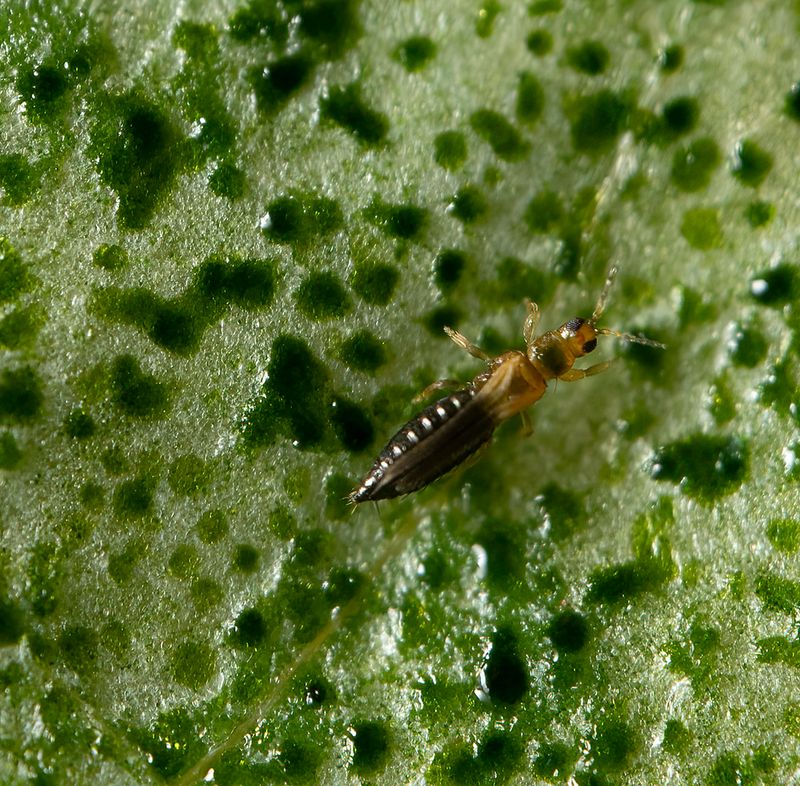
Gardeners sometimes assume poor soil or inconsistent watering is behind the strange, twisted growth appearing on their plants in April. More often than not in Florida gardens, thrips are the real culprits.
These slender, barely-visible insects feed by scraping plant tissue and lapping up the released plant fluids, leaving behind silvery streaks, distorted leaves, and deformed flower buds that never fully open.
Because they are so small, many gardeners do not notice them until the damage has already become significant.
Thrips are particularly drawn to flowers and tender new shoots, making spring the prime season for infestations in Florida.
They can also move between plants with ease, which means an overlooked problem on one plant can spread across a garden bed fairly quickly.
Some thrips species are capable of transmitting plant viruses, adding an extra reason to address infestations promptly.
Reflective mulch placed around plants can help reduce thrips populations by disorienting the insects before they land. Insecticidal soap and neem oil applied directly to affected growth are practical first-line treatments.
Blue or yellow sticky traps can help you monitor activity levels and give you a clearer sense of whether populations are building. Introducing beneficial insects like predatory mites and lacewings provides useful biological support.
Removing and disposing of heavily infested buds or leaves also limits the spread within your Florida garden during the active spring season.
5. Scale Insects Attach To Stems And Go Unnoticed At First
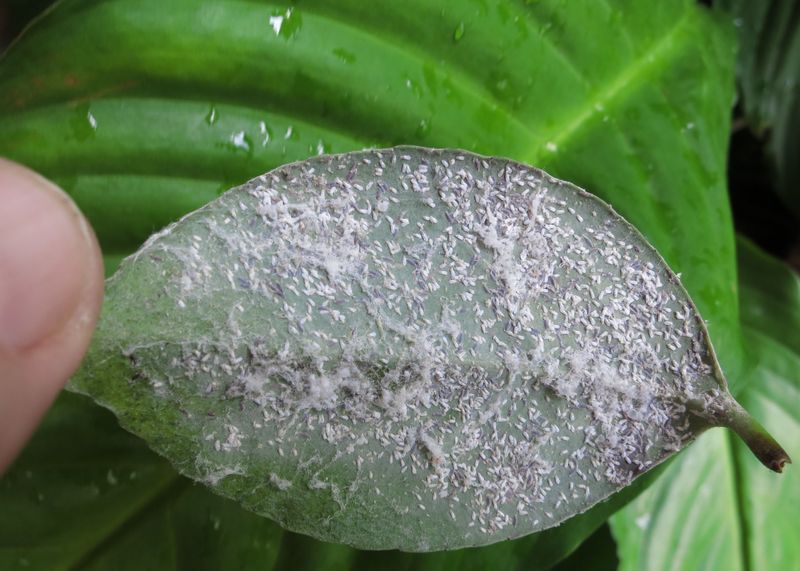
Scale insects have a clever survival strategy that makes them one of the trickier pests to catch early in a Florida garden.
Their hard or waxy outer coverings make them look more like part of the plant than an actual insect, and many gardeners mistake them for bumps on stems or unusual bark texture.
By the time the damage becomes obvious, including yellowing leaves, premature leaf drop, and stunted growth, the infestation has often been quietly building for weeks or even months.
April is a good time to inspect your shrubs, trees, and ornamentals closely for scale, as the warming weather encourages populations to become more active.
Florida’s subtropical climate supports a wide variety of scale species, and some can produce multiple generations in a single growing season.
Like aphids and whiteflies, scale insects excrete honeydew, which leads to sooty mold growth on stems and leaves.
Horticultural oil applied during cooler parts of the day smothers scale insects effectively by blocking their ability to breathe through their protective coverings.
Rubbing alcohol applied with a cotton swab works well for smaller infestations on individual stems or houseplants.
Pruning and removing heavily infested branches reduces the overall population and improves the plant’s condition.
Checking your ornamentals and fruit trees carefully through April gives you a meaningful head start before scale populations reach levels that are harder to manage.
6. Mealybugs Hide In Leaf Joints And Protected Spots
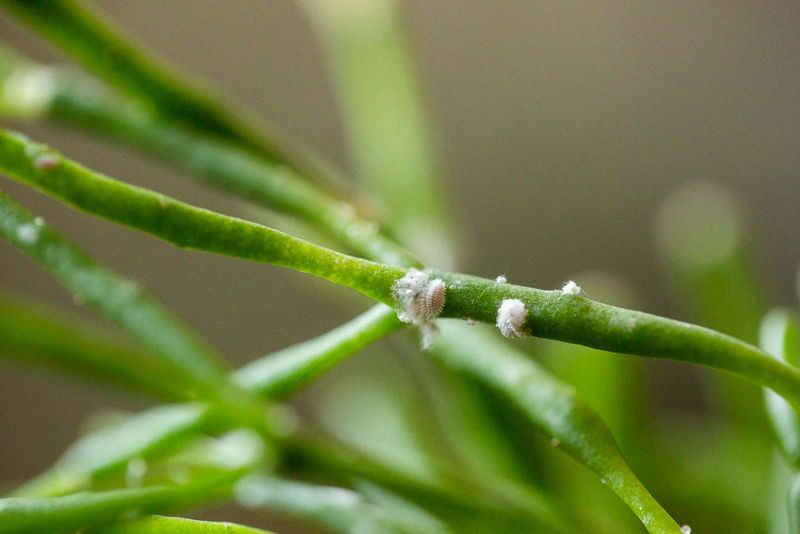
Tucked into the angles where leaves meet stems, nestled along root crowns, or clustered in the tightest folds of tropical foliage, mealybugs are experts at finding shelter.
Their white, cottony appearance makes them look almost harmless, but these soft-bodied insects can do serious damage to Florida garden plants by feeding steadily on plant sap.
The result is weakened, yellowing growth that struggles to keep pace with the season’s natural development.
Florida’s warm, humid spring conditions are well-suited to mealybug activity, and April often sees populations expanding on ornamentals, tropical plants, and even some vegetables.
Their waxy coating provides protection against moisture loss and makes them somewhat resistant to pesticide sprays if coverage is not thorough.
They also produce honeydew, creating the same sooty mold issues seen with other sap-feeding pests.
Rubbing alcohol applied with a cotton swab directly onto individual mealybugs is a simple, targeted approach that works well for smaller infestations.
Neem oil and insecticidal soap are effective for broader treatments, though thorough coverage of all hiding spots is key.
Pruning out heavily infested sections of the plant reduces the pest load quickly. Encouraging natural predators such as ladybugs and lacewings supports longer-term management.
Inspecting new plants carefully before introducing them to your Florida garden is one of the most practical ways to prevent mealybug problems from taking hold in the first place.
7. Caterpillars Chew Through Leaves On Vegetables And Ornamentals
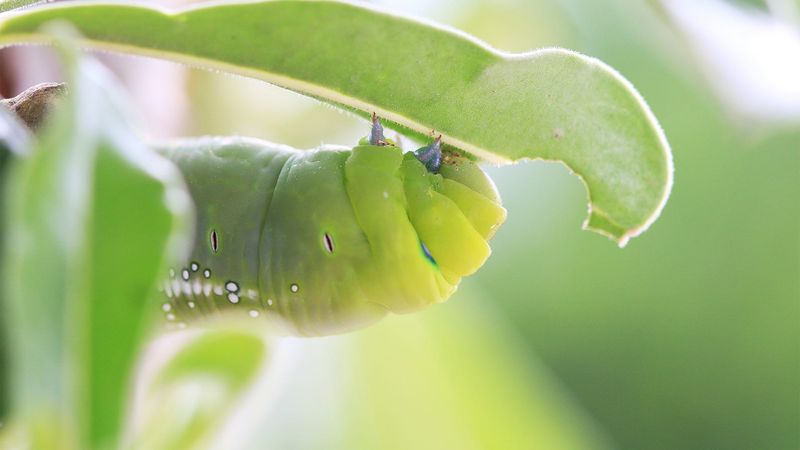
Few things are quite as disheartening as stepping into your Florida vegetable garden in April to find neat, circular holes punched through your pepper leaves or entire sections of your tomato foliage stripped overnight.
Caterpillars are enthusiastic feeders, and spring is when many species hatch from eggs laid by moths and butterflies that were active through the cooler months.
From tomato hornworms to cabbage loopers and armyworms, Florida gardeners deal with a wide variety of caterpillar species that target both edible crops and ornamental plantings.
Because many caterpillars feed at night or blend in remarkably well with surrounding foliage, gardeners often notice the damage before spotting the pest itself.
Small, dark droppings called frass left on leaves or at the base of plants are a reliable indicator that caterpillars are present and actively feeding.
Bacillus thuringiensis, commonly known as Bt, is a naturally occurring soil bacterium that is highly effective against caterpillars and poses minimal risk to beneficial insects when applied correctly.
Hand-picking caterpillars during evening garden checks can significantly reduce populations on smaller plantings.
Floating row covers offer physical protection for vegetable beds during the most active pest periods in Florida’s spring season.
Avoiding broad-spectrum insecticides that harm beneficial insects helps maintain the natural predator balance that keeps caterpillar populations from rebounding too quickly after treatment.
8. Leafminers Leave Winding Trails Inside Leaves
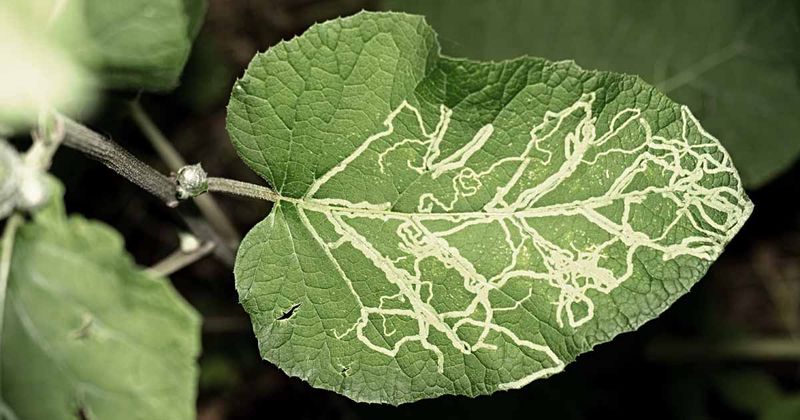
Those pale, winding lines that appear to have been sketched across the surface of your garden leaves are not a disease or a nutrient deficiency.
Leafminers are the artists behind those irregular trails, tunneling between the upper and lower surfaces of leaves as larvae and feeding on the soft tissue inside.
The result is a distinctive serpentine pattern that becomes more visible as the larvae grow and the tunnel widens, eventually causing affected leaves to look bleached, papery, or blotchy.
In Florida, leafminers are active across a wide range of host plants, including vegetables like beans, tomatoes, and spinach, as well as many ornamentals.
April’s warming temperatures and flush of new foliage give leafminer populations an ideal opportunity to expand.
While a light infestation rarely threatens an otherwise healthy plant, heavy feeding can reduce a plant’s ability to photosynthesize efficiently, slowing growth during the critical early part of the season.
Removing and disposing of heavily mined leaves helps reduce the number of larvae completing their life cycle in your garden. Because the larvae feed inside the leaf tissue, contact insecticides have limited effectiveness once mining has begun.
Neem oil used as a preventive spray can deter adult flies from laying eggs on foliage. Encouraging parasitic wasps, which naturally attack leafminer larvae, provides reliable biological support in Florida gardens.
Rotating vegetable crops between seasons also helps break the leafminer cycle over time.