7 Flowering Vines That Take Off Fast In Georgia Spring
Georgia springs have a way of waking up the garden almost overnight.
Once the soil warms and daylight stretches into those long, golden evenings, fast-growing flowering vines can transform a bare fence or trellis in just a matter of weeks.
Our mild winters and humid, warm springs create the perfect “fast lane” for vines to establish deep roots and shoot upward with incredible speed.
Choosing the right climber means you can add bold color, natural privacy, and vertical drama to your yard without waiting years for results.
Whether you’re covering a sunny fence line or a wooden arbor, these seven flowering vines are perfectly suited to Georgia’s spring rhythm and known for their impressive, rapid growth.
1. Coral Honeysuckle Brings Fast Growth And Bright Blooms
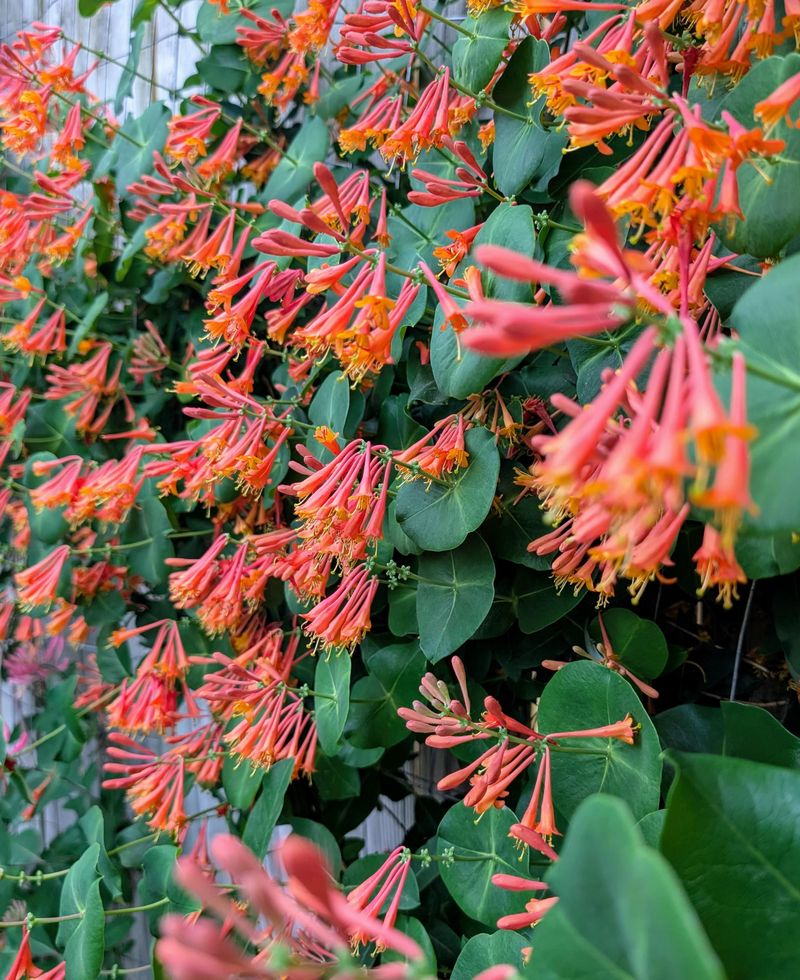
Few sights in a Georgia garden are as cheerful as coral honeysuckle bursting into bloom along a fence in early spring.
This native vine, known scientifically as Lonicera sempervirens, produces clusters of slender, tubular flowers in vivid shades of coral red and orange that hummingbirds find almost impossible to resist.
Unlike its invasive Japanese cousin, coral honeysuckle stays manageable and does not spread aggressively into surrounding areas.
Gardeners in Georgia can expect this vine to reach anywhere from 10 to 15 feet in a single growing season under good conditions. It twines naturally around supports such as wire fencing, wooden trellises, and garden arbors without needing much guidance early on.
Full sun encourages the heaviest blooms, though it handles partial shade reasonably well in Georgia’s warmer inland regions.
Watering needs are modest once the vine establishes itself, making it a low-maintenance choice for busy gardeners. Soil should drain well, as consistently soggy roots can slow growth noticeably.
Coral honeysuckle also tends to bloom from spring through fall in Georgia’s climate, offering months of color rather than just a short seasonal burst.
Planting near a porch or seating area lets you enjoy both the flowers and the hummingbirds that visit regularly.
For gardeners wanting a native vine with reliable, fast growth and lasting seasonal color, coral honeysuckle delivers on nearly every front.
2. Trumpet Vine Grows Quickly And Fills Large Spaces
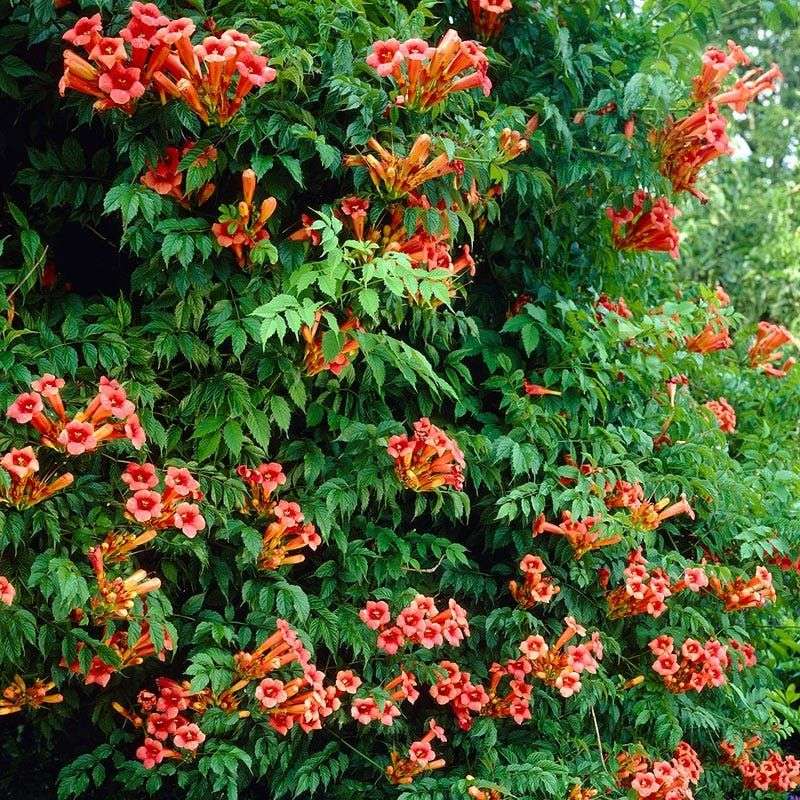
When a gardener needs to cover a large fence or a sturdy pergola in a hurry, trumpet vine earns its reputation as one of the most vigorous climbers available in Georgia.
Campsis radicans, as it is formally known, can push out several feet of new growth in a single week during warm spring weather.
The large, trumpet-shaped flowers come in shades of deep orange and red, making a dramatic visual statement that is hard to miss from across the yard.
Georgia’s warm spring temperatures and long growing season suit trumpet vine extremely well. It attaches to surfaces using small aerial rootlets, clinging to wood, brick, and stone without needing wire support in many cases.
Because of its enthusiastic growth habit, it works best on large, permanent structures rather than lightweight garden trellises that might struggle under its weight over time.
Gardeners should plan ahead when choosing a spot for trumpet vine, since it spreads through underground runners and can send up new shoots several feet from the original planting.
Your Georgia Garden Changes Every Week. Your Plan Should Too.
Gardening in Georgia changes quickly throughout the season. Every Friday you’ll receive a simple weekly plan showing exactly what to plant, prune, fertilize, harvest, and protect so you never miss the right timing.
Regular trimming keeps growth contained and encourages more flower production through the season.
Hummingbirds and bees visit the blooms frequently, adding wildlife value to the garden.
In Georgia, this vine can reach 25 to 30 feet under favorable conditions, so giving it a strong support structure from the beginning helps it perform at its best throughout the growing season.
3. Passionflower Spreads Fast In Warm Spring Soil
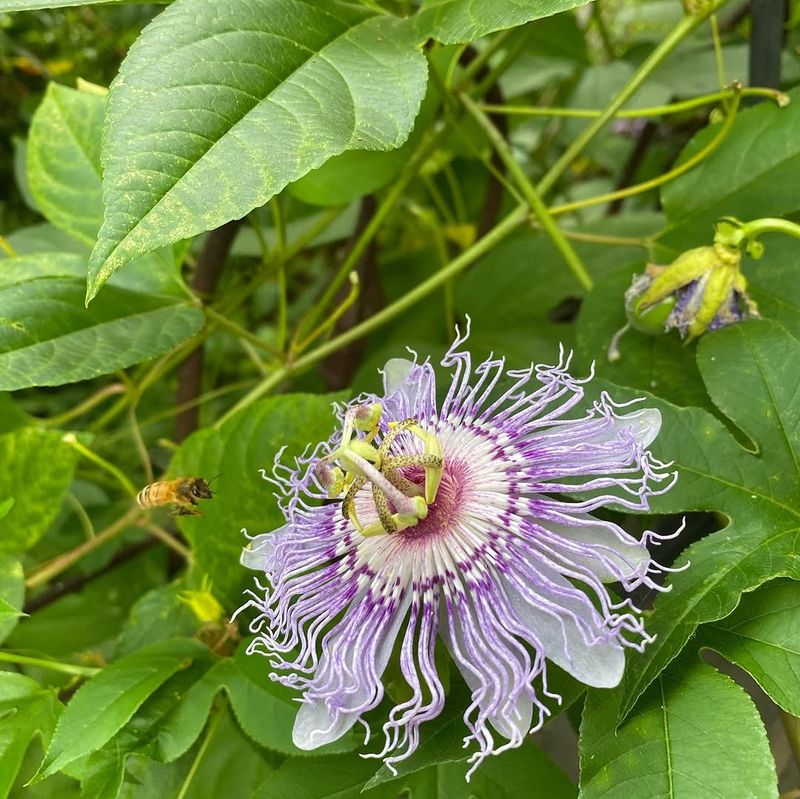
Georgia’s warming spring soil seems tailor-made for passionflower, a native vine that wakes up quickly once temperatures climb above the cool early-season range.
Passiflora incarnata produces some of the most unusual and visually striking flowers in the vine world, with intricate purple and white blooms that look almost too exotic to be growing in a backyard garden.
Pollinators, including bees and several butterfly species, are drawn to the flowers throughout the blooming season.
Growth can be surprisingly rapid once soil temperatures rise in late spring. The vine spreads through underground rhizomes as well as above-ground stems, which means it can cover a fence line or naturalized area with noticeable speed.
Gardeners who want to keep it contained to a specific structure may need to trim back spreading runners occasionally through the season.
Passionflower handles Georgia’s heat and humidity better than many ornamental vines, making it a dependable choice for summer-long coverage.
It blooms from roughly June through September, and the egg-shaped fruits that follow attract birds and other wildlife to the garden.
Light requirements lean toward full sun, though the vine tolerates partial shade without losing too much of its growth energy.
Well-drained soil encourages the strongest root development, but passionflower adapts to a range of soil types found across Georgia’s varied landscape.
For gardeners wanting fast coverage with genuine visual drama, passionflower is a standout choice worth considering seriously.
4. Carolina Jessamine Adds Early Color And Climbing Growth
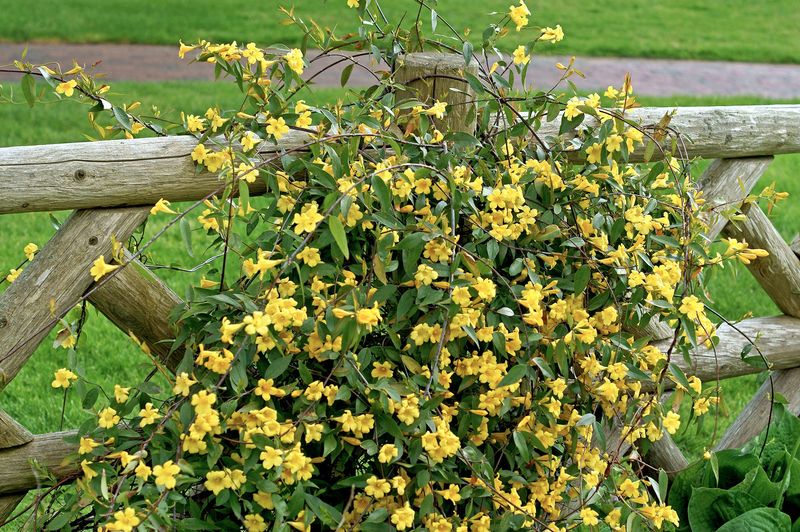
When most Georgia gardens are still shaking off the last of winter, Carolina jessamine is already putting on a show.
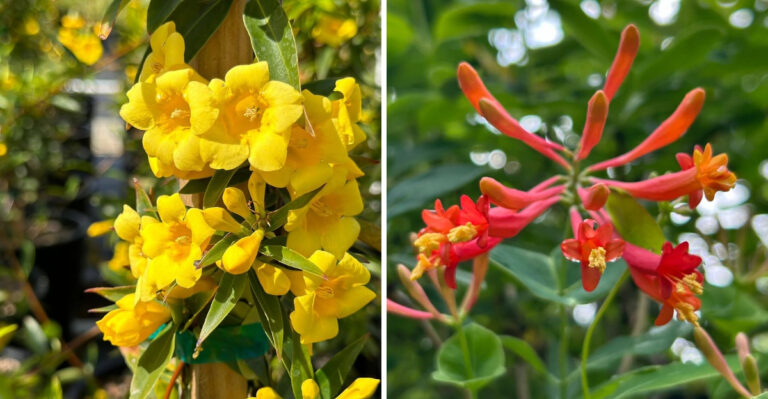
Gelsemium sempervirens, the state flower of South Carolina and a beloved vine throughout the Southeast, bursts into clusters of fragrant yellow blooms earlier in spring than nearly any other flowering vine on this list.
That early color makes it especially valuable for gardeners who want to see life in the garden before warmer temperatures fully arrive.
This evergreen vine can grow up to 20 feet in length, and its twining stems readily climb trellises, fences, mailbox posts, and garden walls without requiring much coaxing.
In Georgia’s climate, it tends to hold its foliage through winter, providing year-round greenery even when blooms are not present.
Full sun produces the heaviest flowering, though partial shade is handled well in most Georgia growing zones.
Soil should be slightly acidic and well-drained for the best results, which fits naturally with the clay-heavy or sandy soils found across much of Georgia once amended properly.
Watering needs are modest once the vine establishes, and it shows solid drought tolerance through Georgia’s warmer months.
One important note for households with children or pets: all parts of Carolina jessamine are toxic if consumed, so planting location should be chosen thoughtfully.
For gardeners wanting early spring color with reliable climbing growth, this vine is a tried-and-true southeastern favorite worth adding to any vertical garden plan.
5. Black-Eyed Susan Vine Climbs Fast In Sunny Spots
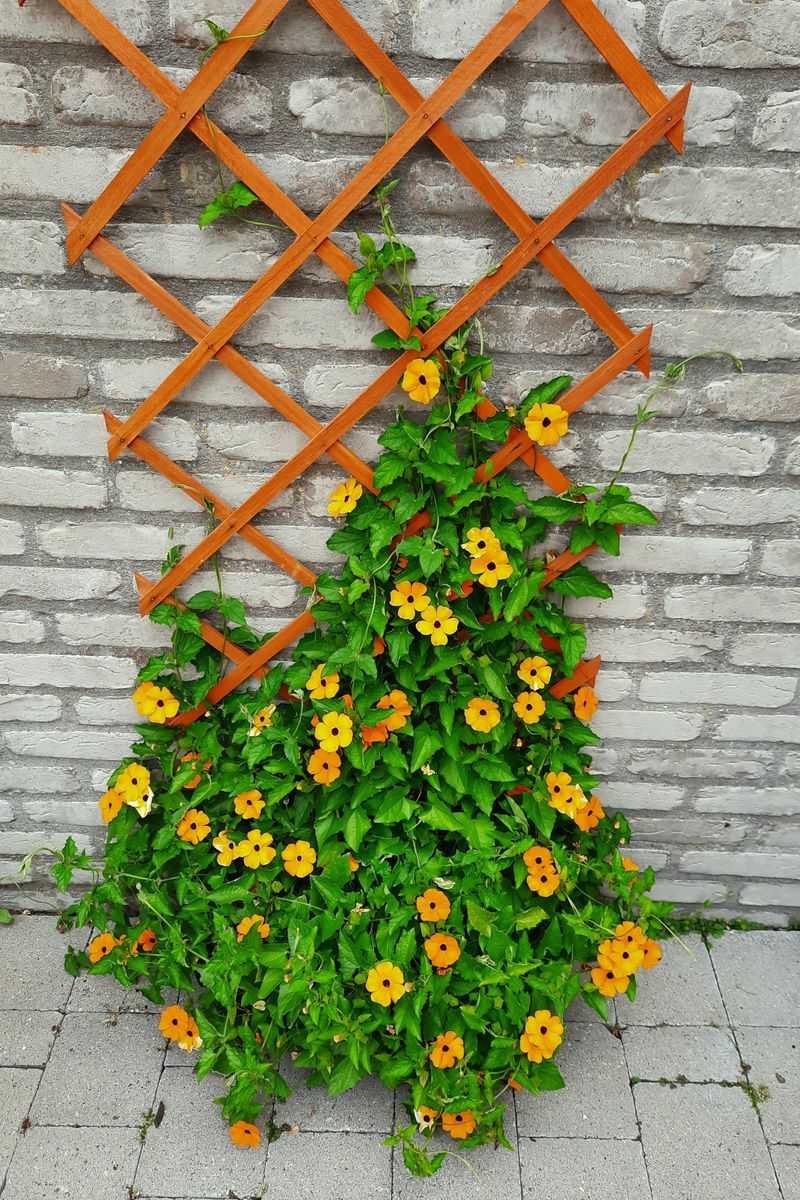
Sunny Georgia garden spots that need quick color and cheerful energy are where black-eyed Susan vine truly shines.
Thunbergia alata is an annual vine in most of Georgia, but it grows with such enthusiasm through the warm season that it can cover a trellis or fence section with surprising speed from a spring planting.
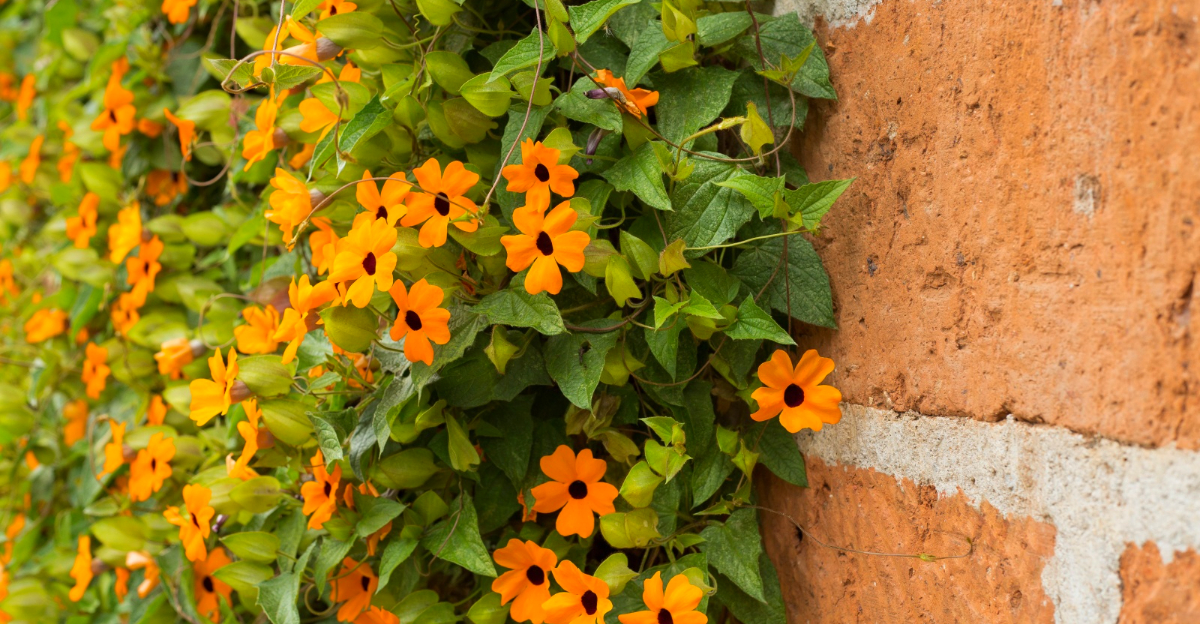
The flowers are bright orange or yellow with a distinctive dark center, giving the plant a bold, eye-catching look that stands out in mixed garden plantings.
Seeds can be started indoors a few weeks before Georgia’s last frost date and transplanted outside once nighttime temperatures stay reliably warm.
Direct sowing after frost has passed also works well given how quickly the vine establishes once soil temperatures rise.
It climbs by twining its stems around supports, so a wire trellis, bamboo stakes, or a simple string lattice all work as effective structures for guiding early growth.
Full sun is strongly preferred, as shaded locations tend to reduce flowering noticeably. Regular watering during dry stretches through Georgia’s summer keeps the vine producing blooms steadily rather than slowing down in the heat.
Since it behaves as an annual in Georgia rather than returning from the root system, gardeners typically replant each spring.
The good news is that black-eyed Susan vine grows so quickly that even a late spring planting can deliver impressive coverage and color well before summer reaches its peak intensity across the state.
6. Hyacinth Bean Vine Grows Quickly With Bold Color
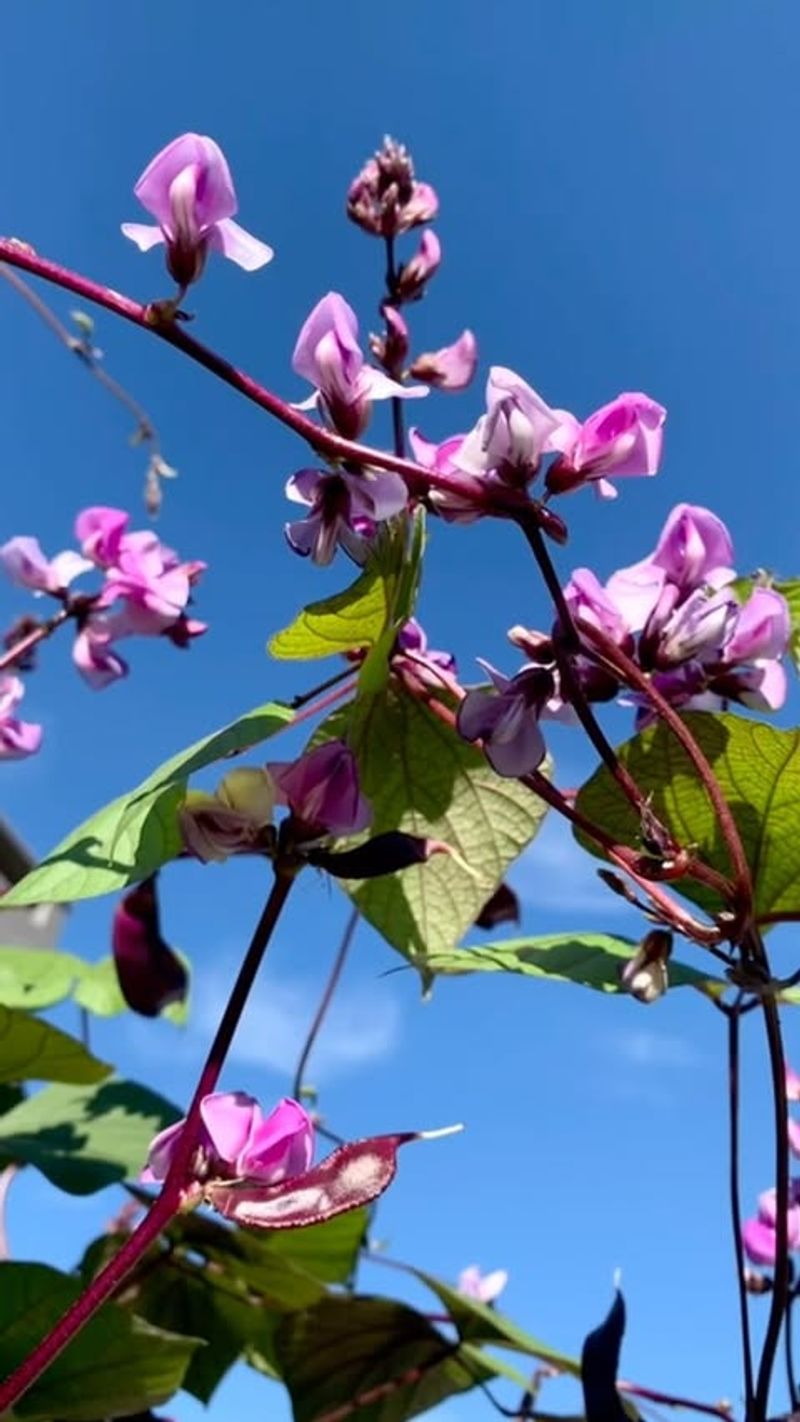
Bold, fast, and visually dramatic, hyacinth bean vine is one of those plants that makes gardeners do a double-take the first time they see it in full growth.
Lablab purpureus produces lavender to purple flower clusters that resemble sweet pea blooms, followed by glossy, deep purple seed pods that remain on the vine and add color even after the flowers fade.
The combination of purple foliage tinges, colorful blooms, and ornamental pods makes it one of the most visually layered vines available to Georgia gardeners.
Growth speed is genuinely impressive in Georgia’s warm spring and summer conditions.
The vine can reach 10 to 15 feet or more in a single growing season, making it an excellent choice for covering a fence, screening an unsightly structure, or adding vertical color to a garden quickly.
It performs best in full sun with consistent moisture, though it shows solid resilience during Georgia’s occasional dry spells once established.
Hyacinth bean vine is treated as an annual in most of Georgia, so it needs to be replanted each spring from seed. Seeds benefit from soaking in water for several hours before planting to encourage faster and more even germination.
Providing a trellis or sturdy fence from the start gives the vine somewhere to direct its rapid upward energy.
For gardeners who want maximum visual impact with minimal waiting time, hyacinth bean vine is a rewarding seasonal choice that delivers bold results through summer and into early fall across Georgia gardens.
7. Morning Glory Covers Trellises With Rapid Growth
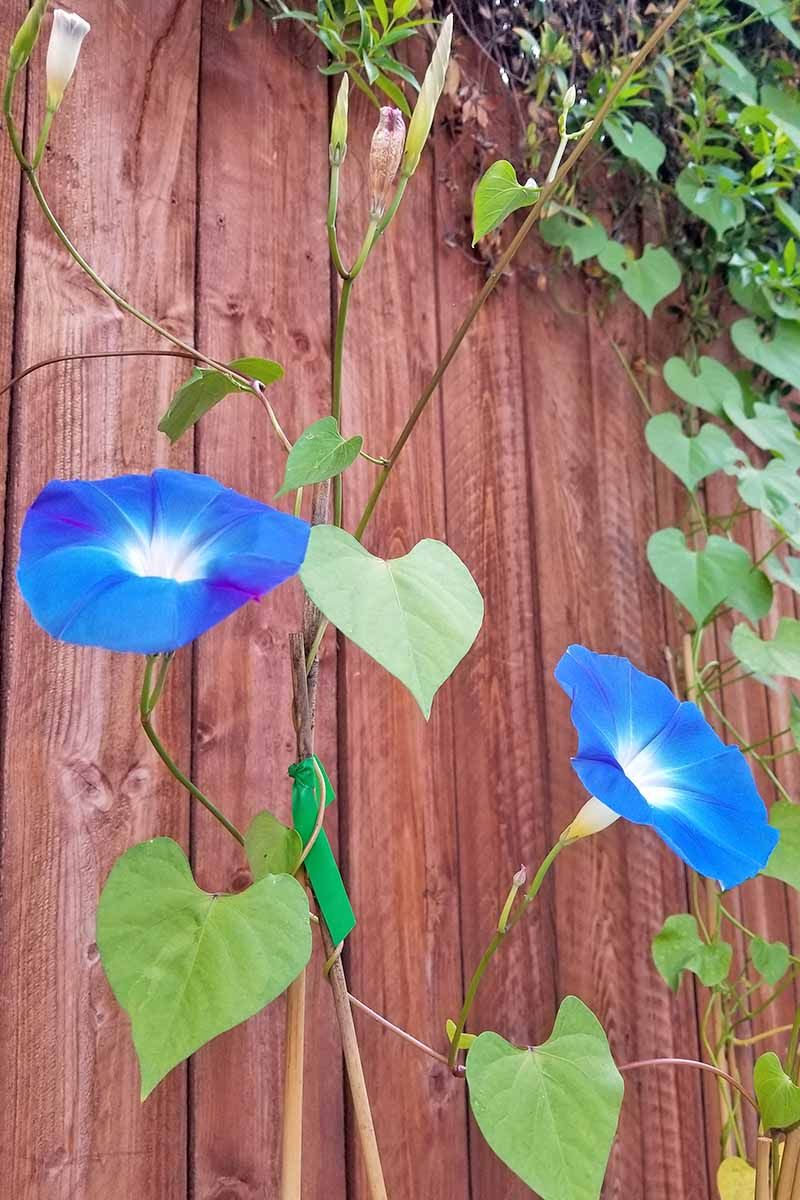
On a warm Georgia spring morning, few garden sights are as quietly satisfying as morning glory flowers opening along a trellis just as the sun comes up.
Ipomoea purpurea is one of the fastest-growing annual vines available, capable of climbing 10 to 15 feet in just a few months from a direct seed sowing.
The trumpet-shaped flowers come in shades of deep blue, purple, pink, and white, with some varieties offering striped or bicolor patterns that add extra visual interest.
Planting after Georgia’s last frost date, when soil has warmed sufficiently, gives morning glory seeds the conditions they need to sprout and take off quickly. Soaking seeds overnight before planting speeds up germination noticeably.
The vine twines naturally around most support structures, including wire, wood slats, and string, making it easy to guide upward from the beginning of the season.
Full sun is the key to heavy flowering, and Georgia’s long, bright spring days provide exactly the right light conditions for consistent bloom production.
Flowers open in the morning and typically close by early afternoon, so placing the vine where it catches early sunlight makes the most of the daily display.
Morning glory tends to reseed itself in Georgia’s climate, so gardeners may find volunteer seedlings returning in subsequent springs without any extra effort.
Keeping an eye on reseeding helps prevent unwanted spread while still allowing the vine to bring its cheerful, fast-growing energy back to the garden year after year.