What Bigleaf Hydrangeas Need In April In Ohio For Better Blooms
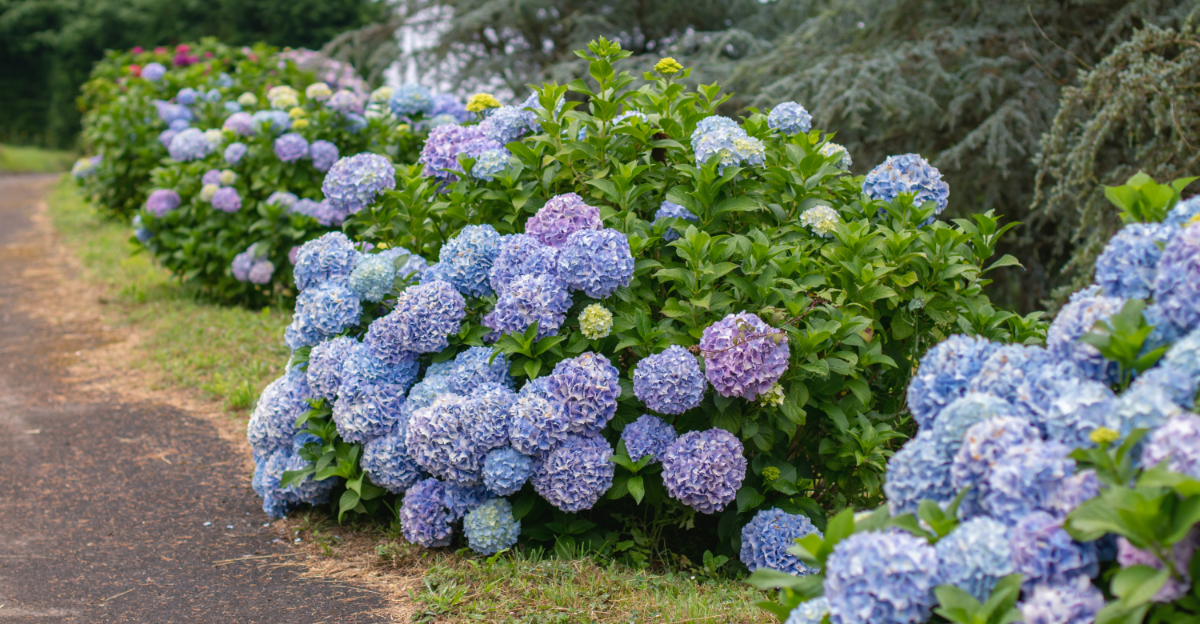
Ohio gardeners know the feeling. Hydrangeas leaf out, the shrub looks healthy enough, and you start hoping for those big blue or pink blooms that make the whole yard feel finished.
Then summer arrives, and the flowers are not nearly as full or impressive as you pictured back in spring.
April often sets the tone for what happens later. This is when old winter damage becomes clearer, the soil starts waking up, and small care choices begin shaping the season ahead.
It is also the month when many gardeners accidentally do too much, too little, or simply the wrong thing without realizing it.
Bigleaf hydrangeas can be beautiful in Ohio, but they usually need a more careful approach than people expect. A stronger bloom season often starts with a handful of timely moves made right now.
The next part gets into exactly where gardeners tend to help, and where they interfere.
1. Give Bigleaf Hydrangeas More Shade Than Other Types
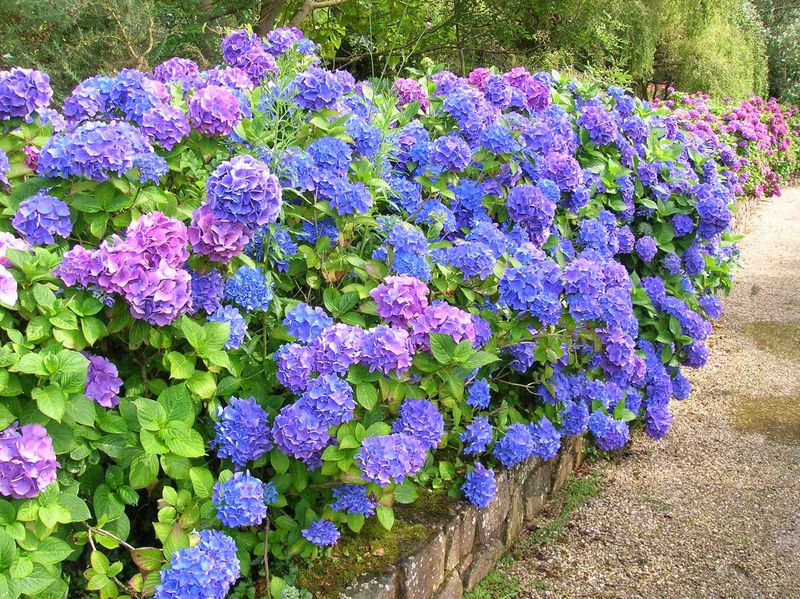
Most people assume hydrangeas love full sun, but bigleaf hydrangeas are actually different from many other varieties you might grow in Ohio. Unlike panicle or smooth hydrangeas that can handle more direct light, bigleaf types are sensitive to intense sunshine, especially as spring temperatures start climbing.
Giving them more shade than you might think is necessary can actually protect the plant and lead to much better blooms later in the season.
Morning sun is perfectly fine for bigleaf hydrangeas and even encouraged. Those early hours of gentle light help the plant photosynthesize and build energy without causing stress.
The problem comes when midday and afternoon sun hits the large leaves, causing them to wilt dramatically even when the soil has plenty of moisture. Ohio summers can get surprisingly hot, and even in April the sun angle starts increasing enough to matter.
Planting bigleaf hydrangeas on the east side of your house, under a high tree canopy, or near a fence that blocks western exposure works really well in Ohio landscapes. If your plant is already in a sunnier spot and struggling, you can use a shade cloth temporarily during the hottest parts of the day.
Even shifting a container-grown bigleaf hydrangea a few feet can make a noticeable difference in how the plant handles spring stress. Gardeners across Ohio have found that plants growing in naturally shaded areas tend to hold their flower buds better through April temperature swings and come into bloom with more vigor when summer finally arrives.
2. Keep Harsh Afternoon Sun Off The Plant

Walk outside on a clear April afternoon in Ohio and feel how strong that sun already is. Now imagine those rays hitting your bigleaf hydrangea for four or five hours straight.
The leaves might look okay in the morning, but by 2 or 3 in the afternoon, you could see them flopping dramatically, even if the soil is moist. That wilting is a stress response, and repeated stress in spring weakens the plant right when it needs all its energy for bud development.
Your Ohio Garden Changes Every Week. Your Plan Should Too.
Gardening in Ohio changes quickly throughout the season. Every Friday you’ll receive a simple weekly plan showing exactly what to plant, prune, fertilize, harvest, and protect so you never miss the right timing.
Afternoon sun is especially damaging because the UV intensity peaks between noon and 4 PM. For bigleaf hydrangeas in Ohio, that window of intense light can scorch leaf edges, fade developing flower buds, and cause the plant to put energy into recovery rather than bloom production.
You might notice brown, crispy edges on the leaves or buds that seem to stall out and never fully develop. These are signs that your plant is getting too much harsh light.
One practical trick Ohio gardeners use is planting tall perennials or ornamental grasses nearby to act as a natural buffer on the western side of the hydrangea. You can also use a garden umbrella or temporary shade screen during an unusually sunny stretch in April.
Established shrubs and fences make excellent permanent shields. If you are planning a new planting this spring, walk your yard in the afternoon and watch where the shadows fall.
Choosing a spot that naturally receives shade after noon is one of the simplest and most effective things you can do to protect your bigleaf hydrangeas and set them up for a beautiful bloom season in Ohio.
3. Protect Tender Spring Growth From Late Frost
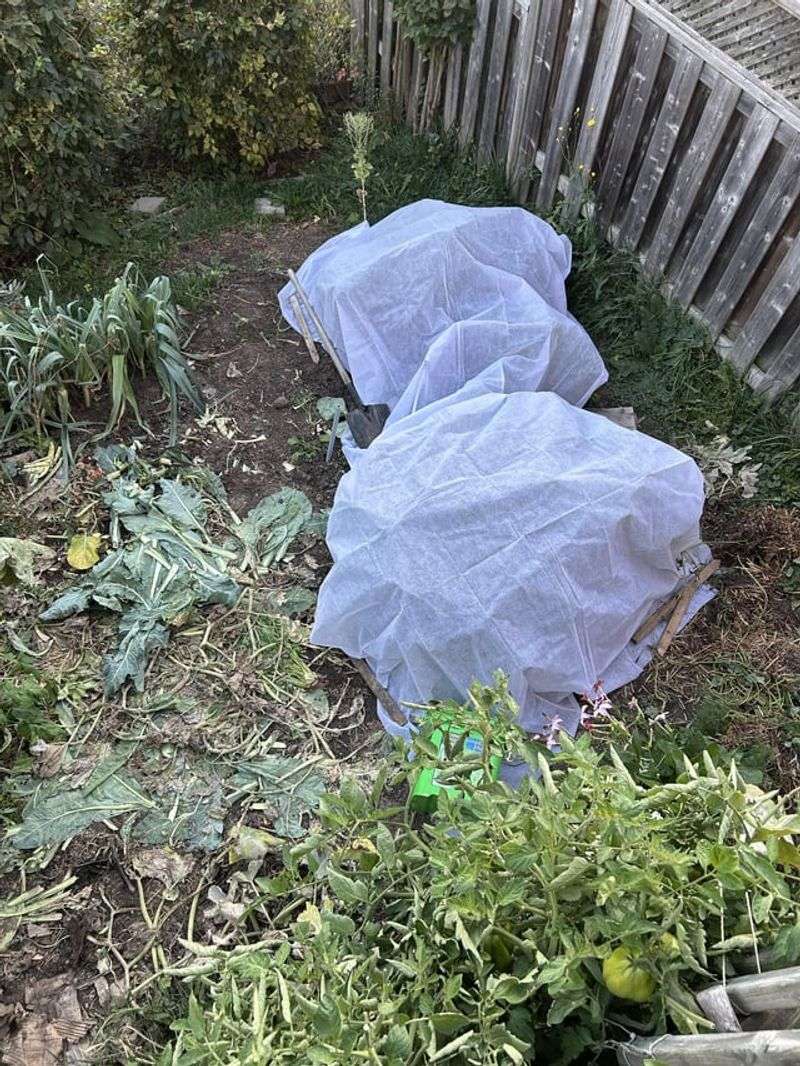
Ohio weather in April is famously unpredictable. One week you might have temperatures pushing into the 60s and everything looks like spring is fully underway, then a cold front rolls in and suddenly you are looking at a frost warning with brand-new growth on your bigleaf hydrangeas already poking out.
That tender new growth is extremely vulnerable, and a single hard frost can wipe out weeks of progress and destroy the flower buds your plant has been working to develop since last fall.
Bigleaf hydrangeas are particularly sensitive to late frost damage because their buds break earlier than some other shrubs. Once those buds open up and soft green growth emerges, there is very little natural protection against freezing temperatures.
Even a light frost at 30 or 31 degrees Fahrenheit can turn fresh growth black and mushy overnight. In Ohio, late frosts can occur well into May, so April is not the time to let your guard down.
Keeping an eye on the local forecast is one of the most useful habits Ohio gardeners can develop in spring. When temperatures are expected to drop below 32 degrees, cover your bigleaf hydrangeas with a breathable frost cloth, an old bedsheet, or even a layer of burlap.
Avoid using plastic directly on the plant because it can trap cold against the leaves and cause more damage. Remove the covering during the day so the plant can breathe and warm up naturally.
Some Ohio gardeners also mound a layer of straw mulch around the base to help insulate the root zone and protect any lower buds that are just starting to emerge from the soil line.
4. Keep Soil Evenly Moist As Growth Starts
April in Ohio brings a mix of rain and dry spells, and bigleaf hydrangeas need consistent moisture to fuel the rapid growth that happens this time of year. The name hydrangea actually comes from the Greek word for water vessel, which tells you something important about what these plants prefer.
When soil moisture is uneven, going from soggy to bone dry and back again, the plant struggles to move nutrients efficiently and the developing flower buds can suffer as a result.
Consistent moisture does not mean waterlogged soil. Standing water around the roots is just as harmful as drought because it cuts off oxygen and can cause root problems over time.
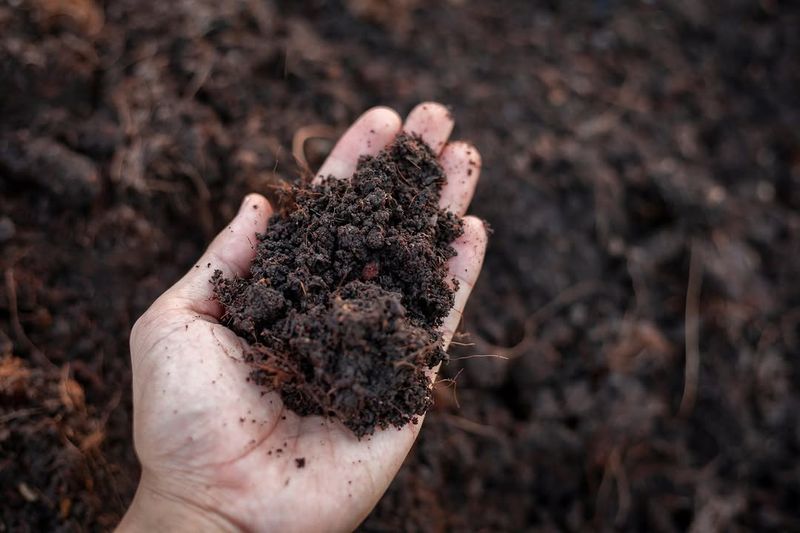
What you want is soil that feels damp when you squeeze a handful but does not drip water. A good rule of thumb for Ohio gardeners is to water deeply once or twice a week during dry stretches, giving the soil about an inch of water each time.
Deep watering encourages roots to grow down rather than staying shallow near the surface.
Adding a two to three inch layer of organic mulch around the base of your bigleaf hydrangea is one of the best ways to lock in soil moisture between waterings. Shredded bark, wood chips, or leaf compost all work well and also help moderate soil temperature as Ohio weather swings between warm days and cool nights in April.
Keep the mulch a few inches away from the main stem to allow good air circulation at the base of the plant. Checking the soil with your finger before watering helps you avoid overwatering, which is actually one of the more common mistakes Ohio gardeners make with hydrangeas in spring.
5. Avoid Heavy Nitrogen Feeding
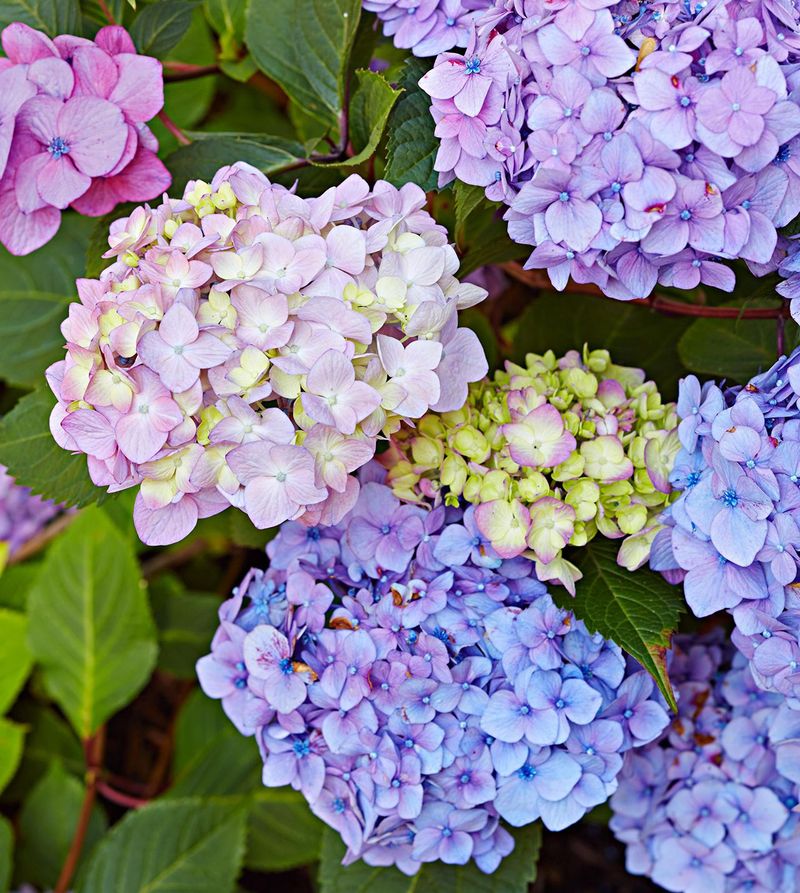
Fertilizing in April feels like the right move when you see everything waking up in the garden, but with bigleaf hydrangeas, the type of fertilizer matters just as much as the timing. Reaching for a high-nitrogen product might seem like a great way to push your plant into fast, lush growth, but it often backfires.
Nitrogen is the nutrient that fuels leafy, green growth, and when you give a bigleaf hydrangea too much of it, the plant puts nearly all its energy into producing foliage instead of flowers.
Ohio gardeners who have made this mistake before often describe ending up with a huge, bushy plant that looks healthy all summer but produces very few blooms. The leaves are big and dark green, but the flower heads just are not there.
Cutting back on nitrogen and choosing a more balanced fertilizer changes the picture dramatically the following season. A slow-release granular fertilizer with an equal ratio of nitrogen, phosphorus, and potassium, something like a 10-10-10 formula, gives the plant what it needs without pushing it too hard in one direction.
Phosphorus is particularly helpful for flower development, so some Ohio gardeners prefer a fertilizer that is slightly higher in that middle number. Apply your fertilizer in early April when growth is just starting, following the package directions carefully.
Avoid the temptation to add extra because more is not always better with hydrangeas. If your soil is already rich in organic matter from years of composting, you may need very little fertilizer at all.
Getting a basic soil test through Ohio State University Extension is a smart way to know exactly what your garden actually needs before adding anything.
6. Remember That Most Bigleaf Types Bloom On Old Wood
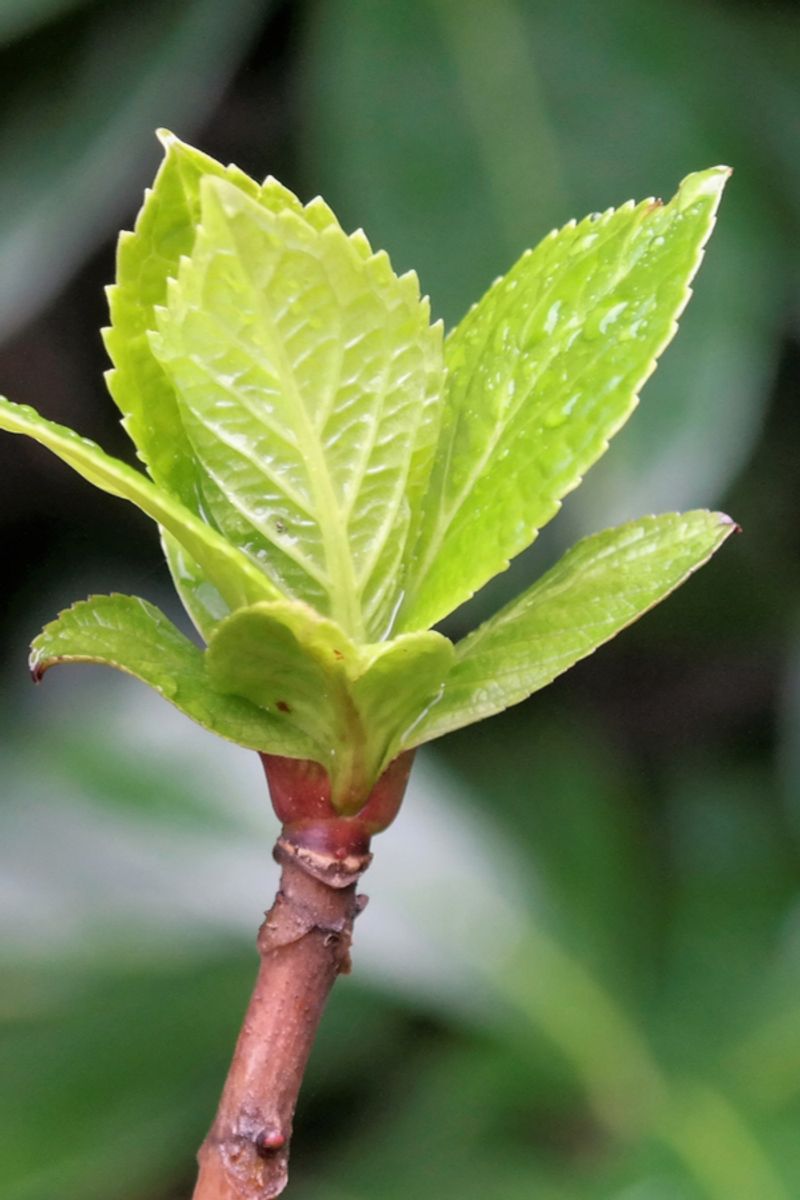
Here is something that surprises a lot of newer Ohio gardeners: bigleaf hydrangeas set their flower buds in the fall, not in spring. Those buds sit on the stems that grew the previous year, which gardeners call old wood.
By the time April rolls around in Ohio, those buds have already survived winter and are just waiting for warm weather to push them into bloom. Anything that damages or removes those old stems before they flower will cost you your blooms for the entire season.
Pruning is the most common way Ohio gardeners accidentally eliminate their blooms. If you cut back a bigleaf hydrangea in early spring thinking you are helping it along, you are actually removing exactly the wood that holds all the flower buds.
This is why timing matters so much. The only pruning that is safe to do in April is removing stems that are clearly no longer viable all the way down, which you can identify by scratching the bark and checking for green tissue underneath.
Anything with green inside still has life and likely has buds waiting to open.
Understanding this old wood blooming habit also explains why Ohio winters can be so tough on bigleaf hydrangeas. A particularly cold winter, especially one with sudden temperature drops or little snow cover for insulation, can damage or destroy those precious buds before spring even arrives.
That is why Ohio gardeners often see their plants survive fine but still produce no flowers after a rough winter. Protecting the canes from winter damage through mulching and burlap wrapping in late fall is one of the best investments you can make for the following summer bloom season.
7. Choose Reblooming Or Hardier Types If Winter Bud Loss Keeps Happening
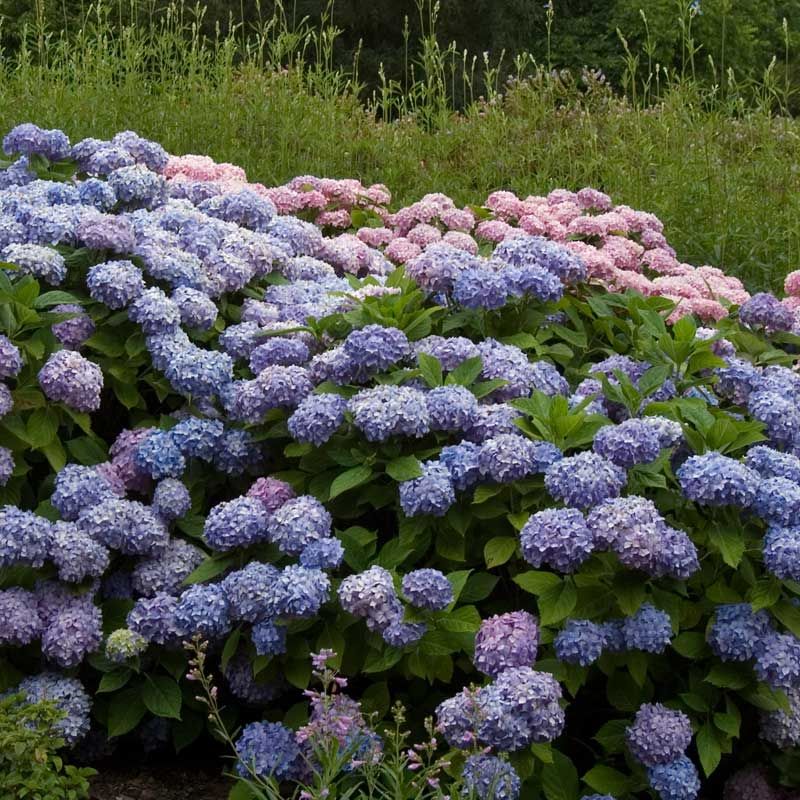
Losing your bigleaf hydrangea blooms year after year because of Ohio winters can feel genuinely frustrating, especially when you do everything right in spring and still end up with a plant full of leaves but no flowers. If this pattern keeps repeating, it might be time to rethink the variety you are growing rather than changing your care routine.
Not all bigleaf hydrangeas are created equal when it comes to surviving the unpredictable cold snaps and temperature swings Ohio winters regularly deliver.
Reblooming varieties were developed specifically to address this problem. Plants like Endless Summer, Bloomstruck, and Let’s Dance series produce buds on both old wood and new wood that grows in the current season.
That means even if a harsh Ohio winter damages or destroys the old wood buds, the plant can still produce flowers later in summer from the new growth that emerges in spring. For many Ohio gardeners, switching to a reblooming type has been a game changer that finally delivered the flower-filled summers they had been hoping for.
Hardier cultivars bred for colder climates are another solid option worth exploring at your local Ohio nursery. Look for varieties that are rated for USDA hardiness zones 5 or 6, which covers most of Ohio.
Ask garden center staff specifically about their performance in your region, because local experience is incredibly valuable when choosing plants. Planting in a sheltered location, such as against a south-facing wall or in a spot protected from north winds, also helps reblooming and hardier types perform even better.
Combining the right variety with the right location in Ohio gives you the best possible chance at consistent, reliable blooms every single summer.