Hardy North Carolina Shrubs That Thrive With Almost No April Care
North Carolina gardeners know that spring can feel like a frantic race against the clock, with warming temperatures and April showers waking up the entire yard at once.
Fortunately, our state’s humid climate and generous rainfall can actually do the heavy lifting for you – if you have the right shrubs in place.
Certain native and well-adapted plants are so perfectly in tune with North Carolina’s seasonal rhythms that they practically manage themselves through April.
Choosing low-maintenance shrubs is one of the smartest moves a homeowner can make to save time.
This list highlights eight powerhouse varieties that provide structure and color while earning their keep with almost no help at all.
1. Inkberry Holly Keeps A Clean Shape Easily
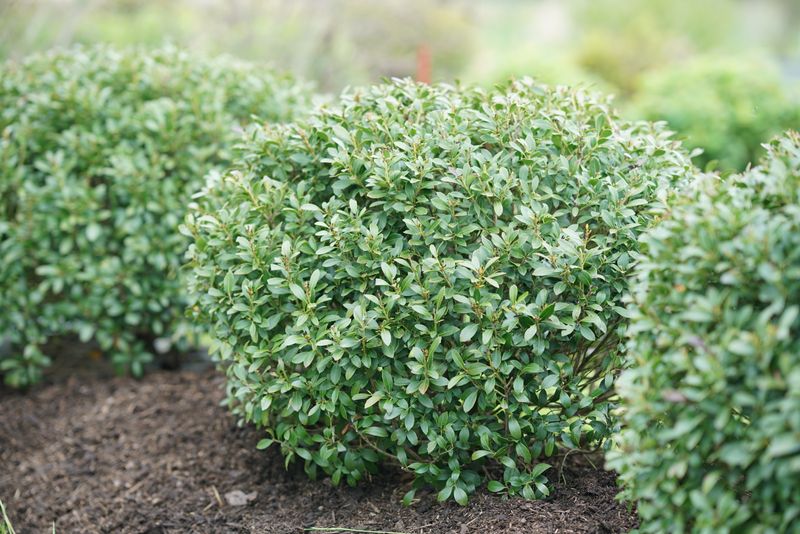
Walk past a well-established inkberry holly in April, and you might not even realize how little work went into keeping it looking that tidy.
Native to the eastern United States, inkberry holly (Ilex glabra) is naturally at home across North Carolina’s piedmont and coastal plain regions, where wet, acidic soils are common.
It holds a rounded, compact shape without much encouragement from the gardener.
In April, inkberry is quietly leafing out and settling into its growing season. Unlike some shrubs that need shaping before new growth begins, inkberry rarely requires pruning in spring.
Its naturally dense branching habit keeps it looking orderly on its own, which is a real advantage for busy homeowners.
Inkberry grows well in full sun to partial shade and handles both consistently moist soils and occasional dry spells once established.
It tends to reach about five to eight feet tall and wide, so giving it room to spread naturally reduces the need for frequent trimming.
North Carolina gardeners who have low-lying areas or spots near rain gardens will find inkberry especially well-suited. The small black berries that appear in fall are a bonus, attracting birds and adding seasonal interest.
For a shrub that quietly does its job without demanding attention, inkberry holly is a reliable and underappreciated choice.
2. Yaupon Holly Handles Tough Conditions
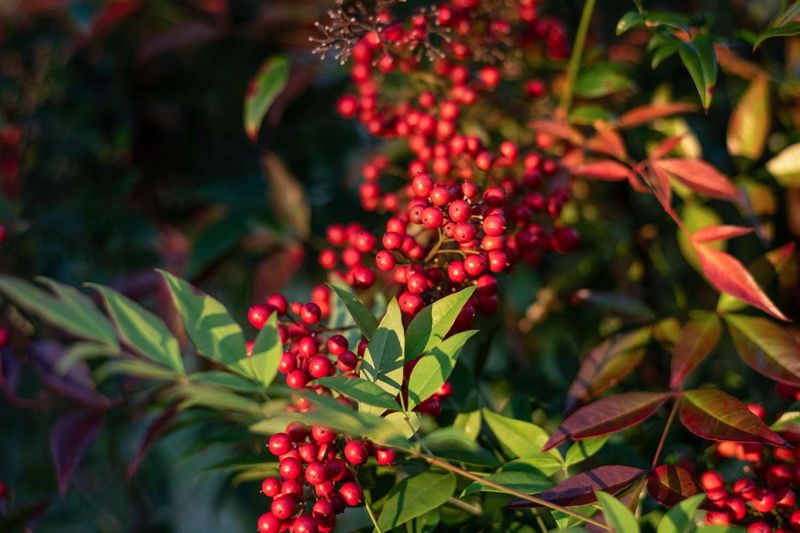
Few shrubs in North Carolina can match the sheer toughness of yaupon holly (Ilex vomitoria).
It grows along the coast, in the piedmont, and even into the foothills, adapting to sandy soils, clay, drought, salt spray, and flooding with an ease that seems almost unfair to less resilient plants.
By April, yaupon is already pushing out fresh growth without any prompting from the gardener.
One reason yaupon needs almost no April care is that it handles North Carolina’s unpredictable spring weather without stress. Late frosts, heavy rains, or warm dry spells that might set back other shrubs barely register with yaupon.
Its evergreen foliage stays clean and presentable through seasonal swings, which means there is rarely any cleanup needed once the weather warms up.
Yaupon comes in many forms, from compact dwarf varieties that stay under three feet to upright selections that can reach fifteen feet or more. Choosing the right cultivar for your space reduces pruning needs significantly.
Your North Carolina Garden Changes Every Week. Your Plan Should Too.
Gardening in North Carolina changes quickly throughout the season. Every Friday you’ll receive a simple weekly plan showing exactly what to plant, prune, fertilize, harvest, and protect so you never miss the right timing.
Female plants produce bright red or yellow berries in fall and winter, adding ornamental value long after April has passed.
North Carolina homeowners who want a native, wildlife-friendly shrub that practically takes care of itself will find yaupon holly to be one of the most dependable options available in the state.
3. Virginia Sweetspire Adds Easy Seasonal Interest
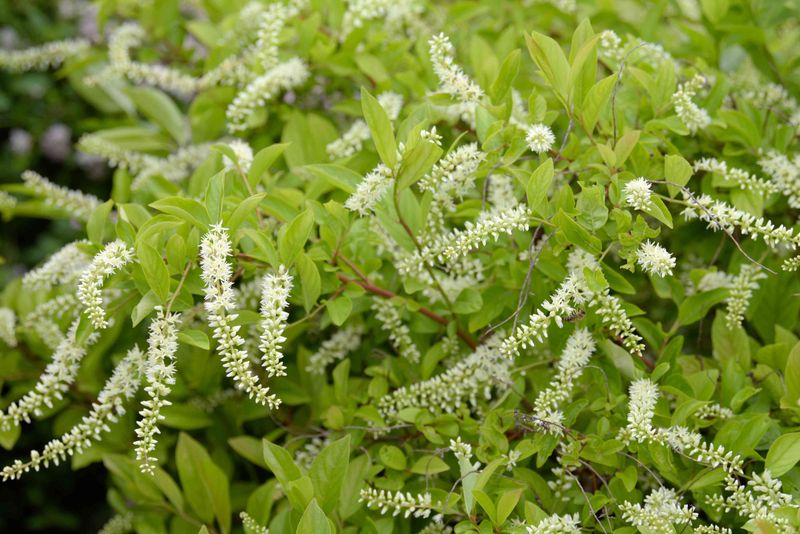
There is something quietly charming about Virginia sweetspire (Itea virginica) in April, when its arching branches begin to fill out with fresh, bright green foliage before its signature white flower spikes arrive in early summer.
Native to much of the eastern United States, including North Carolina, this shrub has spent thousands of years adapting to the region’s soils, rainfall, and seasonal temperatures.
That long history of adaptation is exactly why it needs so little from gardeners in spring.
Virginia sweetspire grows naturally along stream banks and woodland edges, which means it is well-suited to the moist, sometimes poorly drained spots that challenge other plants.
In North Carolina’s piedmont and mountain foothills, where spring rainfall can be generous and soils stay wet longer, sweetspire settles in and grows steadily without intervention.
It tolerates full sun to full shade, giving gardeners flexibility in placement.
April care for sweetspire is minimal by nature. The shrub does not need fertilizing at this stage, rarely requires pruning in spring, and handles temperature fluctuations without showing stress.
It typically grows three to five feet tall and spreads gradually through root suckers, slowly filling in a border or naturalized area. Fall color is a genuine highlight, with foliage turning deep red and burgundy.
For gardeners who want multi-season interest without multi-season effort, Virginia sweetspire delivers reliably across much of North Carolina.
4. Fothergilla Brings Color With Little Effort
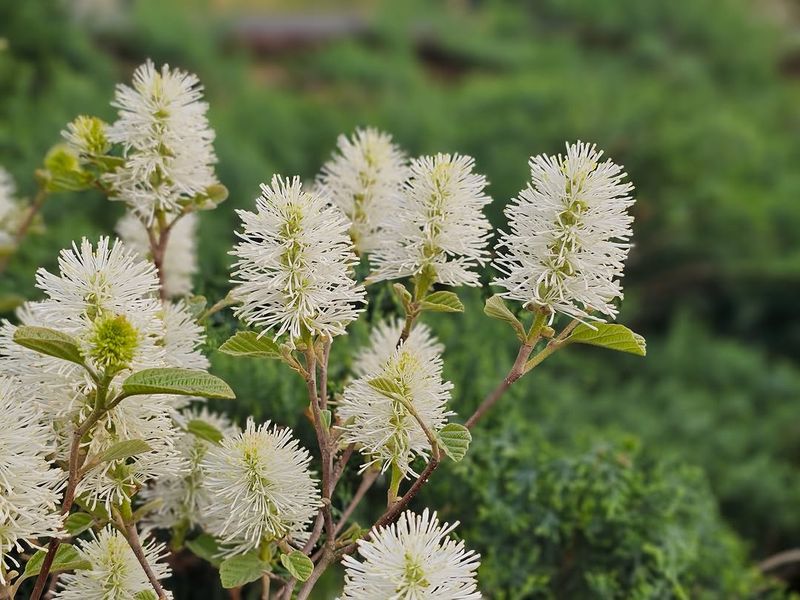
Fothergilla is the kind of shrub that makes people stop and ask what it is, because its fluffy white bottlebrush flowers in early spring are genuinely eye-catching.
Native to the southeastern United States, fothergilla (Fothergilla spp.) is well-adapted to North Carolina’s acidic soils and variable spring conditions, which is a big part of why it performs so well with minimal April care.
The blooms appear on bare or just-budding branches, creating a striking display before most other shrubs have even woken up.
Both dwarf fothergilla (Fothergilla gardenii) and large fothergilla (Fothergilla major) grow naturally in acidic, well-drained to moderately moist soils.
Across North Carolina’s piedmont and mountain regions, where clay-heavy or sandy acidic soils are common, fothergilla tends to establish well without soil amendments.
Once settled in, it grows at a moderate pace and holds a tidy, rounded shape without much pruning.
In April, fothergilla is either finishing its bloom period or transitioning into leafy growth, and neither phase requires gardener intervention. It prefers full sun to partial shade, with better flower production in sunnier spots.
Fall foliage is spectacular, often displaying orange, red, and yellow tones simultaneously on the same plant.
North Carolina homeowners looking for a native shrub that rewards patience and minimal care with two seasons of standout color will find fothergilla to be a genuinely satisfying choice for the landscape.
5. Oakleaf Hydrangea Needs Minimal Spring Care
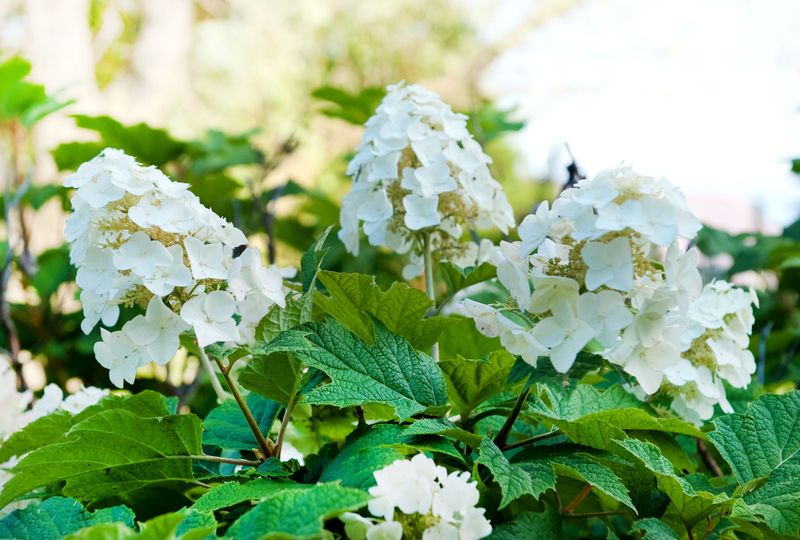
Oakleaf hydrangea (Hydrangea quercifolia) is native to the southeastern United States, and North Carolina sits squarely in its natural range.
That native status translates directly into low April maintenance, because the plant is already calibrated to the state’s spring rainfall, soil chemistry, and temperature patterns.
By the time April arrives, oakleaf hydrangea is pushing out its distinctive lobed leaves and preparing for its summer bloom season without any help from the homeowner.
One of the most practical things about oakleaf hydrangea in spring is that it does not need pruning in April. In fact, pruning at this time of year can remove the buds that will become summer flowers, so the best April care strategy is simply to leave it alone.
That hands-off approach suits busy gardeners well and still results in a shrub covered in large white flower cones by June or July.
Oakleaf hydrangea grows well in partial shade, which makes it useful under tree canopies or along the north-facing side of a home.
It tolerates North Carolina’s summer heat and humidity better than many other hydrangea species, and its exfoliating bark adds winter interest after the leaves fall.
Mature plants can reach six to eight feet tall and wide, so spacing them generously at planting reduces long-term maintenance.
The combination of spring foliage, summer blooms, fall color, and winter bark texture makes oakleaf hydrangea a four-season performer with minimal seasonal effort.
6. Abelia Grows Well With Little Maintenance
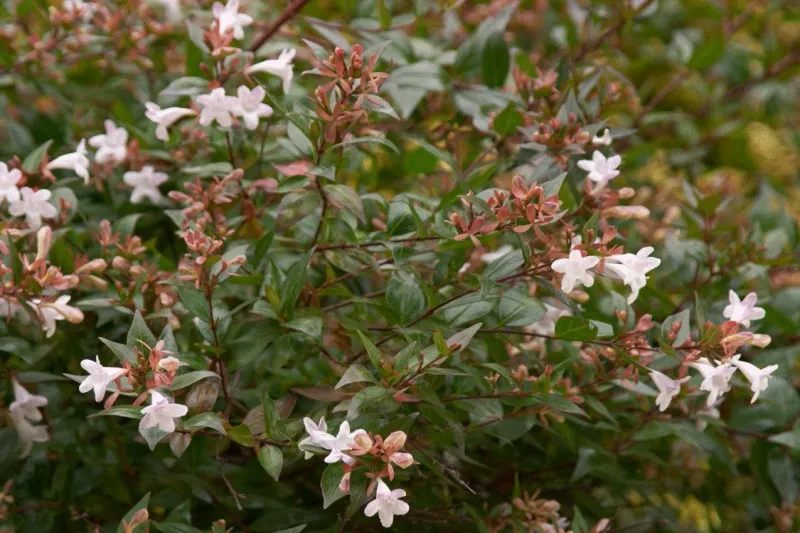
Glossy abelia (Abelia x grandiflora) has been a staple of Southern landscapes for good reason.
It tolerates heat, humidity, drought once established, and a wide range of soil conditions, making it a natural fit for North Carolina’s varied growing environments from the coastal plain to the piedmont.
April is a quiet month for abelia in terms of maintenance, as the shrub is simply leafing out and building energy for its long summer bloom season.
Abelia blooms from late spring through fall, producing clusters of small, tubular white and pink flowers that attract pollinators for months.
Because it blooms on new growth, spring pruning does not sacrifice flower production the way it does with some other shrubs.
That said, abelia rarely needs heavy pruning in April at all. Light shaping can be done if needed, but most established plants hold a pleasant mounding form on their own.
In North Carolina, abelia grows well in full sun to partial shade and reaches roughly three to six feet tall depending on the variety.
Compact cultivars like ‘Kaleidoscope’ and ‘Little Richard’ are especially popular for smaller spaces and require even less trimming than standard selections.
The semi-evergreen foliage holds through mild North Carolina winters, giving the shrub year-round presence.
For homeowners who want a flowering shrub that practically runs itself from spring through fall, abelia is a reliable and widely available option across the state.
7. Loropetalum Adds Color In Warmer Areas
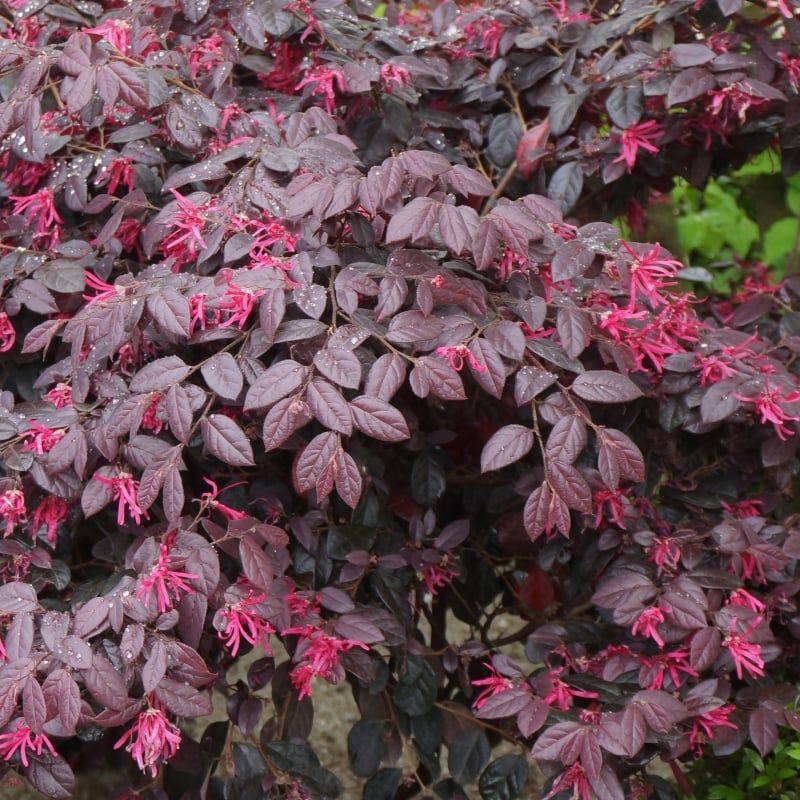
Driving through neighborhoods in the warmer parts of North Carolina in April, you will likely spot loropetalum (Loropetalum chinense) in full, fringy bloom, its hot pink flowers contrasting sharply against deep burgundy or rich green foliage.
Also known as Chinese fringe flower, loropetalum has become one of the most popular landscape shrubs in the state’s piedmont and coastal plain regions, largely because it handles warm temperatures and moderate drought with minimal fuss once established.
Loropetalum blooms most heavily in early spring, and April often catches the tail end of that display in North Carolina’s warmer zones.
After blooming, the shrub settles into steady growth without requiring fertilizer, irrigation, or pruning to stay attractive.
Its natural form is graceful and slightly arching, which reduces the need for shaping.
In cooler mountain regions of North Carolina, loropetalum may be more susceptible to late frost damage, so placement near a south-facing wall or in a sheltered spot can help in those areas.
Most loropetalum varieties grow four to six feet tall and wide, though some larger selections can reach ten feet or more. Choosing a cultivar sized appropriately for the space at planting is one of the best ways to minimize long-term maintenance.
Full sun to partial shade works well, with the richest foliage color developing in sunnier locations.
For gardeners in North Carolina’s warmer regions who want bold color without constant attention, loropetalum is a standout option.
8. American Beautyberry Brings Color With Little Upkeep
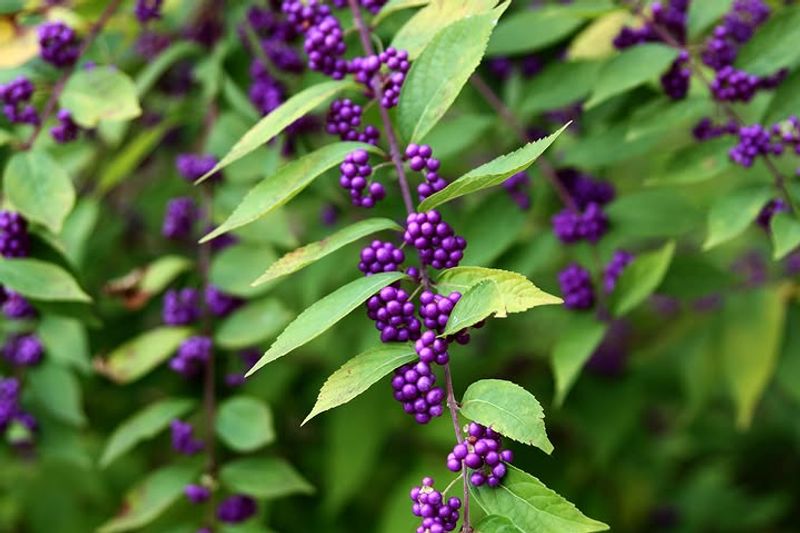
Most shrubs that look this good in fall start earning that reputation in April, and American beautyberry (Callicarpa americana) is no exception.
Native across the southeastern United States and well-established in North Carolina’s forests and woodland edges, beautyberry wakes up in spring and begins growing vigorously with almost no input from the gardener.
Its large, textured leaves emerge quickly as temperatures warm, and the shrub fills in fast through April and May.
April care for beautyberry is refreshingly simple. If you did not cut it back in late winter or early spring, you can do so lightly in April before growth gets too far along, since beautyberry blooms and fruits on new wood.
That means pruning at this stage does not reduce fall berry production.
Many gardeners in North Carolina cut beautyberry back fairly hard every few years to keep it from getting too large, but annual heavy pruning is not necessary for a healthy, productive plant.
Beautyberry grows well in full sun to partial shade and adapts to a range of soil types common across North Carolina, from sandy coastal soils to the heavier clay found in the piedmont. It typically reaches four to six feet tall and wide.
The electric magenta-purple berry clusters that appear in late summer and fall are stunning and attract birds.
For a native shrub that practically grows itself through April and rewards patience with one of fall’s most dramatic displays, American beautyberry is hard to beat.