Force paperwhites indoors this winter for a Wisconsin windowsill full of blooms by the holidays
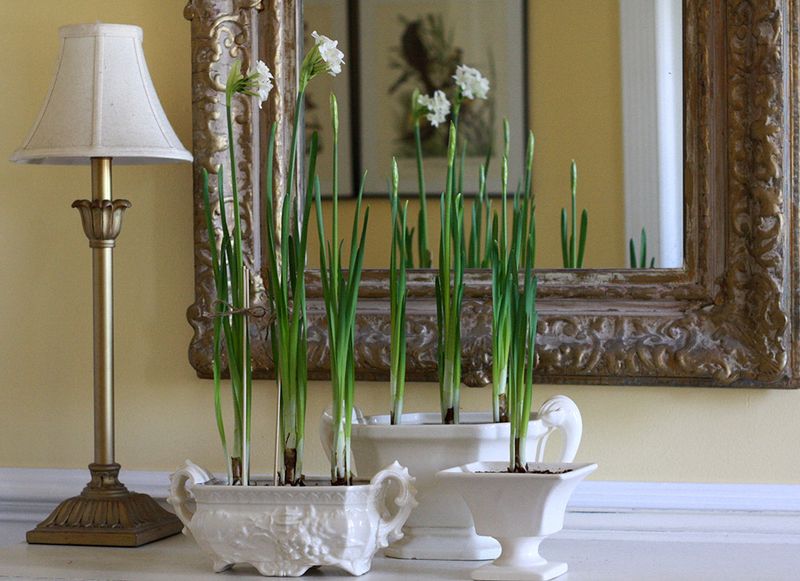
Wisconsin winters lock the garden under frost and snow for months, but a handful of paperwhite narcissus bulbs can bring fragrant blooms right to your windowsill. Paperwhites are one of the few flowering bulbs you can grow in plain water without any cold treatment, making them a genuinely approachable project for first-time indoor gardeners.
Start them at the right time and you can improve your chances of having flowers near the holidays, even if the yard outside is completely frozen.
Why Wisconsin winters suit an indoor paperwhite project
Wisconsin’s outdoor growing season winds down hard by late fall, leaving gardeners with frozen ground and bare beds from roughly November through April. That long indoor stretch is exactly where paperwhite narcissus earns its place.
Unlike tulips, hyacinths or most garden daffodils, the paperwhite types sold for indoor forcing do not require a cold treatment before they will bloom, so Wisconsin gardeners can set them up on a kitchen counter and expect flowers within weeks, not months.
That no-chill advantage is specific to paperwhite narcissus grown for indoor use. University of Wisconsin-Madison Extension guidance on forcing bulbs confirms that paperwhites bloom without a chilling period, while many other spring bulbs require weeks of cold conditioning first.
Hardy outdoor daffodils sold at Wisconsin garden centers are a different story: most of those cultivars do need cold before they flower, so do not assume the no-chill rule applies to every Narcissus you come across.
Wisconsin gardeners can try this project with a reasonable expectation of flowers near the holidays, but the outcome is not guaranteed on any specific date. Bulb condition, cultivar differences, your home’s temperature and the amount of light your window delivers all affect how quickly plants develop.
Treat the holiday target as a realistic goal rather than a firm deadline.
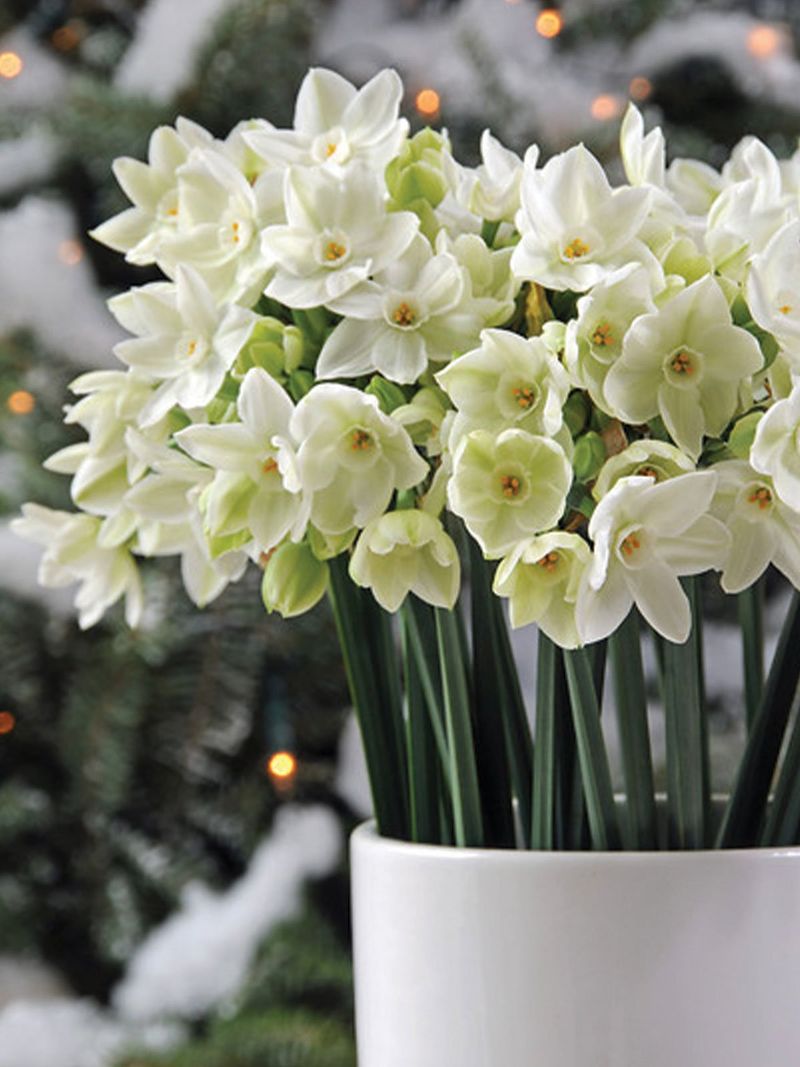
One more quality worth mentioning: paperwhites are often fragrant, with clusters of small white flowers that scent a room noticeably. Fragrance strength does vary by cultivar, though, so some varieties perfume a space more than others.
Wisconsin growers who find the scent too intense can move the container to a cooler or larger room without stopping the bloom.
Choose sound bulbs and a suitable container
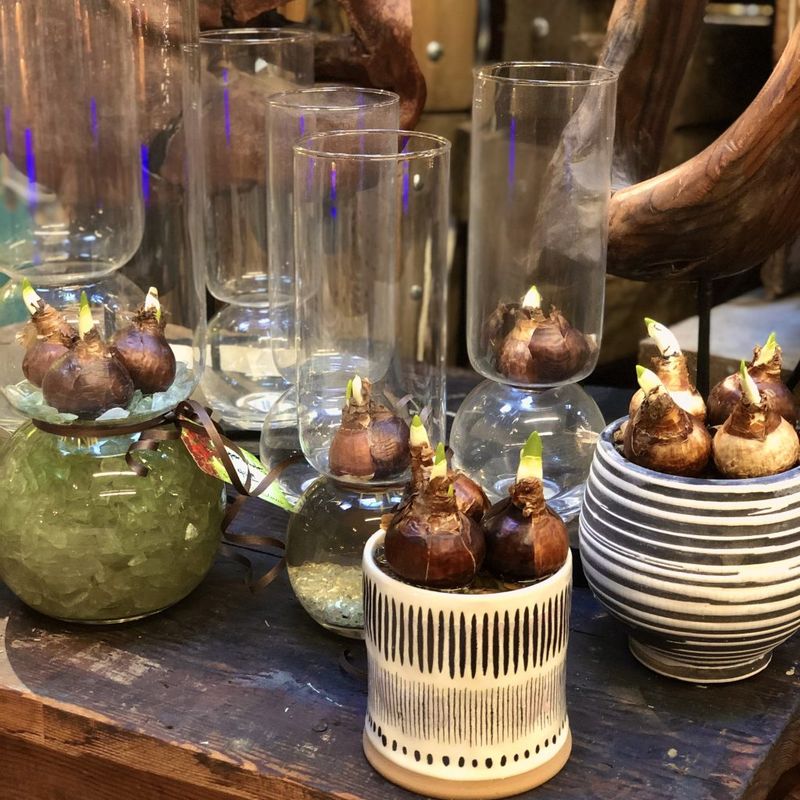
Bulb quality matters more than almost any other factor in this project. Wisconsin gardeners should squeeze each bulb lightly before buying or planting: a healthy paperwhite feels firm and solid all the way around, with no soft patches, dark sunken spots or visible mold.
Soft spots often signal rot that has already started inside, and a compromised bulb rarely produces a strong flowering stem no matter how carefully you tend it.
UW-Madison Extension’s forcing guide recommends selecting the largest, firmest bulbs available, since bigger bulbs generally contain more stored energy for flower development. In Wisconsin, paperwhites show up at garden centers, hardware stores and grocery stores starting in October.
If you are buying from a bin rather than a sealed bag, check each bulb individually rather than grabbing a handful at once.
Your Wisconsin Garden Changes Every Week. Your Plan Should Too.
Gardening in Wisconsin changes quickly throughout the season. Every Friday you’ll receive a simple weekly plan showing exactly what to plant, prune, fertilize, harvest, and protect so you never miss the right timing.
Container choice comes down to what you already own and how you want the finished planting to look. A shallow bowl, a low ceramic dish or a standard nursery flat all work well.
The container needs to be at least three to four inches deep so the pebbles or gravel can anchor the bulbs upright, but it does not need drainage holes because you will be managing the water level by hand. A taller-sided container offers an added bonus: it gives the stems something to lean against as they grow, which helps with the floppy-stem problem Wisconsin growers often encounter in warm, low-light interiors.
Pebbles, gravel, glass marbles and coarse sand are all reliable support materials. Potting mix is another option that works well, particularly if you want a more traditional planted look.
Whichever material you choose, arrange the bulbs flat-side down and close together for a fuller grouping of stems. Wisconsin gardeners who want a layered, lush look can press the bulbs until they nearly touch, leaving just enough space for roots to spread downward.
Set paperwhites above the waterline
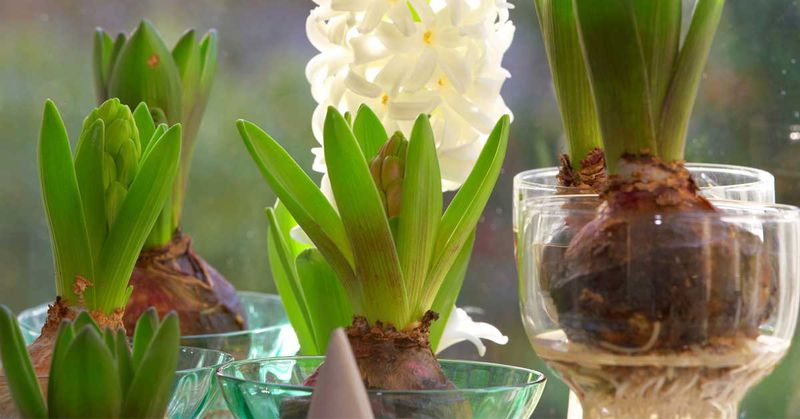
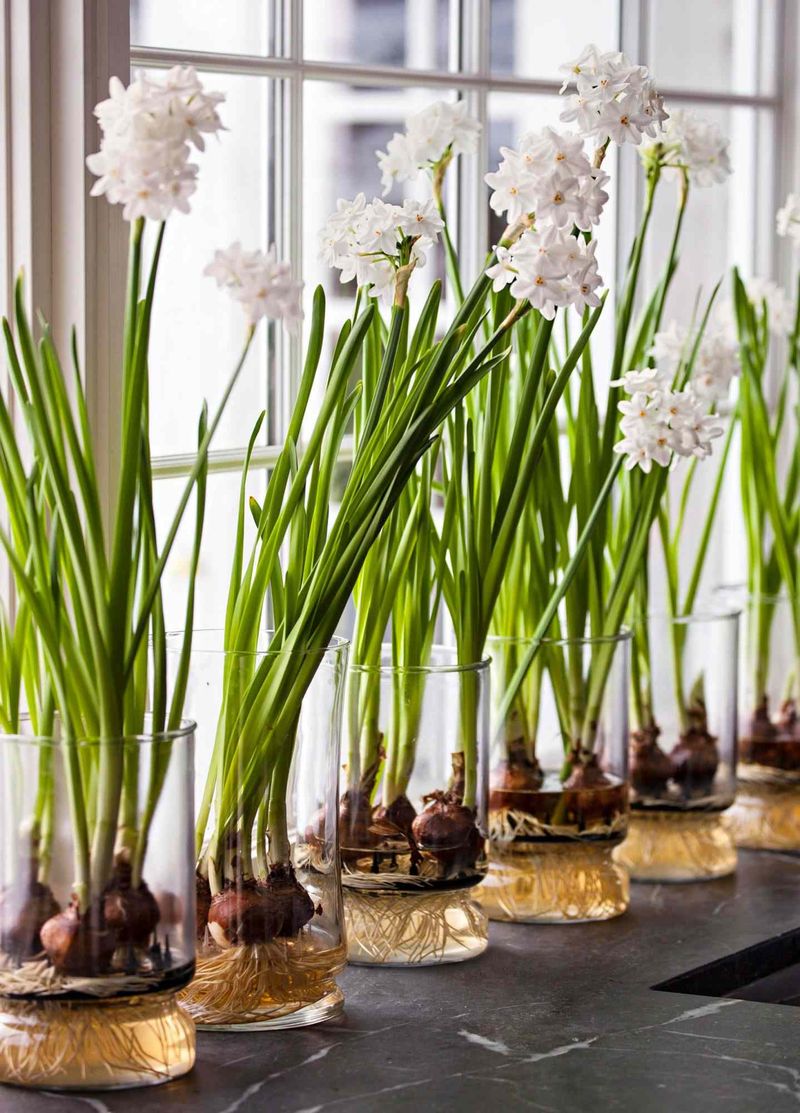
Getting the water level right from the start is the single most important technical step in the whole process. Fill your container with about two to three inches of pebbles, gravel or marbles, then nestle the bulbs flat-side down on top of the supporting material.
Add more pebbles around the sides to hold the bulbs upright, but leave the top third of each bulb exposed to air. The goal is stability without burial.
Water goes in next, and the target level is just below the bases of the bulbs or at the very top of the pebble layer. Roots will grow downward from the base and find the water on their own.
UW-Madison Extension’s bulb-forcing guidance consistently advises keeping water below the bulb rather than letting the bulb sit in it, because direct and prolonged water contact softens the base and promotes rot. Wisconsin homes with dry winter air may need a water top-off every few days, so check the level regularly rather than assuming it stays constant.
Potting mix works a little differently. If you choose that medium, fill the container to about an inch below the rim, press the bulbs in with the pointed tip facing up, and water thoroughly until moisture drains or pools at the bottom.
After that initial soak, keep the mix moist but not soggy. A finger pressed an inch into the soil tells you whether it needs water: if it feels damp, hold off; if it feels dry, add a small amount.
One rule applies to both setups: never let the bulb base sit submerged. A paperwhite bulb resting in standing water is far more likely to rot before it roots, and a rotting bulb will not flower.
Wisconsin gardeners who have lost bulbs in past seasons often trace the problem back to a container that was simply too full of water at the start.
Use cool beginnings and bright light
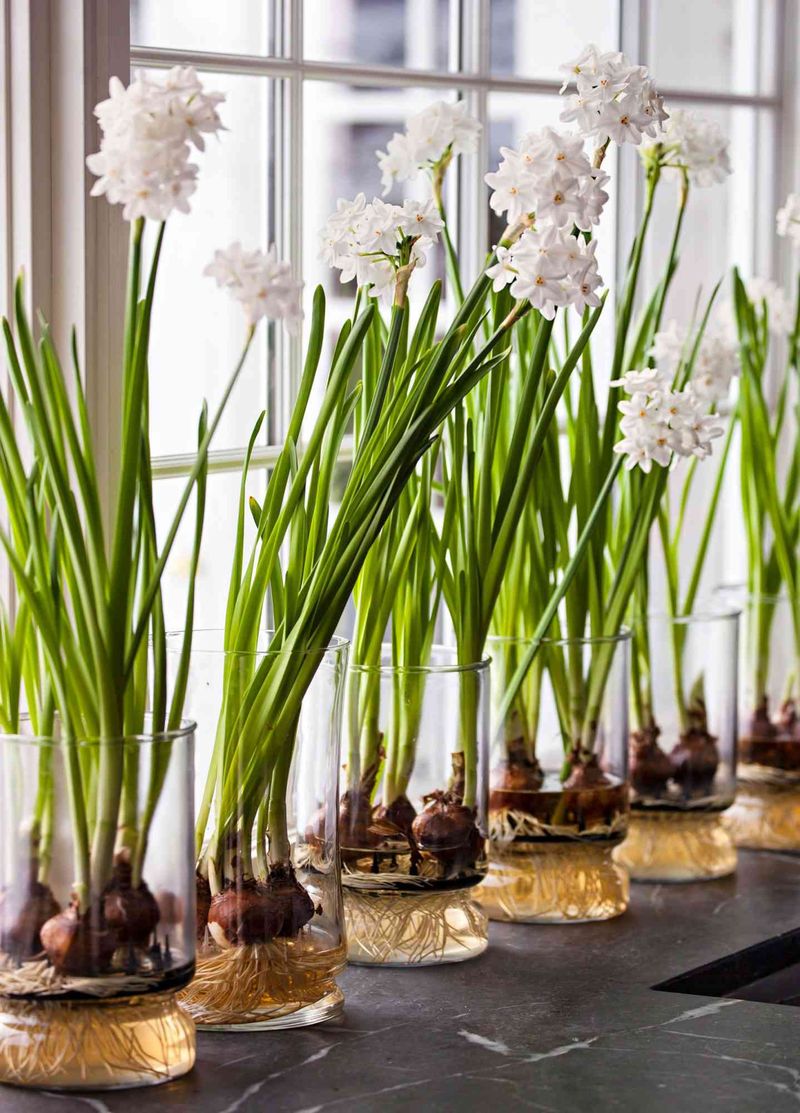
After planting, a cool location helps roots develop before the plant puts energy into top growth. Wisconsin gardeners can use an unheated spare room, a cool basement corner or an enclosed porch that stays around 45 to 50 degrees Fahrenheit.
At that temperature, roots typically establish within one to two weeks while shoot growth stays slow and compact. Once shoots are clearly visible and an inch or two tall, move the container to the brightest window in the house.
A south-facing window is the best option for most Wisconsin homes in winter, when the sun angle is low and days are short. East- or west-facing windows can work if they receive several hours of direct light, but north-facing windows generally do not provide enough intensity to keep stems upright.
UW-Madison Extension’s forcing guidance notes that bright light after shoot emergence helps limit the leggy, flopping growth that warm and dim conditions encourage in Wisconsin interiors during the short days of December.
Temperature management continues to matter after the container moves to the window. Keeping plants in the cooler end of your living space, ideally below 65 degrees, slows stem elongation and can extend the time the flowers stay open once they bloom.
Avoid placing the container near a heating vent, a wood stove or a radiator, since the dry heat accelerates development and shortens the display. Wisconsin homes that run warm all winter can partially compensate by rotating the container toward the coldest part of the window at night.
Fertilizer is not necessary during this process. The paperwhite bulb carries all the stored energy it needs to push roots, stems and flowers through one bloom cycle.
Adding fertilizer will not speed up flowering and may actually encourage soft, weak growth. Keep the routine simple: cool start, bright window, consistent water level, and the bulbs will do the rest on their own schedule.
Plan for a holiday bloom window, not a fixed date
Anyone who has grown paperwhites knows that timing is genuinely variable. UW-Madison Extension estimates that paperwhites generally flower in about three to five weeks from planting under typical indoor conditions.
Missouri Extension puts the range at four to six weeks for some kits, and Cornell’s Flower Bulb Research Program describes flowers opening within approximately two to three weeks when conditions are favorable. The overall practical range, accounting for all those variables, runs from roughly two to six weeks.
For Wisconsin gardeners aiming at flowers near December 25, late November or early December is a reasonable planting target. If you plant healthy bulbs around November 25, you are working within the three-to-five-week window that UW-Madison describes, which puts potential bloom time anywhere from mid-December through early January.
Starting a week or two earlier gives you a wider margin, though flowers that open before December 20 may finish before Christmas Day arrives.
Several factors can shift the schedule in either direction. Bulbs that have already begun rooting or showing a sprout tip when you buy them may be farther along developmentally and could flower faster than a completely dormant bulb.
Warm indoor temperatures accelerate growth but shorten the overall display once buds open. Cool conditions slow everything down, which can push bloom past the holiday window but often results in sturdier stems and longer-lasting flowers.
Wisconsin gardeners who want to hedge their bets can start two small containers a week or ten days apart. If the first set blooms early, the second is on its way.
That staggered approach is common among experienced indoor bulb growers and costs very little extra effort. Treat the holiday date as a target worth aiming for rather than a deadline the bulbs are obligated to meet.
Reduce floppy growth with simple support
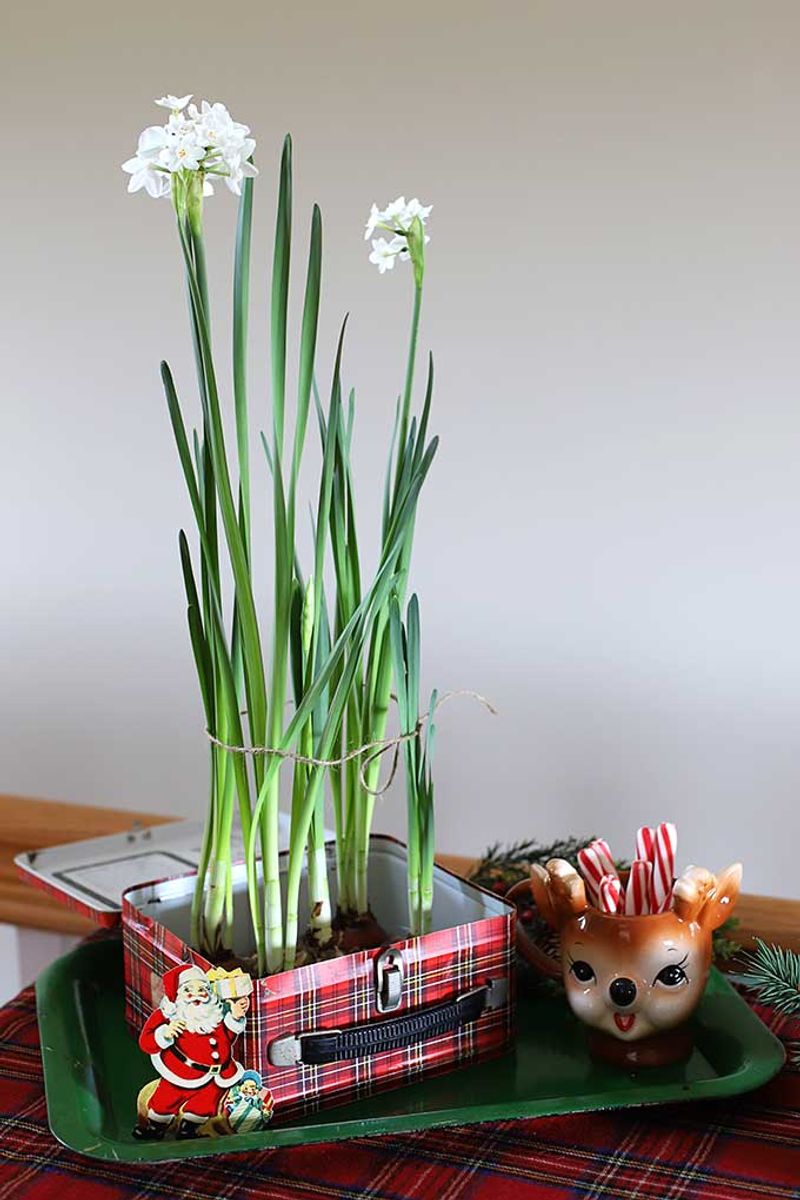
Floppy stems are the most common frustration Wisconsin growers report with paperwhites, especially in homes that run warm and have limited winter light. The first line of defense is environmental: move the container to the brightest available window, keep the room on the cooler side and avoid placing the plants near heat sources.
Those three adjustments alone often produce noticeably more compact growth compared with a warm, dim location.
When stems start leaning despite good light and cool temperatures, physical support works reliably. Bamboo stakes pushed gently into the pebbles or potting mix, with soft twine looped loosely around the stems, keep a grouping upright without damaging the plants.
A taller-sided container provides passive support as stems elongate, since the walls catch the stems before they tip over the edge. Grouping several bulbs together so the stems can lean on each other is another low-effort option that Wisconsin gardeners often find sufficient.
An optional and more experimental approach comes from Cornell University research. Cornell’s Flower Bulb Research Program found that replacing plain water with a dilute alcohol solution after roots have formed and shoots reach about one to two inches tall can reduce plant height by roughly one-third to one-half without reducing flower size or fragrance under the tested conditions.
The tested concentration range is 4 to 6 percent alcohol. Cornell’s example formula is one part 80-proof liquor to seven parts water, which produces approximately a 5 percent solution.
Wisconsin gardeners who want to try this method should start the bulbs in plain water as usual and switch to the diluted solution only after rooting and shoot emergence are clearly underway. Cornell’s bulb newsletter specifically advises against substituting beer or wine, since the sugars in those beverages can damage the plants.
Concentrations above about 10 percent can also injure growth, so measuring carefully matters. The alcohol method is optional and height-control focused, not a requirement for flowering: plain water, good light and cool conditions remain the simplest and most reliable path for Wisconsin growers.
Protect pets and children and plan for after flowering
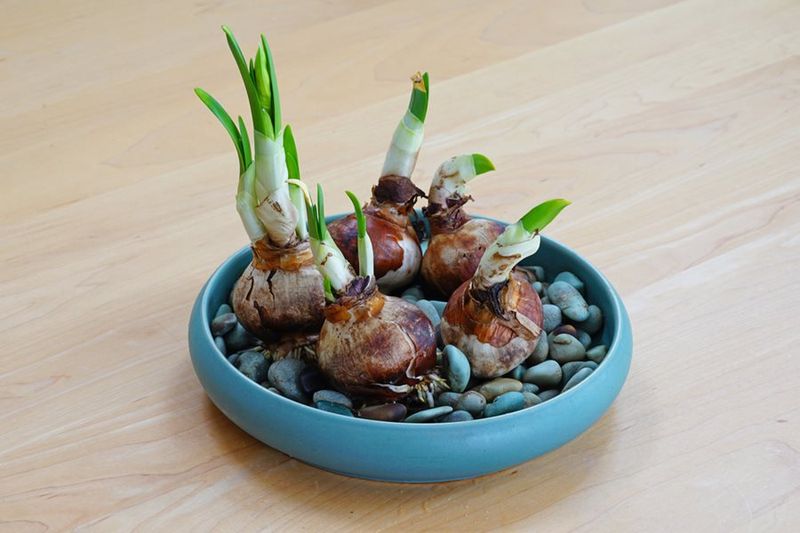
Safety comes before display advice. Paperwhites are Narcissus species, and all parts of the plant contain toxic alkaloids, with the bulbs holding the highest concentration.
The ASPCA lists paperwhites as toxic to dogs, cats and horses, noting that the bulbs are the most poisonous part and that ingestion can cause vomiting, diarrhea, low blood pressure, tremors and other serious symptoms. Wisconsin households with pets should treat these plants the same way they would treat any other toxic houseplant: keep the container on a high shelf or in a room the animal cannot access.
Young children face the same risk. Poison Control guidance on daffodils advises keeping the bulbs away from children and seeking medical advice promptly if ingestion is suspected.
Growing paperwhites indoors in water does not change their chemistry or make them safer; a bulb sitting in a glass bowl on a low coffee table is just as hazardous as one stored in a garage. Wisconsin parents and pet owners who want to try this project should plan the container’s location before the bulbs go in.
After the flowers fade, Wisconsin gardeners face a straightforward decision about what to do with spent bulbs. Water-forced paperwhites often exhaust most of their stored energy during the single bloom cycle, leaving bulbs that are smaller and weaker than when they started.
Iowa State University Extension notes that paperwhites are not winter-hardy outdoors in cold climates and recommends discarding the bulbs after forcing rather than trying to save them.
UW-Madison Extension’s Dane County resource on forcing bulbs similarly indicates that forced narcissus planted outdoors may take a year or two to rebloom if they survive at all, and that outcome is not dependable in Wisconsin’s climate. Treat the paperwhite as a one-season indoor project rather than the start of a perennial garden plant.
Compost the spent bulbs, wash the container and pebbles, and save the setup for next fall’s batch.
Give the Wisconsin project realistic expectations
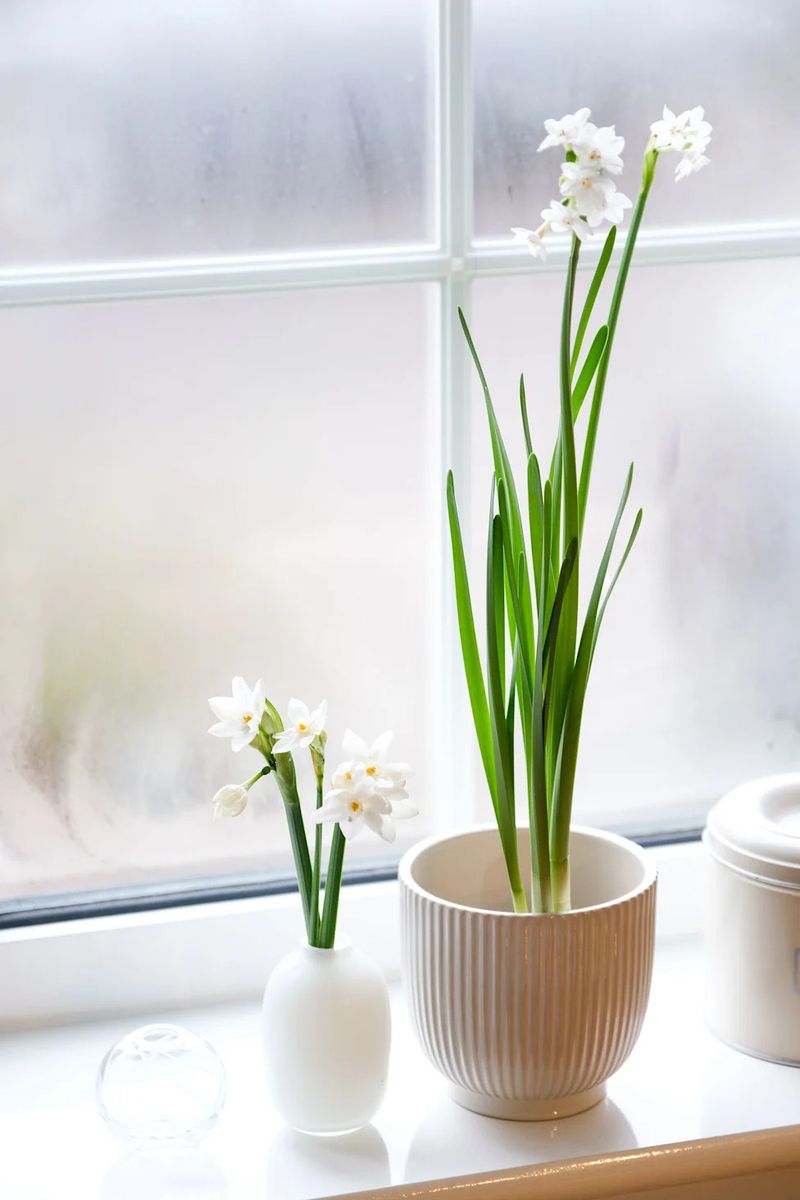
A quick checklist covers the essentials: choose firm, undamaged bulbs; position them flat-side down above the waterline in pebbles or moist potting mix; start in a cool spot around 45 to 50 degrees Fahrenheit until roots and shoots appear; then move the container to the brightest window your Wisconsin home offers. UW-Madison Extension puts typical bloom time at three to five weeks, so planting in late November or early December improves your chances of flowers near the holidays without guaranteeing a specific date.
Plain water remains the simplest approach. If stems get unruly, try staking or a taller container first.
The optional dilute alcohol method from Cornell’s Flower Bulb Research Program can reduce height by roughly one-third to one-half, but it requires careful measurement and is not needed for flowering. Keep all containers out of reach of pets and children: the ASPCA confirms paperwhite bulbs are toxic to dogs, cats and horses, and indoor growing does not change that.
When the blooms finish, UW-Madison Extension’s Dane County resource advises against counting on spent water-forced paperwhites to rebloom reliably outdoors in Wisconsin. Compost the bulbs, clean the container and plan another round next November.
A windowsill that smells like spring while the driveway needs shoveling is its own reward.