Found Giant Green “Brains” In Your Virginia Yard? Here’s What To Know Before You Toss Them
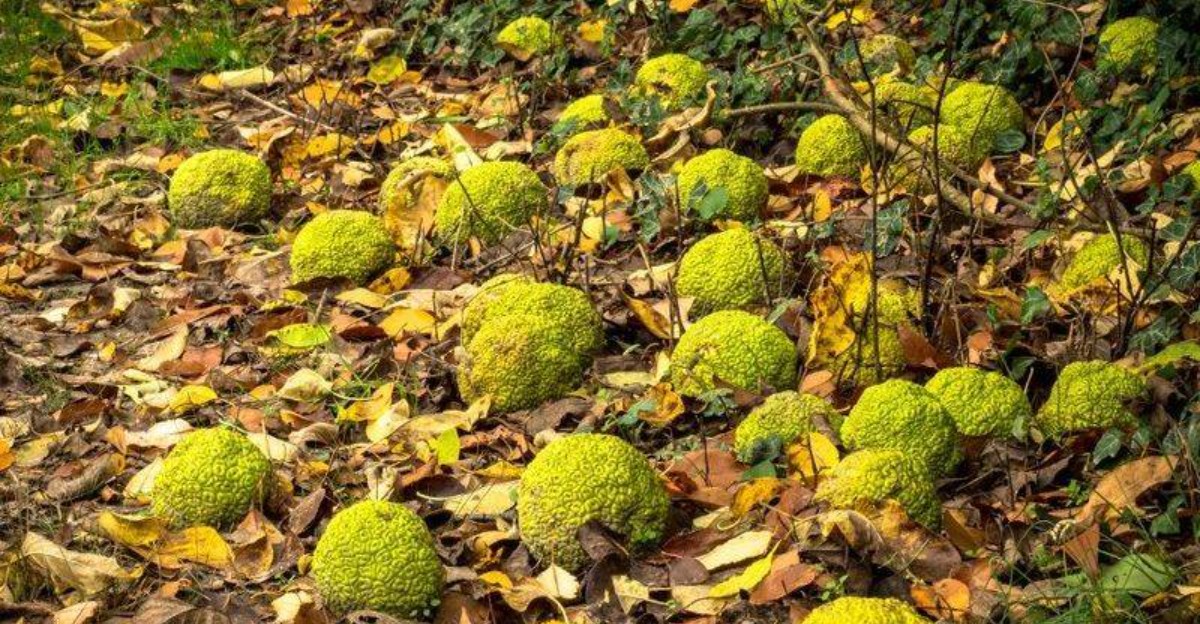
One lumpy green ball in my yard weighed about as much as a small cantaloupe and smelled faintly of citrus peel. It looked like a brain from a science fiction movie, and I honestly laughed out loud.
You might notice these wrinkled spheres rolling under fences or piling up beside old farm roads every autumn in Virginia. Squirrels shred them for seeds, while most people just stare and wonder what on earth dropped from above.
I skipped tossing mine right away because curiosity won, and I am glad I waited a little longer. Turns out this odd fruit carries a backstory full of bows, hedges, and some very ancient giant animals.
Many yards hide these bumpy treasures each fall, especially near old fence lines and country homesteads across Virginia. Before you grab the rake and wheelbarrow, would you like to know what you are really holding?
1. Those Bumpy Green Balls Come From The Osage Orange Tree
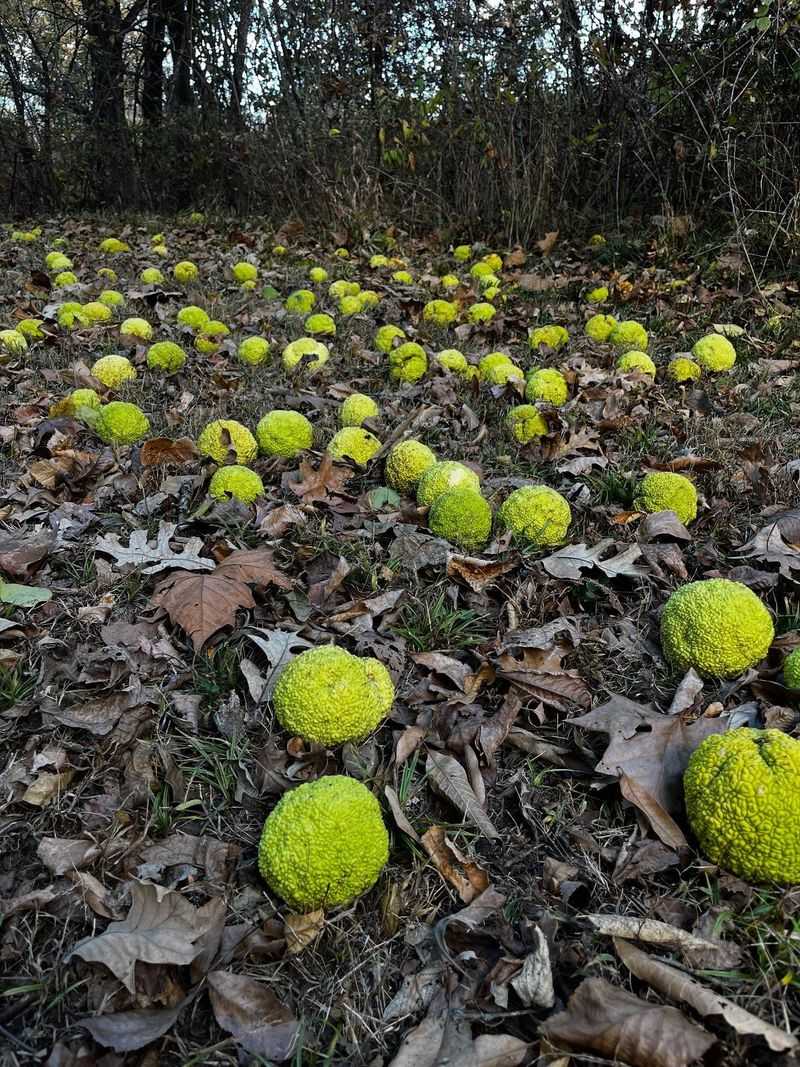
Grab one and you will feel the surprise right away, because these wrinkled orbs are firm, heavy, and slightly sticky. They come from the Osage orange tree, known to scientists as Maclura pomifera, a close cousin of the mulberry that grows widely in Virginia.
Each fruit usually measures about three to six inches across, with a surface that looks like tiny folded tissue. The bright yellow-green color makes them glow against fallen leaves, which is why so many people call them brains.
Nicknames run wild across the country, including hedge apple, horse apple, and even monkey ball in some rural areas. I love how every region seems to invent a funnier name for the same strange piece of fruit.
Despite the orange label, this tree has no family ties to citrus at all, so the name is misleading. The word pomifera simply means fruit-bearing, and the genus honors William Maclure, an early American geologist and naturalist.
Slice one open and you will find dense pale flesh packed with small seeds tucked deep inside the core. A milky white sap oozes from cut surfaces, and it can feel gummy on your fingers for a while, as many Virginia gardeners have discovered.
Wear garden gloves when you handle cut fruit, since that sap can irritate sensitive skin in some people. A quick wash with soap and warm water usually removes the sticky film from your hands without much trouble, even after a long afternoon of yard work in Virginia.
2. Old Farm Hedgerows Brought These Trees East
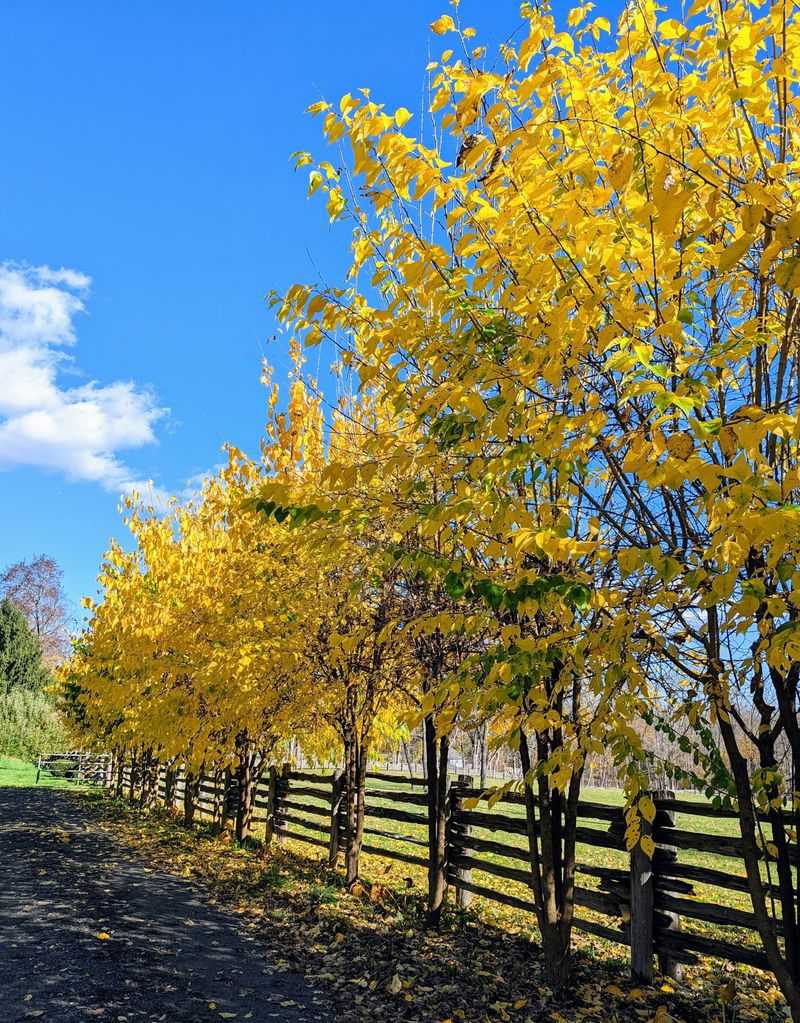
Long before barbed wire showed up, farmers planted rows of thorny trees that cattle simply refused to push through. Osage orange became the favorite choice, and that history explains why you might find one near your home today.
Its original native range sits mostly in the Red River region of Texas, Oklahoma, and Arkansas, a fairly small area. Settlers loved how quickly the trees grew, so they shipped seeds and seedlings across much of the country.
Thousands of miles of living fences were planted during the 1800s, especially across farmland in the Midwest and Plains. Crews pruned the young trees hard so the branches would grow thick, tangled, and nearly impossible for livestock to cross.
Here in Virginia, botanists generally describe Osage orange as introduced or naturalized rather than a true native tree. You will often spot older specimens along fence rows, abandoned pastures, roadsides, and the edges of old homesteads.
I enjoy walking country roads in fall and guessing where long-gone fences once stood by following these trees. A crooked line of hedge apples scattered on the ground often marks a property boundary from generations ago.
Spreading usually happens slowly, mostly through suckers, people, and animals that carry seeds away from the parent tree. Many land managers watch it in open fields, so check with your local extension office before planting new ones.
3. Hedge Apples Are Not A Snack For People
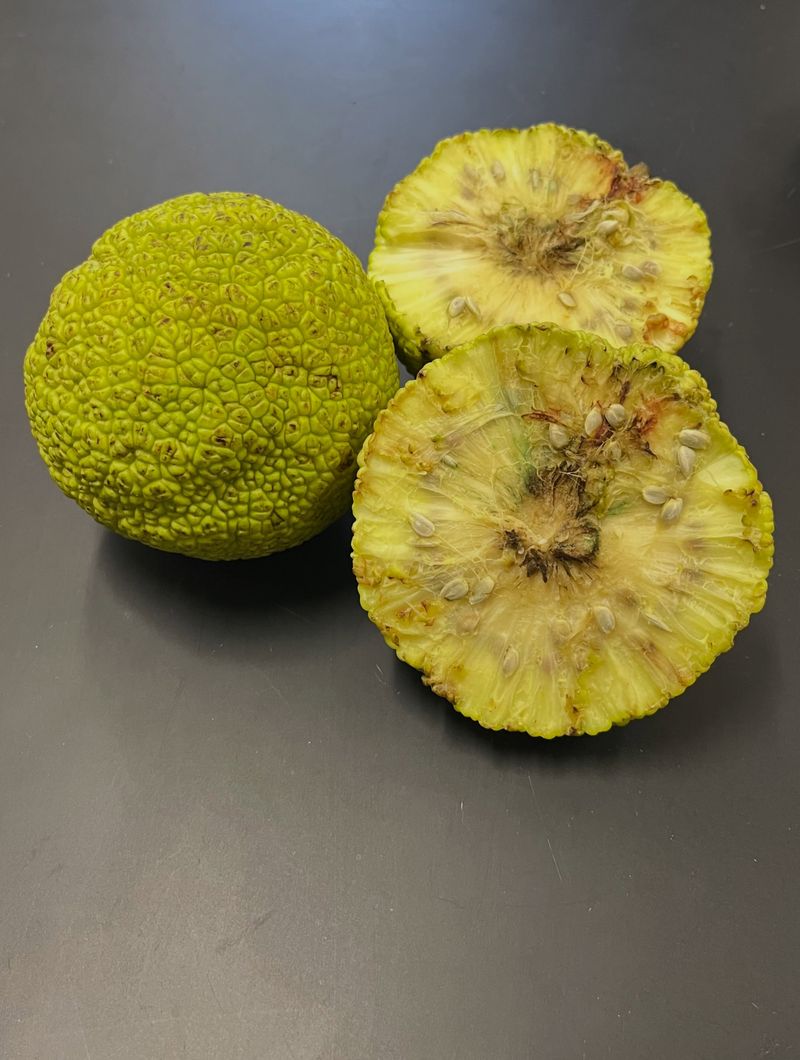
Calling something an apple or an orange sets up big expectations, but this fruit fails every taste test I know. Most sources describe the flesh as bitter, fibrous, and coated in that sticky latex sap from the inside.
Eating the pulp is not considered a serious poisoning risk, yet it can upset your stomach or irritate your mouth. People who have tried it often mention a sharp green flavor, sometimes compared loosely to cucumber rind or raw sap.
Seeds are the one part some adventurous foragers roast, describing a mild nutty taste similar to sunflower seeds. Getting them out takes patience, though, because each fruit hides a couple hundred seeds inside sticky, stringy pulp.
Squirrels happily handle that messy job for you, tearing fruit apart on stumps and leaving green crumbs everywhere. I watched one gray squirrel spend nearly an hour on a single hedge apple, and it looked thrilled.
Kids are often tempted to take a bite because the fruit looks so cartoonish and strangely appealing. Teach them early that these are for looking, rolling, and studying, rather than for tasting at the picnic table.
Keep cut pieces away from your kitchen counters, since the sap clings to cutting boards and knives stubbornly. A little cooking oil on a paper towel helps lift the gummy residue before you wash everything with soapy water.
4. Curious Dogs May Chew On Fallen Hedge Apples
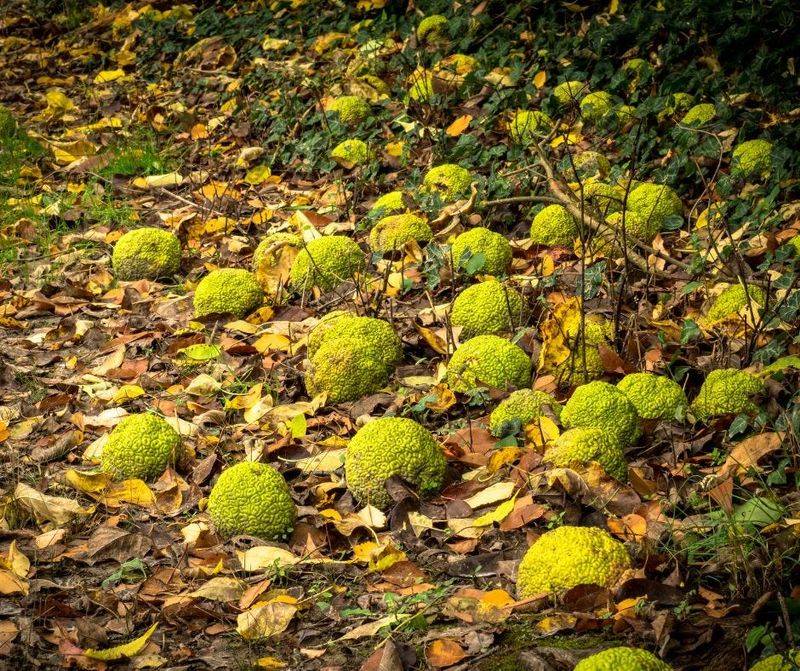
My friend’s beagle treats every fallen hedge apple like a brand new chew toy, which made us both a bit nervous. Pet poison resources generally list Osage orange as nontoxic, so a curious nibble rarely causes serious trouble for animals.
That does not mean the fruit is harmless for every pet, especially dogs that gulp food without chewing much. Large chunks of the dense, fibrous fruit can upset digestion and sometimes lead to vomiting or loose stools afterward.
Size matters most here, since a whole fruit can be about as big as a softball and quite hard. Choking or blockage risks are worth considering, particularly for big dogs that try to swallow pieces in one bite.
Cattle and horses have occasionally choked on whole fruits in pastures, which helped give the tree its mixed reputation. Farmers learned to watch livestock closely during heavy fruit drops, especially when grass grew thin in late autumn.
Sticky sap can bother some pets too, leaving gummy fur around the mouth or paws after a chewing session. Gently wipe the area with a damp cloth, and call your veterinarian if you see swelling, drooling, or repeated vomiting.
Pick up fallen fruit every few days in play areas, and toss it on a compost pile or brush pile. That simple habit keeps your yard tidier and gives your pets far fewer tempting objects to roll around.
5. Spiders Probably Will Not Flee From Hedge Apples
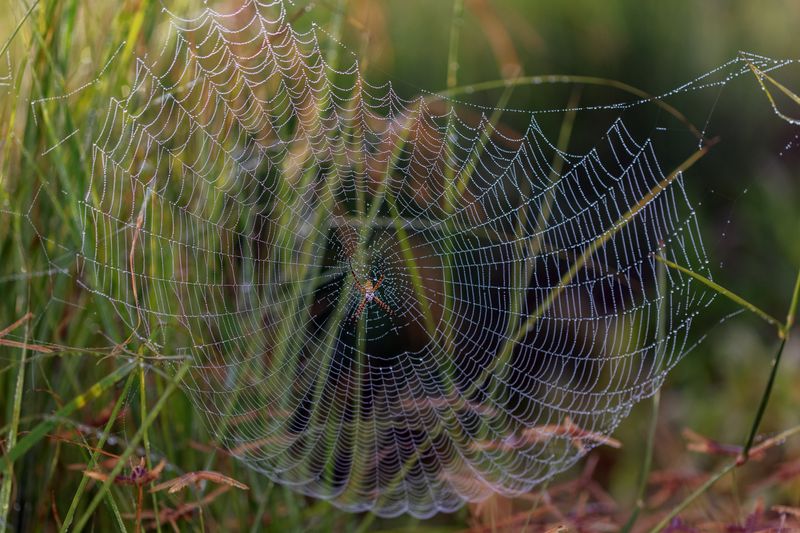
Grandmothers across the country swear that a few hedge apples in the basement send spiders packing for good. I tried it one fall, set three fruits in my garage corners, and still found webs a week later.
Science backs up my disappointing little experiment, because research has not shown whole fruits repel spiders in real homes. Iowa State University tested extracted compounds and found some repellent effects on insects, but only at concentrated levels.
Those chemicals, including ones called elemol and 2,3,4-trihydro-1H-indene, appear in tiny amounts inside an ordinary fruit. Placing a single hedge apple on a shelf simply does not release enough of them to change bug behavior noticeably.
Fruit left indoors also softens and rots within a few weeks, sometimes attracting fruit flies or mold instead. That turns a natural remedy into a brand new cleanup job, which is the opposite of what anyone wants.
Better pest control starts with sealing cracks, fixing leaky pipes, and reducing clutter where spiders like to hide. A dehumidifier in a damp basement helps too, since many crawling insects prefer moist, cool spaces.
Feel free to keep a hedge apple around as a fun conversation piece on the porch or windowsill. Just enjoy it for its quirky looks and history, and rely on proven methods when bugs become a problem.
6. Bright Orange Osage Wood Built Bows And Fence Posts
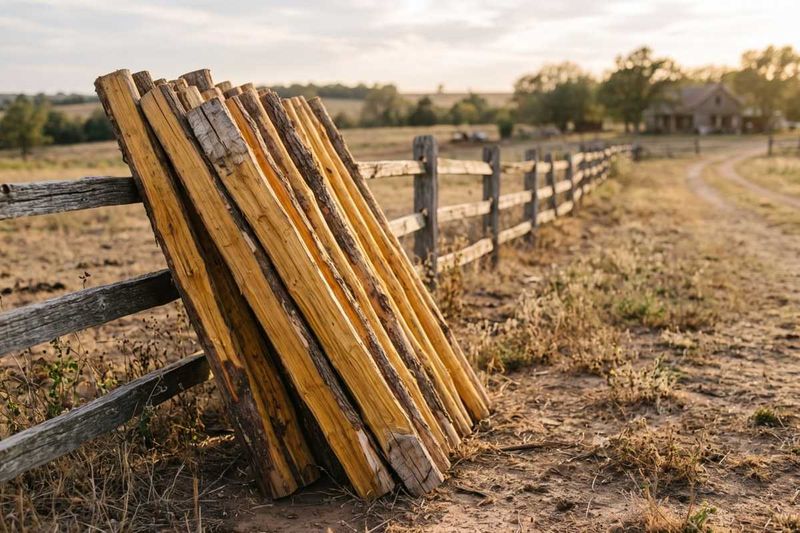
Split an Osage orange log and the inside glows a vivid golden orange, almost like it was freshly painted. That striking heartwood ranks among the densest and most rot-resistant woods growing anywhere in North America.
Members of the Osage Nation and other tribes prized the wood for bows because it bends without snapping easily. French explorers called the tree bois d’arc, meaning wood of the bow, and some people still use that name.
Farmers later turned to Osage orange for fence posts, since a well-set post could last for many decades outdoors. Some old posts reportedly stood in fields longer than the farmers who originally pounded them into the ground.
Woodworkers today still seek it for tool handles, turned bowls, and traditional archery, though it can be tough to cut. I once dulled a chainsaw chain on a single stubborn branch, and I gained instant respect for that tree.
Firewood fans like it too, because it burns hot and long compared with many common hardwoods in the region. It also throws lots of sparks, so use it carefully and only in a closed stove or fireplace insert.
Removing a tree on your land? Ask around before hauling the wood away, because bowyers and turners may happily take it.
Your unwanted logs might become a beautiful bow, mallet, or bowl in someone else’s workshop.
7. Sharp Thorns And Furrowed Orange Bark Reveal The Tree
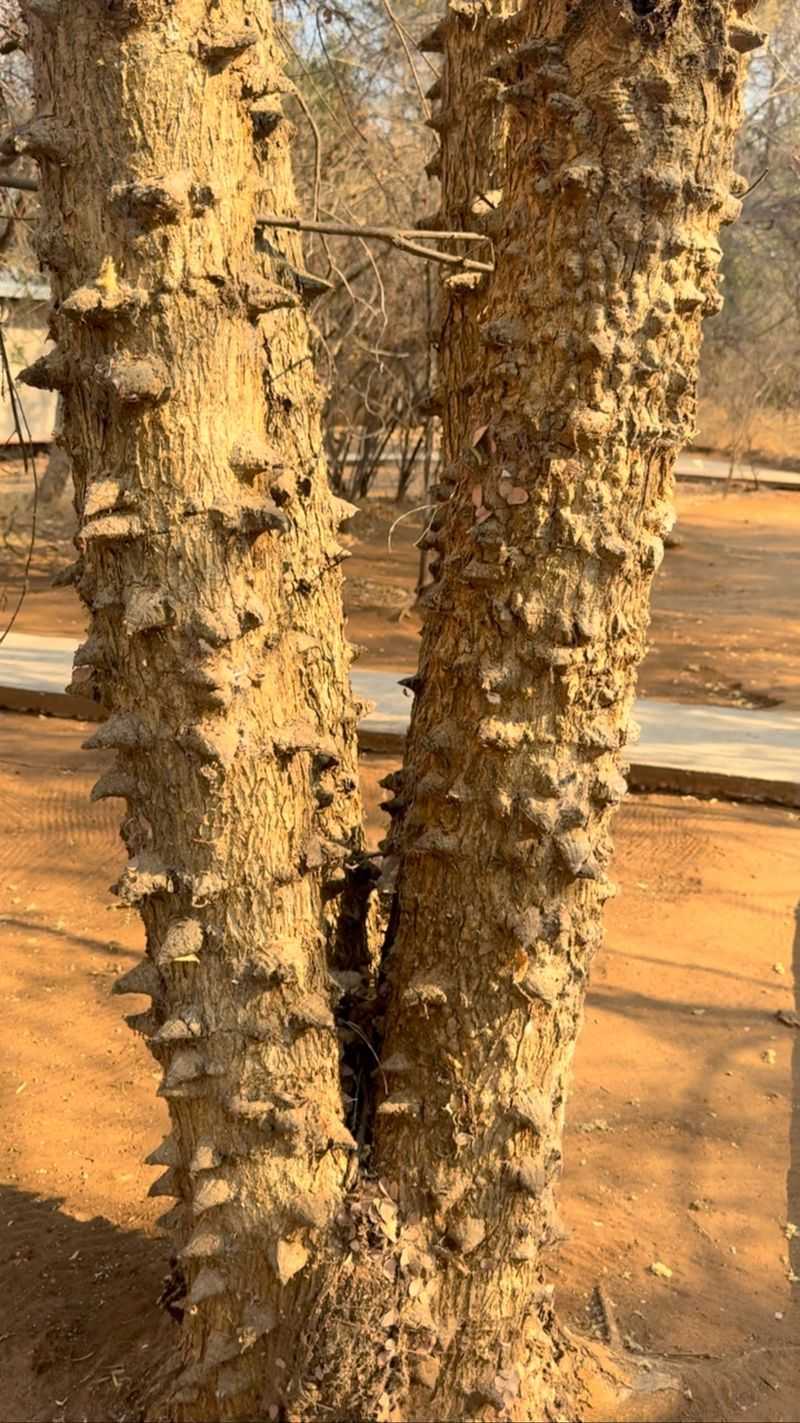
Reach carelessly into an Osage orange tree and you will quickly meet its stiff, sharp thorns along young branches. They usually measure around half an inch to an inch, and they can snag sleeves or scratch arms easily.
Leaves are glossy, deep green, and shaped like simple ovals with long pointed tips arranged alternately on stems. In autumn they turn a clear buttery yellow before dropping, which makes the trees easy to spot along fields.
Bark gives another strong clue, showing orange-brown tones with deep ridges that twist and cross as trees age. Scrape a twig or root lightly and you may notice bright orange coloring hiding just beneath the surface layer.
Here comes the fun part, because only female trees grow those famous brain-like fruits each fall season. Male trees produce small flowers in late spring for pollen, yet they never form a single hedge apple.
Gardeners who appreciate the tree but dislike the cleanup sometimes choose thornless male cultivars like Wichita or White Shield. Those selections offer the tough wood and glowing fall color without dropping heavy fruit onto sidewalks or driveways.
Pruning works best during the dormant season, when you can clearly see the branch structure and avoid sap flow. Wear thick leather gloves and long sleeves, since those thorns scratch anyone who skips basic protection.
8. Ancient Mammoths May Have Once Eaten Hedge Apples

Scientists have a wild theory about why nobody seems to eat these huge fruits anymore, and it involves mammoths. Many researchers think giant Ice Age animals like ground sloths once swallowed hedge apples and spread the seeds widely.
Those big animals disappeared thousands of years ago, which may explain why most fruits now just drop and rot nearby. It remains a hypothesis rather than a proven fact, yet it makes every fallen hedge apple feel delightfully ancient.
American history connects to this tree as well, because Meriwether Lewis sent cuttings to President Thomas Jefferson in 1804. Jefferson was a passionate gardener, so I like imagining him studying those strange thorny cuttings with real curiosity.
Virginia also boasts a famous giant at Red Hill, the Patrick Henry National Memorial near Brookneal in Charlotte County. That massive Osage orange is one of the largest and best-known of its kind in Virginia and is believed to be about two centuries old.
Visiting the tree in person gives you a fresh appreciation for the lumpy fruits scattered across your own lawn. Its sprawling limbs stretch wide, and the whole scene feels like stepping back into an older chapter of history.
So before you toss your green brains into the trash, consider sharing a few with curious kids or neighbors. Compost the rest, leave some for squirrels, and enjoy knowing that your yard holds a remarkable living story.