Why So Many Michigan Mums Don’t Come Back and How to Give Yours a Better Chance

Most of those plump, flower-covered domes at the grocery store were grown to be a fall decoration, not a long-term garden plant. Growers time them to bloom on a schedule, and that bloom often matters more to the plant’s sales than its roots ever will.
I know how frustrating it can be when a spot you filled with copper and gold in October turns up empty in April. I did it for years and blamed the cold every time.
Here’s something you might not expect. A Michigan winter is often less of a problem than soggy soil, late planting, and the wrong kind of plant from the start.
The real question is whether your pot of autumn color was ever built to stay. Once you know what to look for at the store and in your yard, the odds start tipping your way, and the plant on your porch right now might surprise you next spring.
1. That Perfect Store-Bought Mum Dome Might Not Be Built for Winter

Those flawless mounds stacked by the pumpkins look like they could last forever. Many of them are florist mums, raised in greenhouses to look amazing for a few weeks. They often put almost all their energy into flowers, with very little left over for roots.
Garden mums, sometimes sold as hardy mums, are a different story. They are bred to handle cold winters and usually spread by short underground shoots called stolons.
Those shoots are what send up fresh growth in spring, so a plant without them has a much harder time returning. Telling them apart takes a little detective work.
Check the tag for words like hardy, garden mum, or a zone rating. Most of Michigan falls in USDA zones 5 and 6, with some colder zone 4 areas up north and in the Upper Peninsula, so look for plants rated for your zone or colder.
If there’s no tag, ask someone at a local nursery. Independent garden centers often carry hardy varieties grown for northern gardens.
Fun fact for your next trivia night: chrysanthemums have been grown in China for more than 2,000 years. They were prized long before anyone stacked them by a checkout lane.
Buying the right type will not guarantee success, but it gives you a real shot. Starting with a florist mum and expecting a comeback is a bit like asking a goldfish to swim across a lake.
2. Getting Hardy Mums in the Ground Early Gives Roots a Head Start

Timing was my biggest mistake for years. I would buy mums in mid-October, plant them in a cold bed, and wonder why nothing showed up in May. Those plants simply ran out of time to root.
Roots need several weeks of workable soil before the ground freezes. Many extension experts suggest planting fall mums at least six weeks before a hard freeze. In much of lower Michigan, that means late August or early September, and earlier still in the north.
Spring planting works even better. A mum planted in May or early June gets a full growing season to build a strong root system. By fall, it is settled in and much tougher than a plant that just arrived.
Plant at the same depth the mum sat in its pot. Loosen any tightly circling roots with your fingers so they reach out into the surrounding soil.
What if you already bought a late-season mum? You can still plant it and hope for the best, or you can enjoy it as a fall decoration and compost it later. Another option is keeping the pot in an unheated garage over winter and planting it out in spring.
A simple habit helps here. Shop for perennial mums when garden centers stock them in spring, and save the October purchases for porch color.
3. Soggy Clay Soil Is Rough on Chrysanthemum Roots

Cold gets the blame, but wet soil is often the quieter troublemaker. Mums dislike sitting in water, especially in winter. Roots that stay soaked and then freeze are likely to rot.
Plenty of Michigan yards sit on heavy clay. Clay holds water for a long time after rain or snowmelt, which creates exactly the conditions mums struggle with. Spring thaws can leave puddles that linger around the crown for days.
Try a quick test before planting. Dig a hole about a foot deep, fill it with water, and see how long it takes to drain. If water is still sitting there after several hours, that spot needs help.
Mixing in a few inches of compost loosens clay and improves drainage over time. Raised beds or gently mounded planting areas also lift roots above the soggiest soil. Avoid low spots where water collects or where downspouts empty.
Sandy soil has the opposite issue. It drains quickly, so compost helps there too by holding just enough moisture for steady growth.
I like to think of good drainage as giving roots room to breathe. Soil with air pockets lets roots stay healthy through freezes and thaws. Get the ground right, and many of your other efforts will pay off much more.
4. Full Sun Helps Garden Mums Build Strong Stems and Roots

Sunshine is fuel for mums. These plants do best with at least six hours of direct sun each day, and more is usually better. A shady corner might keep them alive, but they rarely thrive there.
Here’s how it plays out. Leaves use sunlight to make food, and some of that food gets stored in the roots and crown. A mum with plenty of stored energy has a far better chance of pushing out new shoots next spring.
Shaded mums tend to grow tall and floppy. They also bloom less, and the extra moisture around their leaves can invite fungal problems like powdery mildew. Weak plants head into winter with less in the tank.
Morning sun is especially helpful. It dries dew off the leaves early in the day, which keeps disease pressure lower. A spot facing south or east often works nicely.
Watch out for competition too. Mums tucked beneath big shrubs or near tree roots may fight for both light and water. Give them some elbow room so air can move around each plant.
Before you dig, spend one day noticing where the sunlight lands in your yard. That small bit of observation can save you from planting a lovely mum in a spot that quietly holds it back.
5. A Thick Layer of Straw Mulch Keeps Mum Crowns Cozy

Picture-perfect snow cover would be a mum’s dream insulation. Sadly, Michigan winters bring plenty of bare, frozen stretches and sudden thaws. That back-and-forth is where mulch earns its keep.
When soil freezes and thaws repeatedly, it expands and shrinks. That movement can lift shallow-rooted plants right out of the ground, a problem gardeners call frost heaving. Exposed roots then dry out or freeze.
After the ground starts to freeze in late fall, pile loose mulch around your mums. Many experts suggest a layer several inches deep, and extension guides often mention around 4 to 6 inches for winter protection. Straw, shredded leaves, and pine needles all work well.
The goal is not to keep the soil warm. It’s to keep the soil temperature steady so it stays frozen instead of bouncing up and down. Waiting until the ground has chilled also discourages mice from moving in for the season.
Skip whole, flat leaves like maple leaves. They can mat down into a soggy layer that traps water against the crown, which brings back the rot problem.
In spring, gradually pull the mulch back as new shoots appear. Do it slowly over a week or two, since late cold snaps are common, and those tender green tips appreciate a little shelter.
6. Leaving Old Mum Stems Standing Until Spring Pays Off
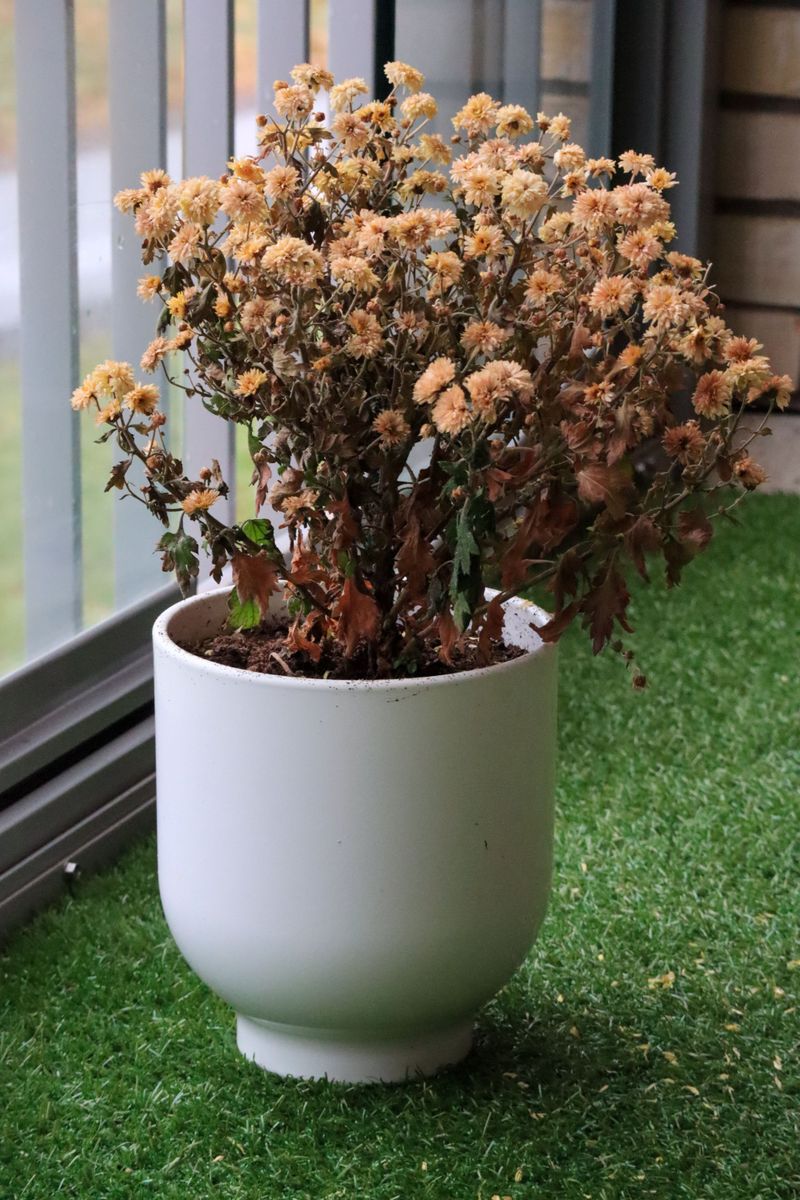
Tidy gardeners, this one might sting a little. Cutting your mums down to the ground right after bloom feels neat, but it can lower their odds of returning. Leaving the old stems in place over winter is often the smarter move.
Those brown stems do quiet work. They catch snow and leaves, which add natural insulation around the crown. Several university extension programs recommend leaving the tops on through winter in colder regions.
Research has backed this up. Studies on hardy mums have found better winter survival when stems were left standing instead of cut back in fall. It’s one of those rare cases where doing less really helps.
Wait until spring, when you spot fresh green shoots at the base. Then trim the old stems down to just above the new growth. Clean, sharp pruners make the job quick.
During summer, a different kind of trimming helps. Pinching back stem tips a few times before early July keeps plants bushy and full of flower buds. Stop by around the Fourth of July so buds can form in time for fall.
Faded stems also offer shelter for some beneficial insects over winter. A slightly messy bed in January can mean a healthier garden by June, which seems like a fair trade to me.
7. Smart Watering Carries Your Mums From Fall Into Spring

Water is a balancing act with mums, and the right amount changes with the seasons. New plants need steady moisture to spread roots. Established plants heading into winter need much less.
After planting, water deeply at the base whenever the top inch of soil feels dry. Deep soaking encourages roots to grow downward instead of staying near the surface. Shallow sprinkles do the opposite.
Aim the water at the soil, not the leaves. Wet foliage, especially in the evening, invites leaf diseases. A watering can or soaker hose makes this easy.
Fall dry spells deserve attention. A thirsty mum going into winter is more stressed than one with moist soil around its roots. Keep watering through a dry autumn until the ground begins to freeze.
Once plants are dormant and the soil is frozen, set the hose aside. Snow and winter rain usually handle the rest. Extra water at that point mostly adds to soggy conditions.
Potted mums you’re overwintering in a garage are an exception. Check them every few weeks, and give a small drink if the soil feels bone dry.
Put all seven pieces together, and you have a solid plan. Choose hardy plants, plant early, mind the soil and sun, mulch, wait to prune, and water wisely, and next spring may bring a very welcome surprise.