Georgia Gardeners Looking For Fall Color Should Know This Native Grass
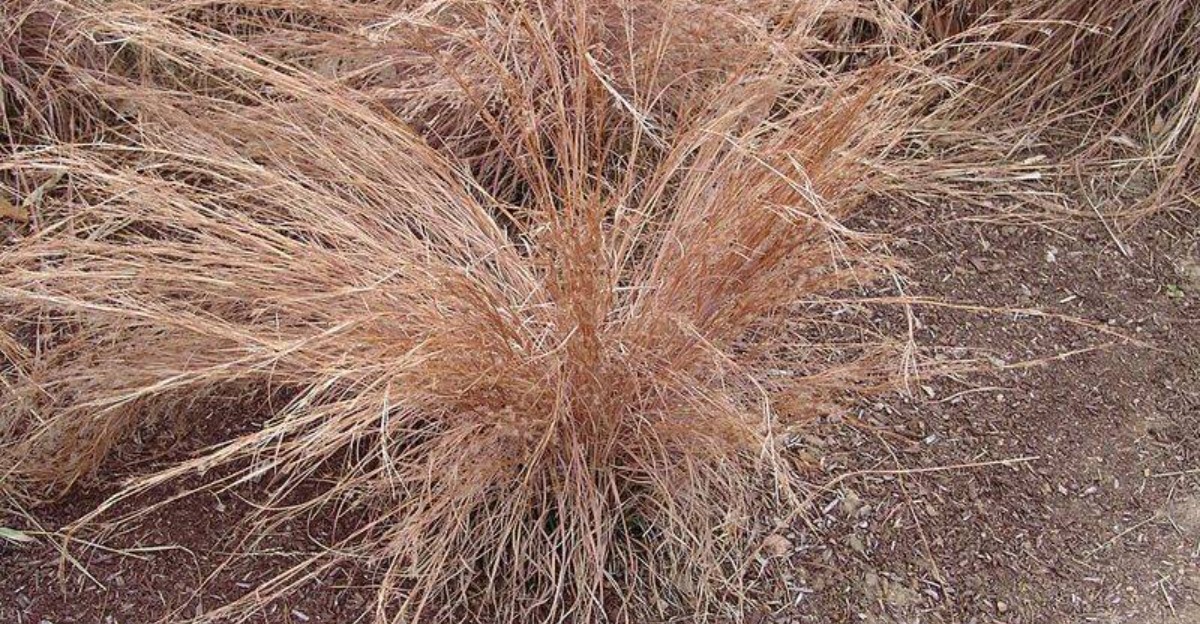
Flowers and trees usually get the attention when fall color arrives, but they are not the only plants changing the landscape. Native grasses can bring their own seasonal show.
One particular grass becomes especially noticeable as its summer green begins shifting into warmer autumn shades.
That transformation gives garden beds movement and color without relying on another flowering plant. It also feels naturally at home in Georgia landscapes.
If your fall garden seems flat after summer blooms fade, this is where a different texture can make a difference.
The plant keeps its appeal as the season moves forward, especially when sunlight catches its changing foliage. Its graceful shape adds interest without overwhelming nearby plants.
Look beyond flowers this fall, and you may find the missing color in an unexpected place.
1. Blue Green Leaves Begin Changing Color As Fall Arrives
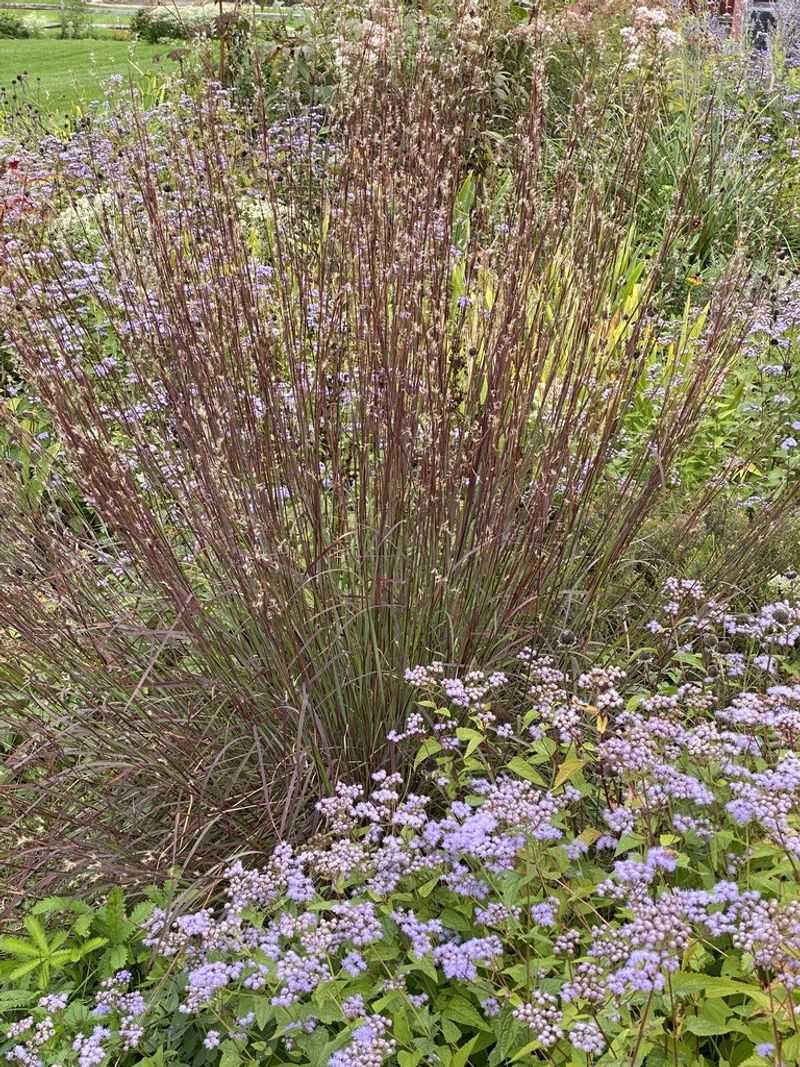
Watch a clump of little bluestem in late September and the change sneaks up on you. Blades that looked cool and blue all summer start picking up bronze along the edges.
Cooler nights seem to trigger most of the shift, though timing varies from year to year depending on weather.
In north Georgia, that turn often begins earlier than it does closer to the coast, sometimes by a couple of weeks. Gardeners in warmer counties may wait until mid October for full color.
The blue green summer tone is worth appreciating on its own, since few native grasses hold that shade so well.
Morning light makes the contrast easier to see, especially when older leaves still carry green while new tips have already flushed rust.
Plants growing in richer soil sometimes stay green longer, which can delay the display slightly.
Fluffy white seed heads appear around the same stretch, and they catch light in a way that makes the whole clump look lit from within. Backlighting from a low sun does most of that work.
Planting where afternoon light hits from behind gives you the best view of both stages.
Color intensity differs between plants, so buying two or three from the same nursery batch does not guarantee identical results.
2. Little Bluestem Is The Native Grass Behind This Fall Display
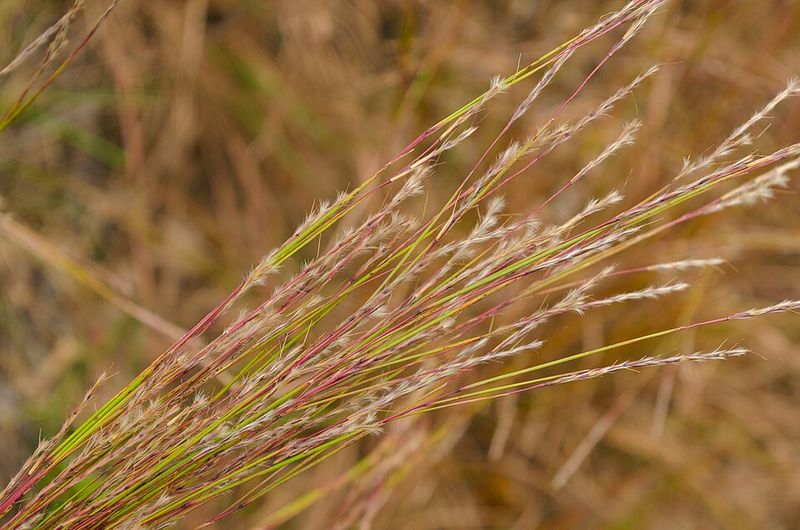
Schizachyrium scoparium is the botanical name, and it belongs to the prairie and open woodland world rather than the flower border. Nurseries usually label it little bluestem, sometimes beard grass.
Height generally lands between two and four feet, seed heads included, though soil and moisture push that number around.
Clumps stay tight instead of running, so it does not spread by underground stems the way some ornamental grasses do. Seedlings can pop up nearby, which most gardeners consider a bonus.
It occurs naturally across much of Georgia, showing up along power line cuts, sandy roadsides, and old fields.
Because it evolved here, it handles the local swing between soggy spring weeks and dry August stretches without much fuss.
Several named selections exist, including forms bred for stronger blue color or better upright habit. Straight species plants tend to be cheaper and vary more in appearance.
Your Georgia Garden Changes Every Week. Your Plan Should Too.
Gardening in Georgia changes quickly throughout the season. Every Friday you’ll receive a simple weekly plan showing exactly what to plant, prune, fertilize, harvest, and protect so you never miss the right timing.
Anyone building a meadow style planting will find it pairs well with goldenrod, asters, and coneflower.
Skippers and other small butterflies use the foliage as a larval host, and sparrows work the seed heads through winter.
Buy plants in spring if possible, since a full growing season helps roots settle before the first cold snap.
Container grown stock transplants more reliably than divisions taken from established clumps.
3. Reddish Brown Foliage Brings Warm Color To Garden Beds
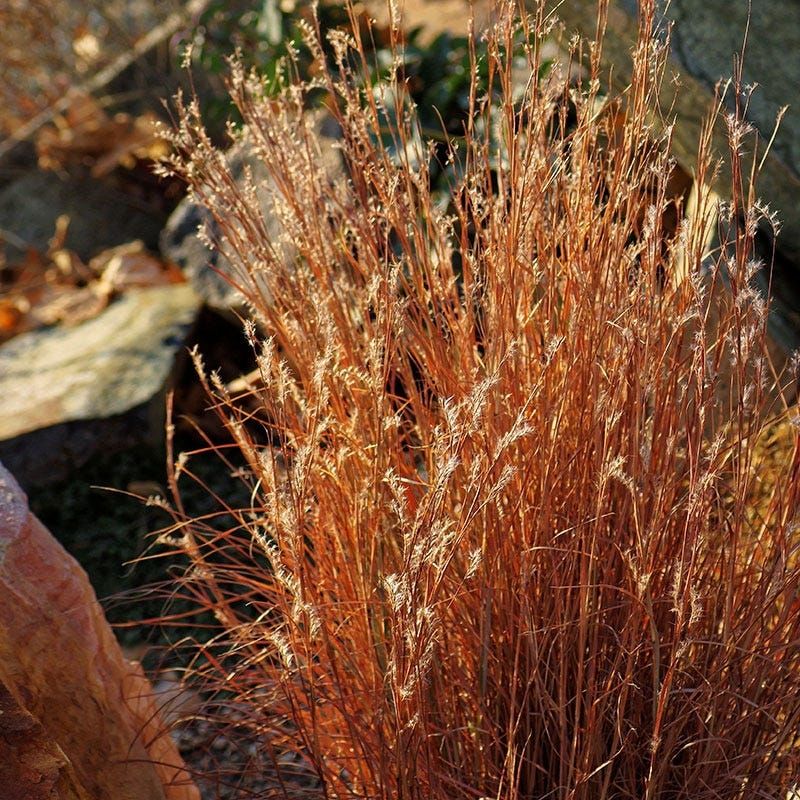
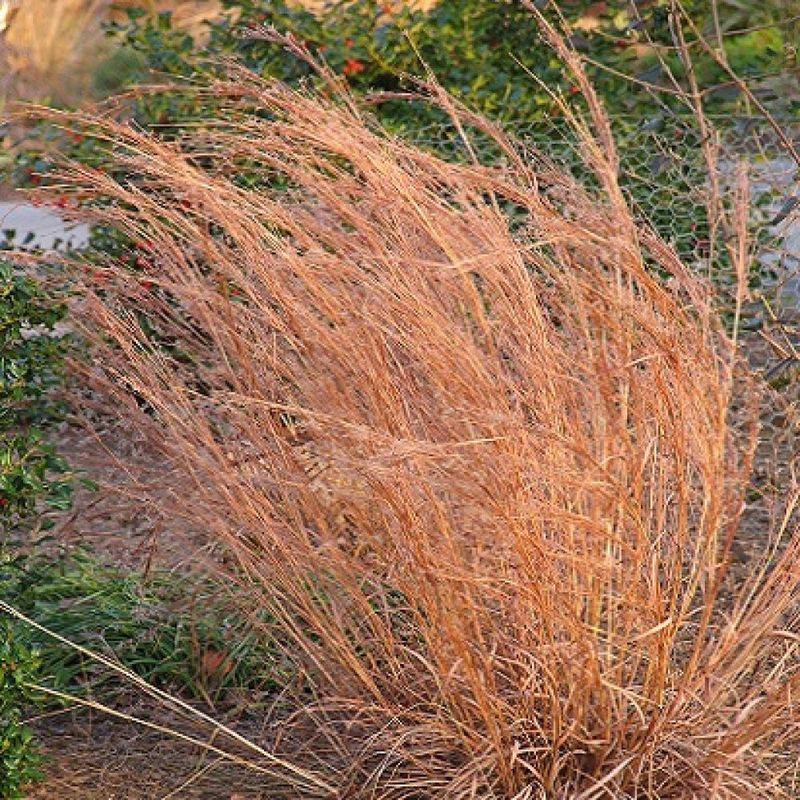
Copper, rust, mahogany, and orange all show up in the same clump once fall settles in. Photographs rarely do it justice because the color shifts with the angle of the light.
That warm tone holds through winter in most cases, fading slowly rather than dropping away.
Placement matters more than people expect. Set the grass against something dark, like a holly or a wooden fence, and the color reads twice as strong.
Pale gravel or light stone tends to wash it out.
Mass plantings look better than single specimens for this reason, since a group of five or seven creates a solid band of warm color.
Spacing around eighteen to twenty four inches apart usually lets clumps touch without crowding.
Combining it with late blooming asters gives you purple against copper, a pairing that works well in Georgia beds through October and November.
Ornamental peppers, dwarf conifers, and evergreen groundcovers also hold their own beside it.
Wind adds movement that static plants cannot match, so open spots near a walkway or driveway show it off.
Color depth varies with the season, and a very wet autumn can mute the display somewhat.
Even in an off year, the grass still turns tan and keeps structure standing through cold months.
4. Full Sun Helps This Grass Grow At Its Best
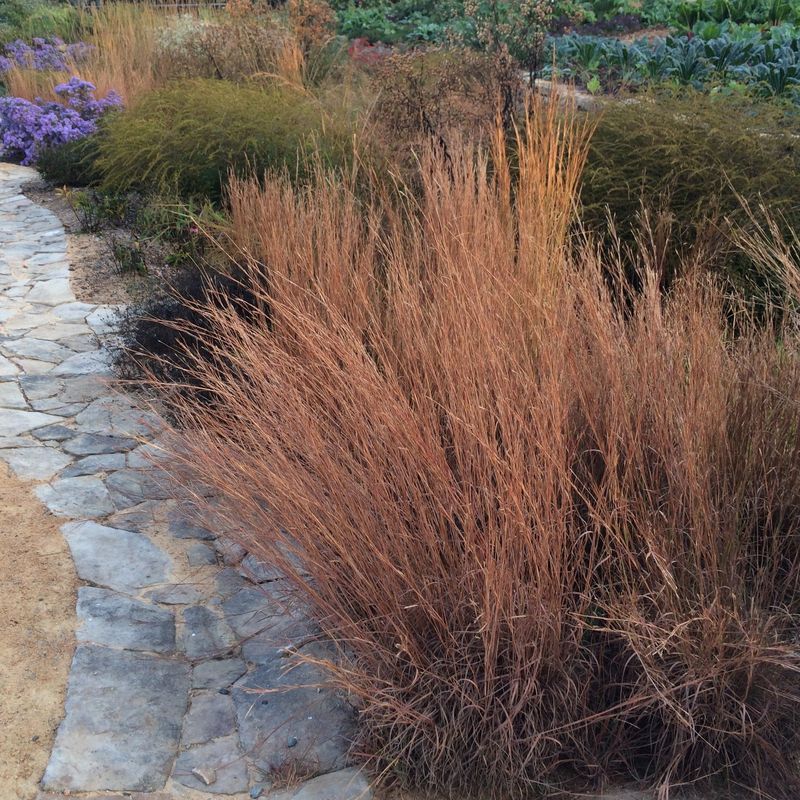
Shade is the fastest way to ruin a little bluestem planting. Clumps grown under trees flop outward by midsummer and look tired long before fall.
Six hours of direct sun is a reasonable minimum, and eight or more produces sturdier, more upright growth.
South and west facing beds usually work well. Spots along a driveway or against a sunny fence often suit it better than a mixed border under high canopy.
Gardeners across Georgia deal with heavy tree cover in older neighborhoods, which limits where this grass will thrive.
Morning sun alone tends not to be enough, since afternoon light drives much of the growth.
Flopping can also come from too much fertilizer or overly rich soil, so shade is not the only culprit worth checking.
Heat rarely bothers it. Even during the worst July stretches, established plants stay upright and green without supplemental water in most soils.
Root systems run deep, which explains a lot of that toughness.
New transplants still need regular water through the first summer, roughly once a week when rain does not cover it.
After the first year, watering can usually stop except during extended drought.
Trimming back nearby shrubs sometimes opens enough light to save a struggling clump before moving it becomes necessary.
5. Dry Well Drained Ground Suits It Better Than Wet Soil
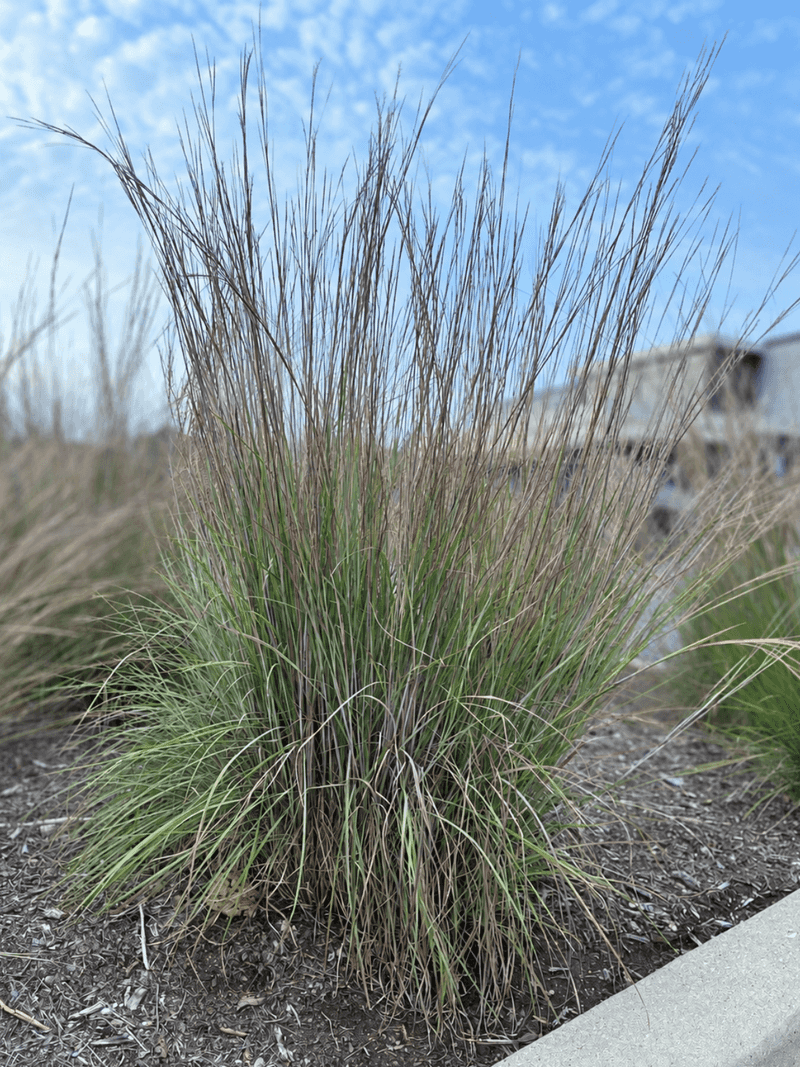
Wet feet cause more trouble for little bluestem than any pest ever will. Soggy ground through winter is especially hard on the crown.
Slopes, berms, and raised beds give it exactly what it wants.
Heavy red clay is common across much of Georgia, and it holds water longer than this grass prefers. Amending with grit or planting slightly high can help drainage in those spots.
Avoid low areas where rain collects after storms, even if they dry out quickly in summer.
Irrigation zones cause problems too, since regular sprinkler water keeps soil wetter than the plant needs.
Placing it outside the spray pattern usually solves that without much effort.
Sandy soils in the southern part of the state suit it beautifully, and plants there often show stronger fall color. Drier conditions seem to sharpen the reds and coppers.
Mulch should stay thin and pulled back from the base rather than piled against the crown.
Rock gardens, parking strips, and gravel edges all make reasonable homes.
Container growing works as long as drainage holes stay open and the mix leans gritty.
Plants that decline over a wet winter often recover if moved to a drier spot in spring, though results depend on how long the roots sat saturated.
6. Poor Soil Does Not Stop This Tough Native From Growing
Skip the compost. Little bluestem actually performs better in lean ground than in soil loaded with organic matter.
Rich beds encourage floppy growth and weaker fall color.
Roadside banks, old pastures, and rocky ground all support healthy stands without any human help. That should tell you something about its needs.
Fertilizer is rarely necessary, and nitrogen in particular tends to push soft, leggy stems.
Gardeners who have battled clay hardpan in Georgia yards often find this grass handles those spots better than most perennials.
Compacted areas near sidewalks or driveways are worth trying before hauling in truckloads of soil.
Deep roots break through tough layers over a few seasons and gradually improve the ground around them. Erosion control is one practical result on sloped sites.
It also competes reasonably well with weeds once clumps fill in, though it will not stop aggressive vines on its own.
Weeding around young plants during year one still pays off.
pH tolerance is wide, covering acidic and neutral soils without special adjustment.
Skipping soil prep saves money, but drainage still needs attention since poor soil and wet soil are different problems.
Plants in tough conditions may stay shorter than the four foot range, which many gardeners actually prefer in smaller beds.
7. Wait Until Late Winter To Cut Back The Old Growth
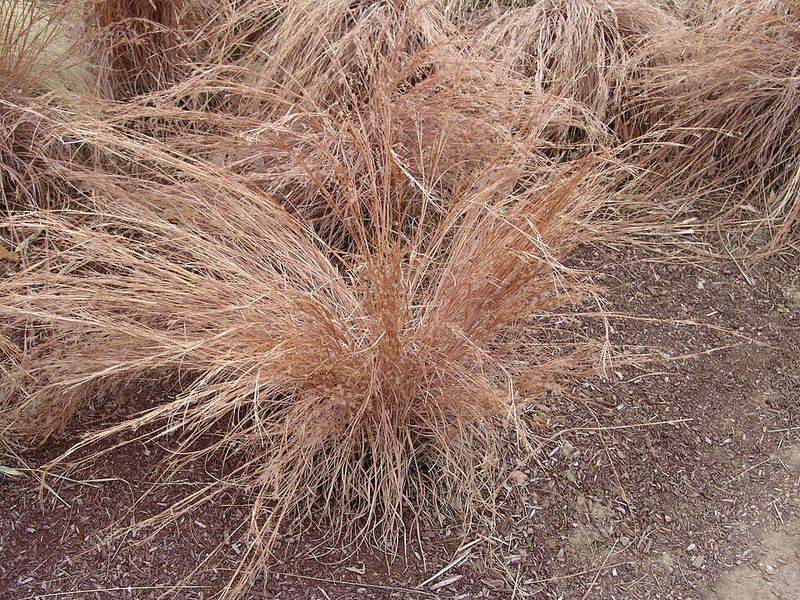
Resist the urge to tidy up in November. Standing foliage carries color through winter and gives small birds cover during cold spells.
Late February into early March is generally the right window for cutting.
Look for the first hints of green at the base before you start. Cutting too early leaves bare soil for weeks longer than necessary.
Leave roughly four to six inches of stubble rather than shearing to ground level.
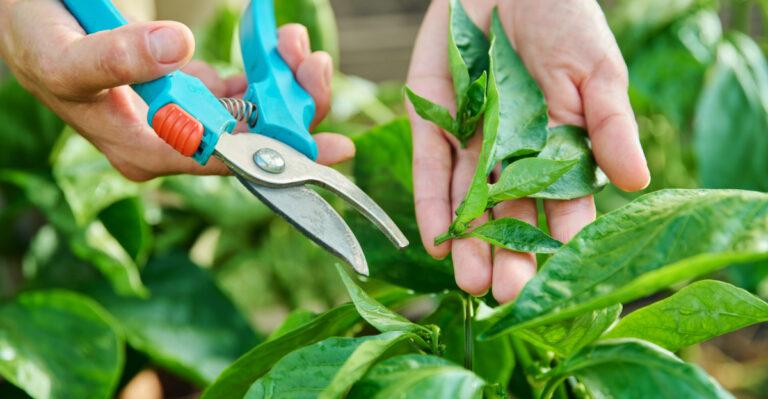
Hand pruners work fine for a few clumps, while hedge shears speed things up in larger plantings.
Winter interest is one of the strongest arguments for this grass in Georgia landscapes, especially when snow or frost outlines the seed heads.
Cut material can go straight into a compost pile or be chopped as mulch. Some gardeners leave a small pile nearby for a few weeks so overwintering insects can move out.
Division works best right after cutting, when clumps are dormant but roots are waking up.
Older plants sometimes open in the middle after several years, and splitting them restores the shape.
Skipping the cutback entirely leads to a scruffy mix of old and new growth by May.
Timing shifts a bit with elevation, so mountain gardeners may wait an extra week or two.