Why Bald Eagles In Georgia Start Preparing Their Nests In Fall
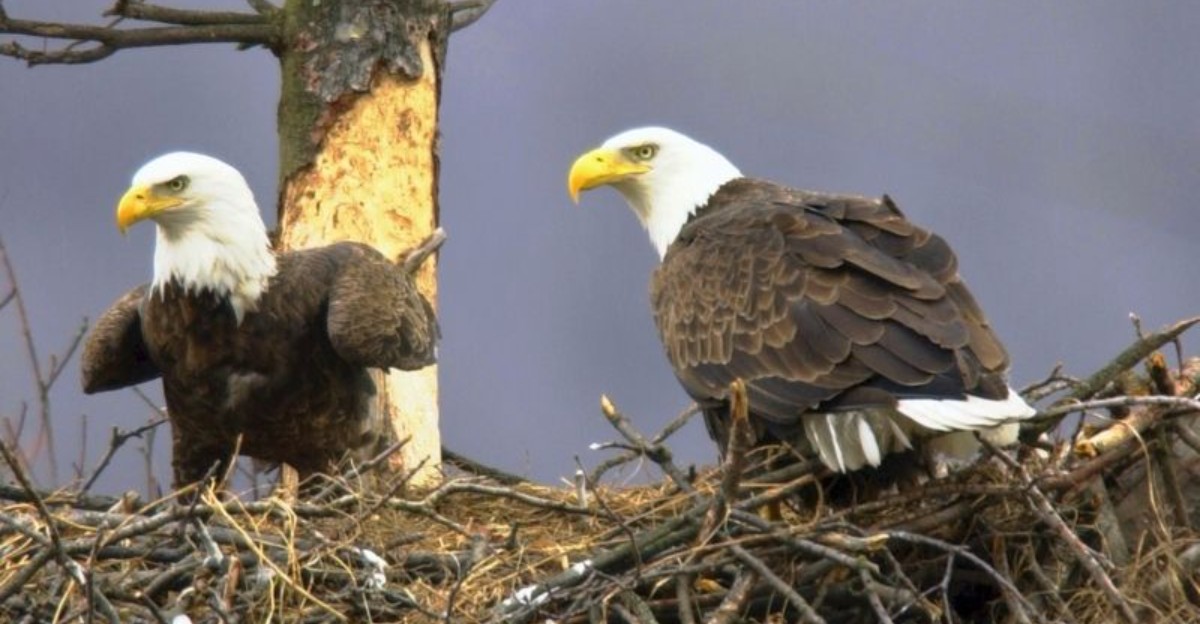
Bald eagles carrying sticks across a gray October sky can look out of place to anyone who links nesting with spring.
Many pairs in coastal Georgia and near large lakes start repairing old nests weeks before the weather turns cold. Some return to the same tall pine year after year, adding fresh material each fall.
Nests built up over many seasons can grow taller than a person and weigh well over a thousand pounds.
Their schedule runs differently from many backyard birds, and the timing is far from random.
Large nests become easier to spot once leaves drop and branches open up. Keep your distance if you find one, since eagles may abandon nests when disturbed early on.
Pairs adding sticks through late fall offer an early look at a season most backyard birdwatchers never notice.
1. Egg Laying Begins As Early As November So Nests Need Work Now
Calendars work differently for southern eagles. In Georgia, bald eagle nesting activity usually picks up in fall, and some pairs lay eggs as early as November.
Most clutches in the state show up between late November and early February, though timing can shift from pair to pair.
Eggs need a safe, sturdy place to sit, so the building and repairs have to happen first. A pair that waits too long could end up laying in a nest that is not ready.
That is why you may notice eagles carrying sticks in October or even late September.
Courtship also plays a part during these weeks. Pairs often perch close together, call to each other, and fly near the nest tree more often than they did in summer.
Nest work and courtship seem to go hand in hand, helping a pair settle back into its routine.
If you live near a lake or river with known eagles, early fall is a good time to start paying attention. Use binoculars from a public spot, like a boat ramp or park, rather than walking toward the tree.
Keep a simple notebook with dates of stick carrying, perching, and calling.
Over a few seasons, you may notice your local pair follows a fairly steady schedule, though weather and food supply can nudge things earlier or later in some years.
2. Returning Pairs Often Reuse The Same Nest For Several Years
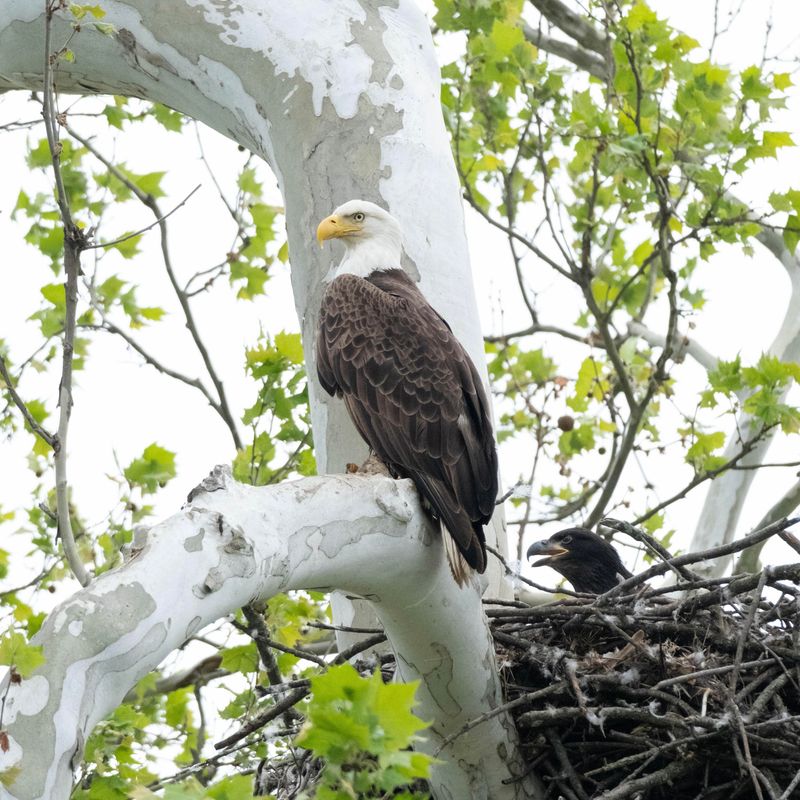
Old nests carry a lot of value for eagles. Instead of starting from scratch each year, established pairs frequently return to the same nest and fix it up.
Bald eagles are known to stay with the same mate for years, and many pairs stick with one territory too.
Reusing a nest saves time and energy. Much of the base is already in place, so the pair can focus on adding fresh layers and reshaping the cup where eggs will sit.
Some pairs keep more than one nest within their territory and switch between them from year to year.
Storms, falling limbs, or a weakened tree can push a pair to move to a new site. When that happens, building a nest from the ground up can take weeks of steady work.
Your Georgia Garden Changes Every Week. Your Plan Should Too.
Gardening in Georgia changes quickly throughout the season. Every Friday you’ll receive a simple weekly plan showing exactly what to plant, prune, fertilize, harvest, and protect so you never miss the right timing.
Across Georgia, wildlife staff track known nest sites through surveys, and many are used for several seasons in a row.
For backyard watchers, that habit is good news. A nest you spotted last winter may be active again this fall, though nothing is certain.
Check the site from a distance in October and November and look for fresh green sprigs or pale new sticks along the rim.
Those small details often signal that the owners are back and getting ready for another season.
3. Fresh Sticks Add Bulk To Nests That Can Reach Six Feet Across
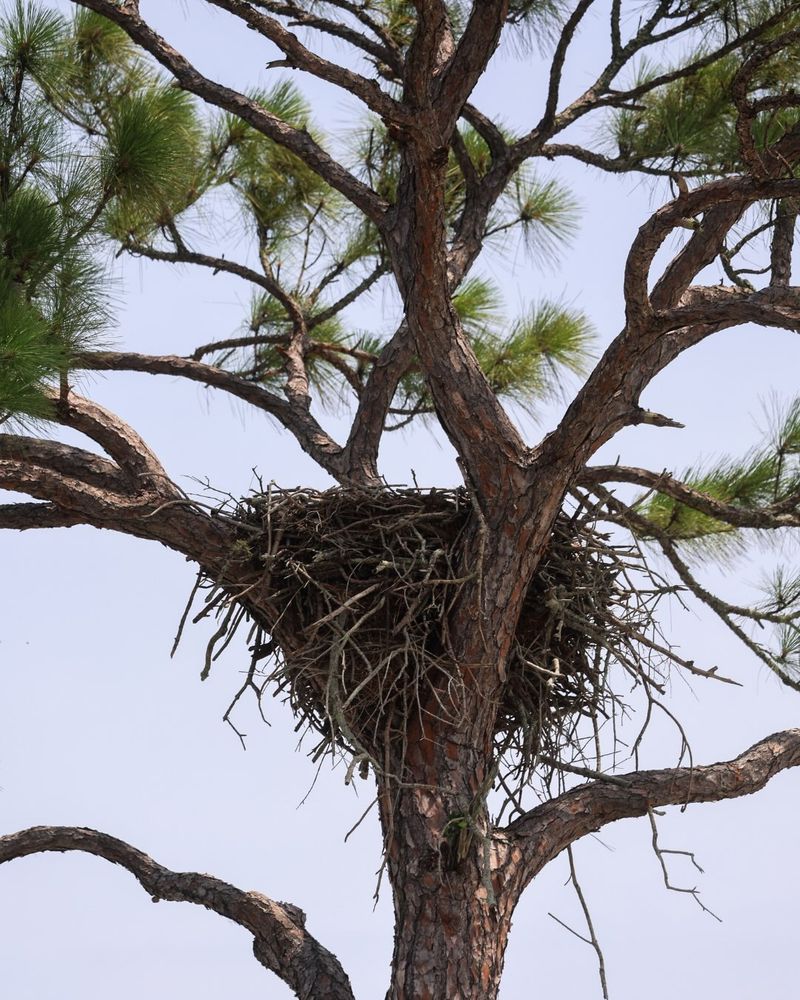
Picture a stick pile wider than a kitchen table, perched high in a pine. Bald eagle nests are among the largest built by any North American bird.
Typical nests run around five to six feet across, and older ones can grow even bigger.
Size comes from years of adding material. Each season, a pair brings in new sticks to strengthen the outer frame and replace pieces lost to wind or weather.
Softer materials go into the center to form a cushioned cup.
Eagles often line that cup with grasses, moss, pine needles, or similar soft plant matter. The lining helps cushion the eggs and may help keep them steady while the adults take turns incubating.
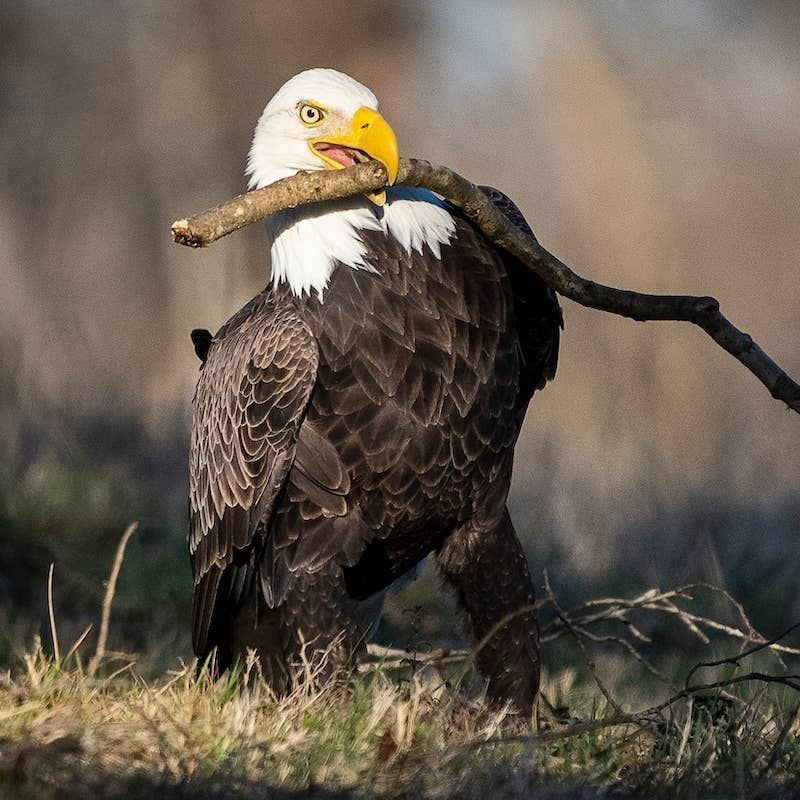
Watching an eagle snap a branch from a tree or grab one off the ground is a memorable sight.
In Georgia, many nests sit in tall living pines near water, which can offer strong limbs and a clear view of the surroundings. Over time, all that weight matters.
Very heavy nests can sometimes break supporting limbs or fall during strong storms.
If you notice a well-known nest has collapsed, there is no need to step in. Pairs often rebuild nearby, and state wildlife staff may want to hear about the change if the site is part of their records.
4. Coastal Pairs Can Start Nesting Up To Two Months Before Northern Ones
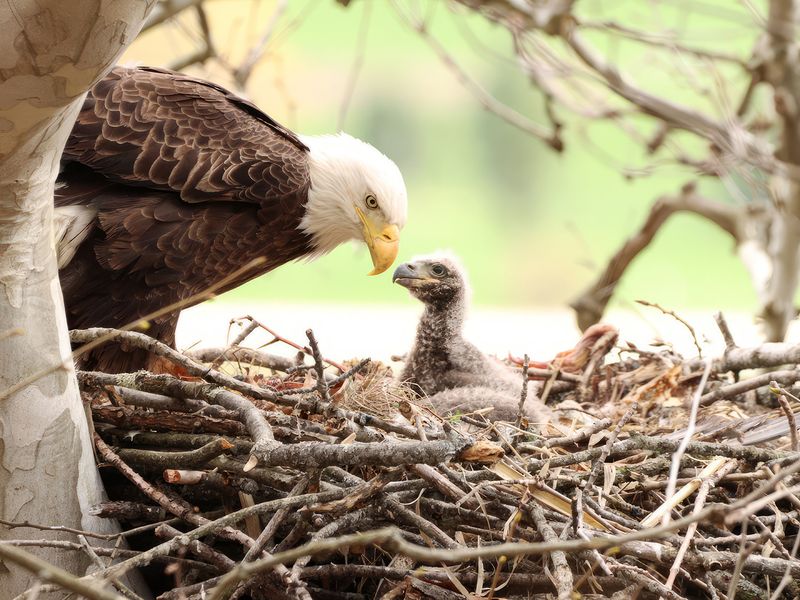
Location shapes timing more than people expect. Eagles nesting near the coast and in the warmer south of the state tend to get started earlier than those in the north.
Wildlife observers often report that coastal pairs can begin roughly one to two months ahead of pairs in northern regions.
Milder winters likely play a role. Warmer areas may offer steadier food and less harsh weather during incubation, though each pair still follows its own pattern.
Exact dates vary year to year, so treat any range as a general guide rather than a fixed rule.
Georgia stretches from salt marshes to mountain foothills, so eagle activity does not look the same everywhere. A pair along the coast might be sitting on eggs while a pair near a northern reservoir is still tidying its nest.
Both patterns are normal for their area.
Watchers can use that difference to their advantage. Coastal visitors may want to look for nest activity starting in early fall.
Folks farther north might see the busiest building weeks a bit later, often closer to late fall and early winter.
Local birding groups and nature centers often share sighting reports that can help you narrow down timing near your home.
5. Coots And Other Waterfowl Become Key Food During Nesting
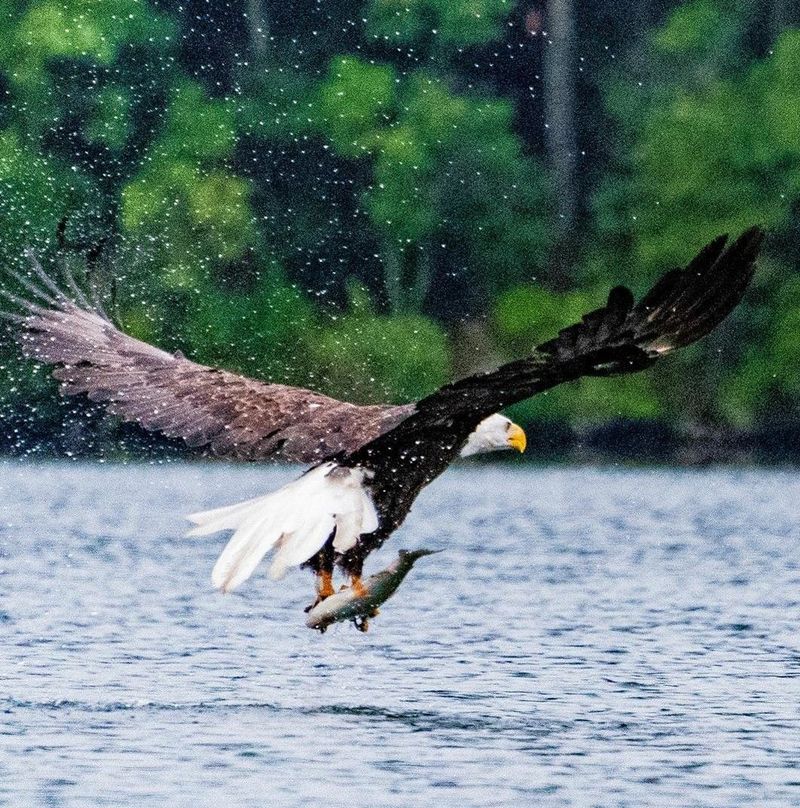
Winter brings a moving buffet to southern lakes. Ducks, coots, and other waterfowl migrate south, and plenty of them spend the colder months on reservoirs and wetlands across the region.
For eagles raising a family, that extra food source can be a real help.
Bald eagles eat a wide range of foods. Fish make up a big part of their diet, but they also take waterfowl, scavenge carcasses, and sometimes steal meals from ospreys or other birds.
American coots, which gather in large flocks on open water, are a common target in some areas.
Timing lines up well for southern nesters. Eggs and young chicks arrive during months when wintering waterfowl are often present, giving adults more options to feed growing eaglets.
Food supply can vary with weather, water levels, and how many birds arrive in a given year.
Lakes in Georgia that hold big rafts of coots can be great places to watch eagles hunt. Bring binoculars or a spotting scope and scan the open water rather than only the treetops.
Watch for coots suddenly bunching together or splashing, which can mean an eagle is circling nearby.
Patience pays off, since hunting attempts can be quick and easy to miss.
6. State And Federal Protections Cover Eagles And Their Nests
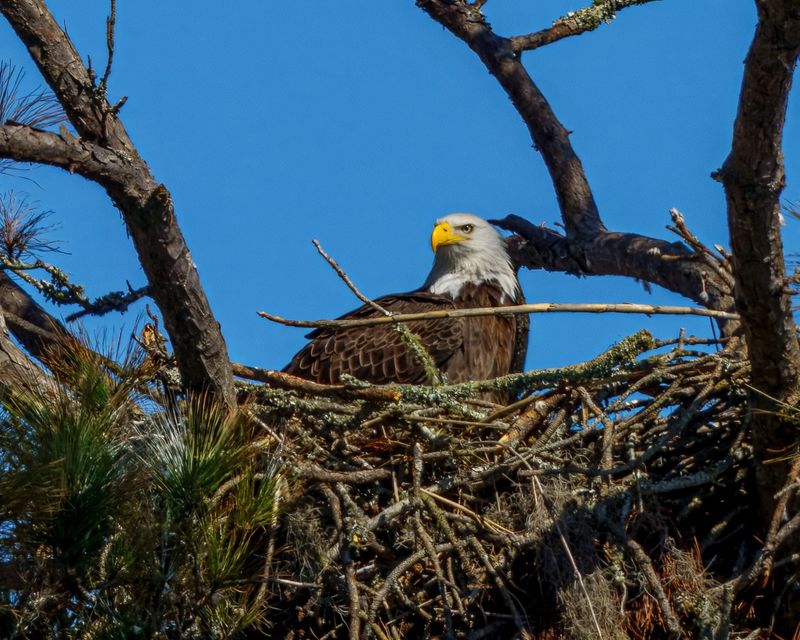
Recovery did not happen by luck. Bald eagles were once rare in the Southeast, and legal protection played a large part in their comeback.
Today, the federal Bald and Golden Eagle Protection Act still guards these birds even though they are off the endangered species list.
That law makes it illegal to disturb eagles or to take them, their eggs, or their nests without a permit. The Migratory Bird Treaty Act adds another layer of federal protection.
Disturbance can include actions that cause a pair to leave its nest or stop caring for eggs or young.
Georgia also protects bald eagles under state law, and the state wildlife agency monitors nests through regular surveys. Penalties for violations can be serious at both the state and federal levels.
Protection usually extends to nest trees, even when a nest seems unused for a season.
Landowners with a nest on their property have practical options. The U.S.
Fish and Wildlife Service offers guidelines on buffer distances for activities like clearing, building, or timber work.
Reaching out to the state wildlife agency before starting a project near a nest is a smart move.
Staff can often help you plan work around the nesting season and avoid problems for both you and the birds.
7. Keeping A Safe Distance From Eagle Nests Helps Prevent Disturbance
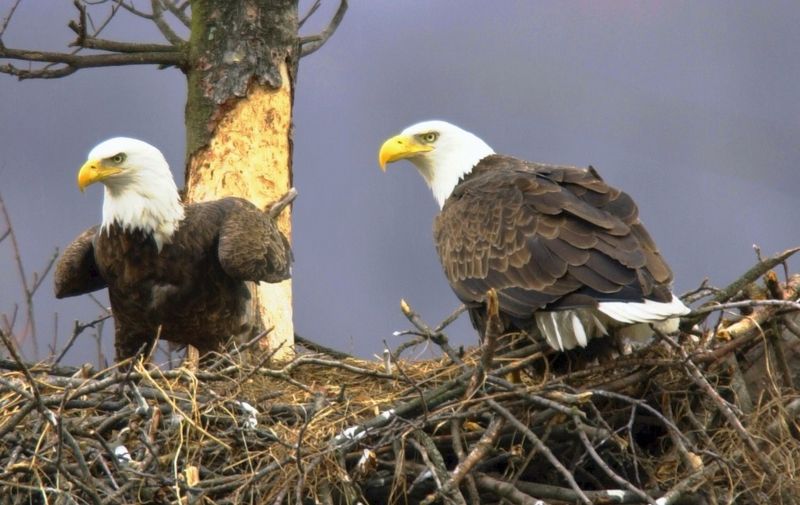
Getting close is tempting, but distance is the kindest thing you can offer. Nesting eagles can be sensitive to people, especially early in the season.
A pair that feels pressured might leave the nest for long stretches, which can expose eggs to cold or predators.
Federal guidelines generally suggest staying about 330 feet away from an active nest, and farther in open areas with a clear line of sight. Some situations call for even more space.
Loud noise, drones, and lingering near the tree can all cause stress.
Watch the birds for clues. If an eagle stands up, calls repeatedly, or flies off as you approach, you are likely too close and should back away slowly.
Fall and winter in Georgia are busy nesting months, so extra care matters during this time.
Good gear makes distance easy. Binoculars or a spotting scope let you see details like stick carrying and feeding without stepping closer.
Photographers can use long lenses and stay inside a car, which often acts like a blind.
Keep pets leashed near shorelines, skip drone flights near nests, and avoid sharing exact nest locations online. Small choices like these help eagles raise their young while letting everyone enjoy the show from a respectful spot.