Georgia Native Plants That Fill Soggy Low Spots In Your Yard While Looking Intentional All Season
Every yard seems to have that one spot where water lingers longer than it should. It may stay damp after heavy rain, collect runoff from nearby areas, or remain soft underfoot long after the rest of the yard has dried out.
These areas can be frustrating because many common plants struggle to grow there.
Over time, those soggy spaces often become an eyesore. Bare patches, weak growth, and constant replanting can make them feel like a problem that never quite gets solved.
Many homeowners eventually stop trying to improve the area and simply learn to work around it.
That is starting to change in many Georgia landscapes. More gardeners are discovering that certain native plants are naturally suited to wetter conditions.
Instead of fighting those low spots, they are using plants that thrive there and help the space feel like a purposeful part of the yard from season to season.
1. Soft Rush Stays Upright Even In Saturated Soil
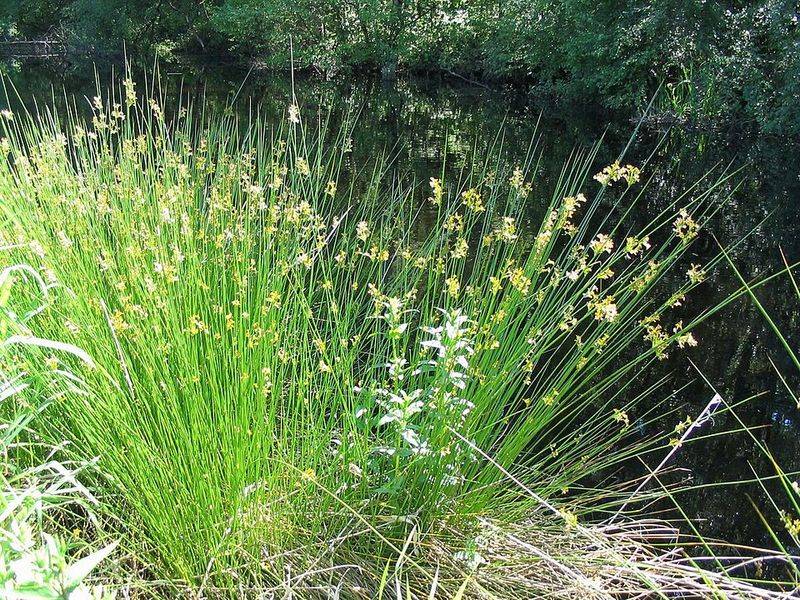
Standing water does not bother Soft Rush one bit. Juncus effusus grows naturally along stream banks, pond edges, and wet meadows across the Southeast.
Its round, dark green stems shoot straight up and stay tidy even when the ground beneath is completely waterlogged.
Soft Rush reaches about two to four feet tall depending on light and moisture levels. Full sun produces the densest clumps, but partial shade works fine too.
Once established, it needs almost no maintenance beyond occasional division every few years to keep the clump from spreading too wide.
Small brownish flower clusters appear near the stem tips in summer. They are subtle, but up close they add a quiet, interesting texture.
Birds, especially wrens and sparrows, use the dense stems for nesting material and cover during colder months.
Soft Rush works well planted in groups of three or more for a naturalistic look. Spacing clumps about eighteen inches apart gives each plant room to fill out without overcrowding.
It pairs beautifully with Blue Flag Iris and Cardinal Flower for a layered wet garden design.
In heavy clay soils common across many parts of the region, Soft Rush performs reliably where turf grass fails completely. It stays evergreen in mild winters, giving the wet area structure and green color even in the coldest months of the year.
2. Blue Flag Iris Brings Spring Color To Poorly Drained Areas
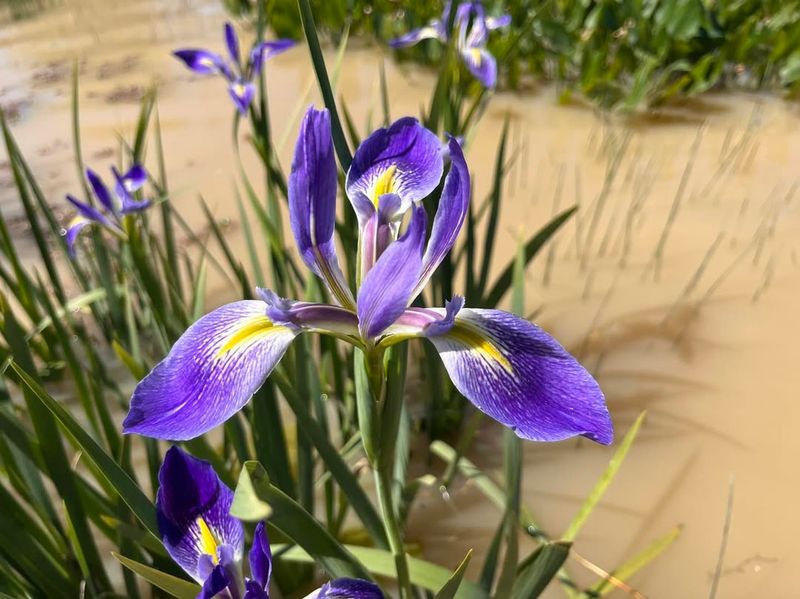
Nothing announces spring quite like Blue Flag Iris pushing up through wet, heavy soil. Iris virginica is a true native of the Southeast, found naturally along stream margins, swamp edges, and low-lying meadows.
Its violet-blue blooms with yellow and white markings are genuinely striking.
Blooms appear from late April through June depending on your location and weather patterns. Each flower lasts only a few days, but the plant produces multiple blooms per stem, extending the show.
After flowering, the sword-shaped foliage stays upright and attractive well into fall.
Blue Flag Iris handles standing water better than almost any other flowering perennial. Roots can sit in shallow water for extended periods without suffering.
Your Georgia Garden Changes Every Week. Your Plan Should Too.
Gardening in Georgia changes quickly throughout the season. Every Friday you’ll receive a simple weekly plan showing exactly what to plant, prune, fertilize, harvest, and protect so you never miss the right timing.
That makes it a solid anchor plant for the lowest, wettest part of a yard.
Plant it in full sun to partial shade. More sun generally means more flowers, but the foliage holds up well in shadier spots too.
Clumps spread slowly over time through rhizomes, gradually filling in the space around them without becoming invasive.
Pollinators love it. Bumblebees and several native bee species visit the flowers regularly during bloom time.
Hummingbirds occasionally stop by as well. Pairing Blue Flag Iris with Soft Rush or Golden Ragwort creates a layered spring display that looks completely intentional and holds up beautifully across the whole growing season.
3. River Oats Adds Movement Beneath Trees And Along Slopes
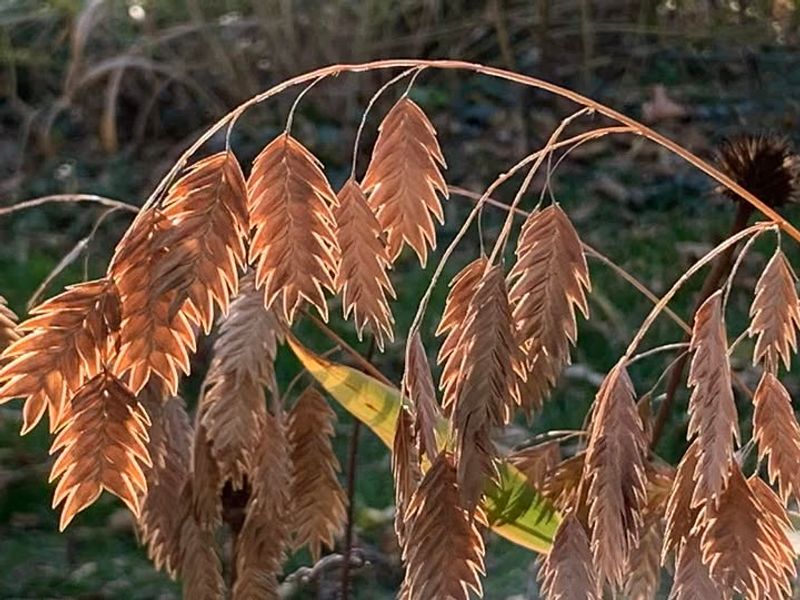
River Oats might be the most underused native grass in wet shade gardens. Chasmanthium latifolium handles conditions that most plants refuse: deep shade, soggy soil, and steep slopes where erosion is a constant concern.
It fills those tricky spots with genuine elegance.
Flat, oat-like seed heads dangle from arching stems and catch every breeze. They emerge green in summer, then shift to a warm copper-bronze as fall arrives.
That color holds through winter, giving the plant multi-season presence without any extra effort from you.
River Oats grows two to four feet tall and spreads steadily by seed. In ideal conditions, it can colonize a slope fairly quickly.
Planting it where you want natural coverage is smart; just be ready to pull seedlings that stray into unwanted areas if they start spreading beyond your target zone.
Shade tolerance is one of its biggest strengths. Under deciduous trees where little else grows, River Oats fills in without complaint.
It also handles the dry shade of summer after spring rains slow down, making it more adaptable than many moisture-loving plants.
Wildlife value is solid too. Birds eat the seeds through fall and winter.
Dense clumps provide ground-level cover for small animals. Paired with ferns or Wild Ginger, River Oats creates a layered woodland floor that looks completely natural and requires almost nothing from you once it settles in.
4. Swamp Milkweed Attracts Monarchs To Moist Garden Spaces
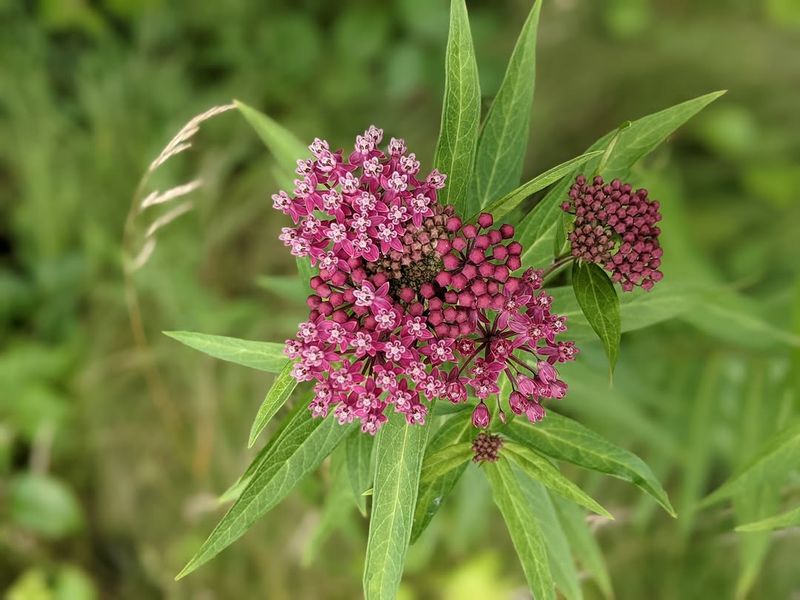
Monarch butterflies need milkweed to complete their life cycle, and Swamp Milkweed is one of the best options for wet yards. Asclepias incarnata grows naturally in marshes, wet meadows, and along stream banks.
It handles consistently moist to occasionally flooded soil without missing a beat.
Clusters of pink to mauve flowers bloom from June through August. Monarchs lay their eggs on the leaves, and caterpillars feed on the foliage through summer.
Other pollinators, including swallowtails, fritillaries, and native bees, visit the blooms constantly during peak season.
Plants grow three to five feet tall in full sun with adequate moisture. Stems are sturdy and upright, so they do not flop even in open, exposed areas.
Seed pods split open in fall to release silky-tailed seeds that drift on the wind, which adds another layer of seasonal interest.
Swamp Milkweed is a true perennial. It goes dormant in winter and returns reliably each spring from established roots.
Give it a full-sun location with consistently moist soil and it will reward you year after year with minimal input required.
Starting from transplants gives faster results than seed. Space plants about eighteen to twenty-four inches apart.
Once established, they handle summer heat well across the Southeast, making them a practical and ecologically valuable choice for any wet garden space that gets plenty of direct sunlight.
5. Cardinal Flower Stands Out With Bright Red Summer Blooms
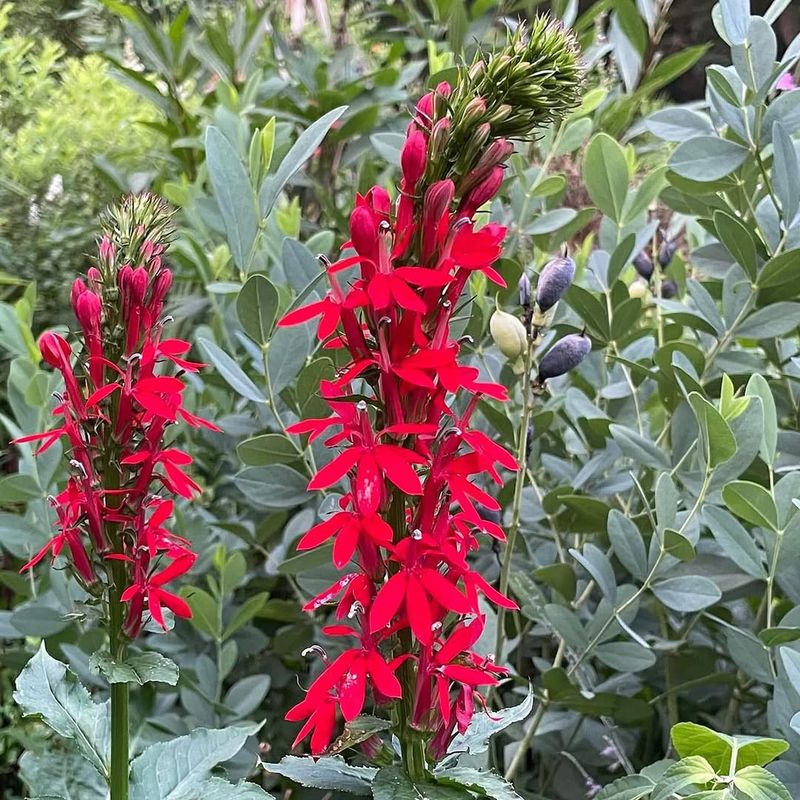
Few plants stop people in their tracks the way Cardinal Flower does. Lobelia cardinalis produces tall spikes of brilliant scarlet blooms that almost glow in shaded, moist garden spaces.
Hummingbirds find them irresistible, and the plant blooms right when hummingbirds need fuel most, late summer into early fall.
Cardinal Flower grows naturally along stream banks and in moist woodland edges across the Southeast. It prefers partial to full shade with consistently wet soil.
Full sun works too, but only if moisture stays consistent. Dry spells in sunny spots can stress the plant significantly.
Plants grow two to four feet tall. Flower spikes rise well above the basal foliage, making the blooms visible from a distance.
Individual flowers are tubular and perfectly shaped for hummingbird bills, which is not a coincidence since hummingbirds are the plant’s primary pollinator.
Cardinal Flower is a short-lived perennial, often behaving more like a biennial in some conditions. It self-seeds reliably, though, so established colonies tend to persist and even expand over time.
Leaving spent flower stalks in place allows seeds to drop naturally into surrounding soil.
Pair it with Blue Flag Iris or Swamp Milkweed for a pollinator-rich wet garden that blooms across multiple seasons. Together they cover spring, summer, and fall with color and wildlife activity.
Cardinal Flower is genuinely one of the most rewarding native plants you can grow in a moist, low-light spot.
6. Golden Ragwort Forms A Dense Ground Cover Over Time
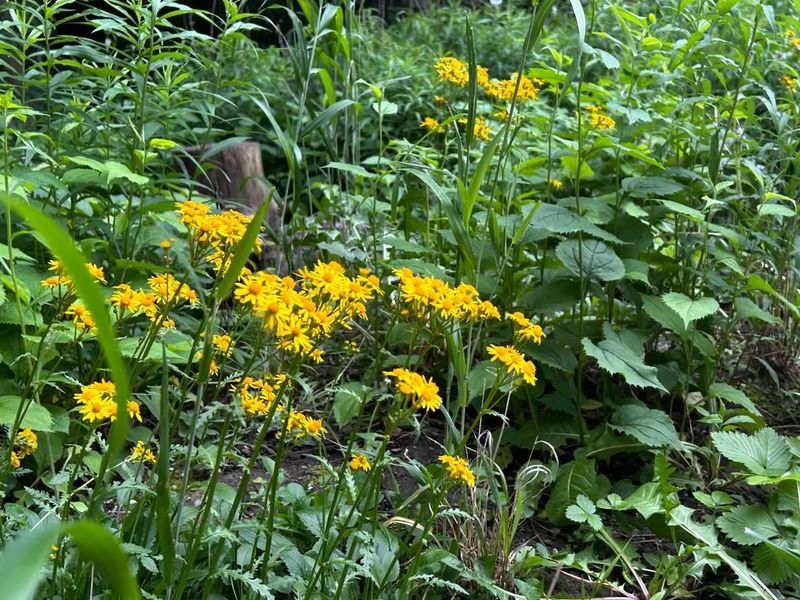
Golden Ragwort does something few plants manage: it covers ground aggressively in wet shade and still looks refined doing it. Packera aurea forms a low, spreading mat of dark green, heart-shaped leaves that stays attractive all year.
In early spring, bright yellow daisy-like flowers rise above the foliage on slender stems.
Bloom time runs from March through May depending on weather. Flowers are small but produced in large numbers, creating a cheerful yellow haze over the entire planting.
After blooming, the foliage thickens and continues suppressing weeds through summer, fall, and into winter.
Golden Ragwort tolerates wet clay, seasonal flooding, and heavy shade better than most ground covers. It spreads by both rhizomes and self-seeding, so a small initial planting can fill a large area within two to three seasons.
That spreading habit is actually a feature in wet low spots where you want coverage fast.
Native bees and small native flies visit the flowers during their spring bloom window. The plant is also a larval host for several native moth species, adding ecological value beyond just looking good.
Spacing transplants about twelve inches apart gives faster coverage than wider spacing. Once Golden Ragwort closes the canopy at ground level, weed pressure drops noticeably.
It pairs especially well with ferns, Wild Ginger, and Cardinal Flower for a layered shade garden that handles wet conditions with ease across Georgia and the broader Southeast.
7. Buttonbush Produces Unique Flowers Pollinators Visit Often
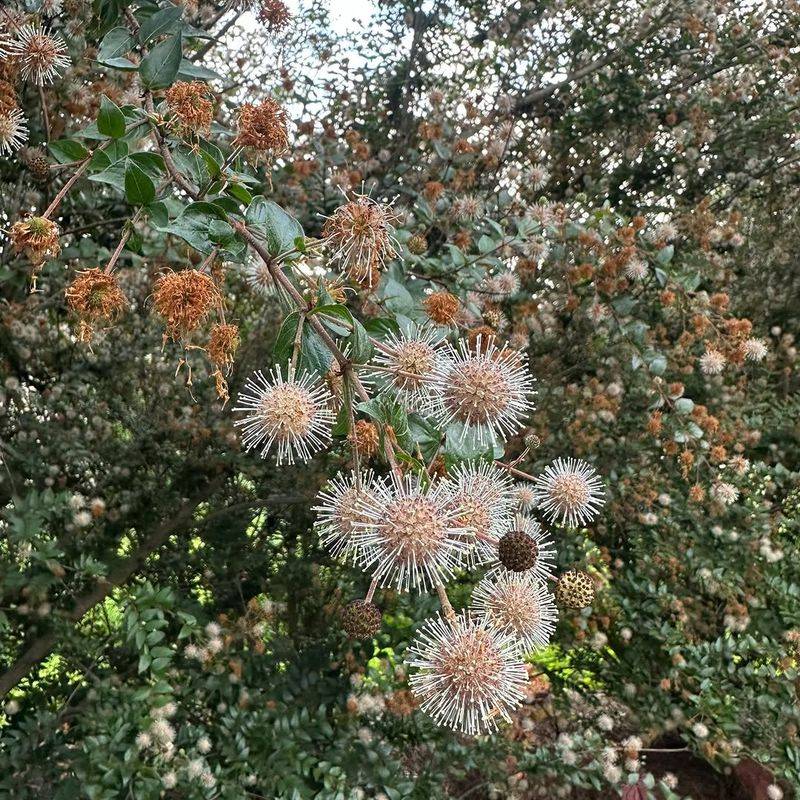
Buttonbush is one of those plants that makes people stop and ask what it is. Cephalanthus occidentalis produces perfectly round, white flower heads that look like tiny pincushions.
They appear in summer and attract an almost ridiculous number of pollinators, including bees, butterflies, and hummingbirds.
As a native shrub, Buttonbush can handle standing water for extended periods. It grows naturally along pond margins, swamp edges, and in low-lying floodplains.
If your wet spot is large and you need structural height, this plant delivers both presence and ecological function.
Mature shrubs reach six to twelve feet tall and wide depending on conditions. That size makes Buttonbush more of a landscape anchor than a filler plant.
Used at the back of a wet garden bed or along a property edge, it creates a natural backdrop for shorter plants in front.
Round seed heads follow the flowers in late summer and persist through fall. Waterfowl and shorebirds eat the seeds, so if your property is near water, you may attract more wildlife than expected.
The branching structure also provides nesting sites for several songbird species.
Full sun produces the best flowering, but Buttonbush tolerates partial shade reasonably well. Pruning is rarely necessary unless you want to control size.
Give it space to grow naturally and it rewards you with structure, flowers, and wildlife activity across most of the growing season without demanding much care at all.
8. Joe Pye Weed Brings Height To Areas That Stay Moist
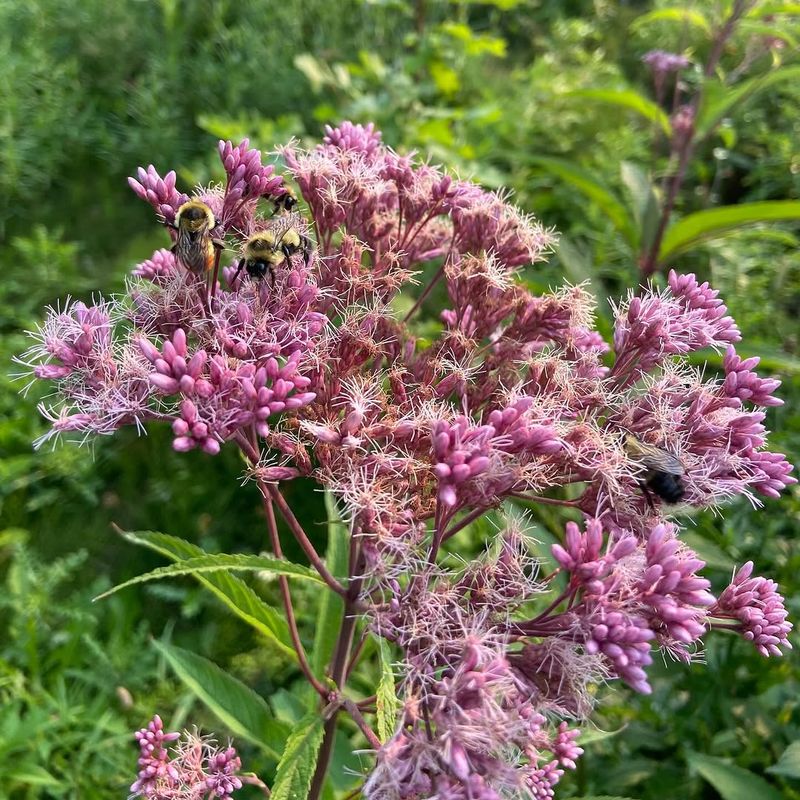
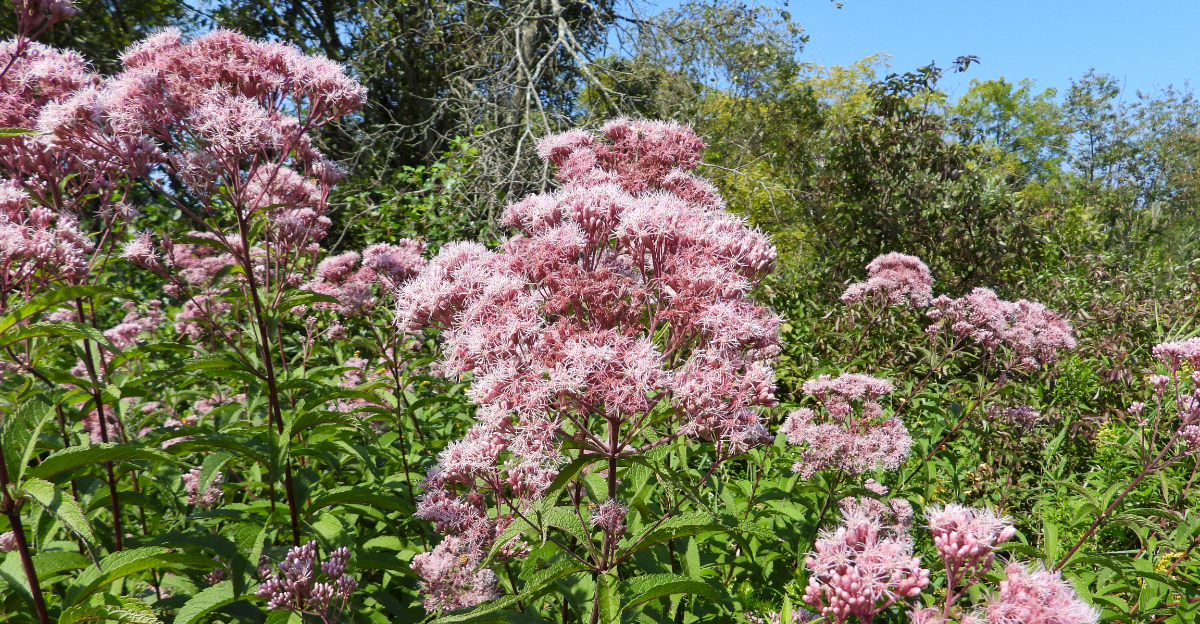
Joe Pye Weed earns its space in any wet garden with sheer presence. Eutrochium purpureum can reach five to seven feet tall in moist, fertile soil, and its large domed flower clusters in dusty pink-purple tones are impossible to miss from late summer into fall.
It looks bold and intentional.
Butterflies swarm it during bloom time. Swallowtails, fritillaries, and monarchs all visit regularly.
The nectar supply is generous, and the wide, flat flower heads give butterflies a stable landing platform, which is part of why so many species are drawn to it.
Joe Pye Weed grows best in full sun to partial shade with consistently moist soil. Rich, amended soil produces the tallest, most floriferous plants.
In leaner, wetter clay soils it still performs well, though plants may stay shorter and bloom slightly later in the season.
Stems are sturdy and rarely need staking even at full height. Whorled leaves line the stems from bottom to top, giving the plant a full, lush appearance even before it blooms.
After flowering, seed heads attract finches and sparrows through fall and into early winter.
Cutting stems back by half in late May encourages bushier growth and can reduce the final height if your space is limited. Leaving plants standing through winter provides food and shelter for birds.
Joe Pye Weed is a true workhorse for large wet areas across the Southeast, combining serious height with serious wildlife value all season long.