8 Georgia Plants That Handle Root Competition Under Mature Trees
Planting beneath a large tree often seems like a great idea until nothing wants to grow there. You bring home healthy plants, give them a good start, and still watch them struggle after only a short time.
It can be frustrating when every new attempt ends the same way and those shady spots never seem to fill in the way you imagined.
The challenge is not always the shade. Mature trees also compete for water and nutrients, making life much harder for many plants.
That is why some varieties fade while others settle in and continue growing with very little trouble.
Fortunately, there are plants that are well suited to these demanding conditions. In Georgia, choosing the right ones can turn those difficult spaces into some of the most attractive parts of your landscape.
The right match makes all the difference and saves plenty of frustration along the way.
1. Autumn Fern Stays Attractive In Dry Shade
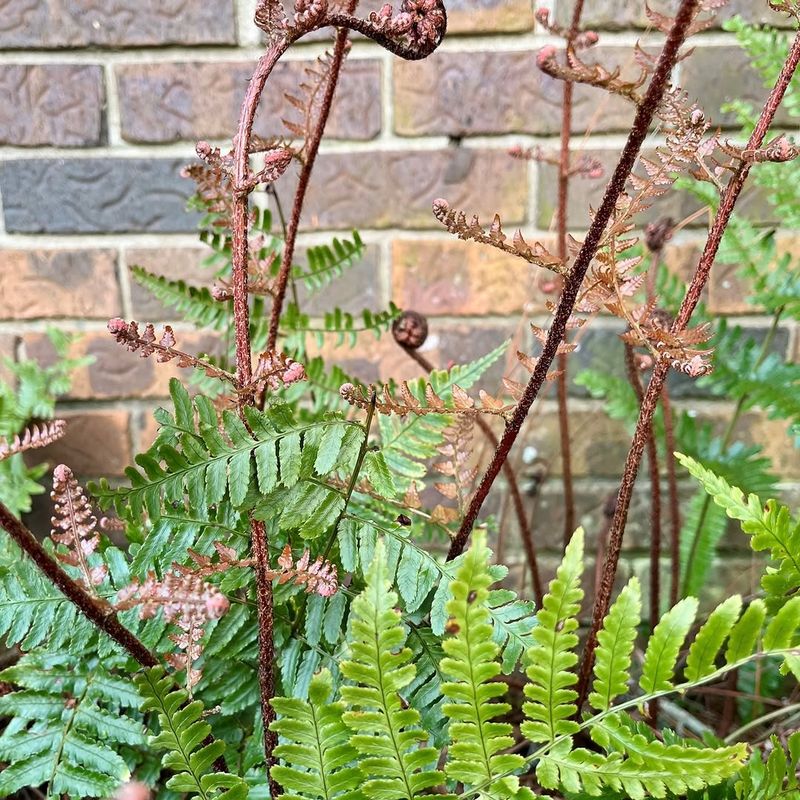
Copper-red fronds emerging in spring make Autumn Fern one of the most eye-catching plants you can grow in deep shade. Most ferns look plain and forgettable, but this one brings real color to spots that need it badly.
Autumn Fern handles root competition better than most ferns you will find at a nursery. It pushes through compacted, dry soil and keeps growing even when larger tree roots are pulling most of the moisture away.
Once it settles in, it rarely needs extra watering.
New growth starts out a warm copper or bronze color, then shifts to rich, glossy green as the season moves along. That color change keeps the planting looking fresh without any effort on your part.
In Georgia, Autumn Fern holds its fronds through most of the winter in milder zones. It behaves more like a semi-evergreen than a plant that completely disappears in cold weather.
That extended season of interest is a real bonus under trees where options are limited.
Plant it in groups of three or more for the best visual impact. Single plants tend to get lost under the canopy.
Spacing them about 18 inches apart gives each one room to spread without crowding.
Mulching around the base helps retain whatever moisture is available. Keep the mulch a few inches back from the crown to avoid rot issues.
Established clumps need very little ongoing attention after the first growing season.
2. Oakleaf Hydrangea Handles Established Tree Roots
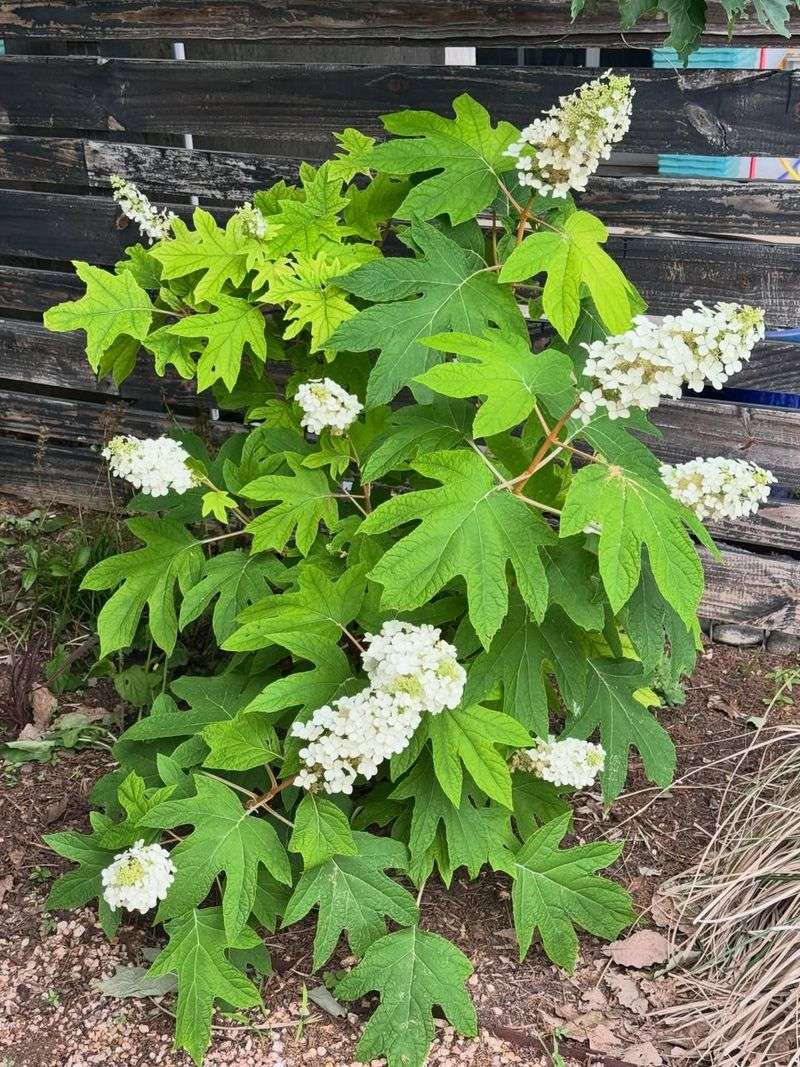
Bold, cone-shaped flower clusters and leaves the size of a dinner plate make Oakleaf Hydrangea hard to miss. Most shrubs planted under trees look scraggly and weak, but this one holds its own with confidence.
It is a native shrub, which means it already knows how to survive in the kind of soil and root competition found under large established trees across the Southeast. Its root system is tough enough to work around existing tree roots without much help from the gardener.
Flowers open creamy white in early summer and slowly age to tan and parchment as the season moves forward.
Those dried flower heads stay on the plant through fall and winter, giving the spot structure during the colder months when most other plants go quiet.
Your Georgia Garden Changes Every Week. Your Plan Should Too.
Gardening in Georgia changes quickly throughout the season. Every Friday you’ll receive a simple weekly plan showing exactly what to plant, prune, fertilize, harvest, and protect so you never miss the right timing.
Fall foliage adds another layer of interest. Leaves turn deep burgundy and orange before dropping, so the plant earns its space in the landscape across multiple seasons.
Very few shrubs planted in shade can claim that kind of seasonal range.
Oakleaf Hydrangea tolerates drought once established, which matters a lot in spots where tree roots pull water fast. It prefers some morning sun with afternoon shade, but it handles full shade too, just with fewer blooms.
Pruning is optional and rarely necessary. If the shrub gets too wide, cut back right after flowering.
Avoid late-season pruning since it sets next year’s flower buds on old wood.
3. Christmas Fern Grows Well Beneath Large Trees
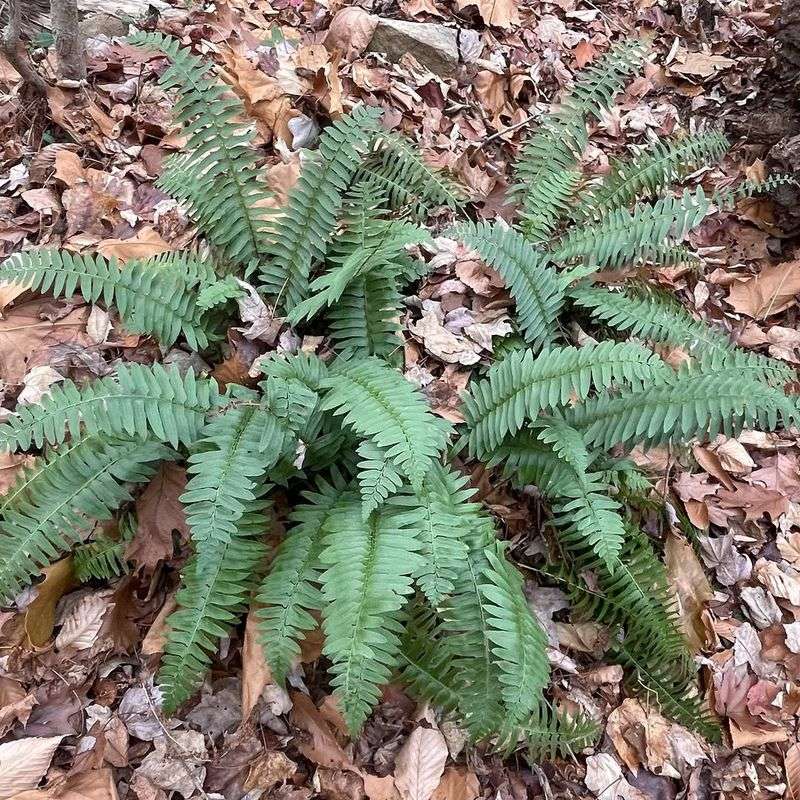
Tough, dark green, and evergreen all winter long, Christmas Fern earns its spot in some of the most difficult planting areas imaginable. It is one of the most reliable native ferns for shaded ground under large established trees.
Root competition barely slows it down. Christmas Fern pushes into compacted, dry soil with quiet persistence and keeps producing fresh fronds year after year.
Once it gets going, it basically takes care of itself.
The fronds lie flat in winter, which actually protects the crown from hard freezes. Come spring, new growth pushes up through the old fronds with a bright lime-green color that signals the season is changing.
That annual renewal feels satisfying in a spot that can otherwise look static.
Wildlife benefits too. Small birds use the dense clumps for cover, and certain moths rely on Christmas Fern as a larval host plant.
Choosing it means supporting more than just your garden’s appearance.
Planting is straightforward. Set the crown at soil level, water well during the first season, and let the plant find its footing.
After the first year, supplemental watering is rarely needed except during extended dry stretches.
Spacing of 18 to 24 inches between plants works well for ground cover use. Clumps slowly expand over time but never become invasive or aggressive.
For difficult dry-shade spots in the Southeast, Christmas Fern is a dependable, low-maintenance choice worth planting in quantity.
4. Cast Iron Plant Tolerates Heavy Root Competition
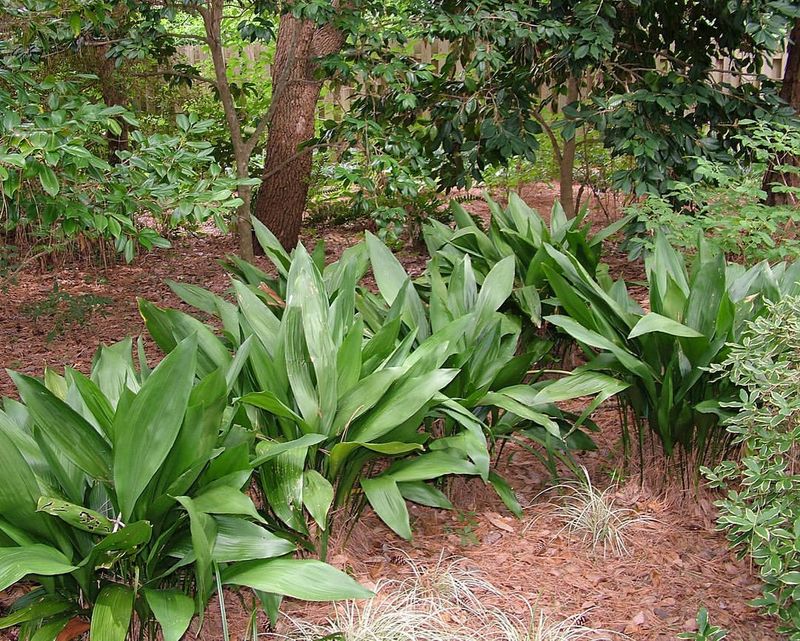
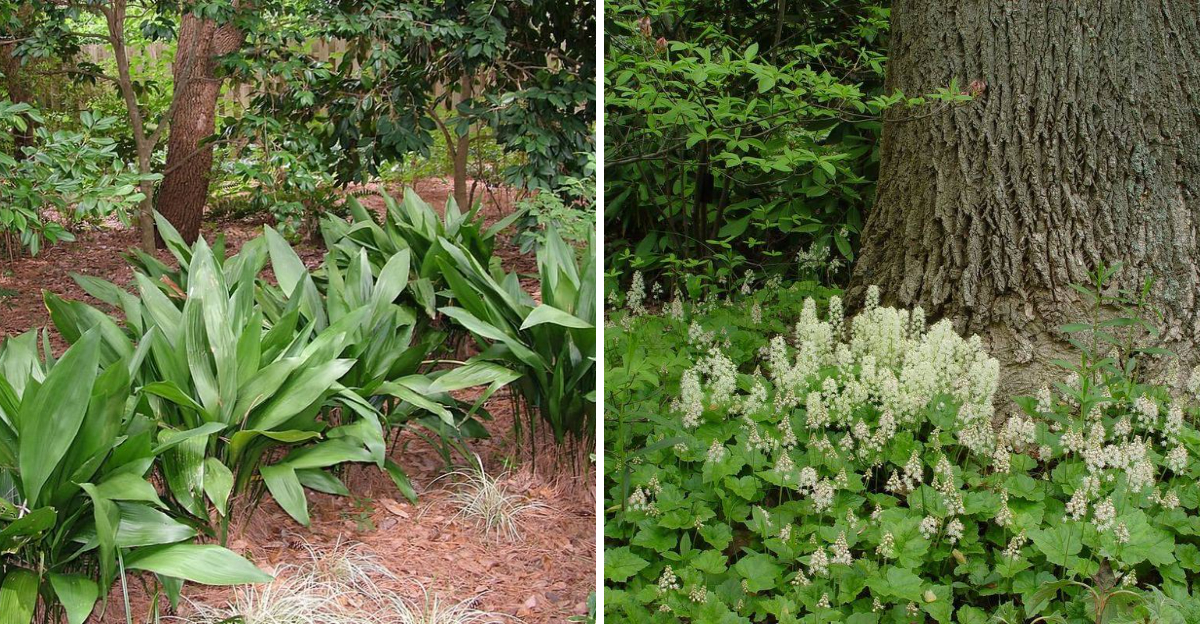
Nothing gets through a Cast Iron Plant. Drought, deep shade, poor soil, root competition from massive trees, it handles all of it without complaint.
Few plants in the Southeast can match its ability to survive genuine neglect.
Its name is not an exaggeration. Cast Iron Plant stays green and upright in conditions that would wipe out most ornamentals.
Surface roots from oaks and maples do not faze it. Compacted clay soil barely slows it down.
Growth is slow, so patience is required in the first year or two. But once established, it fills in steadily and creates a clean, lush-looking ground cover even in the deepest shade.
The broad, dark green leaves stay attractive across all four seasons.
There are no flashy flowers to speak of. Small, inconspicuous blooms appear at the base of the plant, but they are not the point.
The foliage itself is the feature, and it does the job exceptionally well in spots where nothing else wants to grow.
Variegated forms exist and add some visual interest if the standard green feels too plain. Striped and spotted varieties hold up just as well in tough conditions, though they tend to grow a bit slower than the straight species.
Planting in fall or early spring gives roots time to settle before summer heat arrives. Water regularly for the first season.
After that, Cast Iron Plant is largely self-sufficient and rarely needs intervention from the gardener.
5. Foamflower Spreads Through Difficult Shady Areas
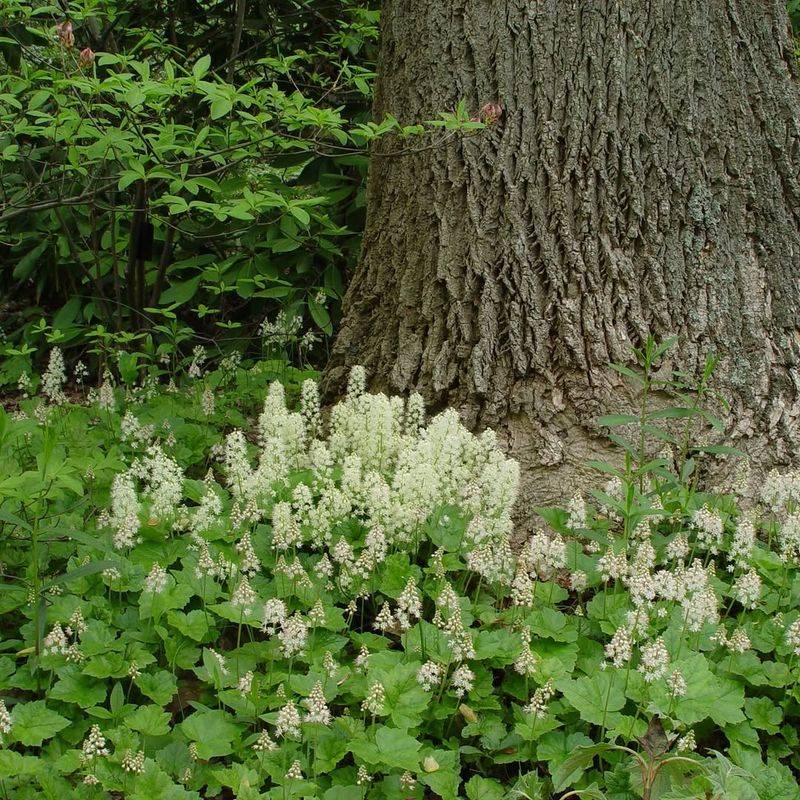
Frothy white flower spikes rising above heart-shaped leaves give Foamflower a look that feels almost too pretty for the tough conditions it grows in.
It is a native wildflower that genuinely thrives in the kind of shaded, root-filled spots most gardeners give up on.
Spreading by runners, Foamflower slowly fills in bare ground beneath trees without becoming invasive. It knits together nicely over a few seasons and creates a soft, textured ground cover that looks right at home in a woodland setting.
Blooms appear in mid-spring and last several weeks. The flowers are delicate and airy, standing about 6 to 12 inches above the foliage.
Even after blooming ends, the leaf color and texture keep the planting interesting through summer and into fall.
Soil moisture matters more for Foamflower than for some of the other plants on this list. It prefers consistently moist, well-drained soil and does best where some organic matter is present.
Under trees with heavy surface roots, adding a layer of compost at planting time helps considerably.
Afternoon shade is ideal. Morning sun is tolerated, but too much direct light causes the leaves to look scorched and faded.
Deep, consistent shade suits it well and actually brings out the best in the foliage color.
6. Coral Bells Grow Well Around Mature Trees
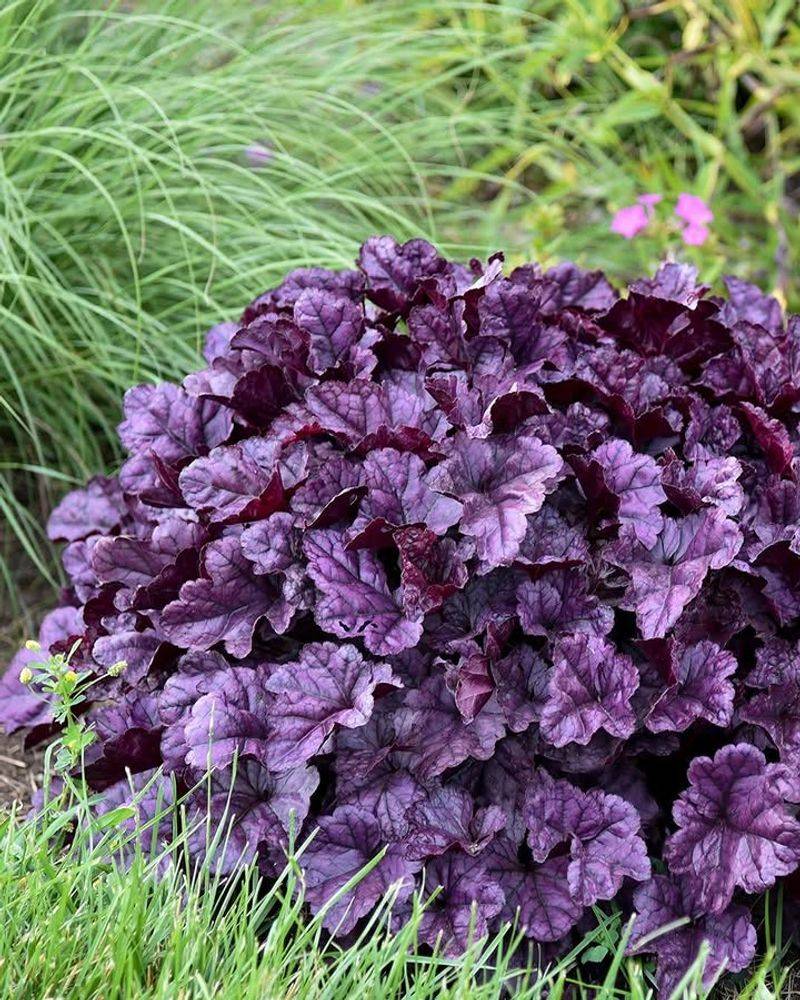
Few plants pack as much visual punch as Coral Bells in a shaded planting bed. The foliage comes in an almost ridiculous range of colors, from deep purple and chocolate brown to lime green and caramel orange, depending on the variety you choose.
Root competition from mature trees does not stop Coral Bells from performing. It is a tough, adaptable perennial that works well in both partial and full shade.
The shallow root system fits neatly between established tree roots without much struggle.
Delicate flower spikes rise above the foliage in late spring and early summer. Hummingbirds are attracted to the small tubular flowers, which adds another layer of life and movement to the garden.
Even after blooming, the foliage remains the main attraction all season long.
Drainage matters. Coral Bells does not like sitting in waterlogged soil, so avoid low spots where water pools after rain.
Under tree canopies, drainage is usually decent because the roots pull water away quickly, which actually works in Coral Bells’ favor.
Dividing clumps every three to four years keeps the plants healthy and vigorous. Over time, the crown tends to heave upward out of the soil.
Replanting slightly deeper when dividing solves that issue easily.
Pairing Coral Bells with ferns or Foamflower creates a layered, textured planting that looks intentional and polished.
7. Woodland Phlox Adapts To Dry Woodland Conditions
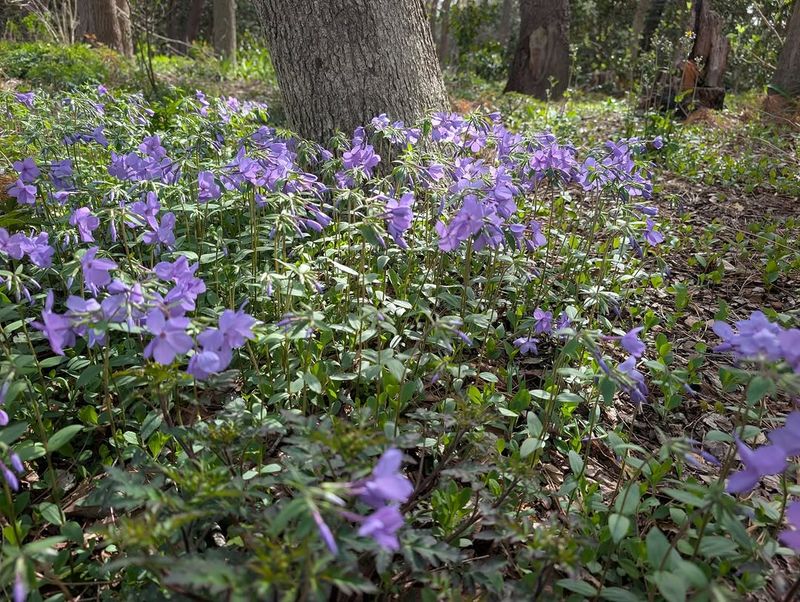
Pale lavender blooms drifting through a dry, shaded woodland in spring look effortless, but Woodland Phlox earns that look by being genuinely tough. It is one of the best native perennials for dry shade under established trees in the Southeast.
Spring is its moment. Clusters of fragrant flowers cover the plant for several weeks, usually from mid-March through April depending on the year.
After blooming, the foliage stays low and green through summer, holding its ground without much fuss.
Dry soil is not a dealbreaker for Woodland Phlox once it is established. During the first growing season, consistent watering helps roots get settled.
After that, it handles dry stretches under tree canopies better than most flowering perennials its size.
Powdery mildew can appear on the foliage in late summer, especially during humid stretches. Good air circulation helps reduce the problem.
Cutting the plant back lightly after blooming can also improve airflow and keep the clump looking tidy going into fall.
Naturalizing is one of Woodland Phlox’s best qualities. It slowly spreads by seed and by short stolons, gradually filling in a planting area over several seasons.
That spreading habit makes it a smart choice for covering large areas under mature trees without constant replanting.
Blue, white, and pink flowering varieties are all available at most native plant nurseries. Mixing colors across a planting creates a soft, meadow-like feel that suits a woodland garden setting extremely well.
8. Solomon’s Seal Thrives Beneath Established Trees
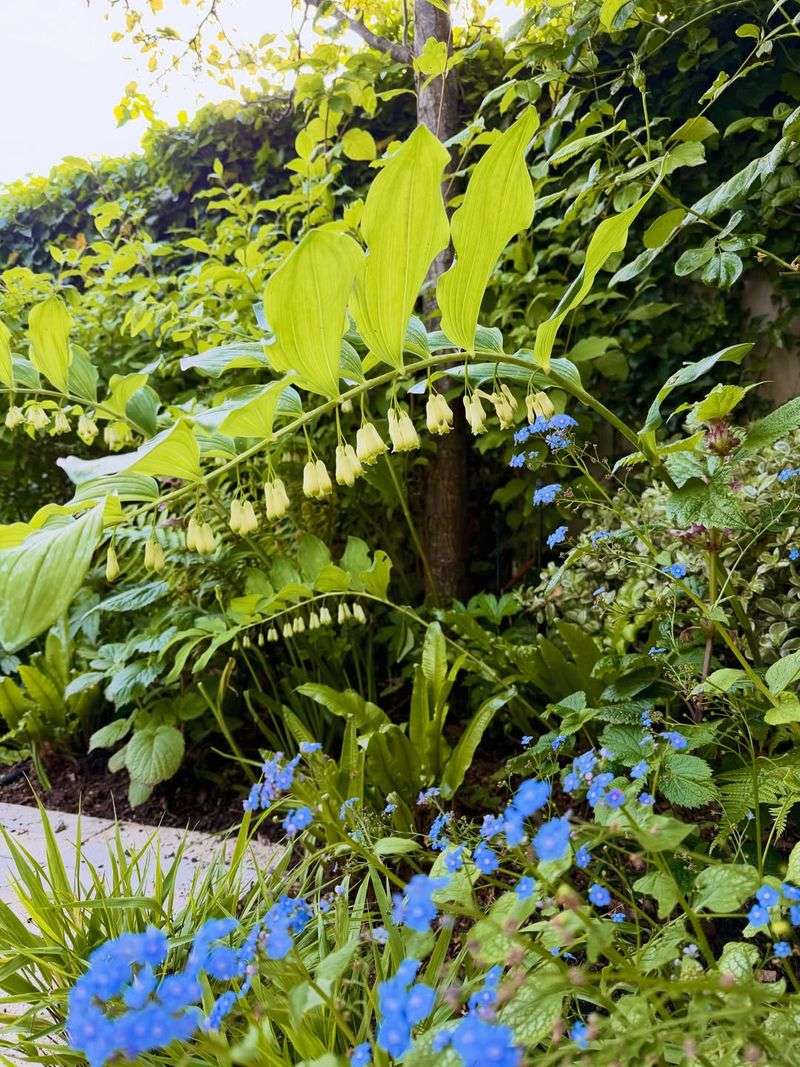
Arching stems hung with small white bell-shaped flowers give Solomon’s Seal a graceful, unhurried quality that feels right at home in a shaded woodland garden. It is one of those plants that looks like it belongs exactly where you put it.
Root competition from large, established trees does not rattle Solomon’s Seal. Its thick rhizomes push through compacted soil and spread slowly but steadily, filling in bare spots under canopies where other plants give up.
It is a patient, persistent grower.
Spring brings the best show. Stems unfurl and reach outward, creating a layered, arching effect that adds real movement and dimension to a shaded bed.
Flowers dangle beneath the leaves in rows, which gives the plant its distinctive, architectural look.
Fall color is a bonus many gardeners overlook. Leaves turn a clean, warm yellow before the stems go dormant for winter.
That fall display adds one more season of interest to a plant already pulling its weight in spring and summer.
Solomon’s Seal prefers moist, well-drained soil with some organic matter. Under trees with heavy root competition, amending the planting hole with compost gives it a better start.
After establishment, it handles drier conditions reasonably well, though it looks best with occasional deep watering during dry summers.
Variegated forms with white-edged leaves are widely available and brighten up dark corners effectively.