Georgia Sago Palms Can Look Diseased After Frost But Cutting The Fronds Too Soon Is A Mistake
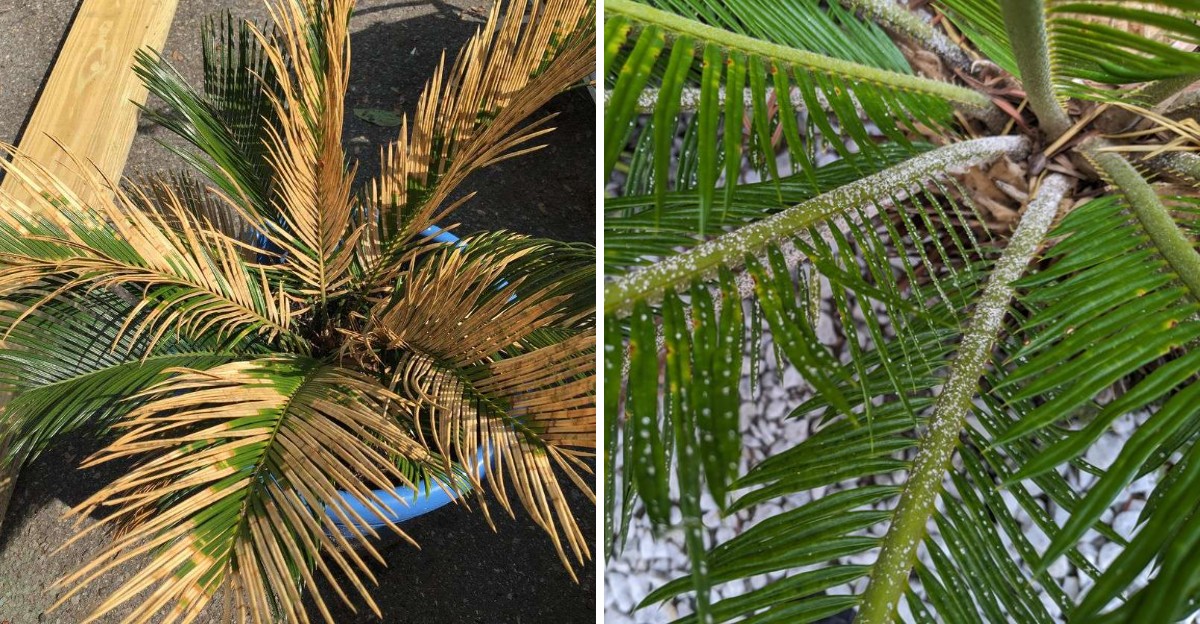
A plant older than the dinosaurs can turn crispy brown overnight and still be fine. Its ancestors weathered wild climate swings for more than 250 million years.
One cold Georgia night, though, can make it look like it caught something awful.
I get the panic. The once-glossy fronds go tan, yellow, or blotchy black, and the whole thing looks sick.
Your neighbors start giving it pitying looks from the sidewalk.
I reached for the pruners the first time it happened to mine. I’m glad an older gardener at the nursery stopped me.
Those ugly leaves have a job to do, and cutting them early can leave the plant exposed.
The answer sits right in the very center of that scruffy crown, and it changes exactly when you should make your first cut.
1. Those Brown Sago Palm Fronds Are Hiding a Secret in the Crown
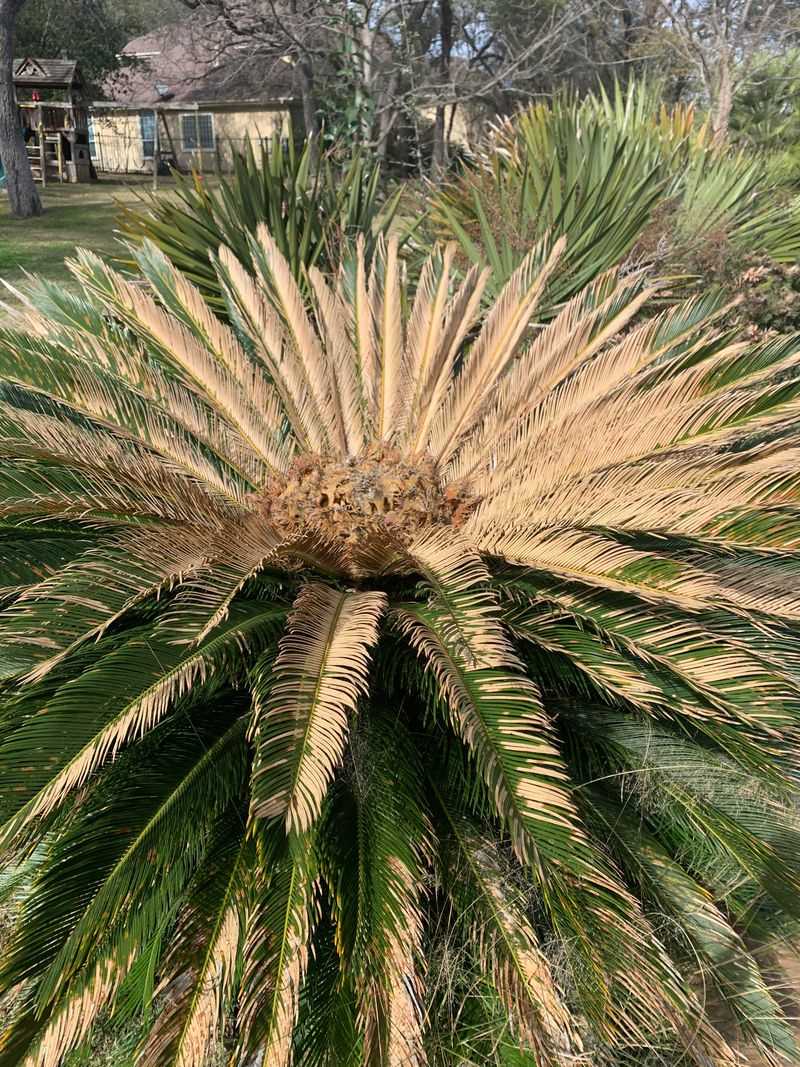
Cold injury on a sago palm looks dramatic, but it is mostly skin deep. The fronds take the hit first, turning yellow, tan, or mottled with dark patches after temperatures dip into the low 20s or teens.
Sago palms are not true palms at all. They are cycads, a plant group that has been around since before the dinosaurs, and they are rated hardy to roughly 15 degrees Fahrenheit once established.
That covers much of Georgia, from the coast up through the Piedmont, though north Georgia plants sit closer to the edge.
The real action happens deep in the crown. Tucked at the top of the trunk is a single growing point, protected by woolly fibers and the bases of old leaves.
If that bud stays healthy, the plant can push out a brand new ring of fronds in spring, even when every old leaf looks ruined.
So a brown sago is not automatically a lost sago. Discolored fronds tell you the leaves got chilled, not that the plant is sick with a disease.
I like to think of it as a sunburn rather than an illness. Tropical-looking plants like this often surprise people with how tough they really are.
2. Frost-Bitten Fronds Act Like a Winter Coat Over the Sago’s Bud
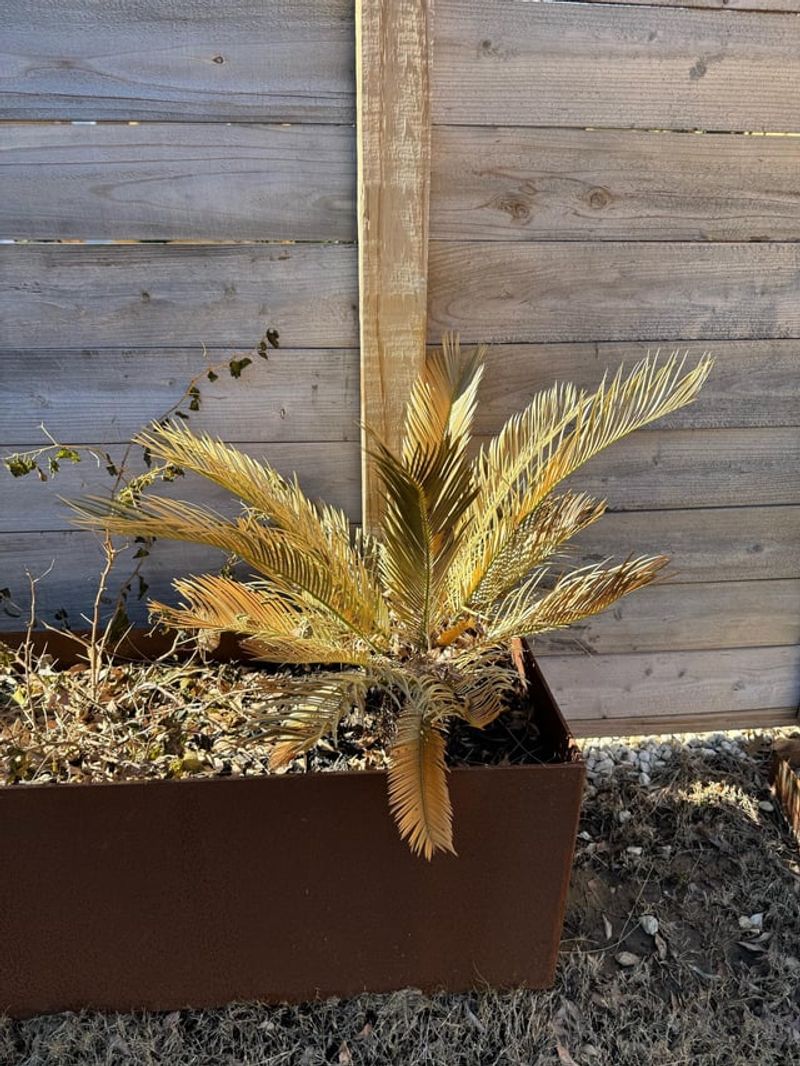
Ugly as they are, those crispy leaves are working the night shift. Extension specialists at the University of Florida and the University of Georgia both advise leaving cold-damaged foliage in place until spring, and the reason is simple.
The old fronds form a loose umbrella over the crown. That canopy traps a little warmth, blocks drying winter wind, and shields the growing point from frost settling directly on it.
Georgia winters rarely end after one cold snap, and a second or third freeze in February or March is common.
Strip the fronds off in January and you leave the bud sitting bare. A later freeze can then reach the tender center, which is far more serious than a few brown leaves.
Bare stubs also give winter wind a clear path straight into the crown.
There is a cosmetic tradeoff, I admit. Your yard may look a bit scruffy for a couple of months.
If that bugs you, tuck some pine straw around the base and remind yourself that the plant is protecting its future. Honestly, a messy sago in March beats a bare trunk in June.
3. Wait for Spring Before You Grab the Pruning Loppers

Timing is the whole game here. The safe window to clean up a cold-damaged sago opens once your area’s frost danger has passed, and that date changes a lot across Georgia.
Along the coast and in south Georgia, the average last frost often lands in early to mid March. Middle Georgia usually clears late March.
In the mountains and upper Piedmont, frost can linger into mid April. Mark the date on your phone so you remember to check, and ask your county Extension office for a closer local estimate.
Even better than the calendar is the plant itself. Sagos typically push one big flush of new fronds in spring, and that flush starts as a tight, fuzzy cluster rising from the crown.
Once you see those fresh leaves unfurling, you know the growing point survived and the cold season is behind you.
My rule is simple. No new growth, no cuts.
Patience feels hard when the plant looks rough, but waiting lets you see exactly which fronds are finished and which still have green to offer. Some cold-hit plants take until late spring or early summer to flush, so do not panic if yours is slow.
A late start is still a start.
4. Half-Green Sago Fronds Are Still Feeding the Plant
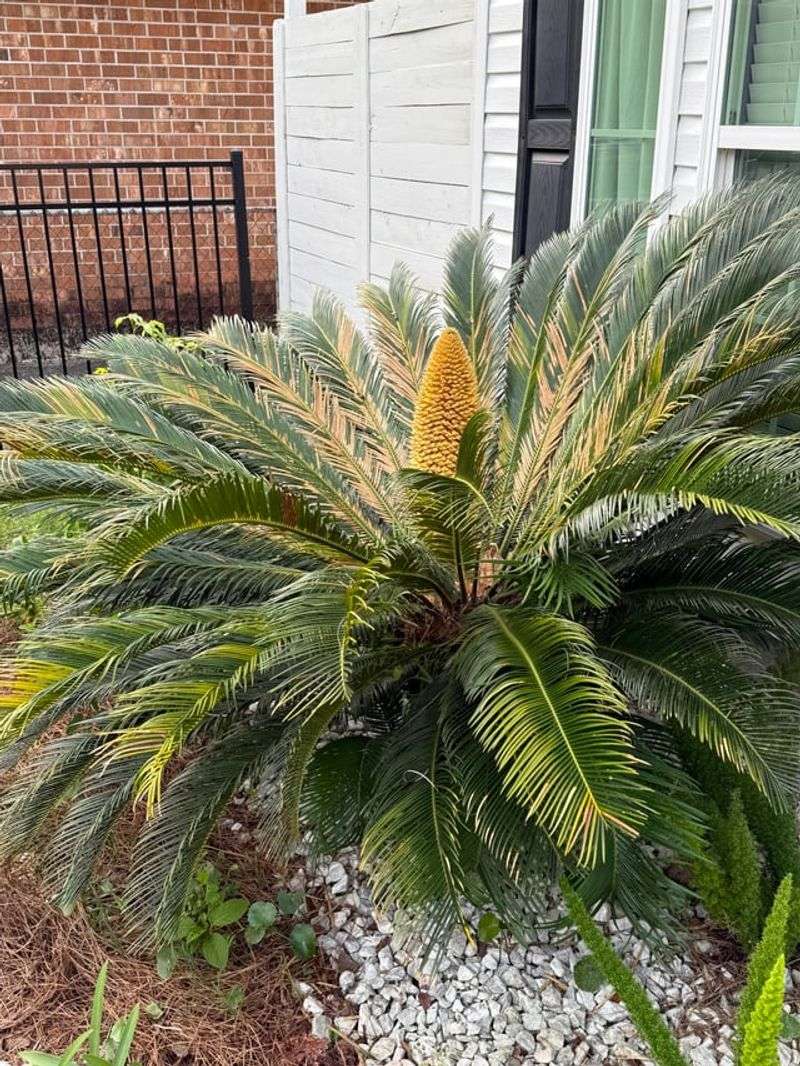
Plenty of gardeners miss this part. A frond that is only partly brown still has living green tissue, and that green tissue keeps making food for the plant through photosynthesis.
Sagos also pull certain nutrients, especially potassium and magnesium, out of older leaves and move them to new growth.
University of Florida guidance on palms and cycads warns that removing partly yellow or partly green fronds can speed up nutrient shortages, because the plant loses a source it was quietly drawing from.
Georgia’s sandy coastal plain soils are often low in potassium already, so every bit counts.
A fully brown, dry, brittle frond is a different story. It has nothing left to give, and removing it in spring is fine.
You can usually snap a few of its leaflets with your fingers. The tricky ones are the leaves with green bases and brown tips, or green leaflets mixed with tan ones.
My advice is to leave those mixed fronds alone for now. Trim them later in the season, once the new flush has hardened off and taken over the work.
Your plant will look a little patchy for a while. It will also have more energy for a strong comeback, and that is a trade I happily make.
5. Press on the Sago Palm Trunk Before You Worry
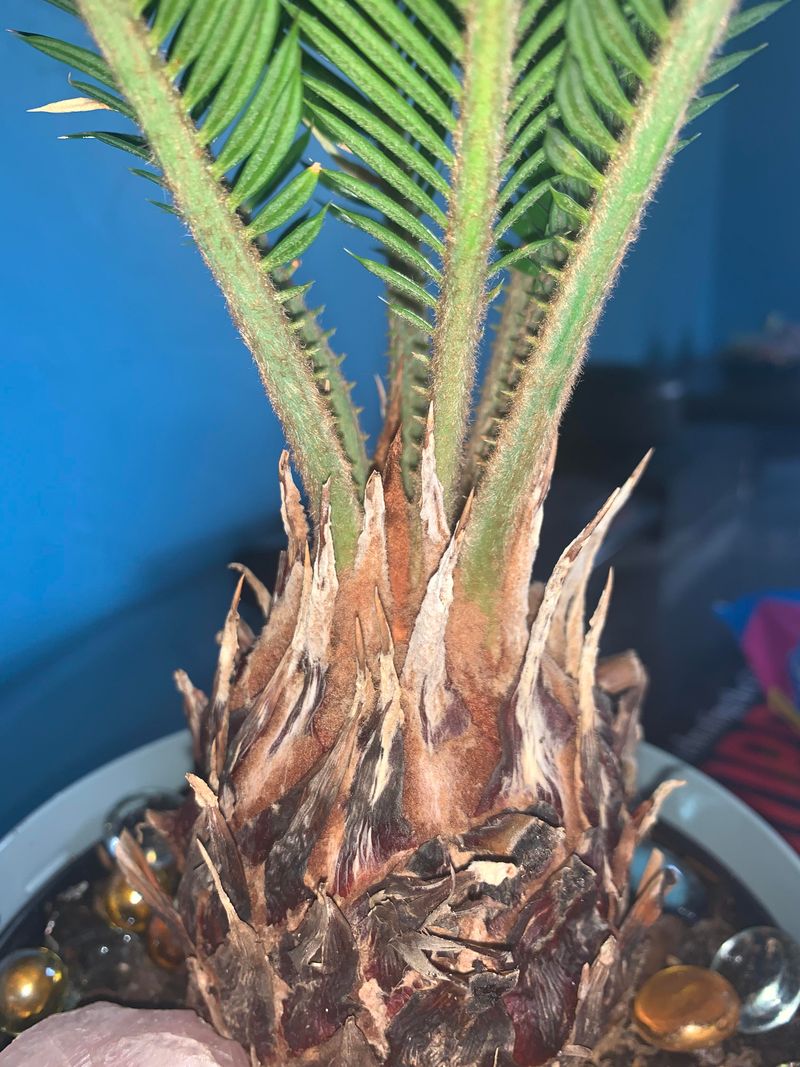
Want a quick checkup that takes ten seconds? Put on gloves and give the trunk a firm squeeze, then gently press near the very center of the crown.
A healthy sago trunk feels hard, almost like a pineapple or a block of wood. If yours feels solid, the odds of a spring recovery are strong, no matter how sad the leaves look.
Firm tissue means the stored starch and water inside the trunk are still in good shape.
Soft, spongy, or mushy spots tell a different story. Severe freezes can rupture cells inside the trunk or bud, and rot may follow as temperatures warm.
A foul smell or a crown that pulls loose with little effort points to serious damage that the plant may not recover from.
Hold off on judging too fast, though. Some sagos with a damaged bud can still sprout side shoots, called pups, from the trunk over the following months.
If the trunk is mostly firm but the center is questionable, give the plant until early summer before deciding. I have watched a few written-off sagos surprise their owners by July.
Patience costs you nothing, and replacing a mature sago costs plenty.
6. White Crusty Scale on Sago Fronds Is a Separate Problem
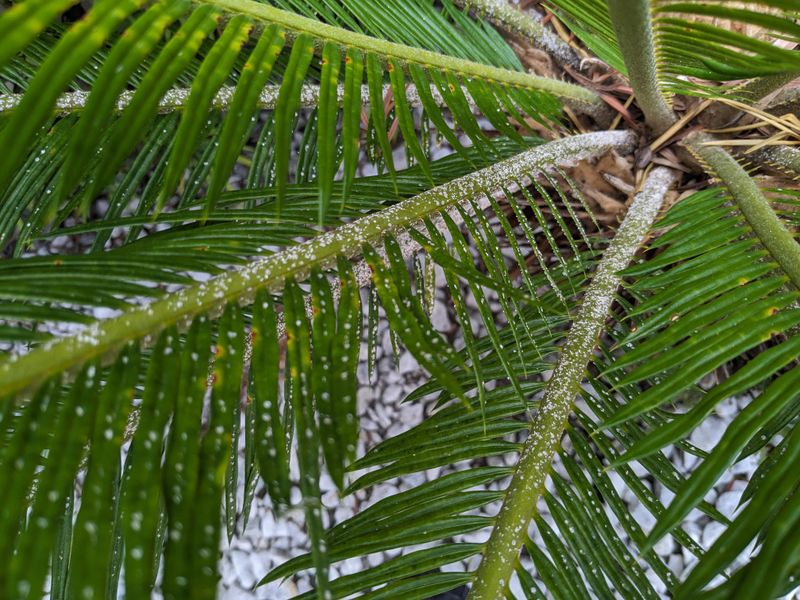
Not every ugly sago is a frost victim. Before blaming the weather, flip a few leaflets over and look closely at the undersides and stems.
A white, crusty, almost snowy coating points to cycad aulacaspis scale, also called Asian cycad scale. This tiny sap-sucking insect has spread across Florida and into other parts of the Southeast, and heavy infestations turn fronds yellow, then brown.
Unlike frost damage, scale keeps spreading and worsening, so leaving it alone is a mistake. Horticultural oil sprays and systemic insecticides labeled for scale can help.
Two other look-alikes deserve a mention. Frizzle top, a manganese deficiency, makes new fronds come out stunted, yellow, and curled.
Sandy, alkaline, or poorly drained soils make it more likely, and a manganese sulfate treatment usually helps future growth. Leaf spot fungi can also leave brown blotches, though they rarely threaten a healthy plant.
Cold damage has a telltale pattern. It shows up suddenly after a freeze and affects the exposed upper fronds most.
If the browning started before winter, or keeps creeping along after warm weather returns, something else may be going on.
A clear phone photo and a quick visit to your local Extension office can save you weeks of guessing.
7. Cut Brown Sago Fronds With Gloves, Long Sleeves, and Sharp Loppers
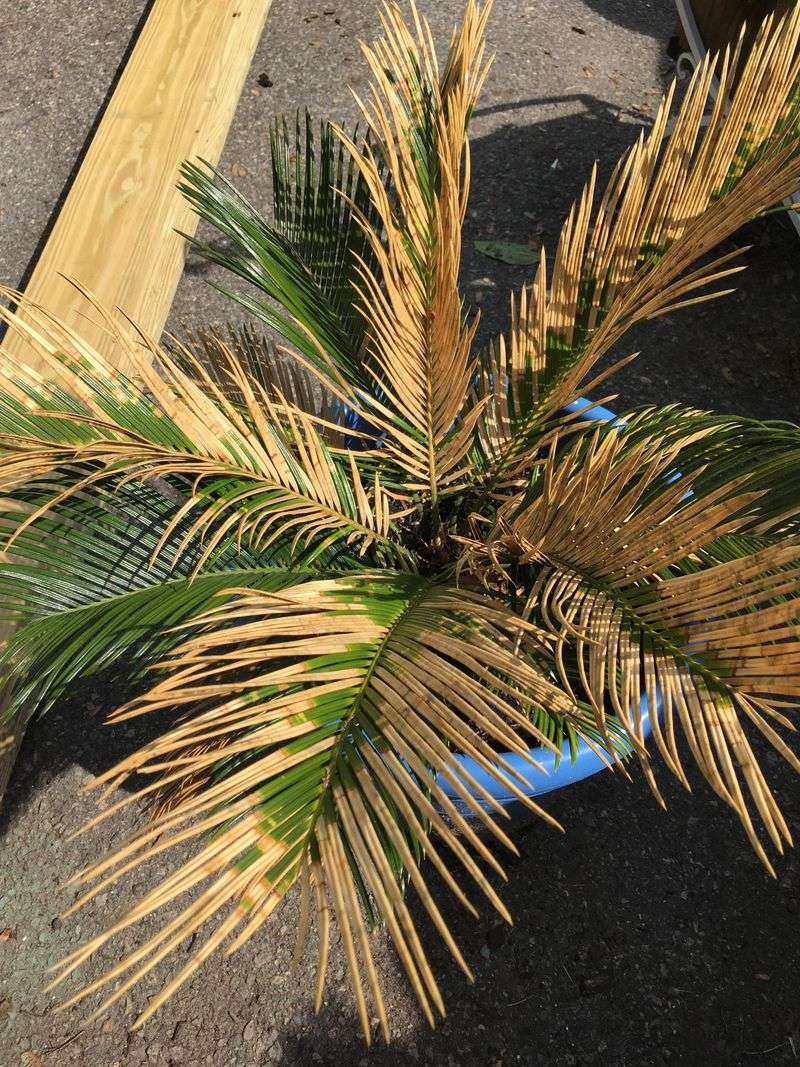
Sago fronds bite back. Each leaflet ends in a stiff, needle-like tip, and the lower stems carry sharp spines that happily snag bare arms.
Trust me, one jab teaches you fast.
Every part of the plant is also toxic, with the seeds being the most dangerous. The ASPCA lists sago palm as highly toxic to dogs and cats, and even small amounts can cause severe liver damage.
Keep pets and kids away while you work, and bag the clippings instead of leaving them on the lawn.
Gear up with thick leather gloves, long sleeves, and eye protection. Sharp bypass loppers or a pruning saw work best.
Cut each fully brown frond close to the trunk, but avoid slicing into the trunk itself, since wounds can invite rot and pests. Skip the urge to rip fronds off by hand, because tearing can damage the trunk tissue.
Leave any fronds that still carry real green. Many gardeners use a 10 o’clock to 2 o’clock line as a guide, removing only the lowest, most damaged leaves.
Over-trimming into a skinny pineapple shape stresses the plant and steals its stored energy. A modest cleanup looks tidier and keeps your sago stronger for summer.
8. A Fresh Ring of Sago Fronds Makes the Wait Worth It
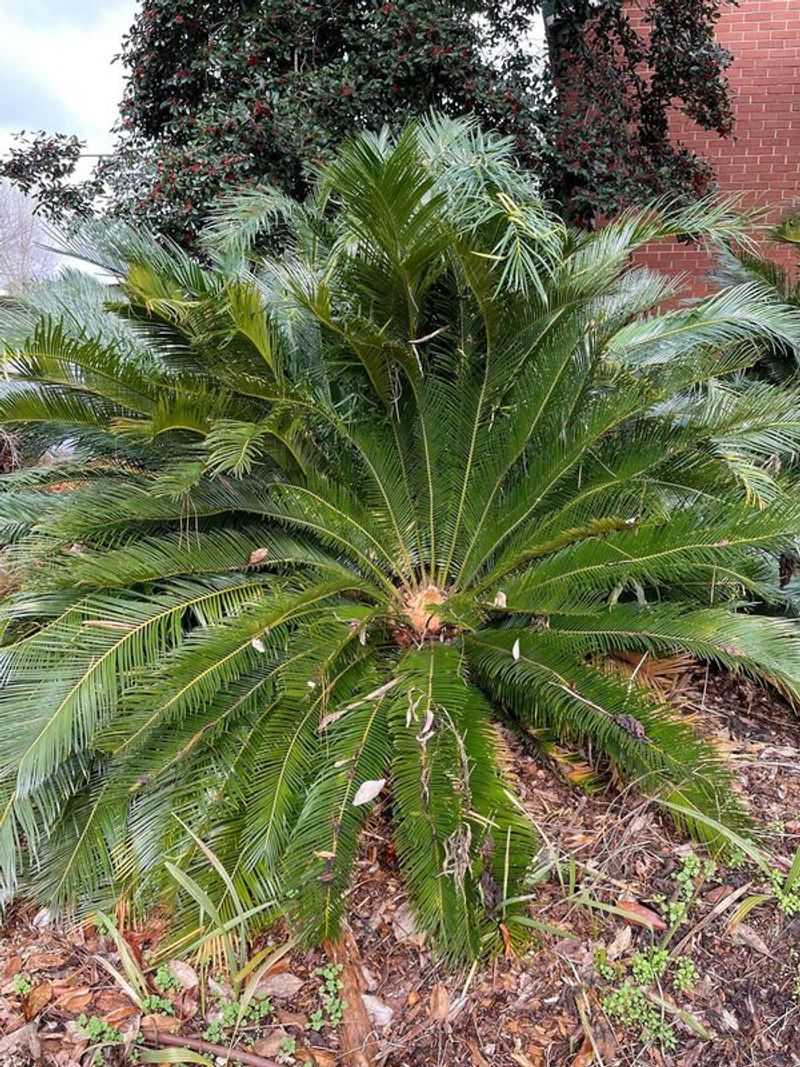
That first spring flush feels like a reward. Soft, pale green fronds rise from the crown, often fuzzy at first, then stretch out and darken over a few weeks.
Hold off on fertilizer until those new leaves are actively growing. Feeding a stressed plant too early does little, and in warm spells it can push tender growth before the last cold snap.
Once growth is underway, a slow-release palm fertilizer with potassium, magnesium, and manganese suits sagos well. Water deeply during dry stretches, but keep soil from staying soggy, since constantly wet roots can rot.
Give the new fronds space too. They are soft and easy to bend until they harden, so keep hoses, kids, and mowers away.
Then plan ahead for next winter. When forecasts call for temperatures near the low 20s, cover the plant with frost cloth or an old sheet reaching to the ground, and remove it once the sun warms things up.
Mulch around the base helps protect roots. In north Georgia, a spot near a south-facing wall gives extra warmth.
Brown fronds in January are part of the deal. A little patience usually turns them into a glossy green crown by summer.