Get Denser Florida Wax Myrtle Growth Next Spring With This August Step
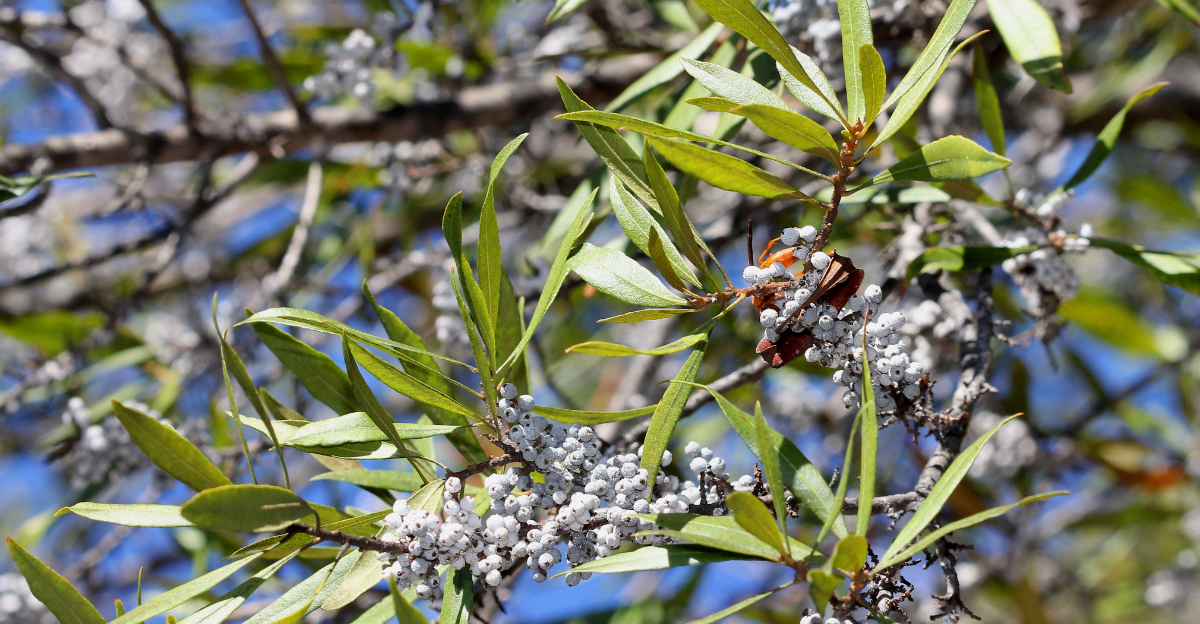
Wax myrtle in a Florida yard earns its place without much argument. Fast, native, dense enough to screen effectively, and adapted to this climate in ways that most privacy shrubs only pretend to be.
What it does not do automatically is reach its full density potential without one specific push made at the right moment. August is that moment.
Not spring when new growth is already happening. Not fall when the window has closed.
Right now, while the plant still has enough warm season ahead to respond in a way that shows up clearly next May. One step taken this month redirects wax myrtle energy in a direction that produces noticeably denser growth by spring.
Skip it and the shrub grows anyway. It just grows differently, with gaps and a looseness that the right August intervention would have prevented.
Dense wax myrtle does not happen by accident. It happens in August.
1. Tip Back Long Shoots Before They Get Leggy
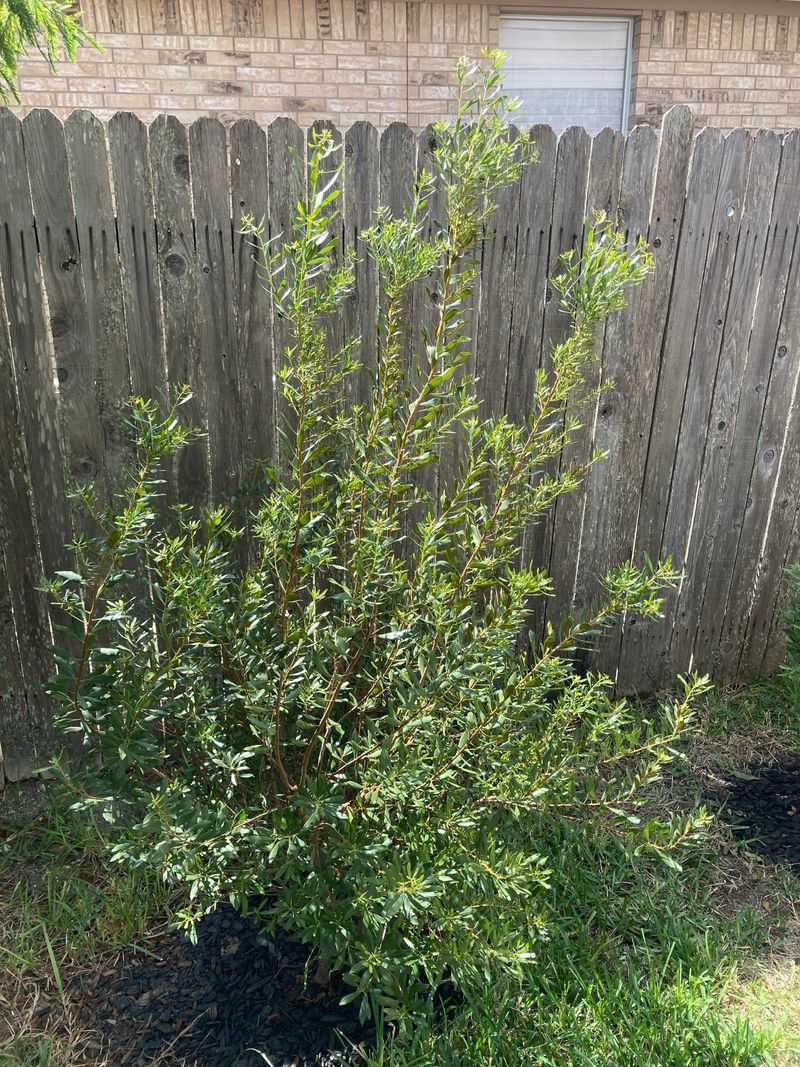
Spotting a branch that shoots two feet past every other stem on the shrub is a familiar August sight for anyone growing Morella cerifera as a screen. That one rogue shoot makes the whole hedge look unfinished, and the instinct is to shear the entire top to match.
Resist that impulse.
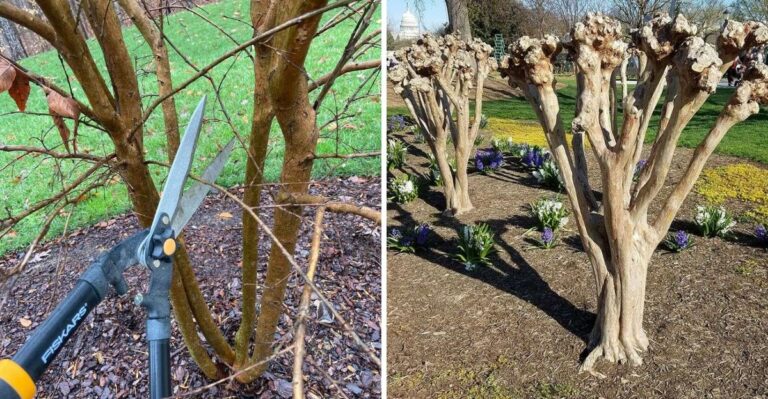
Selective tip pruning means shortening only those individual shoots that are noticeably longer or more awkward than the rest. You leave healthy, well-placed growth alone and focus your pruners on the outliers.
A wax myrtle growing in its natural form does not need constant trimming just because a few branches reach farther than others.
When you do make a cut, aim just above a leaf node or a side bud. NC State Extension pruning guidance recommends making clean cuts at a slight angle to reduce moisture sitting on the wound.
Sharp, clean hand pruners make a neater cut than dull blades, which can crush the stem tissue.
August still leaves enough of the growing season in Florida for the shrub to respond before temperatures cool significantly. Avoid removing large amounts of healthy foliage at this time of year.
The goal is a light corrective trim on the shoots that are genuinely pulling the shape off balance, not a full-scale reshaping of the plant.
2. One Small Cut Can Bring More Side Branches
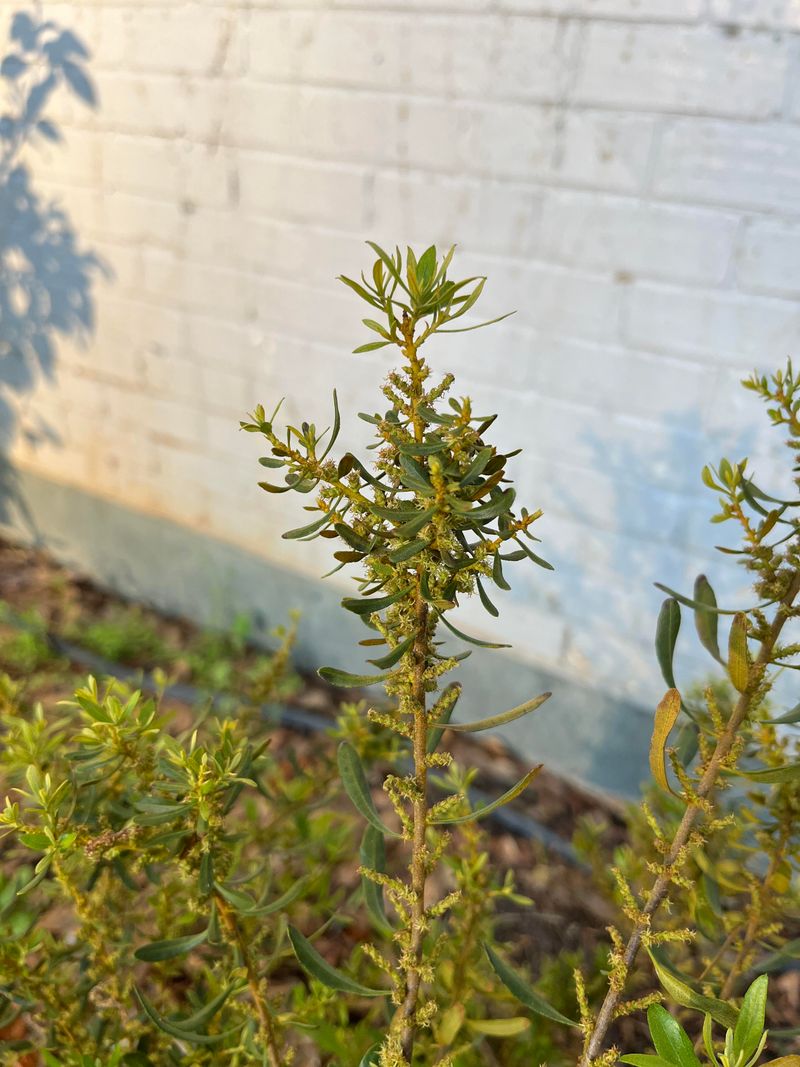
Most plants, including Morella cerifera, have a built-in growth pattern called apical dominance. The tip of a growing shoot releases hormones that suppress the buds lower down the stem, keeping energy flowing upward and outward rather than sideways.
Shortening that tip changes the balance. Once the dominant tip is removed, lateral buds that were previously suppressed can begin developing.
Over time, this can produce more side branching along the stem below the cut. Clemson Cooperative Extension describes this principle in its general pruning guidance, noting that heading cuts encourage growth from buds near the cut.
For a privacy screen in Florida, that branching response is exactly what you want. More side branches mean more foliage spread at mid-height, which is often where screens look thinnest.
Your Florida Garden Changes Every Week. Your Plan Should Too.
Gardening in Florida changes quickly throughout the season. Every Friday you’ll receive a simple weekly plan showing exactly what to plant, prune, fertilize, harvest, and protect so you never miss the right timing.
A shrub that keeps sending one long shoot straight up without filling out sideways benefits from this kind of correction.
Keep expectations realistic, though. Not every cut produces a burst of new branches.
The shrub’s overall health, available sunlight, soil moisture, and the time of year all influence how strongly it responds. Think of this August step as planting a seed for next spring’s growth rather than expecting an immediate transformation.
Gradual improvement over a full growing season is a more honest goal than overnight density.
3. Skip The Hedge Trimmer For A Fuller Look
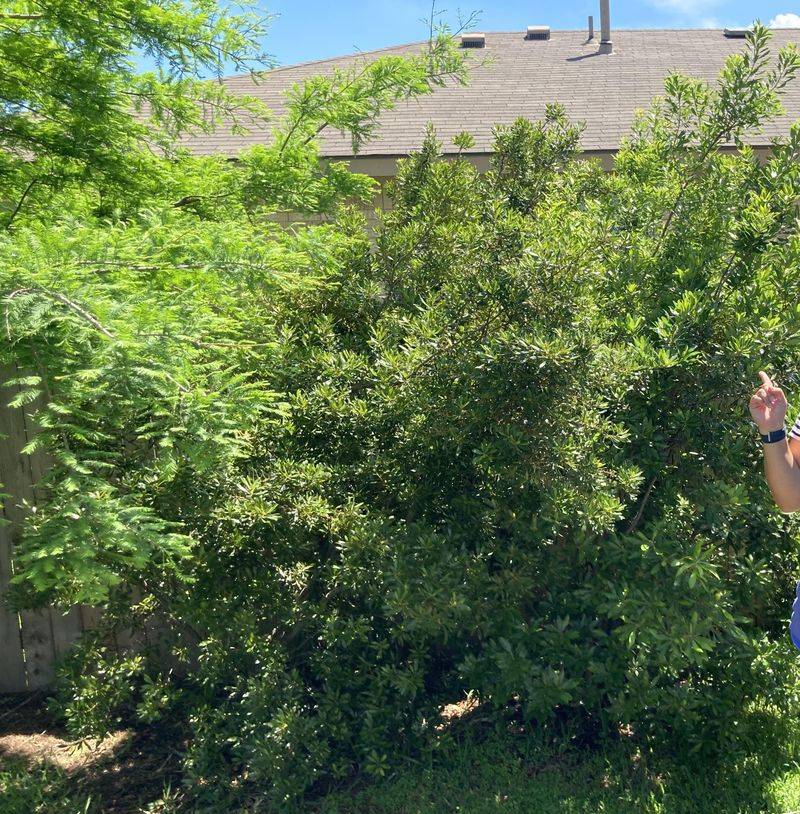
Running a hedge trimmer across a wax myrtle creates a tidy surface in about ten minutes. That convenience comes with a trade-off most gardeners do not notice until a season or two later.
Repeated shearing cuts every shoot tip at the same height, which concentrates new growth along the outer shell of the shrub. Over time, that outer layer thickens while the interior becomes shadier and less productive.
Foliage inside the shrub gradually thins out because it receives less light. The result can be a shrub that looks full from a distance but is actually hollow in the middle.
Selective hand pruning works differently. By shortening individual stems rather than trimming everything to one plane, you preserve branching at different depths inside the canopy.
Interior stems can still catch enough light to stay active. UGA Extension pruning guidance notes that selectively thinning or heading individual stems maintains a more natural growth habit than mechanical shearing.
For a gardener who wants a formal, geometric hedge, shearing is a valid choice and requires consistent follow-up.
For Florida homeowners who want a dense, natural-looking screen that fills in over time, selective pruning of the problem shoots tends to support that goal more effectively.
The two techniques produce different long-term results, and choosing the right one depends on the look and maintenance level you actually want.
4. Target The Stray Growth Instead Of Everything
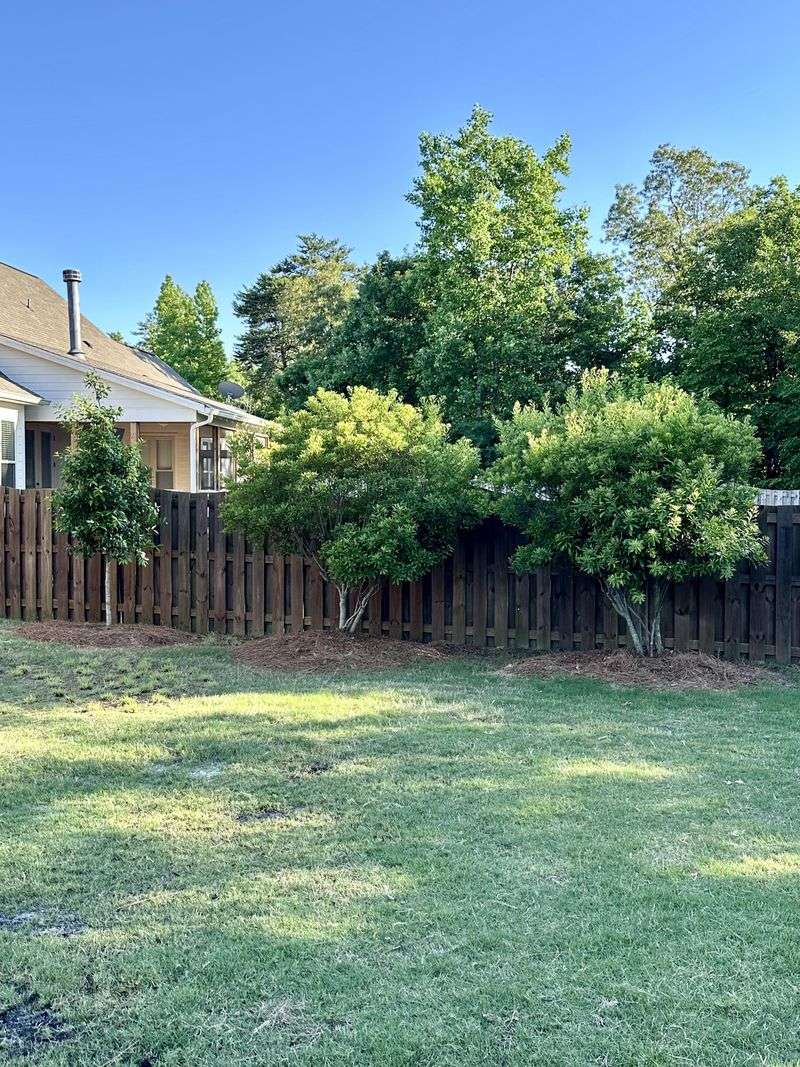
Before making a single cut, walk away from the shrub and look at it from a distance of ten to fifteen feet. That perspective reveals things you cannot see when you are standing right next to it.
Look for shoots that extend noticeably beyond the general outline of the plant. Notice any stems that cross over other branches, rub against them, or grow at an odd angle back into the center.
Check for any growth that looks damaged, discolored, or structurally weak. Those are the candidates for removal or shortening.
Healthy stems that already contribute to the shape of the screen do not need to be touched. A branch that is slightly longer than its neighbor but still pointing in a useful direction is doing its job.
Removing it just because it is not perfectly even with everything else takes away growth the shrub already worked to produce.
Reputable pruning guidance consistently recommends assessing before cutting and having a clear reason for every cut. This is not about perfection.
Morella cerifera has a naturally informal, multi-stemmed growth habit that does not need constant correction. Identifying the specific shoots that are genuinely causing a problem keeps you from over-pruning by default.
Put the pruners down between cuts, step back, and check your progress before moving on to the next stem.
5. Keep Sunlight Reaching The Lower Branches
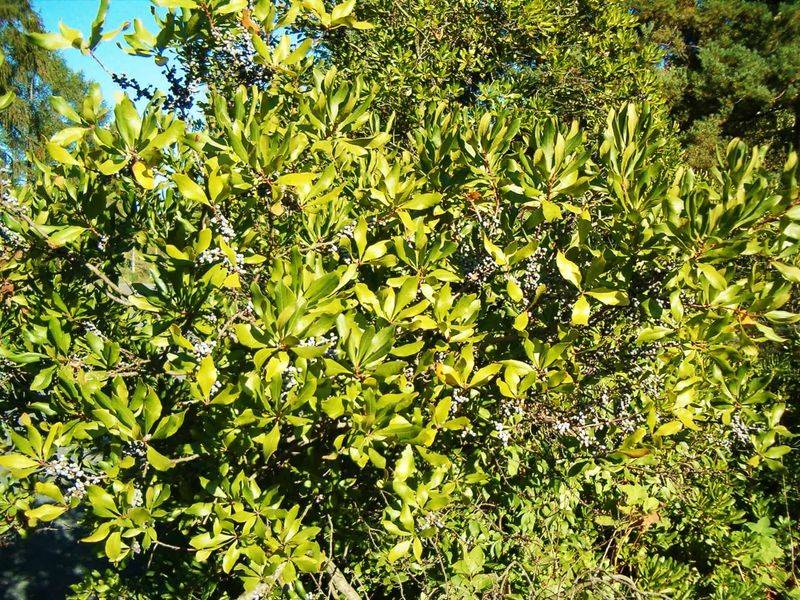
A Florida privacy screen that blocks light from its own lower branches creates a slow problem. As the top of the shrub grows wider and denser, it casts shade on the stems below.
Foliage in low-light conditions gradually becomes sparse, and the base of the hedge starts looking bare.
UF/IFAS Extension notes that Morella cerifera grows well in full sun to partial shade. The plant tolerates some shade, but stems inside a dense, self-shading canopy can lose vigor over time.
Keeping the upper portion of the hedge slightly narrower than the base allows more light to reach the lower growth.
This principle applies during pruning. If you are shortening tall shoots, pay attention to whether those shoots are also spreading outward and beginning to shade the stems below them.
A slight taper from bottom to top, sometimes described as an A-frame profile in extension hedge-shaping guidance, helps distribute light more evenly down the plant.
Pruning alone cannot fix a wax myrtle planted in genuinely unsuitable light. A shrub growing in deep shade will struggle regardless of how carefully you prune it.
But for plants in adequate sun, managing canopy shape can help lower branches receive enough light. That supports foliage density from the ground up, not just at the tips where the newest growth appears.
6. Leave Healthy Interior Growth In Place
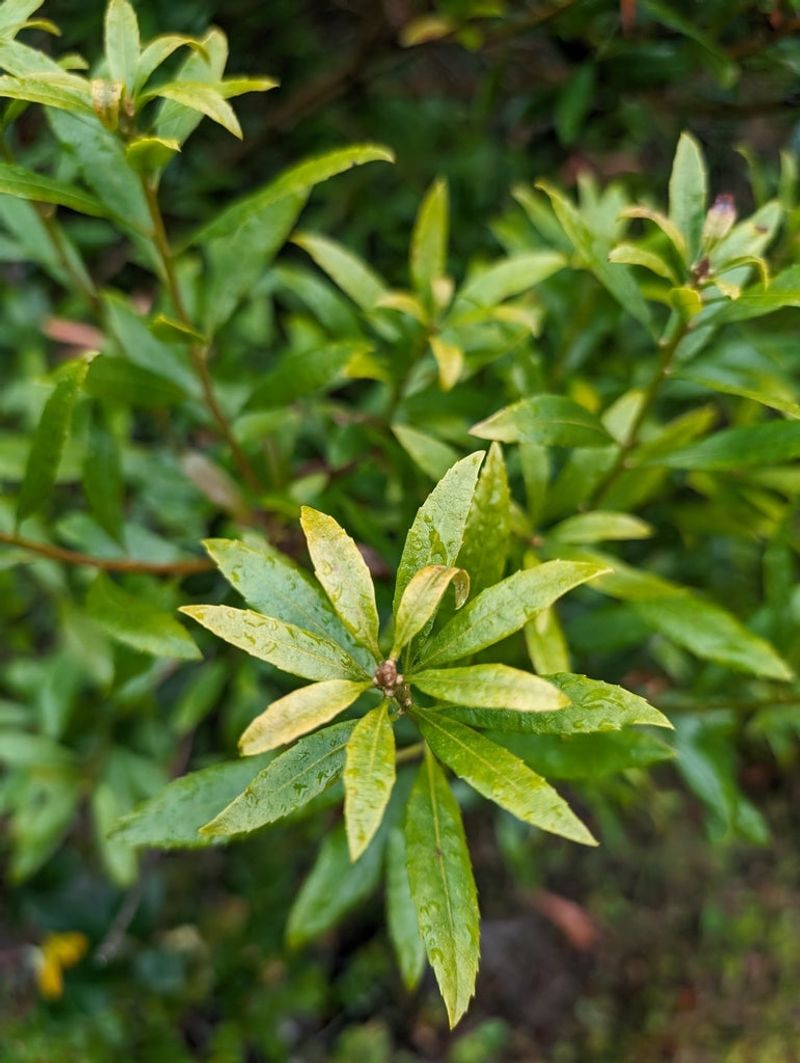
Reach into a mature wax myrtle and you will likely find more green growth inside than you expected. Those interior branches are already doing useful work, filling the space between the outer shoots and contributing to the overall density of the screen.
Removing them in an attempt to open up the center works against the goal of a fuller hedge. Opening the center of a fruit tree can improve air circulation and light penetration for fruiting.
A privacy screen shrub, however, benefits from retaining as much healthy interior foliage as possible. Thinning interior growth indiscriminately can leave visible gaps that take a long time to fill back in.
Selective interior thinning has a place in shrub care, but only when branches are genuinely crowded, rubbing against each other and causing damage, or structurally weak.
NC State Extension pruning guidance recommends removing crossing or rubbing branches at their point of origin rather than shortening them.
This avoids leaving stubs that can become entry points for pathogens.
Restraint is the operating principle here. Before removing any interior branch, ask whether it is actually causing a problem or simply occupying space.
If it is green, healthy, and pointed in a reasonable direction, leave it. Every branch you keep is one fewer gap to fill next season.
The interior structure of the shrub is an asset, not something to routinely clear out during a light August trim.
7. Stop Before A Trim Becomes A Hard Cut
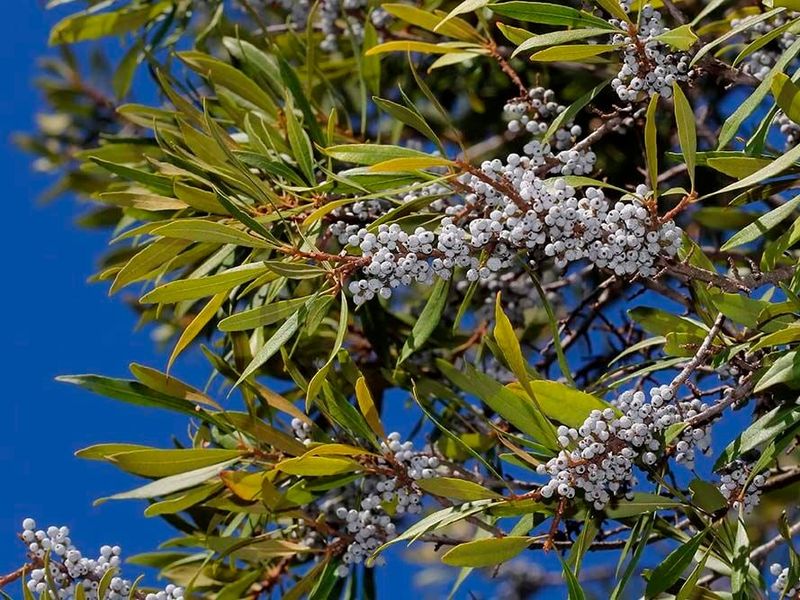
Light tip pruning and severe renovation are completely different operations, and August is not the time to confuse them. Shortening a handful of overly long shoots is corrective maintenance.
Cutting the entire shrub back dramatically to force a size reduction is a different situation with different consequences.
Hard pruning in late summer removes a large portion of the leaf area the plant relies on to produce energy heading into fall. For Morella cerifera, there is another consideration specific to female plants.
Wax myrtles produce small, waxy blue-gray fruit on older wood. That fruit is a documented food source for birds, including yellow-rumped warblers and other species that depend on it during migration and winter.
Removing older fruiting wood through aggressive late-season pruning can reduce the berry crop available to wildlife the following season.
UF/IFAS Extension highlights the ecological value of wax myrtle fruit for Florida wildlife, which makes excessive pruning a trade-off worth thinking about carefully.
A good rule of thumb from general extension pruning guidance is to avoid removing more than necessary to correct the specific problem you identified. If you set out to tip back a few long shoots and find yourself cutting branch after branch, stop and reassess.
A trim that started as light maintenance can turn into a hard cut before you realize it, and walking that back is not always possible once the growth is on the ground.