Grow These 8 Native Shrubs And Let Virginia’s Climate Do The Work
There are gardens that feel like a second job and gardens that feel like they run themselves. For an embarrassingly long time, mine was firmly in the first category.
I watered things that didn’t want watering, moved plants that didn’t want moving and spent entire weekends managing shrubs.
Then I took a walk through a Virginia woodland in early spring and stumbled across a shrub doing something remarkable. Absolutely nothing.
No one was tending it, feeding it, or worrying about it.
It was simply covered in soft pink flowers, performing without an audience and clearly not needing one. I stood there longer than was strictly necessary for a casual walk.
The light was coming through the bare branches above at exactly the right angle, catching those flowers in a way that felt almost theatrical.
I went home, looked at my garden with fresh eyes, and had a quiet word with myself. Virginia has its own plants.
Plants that know this soil, this climate, and exactly what they’re doing. It turns out the garden didn’t need more effort.
It needed better shrubs.
1. Wild Azalea
Nobody walks past a Wild Azalea in bloom without slowing down.
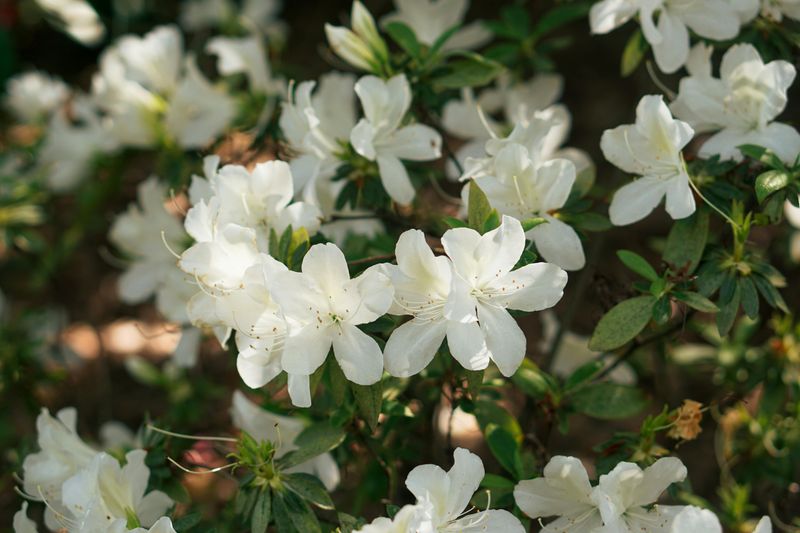
Rhododendron periclymenoides produces clusters of pale pink to soft lavender-pink tubular flowers in April and May, appearing on bare stems just before the foliage emerges.
The effect is light, airy, and genuinely lovely in a way that feels natural rather than cultivated.
The flowers carry a faint fragrance on warm afternoons, subtle enough to catch you off guard rather than announce itself from across the yard.
Long curved stamens extend beyond the petals, giving each bloom a graceful, reaching quality that draws the eye.
Wild Azalea grows six to ten feet tall with an open, upright habit that suits woodland garden settings naturally.
It thrives in part shade to full shade with moist, acidic, well-drained soil, conditions that exist readily under Virginia’s oak and hickory canopy.
Native bumblebee queens locate the flowers immediately in spring. Ruby-throated hummingbirds use them as an early fuel source after their long journey north.
Eastern tiger swallowtail butterflies visit regularly through the bloom period.
The fall foliage turns soft yellow-orange before dropping, adding one more season of color to a shrub that has already delivered considerably in spring.
Plant it where you want a reliable focal point that manages itself once established.
The winter structure is open and architectural. It shows the branching pattern clearly and gives the garden a layered appearance, even when nothing is actively growing.
2. Possumhaw Holly
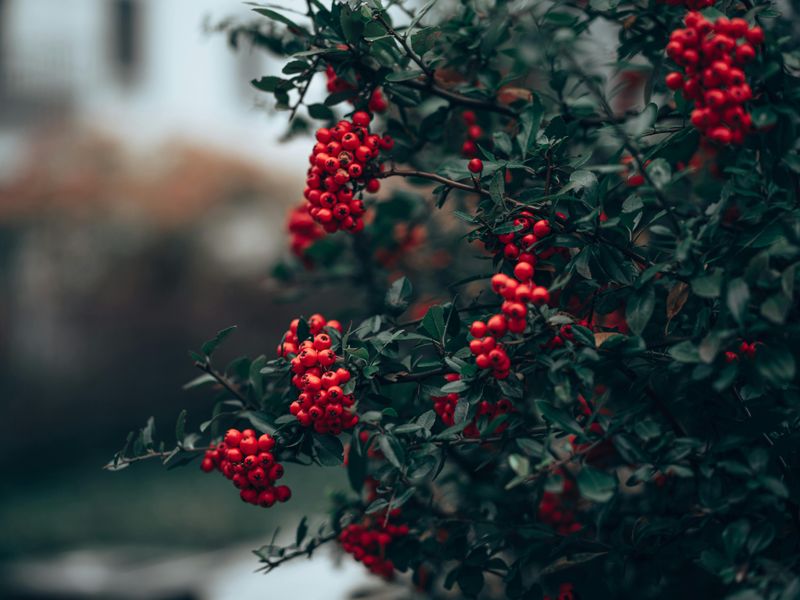
Most shrubs wrap up their visual contribution by October.
Possumhaw Holly is just getting started. This plant is a deciduous native holly that drops its leaves in fall to reveal densely clustered bright red or orange berries coating every branch from October straight through winter.
Is it even winter if the Possumhaw Holly is not out there showing off a little?
It glows against bare stems and dormant garden beds with a cheerfulness that feels almost deliberate.
Your Illinois Garden Changes Every Week. Your Plan Should Too.
Gardening in Illinois changes quickly throughout the season. Every Friday you’ll receive a simple weekly plan showing exactly what to plant, prune, fertilize, harvest, and protect so you never miss the right timing.
It grows seven to fifteen feet tall with an upright, arching habit.
The shrub adapts to a wide range of soil conditions, from moist lowland areas to average garden beds with reasonable drainage.
Virginia’s varied topography suits it well across the state.
The berries persist because birds pace themselves, returning repeatedly through winter as other food sources thin out.
Cedar waxwings, mockingbirds, robins, and bluebirds all visit a fruiting Possumhaw Holly with obvious enthusiasm.
Plant a female cultivar with a male pollinator nearby for reliable berry production, and position it somewhere the winter display can be seen from indoors.
That view earns its keep on cold February mornings when outdoor gardening feels like a distant memory. The arching branches create an attractive silhouette that adds structural interest to the garden year-round, making this shrub as valuable for its form as for its fruit.
3. Elderberry
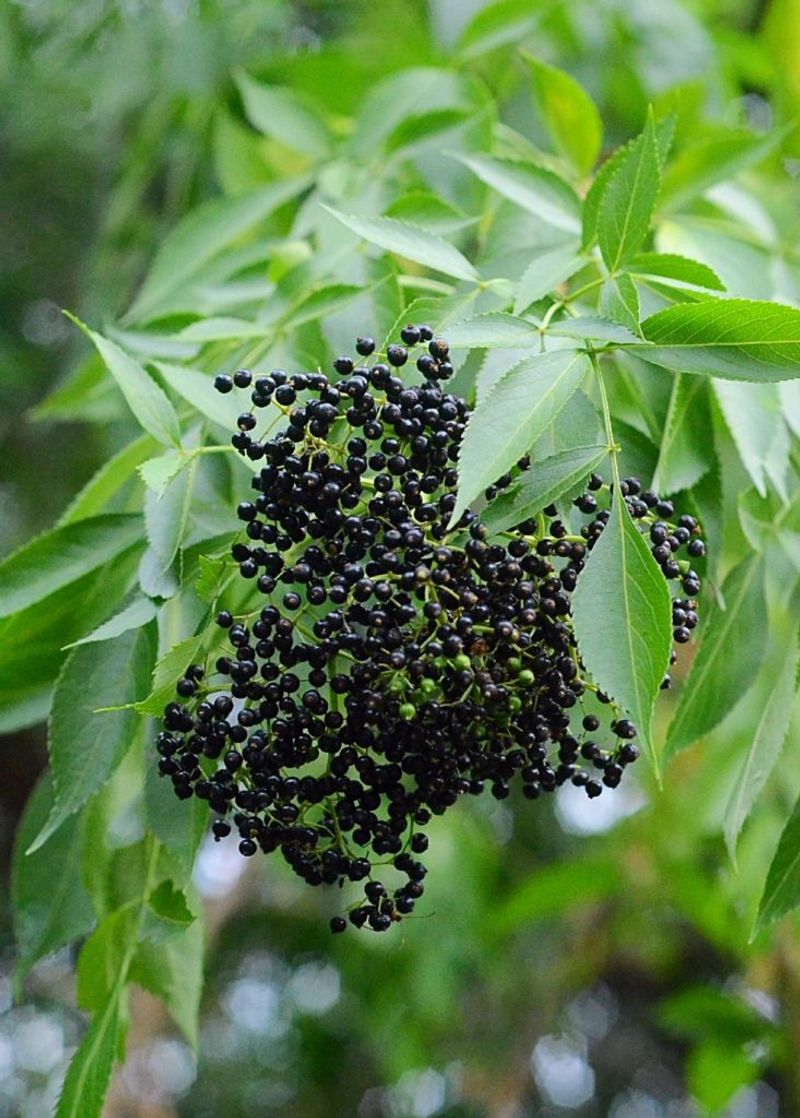
If patience is not your strongest gardening virtue, Elderberry will restore your faith in the whole enterprise. Sambucus canadensis grows quickly, establishes readily, and begins producing its distinctive flat-topped white flower clusters within a season or two of planting.
The flowers appear in June and July, creamy white and lacy, attracting native bees, beetles, and butterflies in impressive numbers.
By late summer the clusters ripen into deep purple-black berries that disappear almost immediately once the birds locate them.
Elderberry grows eight to twelve feet tall and spreads gradually by suckers to form a multi-stemmed colony over time. It handles moist to wet soil conditions exceptionally well, making it one of the most useful native shrubs for low spots, rain gardens, and areas near water features.
The large, pinnate leaves have a bold quality that gives the shrub strong presence in the summer garden. Baltimore orioles, gray catbirds, and wood thrushes consume the berries heavily during the late summer fruiting period.
The combination of fast establishment, strong wildlife value, and genuine adaptability to difficult growing conditions makes Elderberry practically useful for Virginia gardens.
I planted three along a drainage swale where nothing else wanted to grow, and within two seasons they had transformed a soggy problem area into a wildlife magnet.
The vertical growth habit means they don’t take up much horizontal space, fitting into narrow planting beds where broader shrubs would overwhelm neighboring plants.
4. Ninebark
Most gardeners plant Ninebark for the flowers and stay for the bark. It produces clusters of small white to pale pink flowers in May and June that cover the arching branches in a frothy display attractive to native bees and butterflies.
Then the flowers give way to reddish seed capsules that add color through summer and fall.
And winter arrives and the real feature reveals itself: exfoliating bark that peels back in thin strips to expose rich cinnamon and auburn layers beneath.
Running your hand along a mature Ninebark stem in January feels like discovering something the plant was keeping private all summer.
The textural quality adds genuine visual interest to the winter landscape when most shrubs offer only bare twigs.
Ninebark grows six to ten feet tall with a graceful, arching habit and handles an impressive range of conditions including clay soil, dry slopes, and part shade.
This makes it one of the most adaptable native shrubs for challenging Virginia garden spots.
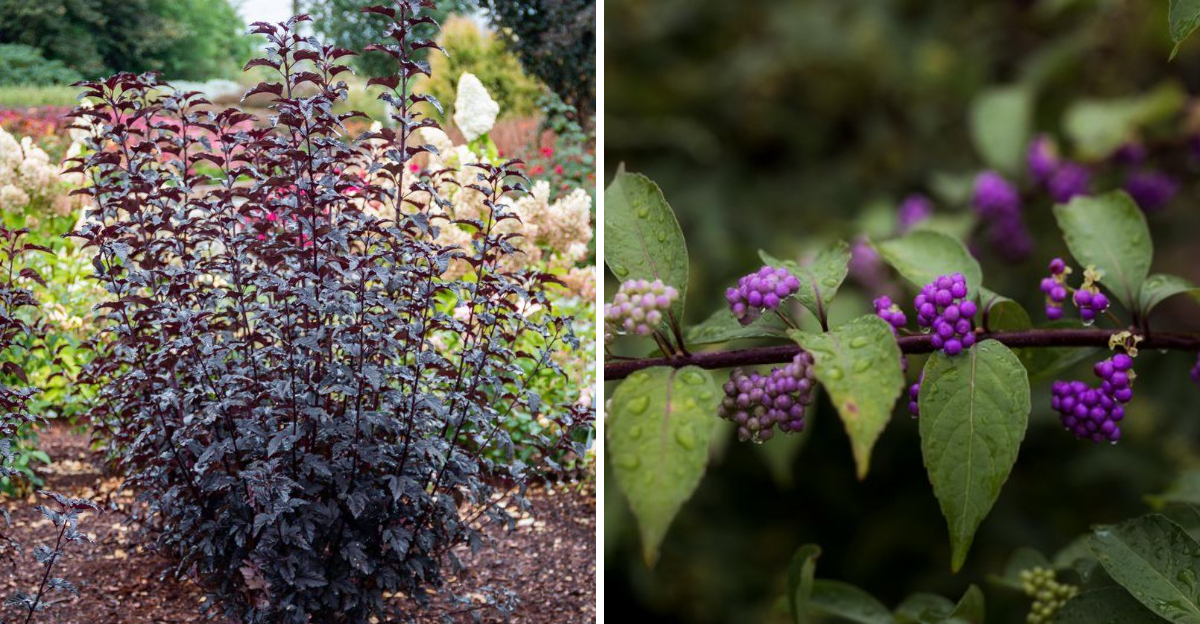
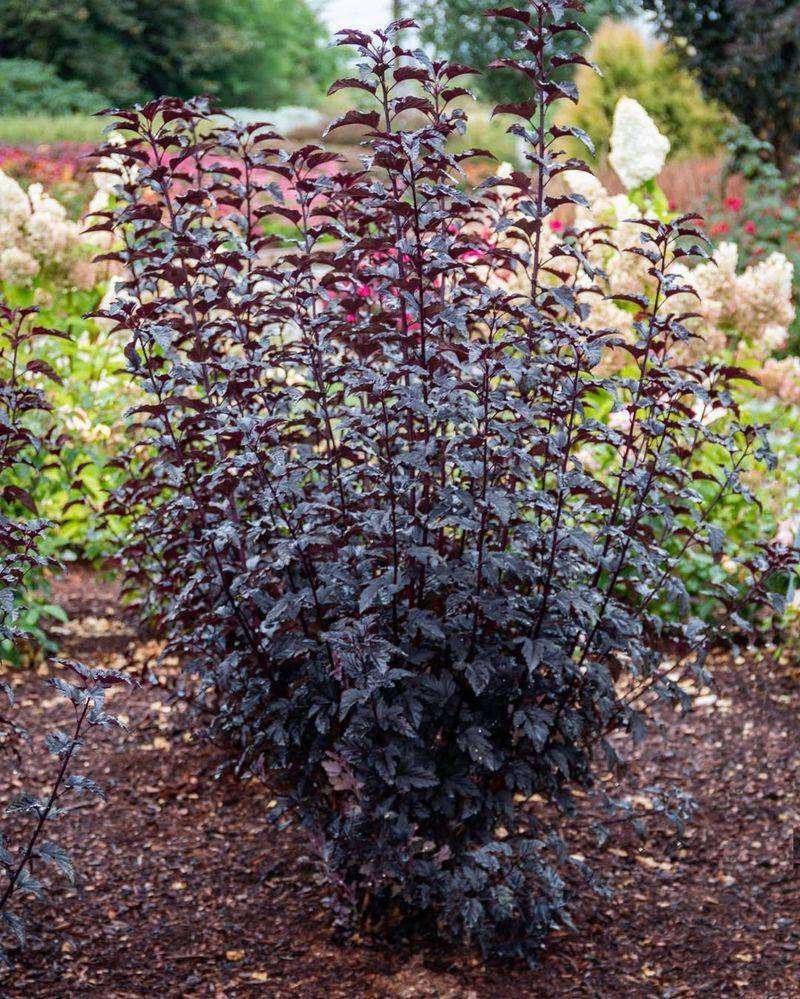
The cultivar Diablo offers deep burgundy foliage that holds its color through the growing season, providing strong contrast in a mixed border.
Native bees work the flower clusters thoroughly in late spring, and the seed capsules feed small birds through fall and winter.
Cut older stems back to the ground every few years to encourage fresh, vigorous growth from the base. This maintains the shrub’s naturally attractive arching form without requiring precise pruning techniques or specialized knowledge.
5. Virginia Meadowsweet
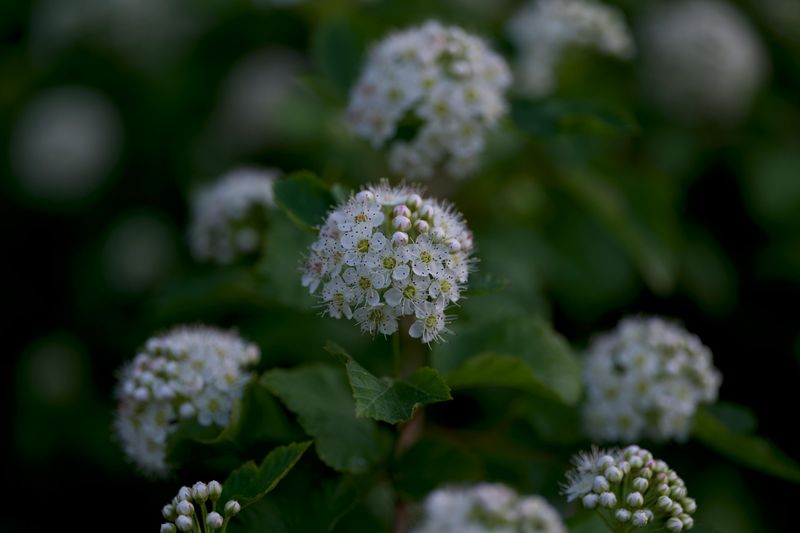
Summer borders can feel heavy by July, all broad leaves and dense foliage pressing against each other. Meadowsweet arrives as a welcome counterpoint.
This plant produces slender upright stems topped with narrow spikes of tiny white flowers from July through August, creating a light, airy texture that lifts the overall composition of any planting it joins.
The flowers are small individually but numerous enough collectively to make a genuine visual contribution at the height of summer.
Meadowsweet grows three to four feet tall and prefers moist to wet soil in full sun to part shade, thriving naturally along stream banks and in low meadow areas across Virginia.
It suits rain gardens, pondside plantings, and low border areas where consistent moisture is available.
Native bees visit the flowers steadily through the bloom period, and the plant supports several specialist native bee species.
The upright, slender form provides vertical interest without bulk, fitting into border gaps where a larger shrub would overwhelm the space.
Cut it back hard in late winter to encourage fresh growth and a strong flower display the following summer.
I have three specimens planted at the edge of a retention pond where they soften the transition between water and lawn without blocking the view.
The vertical flower spikes catch late afternoon light beautifully, glowing white against darker foliage behind them.
Their modest height means they never obstruct sight lines or require constant pruning to keep them in bounds.
6. Bayberry
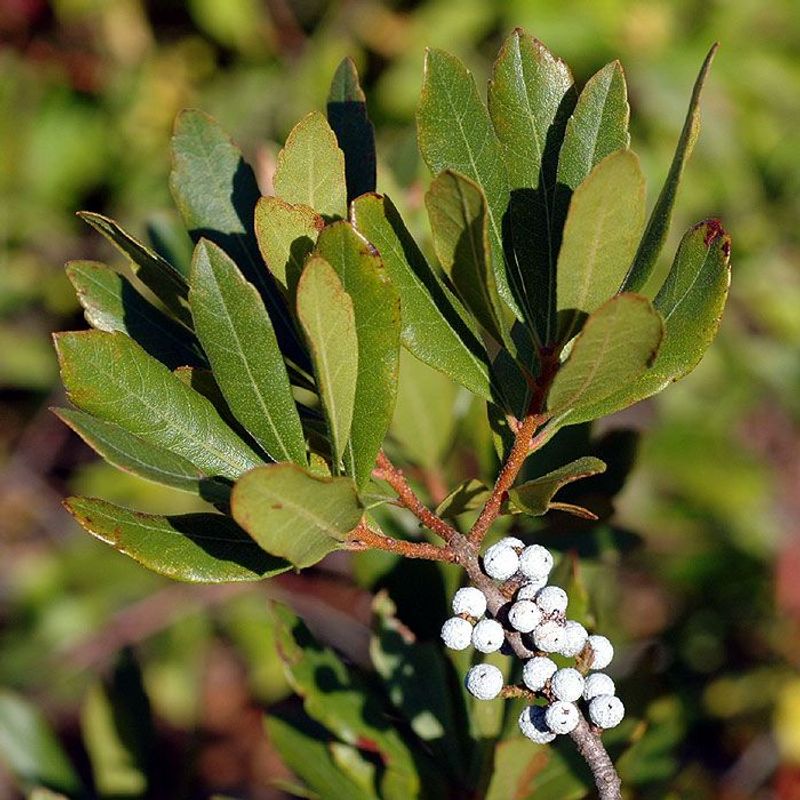
There is a particular category of difficult garden spot that defeats most shrubs: the dry, exposed, driveway, or coastal location where conditions test everything planted there.
Bayberry handles that category with composure. It is a semi-evergreen native shrub that grows five to ten feet tall, tolerates salt spray, dry soil, and coastal wind.
It produces waxy gray-white berries along its stems in fall that yellow-rumped warblers depend on during migration and winter.
The aromatic foliage carries a pleasant bay-like scent when brushed, making it particularly enjoyable near a path or gate where contact happens naturally.
The semi-evergreen habit means it holds foliage through mild Virginia winters. The plant provides year-round structure in exposed spots where deciduous shrubs leave gaps from November through April.
Bayberry spreads slowly by suckers to form a colony over time, which suits naturalistic plantings and slope stabilization applications where spreading coverage is an asset.
It fixes nitrogen in the soil through a symbiotic relationship with soil bacteria, gradually improving conditions for neighboring plants without any deliberate effort on your part.
This trait makes Bayberry particularly valuable in poor soil situations where other shrubs struggle to establish.
I planted a row along a gravel driveway where winter salt spray and summer drought had eliminated previous attempts at landscaping.
Five years later, the colony has filled in completely and actually looks healthier than the pampered shrubs receiving regular irrigation elsewhere in the garden.
7. American Beautyberry
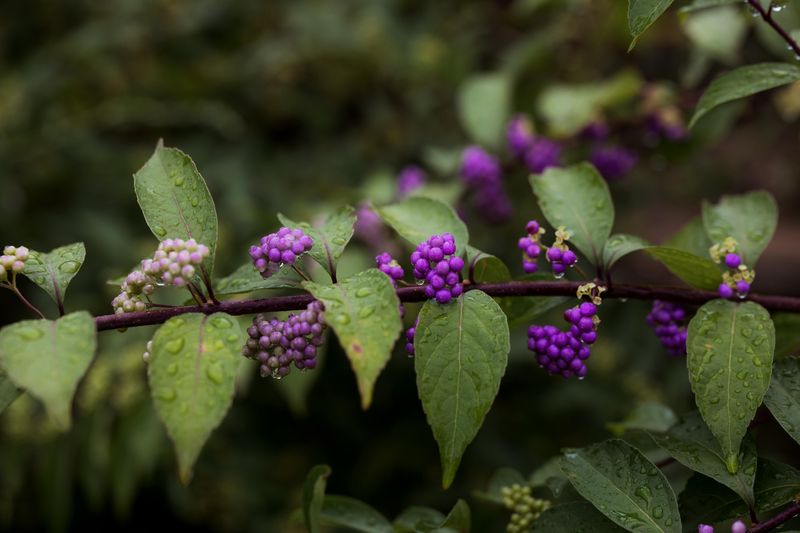
October in a Virginia garden is full of reds and oranges and the occasional reliable yellow.
Then American Beautyberry arrives with vivid magenta-purple berries clustered tightly around its arching stems and makes everything else look like it was playing it safe.
This garden plant produces one of the most genuinely surprising fall colors in the native plant palette.
It is bright, saturated purple that looks almost artificial against the more muted tones of the autumn landscape.
American Beautyberry grows four to eight feet tall with a loose, arching habit and thrives in part shade to full sun across Virginia’s varied growing conditions.
The small pink-lavender flowers in summer are modest and easy to overlook, but they attract native bees reliably before giving way to the spectacular berry display in September and October.
Birds consume the berries steadily through fall, with mockingbirds, robins, and brown thrashers among the most frequent visitors.
Cut the shrub back hard in late winter, as it blooms and fruits on new growth each season, and the regrowth is vigorous and productive.
Few native shrubs deliver a more visually dramatic fall moment in a Virginia garden, and none do it quite that shade of purple.
I have one planted near the front walkway where every visitor stops to ask whether the berries are real.
The color is so vivid it reads as unnatural at first glance, which makes the reveal that it’s a native plant even more satisfying.
Plant it where the fall display can be appreciated from multiple angles.
8. Eastern Sweetshrub
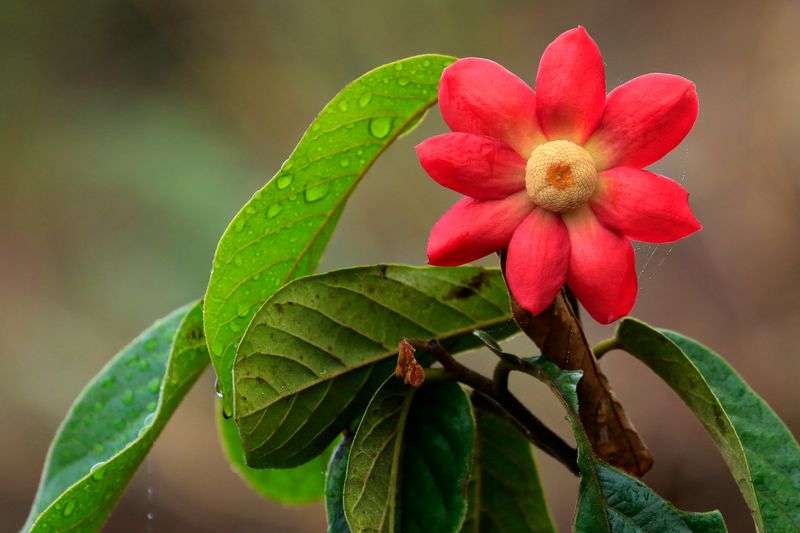
Eastern Sweetshrub announces itself before you locate it.
This garden star produces burgundy-red flowers with a fruity, spicy fragrance that carries on warm days in April and May.
It simply draws attention from across the garden before the blooms themselves come into view.
The flowers have an unusual structure, with numerous strap-shaped petals arranged in a dense, layered pattern that appears more exotic than native.
They often attract attention and consistently prompt questions from garden visitors encountering them for the first time.
Eastern Sweetshrub grows six to nine feet tall with a rounded, multi-stemmed habit and thrives in part shade to full shade, making it one of the most valuable flowering shrubs for Virginia’s shadier garden areas where color options are genuinely limited.
The large, glossy leaves are attractive through summer, and the fall color ranges from clear yellow to gold depending on light levels and seasonal conditions.
It tolerates clay soil and periodic moisture fluctuations without significant stress, handling the variable conditions common in Virginia’s Piedmont and mountain regions reliably well.
The fragrance intensity varies between individual plants, so selecting one in bloom at the nursery gives you the opportunity to choose a strongly scented specimen.
Plant it near a seating area, beside a frequently used path, or below a window where the fragrance can be appreciated without going looking for it.
A shrub that rewards you with scent before it rewards you with color earns a genuinely special position in any Virginia garden, particularly in shadier spots where most flowering options fade into background greenery.