Grow These Shrubs Instead Of Oleander In California
Oleander comes with baggage, and California gardeners have better options. Plenty of shrubs deliver the same bold look, privacy, and heat tolerance without the toxicity concerns that make oleander such a risky pick around kids, pets, and busy outdoor spaces.
That swap makes a lot of sense in California, where a shrub has to do more than survive. It needs to handle sun, dry stretches, and tough conditions while still looking good in the landscape.
The best alternatives bring color, structure, and staying power without turning your yard into a safety warning.
These shrubs prove you do not have to settle for oleander to get a strong, beautiful screen or standout focal point.
You can get the lush look, the reliable performance, and the lower-stress upkeep, all without planting something that makes people nervous the second they hear its name. That alone feels like an upgrade.
1. Pacific Wax Myrtle
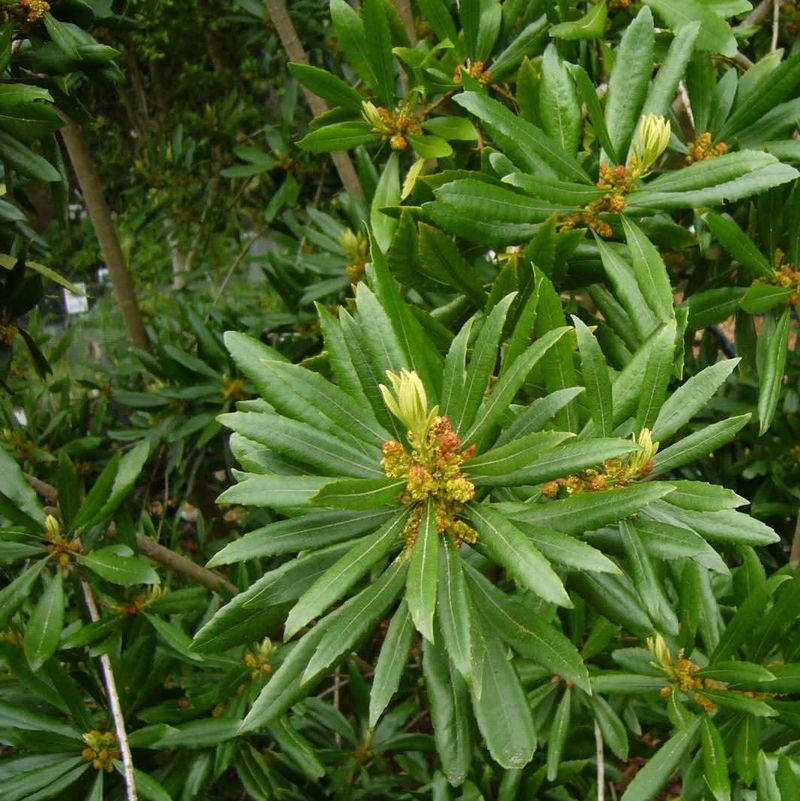
Walk past a Pacific wax myrtle on a warm California afternoon, and you will notice something right away: a clean, pleasant, almost herbal scent drifting from its leaves. That fragrance alone makes it worth planting.
But there is so much more to love about this native evergreen.
Pacific wax myrtle, known scientifically as Morella californica, grows naturally along the California coast and into the Pacific Northwest. It can reach anywhere from six to twenty feet tall, so it works well as a privacy screen, a windbreak, or a standalone specimen shrub.
The leaves are glossy and dark green, giving the garden a tidy, polished look year-round. In fall and winter, small waxy purple berries appear along the stems, and birds absolutely love them.
One of the best things about this shrub is how adaptable it is. It handles coastal fog, salt spray, and clay soils without complaint.
Once established, it needs very little water, making it a smart pick for California’s dry climate. Plant it in full sun or partial shade.
It grows at a steady pace and responds well to pruning if you want to keep it shaped. For a low-fuss, high-reward native shrub, Pacific wax myrtle is hard to beat.
2. White Coast Ceanothus
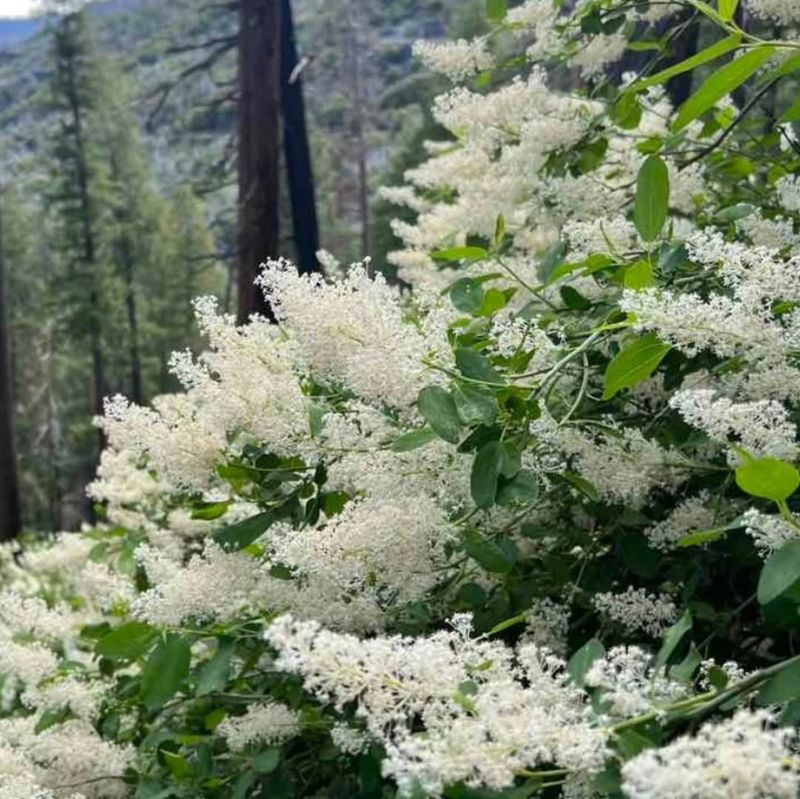
Few plants put on a spring show quite like white coast ceanothus. When it blooms, the whole shrub gets covered in fluffy clusters of creamy white flowers, and the bees go absolutely wild for it.
If you want a garden that buzzes with life, this is your plant.
White coast ceanothus, or Ceanothus thyrsiflorus, is a California native that thrives in coastal and inland areas alike. It grows quickly and can reach six to twelve feet tall with a wide, spreading form.
That makes it a great choice for filling in large spaces or creating a natural-looking hedge along a fence or property line. The deep green, glossy leaves stay on the shrub year-round, so you get structure and color even when it is not blooming.
Here in California, this shrub is a powerhouse for pollinators. Bees, butterflies, and other beneficial insects flock to the flowers each spring.
Your California Garden Changes Every Week. Your Plan Should Too.
Gardening in California changes quickly throughout the season. Every Friday you’ll receive a simple weekly plan showing exactly what to plant, prune, fertilize, harvest, and protect so you never miss the right timing.
Plant it in a spot with full sun and well-drained soil for best results. It is drought-tolerant once established, which means you can cut back on watering after the first year or two.
Compared to oleander, it is a much safer and more ecologically valuable choice for any California yard.
3. Mountain Coffeeberry
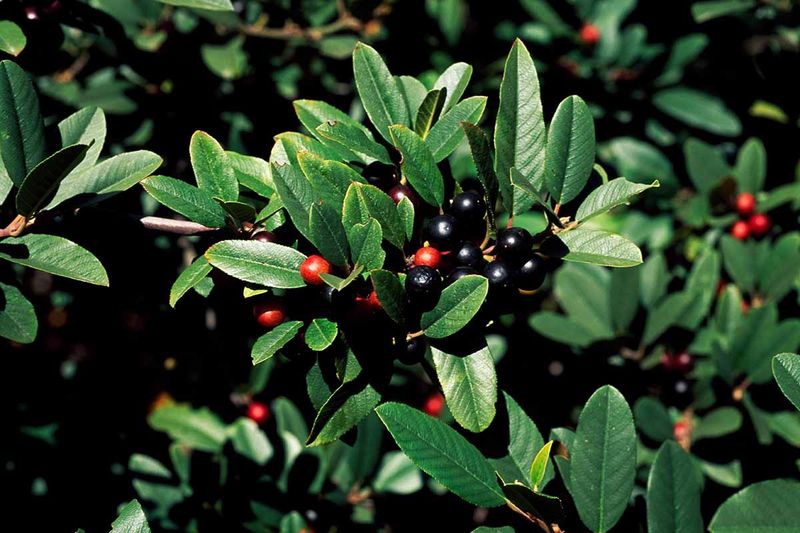
There is something quietly spectacular about mountain coffeeberry. It does not shout for attention the way some flowering shrubs do, but once you notice it, you cannot stop noticing it.
The berries shift from green to red to deep purple as the season progresses, like a slow-motion color show right in your backyard.
Frangula californica, commonly called California coffeeberry, is a tough and adaptable native shrub that grows across a wide range of California habitats, from coastal scrub to dry inland hillsides. It typically reaches four to ten feet in height and width, making it a solid mid-sized option for most gardens.
The glossy, oval leaves stay green through the year, and the berries that follow the small spring flowers are a favorite food source for birds like mockingbirds, thrushes, and waxwings.
Gardeners in California love coffeeberry because it handles both sun and shade without much fuss. It is also remarkably drought-tolerant once it gets established, which usually takes one to two seasons.
Unlike oleander, it poses no toxicity risk to children or pets wandering through the garden. Pruning is optional since it naturally takes on a graceful, rounded shape.
For a reliable, wildlife-friendly native shrub, mountain coffeeberry earns a top spot on the list.
4. Catalina Cherry
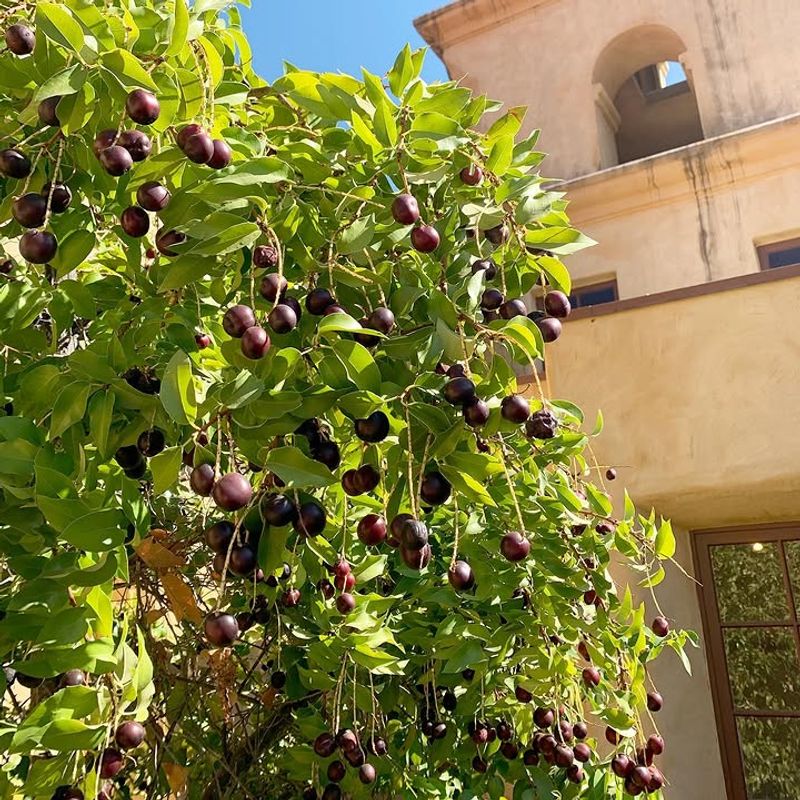
Bold, beautiful, and built for California’s climate, Catalina cherry is the kind of shrub that makes people stop and ask what it is. The large, glossy leaves catch the light in a way that feels almost tropical, and the clusters of dark purple fruit that follow the spring flowers are a feast for local wildlife.
Native to the Channel Islands off the California coast, Prunus lyonii is an evergreen shrub or small tree that can grow anywhere from ten to thirty feet tall. That range gives you a lot of flexibility.
Keep it pruned as a dense, formal hedge, or let it grow freely as a small tree anchoring a corner of your yard. Either way, it looks polished and purposeful.
Birds love the fruit, and the spring flowers attract native bees and other pollinators. Once established in the garden, Catalina cherry is highly drought-tolerant and needs very little supplemental water during California’s dry summers.
It grows best in full sun but handles partial shade reasonably well. The soil does not need to be fancy, just well-drained.
Compared to oleander, which offers little ecological benefit, Catalina cherry gives back to the local ecosystem in a big and meaningful way. It is a real standout for California landscapes.
5. Island Mountain Mahogany
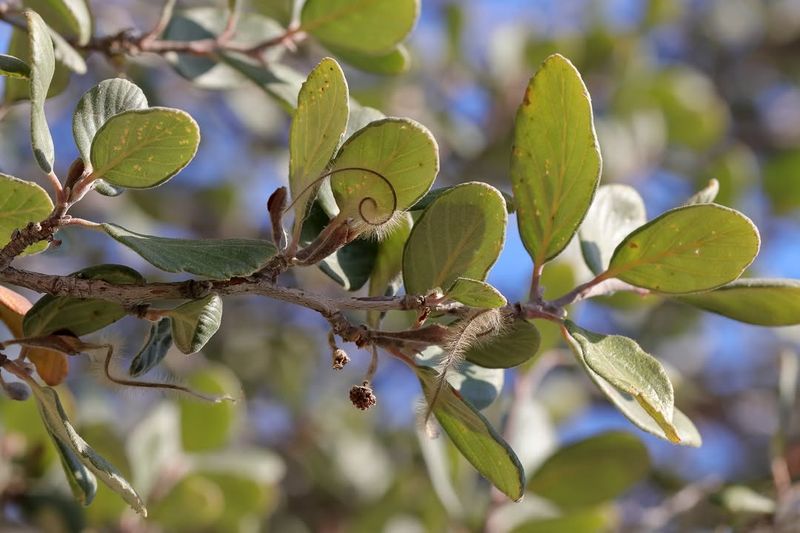
Not every great shrub announces itself with flashy flowers. Island mountain mahogany plays a longer game, and the payoff is genuinely stunning.
When the seeds ripen in late summer, each one is tipped with a long, feathery, silver plume that twists and catches the light like something out of a nature documentary.
Cercocarpus betuloides var. blancheae is native to the Channel Islands and dry slopes of Southern California. It is an evergreen shrub that typically grows eight to fifteen feet tall, with small, leathery, dark green leaves that stay on the plant through the dry season.
The structure is open and airy, which gives it a natural, unmanicured look that fits perfectly into California-style landscapes and habitat gardens.
Wildlife benefits are real and significant. Deer browse on the leaves, and the seeds support a range of birds and small mammals.
For gardeners in California’s drier inland areas, this shrub is a dream because it thrives on very little water once established. Plant it in full sun with good drainage and step back.
It is not a shrub that needs a lot of babying. If you want something that looks beautiful in every season and asks for almost nothing in return, island mountain mahogany is worth serious consideration.
6. Canyon Silktassel
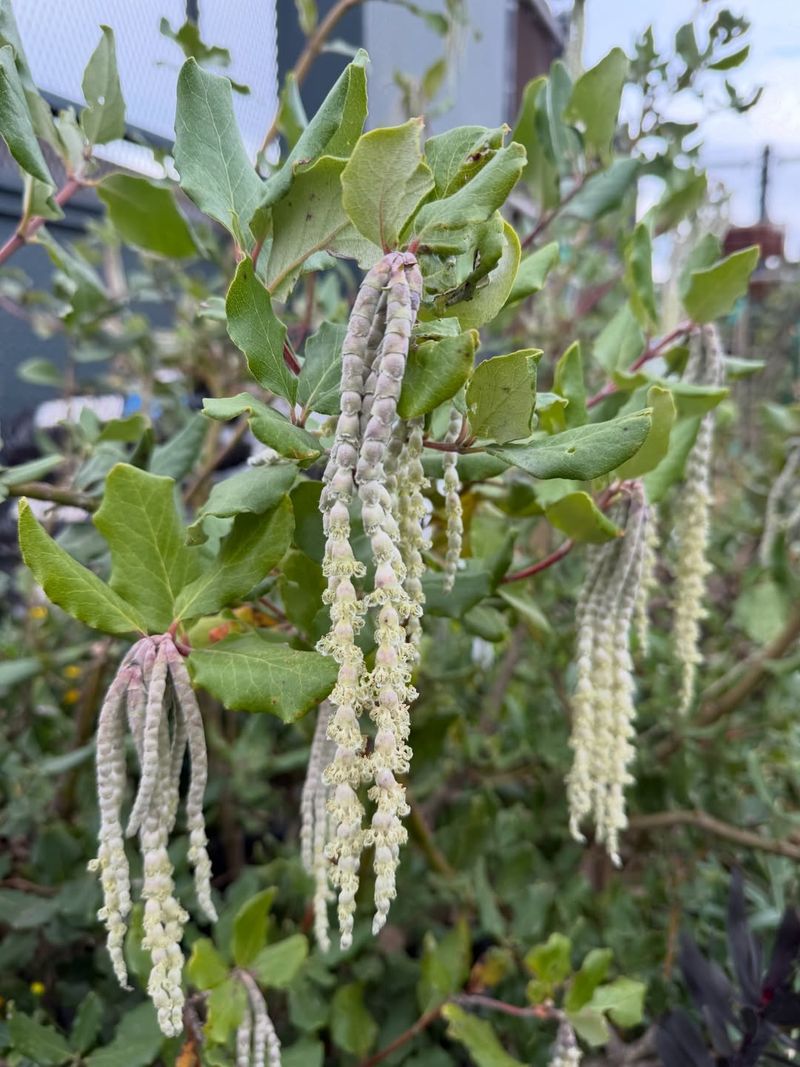
Canyon silktassel is the kind of plant that makes a statement without trying too hard. Those long, hanging tassels that dangle from the branches in winter and early spring look unlike anything else you will find in a California garden.
They sway in the breeze, and they have this quiet, elegant drama that is really hard to put into words.
Garrya elliptica grows naturally along the coastal ranges and dry hillsides of California. It is a tough, evergreen shrub that typically reaches six to twelve feet tall.
The leaves are dark green on top and woolly underneath, giving them a two-toned look that adds textural interest year-round. The catkins, which are the long decorative tassels, appear on male plants and can stretch up to twelve inches in length on mature specimens.
From a wildlife perspective, canyon silktassel punches well above its weight. The berries that follow the flowers on female plants feed birds through late summer and fall.
Butterflies use the plant as a larval host. And because it grows naturally in dry, rocky soils, it handles California’s rainless summers without breaking a sweat.
Give it full sun or partial shade and well-drained soil. Once it settles in, it is essentially self-sufficient.
It is a fantastic, safe, and ecologically rich alternative to oleander in any California yard.
7. Island Bush Poppy
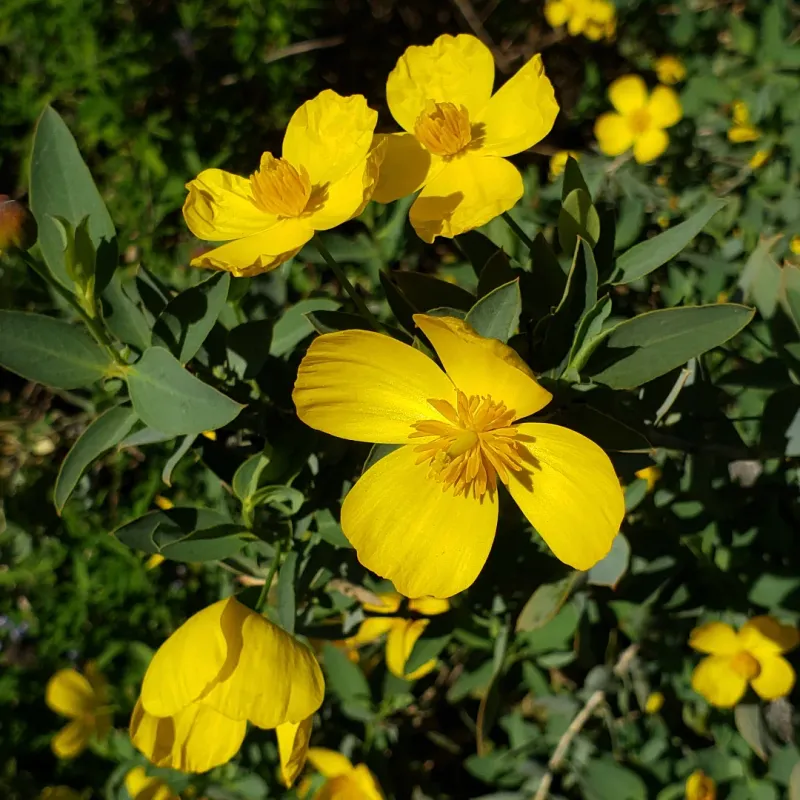
Bright yellow flowers against silvery blue-green foliage, island bush poppy is pure sunshine in shrub form. It blooms generously in spring and early summer, and on a clear California morning with the light hitting it just right, it looks almost unreal.
Gardeners who plant it once tend to never want to be without it again.
Dendromecon harfordii is native to the Channel Islands of California and grows naturally in dry, rocky, coastal scrub environments. In the garden, it typically reaches four to eight feet tall and wide, forming a loose, open mound of blue-gray stems covered in narrow, leathery leaves.
The poppy-like flowers are bright golden yellow and about two inches across, appearing in abundance from late winter through early summer.
This shrub is tailor-made for California’s Mediterranean climate. It needs excellent drainage and full sun to perform at its best, and once established, it is extremely drought-tolerant.
In fact, overwatering is one of the few things that will cause problems. Keep irrigation minimal during summer.
It is a good idea to plant it on a slope or in a raised bed if your soil tends to hold moisture. Unlike oleander, island bush poppy is safe around children, pets, and wildlife.
It also supports native bees and butterflies, making it a beautiful and responsible choice for California gardens.
8. Sugar Bush
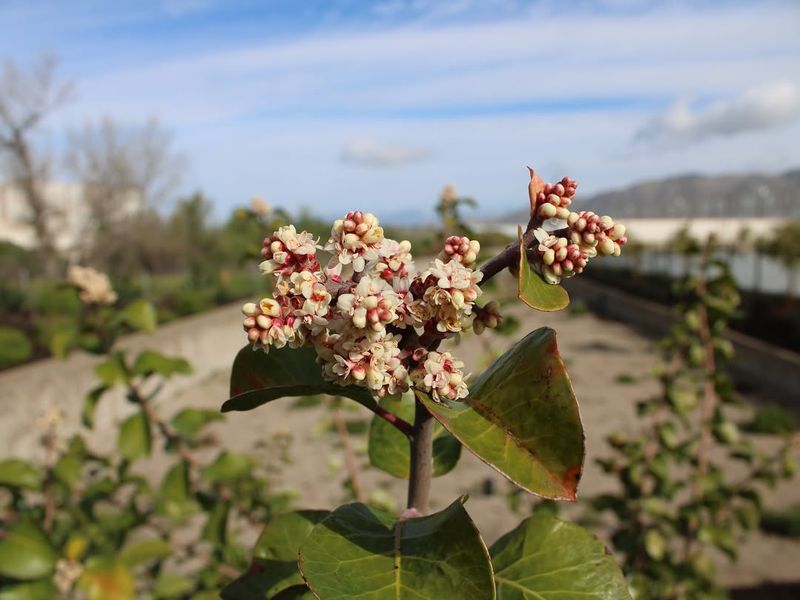
Sugar bush has been feeding California wildlife and people for thousands of years. The Chumash and other Indigenous peoples of California used the sticky, tart berries to make a refreshing drink, which is exactly how this plant got its sweet-sounding name.
That kind of deep-rooted history makes it feel like more than just a garden shrub.
Rhus ovata is an evergreen native shrub found throughout Southern California’s chaparral and coastal sage scrub communities. It grows six to twelve feet tall and wide, with large, thick, dark green leaves that have a distinctive folded shape along the midrib.
In early spring, small clusters of pink to white flowers appear at the branch tips, followed by sticky, reddish berries that birds and small mammals love to eat.
For California gardeners dealing with hot, dry summers and poor, rocky soils, sugar bush is one of the most reliable natives you can plant. It thrives in full sun and handles drought remarkably well once established.
It also works beautifully as a privacy screen, a slope stabilizer, or a backdrop plant in a mixed native garden. Sugar bush is completely safe for people, pets, and wildlife, which puts it miles ahead of oleander in that regard.
If you live in Southern California and want a tough, good-looking native shrub with real historical roots, this one belongs in your yard.
9. Pink-Flowering Currant
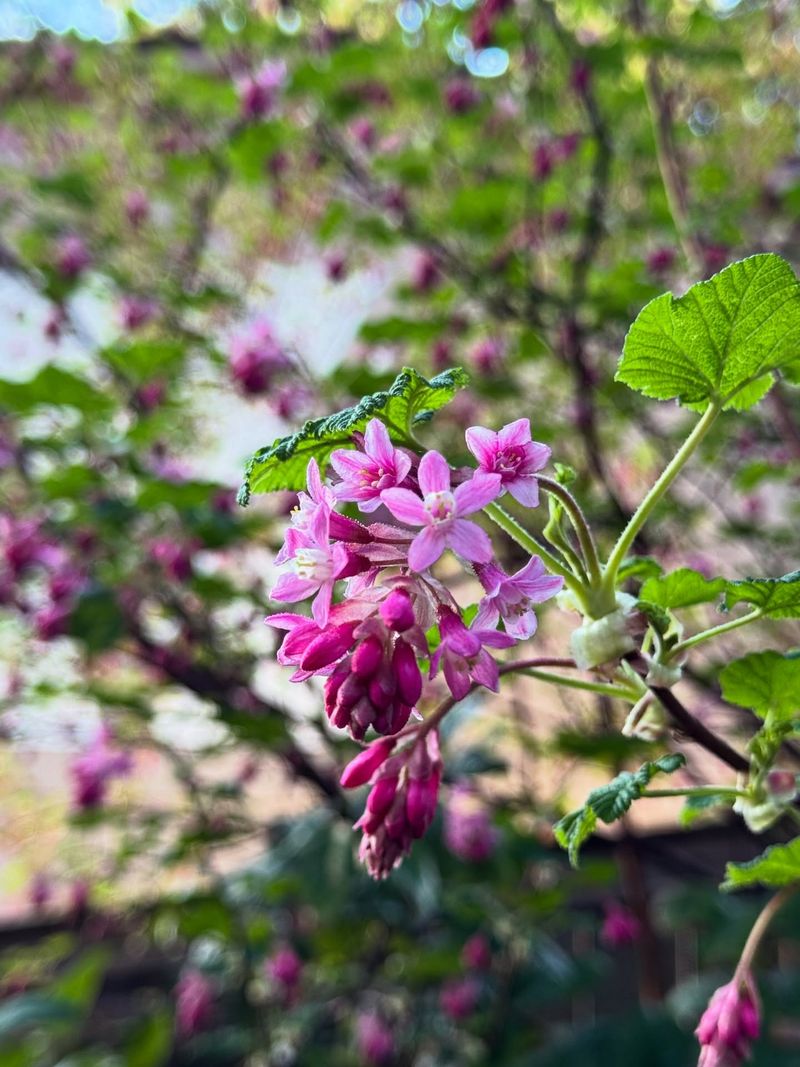
Ask any hummingbird in California where to find a good meal in late winter, and chances are it will point you toward a pink-flowering currant. This shrub blooms earlier than almost anything else in the garden, sometimes as early as January or February, and the hummingbirds find it fast.
Watching them work through the dangling pink flower clusters is one of the genuine joys of having this plant in your yard.
Ribes sanguineum var. glutinosum is native to the coastal and foothill regions of California. It is a deciduous shrub, meaning it loses its leaves in late summer and fall, but that is a small trade-off for the spectacular late-winter bloom.
The flowers hang in long, drooping clusters of deep rose-pink and are absolutely irresistible to Anna’s hummingbirds, which are year-round residents across much of California.
Growing pink-flowering currant is straightforward. It does best in partial shade but tolerates full sun in cooler coastal areas.
It needs moderate water during its first year or two, then settles into a fairly drought-tolerant routine. The small blue-black berries that follow the flowers feed birds into summer.
Unlike oleander, this plant is safe and wildlife-friendly. For California gardeners who want early color, hummingbird activity, and a true native presence in the garden, pink-flowering currant delivers on every level.