Grow This Fragrant White Flower Indoors For Christmas Blooms In Georgia
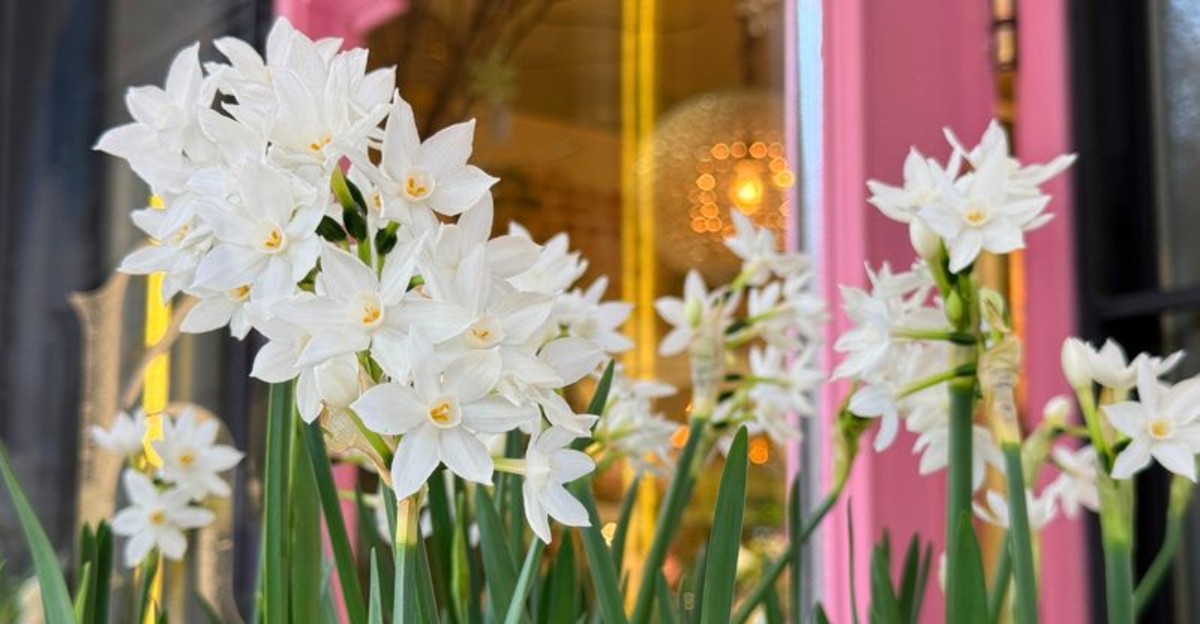
A bulb sitting in nothing but pebbles and water can open dozens of starry white flowers in about a month. No soil, no cold treatment, no fancy gear.
I still remember the first time that perfume hit me in my own kitchen. It smelled sweet, bold, and a little musky, and it filled the whole room by breakfast.
You need only a shallow dish, a bag of bulbs, and a sunny window.
Gardeners across Georgia can pull this off whether they live in the mountains or near the coast, since the whole show happens indoors.
I’ve always found the timing to be the fun part. Plant too early and the blooms fade before the presents get opened.
Plant too late and you get green shoots at the holiday table. So when should those bulbs go in?
1. A Pebble-Filled Bowl Holds A Fragrant Holiday Secret
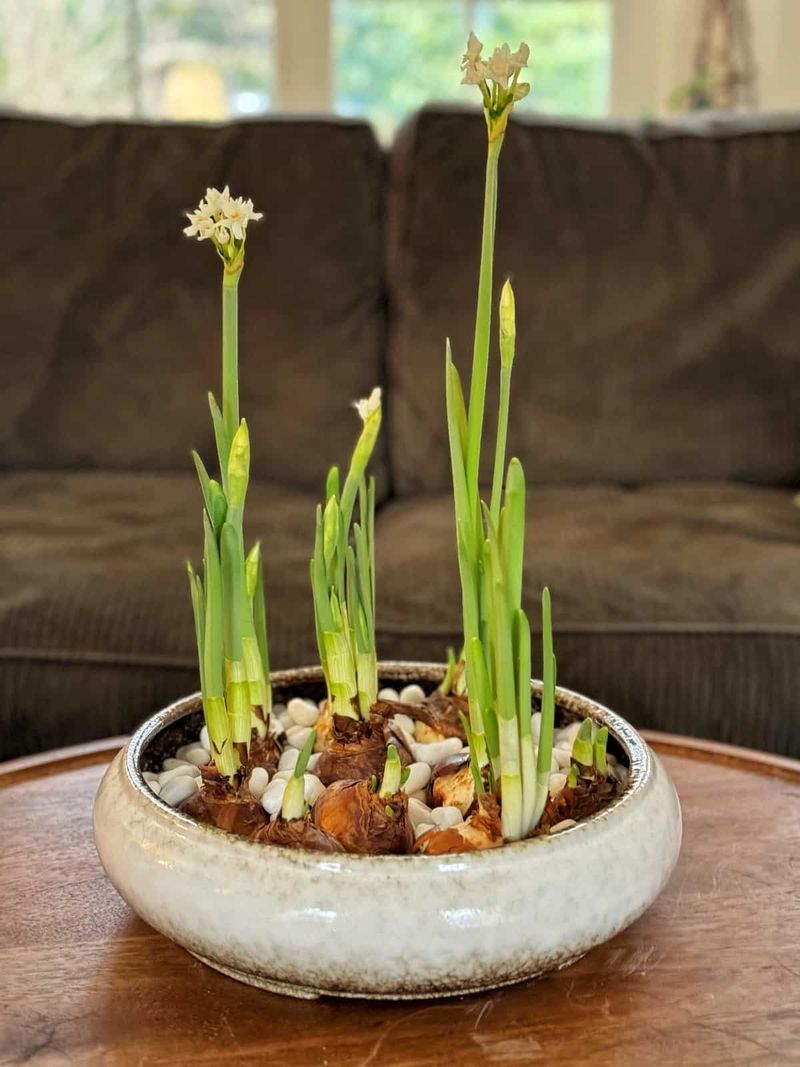
My favorite holiday trick costs a few dollars and fits on a windowsill. The star of the show is the paperwhite, a type of Narcissus with clusters of small, pure white, star-shaped flowers.
Paperwhites are close cousins of daffodils. Most kinds sold today come from Narcissus papyraceus, a plant native to the Mediterranean region.
Unlike tulips or regular daffodils, they do not need weeks of cold before they bloom.
That missing cold step is what makes them so easy. A tulip bulb needs a long chill to wake up, but a paperwhite is ready to grow the moment it gets water and warmth.
University extension experts, including those at the University of Georgia, list paperwhites among the simplest bulbs to force indoors.
Each bulb usually sends up one to three flower stalks. Every stalk can hold ten or more blooms, so even a small bowl turns into a big bouquet.
The scent is strong and sweet, with a musky edge. Some people adore it, and a few find it too much in a small room.
If you are not sure how your family feels, try a few bulbs first before filling every table. That way the fragrance stays a treat, not a surprise.
2. Plant Paperwhite Bulbs About Six Weeks Before Christmas
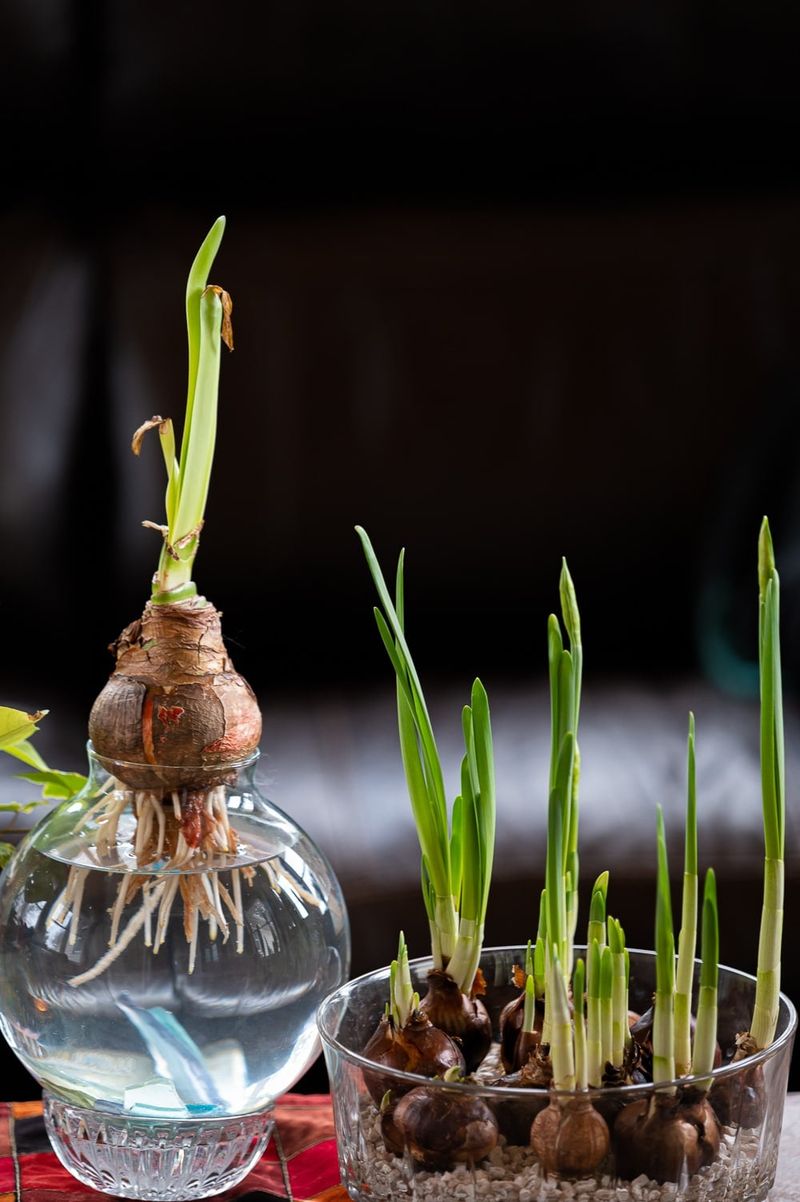
Timing is everything with these bulbs. Paperwhites usually bloom four to six weeks after planting, depending on how warm your house stays.
For flowers around December 25, aim to plant between early and mid-November. A warm home often speeds things up, so bulbs in a heated living room may open closer to four weeks.
Cooler rooms stretch that out toward six weeks.
I like to stagger my plantings. Start one pot in early November, another a week later, and a third after that.
You get a wave of blooms that carries you from Thanksgiving leftovers right through New Year’s Day.
Buy bulbs as soon as they show up at garden centers in fall. Choose ones that feel firm and heavy, like a good onion.
Skip any that feel soft, smell sour, or show gray mold.
Not ready to plant yet? Store bulbs in a paper bag in a cool, dry, dark spot, ideally around 50 to 60 degrees.
Your Georgia Garden Changes Every Week. Your Plan Should Too.
Gardening in Georgia changes quickly throughout the season. Every Friday you’ll receive a simple weekly plan showing exactly what to plant, prune, fertilize, harvest, and protect so you never miss the right timing.
Avoid the fridge if you keep fruit there, because apples give off ethylene gas that can harm flower buds. A closet or unheated garage that stays above freezing works nicely until planting day.
3. Nestle Paperwhites In Gravel And Water For Fast Results
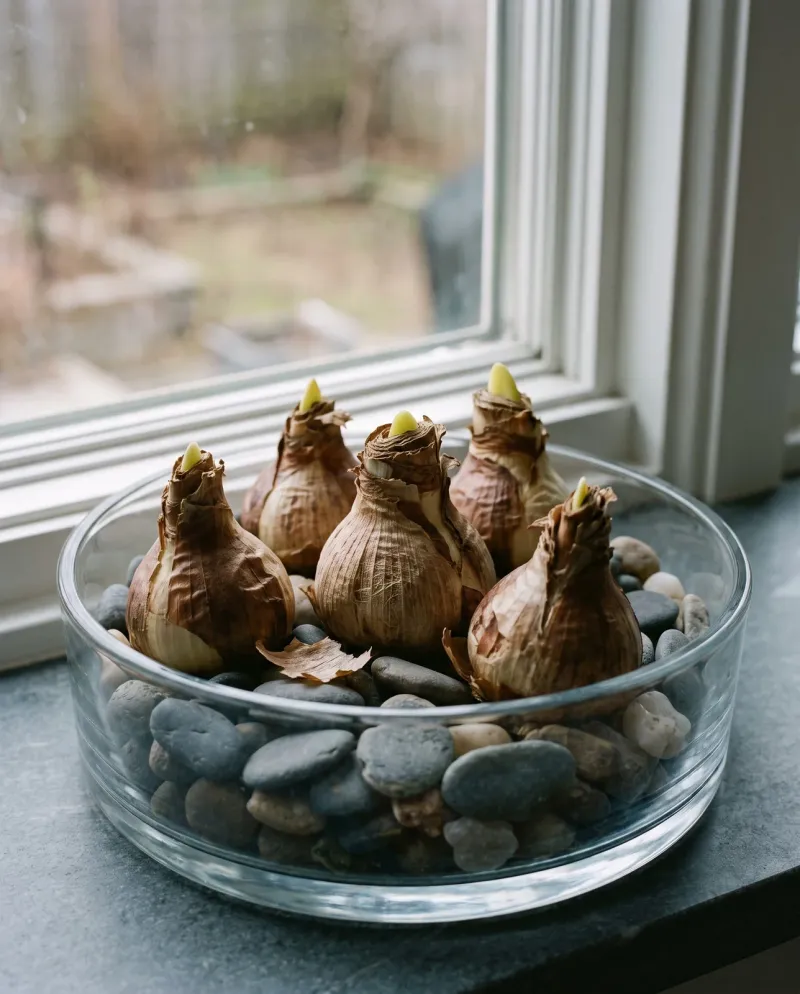
Kids love this method, and honestly, so do I. You get to watch the white roots snake through the stones day by day.
Pick a container with no drainage hole that is at least three to four inches deep. Fill it about halfway with clean gravel, pebbles, marbles, or decorative glass.
Set the bulbs on top, pointed ends up, packed closely but not quite touching.
Add a bit more gravel around the sides to hold them steady. Leave the top half of each bulb showing.
Now comes the key step. Pour in water until it reaches just below the bottom of the bulbs.
The roots will reach down to find it, but the bulb itself should stay dry so it does not rot.
Check the water level every few days. Roots drink fast once they get going, and a dry bowl can stall growth.
Top it off with room-temperature water as needed.
A clear glass vase makes the root show even better. Some gardeners use special hourglass-shaped forcing jars that hold one bulb above the water.
Either way, the setup takes about ten minutes and feels a little like a science project.
4. Potting Mix Gives Paperwhites A Classic Container Look
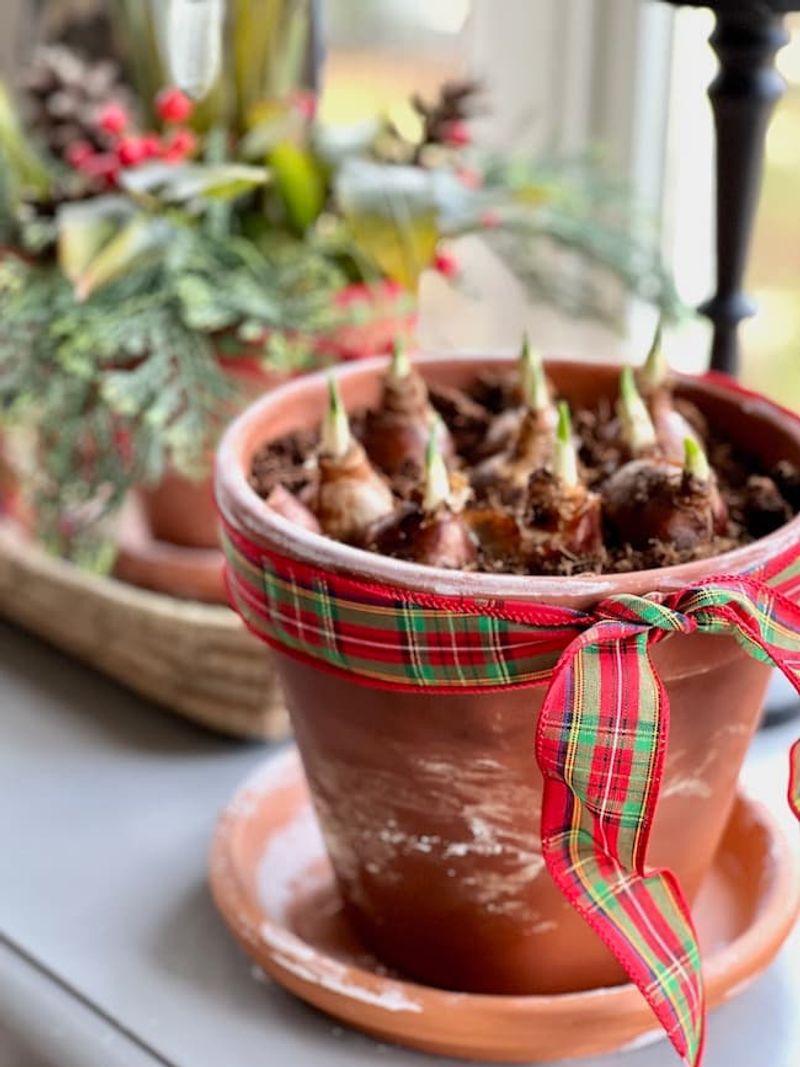
Prefer a traditional potted plant? Soil works just as well as stones, and it can make a pot sturdier for tall stems.
Choose a pot with drainage holes and fill it with a light, well-draining potting mix. Skip heavy garden soil, especially Georgia red clay, since it stays soggy in a container.
Set the bulbs pointed side up so the top third or so peeks above the surface.
Water thoroughly until it drains from the bottom. After that, keep the mix lightly moist, like a wrung-out sponge.
Overwatering is the most common slip-up. Bulbs sitting in wet soil can turn mushy and smell bad.
Stick your finger an inch down, and only water when it feels close to dry.
No fertilizer is needed. Each bulb already carries all the food it needs for this one bloom cycle, packed inside like a lunchbox.
A pretty bonus of soil planting is the chance to dress up the top. Cover the surface with moss, pine cones, or a few sprigs of holly.
Tuck in a bow, and the pot doubles as a sweet homemade gift for a teacher or neighbor.
5. Bright Light And Cool Rooms Keep Paperwhite Stems Sturdy
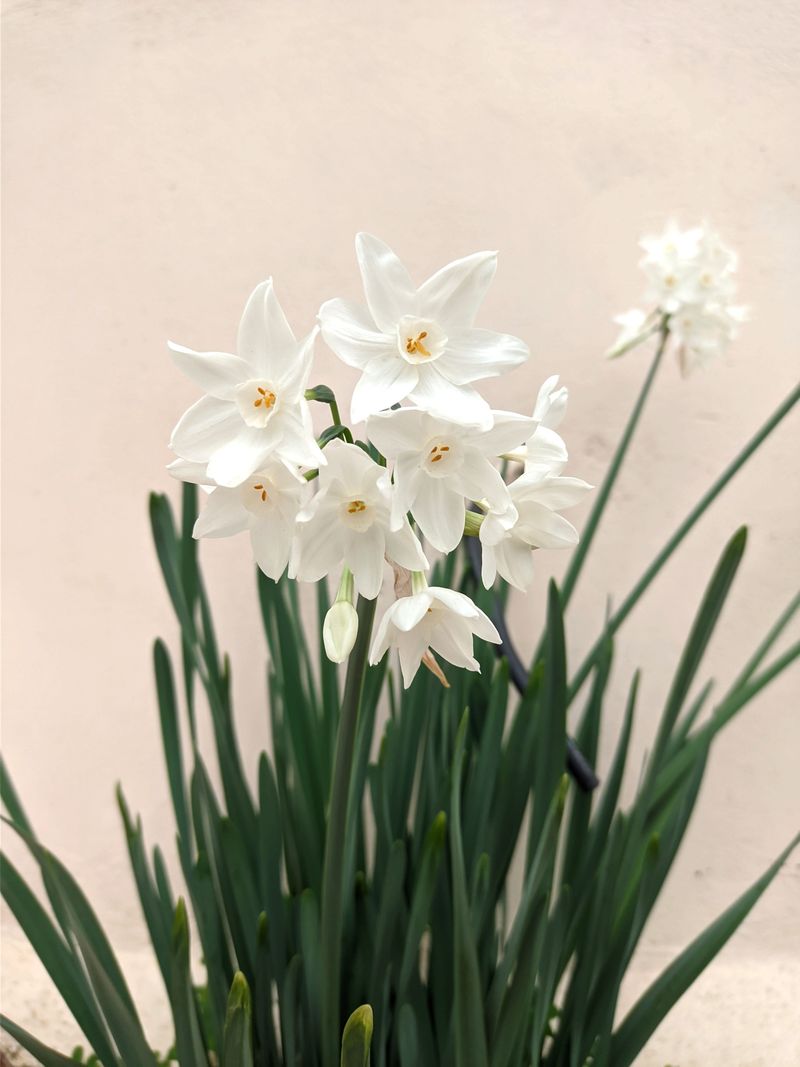
Floppy paperwhites are a real thing. The stems can stretch 18 inches or more and tip over right before the flowers open.
Light is your first fix. Once green shoots appear, move the pot to your brightest window, ideally one facing south.
Weak light makes stems reach and stretch.
Temperature matters too. After the roots get going, a cooler spot around 60 to 65 degrees helps keep growth shorter.
Keep the pots away from heater vents and fireplaces, which push stems to shoot up fast.
Give the container a quarter turn every day or two. Stems bend toward the window, and turning keeps them growing straight.
Some older advice suggests using special treatments to stunt stems, but these can be easy to overdo. Providing plenty of light and keeping temperatures cool are safer ways to manage growth in most homes.
Still leaning? Slip a few bamboo skewers or thin twigs into the pot and loop soft twine or ribbon around the stems.
Red ribbon looks festive, and nobody will guess it is holding everything up.
6. Place Blooming Paperwhites Where Their Perfume Shines
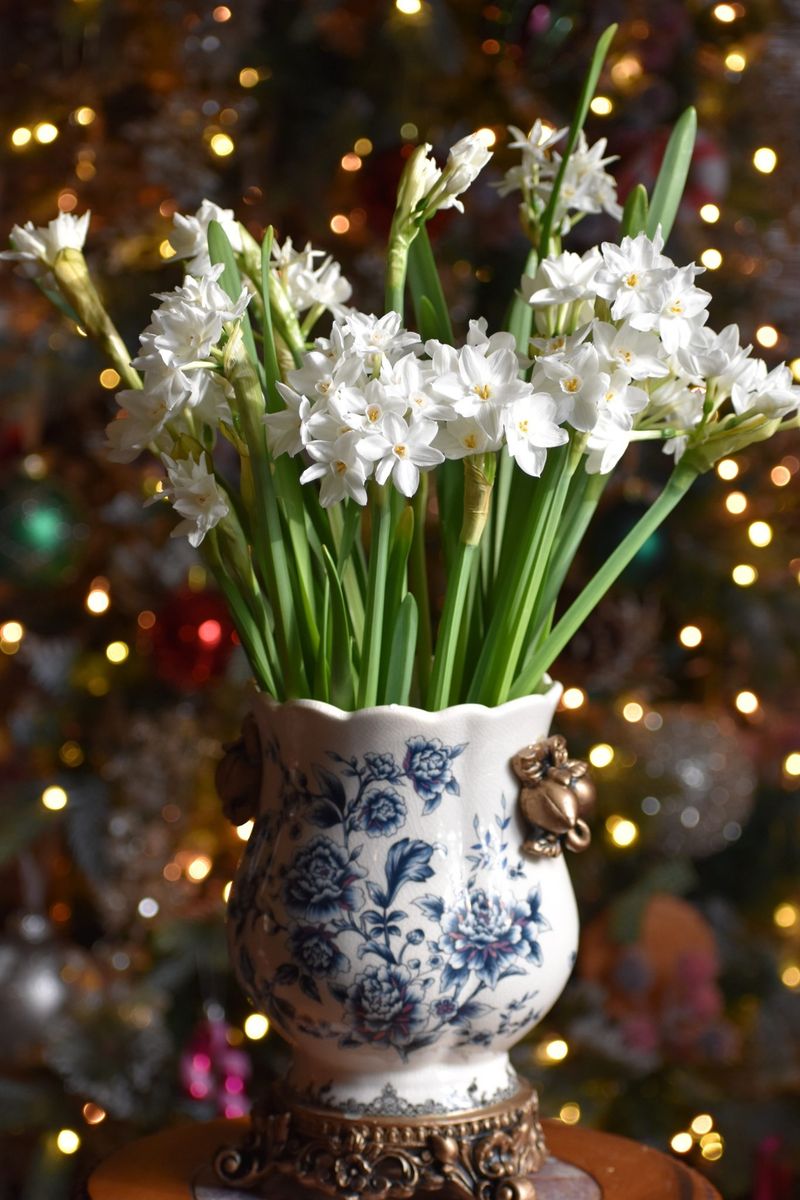
Once those buds pop, your house changes. The fragrance can drift through a whole room, especially in the evening.
Where you place them makes a difference. An entryway, a large living room, or a sunroom gives the scent space to spread out.
A tiny bathroom or bedroom can feel overwhelming to some noses.
Not everyone loves the smell. Plant breeders have created milder types such as ‘Ariel’ and ‘Inbal,’ which many gardeners describe as softer and sweeter.
If someone in your family is sensitive, try one of those.
Want the flowers to last longer? Move the pot out of direct sun once blooms open and keep it in a cool room.
Blossoms often stay fresh for one to two weeks this way.
Paperwhites also make a lovely holiday centerpiece. Group several small pots along the table or set one big bowl in the middle.
One safety note matters here. All parts of Narcissus plants are toxic if eaten, and the ASPCA lists them as harmful to cats and dogs.
Keep pots out of reach of curious pets and toddlers, and wash your hands after handling the bulbs.
7. Spent Paperwhite Bulbs Rarely Rebloom Indoors
Every good show has a final bow. After the flowers fade, most forced paperwhites have used up nearly all their stored energy.
Bulbs grown in water or pebbles struggle the most. Without soil, they cannot rebuild food reserves, so most gardeners simply compost them and buy fresh ones next fall.
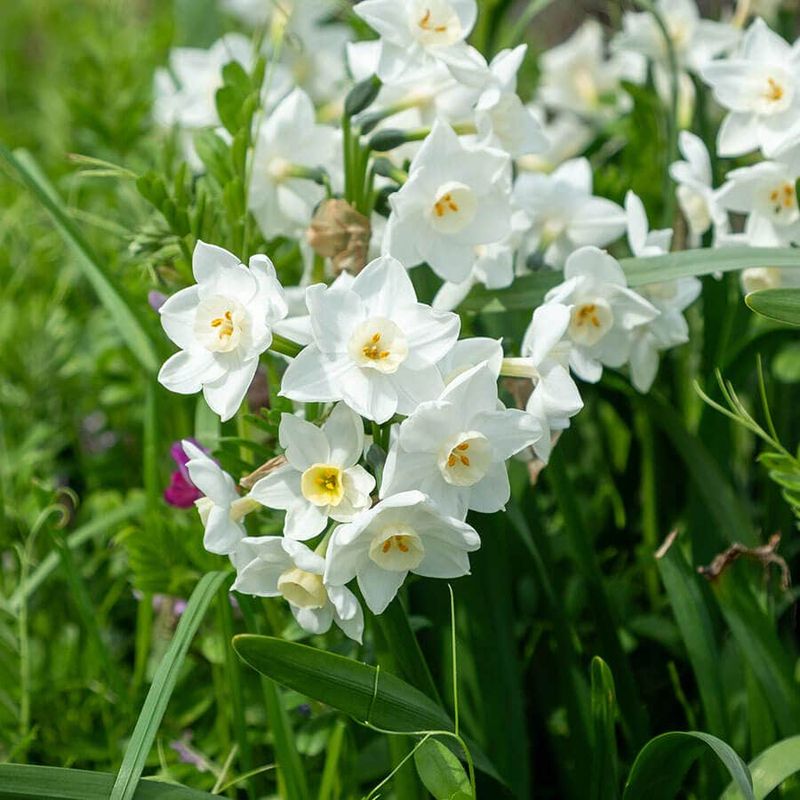
Gardeners in warmer parts of Georgia have another option, though. Paperwhites are generally hardy in USDA zones 8 through 10, which covers much of the state from the middle region down to the coast.
In those areas, soil-grown bulbs can go into a sunny, well-drained garden bed.
Let the leaves stay green as long as possible, then plant the bulbs outdoors once frost risk passes. Be patient, because they may skip blooming for a year or two while they recover.
North Georgia gardeners face colder winters, roughly zones 7a and 7b. Paperwhites may struggle there unless they get a protected, sunny spot.
Some Southern gardens hold old paperwhite patches that bloom outdoors in late fall or winter year after year. Starting one of your own might be a fun long-term project, even if success is not guaranteed.
8. Make Fresh Paperwhite Bulbs A Yearly Holiday Tradition
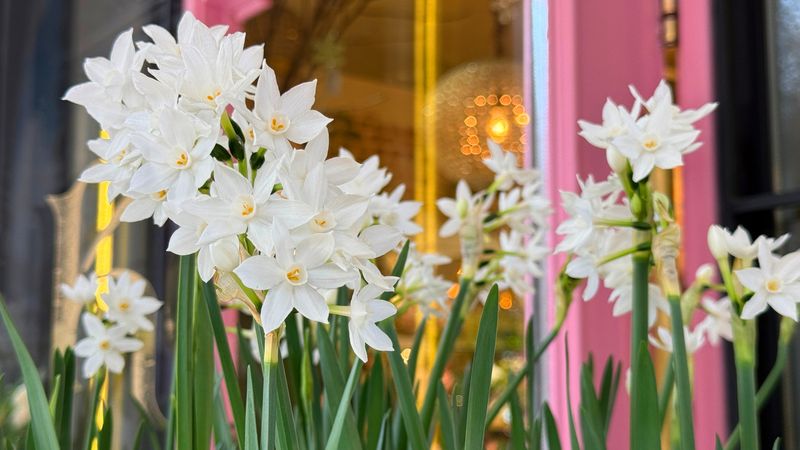
Some traditions stick because they are simple. Planting paperwhites each November has become one of mine, and it takes less time than wrapping a single present.
Get the kids involved. They can pick the bowls, sort the pebbles, and measure how much the stems grow each morning.
Keep a little chart on the fridge, and you have a fun winter science lesson.
Paperwhites also make thoughtful gifts. Pack a few bulbs, a bag of stones, and a small glass jar into a box with simple instructions.
Your friends get to watch the whole show unfold at home.
Plan ahead next year by buying bulbs in October, when garden centers have the best selection. Mark early November on your calendar as planting week.
Once you get comfortable, try forcing other bulbs too. Amaryllis is another easy indoor holiday bloomer, though it takes a bit longer to flower.
The real reward is that moment in mid-December. You walk into a room, catch that sweet scent, and spot fresh white blossoms while the garden outside rests.
For a few dollars and a little water, it is hard to find a better winter pick-me-up.