Hearing Robins Singing In Your Georgia Yard This Fall? Here’s What It Could Mean
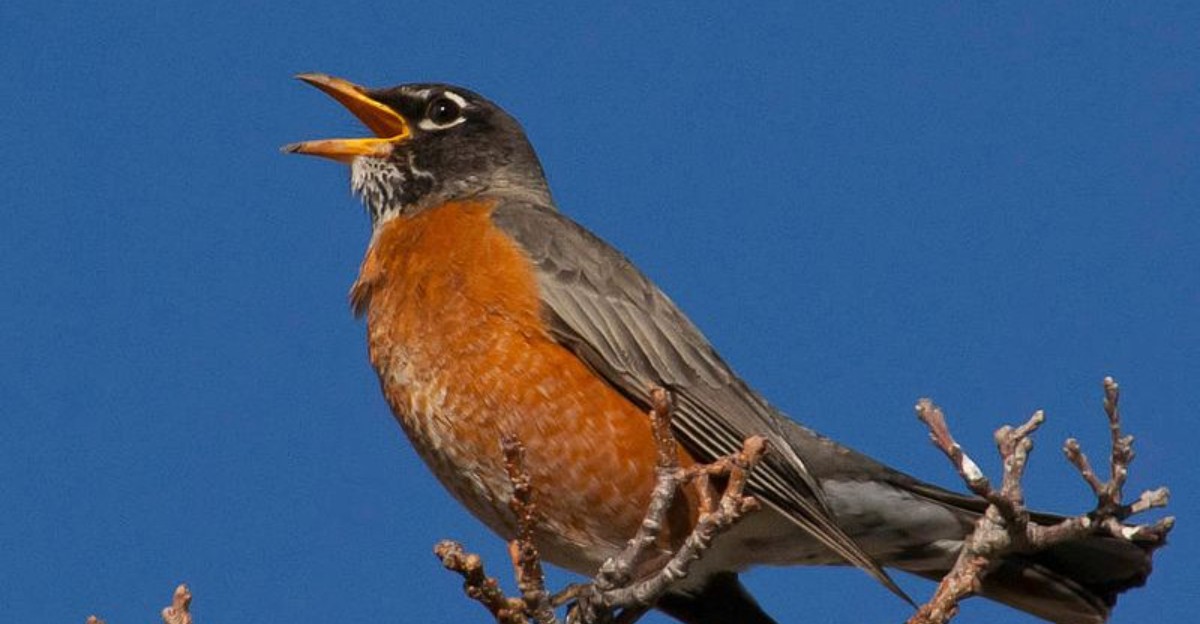
You probably expect to hear robins singing on a warm spring morning, not when autumn leaves are covering your lawn. Yet those familiar whistles and cheerful notes can still drift through the trees long after summer has ended.
So why are these birds making themselves heard when the breeding season is mostly behind them?
American robins don’t become completely silent once fall arrives. Their vocal behavior changes throughout the year, and the sounds you hear now may serve different purposes than their spring songs.
In Georgia, robins can remain active through the cooler months, making their calls a familiar part of the autumn landscape.
You might notice them vocalizing from branches or gathering in groups near feeding areas.
Listening a little more closely can reveal interesting differences in their behavior and help you understand what’s happening in your yard.
1. That Familiar Robin Sound May Not Be A Song At All
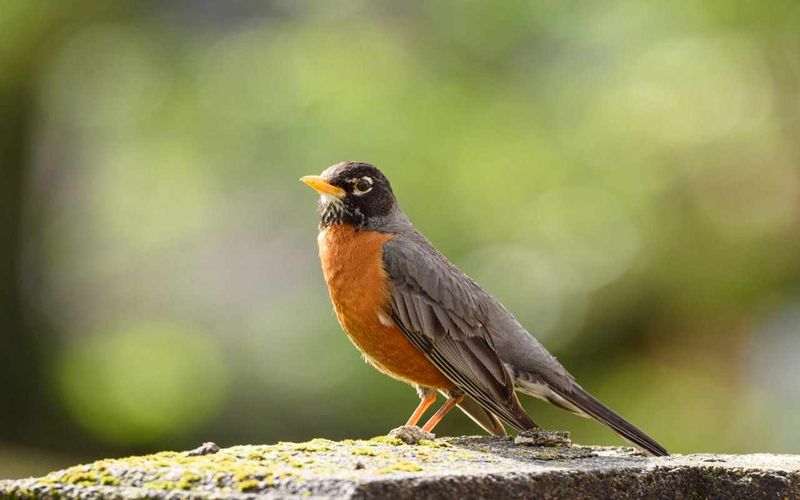
Plenty of people call every robin noise a song, but that is not quite right. Birds make songs and calls, and the two serve different jobs.
A robin song is the long, cheerful string of whistled phrases people often describe as caroling.
Calls are shorter and simpler. They might sound like a quick chuck, a thin squeak, or a fast, sharp chatter.
In a Georgia yard in fall, most of the robin sounds you hear are likely calls rather than full songs.
Robins can still sing a little outside spring, especially on mild days or near dawn. Even so, steady and long singing is much more typical of the breeding season.
So how do you tell them apart while standing at your back door?
Listen for length and pattern first. A song keeps going with rising and falling phrases, while a call is brief and often repeated with pauses in between.
Watching the bird helps too, since a singing robin usually sits still on a perch for a while.
A calling robin, on the other hand, may be hopping across the lawn, flying between trees, or feeding with others. Free apps like Merlin from the Cornell Lab can help you match what you hear, though no app is perfect.
With a few mornings of practice, the difference starts to feel natural.
2. American Robins Use Different Calls To Communicate
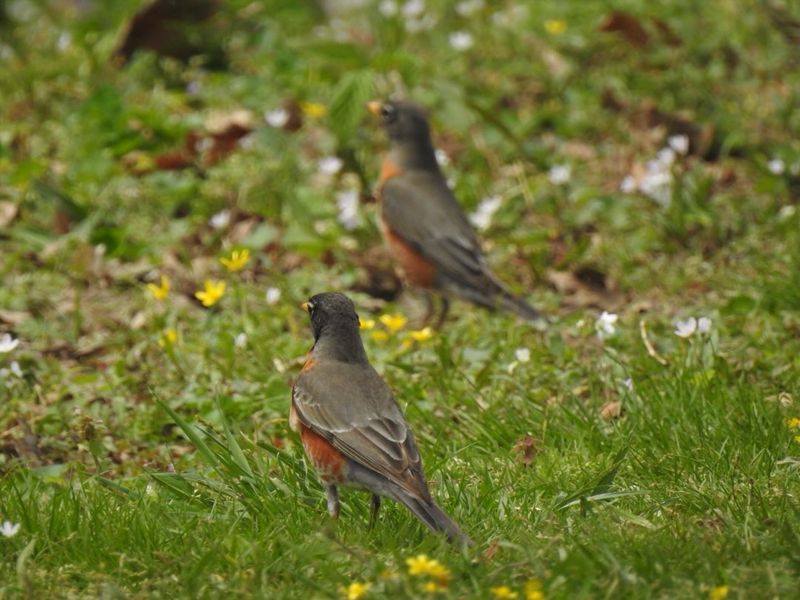
Robins are chatty birds, and they have more than one way to say something. Each call type tends to fit a certain situation.
Bird experts describe several common robin sounds, including chucks, tuts, squeaks, and a high, thin whistle.
Some calls seem to keep birds connected. Others show up when a robin feels nervous or spots a threat close by.
Picture a quiet afternoon when a robin on your fence starts a fast series of notes.
That change in tone is worth noticing. A calm robin and an alarmed robin often sound quite different, even to a beginner.
You can learn a lot by pairing the sound with what the bird is doing.
Is it feeding calmly, or is it staring at a shrub with its tail flicking? Body language and sound together give you a clearer picture than either one alone.
Across Georgia, robins share yards with mockingbirds, blue jays, and brown thrashers, and mockingbirds can even copy robin sounds.
That mix can be confusing at first, so try to see the bird before deciding what you heard. Keeping a simple notebook by the window, with the date, weather, and what the robins were doing, can help you spot patterns.
Over a few weeks, you may find that certain calls line up with certain events in your own yard.
3. Short Chuck Notes Help Birds Stay In Contact
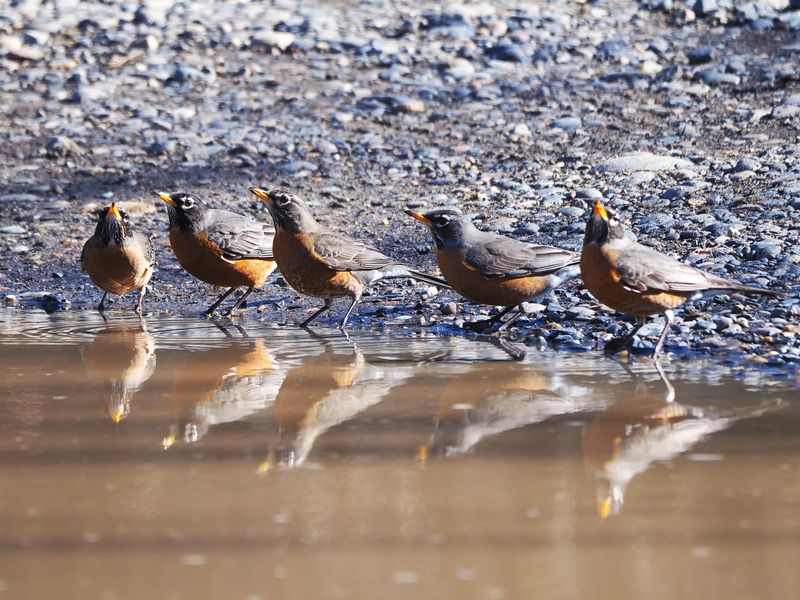
Chuck, chuck, chuck. Once you know that low, clipped note, you will start hearing it everywhere in fall.
Robins often give soft chucks or tuts while moving around, and these sounds seem to help birds keep track of each other.
Think of it like friends calling out in a crowded store. Nobody is panicking, but everyone wants to know where the group is.
Contact notes make a lot of sense once robins start traveling together after nesting season.
A flock may spread out over several yards, a patch of woods, or a park. Quick calls can help scattered birds stay loosely connected as they feed and move.
Sometimes the notes speed up just before birds fly off together.
You might hear a burst of chucks, then see a handful of robins lift from the grass at once. It does not happen every time, but it is a fun pattern to watch for in Georgia neighborhoods with big lawns and tall trees.
A calm, steady pace of chucks usually suggests birds going about their day.
If the notes suddenly turn louder, faster, and harsher, something may have changed. Keep reading, because that shift often points to the next type of call.
For now, enjoy the soft chatter as a sign that your yard is part of their daily route.
4. Sharp Alarm Calls Can Warn Of Nearby Danger
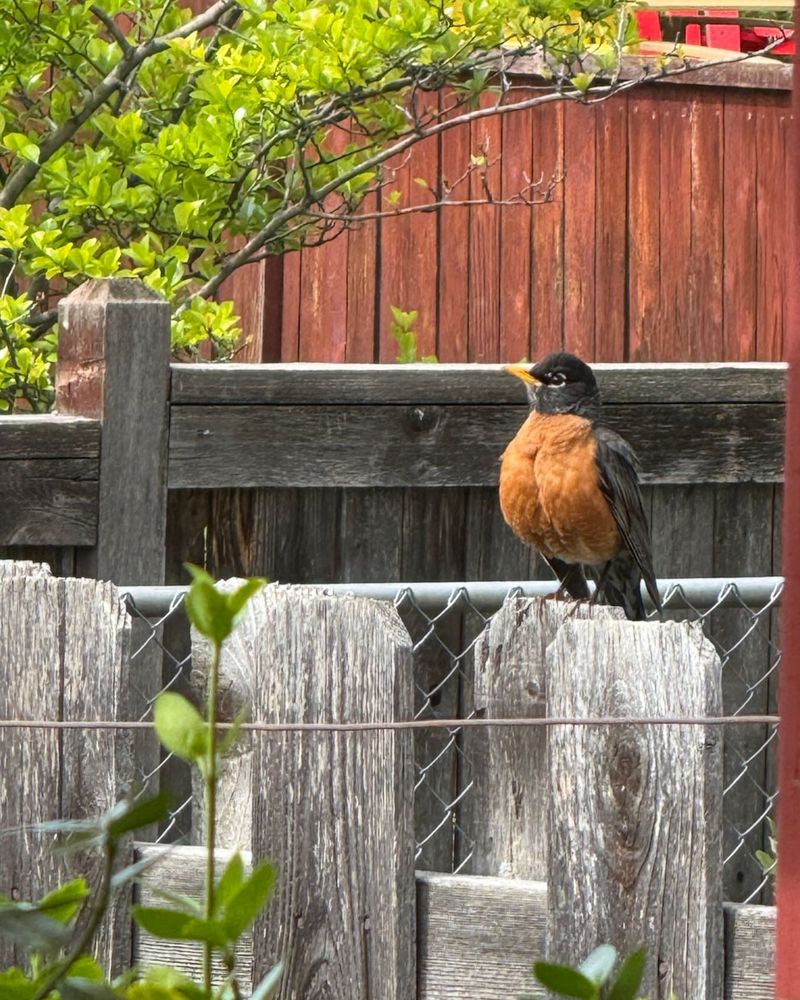
A robin that suddenly sounds furious usually has a reason. Loud, rapid, piercing notes can mean the bird has spotted trouble.
Robins often give harsh alarm calls when they notice a cat, a snake, a hawk, or even a person getting too close.
Some sources also describe a very high, thin call that robins may use when a hawk flies overhead. These sounds can be hard to hear, so watch for birds freezing or diving into cover.
Cooper’s hawks and sharp-shinned hawks hunt songbirds in Georgia, and fall and winter are good times to spot them in yards.
Next time the robins erupt, scan nearby branches, fences, and the sky. You may catch a hawk sitting quietly or a cat crouched under a shrub.
Other birds often join in, which can turn one alarm into a noisy neighborhood chorus.
Outdoor cats are a real concern for backyard birds. Keeping pet cats indoors is one of the simplest steps you can take to help robins and other songbirds.
Placing feeders and birdbaths near shrubs, but not right against them, can give birds cover without hiding predators.
Of course, not every alarm means real danger. Robins sometimes react strongly to things that turn out harmless, like a squirrel or a person walking by.
Still, those sharp calls are worth a quick look.
5. Fall Flocks Become More Common As Breeding Season Ends
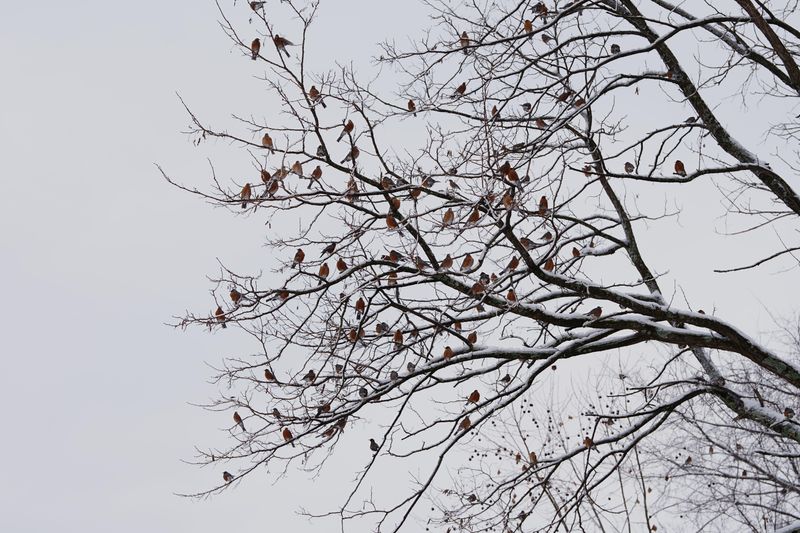
Spring robins guard their space. Fall robins act more like a traveling crowd.
After nesting wraps up, American robins tend to gather in flocks that can range from a few birds to many dozens or more.
Their daily habits shift along with their social lives. Instead of pulling earthworms from one claimed lawn, flocks roam more widely in search of food.
Georgia gets an extra boost in the colder months.
Robins live in the state year-round, but many birds from farther north move south for winter. That can make robins seem to appear out of nowhere in late fall and winter, though numbers vary from year to year.
Weather and food supply play a big role in where flocks show up.
A flock might visit your yard for a few days and then vanish. That is normal, and it often means the birds found better food elsewhere.
Big groups also tend to roost together at night, sometimes in large numbers in wooded areas.
In the morning, they spread out again to feed, which may explain why you hear a burst of activity early in the day. If your neighborhood sits near woods or a creek, you might notice birds passing over in loose streams around sunrise and sunset.
Watching those flights can be a relaxing fall habit.
6. Berry-Rich Trees Can Bring Noisy Groups Into Your Yard
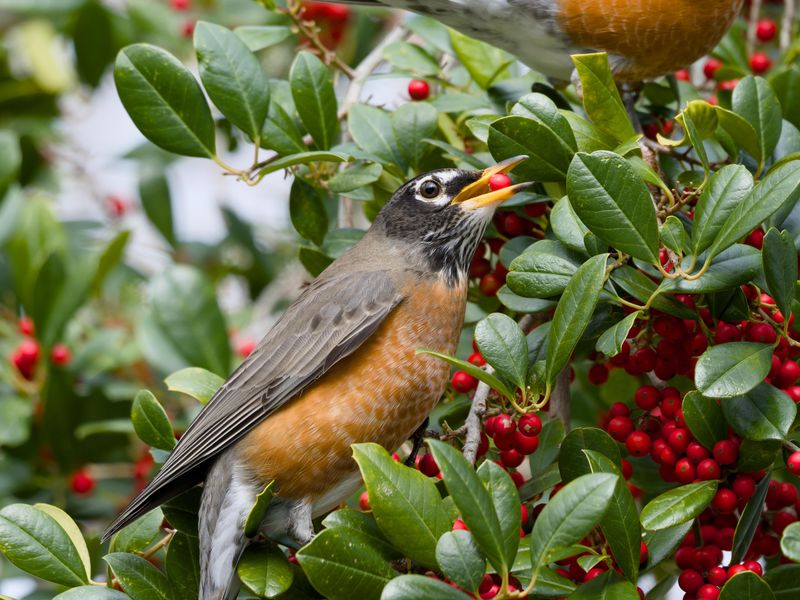
Got a holly loaded with red berries? Your yard may become a robin restaurant.
As fall turns toward winter, robins eat a lot more fruit, especially when worms and insects get harder to find.
Native plants like American holly, yaupon holly, dogwood, sumac, and eastern red cedar can offer fruit that robins eat. Ripening times differ, so some plants feed birds earlier than others.
When a flock finds a good tree, the noise can be impressive.
Birds jostle for space, call back and forth, and fly in and out all day. A loaded holly might be stripped in a short time, or it may last weeks, depending on the crop and the number of birds.
Gardeners across Georgia can help by choosing native fruiting plants suited to their area.
Conditions in the mountains, Piedmont, and coastal plain are not the same. Your local UGA Extension office can suggest plants that fit your soil, sun, and space.
Remember that some hollies need both male and female plants nearby for berries to form.
Avoid spraying pesticides on fruiting shrubs that birds visit, and leave some berries on plants rather than pruning them all off in fall. A shallow birdbath with fresh water can add to the appeal.
Just expect some purple splatters on your patio and car as part of the deal.
7. Full Territorial Songs Are More Common During Spring Breeding
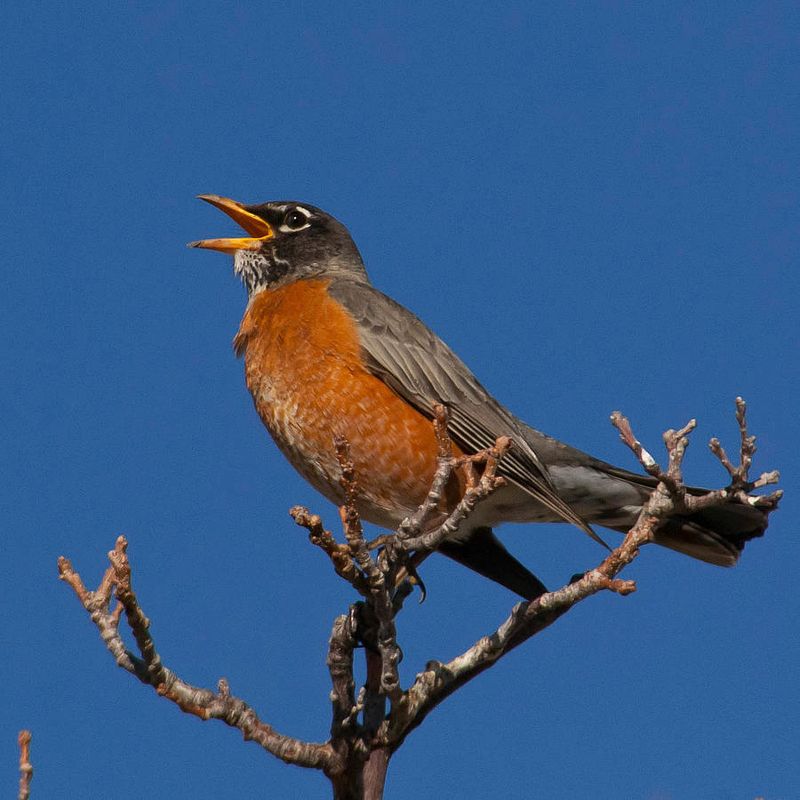
Wait until late winter and early spring, and the soundtrack changes. That is when robin song really takes center stage.
Male robins sing their rich, rolling phrases to claim territory and attract mates during the breeding season.
In Georgia, singing can start ramping up as days lengthen in late winter, though timing shifts with weather and location. Birds in the warmer south of the state may start earlier than those in the mountains.
Dawn is the best time to listen.
Robins are known as early singers, sometimes starting before the sky fully brightens. Their song often blends into the morning chorus along with cardinals, wrens, and mockingbirds.
Singing in fall is not impossible, so do not be surprised by the occasional tune.
Some robins sing softly or briefly on warm days, and young birds may practice. Still, if you hear long, steady songs in October or November, it is less typical than the chatter of flocks.
Comparing seasons can be a fun backyard project.
Record a short clip on your phone this fall, then do it again next spring from the same spot. Hearing the change side by side makes the difference clear.
It also gives you a better sense of how robins in your yard move through their year, from busy nesting months to relaxed berry hunting.