How Arizona Gardeners Are Growing Sweet Potatoes In Small Spaces
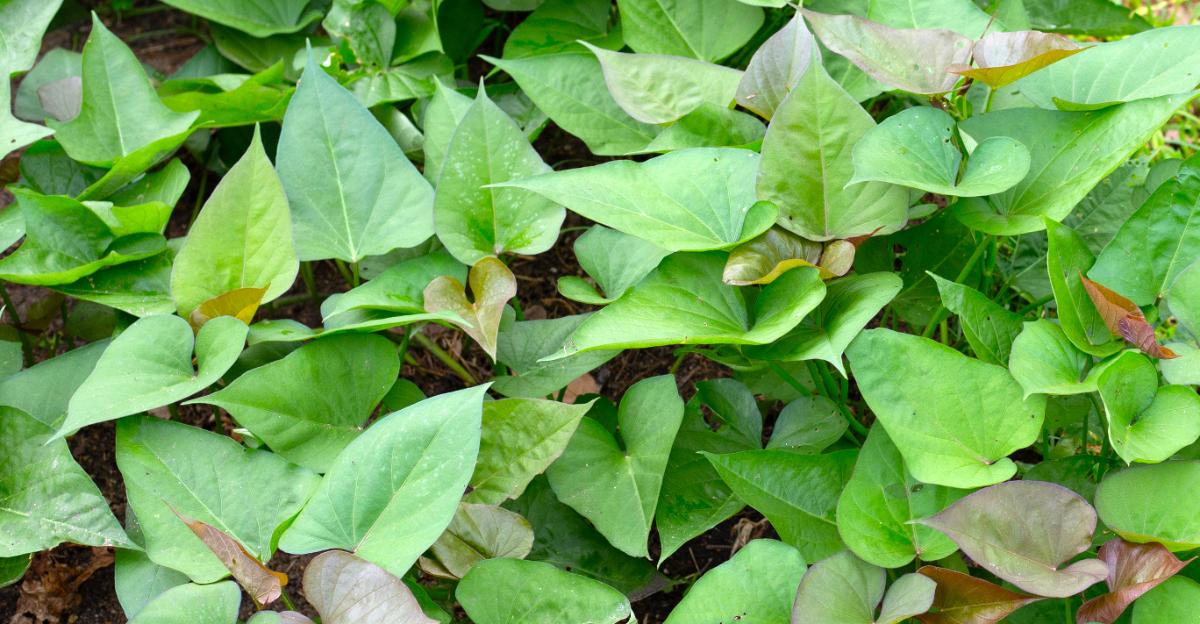
Warm weather makes many gardeners start thinking about what they can still grow without needing a huge backyard. Sweet potatoes keep coming up for a reason.
They grow fast in heat, fill containers with leafy vines, and can produce more than people expect from a small setup.
Plenty of gardeners skip them because the plants seem too large for tight spaces. The vines spread quickly, the roots grow underground, and traditional gardens usually give them far more room than most people have available.
That is starting to change.
More people are growing sweet potatoes in grow bags, deep containers, and compact raised beds with surprisingly good results. A smaller setup can actually make the plants easier to manage through the hottest part of the season.
Arizona summers create the warmth sweet potatoes enjoy most. With the right setup, even a small patio or narrow garden area can turn into a productive growing space.
1. Grow Bags Leave More Room On Small Patios
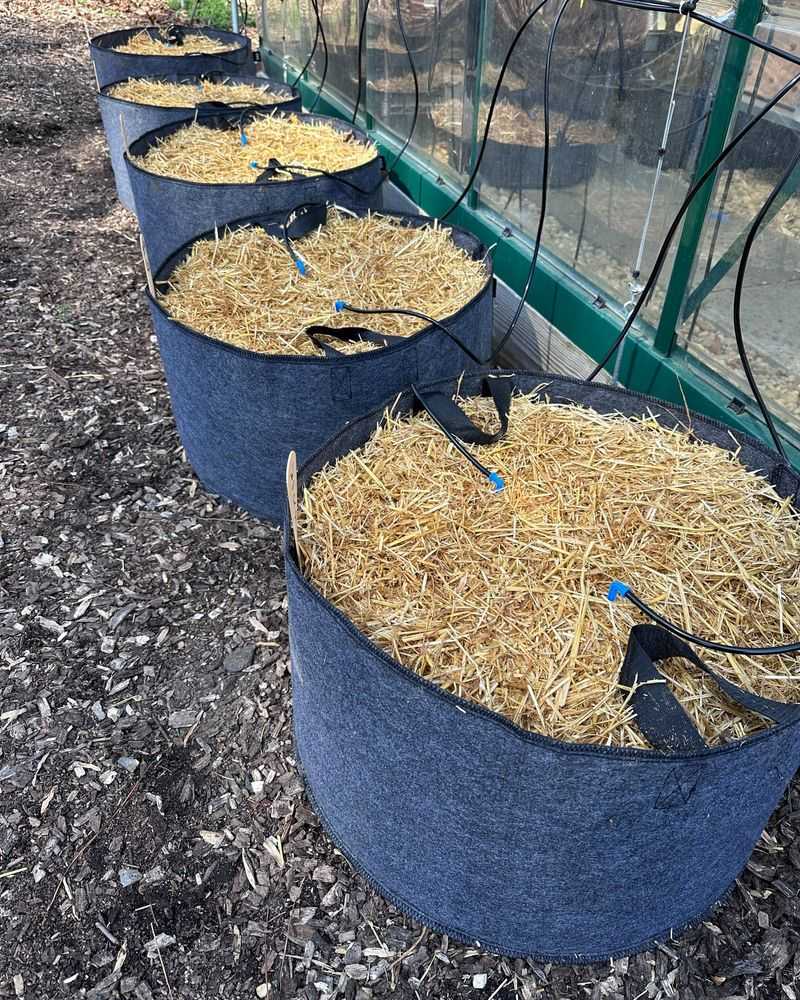
Fabric grow bags changed the game for small-space gardeners. You can tuck them into corners, line them along a fence, or stack them near a wall without losing much floor space at all.
Most growers in hot desert climates go with 10-gallon or larger bags. Anything smaller tends to dry out too fast and does not give tubers enough room to spread out underground.
Grow bags breathe better than hard plastic pots.
That air flow helps prevent roots from overheating, which matters a lot when summer temperatures push well past 100 degrees.
Another big win is portability. You can shift the bags around to follow the sun or move them into shade during the hottest part of the afternoon without much effort.
Fabric bags also tend to drain well on their own.
Standing water at the bottom of a container is one of the fastest ways to stall sweet potato growth, so good drainage is not optional.
Setup is straightforward. Fill the bag with a loose growing mix, push in your slips, water them in well, and let the desert heat do the rest of the work from there.
2. Loose Soil Helps Tubers Expand More Easily
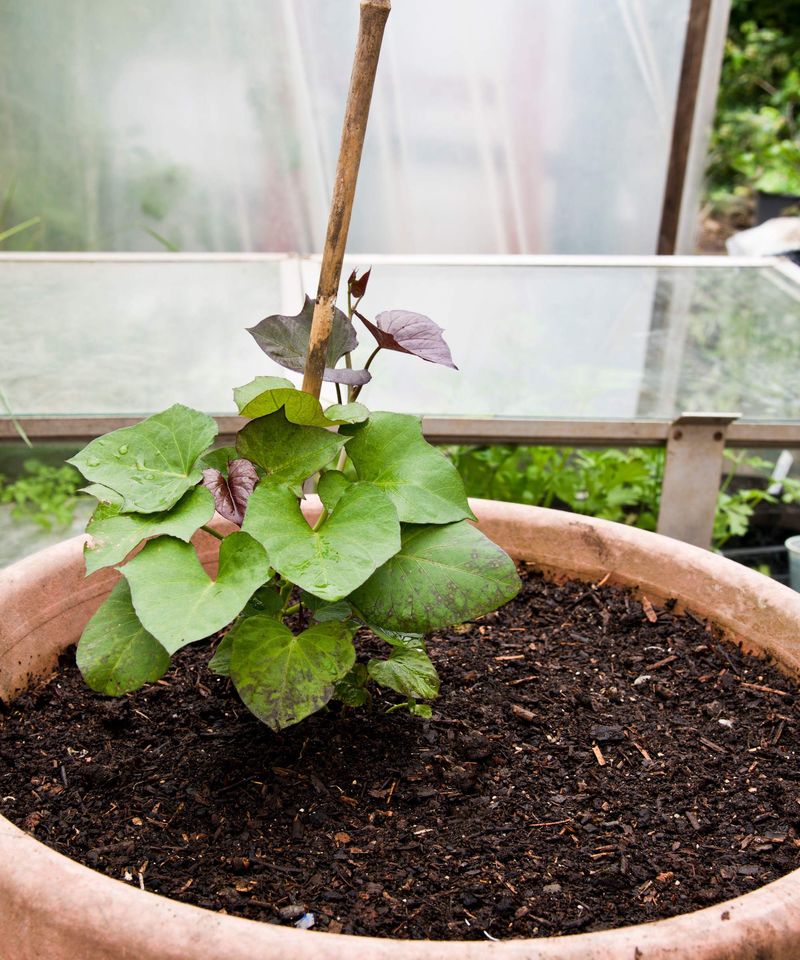
Packed-down, heavy soil is one of the biggest obstacles to a good sweet potato harvest in containers.
Tubers need room to push outward as they develop, and dense soil fights that expansion at every stage.
A mix that works well combines potting soil, coarse sand or perlite, and a bit of compost. That combination stays loose enough for roots to move through while still holding some moisture between waterings.
Skip garden soil pulled straight from the ground. It compacts fast inside containers and rarely drains the way you need it to in a small-space setup.
Perlite is worth the extra cost. A good handful mixed throughout the container keeps air pockets open even after weeks of regular watering and heat exposure.
Compost adds slow nutrition without overwhelming young plants.
Sweet potatoes actually prefer soil that is not too rich in nitrogen, or you end up with lots of leafy vines and very little tuber development underneath.
Your Arizona Garden Changes Every Week. Your Plan Should Too.
Gardening in Arizona changes quickly throughout the season. Every Friday you’ll receive a simple weekly plan showing exactly what to plant, prune, fertilize, harvest, and protect so you never miss the right timing.
Checking soil texture before planting only takes a minute. Squeeze a handful and then release it.
If it crumbles apart easily, you are in good shape. If it holds a tight clump and stays packed, it needs more perlite or sand worked in.
3. Deep Containers Produce Better Harvests Over Time
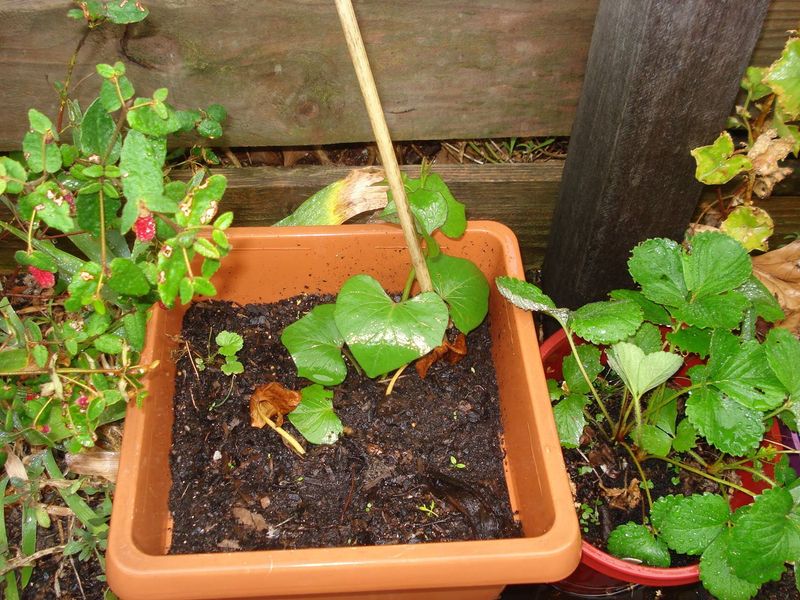
Depth matters more than width when it comes to sweet potatoes in containers. Tubers grow downward and outward, so a shallow pot cuts the harvest short before it even gets started.
Aim for containers that are at least 12 inches deep. Sixteen inches is even better if you can manage the extra weight and space.
Deeper containers hold more soil, which also means more consistent moisture levels throughout the growing season.
Wide, shallow planters look appealing on a patio but tend to disappoint at harvest time. You end up with vines that look healthy on top while the tubers underneath stay small and crowded.
Half-barrel planters work really well for this crop. They offer solid depth, decent width, and enough volume to support multiple slips planted together without competing too much for space.
Weight is something to plan for ahead of time. A large, fully watered container can be surprisingly heavy.
Setting it on a rolling plant stand before filling it makes moving it around much easier later on.
Plastic containers in darker colors absorb a lot of heat in direct sun.
4. Slips Root Faster Once Temperatures Stay Warm
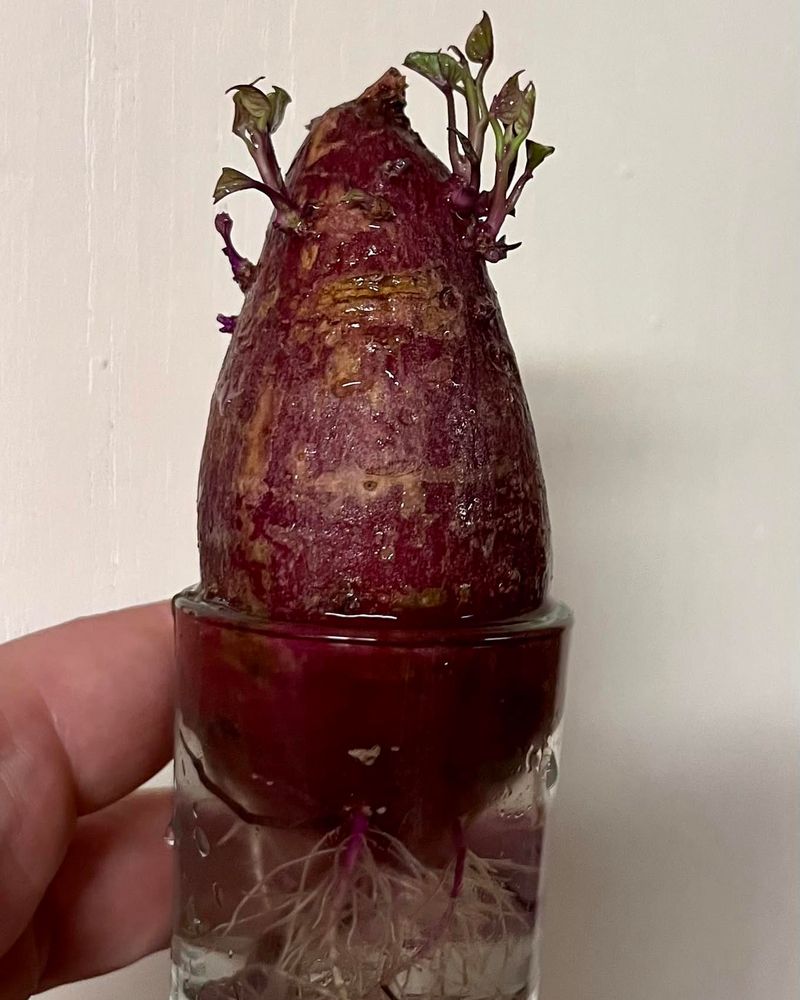
Slips are the small vine cuttings used to start sweet potato plants, and timing their planting around soil temperature makes a real difference in how fast they take hold.
Soil needs to be at least 65 degrees Fahrenheit before slips go into a container.
Planting too early stalls root development and leaves slips sitting in cool, damp soil with little progress for weeks.
In warmer desert regions, that threshold arrives earlier in spring than most other parts of the country. Gardeners here often get slips in the ground by late March or early April without much risk.
Starting slips indoors is simple. Place a sweet potato halfway in a jar of water near a sunny window.
Sprouts appear within a couple of weeks. Once those sprouts are a few inches long, twist them off gently and set them in fresh water until roots develop.
Roots on a healthy slip show up fast once temperatures cooperate. You can sometimes see root nubs forming within just four or five days of placing a slip in warm water.
Planting depth matters too. Push the slip into the soil so at least two or three leaf nodes are buried.
Those buried nodes become the anchor points for new root growth and eventual tuber formation.
5. Regular Watering Keeps Growth More Consistent
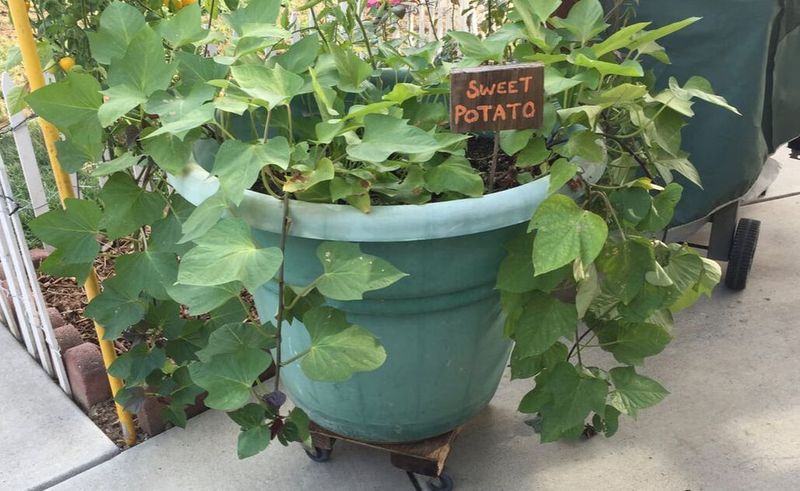
Inconsistent watering is one of the most common reasons container sweet potatoes underperform.
Wet and dry cycles that swing too far in either direction stress the plant and interrupt steady tuber development.
Containers dry out faster than in-ground beds, especially during hot summer stretches. Checking soil moisture every day or two is a practical habit that prevents most watering problems before they start.
Push a finger about two inches into the soil. If it feels dry at that depth, it is time to water.
If it still feels slightly cool and moist, hold off for another day.
Deep, thorough watering works better than light, frequent sprinkles. Water slowly until it drains out the bottom of the container, then let the soil breathe before watering again.
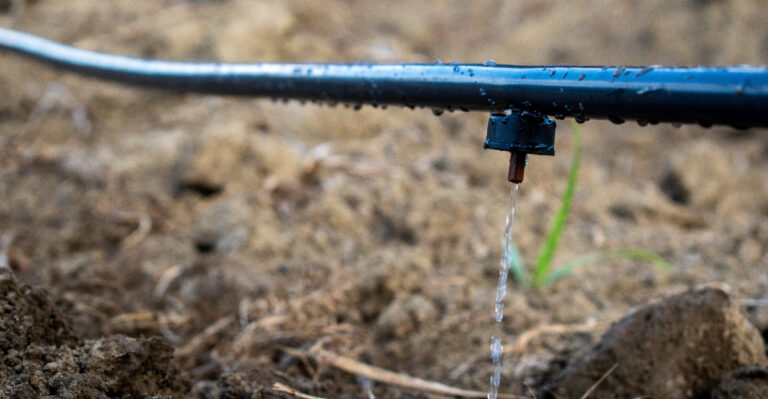
Drip irrigation on a timer is a popular solution for gardeners who travel or work long hours. A simple timer setup keeps the schedule consistent without requiring daily attention during the hottest weeks.
Mulching the top of the container helps slow moisture loss between waterings.
A thin layer of straw or wood chips over the soil surface can make a noticeable difference in how long the container stays moist after a good watering session.
6. Trellises Help Vines Stay Off The Ground
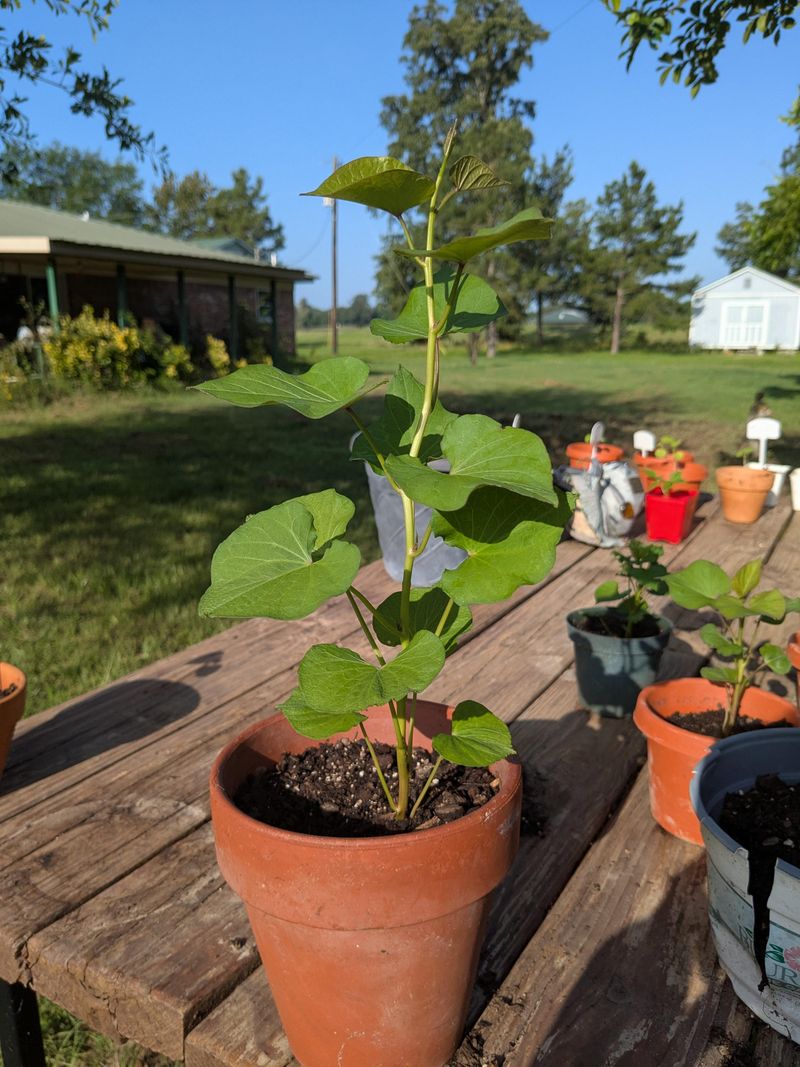
Sweet potato vines grow fast and spread wide if left to sprawl freely. On a small patio, that sprawl quickly becomes a tangled mess that takes over walkways and crowds neighboring plants.
A basic trellis changes that situation completely.
Training vines upward keeps them organized, improves air circulation around the leaves, and frees up floor space for other containers or foot traffic.
Simple bamboo stakes tied together at the top work fine for this purpose. Wire mesh panels attached to a fence or wall are another easy option that holds up well through a full growing season.
Sweet potato vines do not self-cling the way some other climbing plants do. You will need to loosely tie new growth to the trellis every week or so as the plant extends outward.
Soft garden ties or strips of old cotton fabric work well for this. Avoid anything that cuts into the vine, since tight bindings can damage the stem and slow the flow of nutrients to the rest of the plant.
Vertical growing also makes it easier to spot pest activity or leaf damage early. When vines are spread out flat on the ground, problems hide underneath and often go unnoticed until they have already spread.
7. Full Sun Encourages Stronger Tuber Development
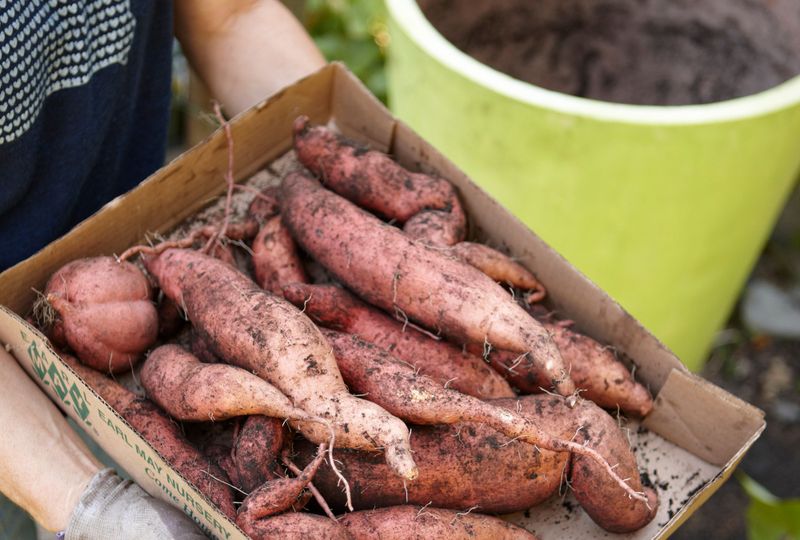
Sweet potatoes are sun lovers, plain and simple. Without enough direct light, the plant puts most of its energy into vine growth and leaves very little for building up tubers underground.
Six to eight hours of direct sun per day is the minimum for solid production. More is generally better, especially during the early weeks when plants are establishing their root systems.
One real advantage of container growing is flexibility. If a spot turns out to be shadier than expected, you can move the container to a sunnier location without disturbing the plant much at all.
Morning sun combined with some afternoon shade can actually work well during peak summer heat.
Full afternoon exposure in triple-digit temperatures can stress plants, so partial shelter during the hottest hours is sometimes the smarter setup.
Reflected heat from walls, fences, or light-colored surfaces adds warmth around the containers. In a desert climate, that reflected energy speeds up growth but also increases how quickly the soil dries out.
Watching the leaves gives you useful feedback.