How Arizona Gardeners Can Grow Lavender From Cuttings
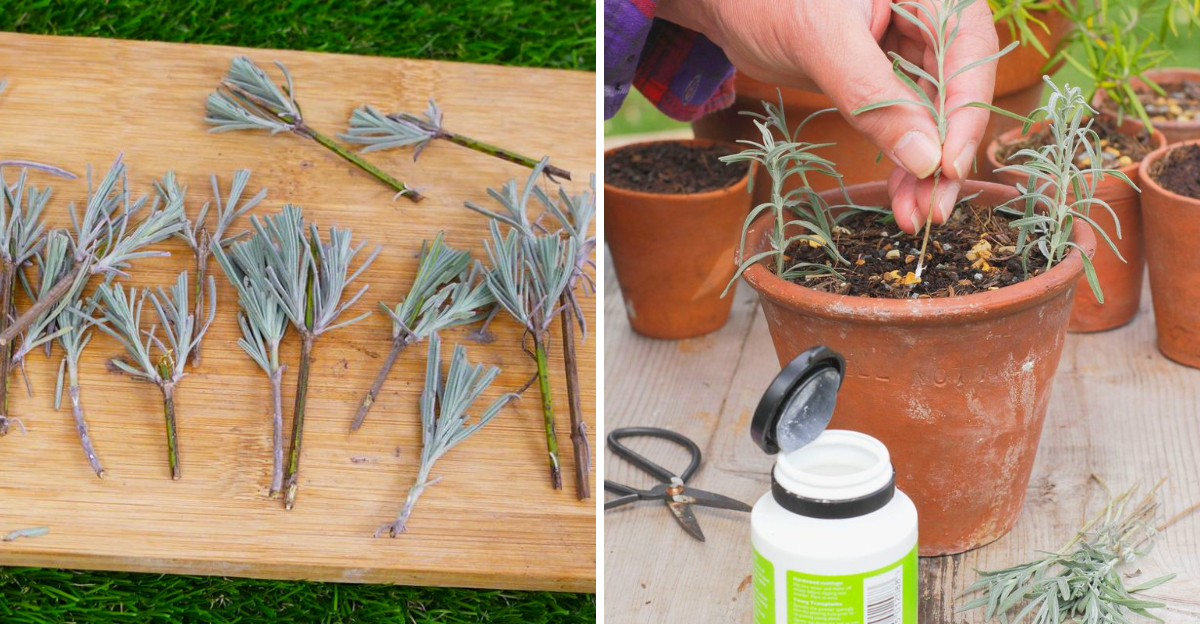
There is something oddly satisfying about turning one lavender plant into several new ones with nothing more than a few stem cuttings and a little patience.
It feels a bit like a gardening magic trick, especially when tiny roots finally start forming and you realize your future lavender plants are officially underway.
For Arizona gardeners, propagating lavender can be a smart way to fill herb beds, patio pots, and gravel landscapes without constantly buying new plants.
Lavender already looks right at home in desert-style gardens, and growing your own cuttings makes the whole project feel even more rewarding.
Of course, Arizona likes to keep gardeners on their toes. Bright sun, dry air, and fast-drying soil can make young lavender cuttings a little fussy in the beginning.
Thankfully, a few simple adjustments can help those small stems settle in and start building strong roots before the serious summer heat arrives.
1. Take Cuttings From Healthy Non-Flowering Stems
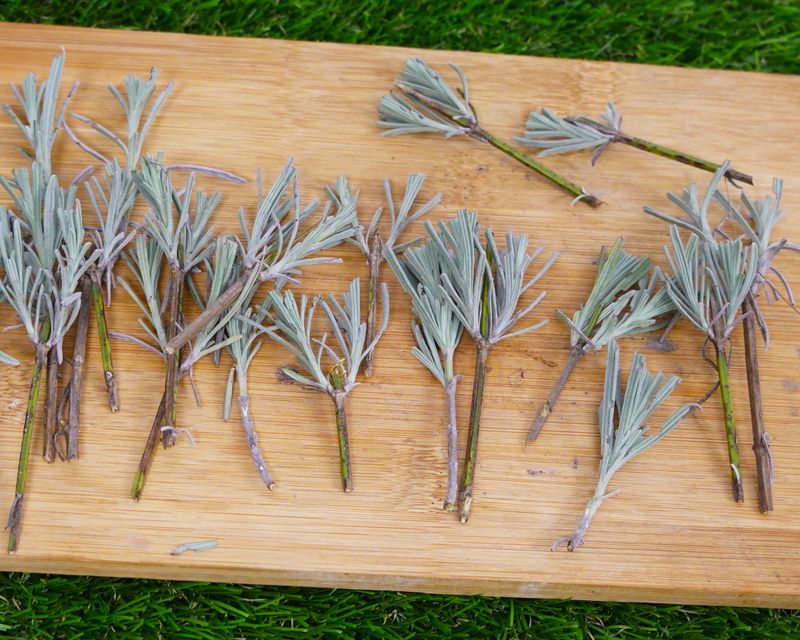
Healthy lavender stems are your starting point, and choosing the right ones makes a real difference in how well your cuttings root. Look for stems that are green and firm but have not yet produced flower buds.
Flowering stems put their energy into blooms rather than roots, which slows down the rooting process considerably.
In Arizona, lavender plants often produce new vegetative growth in spring and again in early fall when temperatures cool slightly. Those are good windows for taking cuttings because the plant is actively growing and the stems are full of energy.
Snip stems that are roughly three to five inches long, cutting just below a leaf node with clean, sharp scissors or pruning shears.
Avoid stems that look woody all the way to the tip, since very stiff stems can be slower to root. You want something with a bit of flexibility near the top but enough structure to stand upright in your rooting mix.
Taking cuttings in the morning when the plant is well-hydrated gives them a better start before Arizona’s afternoon heat sets in.
2. Use Softwood Or Semi-Hardwood Growth For Faster Rooting
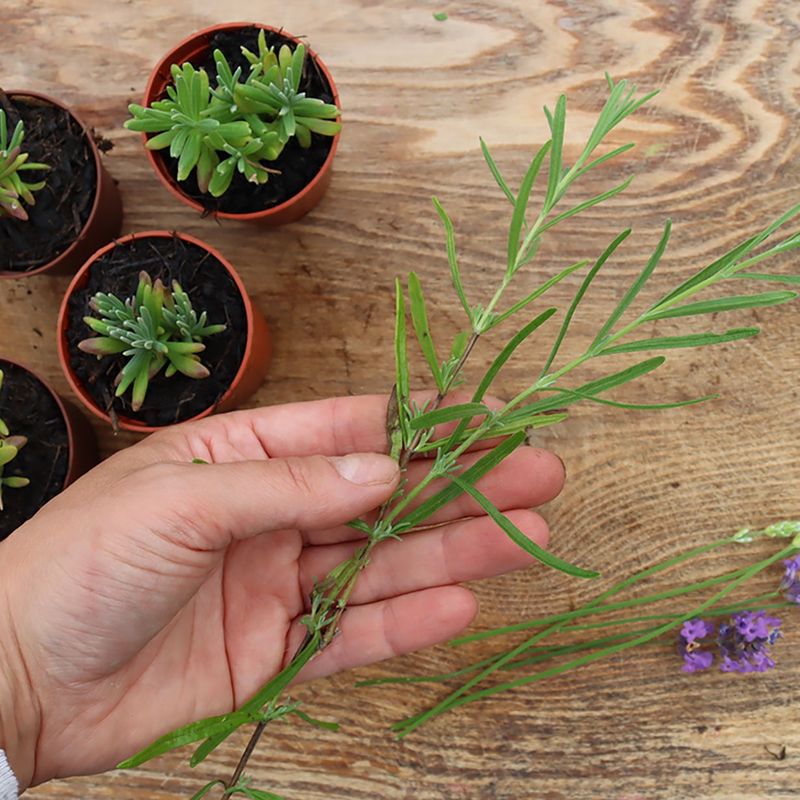
Stem texture plays a bigger role in rooting speed than most gardeners expect. Softwood refers to the young, flexible growth near the tip of a stem, while semi-hardwood is slightly firmer and found a little lower down.
Both can root successfully, but they behave a bit differently once planted.
Softwood cuttings tend to root faster because the cells are younger and more responsive to rooting hormones and moisture.
Semi-hardwood cuttings are a bit tougher and can handle Arizona’s dry air slightly better, making them a practical option for gardeners who find it hard to keep humidity levels consistent around their cuttings.
Many Arizona gardeners find that semi-hardwood cuttings taken in late summer or early fall root well because the plant has had the whole growing season to build up strong stems.
Whichever type you choose, look for growth that snaps cleanly rather than bending without breaking.
That snap test is a quick and easy way to check whether you have found the right section of stem for propagation.
Your Arizona Garden Changes Every Week. Your Plan Should Too.
Gardening in Arizona changes quickly throughout the season. Every Friday you’ll receive a simple weekly plan showing exactly what to plant, prune, fertilize, harvest, and protect so you never miss the right timing.
3. Remove Leaves From The Lower Half Of The Cutting
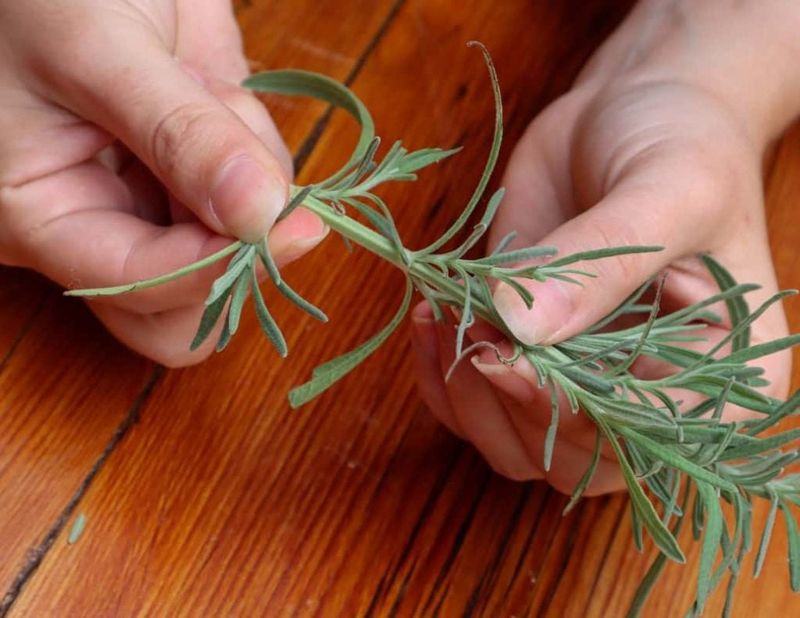
Stripping the lower leaves off your lavender cutting is a small step that has a noticeable impact on rooting success. Leaves left on the buried portion of the stem can rot in the growing mix, which creates conditions that may harm the developing roots.
Removing them gives the cutting a cleaner start underground.
To do this, pinch or gently pull the leaves from the bottom half of the stem, leaving a few sets of leaves at the top so the cutting can still photosynthesize.
Try not to tear the stem itself while removing the leaves, since rough handling can introduce problems at the wound site.
In Arizona’s dry climate, the exposed leaf nodes along the stripped section actually respond well to rooting hormone and moist growing mix because the low humidity keeps the above-ground portion from getting waterlogged.
Aim to leave at least two to three sets of leaves at the top of the cutting.
Those remaining leaves help the cutting stay hydrated and continue producing a small amount of energy while the roots are forming below the surface.
4. Plant Cuttings In A Fast-Draining Growing Mix
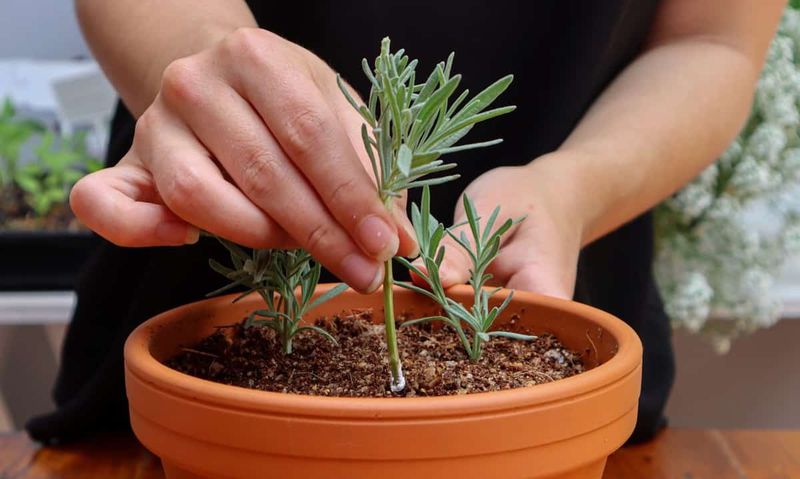
Gritty, fast-draining growing mixes are a natural fit for lavender cuttings, especially in Arizona where overwatering is a common challenge.
A mix of coarse perlite and potting soil, or equal parts sand and peat, gives cuttings the drainage they need while still holding enough moisture for root development.
Avoid using dense, moisture-retaining potting mixes on their own, since they tend to stay too wet in enclosed propagation setups. Lavender roots need oxygen as much as they need water, and a heavy mix can cut off that airflow quickly.
Adding perlite at roughly fifty percent of the mix volume is a simple way to improve drainage without overcomplicating things.
Small propagation trays or individual three-inch pots both work well for starting cuttings.
Before inserting each cutting, use a pencil or thin stick to make a small hole in the mix so you do not scrape off any rooting hormone you may have applied.
Press the mix gently around the base of each cutting to hold it upright. Arizona gardeners working on covered patios or in shaded spots often find that shallow trays dry out more predictably, making it easier to manage watering consistently.
5. Keep Cuttings Moist But Not Waterlogged
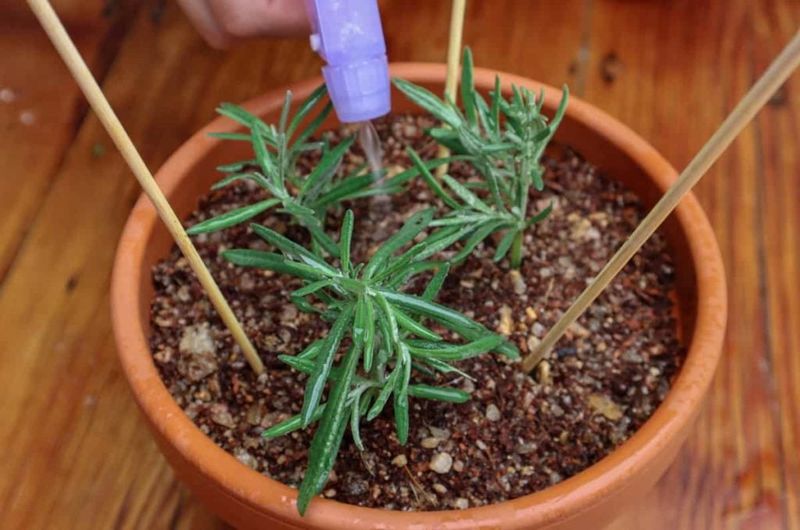
Watering lavender cuttings takes a bit of a balancing act, particularly in Arizona where the dry air can pull moisture out of the growing mix surprisingly fast. The goal is to keep the mix consistently damp, not soaking wet.
Pushing a finger about an inch into the mix is a reliable way to check moisture without guessing.
Misting the cuttings lightly with a spray bottle once or twice a day helps keep the leaves hydrated without flooding the roots.
A loose plastic cover or a clear humidity dome placed over the tray can slow down moisture loss between waterings, which is especially helpful during Arizona’s low-humidity months.
Watch the mix carefully during warm periods. Even in shade, Arizona’s heat can cause the growing mix to dry out faster than expected.
If the mix feels dry more than an inch deep, give it a gentle watering until moisture just begins to drain from the bottom.
On the other hand, if the mix feels soggy or smells musty, ease back on watering and check that your drainage holes are clear.
Finding that steady middle ground is what keeps cuttings healthy while roots are forming.
6. Place Cuttings In Bright Indirect Light During Rooting
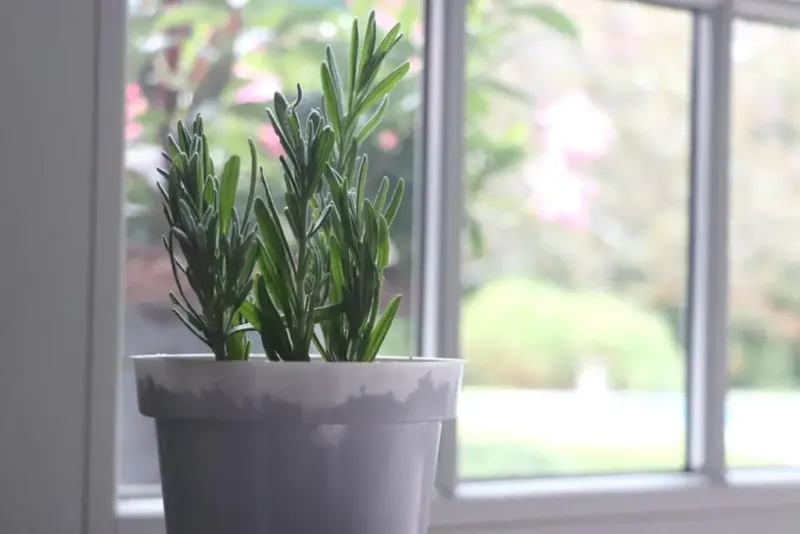
Bright shade is the sweet spot for lavender cuttings during the rooting phase, and Arizona gardeners have to be especially thoughtful about this.
Direct sun can stress unrooted cuttings quickly because they have no established root system to pull up water and replace what the leaves lose in the heat.
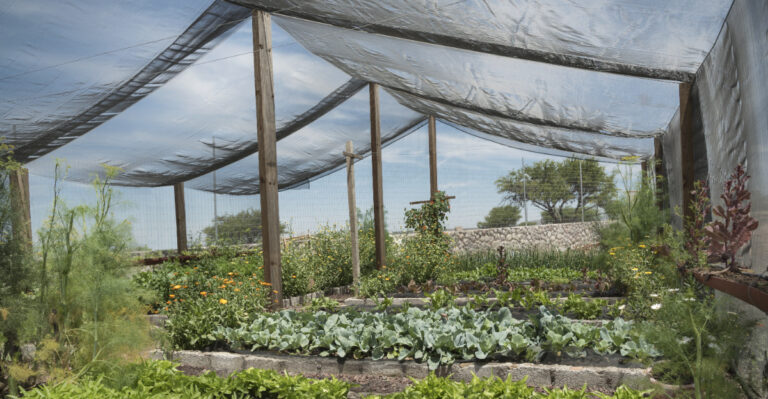
A covered patio, a north-facing wall, or a spot under a shade cloth that filters out about thirty to fifty percent of sunlight works well.
The cuttings still need light to stay healthy and produce a bit of energy, but they should not be sitting in full Arizona sun for hours at a time.
Even morning sun can be intense enough to wilt tender cuttings during the warmer months.
As the cuttings begin to root and show new growth, you can gradually move them into brighter conditions over the course of a week or two. This slow transition helps the young plants adjust without sudden stress.
Think of bright indirect light as the training ground where cuttings build their strength before they are ready to handle the full force of an Arizona garden. Patience during this phase pays off with stronger, more resilient plants later on.
7. Use Rooting Hormone For Better Root Development
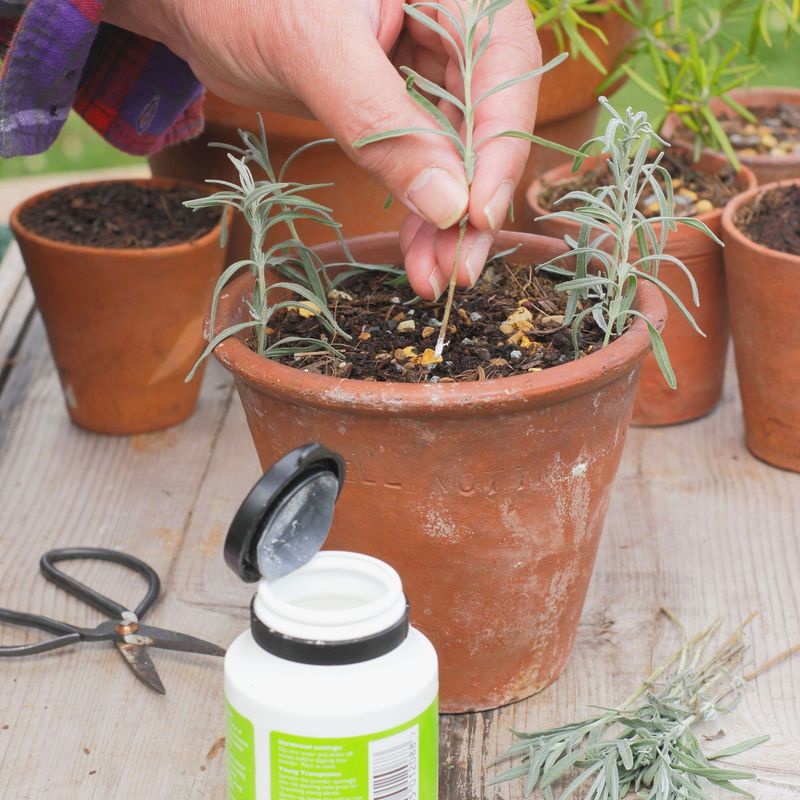
Rooting hormone is one of those simple tools that can genuinely improve your propagation results without a lot of extra effort. It contains auxins, which are natural plant compounds that encourage root cell development at the base of the cutting.
Applying it correctly gives your lavender cuttings a meaningful head start.
Powder forms of rooting hormone are easy to find at most garden centers and work well for lavender.
Dip the stripped end of each cutting about half an inch into the powder, tap off any excess, and then insert the cutting into your prepared growing mix.
Applying too much powder can actually slow things down rather than speed them up, so a light coating is all you need.
Gel and liquid forms of rooting hormone are also available and can work just as effectively when used according to the package directions.
In Arizona’s warm propagation environment, rooting hormone can help cuttings establish before the growing mix has a chance to dry out between waterings.
Gardeners who skip this step sometimes still get good results, but using rooting hormone tends to increase the number of cuttings that successfully develop roots, which is especially helpful when working with a small batch of stems.
8. Transplant Rooted Cuttings Into Small Pots Before Garden Planting
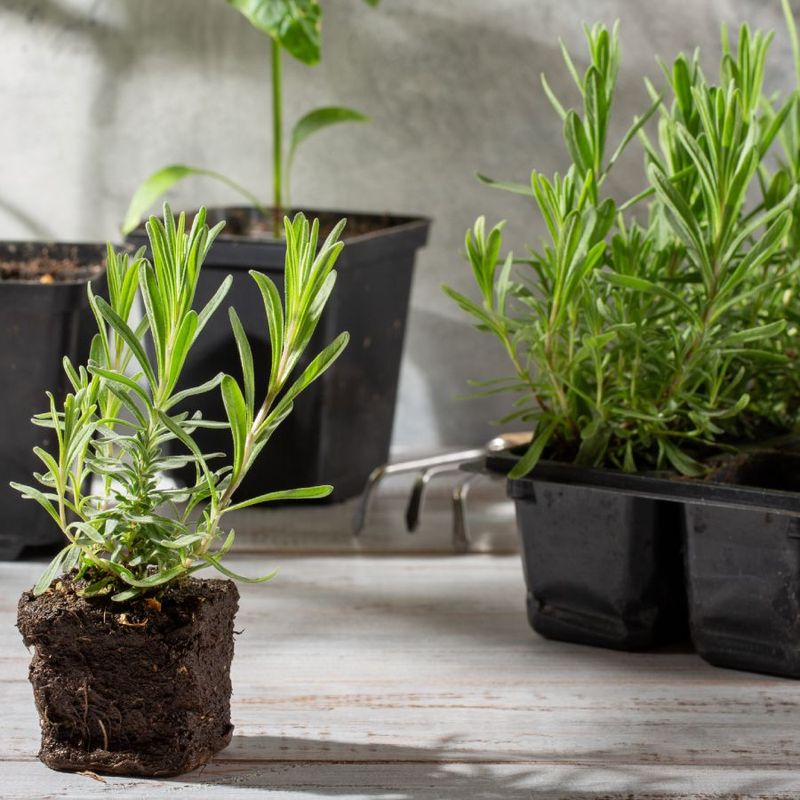
Once your lavender cuttings have developed a small network of roots, moving them into individual pots is the next step before they head into the garden.
A four-inch pot gives a young lavender plant enough room to grow without sitting in more soil than its roots can manage.
Too large a pot can hold excess moisture that young roots are not yet equipped to absorb.
Use a well-draining potting mix for this stage, similar to what you used for rooting. A blend with added perlite or coarse sand works well.
Gently lift each rooted cutting from the propagation tray, trying to keep the root ball as intact as possible, and settle it into the new pot at the same depth it was growing before.
Water the newly potted cuttings lightly and place them back in a bright but protected spot for another week or two while they adjust.
Arizona’s outdoor conditions can be tough on young plants that have only known the sheltered environment of a propagation tray.
Spending a little extra time in individual pots lets the root system develop further and makes the eventual transition to a raised bed, container garden, or gravel landscape much smoother.
9. Wait Until Plants Develop Strong Roots Before Summer Planting
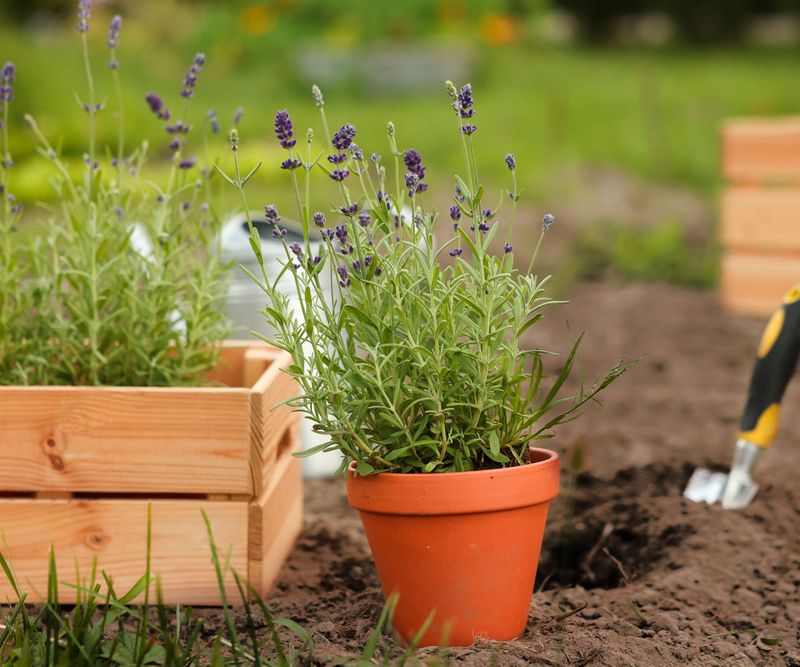
Patience is genuinely one of the most valuable tools in an Arizona gardener’s kit, especially when it comes to transplanting young lavender into the garden.
Moving a cutting outside before its root system is fully established can put the plant under serious stress, particularly as summer temperatures climb well above one hundred degrees in many parts of Arizona.
Check your cuttings for root development by gently tugging on the base of the stem. If you feel light resistance rather than the cutting pulling straight out, roots have likely begun to form.
Visible roots growing out of drainage holes are an even clearer sign that the plant is ready for the next step.
Aim to have your lavender plants well-rooted and growing in individual pots before the intense heat of Arizona’s summer arrives.
Spring and fall are much gentler windows for transplanting into raised beds, patio containers, or low-water landscapes.
A plant with a strong, established root system handles heat and dry conditions far better than one that is still working on its roots.
Taking the extra weeks to let your lavender develop fully before outdoor planting is what turns a fragile cutting into a thriving garden plant.