Small But Striking Trees That Thrive In Illinois Landscapes
I planted my first small tree five years ago. Big mistake.
I chose a massive oak that now blocks my entire bedroom window. Live and learn, right? Small trees are where it’s at for Illinois yards, they pack visual punch without hogging the whole property or cracking your foundation in ten years. They can make a surprisingly big impact, especially in Illinois landscapes where space, climate, and seasonal beauty all matter.
They fit perfectly into suburban yards and tight city corners, instantly adding life, texture, and a touch of elegance to even the smallest Illinois gardens. Once you see how much character they bring, it’s easy to imagine how these little trees can boost curb appeal and turn everyday outdoor spaces into something truly memorable year after year. Small yards don’t have to mean small impact. The right tree can bring color, texture, and year-round beauty without overwhelming your space.
Spring blossoms, fiery fall foliage, and striking winter bark show that less really is more with these compact trees. Built to handle Illinois’ wild weather swings, they’re hardy and low-maintenance too. Best of all, they’re low-maintenance and high-reward. Here are standout small trees that bring serious beauty without the chaos.
1. Eastern Redbud
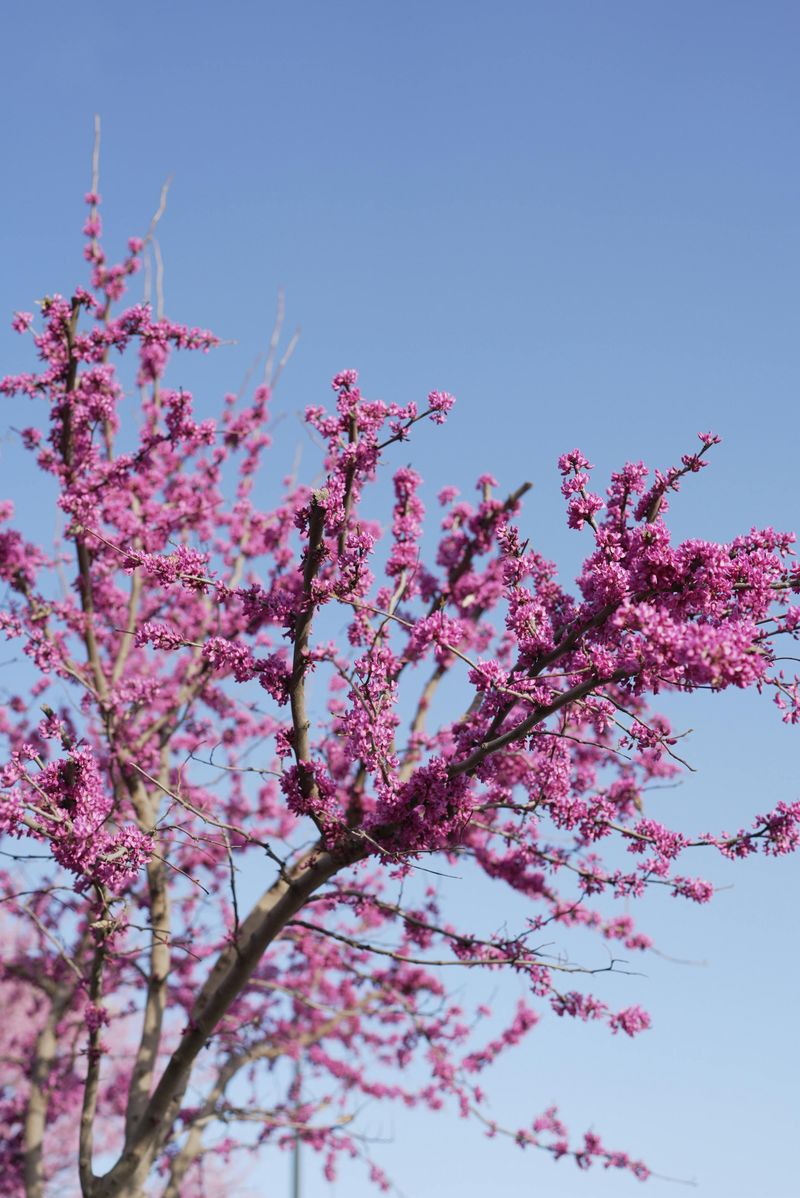
Picture this: late spring in Illinois, everything’s still brown and dreary, then BAM, hot pink fireworks all over your neighborhood.
That’s Eastern Redbud doing its thing.
This native tree literally blooms before it leafs out, covering bare branches with magenta-purple flowers that make your neighbors stop and stare.
Height tops out around 20-30 feet, making it suitable for many smaller yards or tucking under power lines.
The heart-shaped leaves emerge after flowering, turning that lovely chartreuse-green that photographs beautifully.
Come fall, you get butter-yellow foliage that glows in afternoon light.
Redbuds handle our clay soil like champs and don’t throw tantrums during drought.
Plant them where you’ll see them from your kitchen window. Spring coffee tastes better with that pink show.
They also attract hummingbirds and butterflies, turning your yard into a mini nature preserve.
One warning: they’re understory trees in nature, so afternoon shade keeps them happiest.
2. Dwarf Ginkgo
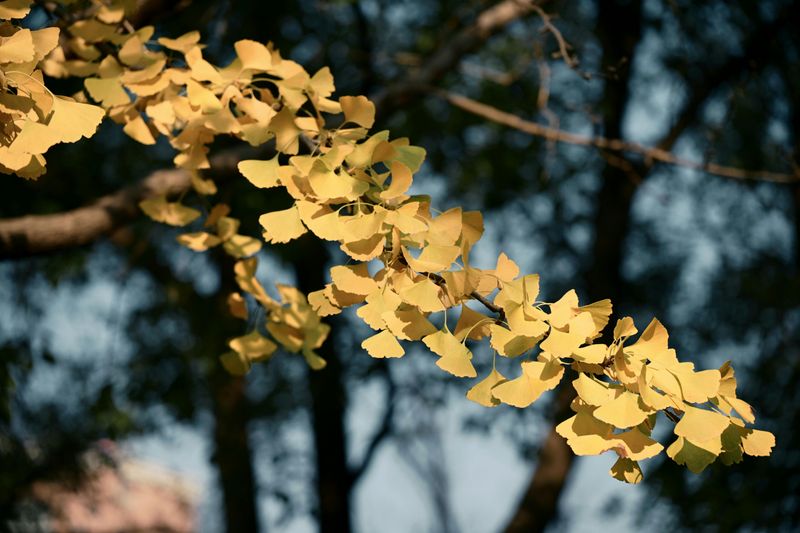
Tiny tree, big attitude, that’s the dwarf ginkgo making its entrance in Illinois landscapes.
It doesn’t tower, it doesn’t sprawl, and it certainly doesn’t get lost in the crowd.
Compact and deliberate, it claims its space with quiet confidence and a neat, sculpted look.
Bright green through the growing season, they bring a crisp, tidy vibe that feels almost curated.
Each leaf looks like it showed up prepared, no chaos, no nonsense, just clean, sharp style.
Then autumn comes and the dwarf ginkgo flips the switch. Green turns to a bold, unmistakable yellow that refuses to blend in.
For a small tree, it delivers a surprisingly loud color moment, like it’s been saving all its energy for this exact scene.
Your Illinois Garden Changes Every Week. Your Plan Should Too.
Gardening in Illinois changes quickly throughout the season. Every Friday you’ll receive a simple weekly plan showing exactly what to plant, prune, fertilize, harvest, and protect so you never miss the right timing.
In Illinois landscapes, male dwarf cultivars are valuable for both pollination and compact growth.
Examples include ‘Mr. Poppins,’ a small winterberry holly used to pollinate female plants, and Ginkgo biloba ‘Spring Grove,’ a hardy, fruitless tree. These cultivars thrive in Zone 5–6 climates and suit space-limited gardens well.
Illinois weather can’t seem to rattle it much. Cold winters, hot summers, city conditions, it handles them all without throwing a fit.
Low maintenance and dependable, it’s basically the friend who’s always on time and never complains.
Let’s talk size, because this is where it really shines.
The dwarf form stays manageable, making it perfect for smaller yards, patios, or anywhere space is tight. No constant pruning battles, no worrying about it taking over, just a steady, controlled presence.
And finally, a small but important detail: pick the right one, and you avoid the infamous ginkgo fruit situation. Male varieties keep things clean, meaning no unexpected odors ruining your outdoor plans.
In the end, the dwarf ginkgo proves you don’t need to go big to make an impression.
It is compact, resilient and just bold enough to stand out without trying too hard, a neat little win for Illinois gardens.
3. Paperbark Maple
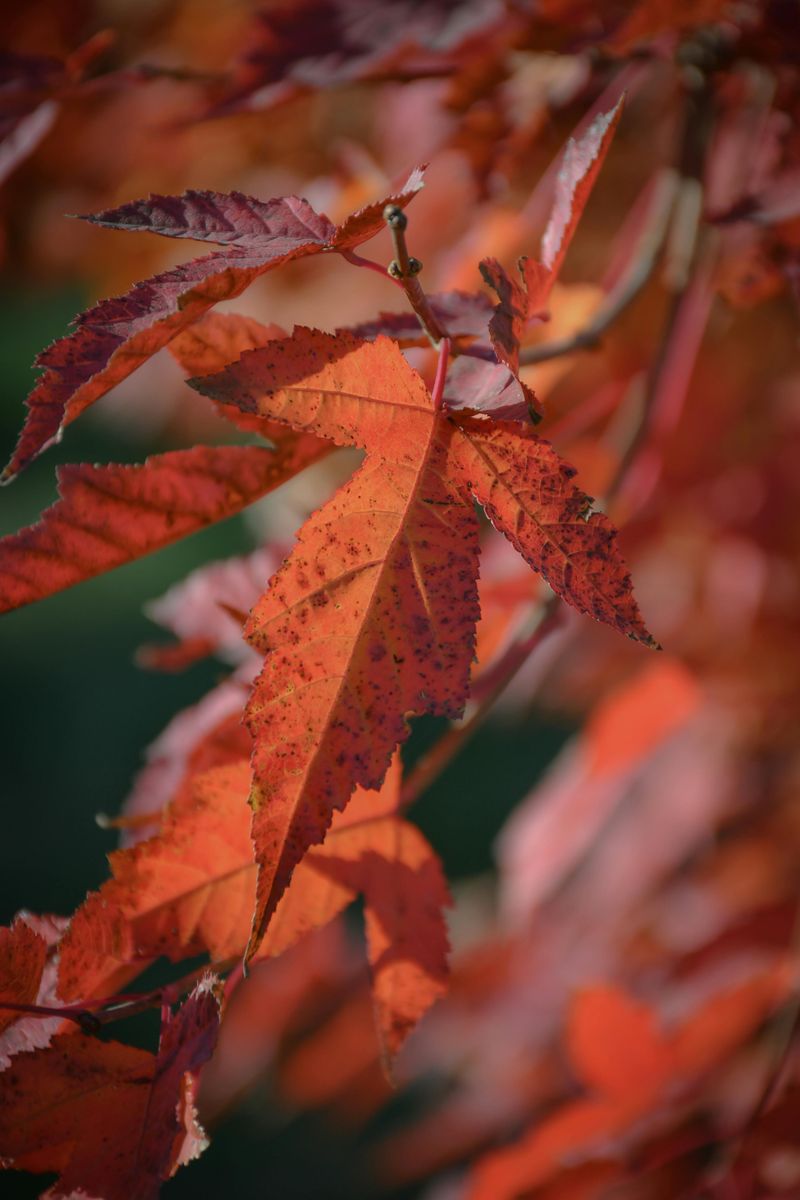
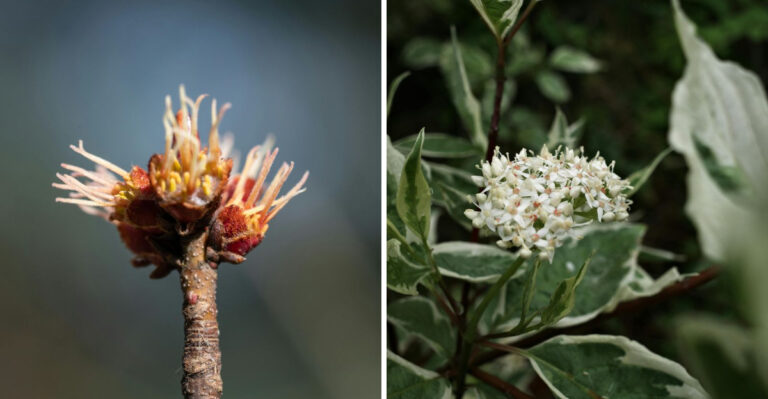
Peel back the ordinary and meet paperbark maple, whose cinnamon bark steals the show in winter.
I first noticed one at a friends’ house and was hooked by that exfoliating bark and the blazing fall color that lasts for weeks.
Its small size and rounded form make it ideal for tighter sites where a splash of autumn color is desired without overwhelming the yard.
It prefers well-drained soil and sun to partial shade; mine thrives with basic care and occasional watering during dry spells. It is relatively pest resistant and develops a refined silhouette as it matures.
Leaves turn brilliant orange and red, which draws compliments every year.
For seasons of bark drama and fall fireworks, this maple is a compact showstopper that feels special in any landscape.
4. Crabapple
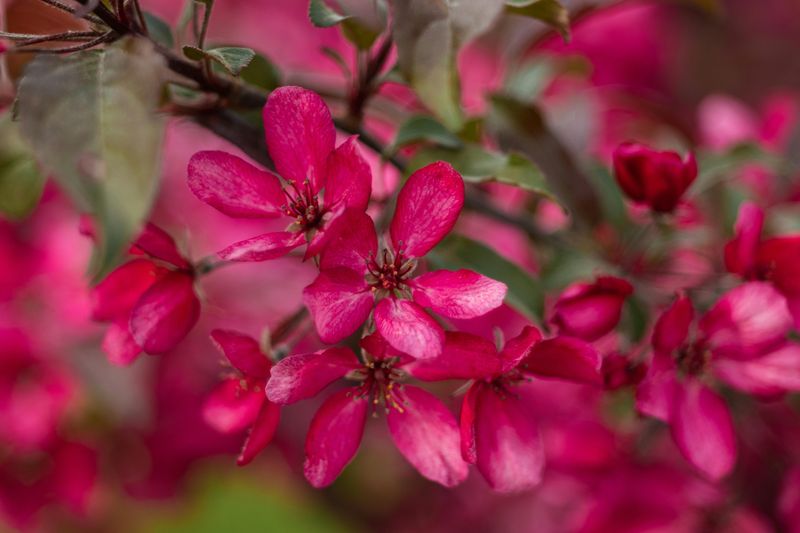
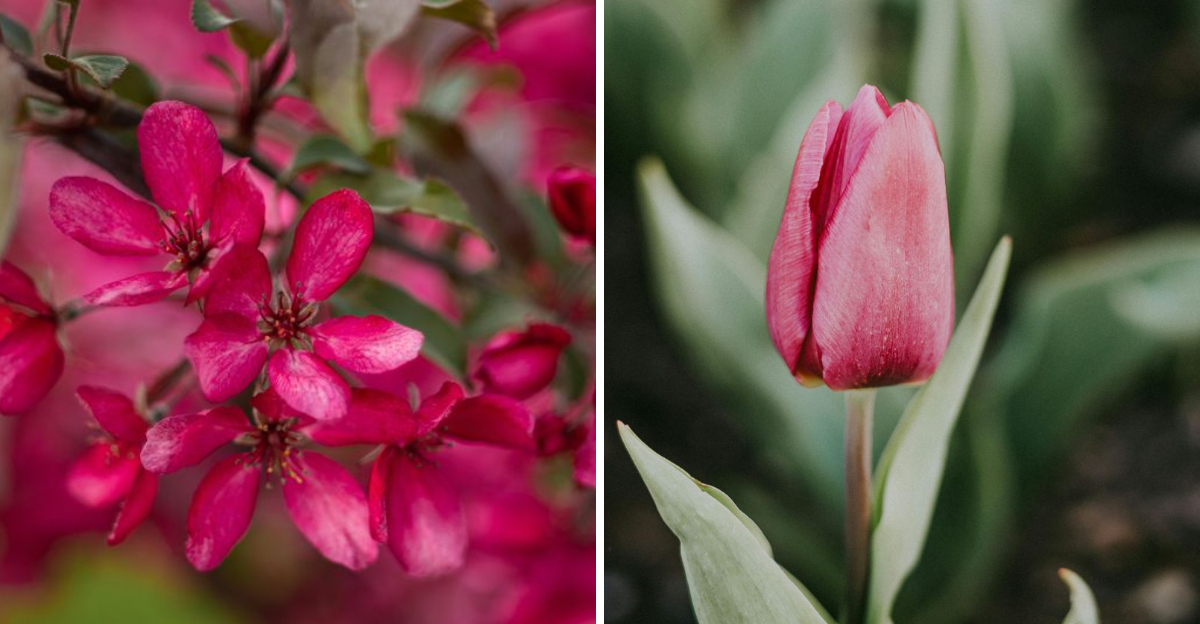
Pink clouds of blossom make crabapples feel like floral fireworks concentrated into a small tree form. Crabapples provide prolific spring flowers, and often stunning fall color, offering multiple seasons of charm for modest yard space.
They do best in full sun and tolerate typical Illinois soils with good drainage.
Prune for shape and disease resistance when young, and pick varieties bred for ornamental fruit and mildew resistance to minimize fuss.
Illinois has warm, humid springs that strongly encourage fungal diseases like apple scab, so resistant cultivars are recommended by horticultural programs such as the Morton Arboretum. Choosing resistant types greatly reduces spraying and maintenance needs.
Disease-resistant crabapples like Prairifire, Tina, and Lollipop perform well in humid conditions. Prairifire is a hardy ornamental tree with strong resistance and bright blooms.
Tina is a dwarf shrub form, while Lollipop offers compact growth. All resist scab, fire blight, and rust effectively.
I planted a compact crabapple to frame my front walk and it became a neighborhood favorite for photos and porch chats.
If you want instant personality without a lumbering trunk, a crabapple delivers color, wildlife interest, and curb appeal.
5. Hawthorn
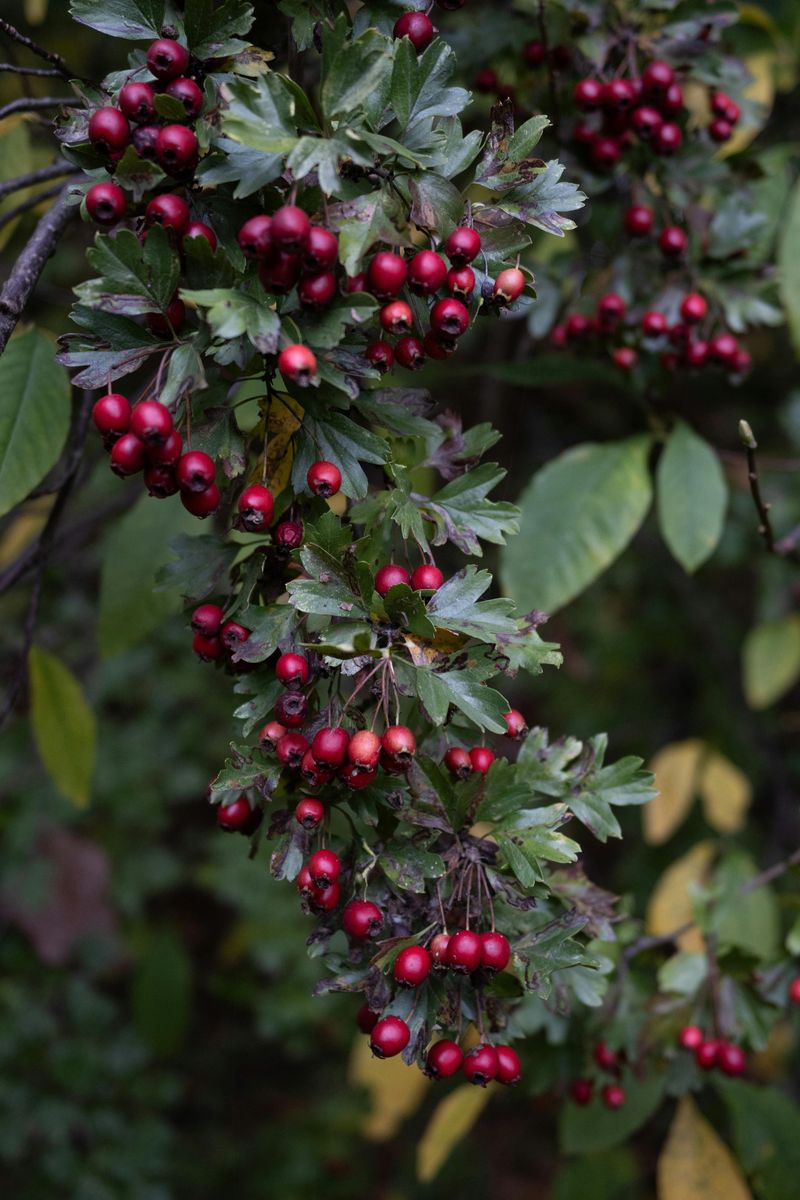
Right when the season starts to feel lively, hawthorn joins the party with a burst of bloom.
The flowers pop up in tight clusters, bringing a fresh, bright look to yards and roadsides.
It’s a short but memorable show, and yes, there’s a scent sometimes pleasant, sometimes…let’s just say “noticeable.”
Just when you think you’ve figured it out, the leaves step in with their own quiet style.
Small, lobed, and neatly arranged, they give the tree a tidy appearance through summer.
It doesn’t try to dominate the landscape, it simply holds its ground with calm confidence.
Then come the berries, and suddenly hawthorn is hosting wildlife hour.
It’s lively, a little chaotic, and oddly satisfying to watch from a safe, thorn-free distance.
Autumn adds another layer, because hawthorn isn’t done yet. The leaves shift to warm shades yellows, oranges, sometimes hints of red, giving the tree a final moment before the colder months roll in.
It’s not flashy, but it lands just right.
And through it all, those thorns stay ready, turning this tree into a natural security system.
In Illinois landscapes, that mix of beauty and bite makes hawthorn stand out.
It’s charming, a little stubborn, and definitely not something you forget after one encounter.
6. Flowering Dogwood
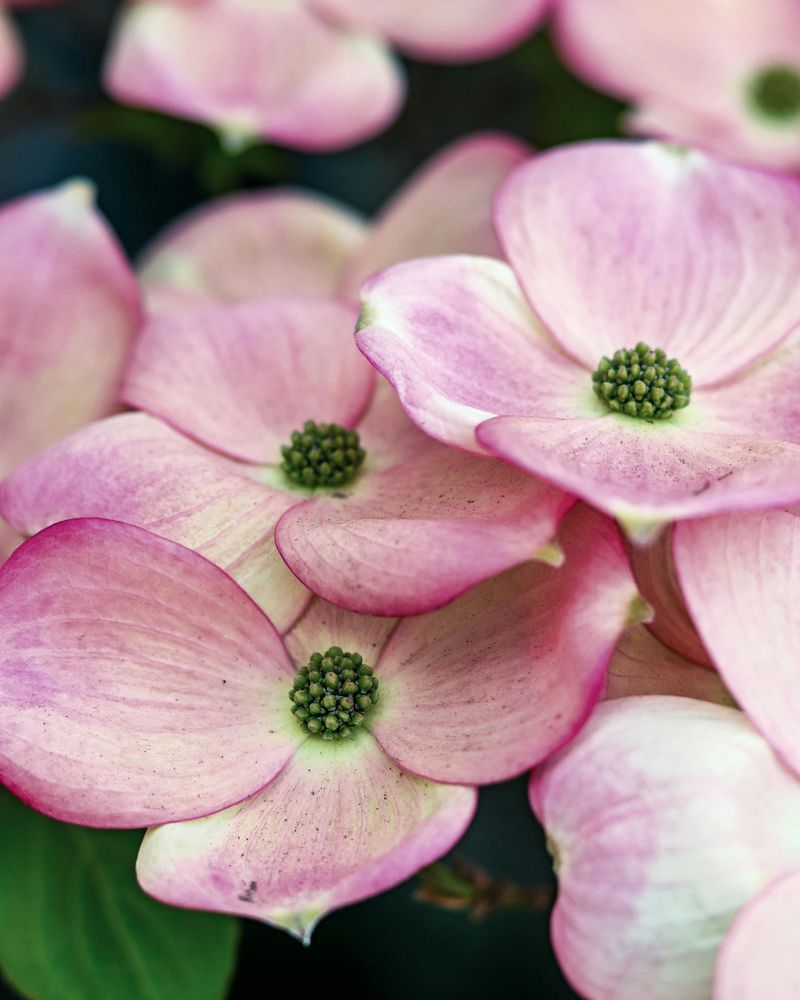
You will adore the Flowering Dogwood for dramatic spring flair and graceful form that suits small yards.
Right when the season needs a lift, those signature “flowers” show up.
Four petal-like shapes frame the tiny true flowers in the center and together they create a look that’s clean, bold, and just a little bit showy.
Just when you think it’s all about spring, the leaves step in to keep things interesting.
Rich green and neatly layered, they give the tree a polished appearance through summer.
Then comes a pop of red that changes the mood entirely. By late summer into fall, bright berries appear, drawing birds in like they’ve received a personal invitation.
It’s lively, a bit busy, and fun to watch unfold from nearby.
The show is not over, because autumn color delivers one more highlight. Leaves shift into deep reds and purples, giving the tree a bold closing act before the chill sets in.
It’s short, sharp, and memorable.
Even in winter, the flowering dogwood keeps its charm intact. Its layered branching pattern stands out against bare landscapes, proving it doesn’t rely on blooms alone.
In Illinois, it’s a four-season performer with a knack for perfect timing and a flair for making each moment count.
7. Tulip Tree
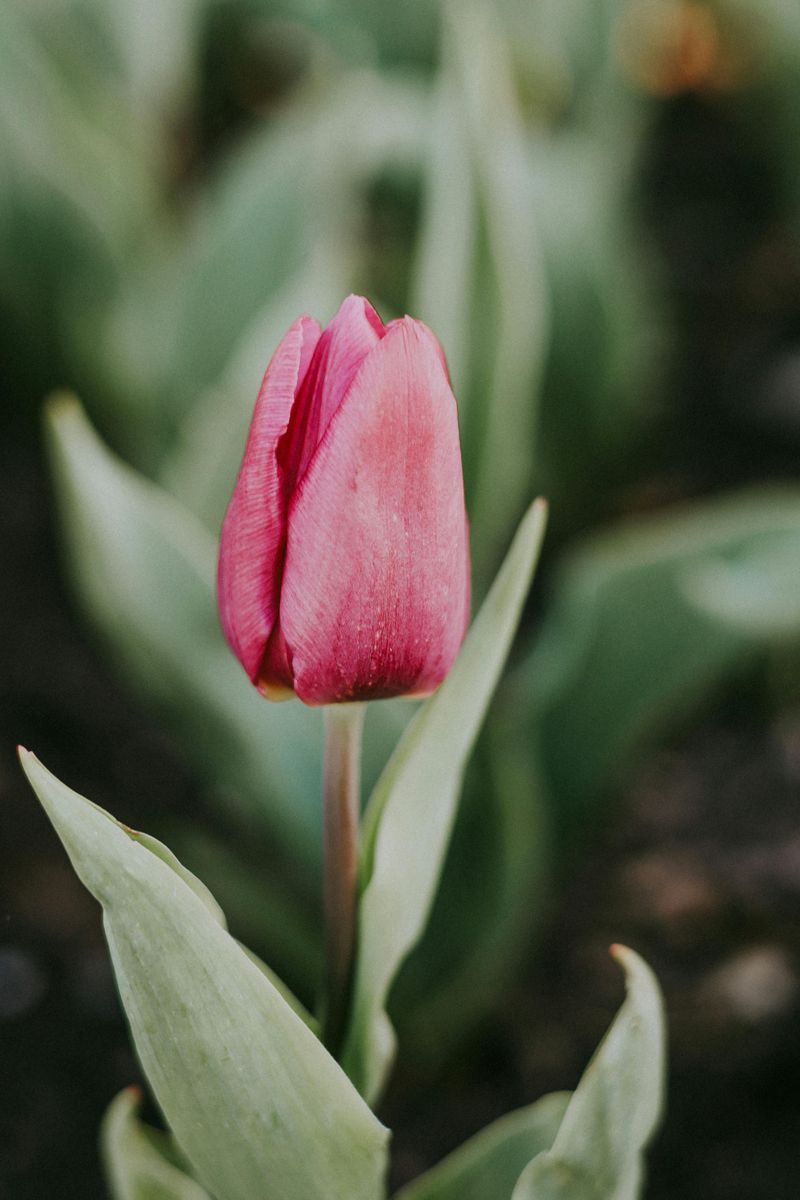
If you want a tree that truly stands out in an Illinois landscape, the Tulip Tree is hard to beat.
Towering yet elegant, this native beauty brings a bold vertical presence while still feeling graceful and refined. Its name comes from the distinctive, tulip-shaped flowers that appear in late spring greenish-yellow with hints of orange, often surprising homeowners who didn’t even realize their tree could bloom so uniquely.
In Illinois, the tulip tree thrives thanks to its adaptability and love for full sun and well-drained soil.
It’s a fast grower, making it perfect for anyone looking to add shade and structure without waiting decades. Its leaves are just as eye-catching as its flowers, with a smooth, almost sculpted shape that turns a glowing golden yellow in the fall.
Beyond its beauty, this tree plays a valuable ecological role, attracting pollinators like bees and supporting native wildlife. While it does need space to reach its full potential, the payoff is a stunning, long-lived centerpiece that transforms any yard into something memorable.
For Illinois homeowners, the tulip tree is more than just a tree, it’s a statement.
8. Japanese Maple
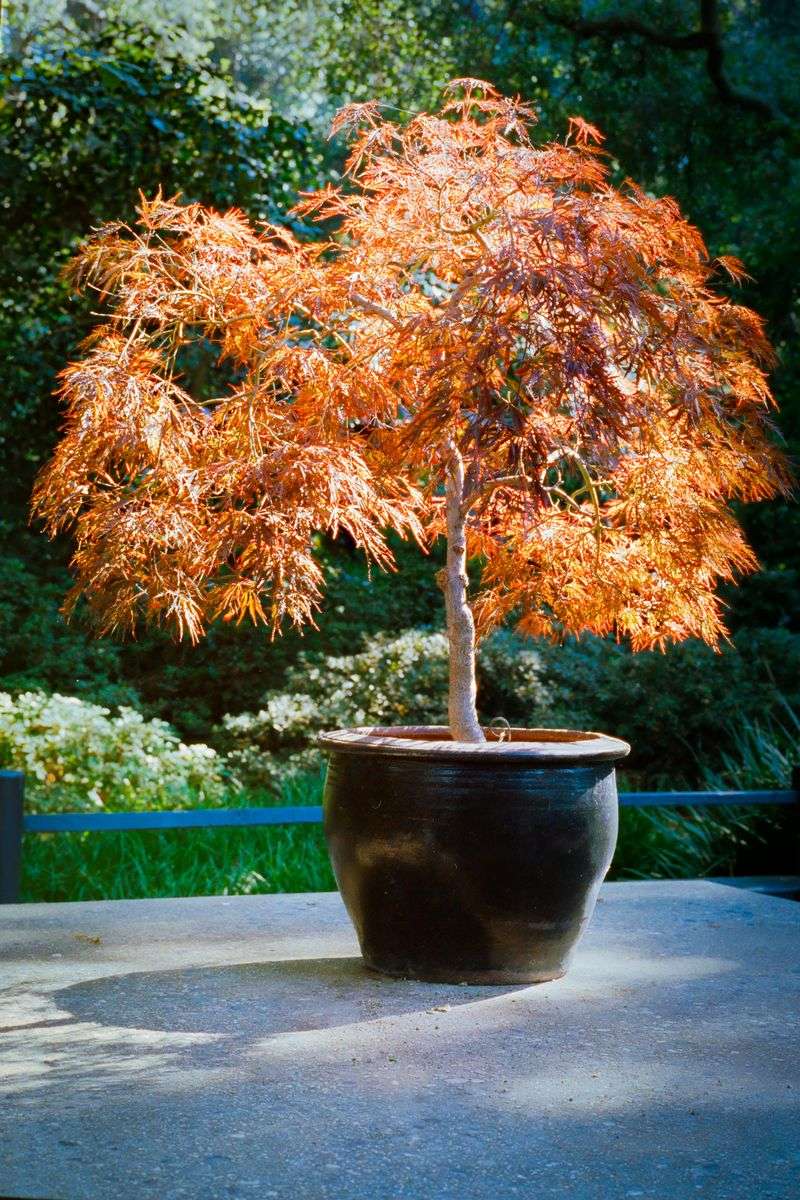
This tree will definitely steal the show in your backyard – its leaves look like tiny hands waving in slow motion.
It thrives in partial shade and gives the landscape year-round personality with vivid spring growth, delicate summer canopy, fiery fall color and a sculptural winter silhouette.
You can plant on well-drained, slightly acidic soil and protect young trees from hot afternoon sun to prevent leaf scorch. It works in protected sites and is not ideal for windy, exposed and full- sun Illinois spots.
Pruning is minimal and mostly about shaping rather than drama, and watering is steady until the rootball establishes.
This tree lends instant serenity and a focal point that friends always ask about when they visit.
9. Fringe Tree
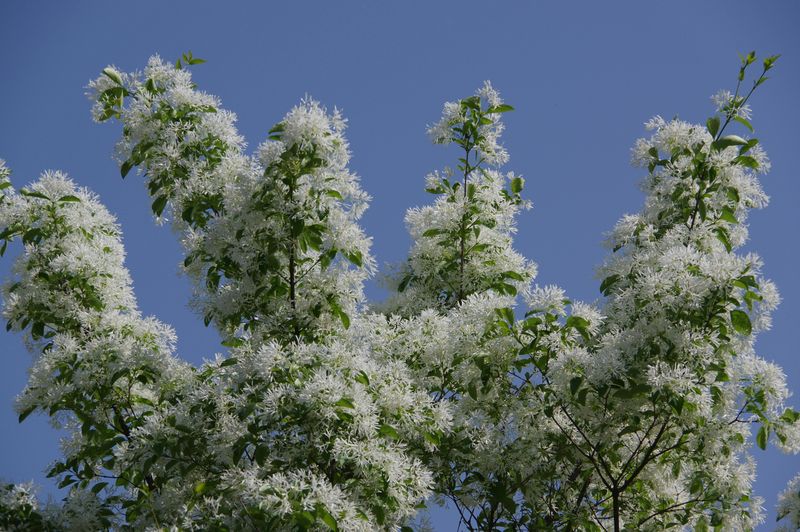
Just when spring starts feeling predictable, same tulips, same budding leaves, this tree bursts in with a completely different vibe.
The flowers hang in delicate clusters that look almost too fancy for the Midwest.
Despite its showy appearance, the fringe tree isn’t some diva demanding constant attention.
It’s surprisingly low-maintenance.
In Illinois, it handles the climate like a pro, from cold winters to humid summers.
Low effort, high reward. That’s the fringe tree’s quiet brag.
It handles Illinois weather without fuss, shrugging off cold snaps and humid stretches like it’s all part of the plan. Gardeners love it for that reason, and honestly, so do I.
Anything that looks this good without constant babysitting earns respect.
It doesn’t just look nice, it smells good too. The scent is gentle, easy to miss if you’re rushing, but rewarding if you slow down.
It adds just enough charm to make a walk feel like an upgrade.
And then, plot change – berries enter the chat.
By late summer, the tree produces dark blue fruit that birds treat like a top-tier dining spot.
Suddenly, the branches are busy, and the whole scene feels lively without trying too hard.
In the end, the fringe tree doesn’t overstay its welcome, and that’s part of its charm.
It shows up, makes an impression, and slips back into the background with zero fuss.
Illinois has plenty of trees, but this one knows how to make its moment count.
10. Magnolia
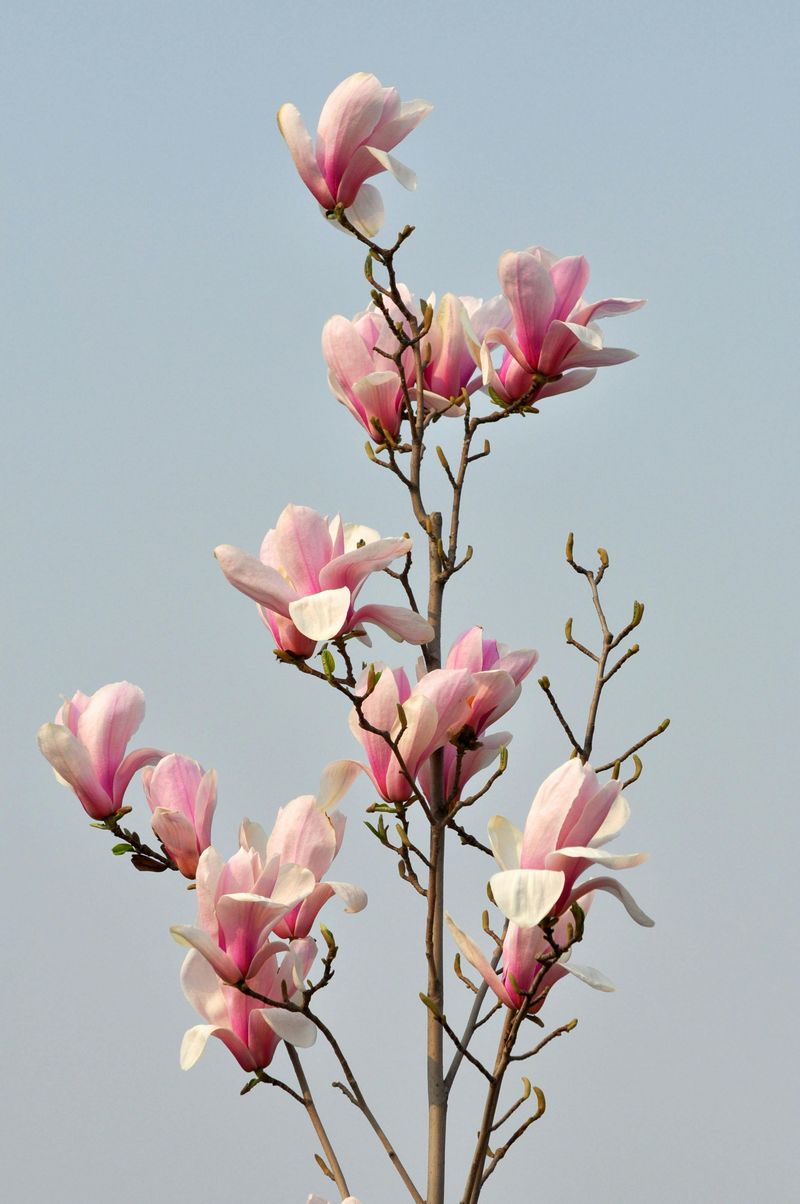
Out of nowhere, the magnolia in Illinois decides it’s showtime.
One day it’s bare branches, the next it’s covered in bold, silky blooms that refuse to be ignored.
No warm up act, no subtle entrance, just full floral drama right when winter finally loosens its grip.
Soft pinks, creamy whites, sometimes both on the same tree, it’s a color palette that knows exactly what it’s doing.
They don’t last forever, and that’s part of the thrill, miss a week, and you’ve missed the headliner.
Weather, however, loves to keep things interesting.
In Illinois, small magnolia varieties that perform well include Ann, a compact shrub-like magnolia with purple spring blooms, and star magnolia, which stays smaller and flowers early in spring. Jane and Susan from the Little Girl series also stay modest in size and handle cold winters better.
Royal Star is another hardy option, forming a small ornamental tree ideal for tight garden spaces and protected locations.
A late frost can sweep in like an uninvited critic, knocking petals down before their big moment is over.
It’s a bit of a gamble every year, but when conditions cooperate, the display feels like a well-earned win.
Magnolias carry a sturdy, sculptural shape that holds attention even after the petals drop.
Once the blooms fade, glossy green leaves take over, keeping the tree in the game through summer without any fuss.
By the time the season shifts again, the magnolia has already wrapped up its performance.
No encore, no dragging it out. It arrives, dazzles, and exits with confidence leaving Illinois yards just a little more interesting for those who caught the show.
11. American Hornbeam

The hornbeam doesn’t shout for attention, but it earns it anyway with quiet confidence.
Tucked along streams and shady corners, it’s the kind of tree that rewards a second look and maybe a third.
At first glance, the bark steals the show. Smooth, gray, and rippled with muscle-like ridges, it looks like it’s been hitting the gym in secret.
Spring rolls in, and the hornbeam keeps things understated but stylish.
Small flowers appear in dangling clusters, not flashy, but definitely interesting if you bother to notice.
It’s not trying to outshine the big bloomers, it’s playing its own game, and doing it well.
With summer knocking on the door, the leaves step up with a clean, crisp look.
Bright green, neatly arranged and refreshingly low drama, they create a dense canopy that’s perfect for shade. It’s the kind of tree that makes you want to linger underneath, even if you weren’t planning to stop.
Then autumn hits, and suddenly the hornbeam decides to show off, just a little.
The foliage shifts to warm yellows and soft oranges, adding a final splash before the season wraps. It’s not over-the-top, but it’s enough to make you pause and nod in approval.
Winter reveals the tree’s true personality. With leaves gone, the sculpted trunk and branches take center stage, proving this tree doesn’t rely on seasonal gimmicks.
In Illinois, where weather can be unpredictable, the hornbeam stands steady, quiet, tough, and effortlessly interesting.