How Florida Gardeners Can Help Heat-Stressed Banana Plants Recover
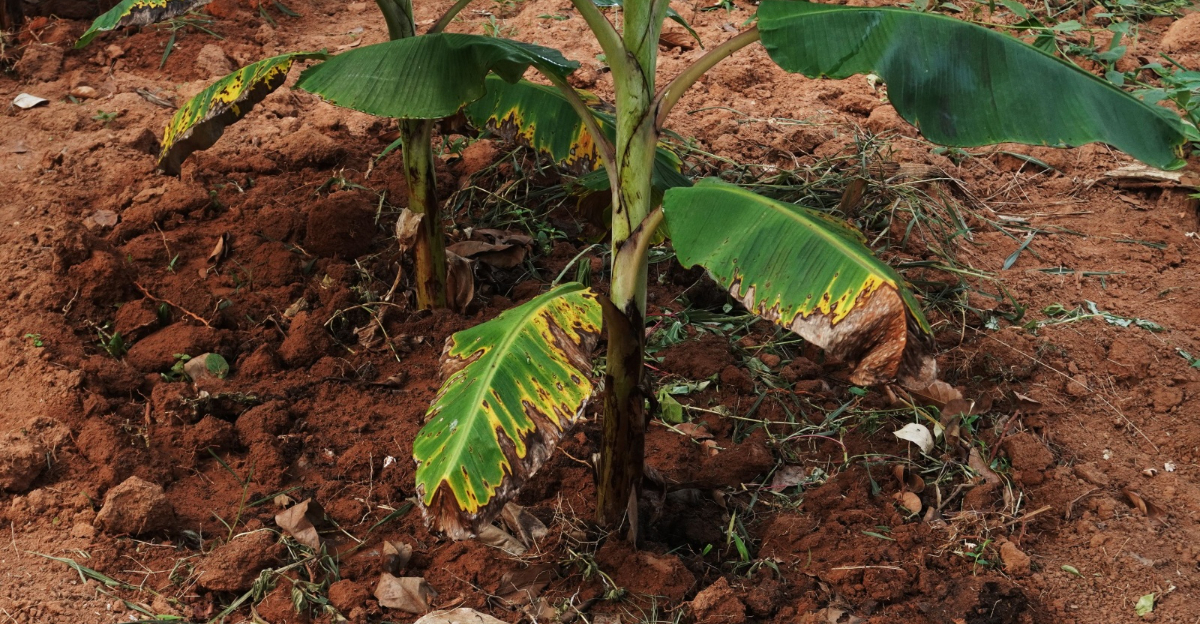
Banana plants seem built for Florida heat, but summer can still push them past their comfort zone.
Hot afternoons, dry spells between storms, sandy soil that drains too fast, and stretches of intense sun all add up to real stress for a banana mat, even one that looked thriving just weeks ago.
Folded leaves, yellowing foliage, and slowed growth are the warning signs, and the instinct to just add more water often misses what is actually going on.
Bananas need a specific set of conditions to recover and thrive, steady moisture at the root zone, good drainage, fresh mulch, and soil that is not losing nutrients to competing weeds.
Understanding that combination is what separates a banana plant that bounces back strong from one that limps through the rest of the season.
1. Check Soil Moisture Before Adding More Water
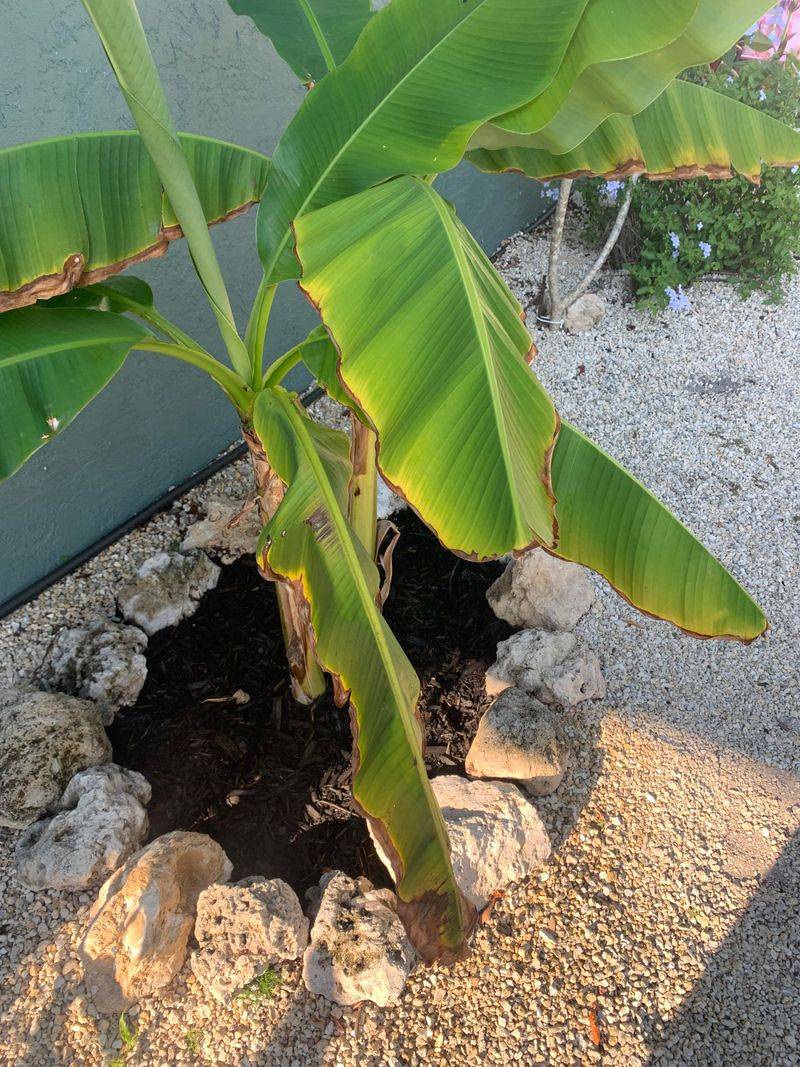
A drooping or tired-looking banana plant can be misleading. That limp, heavy look on a hot Florida afternoon does not automatically mean the plant is thirsty.
Before reaching for a hose, it is worth taking a moment to check what the soil is actually doing beneath the surface.
Push a finger or a wooden dowel several inches into the root zone near the base of the mat. If the soil feels damp or cool just a few inches down, the plant may already have enough moisture.
Adding more water on top of already-wet soil can create problems that are harder to fix than drought stress.
Banana plants are moisture-hungry, but they are also sensitive to soil that stays soggy or poorly drained for extended periods.
Roots sitting in saturated ground can weaken, and a weakened root system makes it harder for the plant to take up water even when it is available.
In Florida, where summer rainstorms can drop several inches of rain in a short stretch, the root zone can shift from dry to oversaturated quickly.
Checking moisture first helps gardeners make a smarter call. A simple soil check takes less than a minute and can save a stressed plant from being overwatered.
Sandy Florida soils drain quickly, but heavy clay pockets or compacted areas near the mat can hold water longer than expected, so it pays to actually feel the soil rather than guess.
2. Water Regularly During Dry Weather
Banana plants have some of the largest leaves of any backyard fruit plant in Florida, and those leaves lose moisture to the air constantly.
During dry stretches, that water loss can outpace what the roots are pulling from the soil, and the plant starts to show it through leaf rolling, pale coloring, and slow growth.
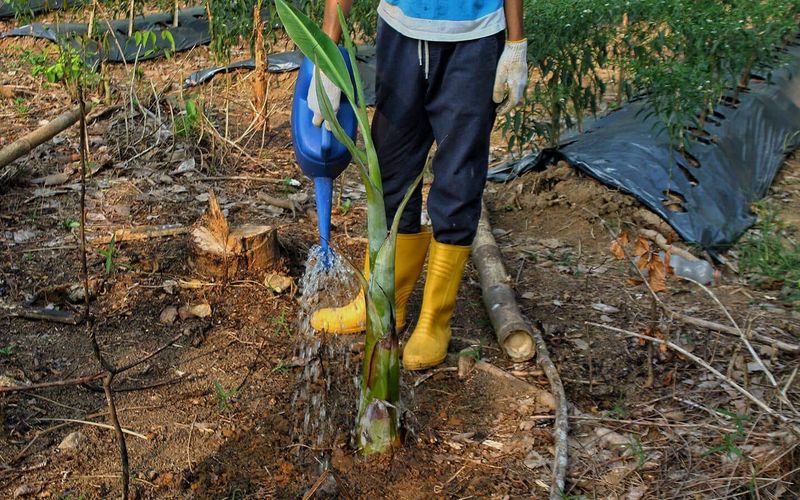
Regular watering during dry weather is one of the most straightforward ways to support a heat-stressed banana mat. A deep, steady soak that reaches the root zone is more useful than a light sprinkle that only wets the top inch of soil.
Sandy Florida soils drain fast, so water needs to be applied slowly enough to actually reach the roots before running off or draining away.
Your Florida Garden Changes Every Week. Your Plan Should Too.
Gardening in Florida changes quickly throughout the season. Every Friday you’ll receive a simple weekly plan showing exactly what to plant, prune, fertilize, harvest, and protect so you never miss the right timing.
Watering frequency should still be based on what the soil actually needs rather than a fixed schedule. Rainfall amounts vary a lot across Florida, and a spot that got soaked by a summer storm earlier in the week may not need irrigation right away.
Checking soil moisture before watering is always a good habit, even during a dry spell.
Early morning is generally a good time to water banana plants. Watering in the morning gives roots time to absorb moisture before afternoon heat peaks, and it reduces the chance of wet foliage sitting overnight.
Consistent moisture during dry Florida summers can make a real difference in how quickly a stressed banana mat recovers and resumes healthy growth.
3. Improve Drainage Around The Mat
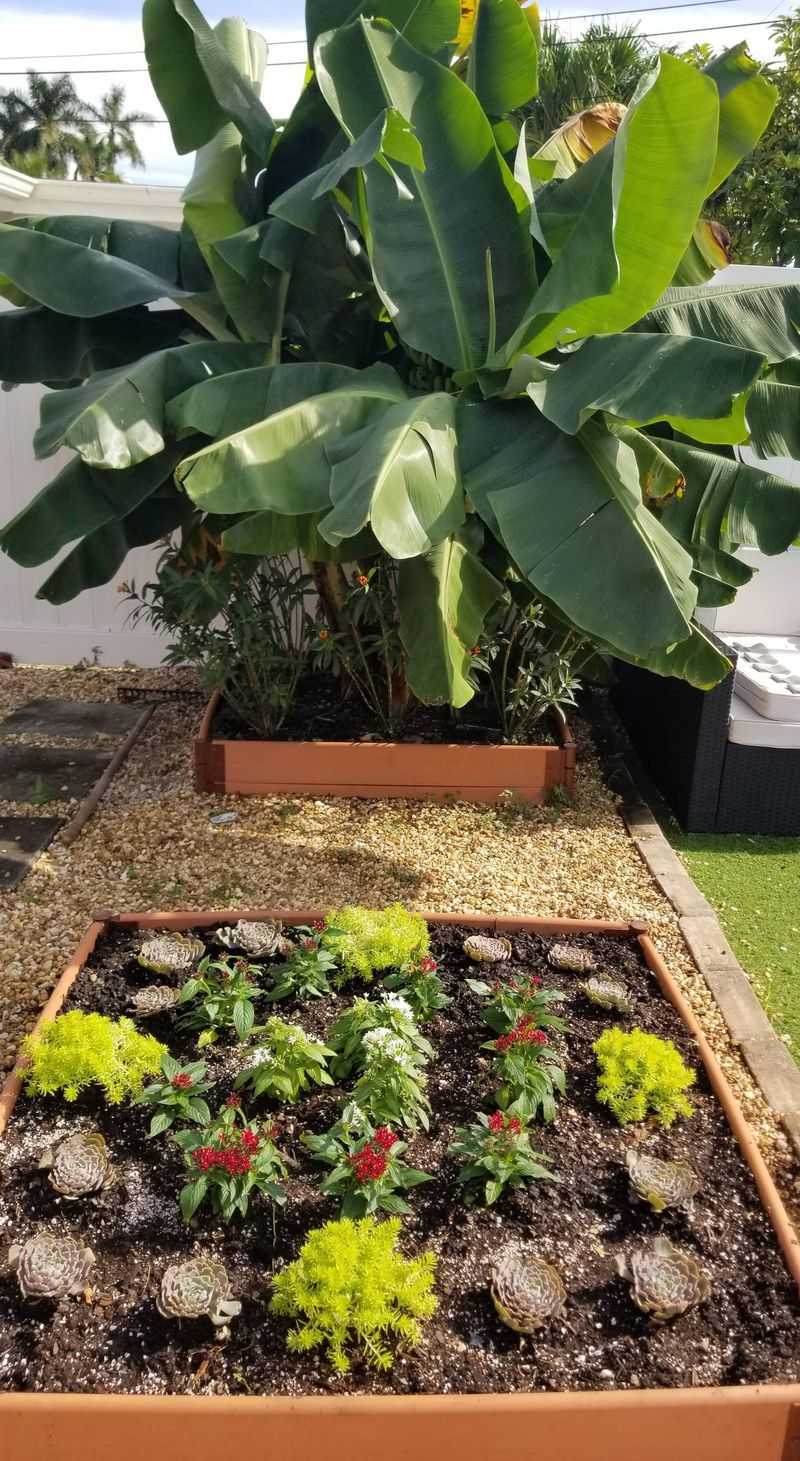
Soggy ground after a heavy Florida summer storm is one of the more overlooked causes of banana plant stress. While it might seem like all that rainfall is helping, a root zone that stays saturated for days can be just as damaging to a banana mat as a dry stretch.
Good drainage is one of the most important factors for long-term banana health in Florida.
Areas with heavy clay layers, high water tables, or compacted soil are especially prone to holding water longer than banana roots can tolerate.
If the planting area tends to puddle after rain or stays wet for more than a day or two, improving drainage around the mat is worth the effort.
Raised beds or planting mounds can lift the root zone above the saturation point and allow excess water to move away more freely.
In flat Florida yards, even a modest mound of soil can improve the situation noticeably. Adding organic matter to the planting area over time can also help improve soil structure and water movement.
For areas with persistent drainage problems, redirecting water flow away from the mat through simple grading or the use of a shallow drainage channel may be worth considering.
Banana plants that sit in poorly drained soil for extended periods can develop root problems that affect their ability to take up water and nutrients.
Fixing drainage proactively gives the mat a better foundation for recovery and for producing fruit through the season.
4. Refresh Mulch To Hold Moisture
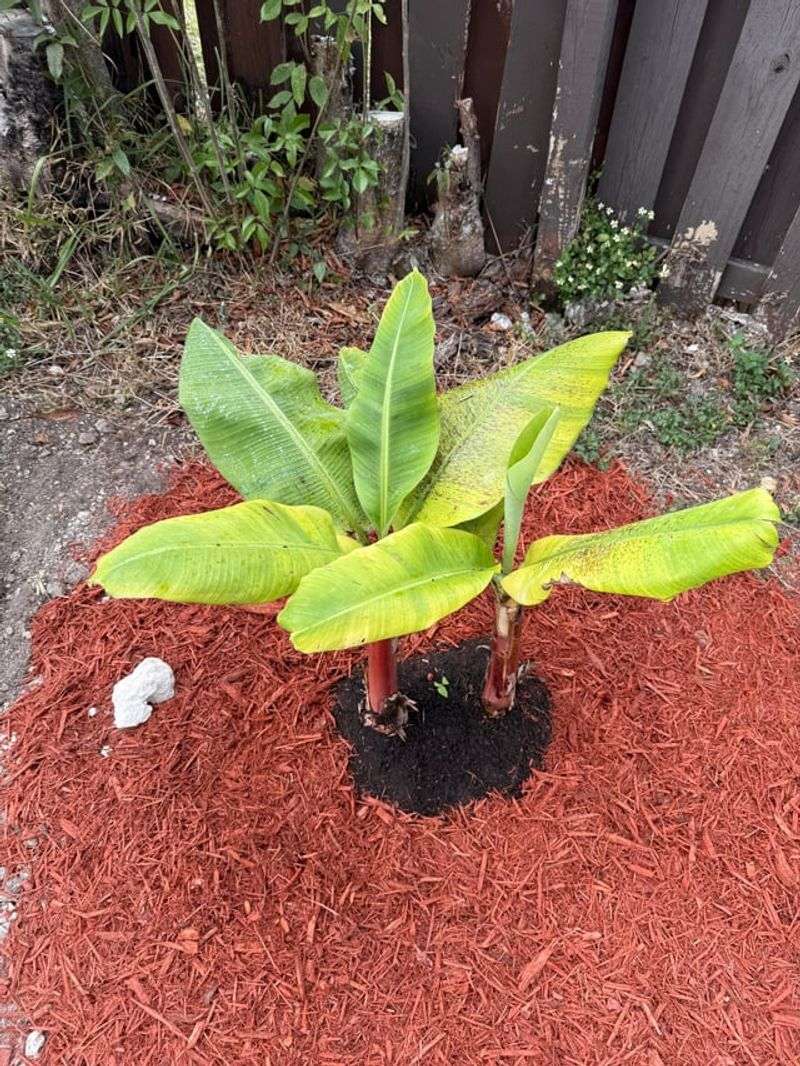
Dry, thin mulch around a banana mat is often a sign that the soil underneath is losing moisture faster than it should.
Florida summers bring intense heat and sun that can bake exposed soil quickly, and a good layer of mulch is one of the simplest tools a gardener has to slow that moisture loss down.
Refreshing the mulch around a banana mat can make a real difference during heat stress recovery.
A layer of wood chips, straw, or shredded leaves spread several inches thick over the root zone helps insulate the soil, reduce evaporation, and keep the ground cooler during the hottest parts of the day.
Over time, organic mulch also breaks down and adds nutrients to the soil surface, which is a bonus for a hungry plant like a banana.
One thing to keep in mind is that mulch should be spread out around the mat rather than piled tightly against the pseudostems themselves.
Mulch pressed up against the base of the plant can hold too much moisture in one spot and create conditions that are not ideal for the lower stem tissue.
In Florida, where summer heat and afternoon storms alternate regularly, mulch helps even out the moisture swings in the root zone.
A freshly mulched banana mat tends to hold up better through dry spells and recover more smoothly after heat stress than one planted in bare, sun-baked soil.
Keeping mulch in good shape is an easy habit with real payoff.
5. Clear Weeds Competing For Water
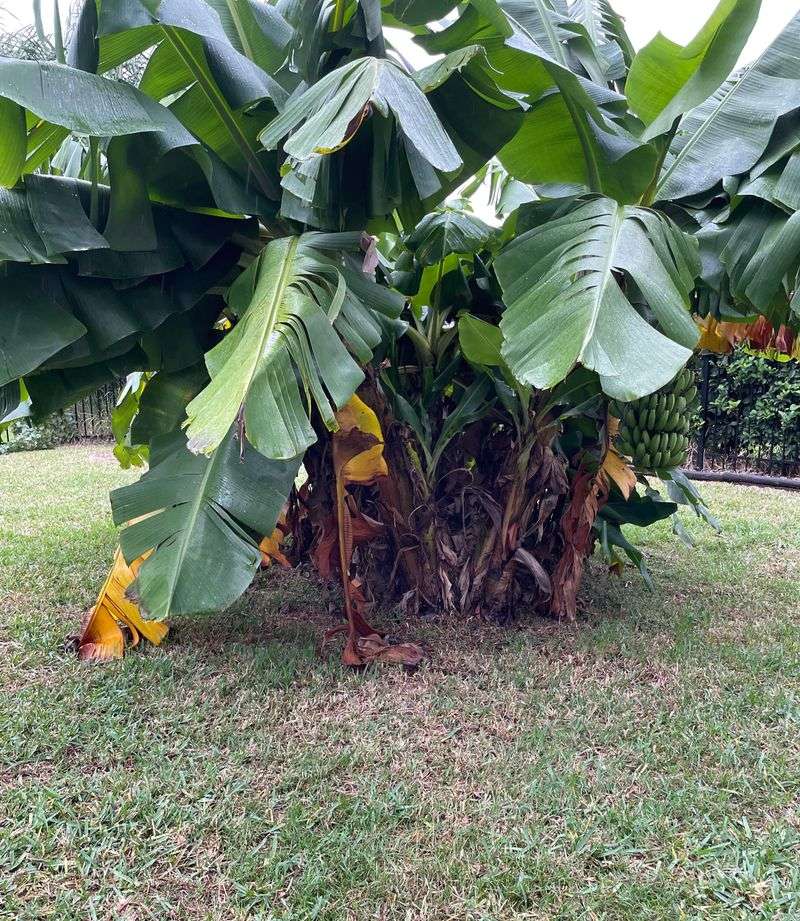
Weeds growing close to a banana mat might not look like a big deal, but during a hot, dry Florida summer they can quietly pull a meaningful amount of water and nutrients away from the banana plant’s root zone.
The closer the weeds grow to the mat, the more directly they compete with the roots that the banana plant depends on most.
Clearing weeds around the mat is one of the easier steps a gardener can take to help a heat-stressed banana plant recover.
With fewer plants competing for the same soil moisture, the banana mat has better access to whatever water is available, whether from rainfall, irrigation, or stored moisture in the soil.
This is especially useful during dry stretches when every bit of moisture in the root zone counts.
Hand-pulling weeds near the base of the mat is generally the safest approach. Using sharp tools or herbicides too close to the pseudostems carries some risk of damaging the plant, and a stressed banana mat does not need additional setbacks.
Pulling weeds while they are still small makes the job easier and prevents them from going to seed and spreading further.
After clearing weeds, refreshing the mulch layer around the mat can help suppress new weed growth and reduce how often the area needs to be cleared.
In Florida’s warm, humid climate, weeds come back quickly, so staying on top of the area around the mat throughout the summer is a good regular habit.
6. Leave Useful Green Leaves In Place
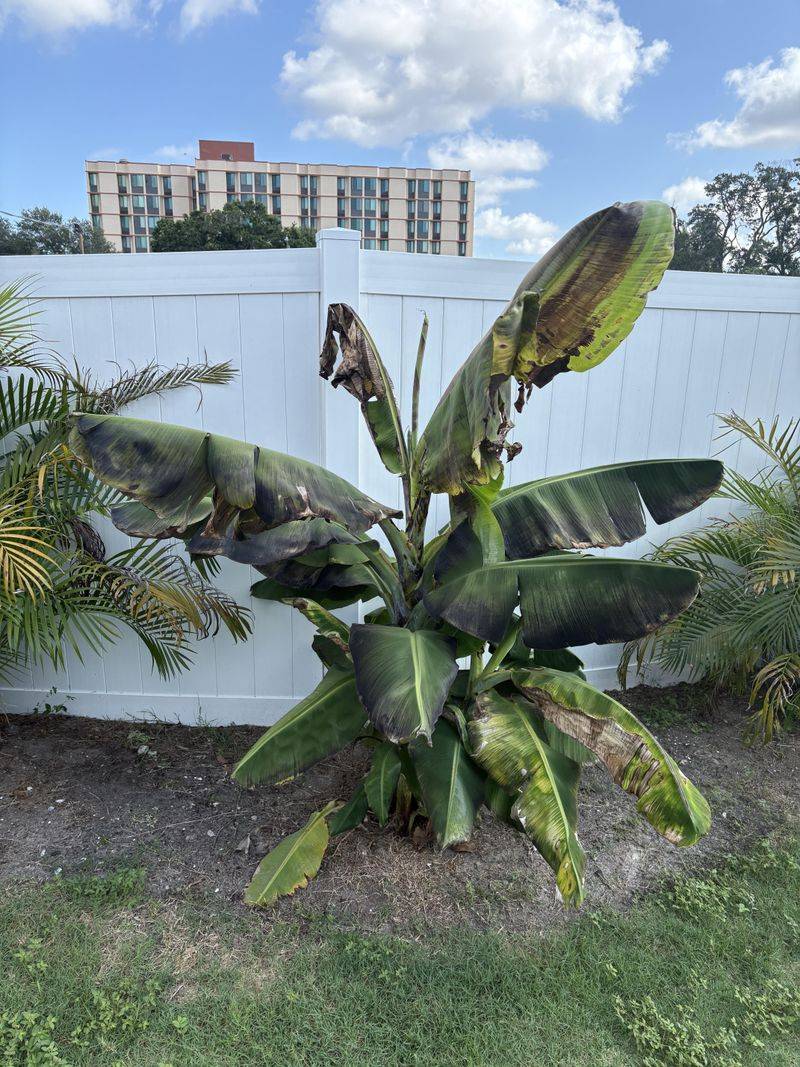
Ragged, windblown, or slightly tattered banana leaves can look like they need to come off, but green or partly green leaves are still doing useful work for the plant.
Leaves are where banana plants make energy through photosynthesis, and removing too many of them during a period of heat stress can slow recovery rather than speed it up.
A leaf that still has green tissue is contributing to the plant’s energy budget, even if it looks rough around the edges.
Florida summers bring strong afternoon storms, gusty winds, and intense sun that can shred or fade banana leaves without the plant being in serious trouble.
That kind of cosmetic damage is normal and does not necessarily mean the leaf should be removed.
The leaves worth removing are those that are fully brown, clearly spent, or showing signs of disease that could spread to healthy tissue. When in doubt, leaving a partly green leaf in place and checking it again in a week or two is a reasonable approach.
A recovering banana plant benefits from keeping as much photosynthetic surface area as possible while it works to rebuild strength.
Gardeners who strip leaves too aggressively, trying to tidy up a stressed mat, can unintentionally reduce the plant’s ability to recover.
In Florida’s heat, where the plant is already working hard to manage its energy and water balance, protecting every useful leaf during the recovery period is a practical and supportive choice that pays off over time.
7. Watch For Leaf Folding And Yellowing
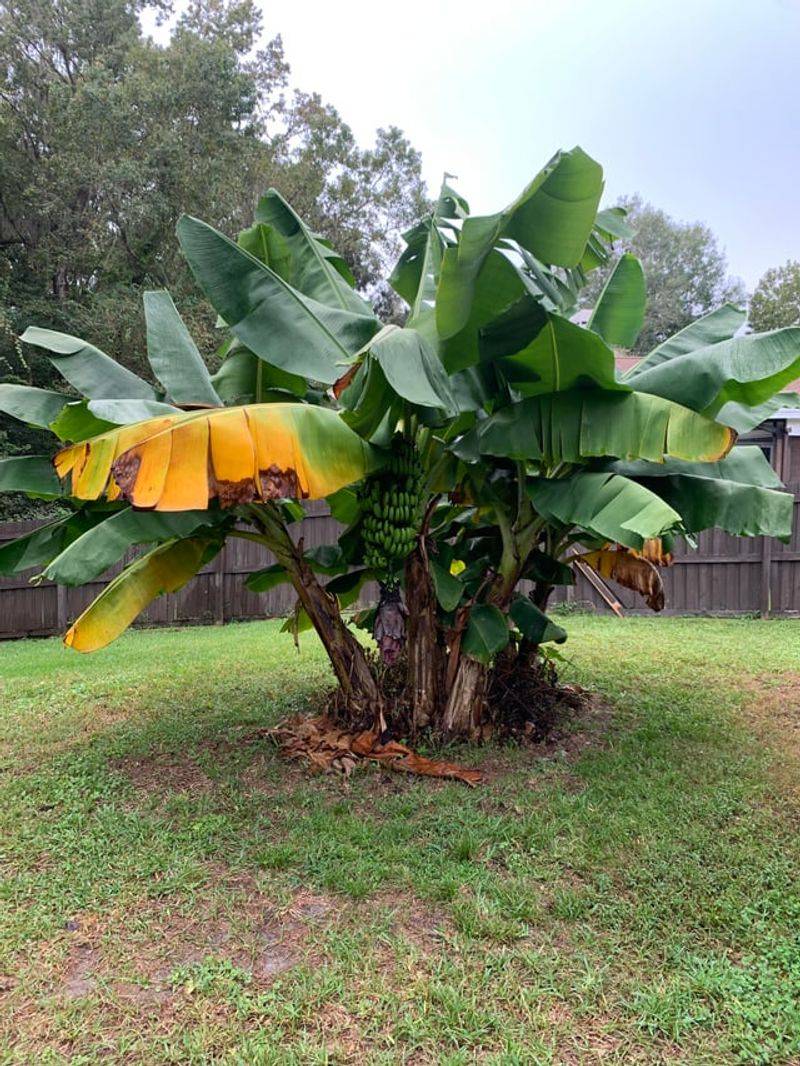
Folded banana leaves on a hot Florida afternoon are a familiar sight, and in many cases they are just the plant’s way of reducing water loss during the hottest part of the day.
But when leaves stay folded in the morning, fail to open fully, or start showing pale green or yellow coloring, that is worth paying closer attention to.
Leaf folding and yellowing can point to drought stress, but they can also show up when soil drainage is poor, roots are struggling, or the plant has been sitting in wet soil too long.
The tricky part is that both too little water and too much water can produce similar-looking symptoms on banana foliage.
Reacting to yellowing by adding more water without checking the soil first can make the situation worse rather than better.
When these signs appear, a useful first step is to check recent rainfall, soil moisture at root depth, and whether the planting area has been draining well. Looking at the overall pattern of affected leaves can also help.
Yellowing that starts on older, lower leaves and moves upward can have different causes than yellowing that starts at leaf tips or appears across multiple leaves at once.
In Florida, where summer weather swings between dry heat and heavy storms, giving the plant a few days to respond to a care adjustment before making another change is often a sensible approach.
Patience combined with careful observation leads to better outcomes than reacting quickly to every symptom.
8. Monitor For Weevils, Nematodes, And Leaf Disease
Heat stress can make banana plants more vulnerable to problems that were already present but not causing obvious symptoms.
When a mat is struggling through a hot, dry Florida summer, it is a good time to take a closer look at the base of the pseudostems, the condition of the leaves, and the overall vigor of the plant to see if something beyond weather stress is involved.
Banana weevils are one pest worth watching for in Florida home gardens. Adult weevils and their larvae can damage the base of pseudostems and interfere with the plant’s ability to move water and nutrients.
Signs of weevil activity can include soft or discolored tissue near the base of the plant, tunneling damage, or a plant that looks persistently weak even after moisture and drainage issues have been addressed.
Nematodes are microscopic soil organisms that can damage banana roots and reduce the plant’s ability to take up water.
Root damage from nematodes can mimic drought stress symptoms, making it harder for a plant to recover even when soil moisture seems adequate.
Checking root health when digging near the mat can sometimes reveal clues.
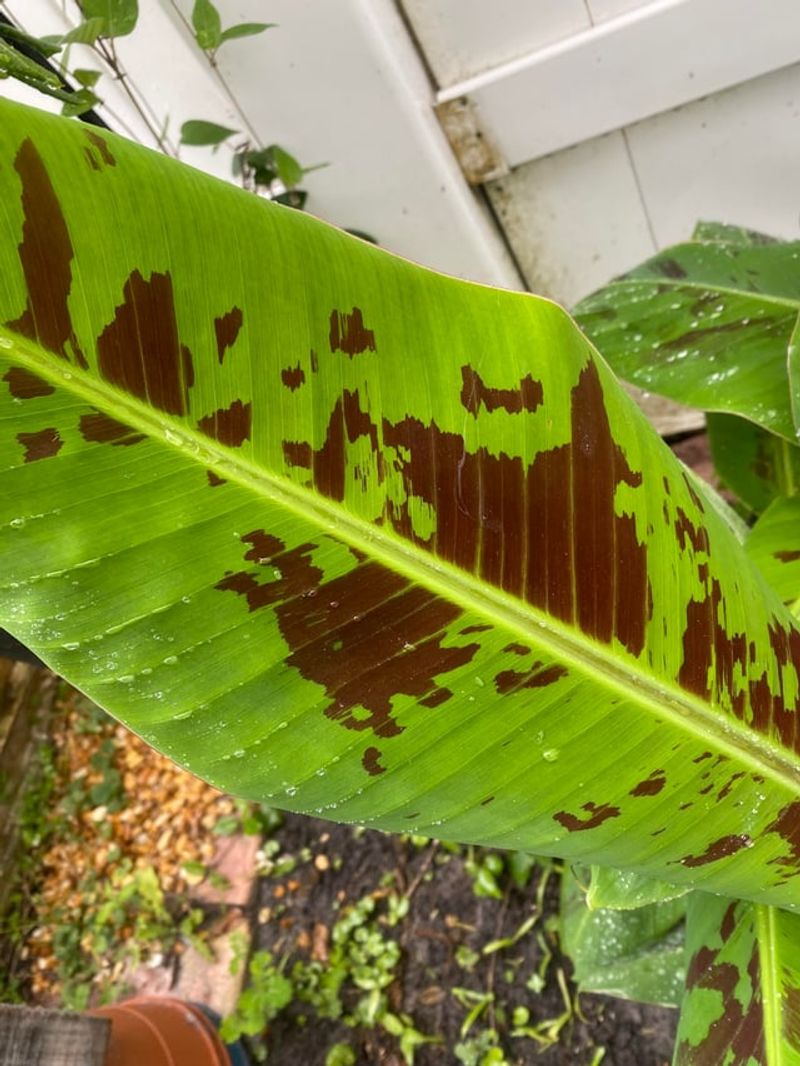
Leaf diseases, including some fungal issues that show up during Florida’s humid summer months, can also appear on stressed plants. Spots, streaks, or unusual discoloration on leaf surfaces are worth noting.
Identifying the specific problem before treating it helps avoid unnecessary interventions and gives the banana mat the most targeted support possible.