How Florida Gardeners Keep Plumeria Blooming Through The Rainy Stretch
A Florida plumeria can look spectacular at breakfast and thoroughly rain-soaked by late afternoon once summer storms settle into a daily rhythm.
That repeated moisture changes the care routine. Plumeria loves warmth, strong light, and an active growing season, but its roots still need air and its leaves become more vulnerable to rust as humidity and wet weather build.
The answer is not sheltering the plant from every cloud. It is helping water leave quickly and avoiding extra moisture the plant never requested.
So how do you keep flowers coming through the wet stretch?
Start with sun and drainage. Then adjust irrigation, keep containers out of standing water, watch leaf undersides for rust, remove infected fallen foliage, preserve airflow, and feed only when the plant actually needs nutrients.
Florida rain can support vigorous growth without becoming the gardener’s enemy.
A plumeria with bright light, a breathable root zone, and healthy branch tips has a much better chance of carrying buds through stormy weeks and opening another round of fragrant flowers.
1. Give Plumeria All The Sun It Can Use
Rainy-season clouds can make a sunny Florida yard feel dimmer than usual, so strong placement matters even more during the wet stretch.
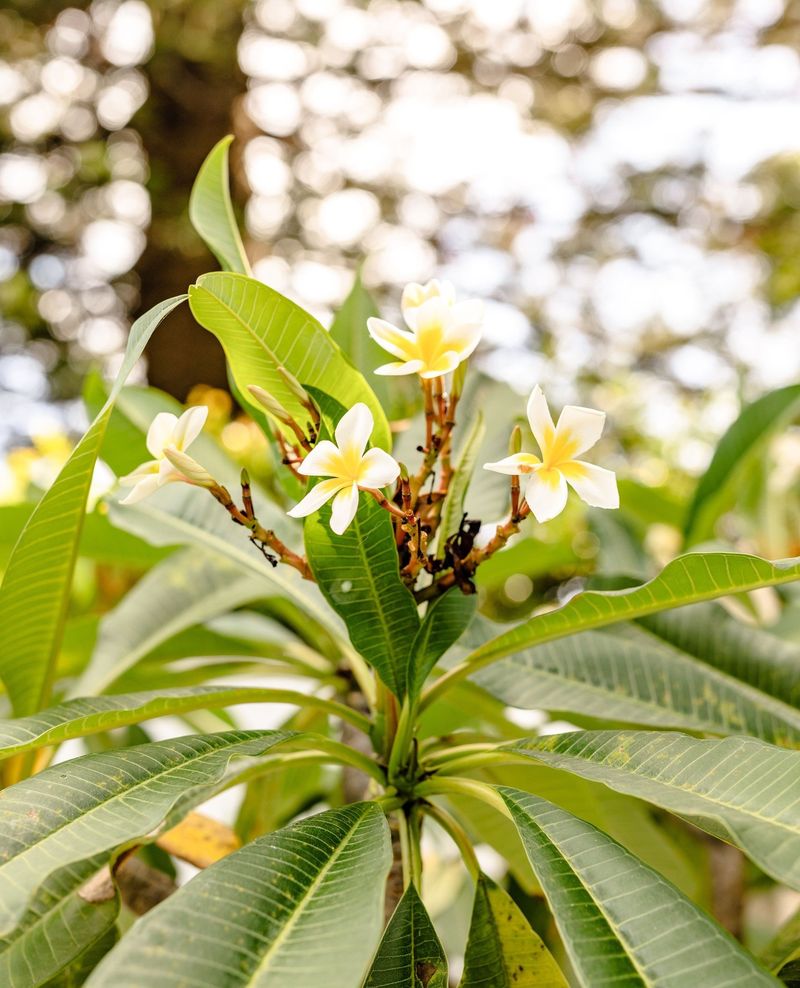
Plumeria performs best in full sun, and UF/IFAS lists it as a full-sun flowering tree for South Florida. A plant that receives strong light has a better chance of producing the mature branch tips that carry flowers through the growing season.
Watch the hours of direct light rather than assuming a bright patio counts.
A roof overhang, screen enclosure, neighboring tree, or tall wall can quietly remove several hours of sun. The plant may still produce handsome leaves while flower production slows.
Moving a container toward a more open position can help, provided the change is gradual enough to avoid sudden leaf scorch.
Keep reflected heat in perspective.
A sunny driveway can work well, but blazing pavement also dries containers quickly. The goal is strong light with a root zone that remains properly watered, not a pot that turns into a pressure cooker by midafternoon.
Rain does not cancel the need for sun.
Cloudy afternoons are unavoidable, yet good placement gives the plant every bright hour available between storms.
That makes sunlight the first rainy-season habit to protect. Before changing fertilizer, pruning, or watering, make sure the plumeria is not spending its bloom season in a spot that became shadier as nearby plants filled out.
2. Let Rain Drain Fast Around The Roots
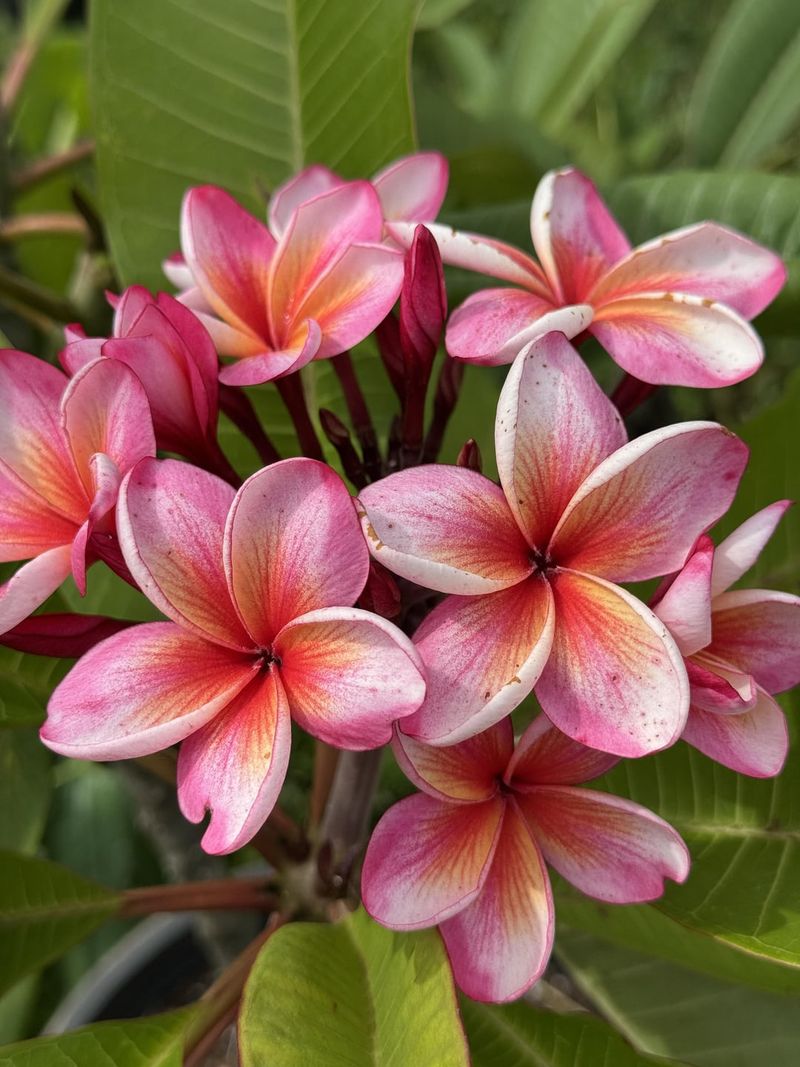
A Florida downpour is much easier on plumeria when the water has somewhere to go.
UF/IFAS lists plumeria for full sun and notes that the foliage is prone to rust during the wet season. Good drainage also matters because roots need both moisture and oxygen, and potting media should allow water movement as well as air exchange.
Check the planting area after a hard storm.
Water that disappears promptly is far less concerning than a puddle that lingers around the trunk. In containers, use a loose potting mix and clear drainage holes.
Your Florida Garden Changes Every Week. Your Plan Should Too.
Gardening in Florida changes quickly throughout the season. Every Friday you’ll receive a simple weekly plan showing exactly what to plant, prune, fertilize, harvest, and protect so you never miss the right timing.
In the ground, avoid low pockets that repeatedly collect runoff from roofs, patios, or neighboring beds.
Do not create a rich bathtub underground.
A heavily amended planting hole surrounded by dense native soil can hold moisture differently from the rest of the yard. The root zone needs a consistent path for drainage rather than one soft pocket that stays wetter after every storm.
Mulch can still be useful.
Keep it pulled back from the trunk so the stem base does not remain wrapped in damp material.
The rainy season does not require bone-dry soil. Plumeria is actively growing and still uses water.
The problem is prolonged saturation.
A fast-draining root zone lets the plant enjoy the rain, then regain the air roots need before the next storm arrives. That balance supports stronger growth far better than trying to keep the soil wet around the clock.
3. Skip Extra Water While Storms Stay Frequent
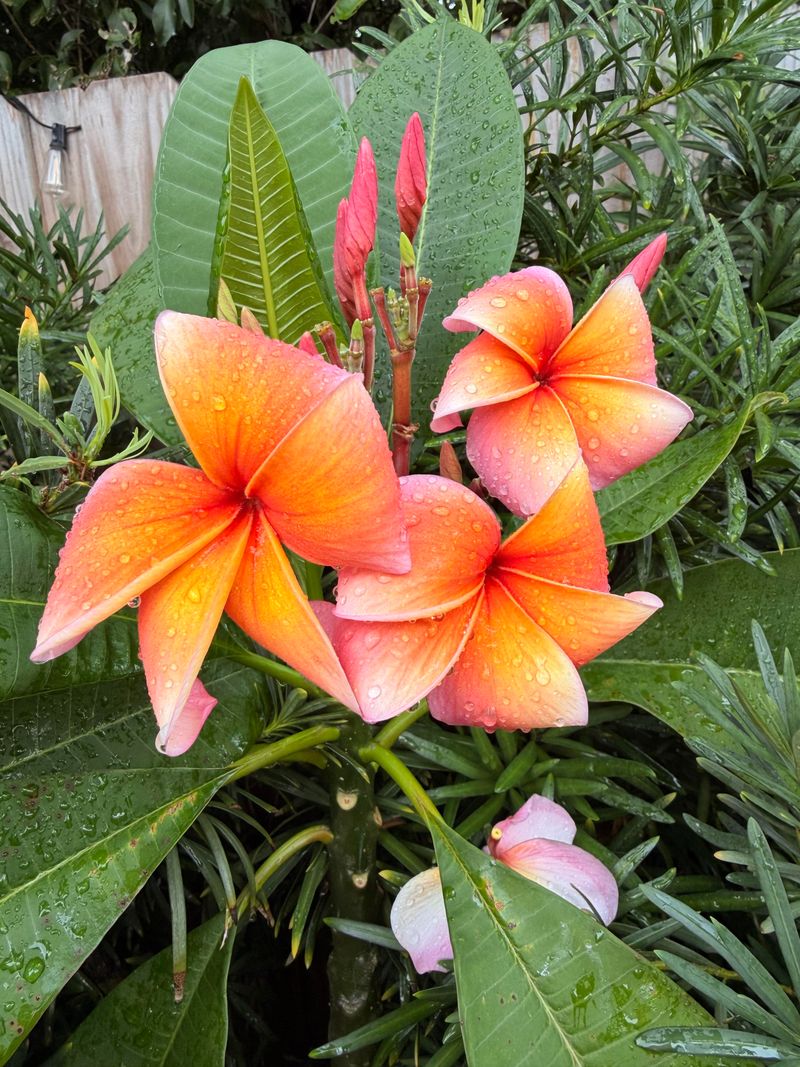
A sprinkler timer does not know that three thunderstorms passed through the neighborhood this week.
That is why rainy-season irrigation needs more attention than a fixed schedule provides. Extra irrigation on an already damp root zone can keep soil wetter than the plant needs.
UF/IFAS container guidance emphasizes the balance between water retention, drainage, and air exchange around roots.
Check before adding water.
Push a finger or soil probe several inches into container mix or the surrounding bed. Damp soil below the surface means another irrigation cycle can wait. A dry upper layer does not always mean deeper roots are short on moisture.
Container plants still deserve separate checks.
A small pot exposed to wind and afternoon sun may dry fast between storms, while a large glazed container can hold moisture for days. Lift smaller pots when practical.
The weight difference between a recently watered container and a dry one becomes easy to recognize.
Rainfall is uneven too.
One Florida yard can receive a heavy storm while a neighborhood a few miles away gets barely enough to spot the pavement. Judge the plant in front of you rather than yesterday’s radar image.
The goal is not to stop watering for the entire rainy season.
It is to stop watering automatically.
Let actual soil moisture decide when the hose comes back out. Plumeria roots appreciate rain, but they also appreciate the chance to breathe between rounds.
4. Keep Containers Out Of Standing Water
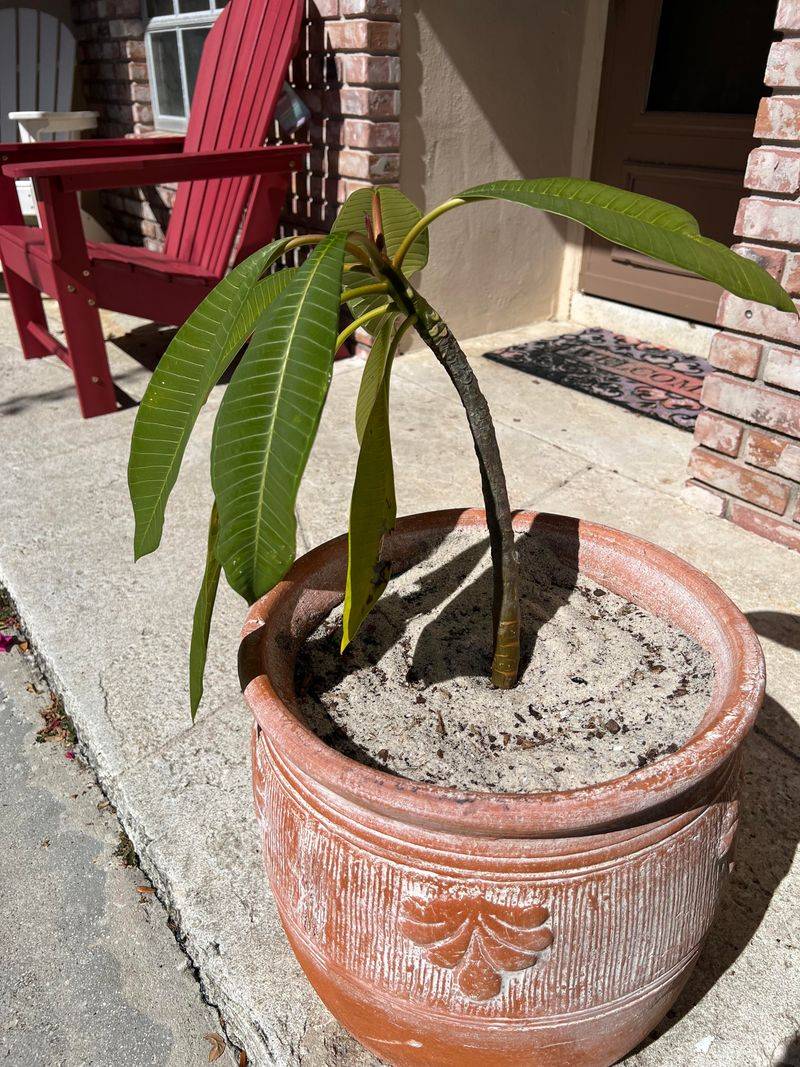
The drainage hole only works when water can leave it.
A plumeria pot sitting flat inside a water-filled saucer can remain saturated long after the rain stops.
Decorative outer pots can create the same problem when storm water collects around the nursery container and quietly blocks drainage.
Check underneath after heavy rain.
Empty saucers, cachepots, and decorative trays that hold standing water. Pot feet, sturdy risers, or a stand can create enough clearance for water to escape freely.
Container mix matters as much as the hole.
UF/IFAS container guidance emphasizes that potting media should hold useful moisture while still allowing air exchange and water flow. A compacted old mix can drain poorly even when the container has several holes underneath.
Watch oversized containers too.
A small plumeria placed in a huge volume of moisture-retentive mix may use water slowly, leaving the center of the pot wet for a long time during a rainy spell. A sensibly sized container makes moisture easier to manage.
Do not confuse a wet patio with a wet root ball.
Sometimes the pot drains beautifully while water simply surrounds it on the pavement. Elevating the container solves that problem without changing the plant itself.
Rainy-season container care is largely about giving water an exit.
The storm can provide the moisture. Your job is making sure the plumeria is not forced to keep every drop.
5. Check Leaf Undersides For Orange Rust
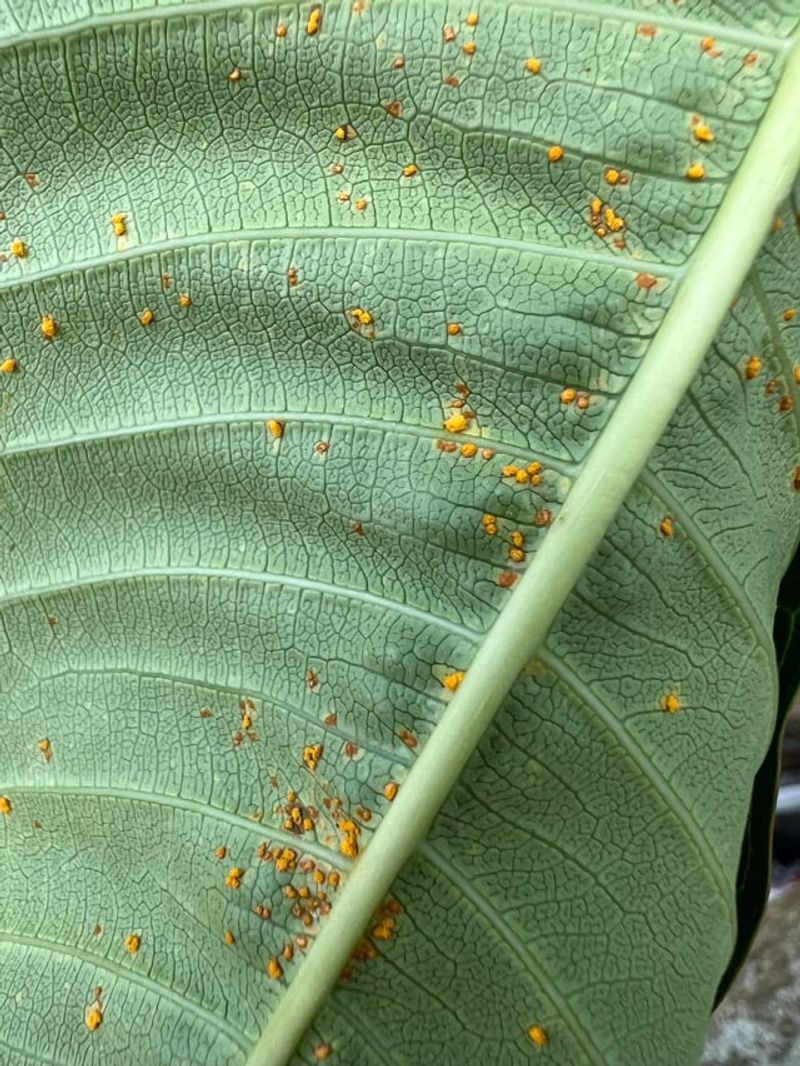
A yellowing plumeria leaf does not automatically mean the plant needs fertilizer.
During Florida summer, plumeria rust is a much more specific possibility.
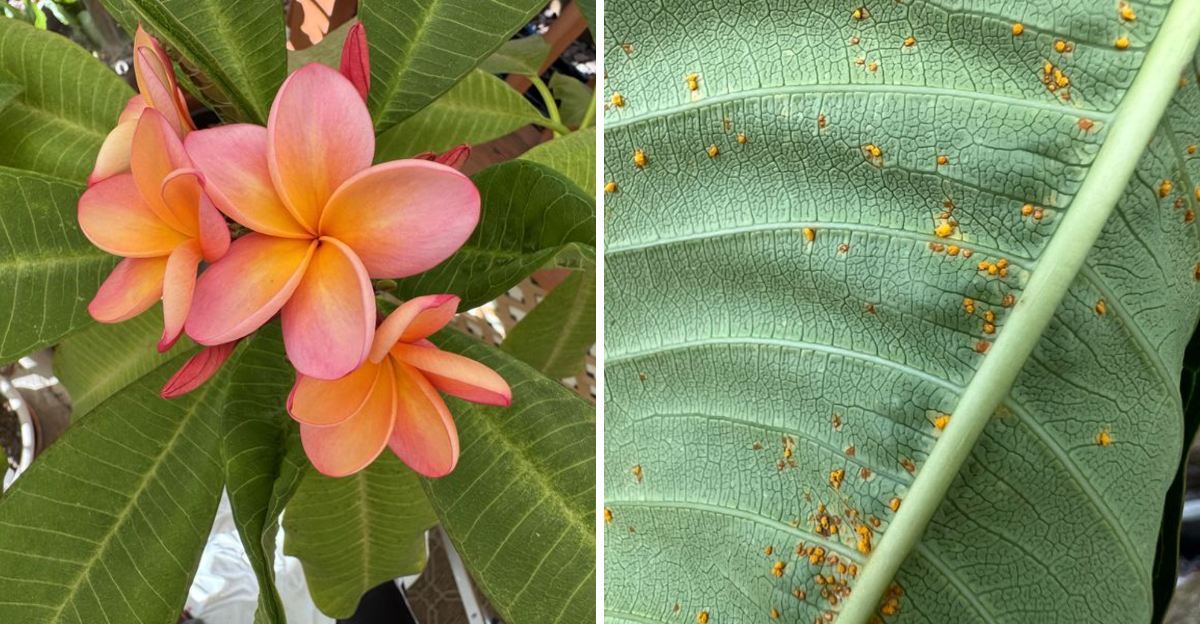
UF/IFAS describes the disease as a fungal problem that produces rust-colored or yellow-orange spore pustules on the undersides of leaves, while yellow spots may appear on the upper surface.
Rust commonly becomes more noticeable from mid to late summer as heat, humidity, and moisture favor the disease.
Turn suspicious leaves over.
That underside check is more useful than diagnosing from general yellowing alone. Natural aging, root stress, and other problems can also change leaf color, so the orange pustules provide the stronger clue.
Do not assume every case needs a spray.
UF/IFAS notes that plumeria rust often looks worse than the long-term damage it causes, and fungicide treatment is frequently unnecessary on deciduous plants approaching seasonal leaf drop.
Focus first on plant health and sanitation.
A mature plumeria can lose rusty leaves and continue growing. Persistent severe problems deserve closer diagnosis, especially on plants that retain foliage longer.
Any pesticide or fungicide used in a Florida garden must be labeled for the plant and disease, then applied exactly according to its directions.
Rust may interrupt the perfect-leaf look.
It does not automatically end the flowering season. Find the real symptom, reduce disease pressure where practical, and avoid throwing fertilizer or chemicals at a leaf problem that has not been properly identified.
6. Clear Fallen Leaves Before Rust Builds
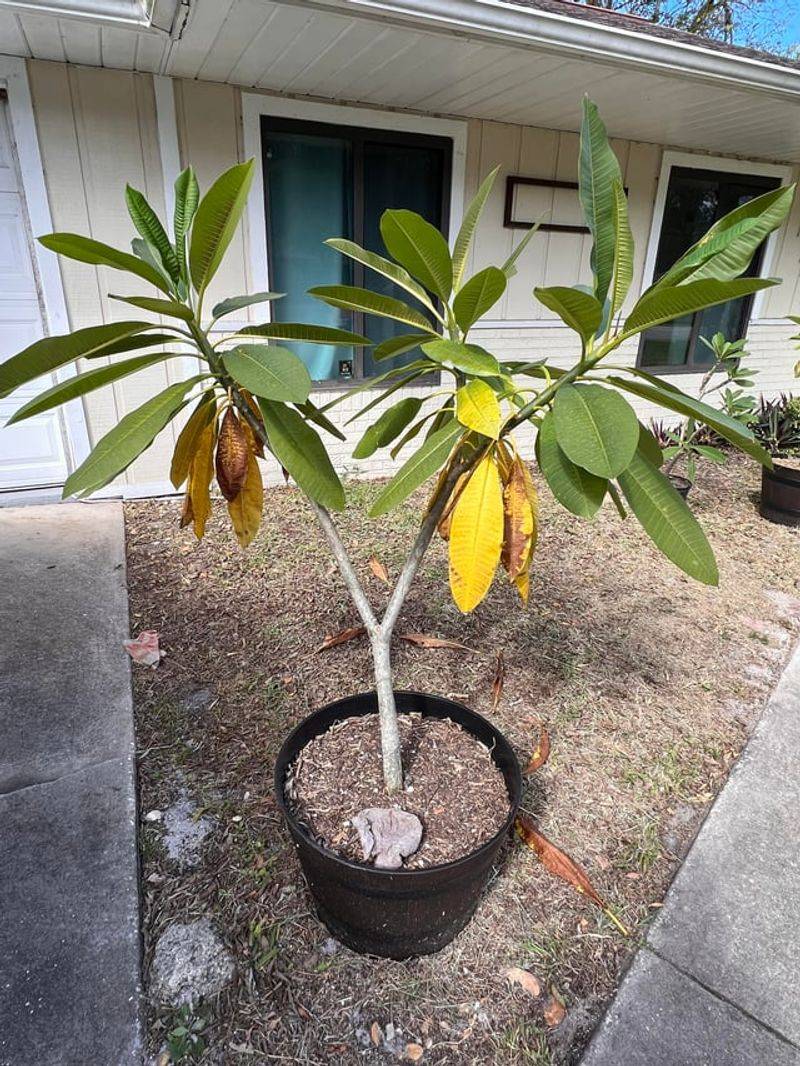
The easiest rust-management job happens after an infected leaf reaches the ground.
UF/IFAS recommends collecting and discarding fallen plumeria leaves carrying rust because the old foliage can contribute spores that later reinfect new leaves.
That sanitation step will not remove every airborne spore in the neighborhood, but it reduces a source sitting directly below the plant.
Make cleanup part of the post-storm routine.
Walk around the pot or tree after strong wind and rain, pick up dropped foliage, and place clearly infected leaves in household trash. UF/IFAS specifically advises removing infected fallen leaves rather than leaving them beneath the canopy.
Do not strip healthy leaves simply to make the plant look cleaner.
Leaves still photosynthesize and support the growing stems that carry future flower clusters. Remove what has fallen and address heavily affected foliage only when there is a clear reason.
Keep the soil surface reasonably open too.
A thick mat of decomposing leaves stays damp after storms and can make inspection harder. The goal is not sterile ground. It is a cleaner zone around a plant already dealing with humid weather.
Rust spores also travel on wind, so sanitation cannot promise a spotless canopy.
That is fine.
The habit is about lowering local disease pressure without turning the garden into a chemical campaign.
A few minutes of cleanup after a storm may accomplish more than an unnecessary spray while revealing drainage problems, pests, or broken stems early.
7. Keep Crowded Branches Open To Airflow
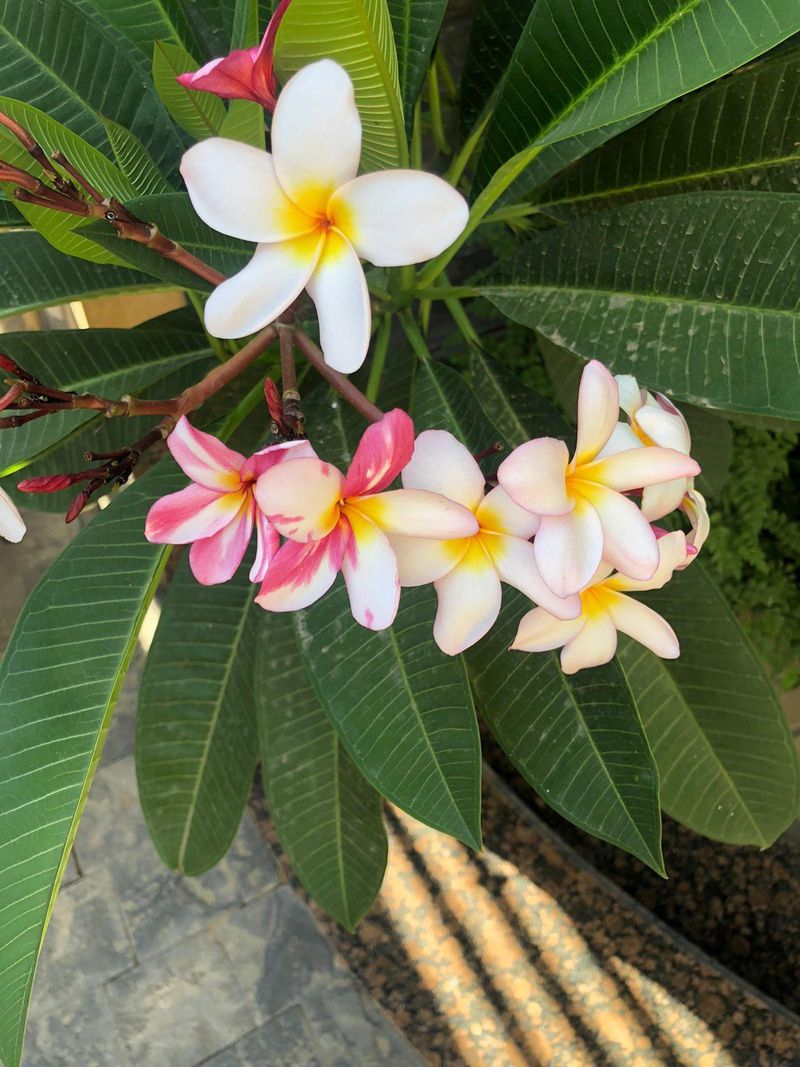
Dense foliage stays wet longer when humid air cannot move through the canopy.
UF/IFAS notes that plumeria rust tends to be more prevalent where air circulation is limited, which makes spacing and canopy openness useful parts of rainy-season management.
Start with the easiest fixes.
Move container plants apart when leaves from neighboring pots are pressed together. Keep plumeria away from dense hedges that trap damp air around the canopy.
Use pruning sparingly during active bloom.
Remove a clearly broken, rubbing, or badly positioned branch when it creates a real problem, but avoid turning August into a major reshaping session.
Flower clusters develop at branch tips, so unnecessary tip removal can also remove current or potential bloom.
Clean tools before making cuts.
The milky sap can irritate skin, so gloves are sensible when handling freshly cut plumeria. Make clean cuts and let the plant close them naturally rather than coating wounds with homemade sealers.
Airflow does not require a hollow tree.
A few well-placed branches and reasonable spacing can help foliage dry after storms while leaving enough healthy canopy to power growth.
The rainy season can tempt gardeners to prune every spot that looks crowded.
Resist that urge.
First give the plant physical space around its leaves. Then remove only growth that genuinely interferes with structure or circulation.
The pruners should create breathing room, not turn a flowering plumeria into a collection of lonely sticks.
8. Let Healthy Growth Carry The Next Bloom
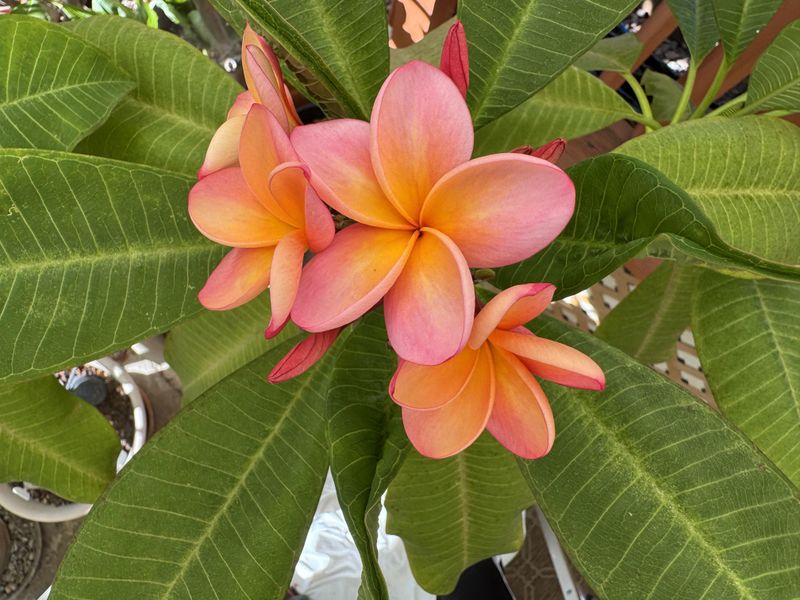
Florida’s rainy stretch does not automatically stop plumeria from flowering.
The bigger problems usually appear when storms are followed by poor drainage, automatic irrigation, trapped container water, crowded foliage, or unnecessary feeding.
UF/IFAS identifies plumeria as a full-sun flowering plant and notes rust as a regular wet-season foliage problem, so rainy-season care works best when light, drainage, and disease awareness stay at the center of the routine.
Start with the root zone.
Let storm water drain, empty saucers, and pause irrigation while the soil remains damp. Then look upward. Keep the canopy open enough for air movement, preserve healthy flowering tips, and check leaf undersides when yellow spots appear.
Rust rarely deserves panic.
UF/IFAS describes it as common and often more alarming in appearance than in long-term effect. Fallen infected leaves are worth removing because sanitation can reduce the local supply of spores.
Keep fertilizer in perspective too.
Heavy rain is a poor time for unnecessary nutrient applications, and Florida fertilizer rules can vary locally. Feed according to plant need and the label rather than chasing blooms with a high-phosphorus formula.
A plumeria does not need protection from every Florida storm.
It needs sun above, drainage below, and enough restraint from the gardener to keep both working.