How Pinecones Can Help Your Oregon Garden Without Extra Cost
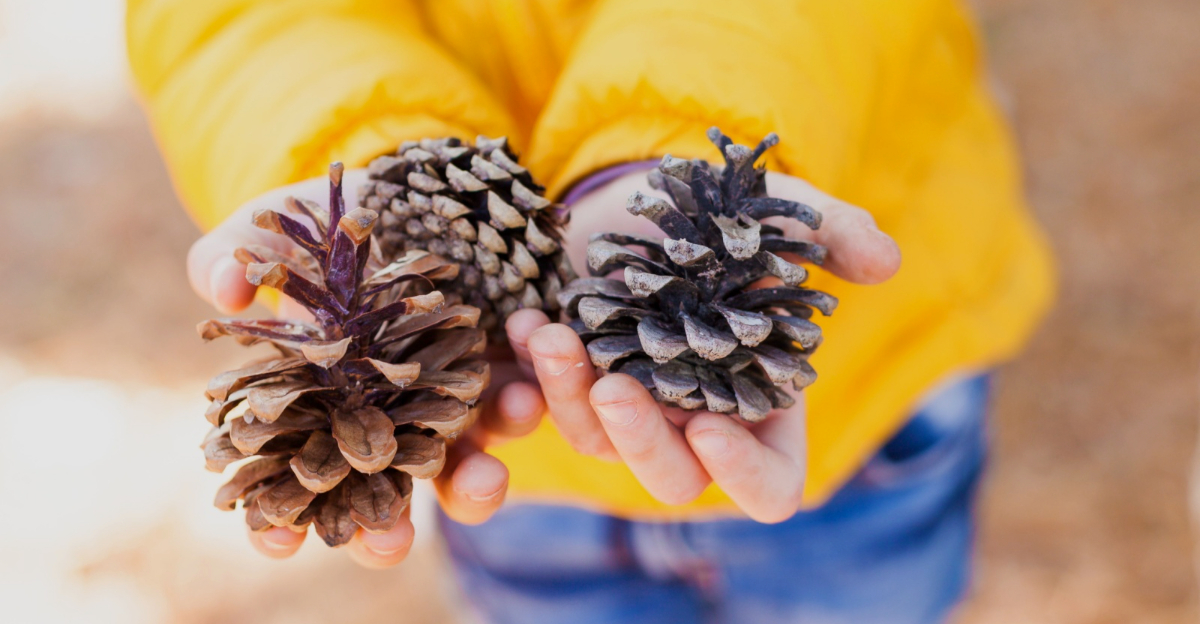
Pinecones have a way of piling up in Oregon yards, and most gardeners clear them out without a second thought. But those small, woody pieces can actually do more than just cover the ground.
In a state filled with conifers, they are one of the easiest materials to reuse right where you garden.
Oregon’s mix of wet winters, mild springs, and dry summers makes simple, natural solutions especially useful.
Before you toss the next batch, it is worth taking a closer look at how pinecones can quietly support your soil, plants, and overall garden setup.
1. Pinecones React To Moisture In Surprising Ways
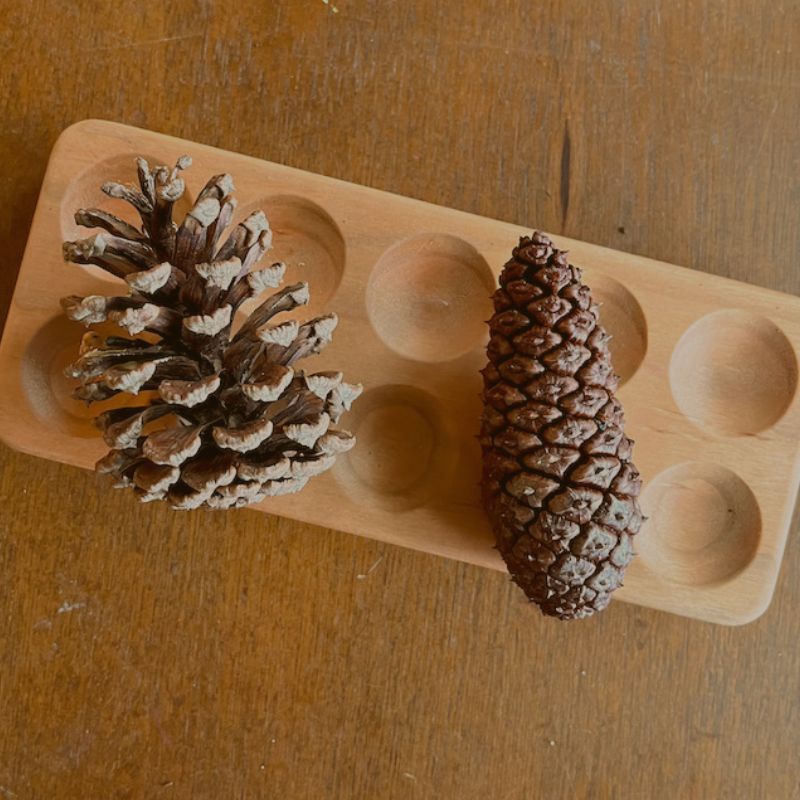
Walk outside after a rainy Oregon morning and look closely at any pinecones lying on the ground. You might notice something odd – some are tightly closed while others are fanned wide open.
That reaction is not random. Pinecones open and close in response to humidity and moisture levels, and this behavior can actually give gardeners a simple, natural signal about conditions in their garden beds.
When moisture is high, the scales of a pinecone pull inward and close up. When the air and soil are drier, the scales spread outward.
Gardeners in the Willamette Valley and along the Oregon Coast, where rainfall can shift quickly, sometimes use pinecones near seedling beds as a rough moisture indicator.
Placing a pinecone on top of the soil gives a quick visual clue about whether the area feels wet or dry.
This is not a replacement for a proper soil moisture meter, but it is a free, low-effort tool that costs nothing.
The reaction happens because the scales are made of two layers of material that absorb and release water at different rates, causing them to curl or flatten.
Scientists have studied this for years as a model for moisture-responsive materials.
For Oregon gardeners who like to pay attention to small seasonal details, this simple behavior offers a satisfying and practical connection to the natural world right outside their door.
2. Preparing Pinecones For Garden Use Is Simple
Grabbing pinecones off the ground and tossing them straight into the garden is tempting, but spending a few minutes preparing them first makes a noticeable difference.
Pinecones collected from the ground can carry mold spores, insect eggs, or plant pathogens that you probably do not want spreading through your garden beds.
A simple cleaning step reduces that risk without requiring any special equipment or products.
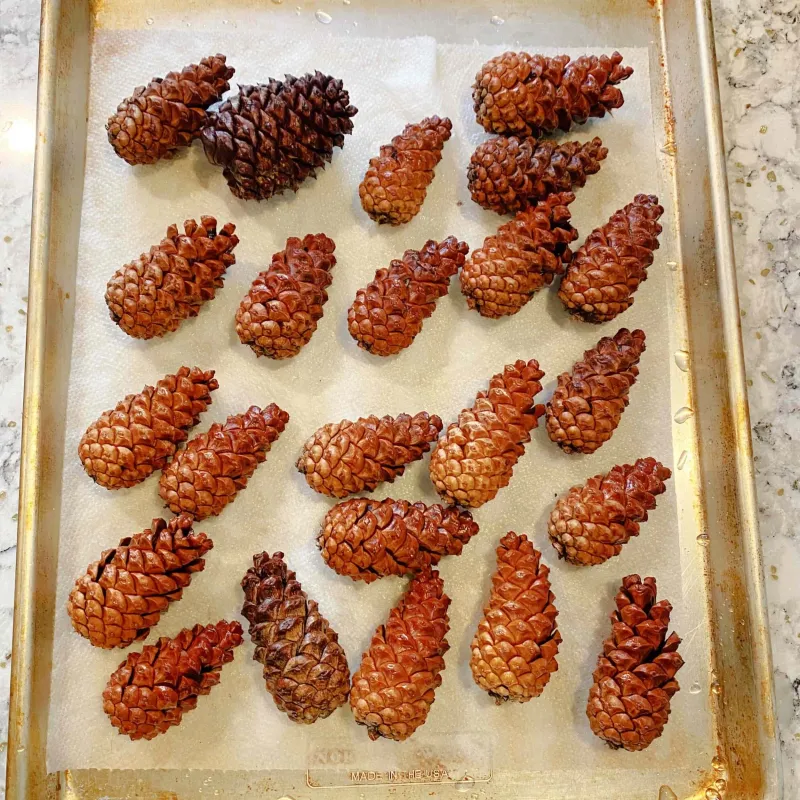
Start by collecting cones from dry ground when possible, and give them a shake to knock out any debris or small insects hiding between the scales. For a more thorough cleaning, soak the cones in a bucket of warm water for about thirty minutes.
This step also causes the scales to close up, making the cones easier to handle and more compact for storage.
After soaking, spread them out on an old towel or a wire rack and let them dry completely in the sun before using them in the garden.
Drying is important because damp cones left in a pile can start to develop mildew. Oregon’s cool, humid conditions in fall and spring mean that moisture lingers longer than gardeners might expect.
Your Oregon Garden Changes Every Week. Your Plan Should Too.
Gardening in Oregon changes quickly throughout the season. Every Friday you’ll receive a simple weekly plan showing exactly what to plant, prune, fertilize, harvest, and protect so you never miss the right timing.
Once the cones are fully dry, they can be stored in a mesh bag, a cardboard box, or a dry corner of the garage until needed.
Cones collected in late summer or early fall, when Oregon’s dry season is winding down, tend to be in the best condition for garden use.
3. A Gentle Way To Discourage Birds From Seedlings
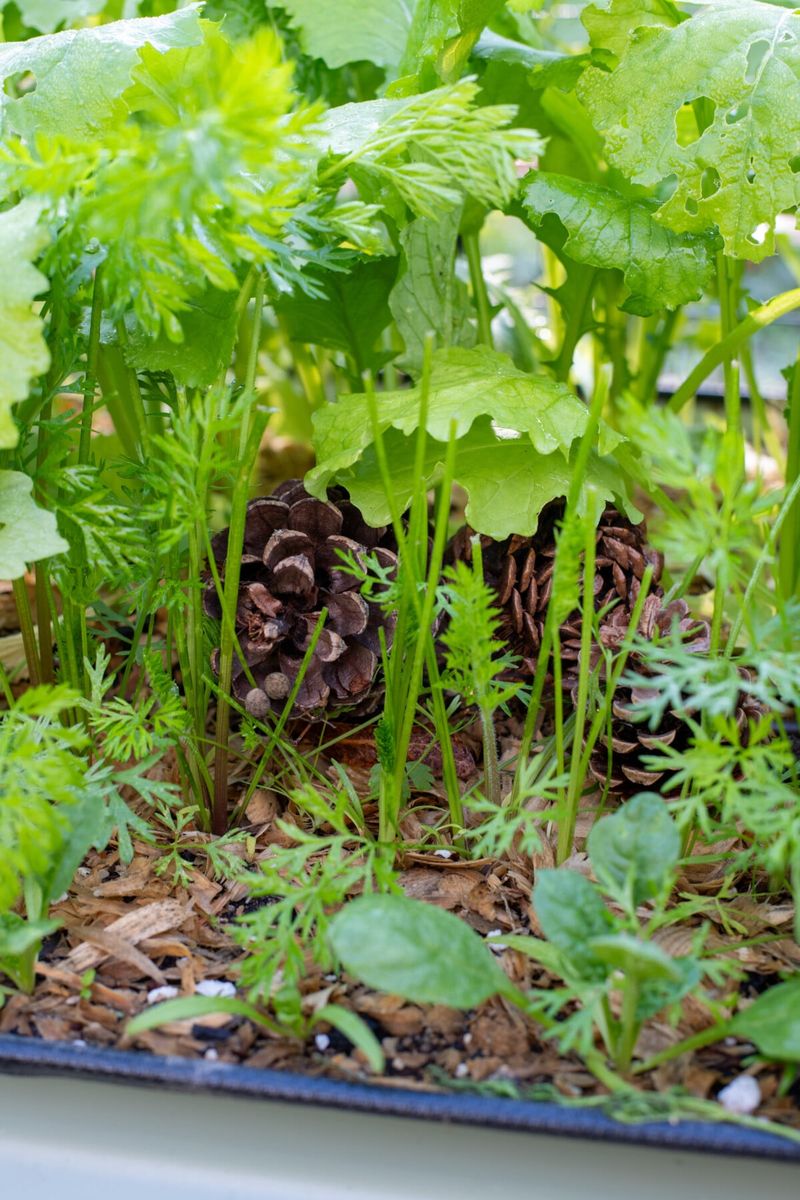
Freshly planted seedling beds can feel like an open invitation to birds looking for a quick meal.
In Oregon, where Steller’s jays, robins, and dark-eyed juncos are common garden visitors, newly sprouted seedlings can disappear almost overnight.
Rather than reaching for netting or other purchased deterrents, some gardeners have found that scattering pinecones across the surface of a seedling bed creates just enough physical disruption to keep birds from landing and pecking around.
Birds tend to prefer flat, open ground where they can hop and scratch freely. The uneven, spiky surface created by a layer of pinecones makes landing awkward and foraging more difficult.
Larger cones from Douglas fir or ponderosa pine, both common across Oregon, work especially well because of their size and the way their scales stick outward at odd angles.
This approach works best during the first few weeks after seeds are sown, when seedlings are most fragile and birds are most likely to investigate disturbed soil.
Once plants are established and have grown a few inches, the risk from birds drops significantly.
Pinecones can then be pushed to the edges of the bed and used as a light mulch layer instead. The transition from deterrent to mulch is seamless, and the pinecones continue serving the garden without any extra effort or cost.
It is a low-fuss solution that works with Oregon’s wildlife rather than against it.
4. Pinecones Create A Natural Barrier Around Beds
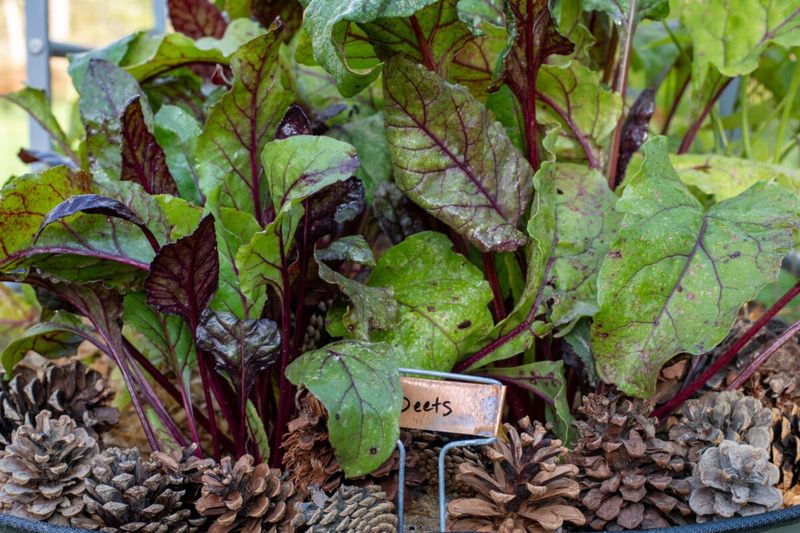
Slugs are one of the most persistent challenges for Oregon gardeners, especially west of the Cascades where rain is frequent and the soil stays moist for months at a time.
Chemical slug baits work, but they come with concerns about soil health and harm to wildlife.
Pinecones offer a different approach – their rough, uneven texture creates a surface that slugs and snails find genuinely uncomfortable to cross.
Placing a ring of pinecones around the base of a raised bed or along the border of a planting area creates a low-cost physical barrier. The sharp, overlapping scales act as a deterrent without using anything synthetic.
The barrier works best when cones are placed close together so there are no easy gaps for slugs to slide through.
Medium to large cones from western white pine or sugar pine, both found in Oregon’s mountain ranges, tend to hold their shape longer and provide better coverage than smaller cones.
Over time, as the cones break down and flatten, they will need to be refreshed. That is easy enough to do with another collection trip under a nearby conifer.
Unlike store-bought edging materials, pinecones also add an earthy visual texture to the garden border that looks natural and unforced.
For gardeners who prefer a low-maintenance, chemical-free approach to pest management, this kind of barrier fits easily into an organic garden routine without adding any cost to the season’s budget.
5. Pinecones Make Simple Bird Feeders For Backyard Wildlife
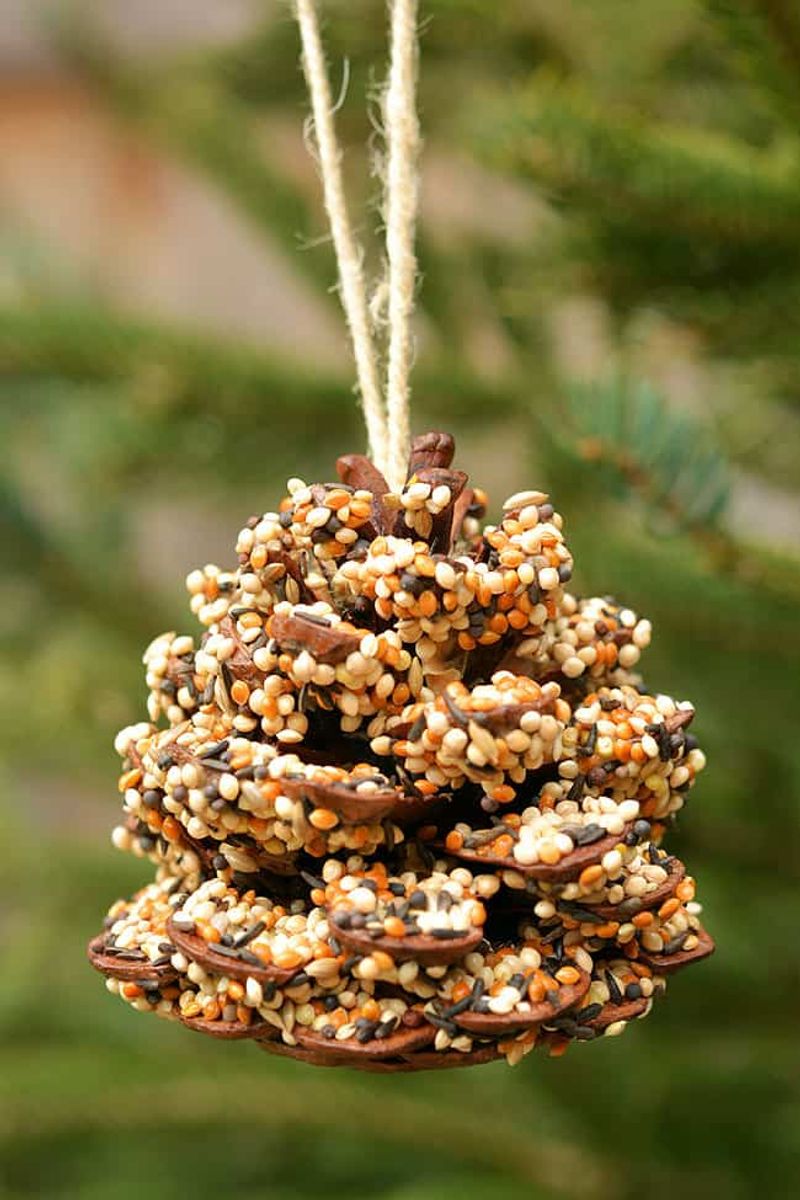
On a quiet Oregon morning, adding a bit of extra food can quickly bring more bird activity into the garden. Pinecones can be turned into simple bird feeders using ingredients many people already have at home.
A common method is to coat a pinecone with peanut butter or suet, then roll it in birdseed and hang it from a branch with twine. The scales hold the food in place, creating small pockets that birds can peck at over time.
This works especially well in early spring and late fall, when natural food sources may be less available. Chickadees, nuthatches, and small songbirds are often drawn to these feeders.
It is important to hang them away from busy garden beds to avoid attracting animals where seedlings are growing. Once the food is gone, the pinecone can be left outside or composted.
It is a simple way to reuse materials while supporting wildlife, and it fits naturally into Oregon gardens where birds are already part of the landscape. Placing feeders near shrubs or small trees can give birds a quick place to land and feel secure.
Checking them occasionally helps make sure they stay clean and continue to attract visitors. Over time, this small addition can make the garden feel more active and connected to the surrounding environment.
6. Pinecones Can Be Used As A Light Mulch Layer
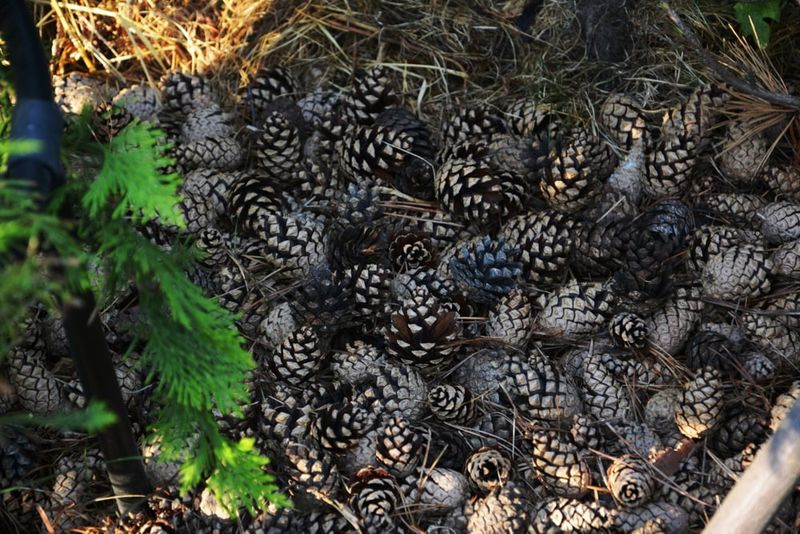
In many Oregon gardens, mulch plays an important role in managing moisture and protecting soil. Pinecones can be used as a light, natural mulch in smaller areas where a full layer of bark or compost is not needed.
When spread loosely around plants, pinecones help shade the soil surface and reduce how quickly moisture evaporates as temperatures begin to rise.
This can be useful during Oregon’s transition from wet spring to drier summer conditions.
They also help limit direct soil exposure, which can reduce minor erosion during heavy rain. Because they are larger and more open than traditional mulch, they work best when combined with other materials or used in targeted spots.
Over time, the cones slowly break down and contribute organic matter to the soil. While they do not provide full coverage, they can still support moisture balance and soil protection in a simple, low-cost way.
Spacing them evenly can improve coverage without crowding plant stems. In areas with frequent wind, they tend to stay in place better than lighter mulch materials.
As they age, they blend more naturally into the garden and require very little upkeep.
7. Pinecones Create Natural Borders Along Garden Paths
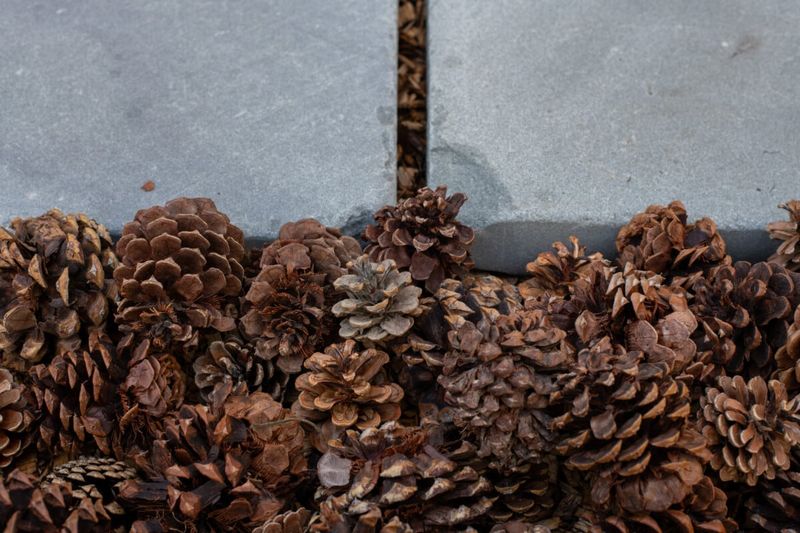
Garden paths in Oregon can shift quickly with changing weather, especially after rain softens the soil. Defining edges with natural materials helps keep planting areas separate and reduces accidental stepping into beds.
Pinecones can be placed along the edges of pathways to create a loose, flexible border. Their shape makes them easy to arrange, and they tend to stay in place better than lighter materials like leaves or straw.
This works well in informal garden designs where a more natural look is preferred. Pinecones blend in with surrounding plants and soil, making the border feel less structured while still serving a purpose.
They can also help guide movement through the garden, especially in areas where paths are not clearly defined.
Over time, cones may shift or break down, but they are easy to replace with new ones collected from nearby trees.
It is a practical way to reuse a common material while adding subtle structure to the garden layout. Arranging them in a single line or a slightly wider band can make paths more visible.
This can be especially helpful in early spring when new growth has not filled in yet. It also adds a seasonal, natural detail that fits well with Oregon’s garden style.