How To Choose Garlic Varieties That Grow Best In California Fall Gardens
A nursery display in October can hold a dozen kinds of garlic, with names like Music, Chesnok Red, and California Early White printed on little cards.
They all look about the same in the bin, and nobody at the register mentions that half of them might struggle in a mild California winter.
The hidden factor is a cold-chilling process called vernalization, and it quietly decides how well a bulb divides into plump cloves.
Some garlic needs weeks of steady cold to bulb properly, while other types grow just fine where frost barely shows up.
Here’s how to tell the two apart, and which varieties make the most sense for different parts of the state.
Softneck Garlic Suits Mild California Winters
The simplest garlic advice for most Californians is to start with softneck. Across much of the state, winters stay short and gentle, with only scattered frosty nights, and softneck garlic is built for exactly that kind of weather.
The big difference comes down to chilling. Hardneck garlic needs several weeks of steady cold before it forms a well-divided bulb.
According to UC ANR garden guides, softneck types don’t require that long chill and bulb well where winters stay mild.
Softneck garlic brings other perks too. It usually stores longer than hardneck, often six months or more in a cool, dry spot.
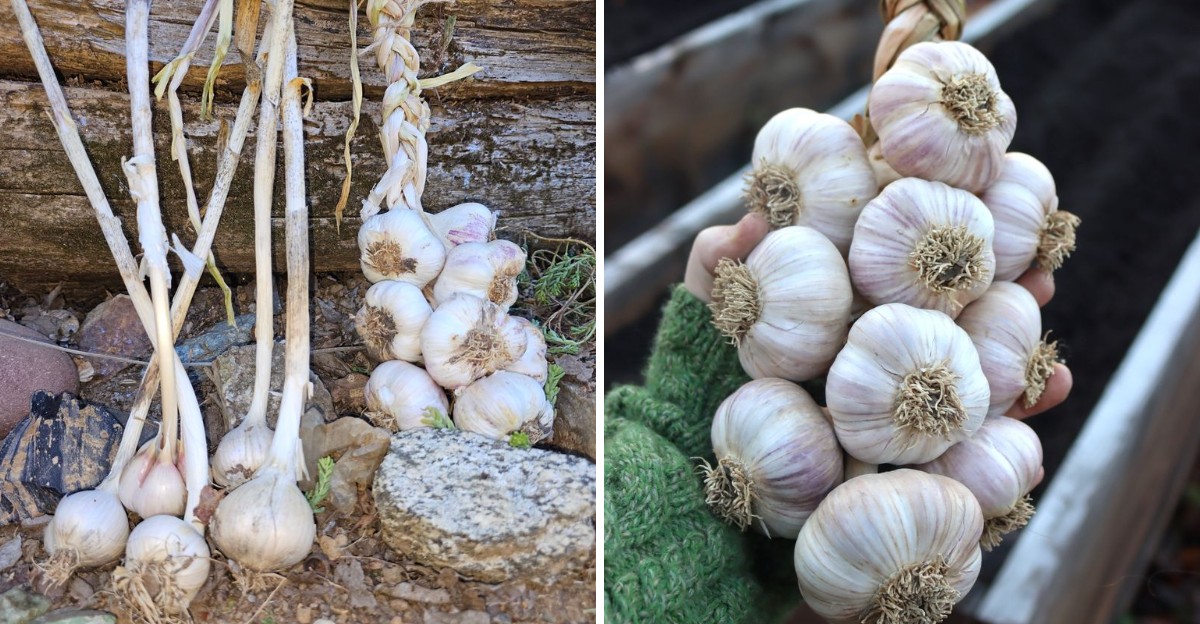
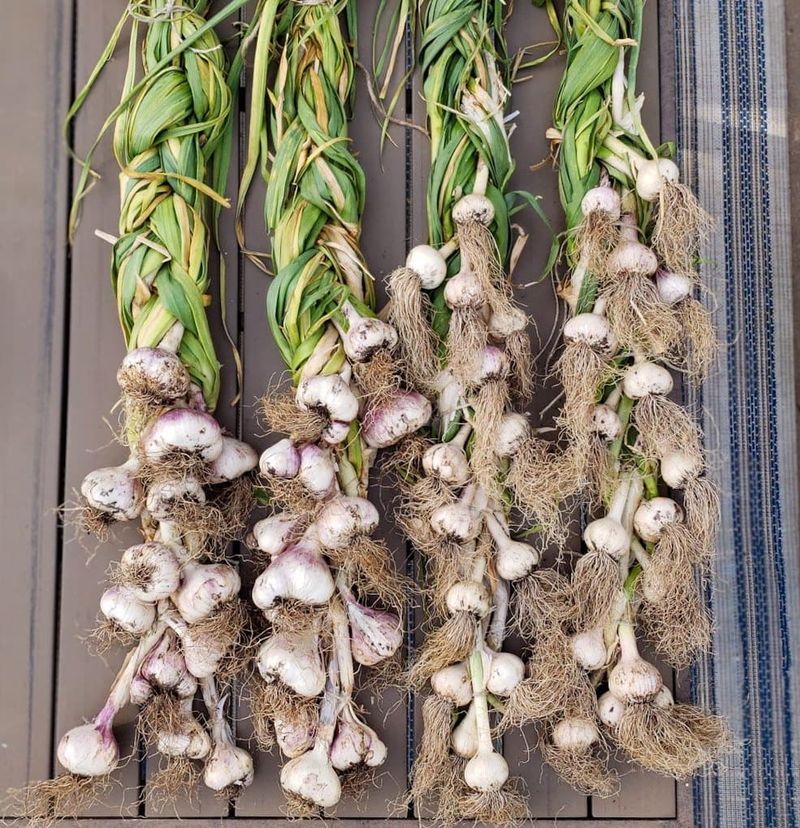
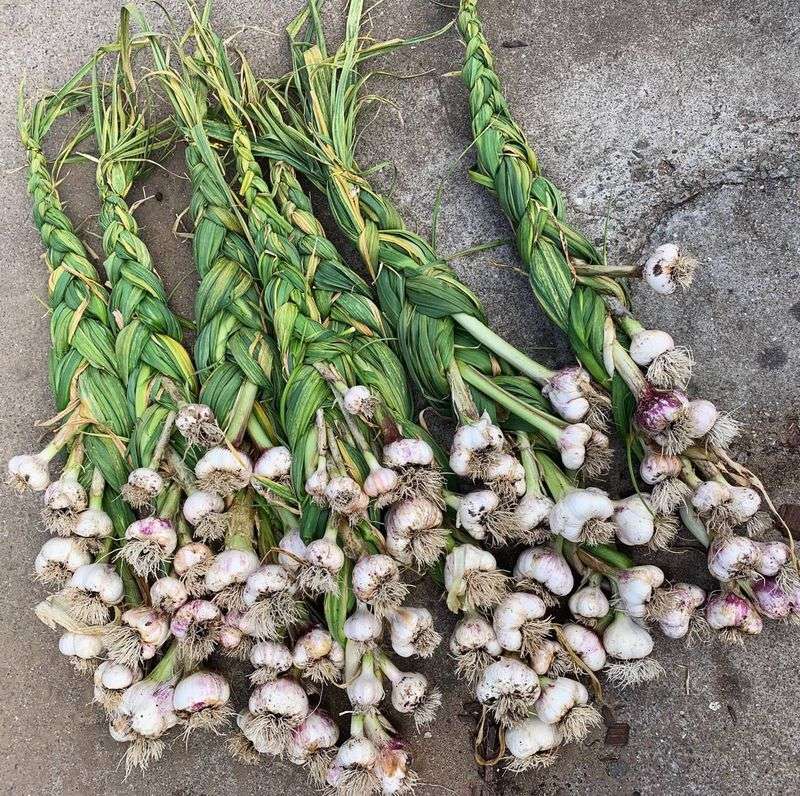
Its soft, bendy stems can also be braided into the strands seen hanging at farmers markets.
Planting is straightforward. In most of California, cloves go into the ground from October through November.
Set each one pointy side up, about 1 to 2 inches deep and 4 to 6 inches apart, in loose soil mixed with compost.
Harvest usually arrives in late spring or early summer, once roughly half the leaves have turned brown. Bulbs then cure best in a shady, airy spot for two to three weeks before storage.
For first-time garlic growers, softneck removes a lot of guesswork. Attention can go to watering, weeding, and feeding instead of worry about a cold enough winter, which makes for a calmer and more successful first season.
California Early White Is A Proven Classic
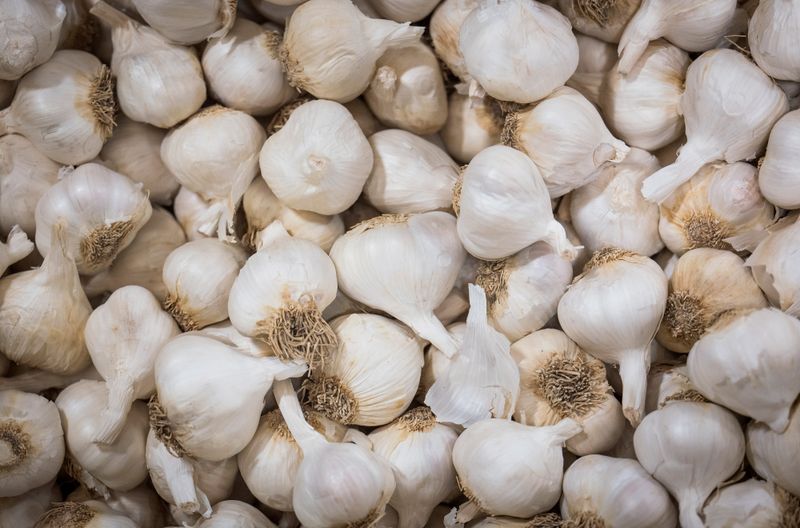
Gilroy, a small city south of San Jose, likes to call itself the Garlic Capital of the World. Much of that fame comes from a softneck variety often nicknamed Gilroy garlic, California Early White, which farmers in the region have grown on a huge scale for decades.
California Early White is an artichoke-type softneck. Each bulb holds many cloves arranged in overlapping layers, a bit like the leaves of an artichoke.
It handles mild winters well and doesn’t depend on a long cold spell to bulb up. UC ANR resources list it among the softneck garlics commonly grown in California, which helps explain its staying power.
The flavor is mild and friendly, making it a dependable everyday kitchen garlic. Pasta sauce, roasted vegetables, and garlic bread on a Friday night all benefit, and the good-sized bulbs with bright white wrappers look great in a kitchen basket.
Your California Garden Changes Every Week. Your Plan Should Too.
Gardening in California changes quickly throughout the season. Every Friday you’ll receive a simple weekly plan showing exactly what to plant, prune, fertilize, harvest, and protect so you never miss the right timing.
As the name suggests, it tends to mature earlier than its cousin, California Late White. That early timing can help gardeners harvest before the hottest summer weather arrives.
Late White is often known for storing a little longer, so some gardeners plant both for a longer supply.
Starting with clean seed garlic from a garden center or seed company makes a real difference. Grocery store bulbs may be treated to slow sprouting or could carry disease, while healthy seed stock gives this classic its best chance to shine in a backyard bed.
Hardneck Types Need Real Sustained Cold
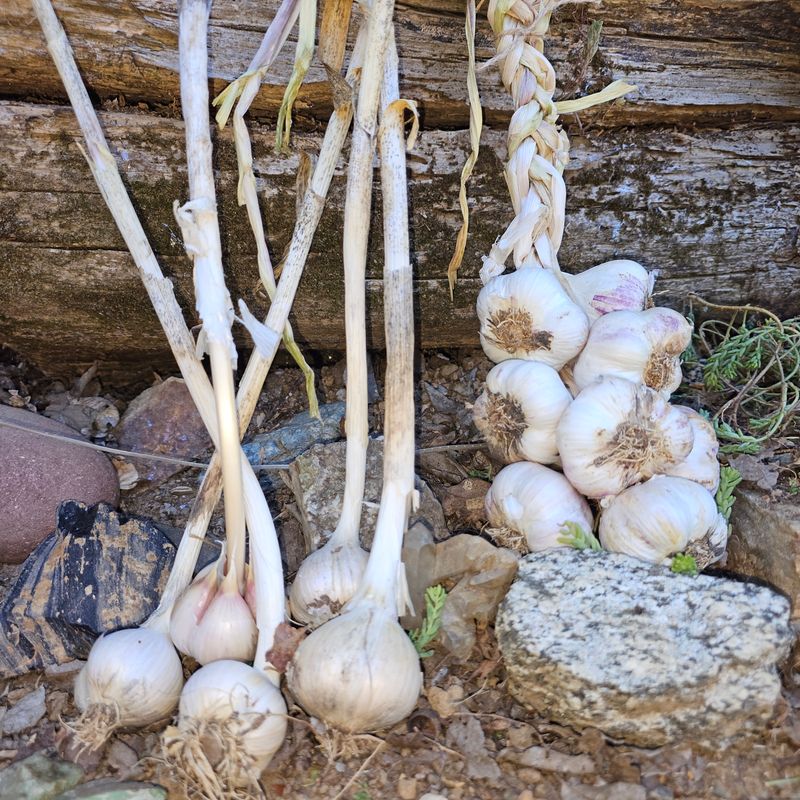
Hardneck garlic behaves a bit like a plant with an alarm clock that only cold can set. Until it gets enough chilly time, it doesn’t get the signal to divide into cloves, a process known as vernalization.
UC ANR Master Gardener materials describe hardneck garlic as needing roughly 4 to 6 weeks of temperatures below about 40 to 45°F to bulb properly. That cold has to be fairly steady, not just a frosty night here and there.
Without enough chill, the harvest may turn up round, single-clove bulbs or small, poorly formed heads. Much of California struggles to deliver what hardnecks need.
Coastal cities, the Central Valley, and Southern California often swing from cool nights to warm, sunny afternoons all winter. A week of chilly weather followed by a 70-degree warm spell doesn’t add up the way hardneck garlic requires.
Hardneck varieties are still tempting, and for good reason. Music and Chesnok Red are loved for bold, spicy flavor and easy-to-peel cloves, and they send up curly stalks called scapes in spring that taste great in stir-fries and pesto.
Some gardeners chill cloves in the refrigerator for several weeks before planting to make up for warm winters. Results from that trick vary, and research-based guidance on it is limited, so it works best as an experiment rather than a sure thing.
Cloves chilled this way should stay away from fruit like apples, which release gases that can affect sprouting.
Inchelium Red Offers A Softneck With Flavor
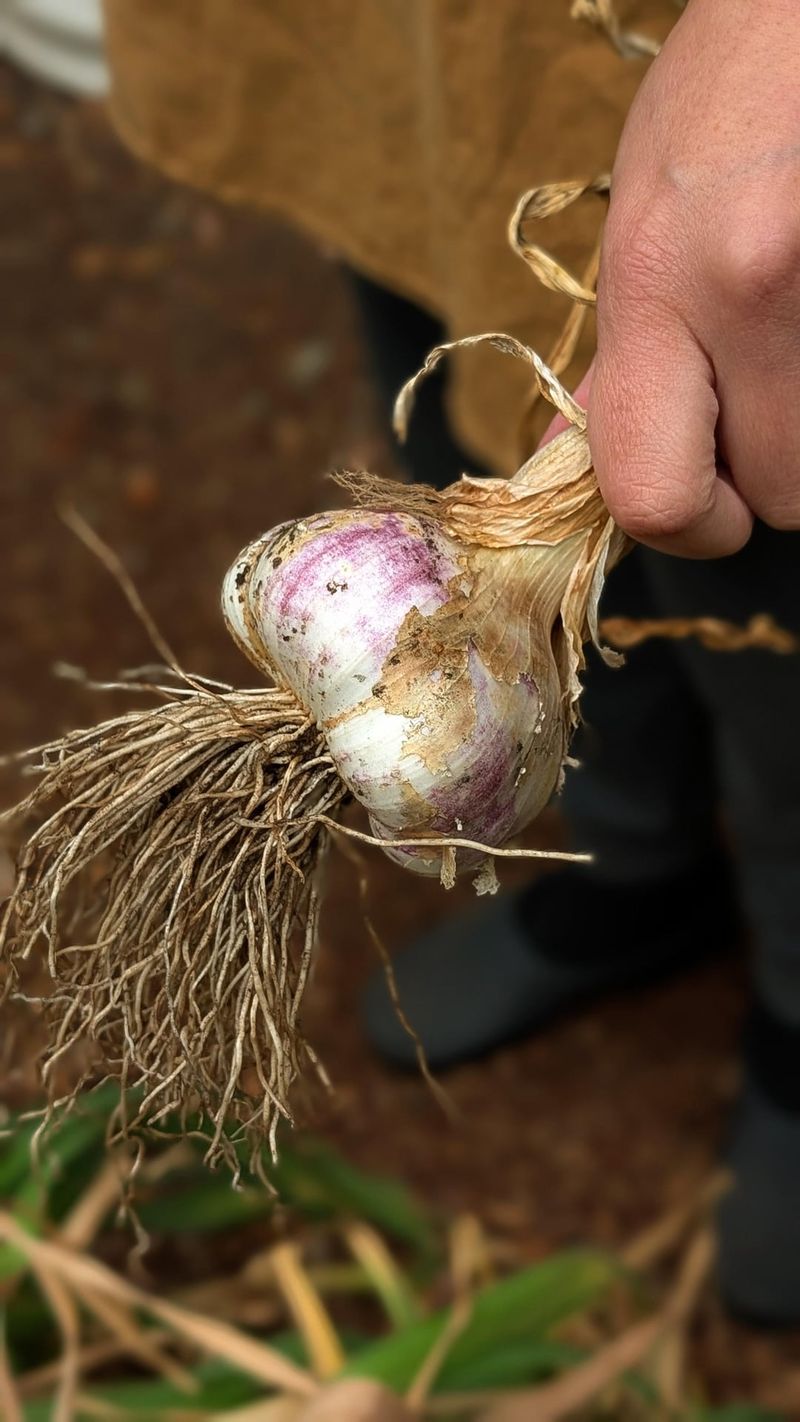
Some garlic comes with a backstory worth sharing at dinner. Inchelium Red was found growing on the Colville Indian Reservation near the town of Inchelium, Washington, and from there it spread to gardens across the West, including plenty of California backyards.
Like California Early White, Inchelium Red is an artichoke-type softneck. It doesn’t demand a long, deep chill, which helps it perform in places where winter feels more like a polite suggestion.
UC ANR resources point to it as one of the softneck varieties commonly grown in California. What really makes it stand out, though, is the flavor.
Many cooks describe it as rich and full, with a warm heat that mellows nicely when roasted. Gardeners often say it carries more personality than most softnecks, offering some of that bold hardneck character without the cold requirement.
The bulbs usually grow large, and the outer wrappers often show soft purple streaks. Cloves come in layers, with big ones on the outside and smaller ones tucked toward the center.
The biggest outer cloves are worth saving for next fall’s planting, since large cloves tend to grow larger bulbs.
Storage is another strong point. Cured well and kept somewhere cool, dark, and dry, Inchelium Red can last for many months.
That means homegrown garlic can still be on the menu in midwinter, right around the time the next crop goes in.
Coastal Zones Favor Softneck Almost Every Time
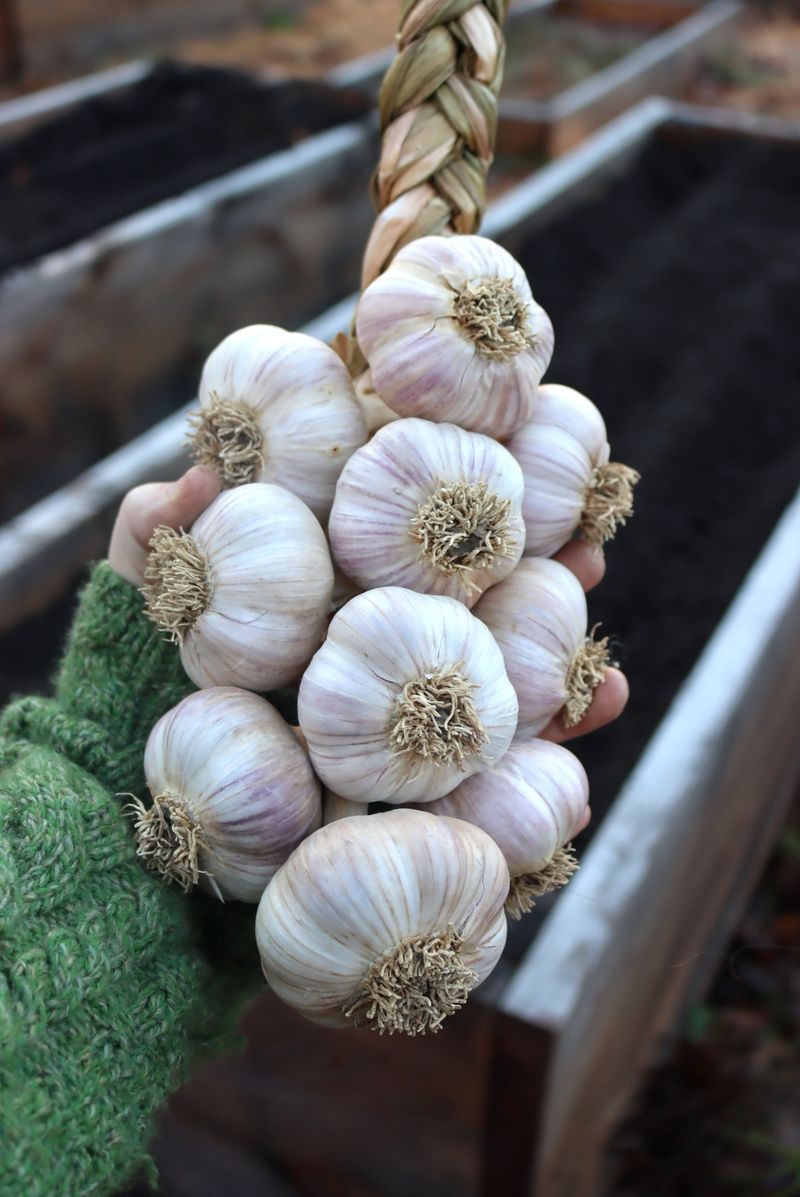
A San Diego winter can feel a lot like a cool spring day somewhere else. Coastal California enjoys some of the mildest winter weather in the country, with the ocean acting like a giant heat blanket that keeps nights from dropping very far.
That’s lovely for beach walks, but it creates a challenge for hardneck garlic. In cities like San Diego, Los Angeles, Santa Barbara, and much of the Bay Area, winter lows often stay above 40°F for weeks at a time.
Reaching 4 to 6 steady weeks below 40 to 45°F, the range UC ANR cites for hardnecks, is unlikely in most coastal neighborhoods. Softneck garlic fits these zones far better.
Varieties such as California Early White, California Late White, and Inchelium Red can bulb without that long cold stretch. For coastal growers, the choice of softneck often separates a good harvest from a frustrating one.
Coastal gardens do come with one quirk worth watching: damp, foggy air. Garlic can pick up a fungal disease called rust, which shows up as orange spots on the leaves.
Generous spacing for airflow, water aimed at the soil instead of the foliage, and removal of badly infected plants all help keep rust in check.
Good drainage matters too, since soggy winter soil can rot cloves. Raised beds work especially well near the coast, and with the right softneck variety, a seaside garden can produce bulbs that rival the ones at the farmers market.
A Little Cold Exposure Still Helps Bulbing
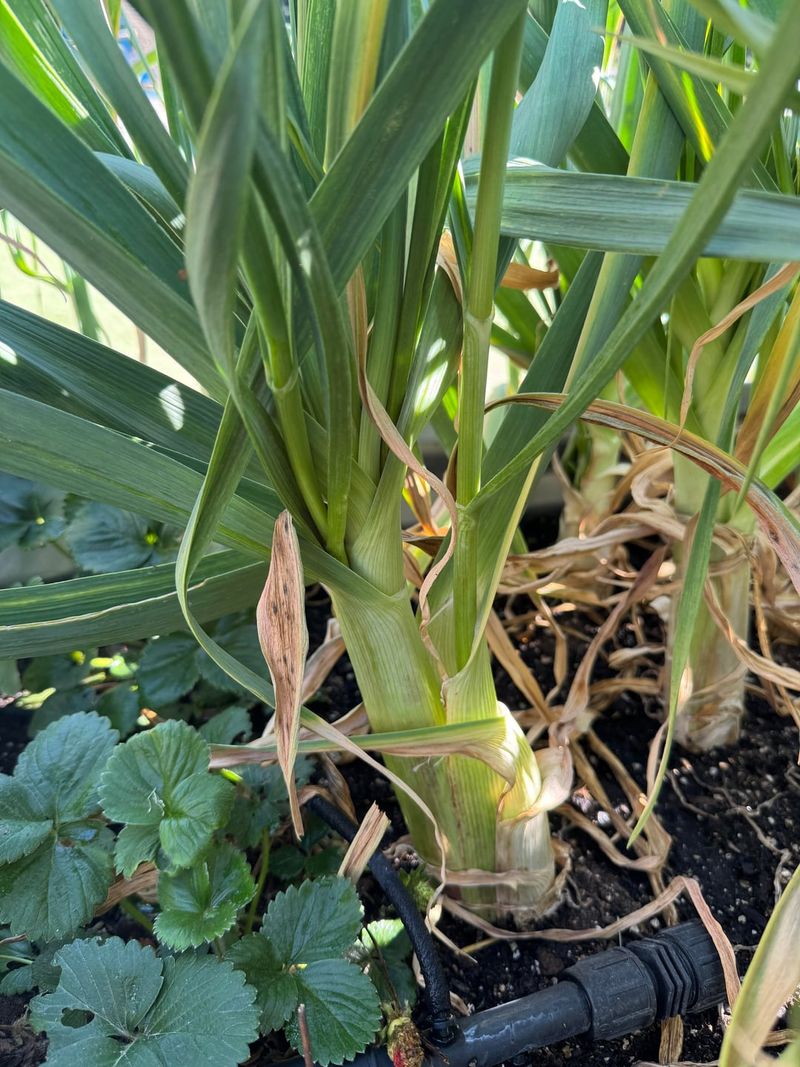
Softneck garlic doesn’t need a deep freeze, but that doesn’t mean it dislikes cool weather. It’s a bit like a runner who does fine without a coach but still trains better with one.
A season of cool temperatures gives softneck plants a helpful push in the same way.
Through fall and winter, garlic spends its energy on roots and leaves. Cool soil and chilly nights support that steady growth.
Later, as days grow longer and warmer in spring, the plant shifts its focus to building a bulb underground. Bigger, healthier leaves in winter usually mean bigger bulbs by summer.
Each leaf connects to a layer of the bulb, so a strong, leafy plant has more to work with when bulbing begins. Some cool exposure also seems to help softnecks form neat, well-divided cloves, even though they don’t strictly require it.
Planting time is the best tool for taking advantage of that cool stretch. Cloves that go in during October or November get to enjoy the coolest months of the year.
Late-winter planting, on the other hand, can leave plants facing warm spring weather before they’ve grown enough leaves to support a good bulb.
Very warm areas, like parts of the low desert, can challenge even softnecks. Gardeners there often plant on the earlier side and choose varieties known to handle heat.
A few seasons of notes on planting dates and results quickly reveal what works best in a particular yard.
Match The Variety To Your Actual Winter
California isn’t one climate so much as a dozen climates squeezed into one state. When it comes to winter, a gardener in Truckee and a gardener in Long Beach might as well live on different planets.
That’s why the best garlic choice depends on where a garden actually sits. Colder inland and higher-elevation areas, such as the Sierra Nevada foothills and mountains, the Modoc Plateau, and parts of the high desert, often get the steady cold hardneck garlic needs.
In those regions, varieties like Music, German Extra Hardy, and Chesnok Red can thrive and reward growers with spicy flavor and tasty scapes.
Most other places do better with softneck. Coastal cities, the Central Valley, and much of Southern California usually lack the 4 to 6 weeks below about 40 to 45°F that hardnecks rely on, according to UC ANR guidance.
Average winter lows for a town offer a good first clue. A simple outdoor thermometer checked each morning adds even more detail, and the county UC Master Gardener program is a great free resource for local planting advice.
Gardens that fall somewhere in between can try a few cloves of each type side by side. Garlic is forgiving, and a small test bed often teaches more than any chart.
Matching the pick to the real winter outside the back door is the surest path to better bulbs, year after year.