How To Know A North Carolina Pawpaw Is Ripe Without Bruising The Fruit
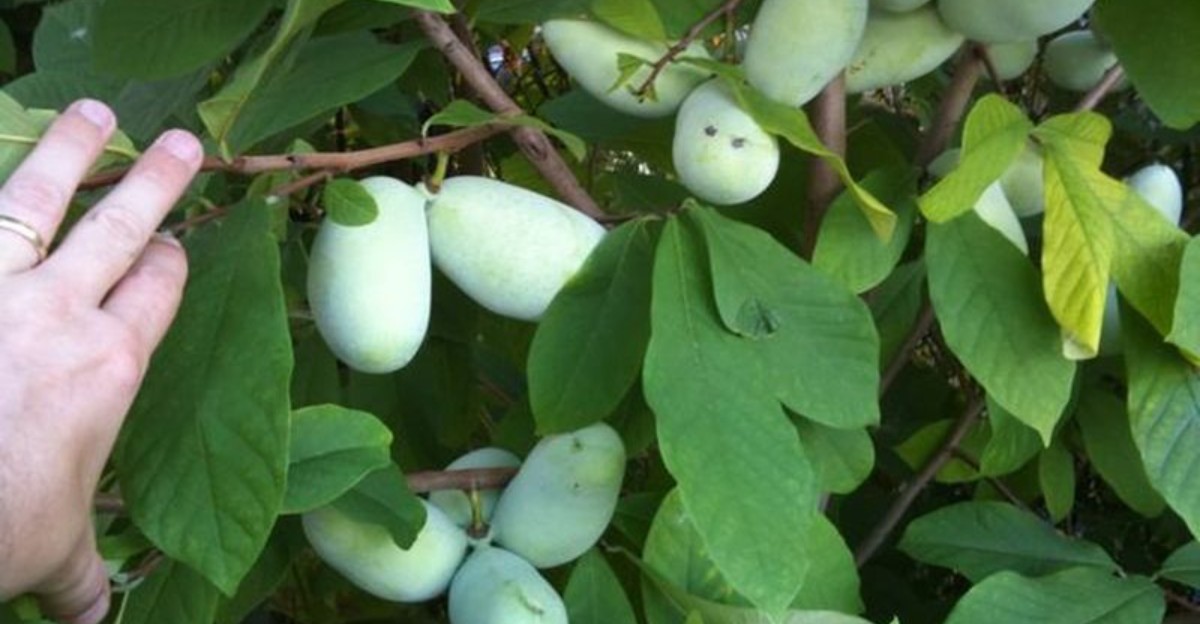
Pawpaws don’t ripen with the obvious color changes many other fruits display, making the moment of peak ripeness surprisingly tricky to judge without damaging the delicate flesh underneath.
A ripe pawpaw typically gives slightly to gentle pressure, similar to a ripe avocado, but pressing too firmly can bruise the soft interior before the fruit even makes it off the tree.
Scent offers a more reliable clue, since ripe pawpaws release a distinctive tropical fragrance that unripe fruit simply doesn’t produce yet.
Because pawpaws often drop from the tree naturally right around peak ripeness, checking the ground beneath a tree can sometimes be more useful than testing fruit still hanging from branches.
Learning to read these subtler signs helps North Carolina foragers and growers enjoy pawpaws at their absolute best, without ruining the fruit in the process of checking it.
1. Know When The Harvest Window Opens
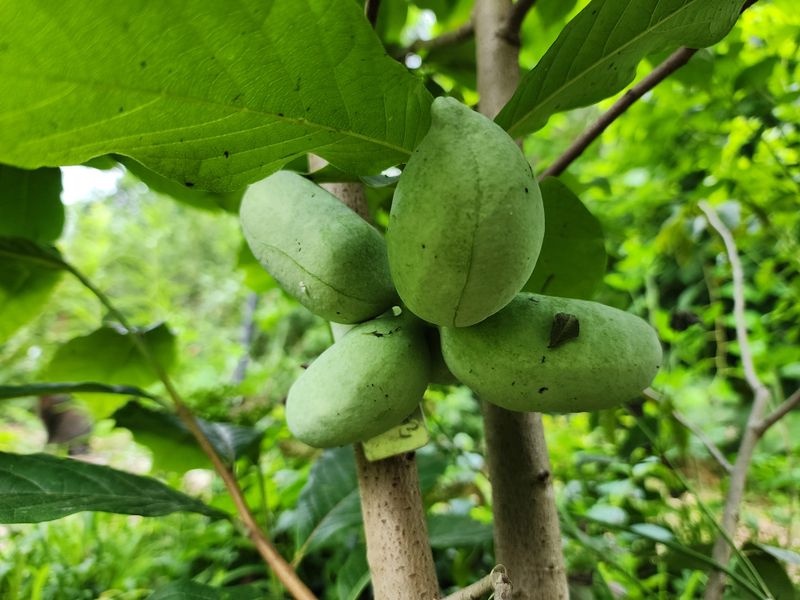
Mark your calendar for late August, because that is when North Carolina pawpaw season usually starts to wake up.
Most trees across the state ripen their fruit from late August through September. Up in the Mountains, cooler weather often pushes the harvest later, sometimes into early October.
Timing might sound like a small detail, but it makes a big difference. When you start checking fruit too early, you end up squeezing and handling it again and again. Pawpaw skin is thin, so all that extra poking can bruise the fruit before it is even ready to eat.
Patience pays off in another way, too. Fruit in the same cluster does not ripen all at once. Instead, it tends to soften over a period of one to three weeks, so a single tree can keep giving you treats for a good while.
Your best plan is to watch the tree from a distance first. Once a few fruits start to look full and plump, begin light checks every couple of days. Keep your hands off anything that still looks small or hard, and let the tree finish its work.
North Carolina is a natural home for this fruit. Pawpaws (Asimina triloba) grow wild in moist river bottoms and along shady woodland edges, from the Mountains through the Piedmont and into parts of the Coastal Plain.
Because the climate changes from east to west, a friend in Raleigh might be eating pawpaws a week or two before someone near Boone. Knowing your local timing helps you catch every fruit at its sweetest.
2. Use A Gentle Thumb Press Test
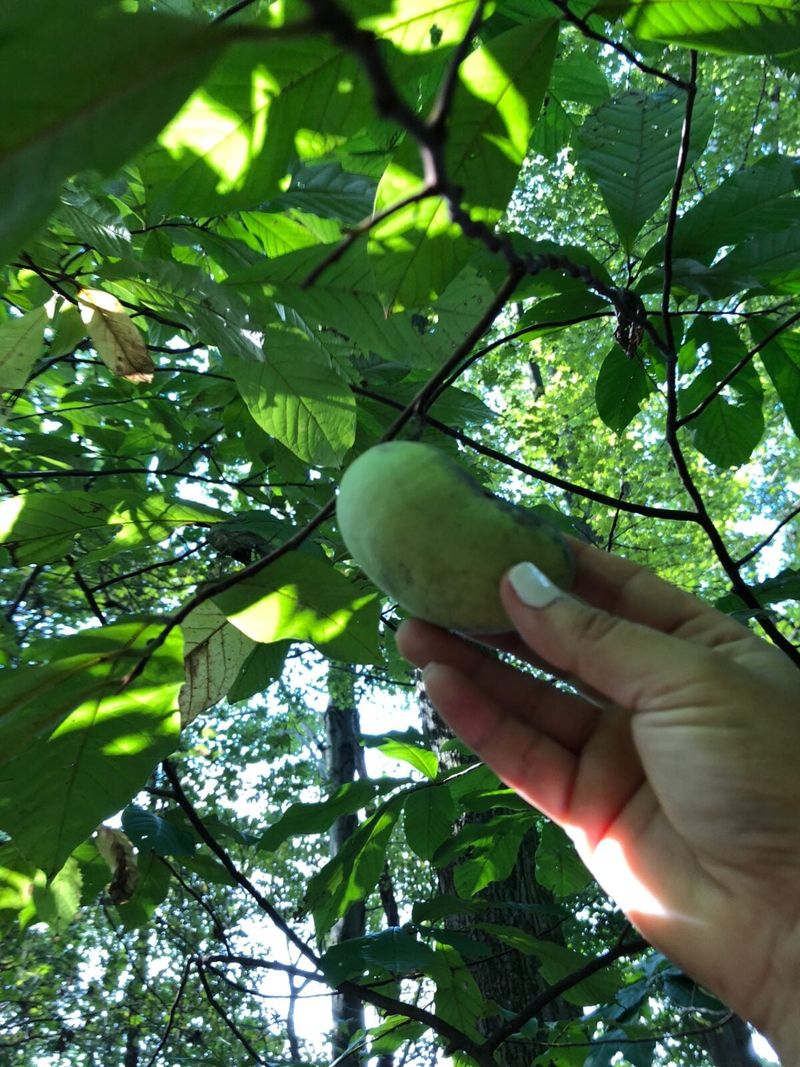
Think about the last time you picked out a ripe peach at the store. You probably gave it a soft little press to see if it had some give, and a pawpaw works in almost the same way. A ripe one yields slightly under light pressure, a lot like a ready avocado.
Softness is a great sign, but pawpaws are delicate. Their skin and flesh bruise very easily. A hard squeeze can leave dark, mushy spots that show up within a day, turning a perfect fruit into a messy one.
Your North Carolina Garden Changes Every Week. Your Plan Should Too.
Gardening in North Carolina changes quickly throughout the season. Every Friday you’ll receive a simple weekly plan showing exactly what to plant, prune, fertilize, harvest, and protect so you never miss the right timing.
Here is the trick that protects your harvest. Cup the fruit in the palm of your hand so it rests there fully supported. Then press lightly with the pad of your thumb, not the tip of your finger, since the flat pad spreads out the pressure.
One press is all you need. Testing the same fruit over and over adds up to damage, even if each touch feels gentle. If the fruit feels firm like an unripe apple, leave it alone and come back in a day or two.
A ripe pawpaw should feel soft but not squishy. If your thumb sinks in deeply, the fruit is likely overripe, though it may still work well for baking or smoothies.
North Carolina growers need to stay alert with this test. Warm late summer weather speeds things up, and pawpaws can go from firm to ripe in just a few days.
A fruit that felt hard on Monday might be ready by Thursday, so regular, gentle checks help you catch it right on time.
3. Follow The Fruity Aroma
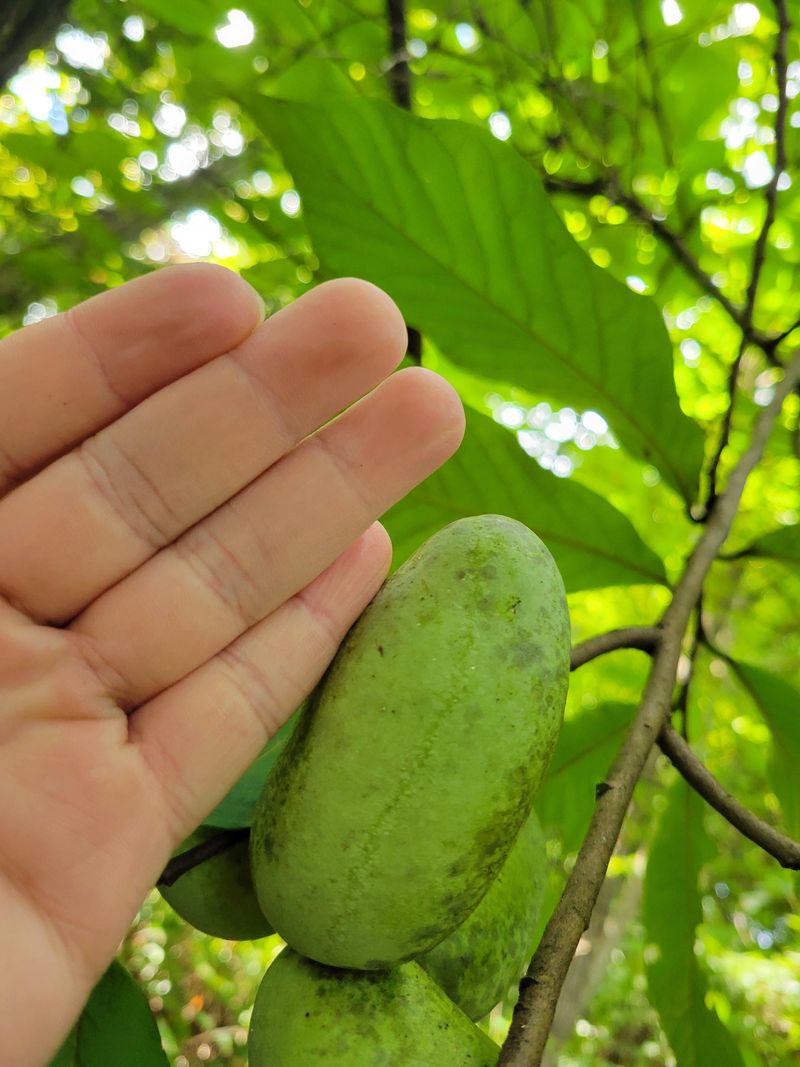
Your nose might be the best harvesting tool you own. Ripe pawpaws give off a strong, sweet smell that many people describe as a mix of banana and mango, with a hint of something tropical.
Some folks even catch a little pineapple or melon in the scent. Best of all, sniffing a fruit does not require touching it.
Every time you skip a squeeze, you lower the chance of a bruise. That makes smell one of the safest ways to figure out which fruit is ready.
Timing your sniff test helps a lot. Warm afternoons are when the aroma is at its strongest, because heat helps release those sweet-smelling compounds into the air. Early mornings can be cool, so the fragrance may be much fainter.
Start by standing near the tree and taking a deep breath. If the air around the branches smells fruity, lean in closer to individual clusters and sniff them one by one. Check the sweetest-smelling clusters first, and save the others for another day.
Don’t forget to smell the ground, too. A strong fruity scent under the tree often means a ripe pawpaw has already dropped and is hiding in the leaves or grass.
North Carolina weather gives you a helping hand here. Warm, humid late summer air holds and carries scents well, so the fragrance can drift a surprising distance from the tree.
Many people in the Piedmont and Mountains say they smell a wild pawpaw patch before they ever see it.
Once you train your nose, you will start noticing that sweet perfume everywhere during harvest season.
4. Check Skin Color Without Relying On It Alone
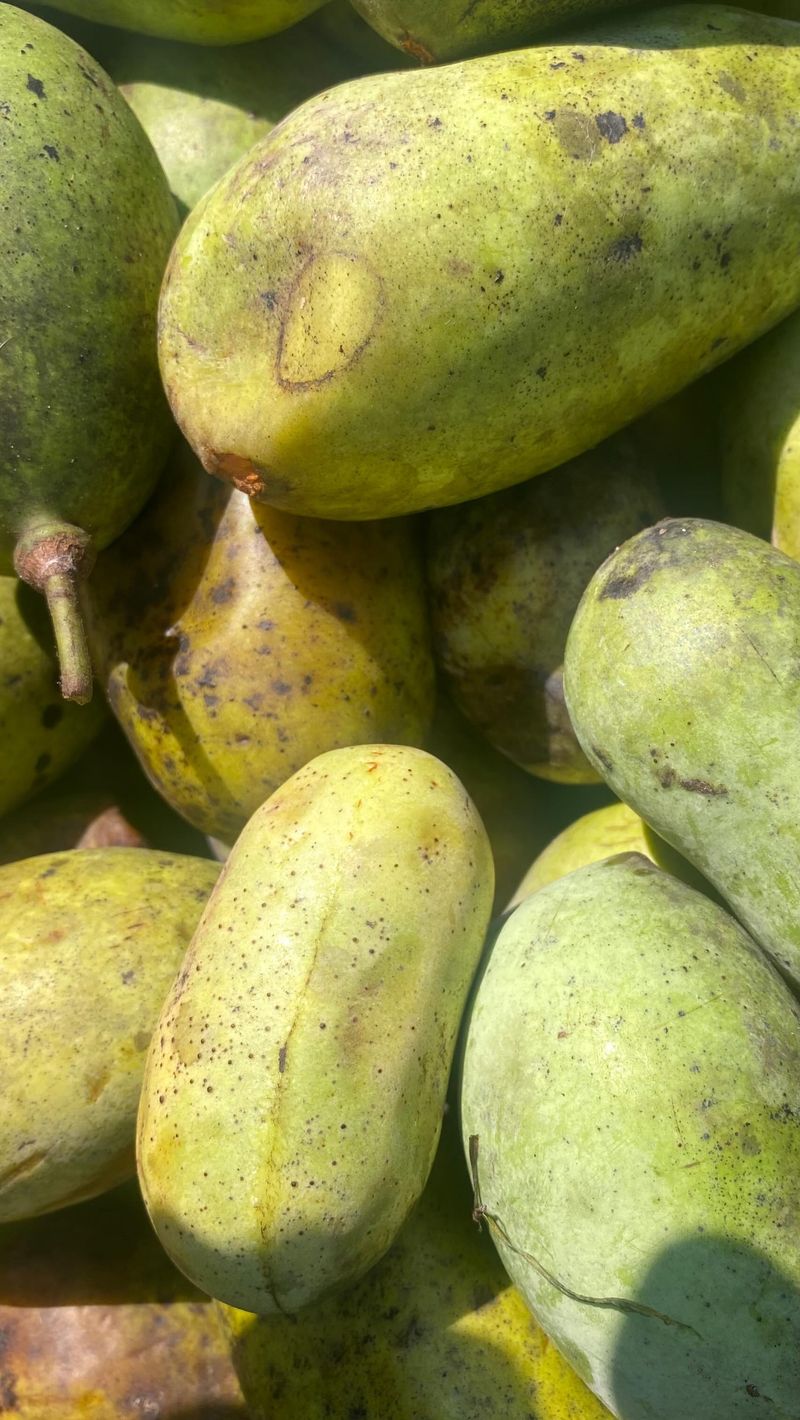
Color can be a helpful hint, but it is a bit of a trickster with pawpaws. Many fruits start out deep green and slowly lighten to a yellowish green as they ripen. Some also pick up dark flecks or blotches on the skin, a little like a banana.
Those changes are useful, but they only tell part of the story. Some trees and named cultivars barely change color at all, so a fruit that still looks green might be perfectly ripe inside. On the flip side, dark spots alone do not mean the fruit has gone bad.
So how should you use color? Treat it as a first signal that helps you decide which fruit deserves a closer look. Scan the tree for pawpaws that look lighter or more yellow than their neighbors.
After that, move on to your other tests. Give the fruit a sniff to check for that sweet, tropical smell. If it passes, try one gentle thumb press to confirm it has some give.
Using color first saves your fruit from extra handling. Instead of pressing every pawpaw on the branch, you only touch the ones that already show promise.
This approach matters a lot in North Carolina. Many pawpaws here grow from wild or seedling trees, not grafted cultivars, and each one can look a little different.
You might find one tree with fruit that turns almost golden and another nearby that stays green the whole season.
Get to know each tree’s habits over a few years. Keeping a notebook of how your fruit looks when ripe can make future harvests much easier.
5. Try A Gentle Tug Test
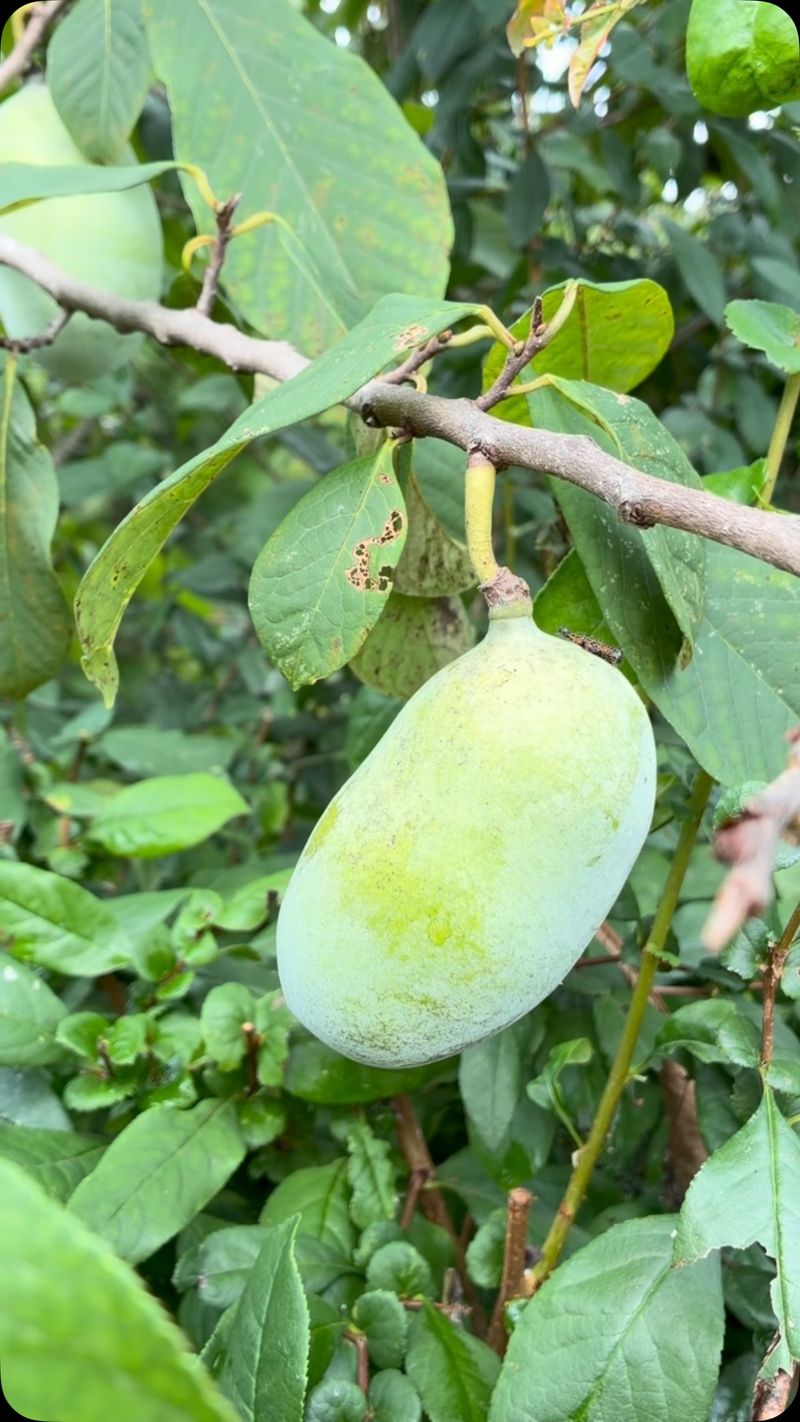
Sometimes the tree tells you when it is ready to let go. Ripe pawpaws separate from the branch easily when you lift them with light pressure. It almost feels like the fruit drops into your hand on its own.
The science behind it is pretty simple. As a pawpaw ripens, the connection between the stem and the branch weakens. If you need to pull hard or twist the fruit to get it off, that is a clear sign it is not ready yet.
To try it, hold your hand open and slide it under the fruit so it rests on your palm. Lift gently upward, as if you were raising a cup of water you did not want to spill. A ripe fruit should come free with very little effort.
Any fruit that holds firm should stay put. Give it another day or two, then test it again. Forcing it off early can bruise the skin and leave you with a fruit that never tastes as sweet as it should.
Resist the urge to shake the branches. It might seem like a fast shortcut, but shaking drops unripe fruit right along with ripe ones, and those hard green pawpaws usually hit the ground and bruise.
This method works especially well in North Carolina, where clusters ripen unevenly. One bunch might hold three ready fruits and two that need more time. A quick tug test on each one lets you take only what is ripe while leaving the rest to finish on the tree.
6. Cushion The Ground Where Fruit Drops
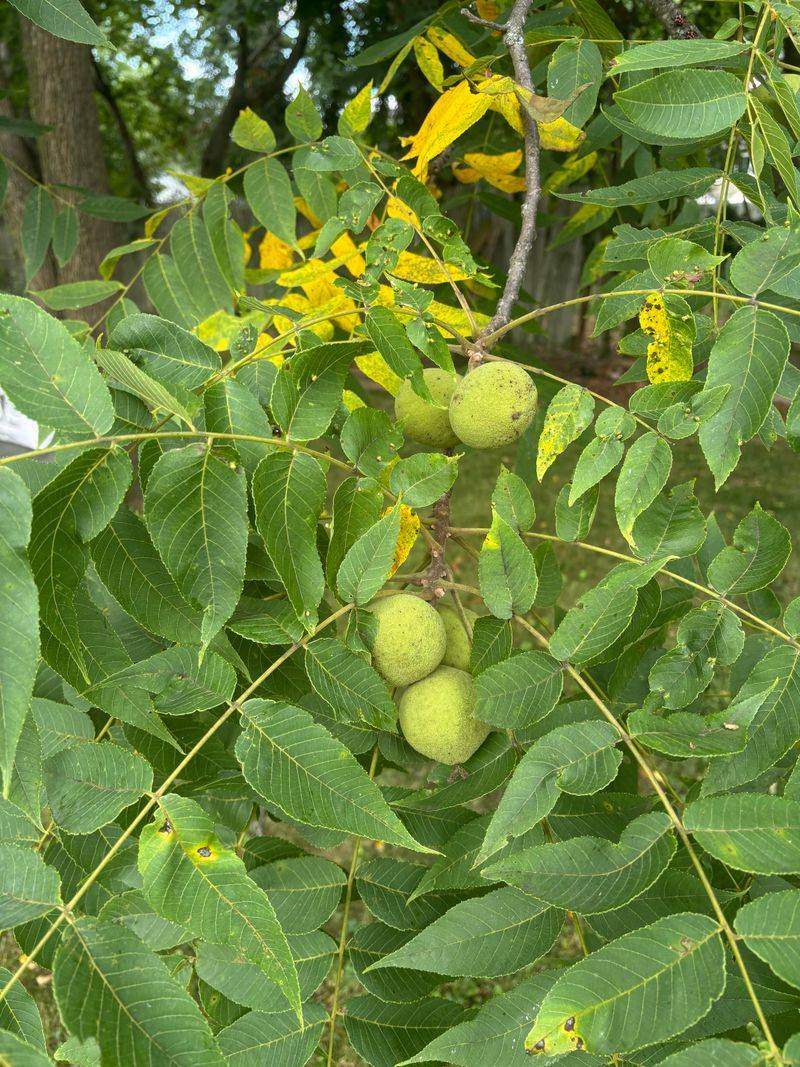
Pawpaws have a funny habit of picking themselves. When the fruit is fully ripe, it often falls from the tree without any help at all. That is great news for harvesters, as long as the fruit has somewhere soft to land.
A fall onto bare dirt, rocks, or packed soil can be rough on such a tender fruit. The skin bruises or splits open, and the flesh inside can turn brown and mushy fast. A softer surface, on the other hand, can keep that same fruit in great shape.
Setting up a cushion is easy. Keep a layer of mulch, leaf litter, or grass under the tree during harvest season. Shredded leaves saved from last fall work wonderfully and cost nothing.
For branches loaded with heavy fruit, try laying a tarp or an old blanket underneath. A thick quilt or a pile of straw adds even more padding. Just make sure the material stays in place so it does not blow away.
Collecting matters as much as cushioning. Walk under the tree at least once a day to gather any fallen fruit. Pawpaws left on the ground too long can soften past their best, attract insects, or draw hungry animals.
This step is extra helpful in North Carolina. Late summer thunderstorms and gusty winds can shake loose a lot of ripe fruit all at once, especially when tropical weather rolls through in September.
A soft landing zone means a stormy night can turn into a big, happy morning harvest instead of a pile of split fruit.
7. Beat Wildlife To The Ripe Fruit
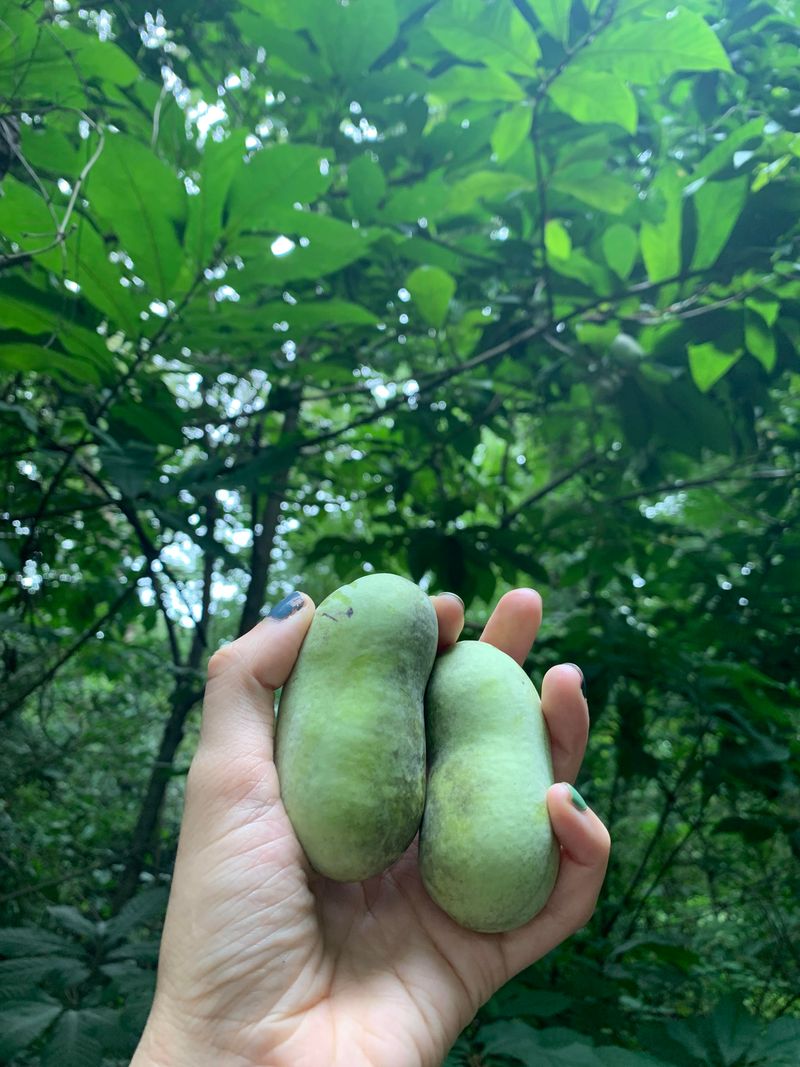
You are not the only one waiting for pawpaw season. Raccoons, opossums, foxes, squirrels, and deer all love this sweet fruit. Box turtles have been known to munch on fallen pawpaws, too.
Many of these visitors come out at night. By morning, the ripest fruit on your tree might be gone, half-eaten, or knocked around on the ground. Fruit that animals chew or roll around is often too damaged to use.
Winning this race comes down to routine. Check your trees every morning during peak ripening, when fruit is most likely to be ready.
Early visits give you first pick before daytime critters like squirrels get busy, and a quick lap around the tree with a basket takes only a few minutes.
When a fruit passes the scent and touch tests, harvest it right away. Waiting one more day might sound like a good idea for extra sweetness, but that delay can give a raccoon the chance to grab it first.
Picking up fallen fruit every day matters just as much. Old, overripe fruit on the ground sends out a strong smell that draws animals back again and again. A tidy space under the tree makes it far less of a nightly buffet.
In North Carolina, pawpaws are an important native food for many woodland animals, which helps explain why the competition is so strong.
Animals that eat the fruit also help spread the large seeds, planting new trees across forests and river bottoms. Respecting their place in nature while protecting your own harvest is a smart balance for any grower.
8. Handle, Ripen, And Store Fruit With Care
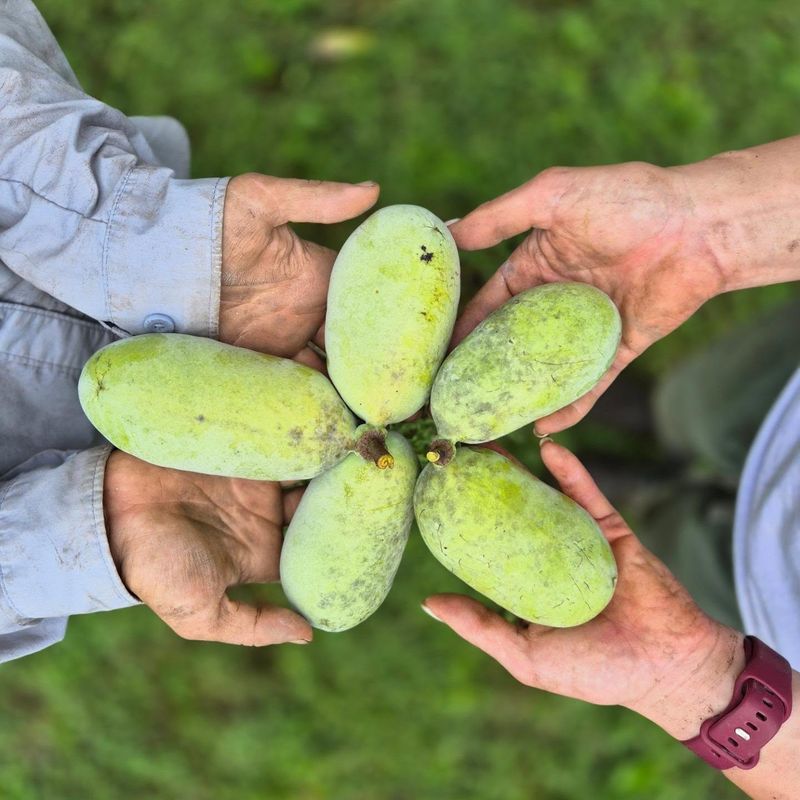
Getting pawpaws off the tree is only half the job. Once they are in your hands, the goal is to keep them bruise-free until you are ready to eat them. That takes a little planning, because this fruit does not wait around.
Ripe pawpaws have a short shelf life. They usually last only a few days at room temperature before turning brown and overly soft.
Stacking them makes things worse, since the weight from fruit on top presses on the fruit below and speeds up browning.
Start with the right container. A shallow basket, tray, or box works best, with the fruit placed in a single layer and never piled up. Lining the bottom with a soft towel adds a bit of extra padding.
Fruit picked at first softening can finish ripening on your counter. Leave it at room temperature for a day or two, and check it with a gentle thumb press. Once it feels soft, it is ready to enjoy or chill.
Fully ripe pawpaws can last about a week in the fridge. Firm-ripe fruit can be refrigerated to hold it longer, then brought out to finish ripening when you want it.
Warm fall weather in North Carolina makes these steps extra important. Kitchens and porches can stay toasty well into October, and harvested pawpaws soften quickly on the counter in that heat.
Moving fruit to the fridge at the right time keeps your hard work from going to waste. Have extra pulp? Scoop it out and freeze it for smoothies, ice cream, or bread later in the year.