Why Georgia Homeowners May Hear More Coyotes At Night This Fall
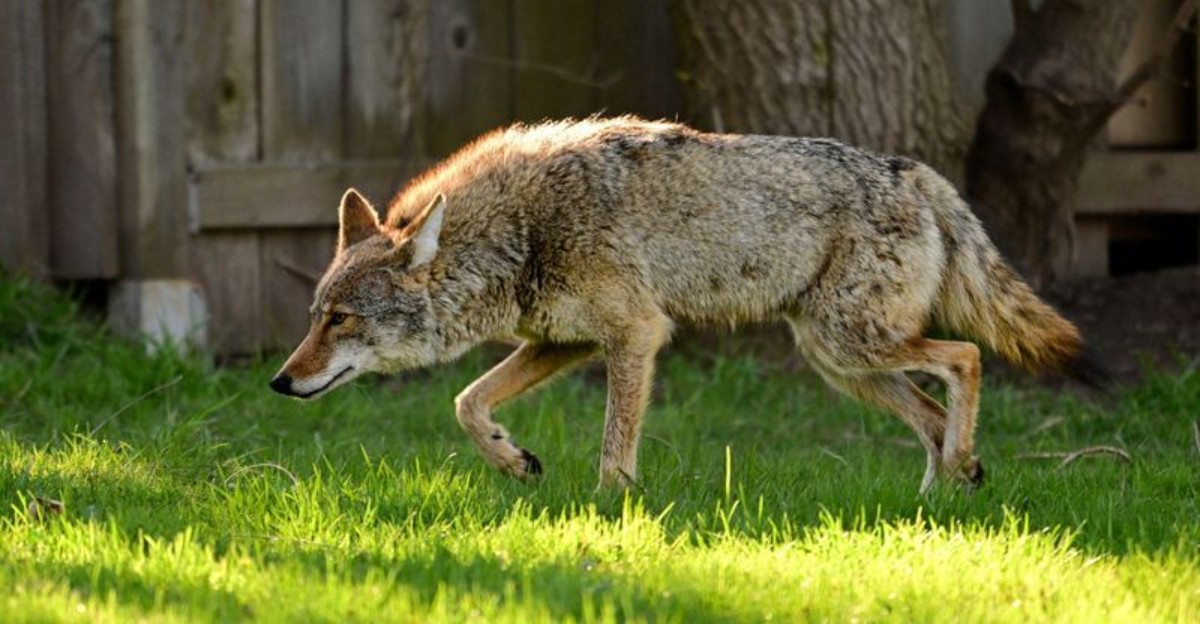
Cool fall nights can make your yard sound surprisingly wild after sunset, especially when several calls carry through the darkness. Coyotes are often responsible for the chorus.
Hearing them clearly does not necessarily mean a larger group has moved into your neighborhood.
Their calls can travel far, and a few animals can sound like many when voices overlap. Seasonal changes in Georgia can also make nighttime coyote activity seem more noticeable.
Knowing that can keep an eerie sound from becoming a reason for concern.
Listen from a distance, and avoid doing anything that encourages coyotes to linger near homes. Understanding their fall behavior puts those nighttime calls into perspective.
Once you know why the season can sound louder, distant howls become easier to interpret without assuming coyotes are suddenly everywhere.
1. Those Nighttime Calls May Become Harder To Miss This Fall
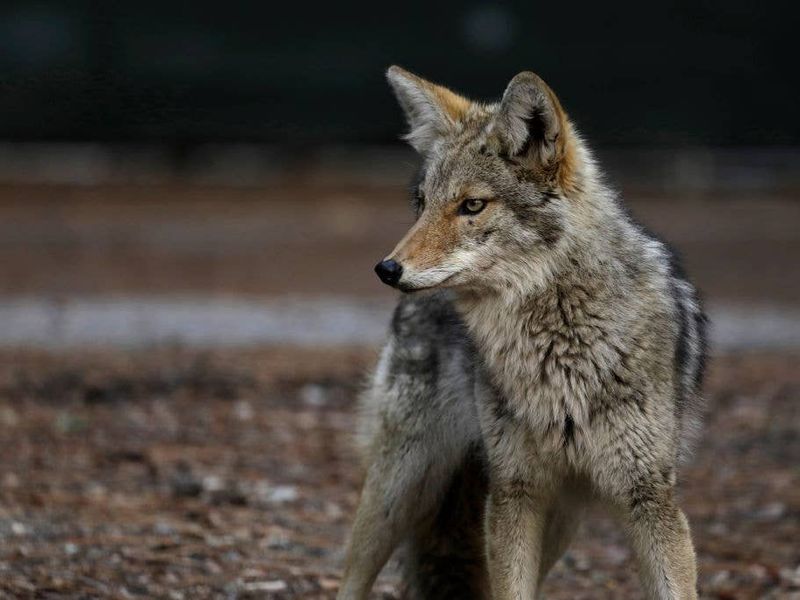
Sound behaves differently once the leaves drop. Bare branches and cooler, denser night air let howls carry farther across neighborhoods than they do in midsummer.
Summer nights come with competition. Cicadas, tree frogs, and running air conditioners cover a lot of background noise, and a coyote call an eighth of a mile away can slip right past you.
By late October, most of that insect chorus has faded.
Windows stay open longer, too, which is part of why homeowners across Georgia suddenly notice sounds that were probably there all along. The animals have not necessarily arrived.
The conditions for hearing them just improved.
Cooler temperatures also change how people use their evenings. Walking the dog after dinner or sitting on the deck puts you outside during peak coyote activity.
Distance can be deceiving as well. A call that seems to come from your back fence may actually be echoing off houses from several streets over.
Weather plays a role too, since still, clear nights carry sound better than windy or humid ones.
None of that means your area has more coyotes than it did in spring. Populations shift for other reasons, and volume alone is a poor way to guess numbers.
Treat those autumn calls as information rather than a warning. Knowing they are normal makes the rest of the season easier to handle.
2. Young Coyotes Start Moving Into New Areas During Fall
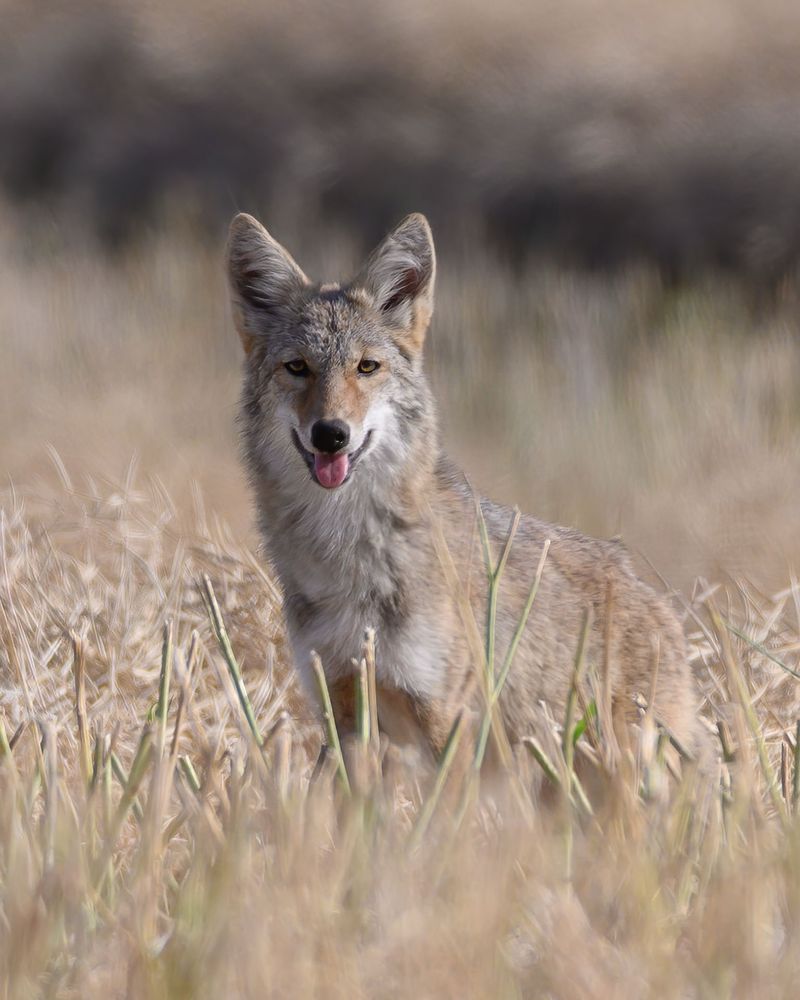
Autumn is moving season for coyotes born in spring. Those pups are close to full size by now, and many begin leaving the area where they were raised.
Wildlife biologists call it dispersal, and it can send a young animal miles from its birthplace.
Traveling coyotes often use greenways, creek corridors, powerline cuts, and undeveloped lots. Anyone living near that kind of edge habitat may see unfamiliar animals passing through during October and November.
Vocalizing helps them along the way.
A dispersing coyote may call to locate siblings or to figure out whether an area is already claimed, and resident animals answer back. That back and forth is a big reason fall nights sound busier than usual.
Sightings tend to spike in this window, which unsettles homeowners in metro Atlanta and smaller Georgia towns alike.
Your Georgia Garden Changes Every Week. Your Plan Should Too.
Gardening in Georgia changes quickly throughout the season. Every Friday you’ll receive a simple weekly plan showing exactly what to plant, prune, fertilize, harvest, and protect so you never miss the right timing.
Most of those animals keep going. A yard is rarely a destination unless something there is worth returning for, such as accessible food or shelter under a deck.
Young coyotes also tend to be less cautious than adults, so they may appear in daylight or seem oddly unbothered by people.
Give them room and let them move on naturally. Chasing or cornering a confused young animal makes the encounter worse for everyone involved.
Patience usually solves what panic cannot.
3. A Few Coyotes Can Sound Like A Much Larger Group
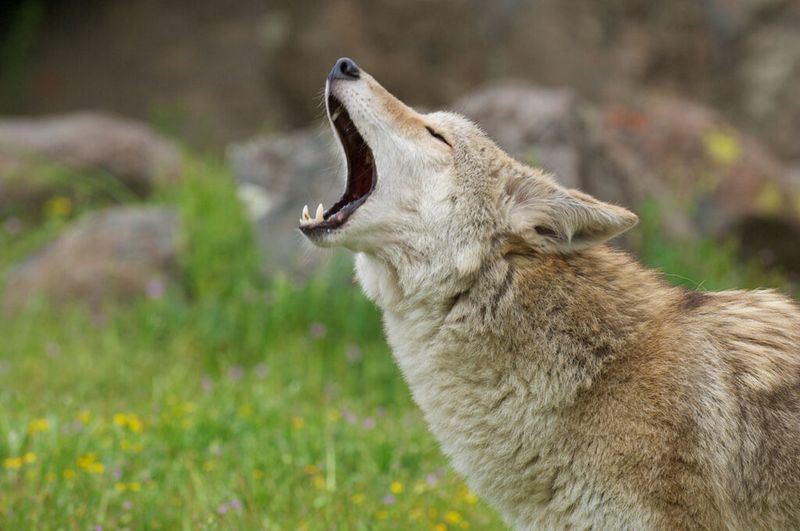
Two coyotes can sound like ten. Their calls shift in pitch and overlap in ways that trick human ears into hearing a crowd.
Wildlife specialists sometimes describe the effect as the beau geste hypothesis, the idea that a small group broadcasts an exaggerated impression of its size.
Yips, barks, and long howls get layered together fast. Echoes off houses, fences, and hillsides pile on even more.
The result sounds overwhelming from a bedroom window.
Family groups in Georgia typically stay small, often a mated pair with that year’s young until the pups disperse. Large roaming packs are more of a movie idea than a backyard reality.
Recording the sound on your phone can help. Played back in daylight, most of these choruses seem far less alarming and far more distant.
Timing matters too, since a burst of calling usually lasts under a minute before everything goes silent again.
Sirens, train horns, and even barking dogs can set off a response.
If your neighborhood erupts right after an ambulance passes, you probably heard a reaction rather than a hunt or a fight. Coyotes answer noise the way dogs do.
Understanding that keeps the volume in perspective. Fewer animals, more drama, and nothing that requires a call to anyone at midnight.
4. Coyotes Are Often Most Active After The Sun Goes Down
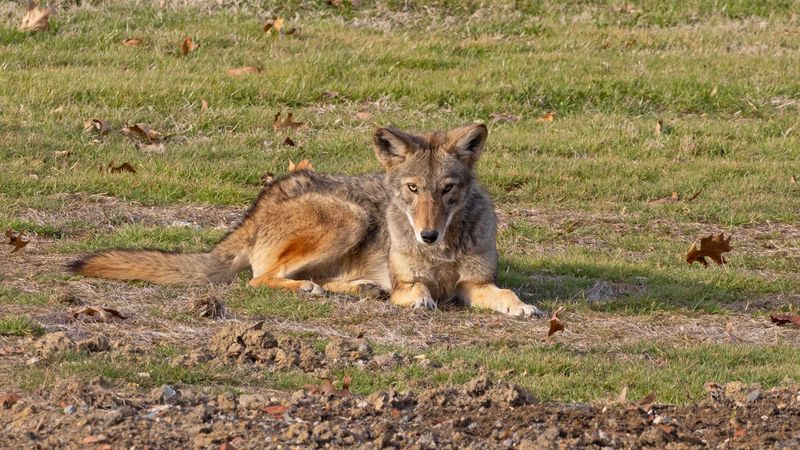
Darkness arrives early once the clocks change, and coyote activity slides right along with it. Animals that once moved at nine at night may now be out by six.
Overlap with human routines increases immediately.
Coyotes near people tend to be most active around dawn and dusk, with plenty of movement through the night. Avoiding daytime traffic is a learned habit, not a strict rule of their biology.
Hunting drives a lot of that schedule, since rodents and rabbits are also busy after dark.
Fall adds another layer, because fruit, acorns, and insects are abundant and easy to find. Coyotes eat a wide mix of foods, and they will happily switch depending on what a season offers.
Homeowners across Georgia often report evening sightings during this stretch, usually along a road edge or a field border.
Motion-activated lights can make yards less appealing without bothering neighbors much. Keeping trash bins closed and grills clean removes reasons to linger.
Daytime sightings deserve attention but not automatic alarm.
A coyote crossing a yard at noon may simply be moving between cover, though an animal that repeatedly ignores people should be reported to local wildlife authorities. Their guidance depends on your county and situation.
Adjusting your own outdoor timing helps more than most gadgets do.
5. Quiet Yards Can Give Coyotes An Easy Route Through
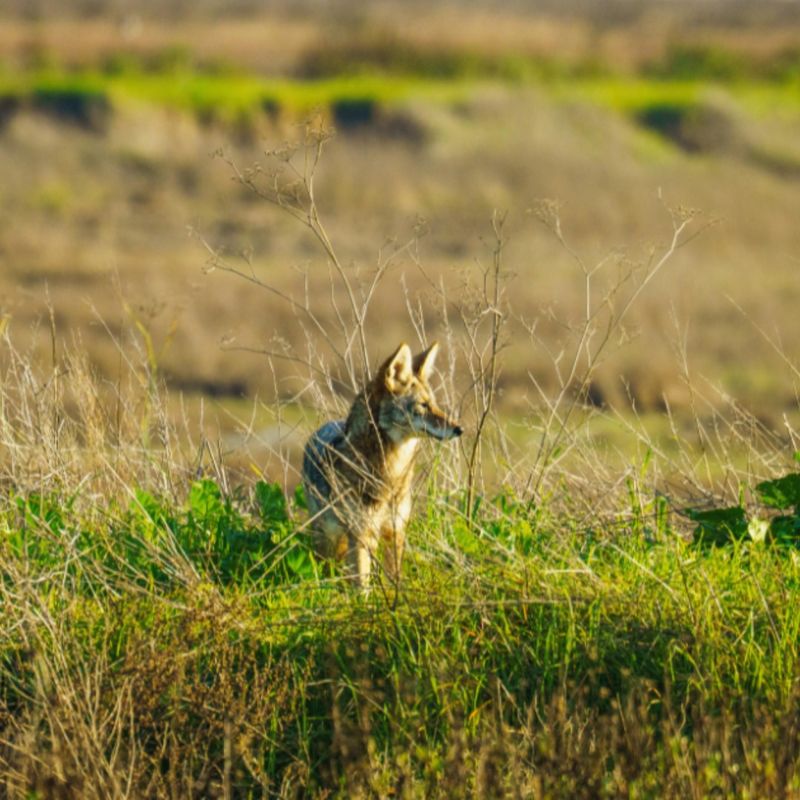
Coyotes prefer the path of least resistance. An unlit yard with brush along the fence line makes a comfortable shortcut between one patch of cover and the next.
Walk your property at dusk and you will spot those routes fast.
Gaps under fences, dry drainage ditches, and thick ivy all funnel animals through predictable lanes. Clearing a few of them changes how attractive your lot looks.
Brush piles are worth a second look, since they shelter the rodents coyotes are hunting.
Stacked firewood, overgrown shrubs, and open crawl spaces can also offer resting spots. Blocking access under decks and sheds with hardware cloth removes one of the more common invitations.
Neighborhoods bordering creeks and greenspace in Georgia see this pattern more than interior blocks do, mostly because of the continuous cover.
Lighting helps, though it works best in combination with cleanup rather than on its own.
Fencing can reduce crossings when it stands at least six feet tall and includes a buried apron or a roller device along the top. Standard privacy fences alone are often not enough, since coyotes climb and dig well.
None of these steps promises a coyote-free yard.
They do shift the odds, and they make your property less convenient than the empty lot down the street.
6. Food Around Homes Can Encourage Coyotes To Come Closer
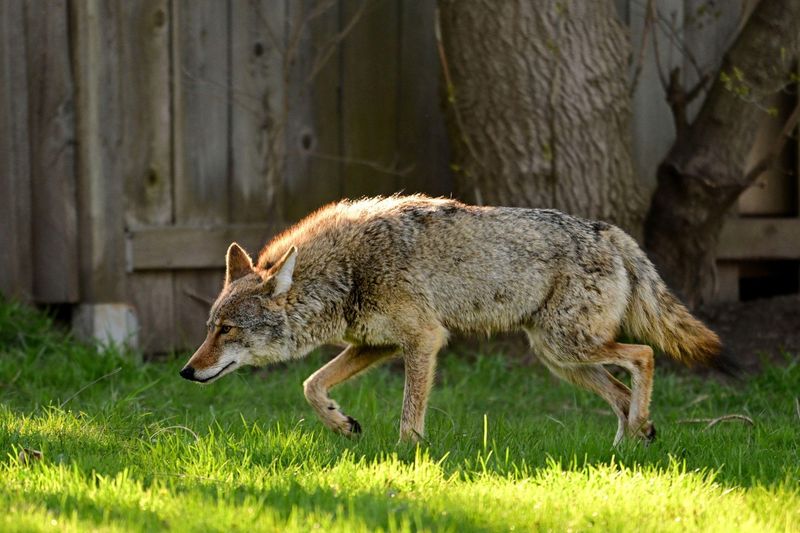
Easy calories change everything. A coyote that finds food once will check the same spot again, and repeat visits are how backyard habits form.
Most of those food sources are accidental.
Pet bowls left on the porch, unsecured garbage, spilled birdseed, and fallen fruit all count. Fall persimmons and pecans drop in quantity across much of Georgia, drawing rodents that in turn draw predators.
Compost with meat or dairy scraps is another frequent culprit.
Feeding deer or feral cats creates the same problem indirectly, since gathering points attract more than the intended animals. Neighbors sometimes need a friendly conversation about it.
Bins with latching lids solve a surprising share of complaints. Rinsing containers and putting trash out in the morning rather than overnight also helps.
Coyotes that lose their wariness are the real concern, not the ones passing through.
An animal comfortable near porches and driveways has usually been rewarded there before, and that boldness is hard to reverse once established. Removing the reward early is far easier.
Feed pets indoors when you can, or pick up bowls right after meals.
Keep grills scraped and check under fruit trees weekly during peak drop. Small chores, done consistently, do more than any single deterrent product on a shelf.
7. Keep Pets Close When Coyotes Are Active Nearby
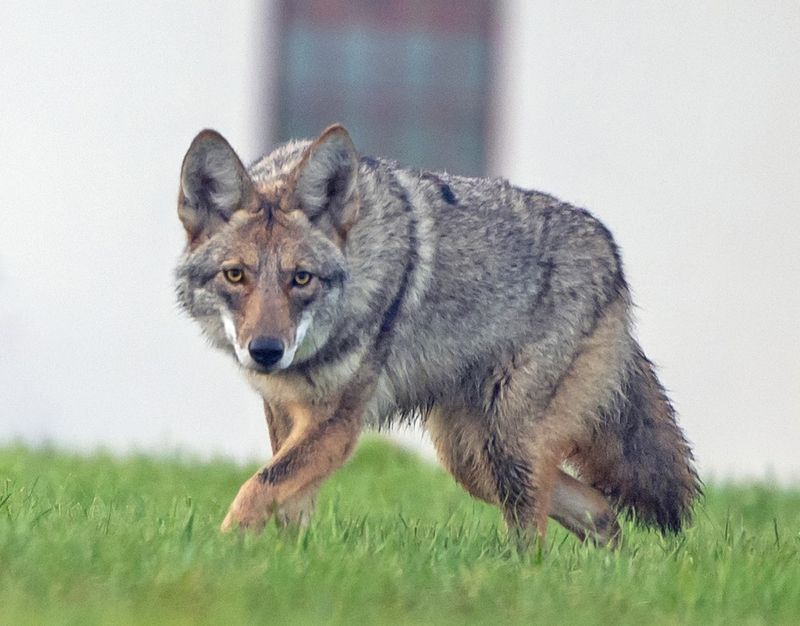
Small pets face the most risk, and fall is a sensible time to tighten routines. Short leashes and lit walking routes matter more than they do in June.
Retractable leashes give too much slack in an encounter.
Cats allowed outdoors overnight are especially vulnerable, which is why many Georgia shelters recommend keeping them inside after dark. Indoor cats also avoid traffic and other hazards.
Supervision beats fencing for small dogs in unfenced yards.
Even a securely fenced yard deserves a quick scan before letting a dog out at night. Flipping on a light and making noise first gives any nearby animal a chance to leave.
Larger dogs are less likely targets but can still provoke conflict, particularly with an unaltered coyote defending territory.
If a coyote approaches, make yourself loud and large. Wave your arms, shout firmly, and back away slowly while facing the animal instead of turning and running.
Carrying a whistle or a small air horn on evening walks is cheap insurance.
Report any coyote that acts unafraid or follows people to your local wildlife office, since guidance varies by county and situation. Documentation helps officials track genuine problems.
Most encounters end with the coyote leaving first.
Steady habits, good lighting, and a little awareness keep autumn evenings pleasant for everyone in the household.