How To Propagate Hydrangeas In Georgia In April For Healthy Growth
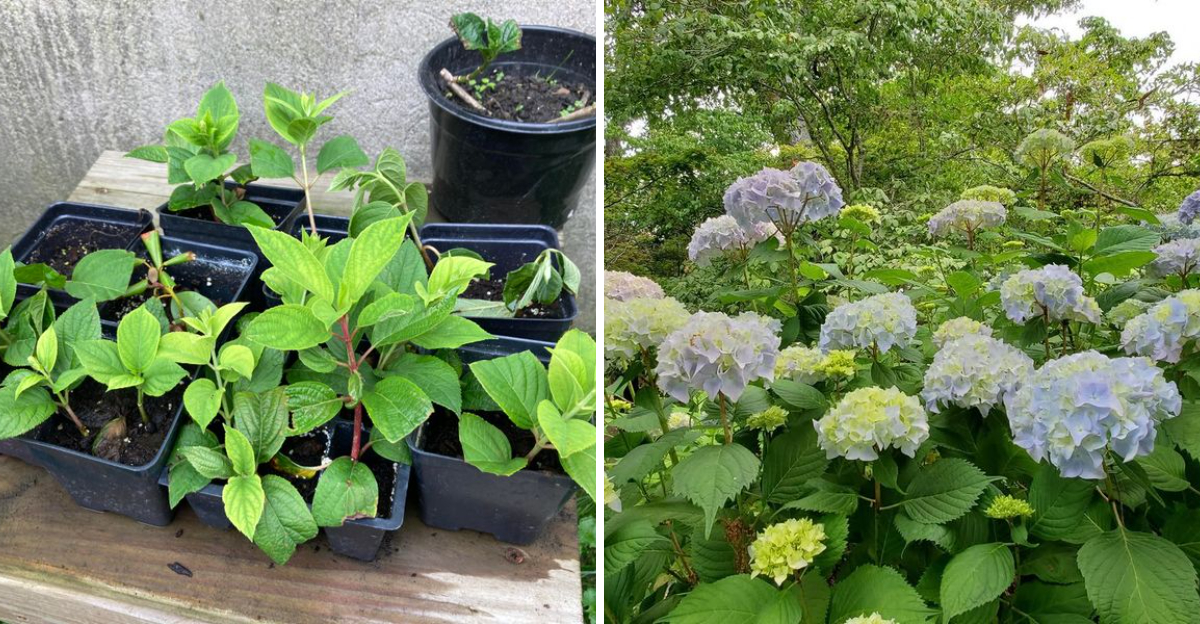
Hydrangeas in Georgia respond well in April, and this stage offers a good chance to start new plants while growth begins to pick up.
Stems have enough strength to handle propagation, yet they are still flexible enough to root more easily than later in the season.
Many cuttings fail because timing feels right on the surface but does not match what the plant actually needs. A healthy looking stem does not always mean it will root well, and small details can decide whether it succeeds or not.
Getting it right leads to steady root development and stronger plants that establish faster once moved. The process does not need to feel complicated, but it does require the right approach at this point.
April gives a useful window for propagation, and the difference shows in how well new hydrangeas take hold and grow.
1. Softwood Cuttings Are The Best Choice For Spring Propagation
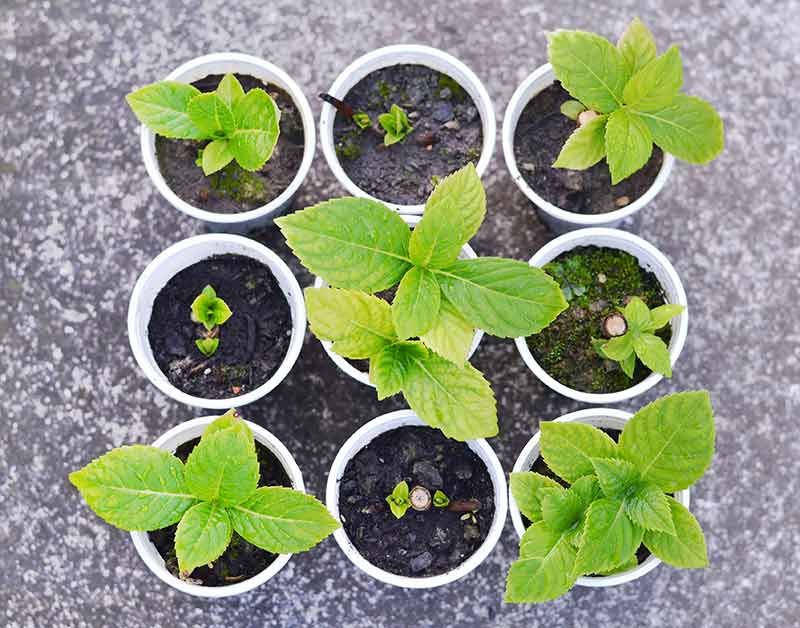
Softwood cuttings give you the most realistic shot at rooting hydrangeas in April, especially in Georgia where spring warmth kicks in early. Softwood refers to the fresh, flexible new growth that appears at the tips of stems before they harden into woody material.
That tender growth is what holds the most potential for root development.
Unlike hardwood cuttings taken in late fall or winter, softwood is actively growing and responds more readily to rooting conditions when kept in the right environment.
You are essentially working with the plant at one of its most energetic points in the season, which can work in your favor if you act quickly.
Georgia’s April temperatures, which often sit in the low to mid-70s, create a warm but not punishing environment for cuttings trying to establish roots. That warmth helps, but it also means your cuttings can dry out faster than they would in cooler climates.
Keeping humidity consistent around your cuttings matters more than almost anything else at this stage.
2. Take Cuttings From Fresh Spring Growth Before Stems Harden
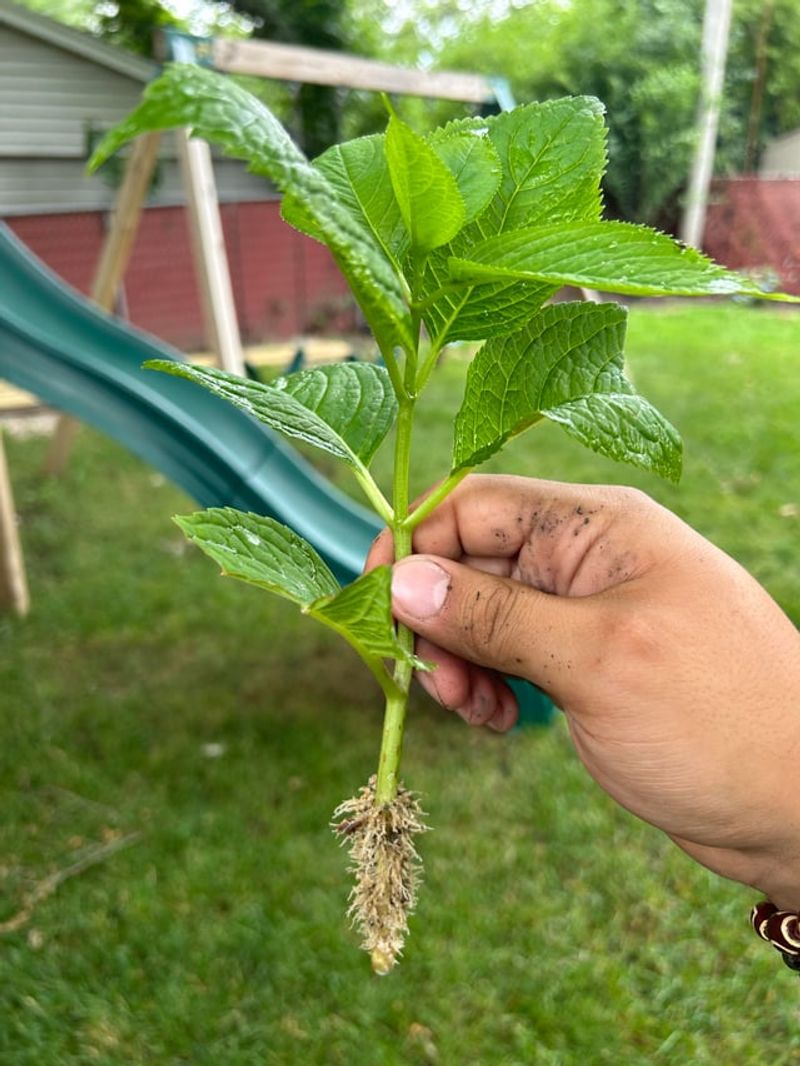
Timing your cut correctly can be the difference between a cutting that roots and one that just sits in soil going nowhere. In Georgia, April brings a fast flush of new hydrangea growth, and that window of genuinely soft, pliable stem is shorter than you might expect.
Once stems start to feel slightly firm and resistant to bending, softwood has begun its transition toward something harder to root.
Look for stems that are green all the way through, not starting to show any woody brown coloring at the base. A stem that bends without snapping is your target.
If it snaps cleanly like a twig, you have missed the softwood window on that particular branch.
Morning is the best time to take cuttings, before Georgia’s afternoon heat causes the plant any moisture stress. A hydrated plant produces cuttings that hold up better during the rooting process.
Sharp, clean pruning shears are non-negotiable here, as a ragged cut creates more surface area for problems to develop before roots form.
Cut just below a leaf node, which is the small bump or joint where a leaf attaches to the stem. Nodes are where root cells are most concentrated, and cutting directly below one gives your cutting its best structural starting point.
Your Georgia Garden Changes Every Week. Your Plan Should Too.
Gardening in Georgia changes quickly throughout the season. Every Friday you’ll receive a simple weekly plan showing exactly what to plant, prune, fertilize, harvest, and protect so you never miss the right timing.
3. Healthy Non-Flowering Stems Root Faster And More Reliably
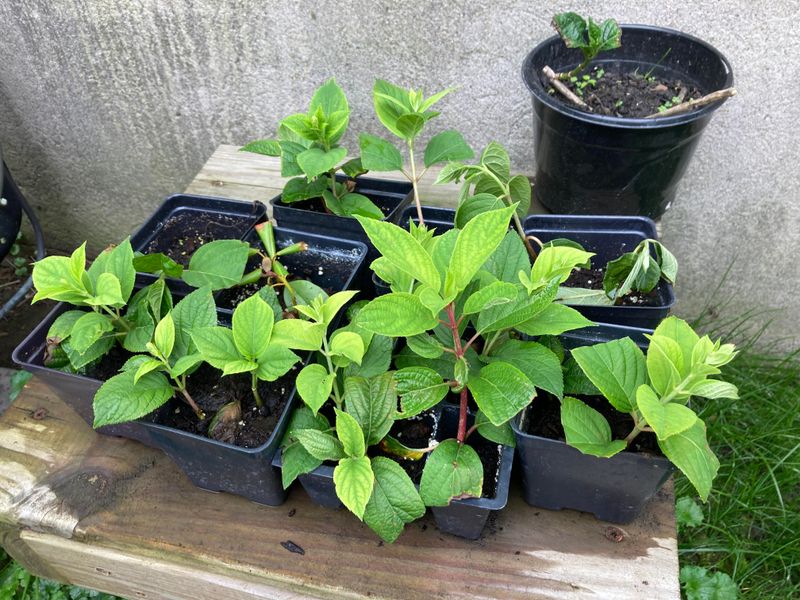
Reaching for a stem with a flower bud on it might feel natural since those are often the showiest parts of the plant, but flowering stems are actually the wrong choice for propagation.
When a stem is putting energy into producing a bloom, it has very little left over for the hard work of generating new roots.
Non-flowering stems are focused on vegetative growth, which makes them far more cooperative for what you are trying to do.
Scan your hydrangea plant in April and look for stems that are producing leaves but showing no signs of bud development. These are usually found lower on the plant or on side branches that are not in the most sun-exposed positions.
They tend to be slightly thinner and greener than the main flowering branches.
Georgia hydrangeas in April are often in a mixed state, with some stems already budding and others still in pure leaf mode. Choosing wisely among what is available on your plant takes a minute of real observation rather than just grabbing the nearest stem.
Getting this selection right genuinely improves your odds.
If you do accidentally grab a stem with a bud forming, pinch the bud off before planting the cutting.
4. A 4 To 6 Inch Cutting Length Works Best For Rooting
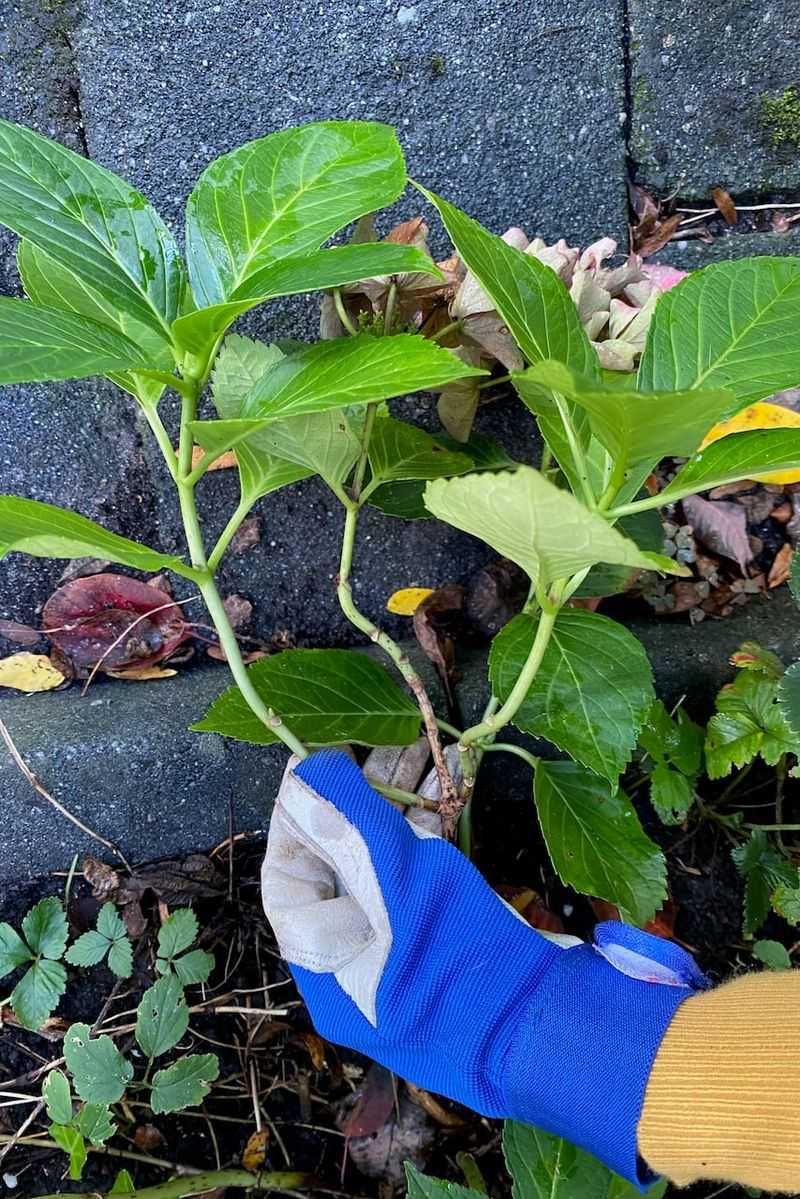
Cutting length is one of those details that sounds almost too simple to matter, but it genuinely affects rooting outcomes. A cutting that is too short does not have enough stem in contact with the rooting medium to develop a strong root system.
One that is too long puts too much demand on the cutting before any roots exist to support it.
Somewhere between four and six inches hits the practical sweet spot for hydrangeas. At that length, you have enough stem to bury an inch or two into your rooting mix while still leaving a couple of leaf nodes above the soil line.
That buried section is where your roots will emerge, so having adequate stem below the surface matters.
In Georgia’s April warmth, longer cuttings can wilt faster because their larger leaf surface loses moisture quickly in the heat.
Keeping cuttings on the shorter end of that four-to-six-inch range can actually reduce wilting stress during those first critical days before any root development begins.
Shorter does not mean worse here.
After making your cut, look at the stem end and make sure it is clean and smooth. A slanted cut at roughly 45 degrees increases the surface area slightly, which some gardeners find helpful for rooting hormone absorption.
5. A Light Mix Of Potting Soil And Perlite Supports Root Growth
Heavy garden soil is not what a hydrangea cutting needs while it is trying to root. Roots emerging from a cutting are delicate and need to push through something that gives them space to develop without fighting compaction.
A mix that is too dense holds moisture in ways that can cause the stem to rot before roots ever form.
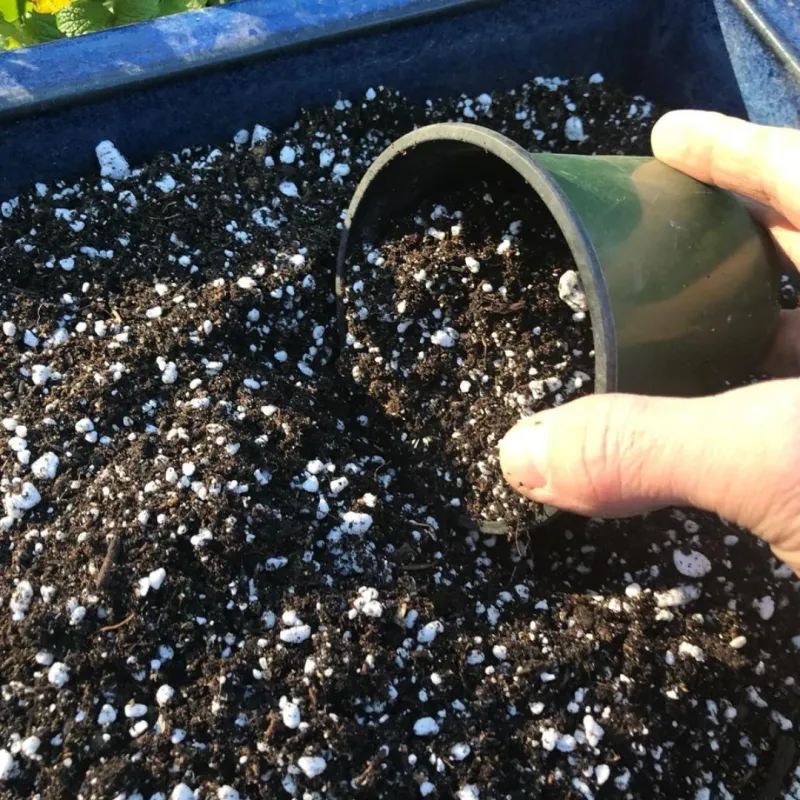
Combining regular potting soil with perlite at roughly a 50/50 ratio creates a medium that holds some moisture while draining well enough to prevent waterlogging. Perlite is that white, lightweight volcanic material you often see in commercial potting mixes.
Adding more of it to standard potting soil opens up the structure and keeps air moving around the developing root zone.
Some Georgia gardeners also add a small amount of coarse sand to the mix for extra drainage, particularly during the warmer months when soggy soil is a real concern.
Sand is not essential, but it is a reasonable addition if you have it on hand and want extra insurance against overwatering issues.
Fill your container firmly but not so tight that drainage is restricted. A four-inch pot works well for individual cuttings and is easy to manage.
6. Consistent Moisture Without Soggy Soil Prevents Rot
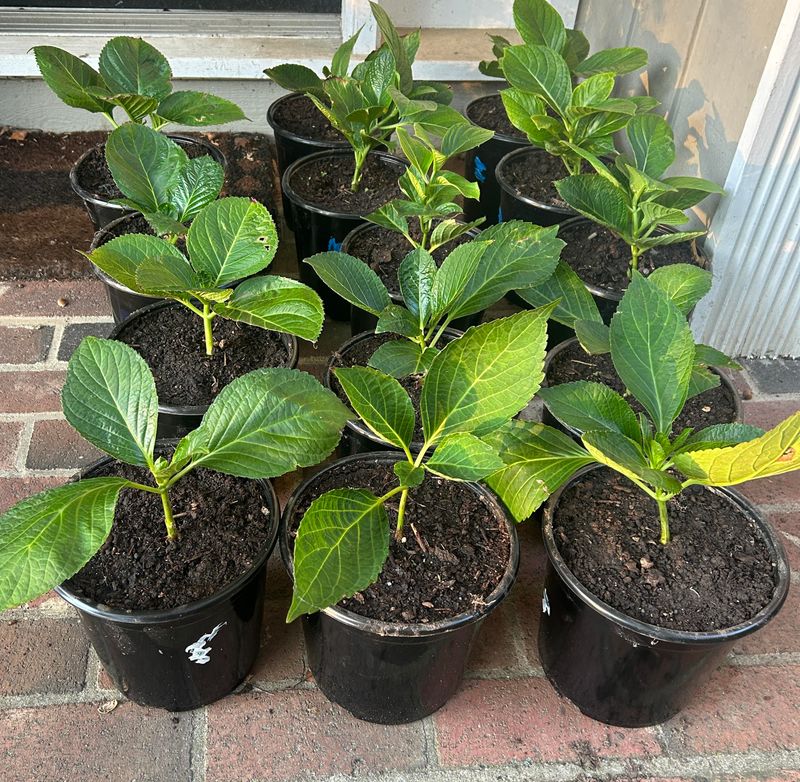
Moisture management is where most propagation attempts go sideways, and Georgia’s warm April weather makes it easy to tip in either direction. Too dry and the cutting wilts and fails before roots form.
Too wet and the stem base softens and rots, which ends the process just as decisively. Finding that middle ground takes some attention during the first couple of weeks.
After potting your cuttings, water them in gently until moisture drips from the drainage holes. After that initial watering, check the soil every day by pressing a finger about an inch into the mix.
If it feels damp, leave it alone. If it feels dry, add a small amount of water.
Watering on a fixed schedule without checking the actual soil condition leads to problems faster than almost any other mistake.
Covering your cuttings loosely with a clear plastic bag or placing them inside a humidity tent helps retain moisture in the air around the leaves, which reduces stress on a cutting that cannot yet pull water up through roots.
Just make sure the plastic is not sitting directly on the leaves, and open the covering briefly each day to let fresh air in.
A little ventilation prevents mold from developing inside the humidity dome.
7. New Leaf Growth Is The First Sign Roots Have Formed
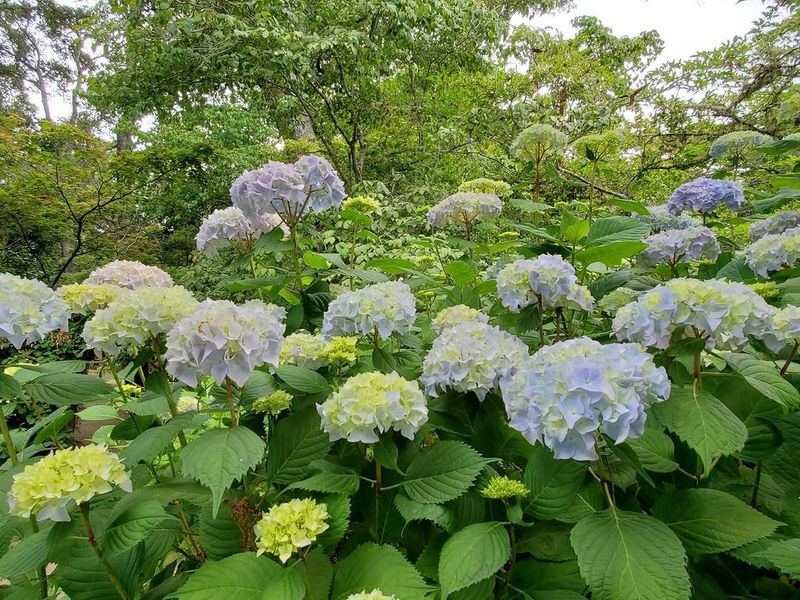
Waiting on cuttings to root is genuinely one of the harder parts of propagation because nothing visible happens for a while.
Most gardeners start checking too early, tugging at the cutting to see if there is resistance, which can actually disrupt root development that is just getting started.
Patience in this stage is a practical strategy, not just a platitude.
Watch the leaves instead of the soil. When a cutting begins producing new leaf growth, that is a strong indicator that roots have formed below the surface.
A cutting without roots cannot support new leaf production, so fresh growth emerging from the top of the cutting is a meaningful signal worth trusting.
In Georgia’s April conditions, rooting can take anywhere from three to five weeks depending on the specific variety, care conditions, and how well the cutting was taken. Bigleaf hydrangeas and panicle types can vary in their rooting speed.
Smooth hydrangeas sometimes root a bit faster. Managing expectations around timing reduces unnecessary anxiety during the wait.
Once you notice new leaves forming, give the cutting another week or two before attempting to transplant it. Early roots are fragile, and moving a cutting too soon after rooting begins can set it back considerably.