How To Prune Clematis In Oregon Without Accidentally Cutting Off Next Season’s Blooms
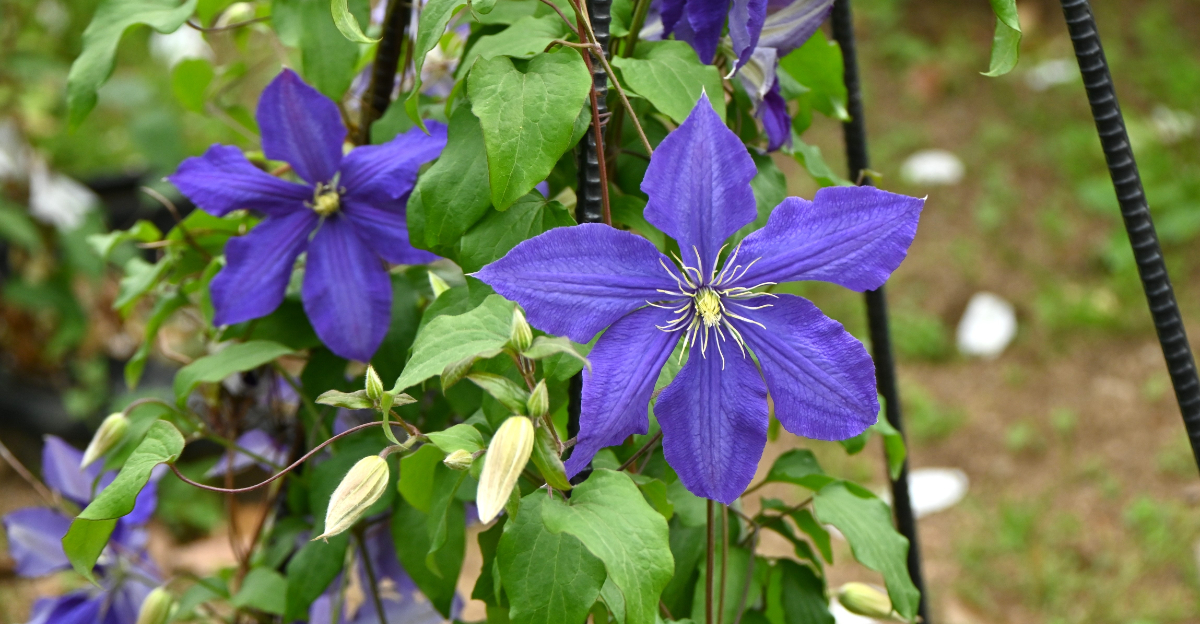
Clematis can make an Oregon garden look magical, but pruning it can feel a little risky. One wrong cut may remove the stems that were getting ready to flower next season.
That is why timing matters so much with this vine. Not every clematis blooms on the same kind of growth.
Some flower on older stems. Others bloom later on fresh growth.
A few can surprise gardeners by doing a bit of both. Before reaching for the pruners, it helps to know which group your plant belongs to.
The goal is not to cut more. It is to cut smarter. With the right approach, you can keep your clematis tidy, healthy, and ready for a better bloom show next year.
1. Know Your Clematis Group Before You Cut
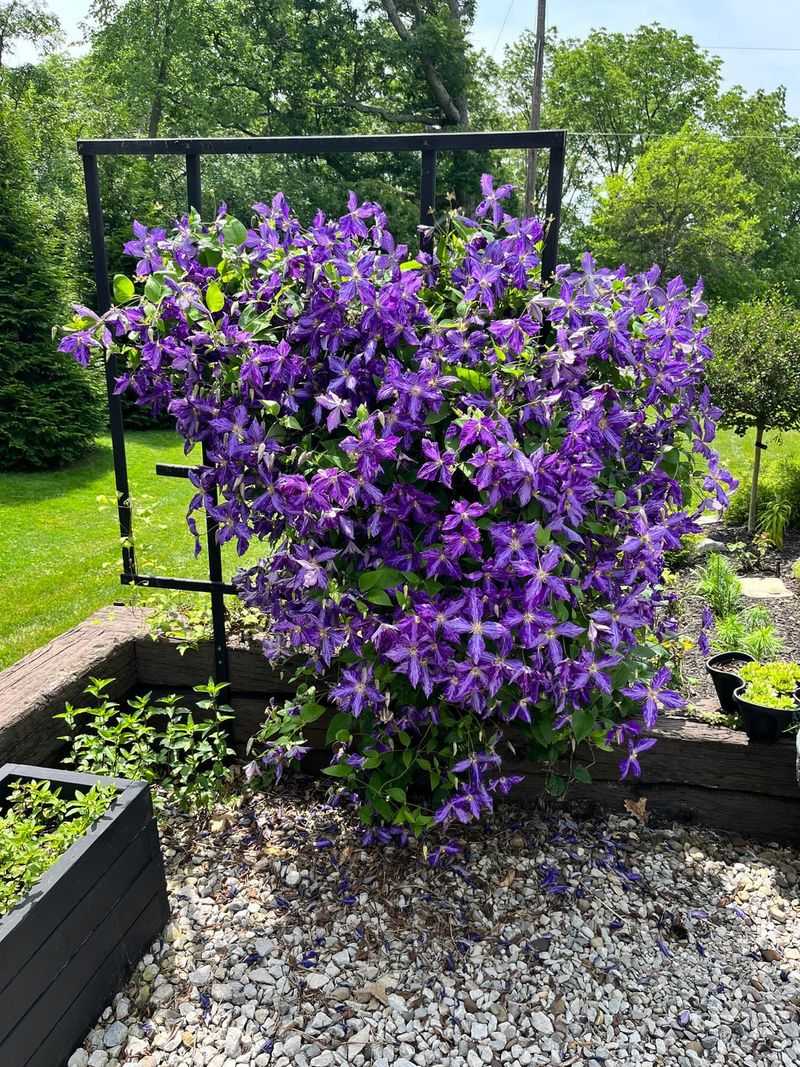
Before you ever pick up a pair of pruning shears, you need to know which group your clematis belongs to. There are three main pruning groups, often called Group 1, Group 2, and Group 3.
Each one has very different needs, and mixing them up is the fastest way to lose a whole season of blooms.
Group 1 clematis bloom in early spring on old wood, meaning the stems they grew last year. Group 2 are the repeat bloomers that flower twice a year.
Group 3 bloom on new wood and can handle the hardest pruning of all three groups.
If you bought your plant from a nursery, check the tag or label that came with it. Many nurseries in Oregon carry plants with pruning group information printed right on the tag.
If you no longer have the tag, look up your variety online using the full plant name.
Knowing your group saves you from making a very frustrating mistake. A gardener who cuts a Group 1 vine down to the ground in late winter will have nothing but leaves all summer.
The blooms were already waiting on those old stems, and now they are gone.
When in doubt, do less. A lighter cut is always safer than an aggressive one when you are still learning your plant.
2. Spring Bloomers Flower On Last Year’s Wood
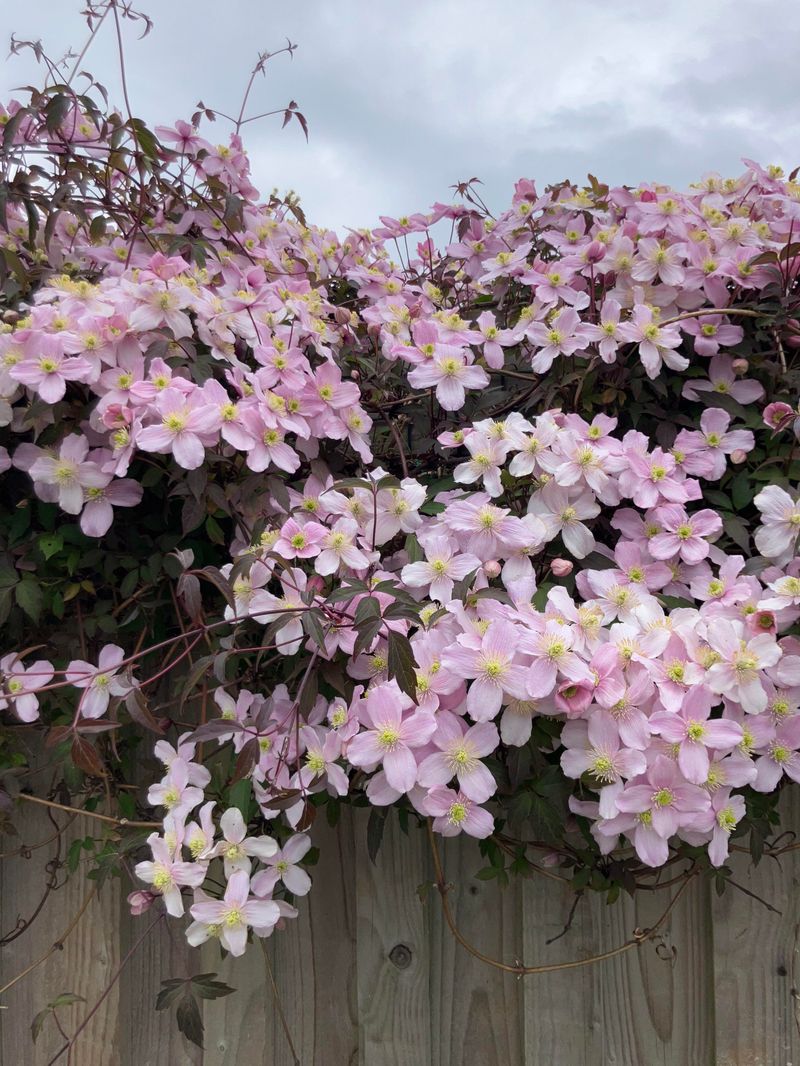
Some of the most beautiful clematis varieties burst into bloom in early spring, often before most other vines even wake up.
These are Group 1 plants, and they set their flower buds on the stems they grew the previous season. That old wood is precious, and you need to protect it through winter.
Popular Group 1 varieties include Clematis montana, Clematis alpina, and Clematis macropetala.
You will often see these draping over fences and trellises in neighborhoods across Oregon during late March and April. Their flowers are small but plentiful, and the display can be breathtaking.
The biggest mistake with spring bloomers is cutting them back in fall or late winter. Many gardeners see scraggly brown vines and assume they need a hard trim.
But those brown stems are full of buds just waiting for warmer weather to arrive.
Your only job with Group 1 plants is to remove any stems that are clearly broken, tangled beyond repair, or have no signs of life. Do this right after flowering in late spring or early summer.
Your Oregon Garden Changes Every Week. Your Plan Should Too.
Gardening in Oregon changes quickly throughout the season. Every Friday you’ll receive a simple weekly plan showing exactly what to plant, prune, fertilize, harvest, and protect so you never miss the right timing.
That gives the vine the rest of the season to grow fresh stems that will carry next year’s blooms.
In Oregon’s milder western regions, these vines often keep some green on them all winter. That is a great sign that your old wood is healthy and ready to bloom.
3. Summer Bloomers Can Usually Handle Hard Pruning
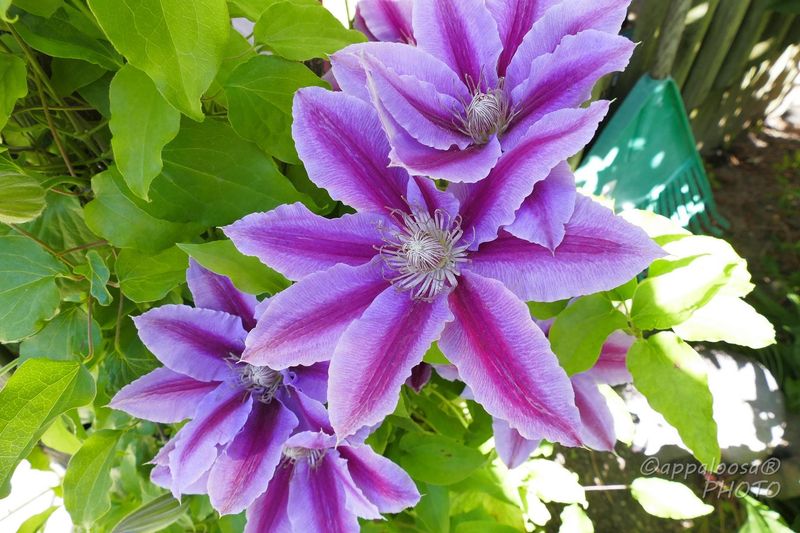
Not every clematis is delicate about pruning. Group 3 varieties are the tough ones, and they actually do better when you cut them back hard each year.
These plants bloom on brand-new growth, so the more you cut, the more fresh stems they produce, and the more flowers you get.
Group 3 includes popular varieties like Clematis viticella, Clematis texensis, and the large-flowered Jackmanii types.
You will find these blooming through July, August, and even into September. They are workhorses in the summer garden.
Cutting these vines back to about 12 to 18 inches from the ground in late winter is the standard approach. Some gardeners go even shorter, leaving just two or three sets of healthy buds on each stem.
Either way, the plant will bounce back fast once warm weather arrives.
Hard pruning also keeps Group 3 vines from becoming a tangled mess. Without regular cutting, they build up layers of dead stems inside that make the plant look messy and can reduce airflow.
Less airflow means more risk of fungal problems, which are already a concern in wetter parts of Oregon.
Do not feel bad about cutting aggressively. These plants are built for it.
By midsummer, you will have a full, lush vine covered in flowers, and you will be glad you were bold with your shears.
4. Repeat Bloomers Need The Lightest Touch
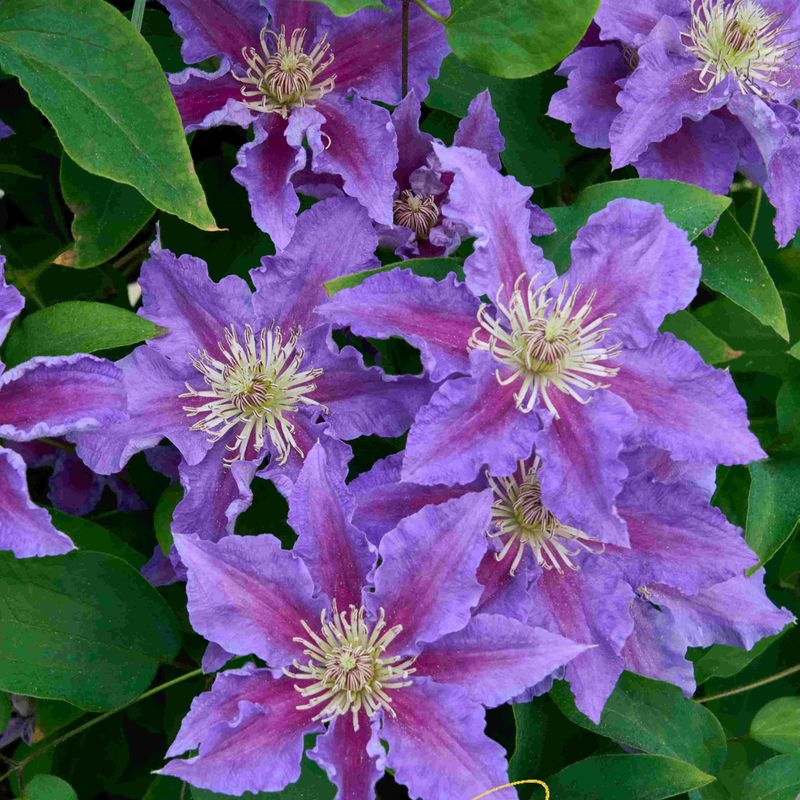
Group 2 clematis are the showiest of the bunch. They bloom twice a year, once in late spring on old wood and again in late summer on new growth.
Because they bloom on both types of stems, you have to be very careful about how much you cut.
Varieties like Nelly Moser, The President, and Duchess of Edinburgh fall into this group. Their large, showy flowers are a favorite among gardeners who want maximum impact for minimum effort.
But they do require a bit more thought at pruning time.
The general rule is to prune lightly in late winter or early spring. Remove only the dead tips and any obviously weak or crossing stems.
Cut just above a healthy pair of buds, and leave the rest of the vine intact. You want to keep as much of that old wood as possible for the first flush of spring blooms.
After the first wave of flowers fades in late spring, you can do a slightly harder trim to shape the vine and encourage the second round of blooms.
Cutting back the stems that just flowered by about one-third is usually enough to trigger new growth and a fresh set of buds.
Patience is your best tool with Group 2 plants. Rushing in with heavy cuts will cost you that gorgeous first bloom, and waiting a full year to see those flowers again is a tough lesson to learn the hard way.
5. Do Not Cut Old-Wood Clematis In Late Winter
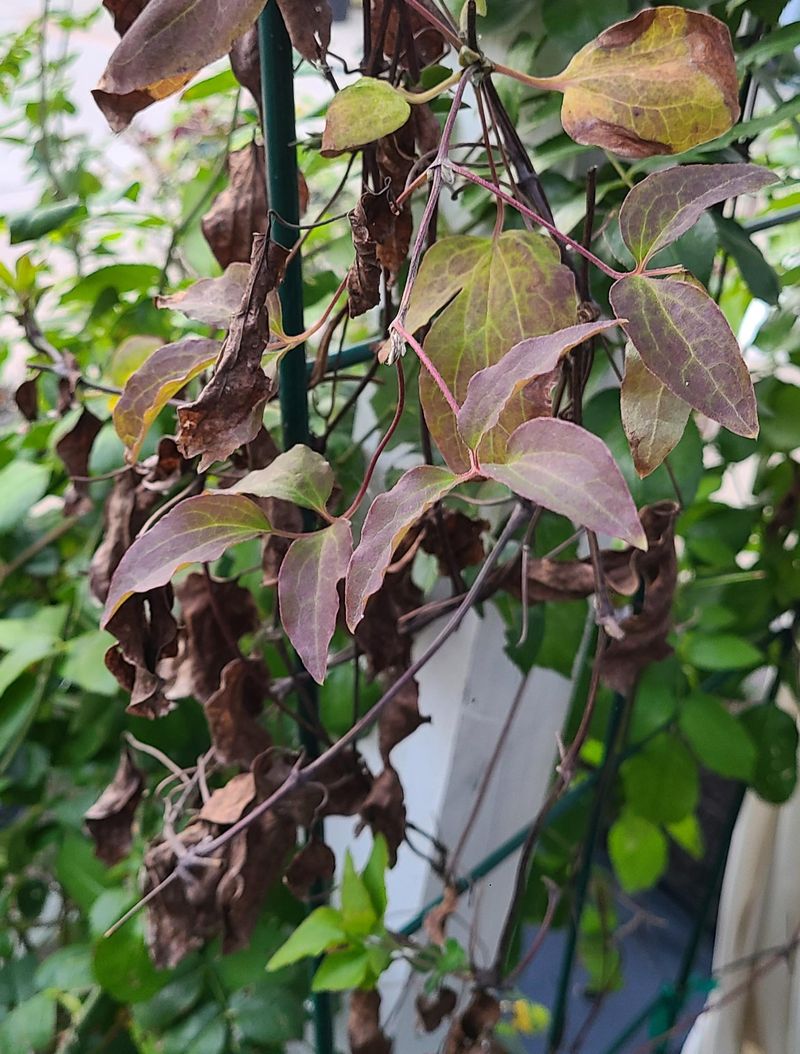
Late winter feels like the perfect time to tidy up the garden. Everything looks bare and brown, and it is tempting to cut back anything that looks scraggly.
But if you have a Group 1 clematis, putting your shears away is the right move during this season.
Old-wood bloomers store all of next season’s flower energy in their mature stems. Those stems might look dead or dried out in January and February, but they are very much alive inside.
Cutting them back now means cutting off every bud that was ready to open in just a few weeks.
In Oregon, late winter pruning mistakes are extremely common because the weather starts to warm up earlier than in many other parts of the country.
Gardeners get eager and start trimming before they should. Then spring arrives, and the vine leafs out but never blooms.
A good habit is to mark your Group 1 vines with a small colored tag or garden stake in the fall.
That way, when late winter arrives and everything looks the same, you have a reminder to leave that particular vine alone.
Check the stems for small, swelling buds before you do anything. If you see buds starting to form along the old wood, step back and wait.
Those buds are your proof that the vine is about to do exactly what you want it to do, and your only job is to stay out of the way.
6. Prune Spring Bloomers Right After Flowering
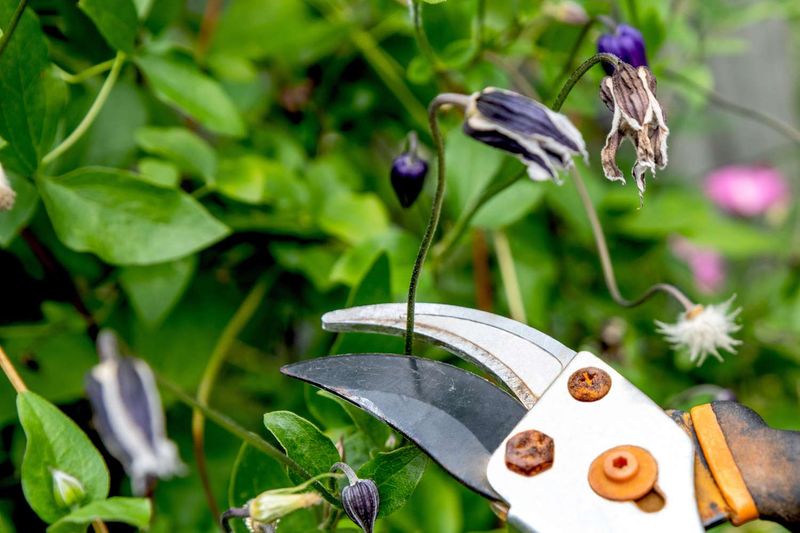
Timing is everything with Group 1 clematis. The window for pruning these plants is short, and it opens right after the last flowers fade.
In most parts of Oregon, that happens somewhere between late May and early July depending on your location and the variety you are growing.
Right after flowering is the ideal time because the vine still has the whole growing season ahead of it. It will use those warm summer months to push out long, healthy stems that will carry next year’s blooms.
The sooner you prune after flowering, the more time the plant has to grow.
You do not need to cut hard. The goal is to remove the stems that just flowered and thin out any sections that are getting too crowded.
Cut back to a healthy set of leaves or buds, and let the vine do the rest. You can also remove any stems that are growing in the wrong direction or rubbing against a fence or structure.
In the wetter western regions, post-bloom pruning also helps improve airflow through the vine.
Better airflow reduces the chance of powdery mildew, which can be a real problem when summers are warm and humid.
Do not wait too long after the flowers drop. If you push pruning into late summer, the vine has less time to grow new stems, and your spring bloom display next year could be noticeably lighter than usual.
7. Cut New-Wood Clematis Back Before Growth Starts
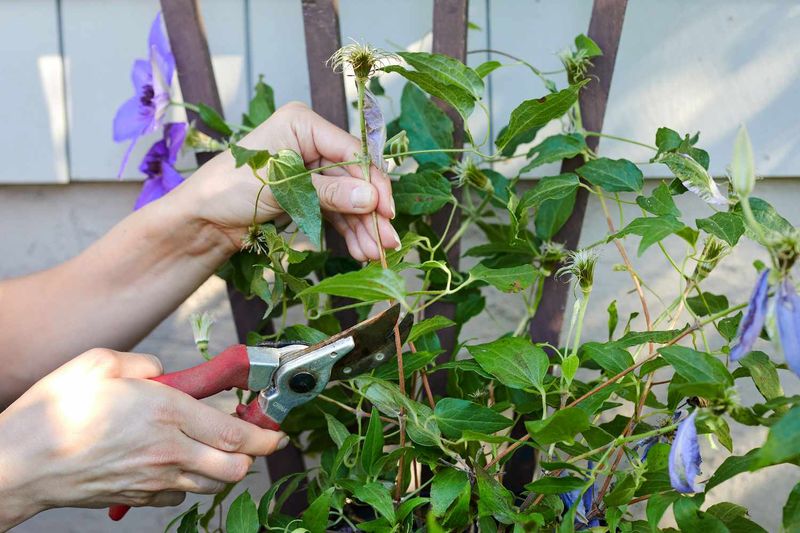
For Group 3 clematis, timing your pruning to happen just before new growth kicks in is the sweet spot.
In Oregon, that usually means late February through mid-March on the west side, and sometimes a little later in the colder inland valleys and higher elevations.
Cutting back before growth starts gives the plant a clean slate. New buds will sprout from the base and lower stems, and the vine will put all of its energy into producing vigorous new shoots.
Those shoots grow fast and will be covered in flower buds by early summer.
Look for small, reddish or green buds just starting to swell along the lower portions of the stems. That is your signal that the plant is waking up and ready to respond to pruning.
Cut just above those lowest healthy buds, leaving a short framework of stems to guide new growth upward.
Some gardeners worry about cutting too early and exposing new growth to a late frost. That is a fair concern, especially in the Willamette Valley and higher elevation areas where cold snaps can surprise you in March.
Waiting until you see consistent signs of new growth reduces that risk.
Keep your pruning cuts clean and angled slightly away from the bud. A sharp pair of bypass pruners makes a cleaner cut than dull blades, and cleaner cuts heal faster and resist disease better in our often-damp spring weather.
8. Remove Damaged And Tangled Stems First
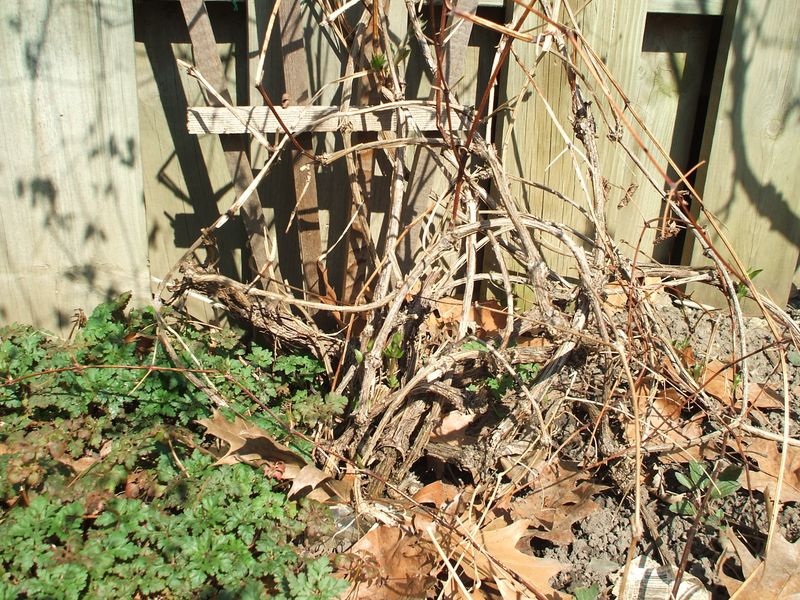
No matter which pruning group your clematis belongs to, there is one step that applies to every single vine: always start by removing damaged, broken, and tangled stems before you do anything else.
This is true in early spring, after flowering, or any time you work with the plant.
Damaged stems are a liability. They can harbor disease, block airflow, and make it harder for you to see the healthy structure underneath.
Removing them first gives you a clearer picture of what you are actually working with before you start making decisions about how much to cut.
Tangled stems are a common problem in Oregon because the wet winters and mild temperatures allow clematis to grow aggressively. By spring, a neglected vine can look like a bird’s nest of twisted, crossing stems.
Gently unwind what you can, and cut out anything that cannot be freed without damaging surrounding growth.
Use clean, sharp pruners for every cut. Dull blades crush stems instead of cutting them cleanly, which slows healing and can open the plant up to fungal infections.
Wipe your blades with rubbing alcohol between plants to avoid spreading any disease from one vine to another.
After removing the damaged and tangled material, step back and look at the vine as a whole.
You will be surprised how much better it already looks, and you will have a much easier time deciding what to do next without all that clutter in the way.
9. Wait For Buds To Swell If You Are Unsure
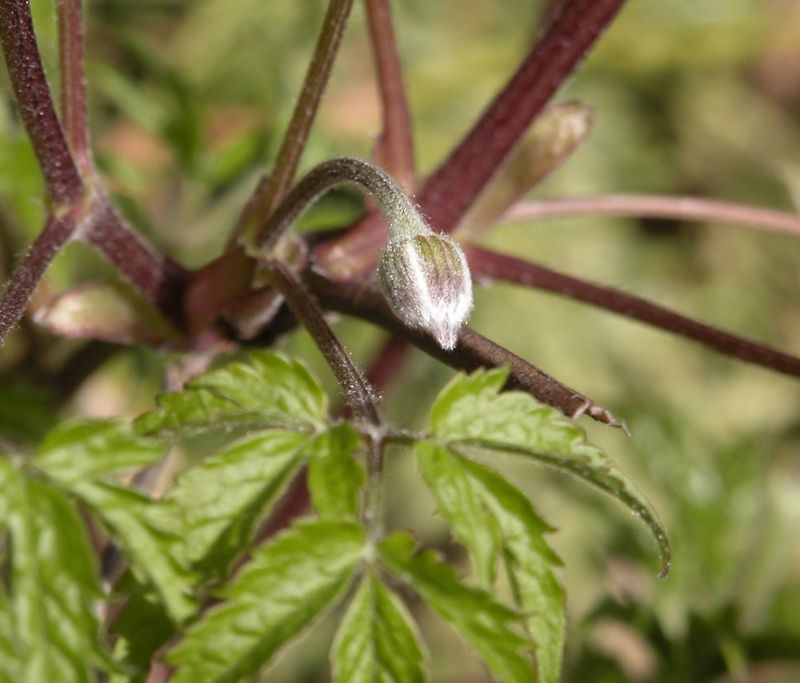
Honestly, the best pruning advice for any confused clematis grower is this: when in doubt, wait.
Waiting for buds to swell and become visible is the single safest strategy you have when you are not sure what type of clematis you are growing.
As temperatures warm up in late winter and early spring, clematis buds begin to swell and change color. Old wood bloomers will show buds all along their existing stems, including near the top.
New wood bloomers will show buds mostly at the base or on short stubs close to the ground.
Watching where the buds appear tells you almost everything you need to know. If buds are forming all the way up the vine on last year’s stems, you have an old wood bloomer, and you should leave those stems alone.
If the buds are only at the bottom, you can safely cut the upper portion back hard.
Buds on most clematis varieties start to show movement in February or March. Cooler areas in the southern and eastern parts of the region may see bud swell a few weeks later.
Either way, the wait is never very long, and the information you gain is worth every day of patience.
Gardeners who rush pruning based on a calendar date alone take unnecessary risks. Letting the plant show you what it needs is a much smarter approach, and it costs you nothing but a little time.