Native Georgia Alternatives To Crape Myrtles That Birds And Pollinators Actually Love
Nobody is saying crape myrtles are a bad choice for a Georgia yard. They handle the heat, they bloom reliably, and they look great doing it.
But Georgia’s plant palette runs a lot deeper than the crape myrtle aisle at the garden center, and some of the most interesting options for a local yard are the ones that were here long before imported ornamentals became the default.
Native shrubs and small trees have built genuine relationships with pollinators, birds, and butterflies over thousands of years, and that history shows up in the nectar, pollen, fruit, and shelter they provide across multiple seasons.
If you’re ready to add something that works harder for local wildlife while still looking great in the yard, these ten natives are a great place to start.
1. Downy Serviceberry Offers Flowers And Bird-Friendly Fruit
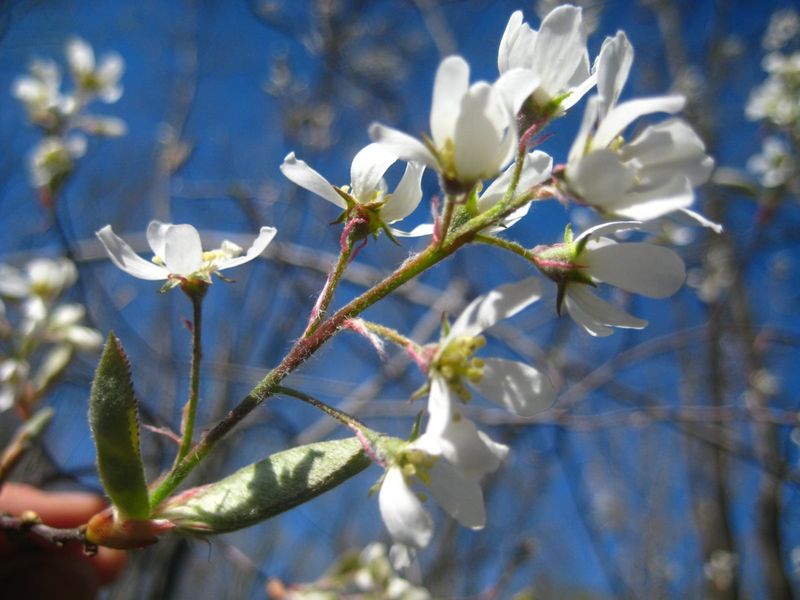
Few Georgia trees put on a show quite as early as the Downy Serviceberry, which bursts into delicate white flowers while most other plants are still waking up.
That early bloom is exactly what makes it such a valuable native alternative, because spring pollinators are actively searching for nectar and pollen right when Serviceberry delivers.
Downy Serviceberry, known scientifically as Amelanchier arborea, is native to Georgia and grows naturally along woodland edges, stream banks, and slopes where the soil stays moderately moist.
In a home landscape, it fits beautifully at the edge of a lawn, near a fence line, or tucked into a mixed shrub border where it gets some morning sun and afternoon shade.
By early summer, the small purplish-red berries ripen, and birds move in quickly. Cardinals, bluebirds, robins, and cedar waxwings are among the species known to enjoy the fruit.
The berries are also edible for people and have a mild, sweet flavor. Fall color adds another season of interest, with leaves turning orange and red before dropping.
Serviceberry stays relatively compact, typically reaching fifteen to twenty-five feet, making it a reasonable small-tree option for yards where a full-sized crape myrtle might work today.
2. Flowering Dogwood Brings Blooms And Red Fruit
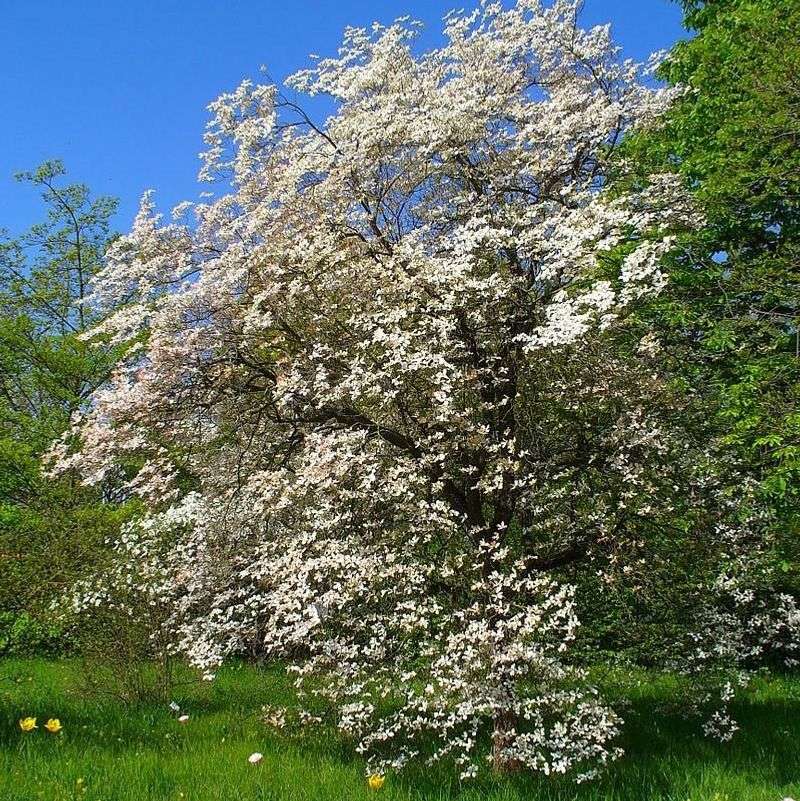
Cornus florida is practically a symbol of Georgia spring, and for good reason.
The large white or pink bracts that surround the tiny true flowers glow in the filtered light of woodland edges and suburban yards from late March into April, making it one of the most recognized native trees in the Southeast.
Beyond the spring display, Flowering Dogwood is a wildlife powerhouse. The bright red berries that ripen in fall are high in fat and eagerly eaten by over forty species of birds, including wood thrushes, bluebirds, robins, and mockingbirds.
That fat content is especially important for migratory birds fueling up during fall travel through Georgia.
Dogwood fits best in partial shade or dappled sun with well-drained, slightly acidic soil, which is common across much of Georgia.
It prefers not to sit in heavy clay without some amendment, and it benefits from a layer of mulch to keep roots cool and moist during hot summers.
Your Georgia Garden Changes Every Week. Your Plan Should Too.
Gardening in Georgia changes quickly throughout the season. Every Friday you’ll receive a simple weekly plan showing exactly what to plant, prune, fertilize, harvest, and protect so you never miss the right timing.
Mature trees typically reach fifteen to thirty feet with a spreading, layered canopy that also provides nesting cover for birds.
While it is not a direct swap for a sunny crape myrtle spot, it performs beautifully along woodland borders, near patios, or as a specimen planting in a partially shaded front yard.
3. Eastern Redbud Feeds Early Spring Pollinators
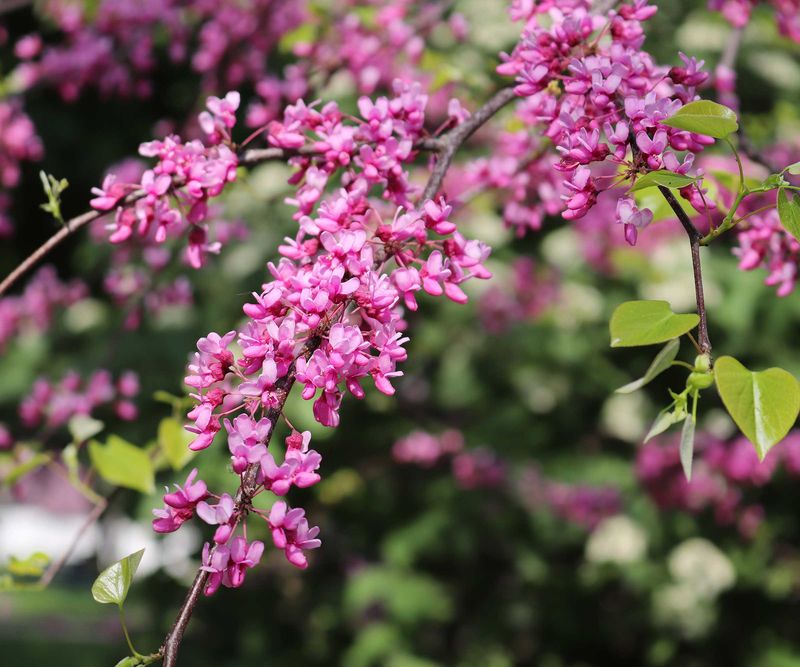
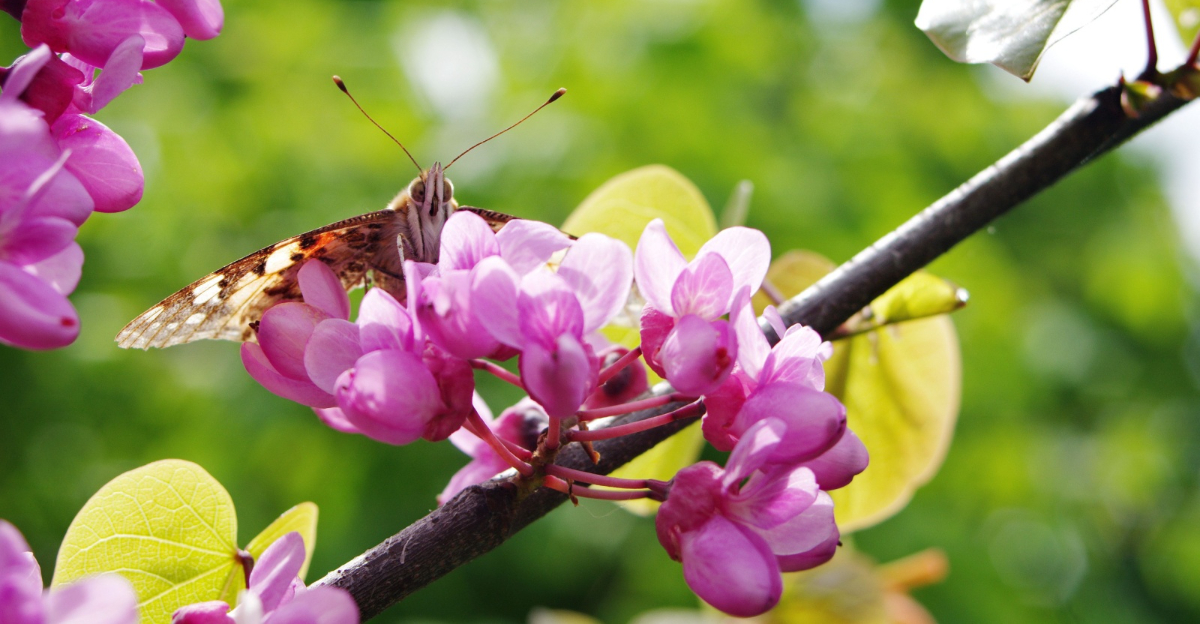
Walk through almost any Georgia neighborhood in late February or March and you will likely spot the rosy-pink clouds of Eastern Redbud blooming before the leaves even appear.
That striking floral display is not just beautiful, it is one of the most important early nectar sources for native bees coming out of winter.
Cercis canadensis is native across much of Georgia and thrives in the state’s climate, tolerating both heat and occasional dry spells once established.
It grows well in full sun to partial shade, making it flexible enough for front yards, woodland edges, and even spots that get filtered afternoon light.
In Georgia landscapes, it often reaches fifteen to thirty feet at maturity, giving it a similar size range to a mature crape myrtle.
Bumblebees, mason bees, and several specialist native bees visit the blooms heavily in spring. The flowers are unique because they emerge directly from the branches and trunk, a trait called cauliflory, which gives the tree an unusual and memorable appearance.
After bloom, flat seed pods develop and persist into winter, offering food for some songbirds and small mammals.
Heart-shaped leaves turn yellow in fall, adding one more seasonal layer to an already productive native tree.
4. Fringetree Adds Native Flowers And Wildlife Fruit
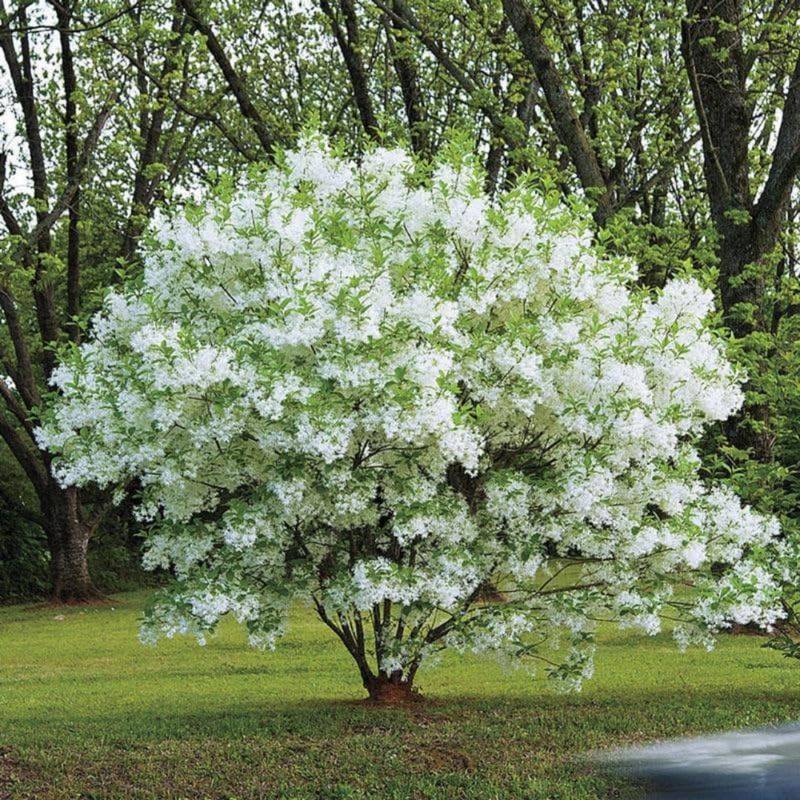
There is nothing quite like a Fringetree in full bloom. The long, wispy white flower clusters hang from the branches like soft fringe in mid-to-late spring, creating a look that stops people in their tracks and prompts the question, what is that plant?
Chionanthus virginicus is native to Georgia and grows naturally in moist woodlands, stream edges, and rocky slopes.
In home landscapes, it works well as a large shrub or small tree, typically reaching twelve to twenty feet, and it tolerates a range of soil conditions as long as drainage is reasonable.
Full sun to partial shade suits it well, giving homeowners flexibility in placement.
Pollinators visit the flowers for nectar and pollen, and the blooms have a light, pleasant fragrance that adds sensory appeal to spring gardens. After flowering, dark blue to purple olive-like fruits develop and ripen in late summer and fall.
Birds including robins, bluebirds, and other fruit-eating species consume the berries when available. Fringetree can be slow growing, so patience is part of the deal, but the long-term reward is a distinctive native specimen that earns its place in any Georgia garden.
It also offers yellow fall foliage before going dormant, extending seasonal interest through autumn.
5. Red Buckeye Draws Hummingbirds In Spring
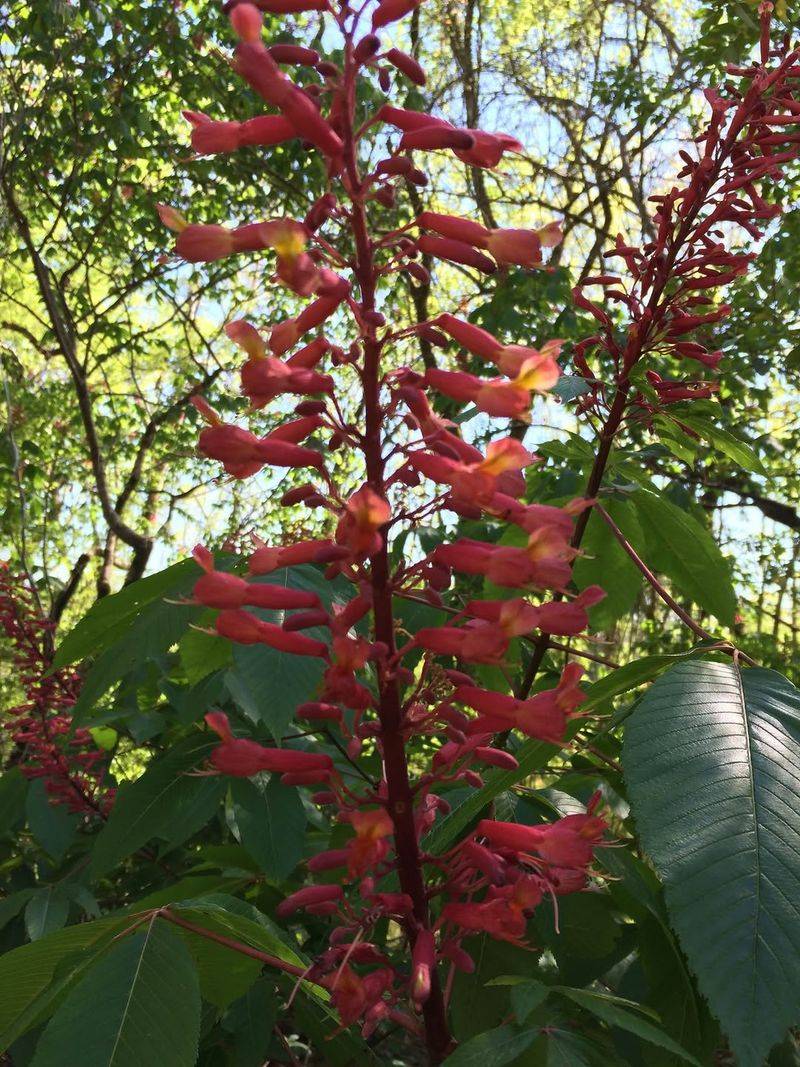
Spring in Georgia comes with a reliable thrill for anyone who plants Red Buckeye near a window or patio: hummingbirds.
The tubular red flower clusters of Aesculus pavia are timed almost perfectly with the arrival of Ruby-throated Hummingbirds migrating north through the state each spring, and the two have a relationship that feels almost choreographed by nature.
Red Buckeye is native across Georgia and grows naturally in moist woodland understories, making it a solid choice for shaded or partially shaded spots in home landscapes.
It typically grows as a large shrub or small tree reaching ten to fifteen feet, with a spreading, multi-stemmed form that works well in shrub borders, near woodland edges, or as an understory planting beneath larger trees.
The bold, palmate leaves and upright flower spikes create a tropical look that feels dramatic without requiring much maintenance. After flowering, round, smooth buckeye seeds develop in husks and drop in late summer.
The seeds are not edible and should be kept away from children and pets. Leaves drop early in summer during dry spells, which is normal behavior for this species.
Planting Red Buckeye where you want reliable hummingbird activity each spring is one of the more rewarding choices a gardener can make.
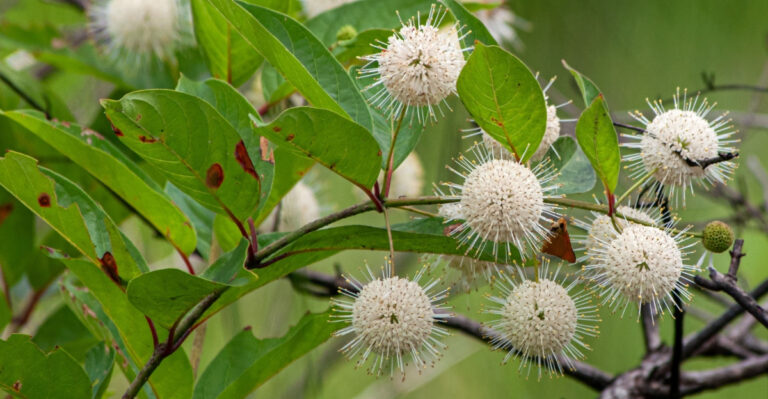
6. Buttonbush Brings Pollinators To Wet Spots
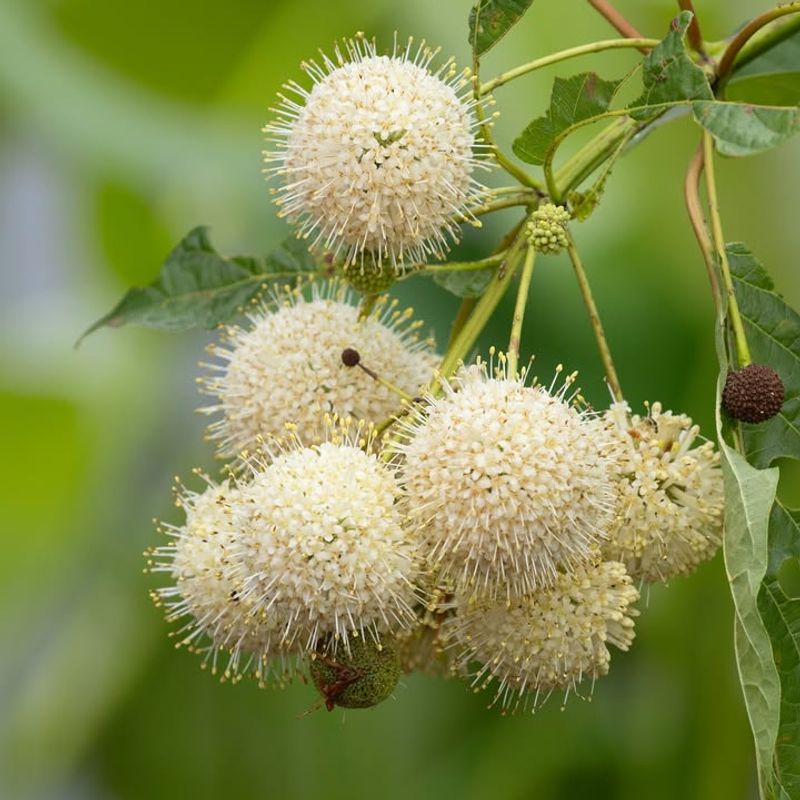
Most shrubs struggle in soggy, low-lying areas of a Georgia yard, but Buttonbush seems to thrive on the challenge.
Cephalanthus occidentalis is one of the best native shrubs for wet spots, pond edges, rain gardens, and areas where water collects after heavy rains, which are common across Georgia’s clay-heavy soils.
The round, globe-shaped white flower clusters bloom in summer, a time when many other native shrubs have finished flowering. That mid-season timing makes Buttonbush especially valuable because it fills a gap in the nectar calendar.
Bees, butterflies, and other pollinators visit the blooms heavily, and the fragrance is noticeable up close on warm summer mornings.
After flowering, the round seed heads persist and become an important food source for waterfowl and other birds, particularly in Georgia’s coastal plain and piedmont regions where wetland edges are common.
Wood ducks, mallards, and several songbirds are known to feed on the seeds.
Buttonbush can grow eight to twelve feet tall and wide, forming a dense, multi-stemmed shrub. It tolerates standing water for extended periods, which is a trait very few ornamental shrubs can match.
For homeowners dealing with a chronically wet corner of the yard, Buttonbush turns a problem area into a pollinator and wildlife destination.
7. American Beautyberry Feeds Birds With Purple Berries
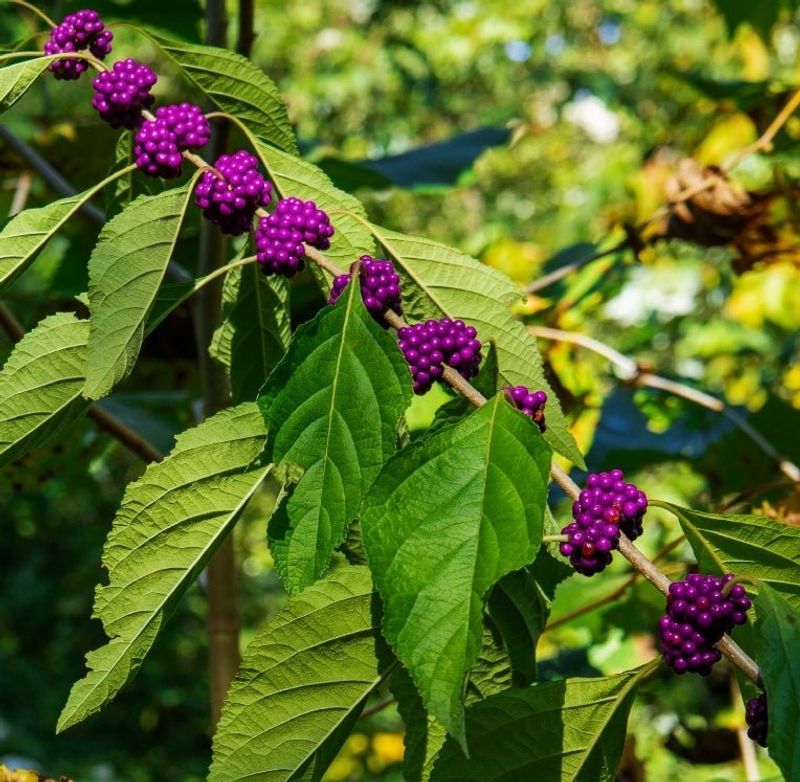
No shrub in Georgia’s fall landscape creates a color moment quite like American Beautyberry.
The clusters of vivid magenta-purple berries wrap tightly around arching branches in late summer and fall, creating a display so bold and unusual that it looks almost artificial, yet it is entirely natural and native to Georgia.
Callicarpa americana grows across the state in woodland edges, roadsides, forest understories, and disturbed areas. In home landscapes, it fits well in naturalized borders, shrub beds, and partially shaded spots where the soil stays moderately moist.
Full sun to partial shade works, though afternoon shade in Georgia’s intense summer heat can help keep the foliage looking its best.
The berries ripen just as many migratory birds are moving through Georgia in fall, and the timing could not be better. Mockingbirds, catbirds, robins, towhees, and brown thrashers are among the species documented feeding on the fruit.
White-tailed deer and other wildlife also browse the berries. American Beautyberry grows quickly and can reach six to eight feet tall and wide, though it responds well to hard pruning in late winter.
That flexibility makes it easy to manage in smaller spaces. The combination of wildlife value, fall color, and low maintenance makes it one of the most rewarding native shrubs a gardener can plant.
8. Oakleaf Hydrangea Adds Native Seasonal Interest
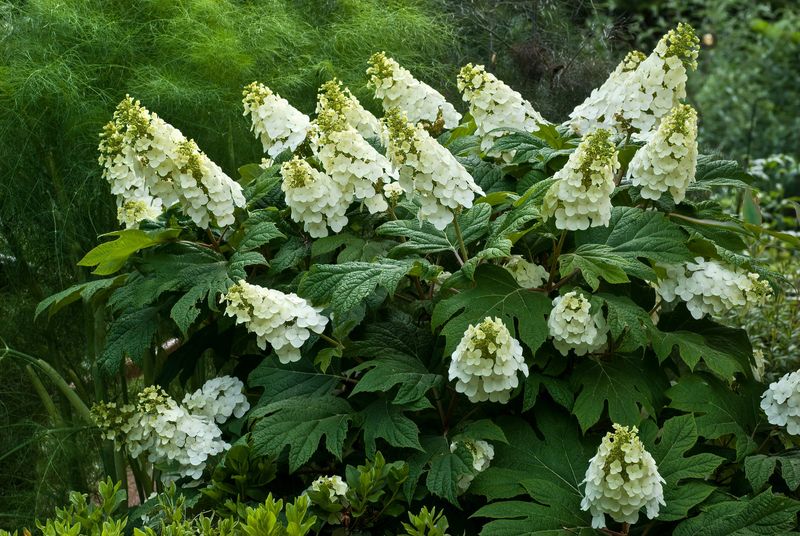
Oakleaf Hydrangea earns its place in Georgia gardens through four solid seasons of interest, which is more than most ornamental shrubs can claim.
Spring and early summer bring large, cone-shaped white flower clusters that gradually age to a warm pinkish-tan as summer progresses, creating a changing display over several months.
Hydrangea quercifolia is native to the southeastern United States and grows naturally in moist, shaded ravines and woodland edges across Georgia. In home landscapes, it performs well in partial to full shade with moist, well-drained, acidic soil.
It does not love prolonged drought, but established plants handle Georgia summers reasonably well with a good layer of mulch to retain moisture around the roots.
The bold, lobed leaves turn shades of orange, red, and burgundy in fall, and the exfoliating cinnamon-brown bark becomes a winter focal point after the leaves drop.
Pollinators visit the outer florets for nectar, while the dense shrub structure provides nesting cover and shelter for birds throughout the year.
Oakleaf Hydrangea typically grows six to eight feet tall with a similar spread. It works well as a foundation planting, along shaded walkways, or massed under large trees.
For homeowners with a partially shaded yard, it offers native beauty with genuine wildlife value.
9. Rabbiteye Blueberry Supports Bees And Birds
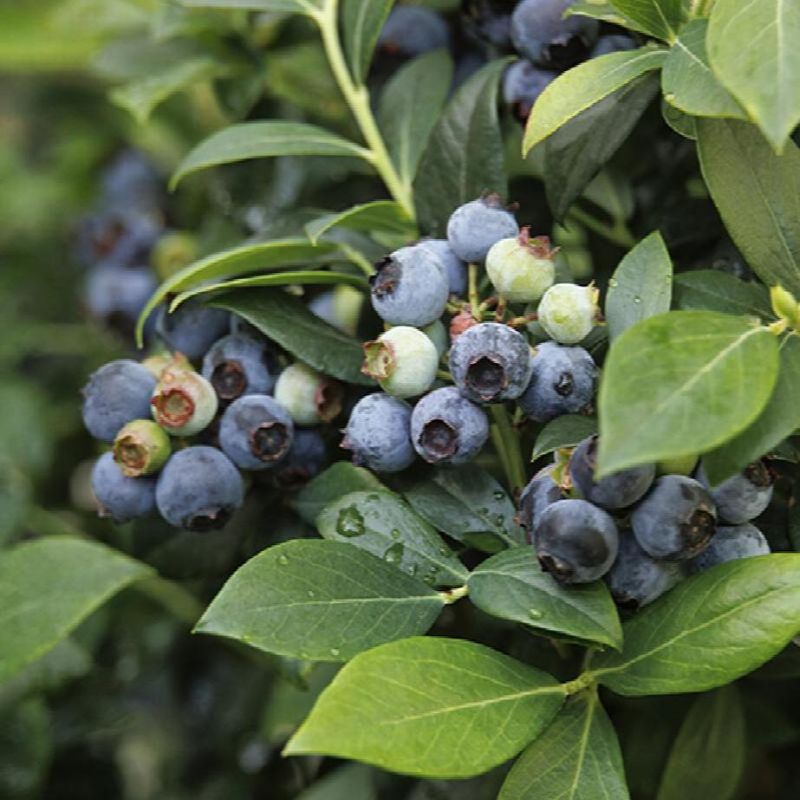
Planting Rabbiteye Blueberry in a Georgia yard might be one of the most practical wildlife decisions a homeowner can make.
Vaccinium ashei is native to Georgia and is actually one of the state’s most important native fruiting shrubs, offering early spring flowers for native bees and a generous summer berry crop that birds and people both enjoy.
The small, white bell-shaped flowers open in early spring and are visited by bumblebees, mason bees, and other native pollinators that are active even on cool early-season days.
Rabbiteye Blueberry is well adapted to Georgia’s warm climate and acidic soils, thriving in the same sandy or well-drained loamy soils found across much of the state’s piedmont and coastal plain regions.
Mature shrubs can reach six to fifteen feet depending on the variety, and they develop attractive reddish fall foliage before dropping leaves. Planting two or more varieties improves fruit set significantly.
Birds including bluebirds, mockingbirds, catbirds, and cedar waxwings compete enthusiastically for the ripe berries each summer. The dense branching also provides good nesting habitat.
For gardeners who want a native shrub that serves as a productive food source for both wildlife and the household, Rabbiteye Blueberry delivers on nearly every level through the seasons.
10. Rusty Blackhaw Viburnum Offers Flowers And Fruit
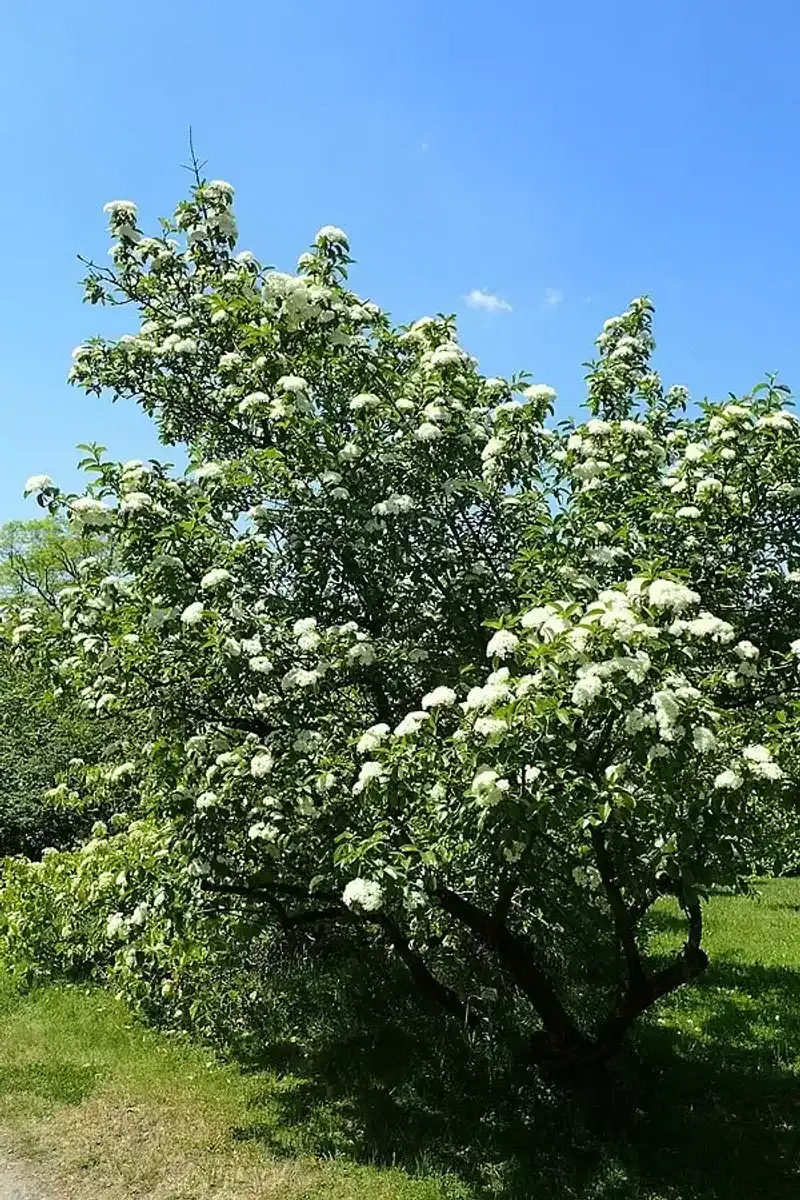
Rusty Blackhaw Viburnum is the kind of native plant that quietly outperforms expectations.
Viburnum rufidulum grows across Georgia in woodland edges, fence rows, and upland forests, and in a home landscape it brings spring flowers, summer foliage, fall fruit, and winter structure without asking for much in return.
The flat-topped clusters of white flowers open in mid-spring and attract a wide range of native bees, flies, and other pollinators. The blooms are not as showy as a crape myrtle at full peak, but the wildlife activity around them is genuine and consistent.
After the flowers fade, dark blue to black berries develop and ripen by fall, offering a high-fat fruit source that migrating and resident birds rely on heading into Georgia’s cooler months.
Rusty Blackhaw tolerates both sun and partial shade, handles drought better than many native alternatives once established, and adapts to a range of soil types including Georgia’s common clay-heavy piedmont soils.
It can be grown as a large multi-stemmed shrub or trained into a small tree reaching ten to twenty feet.
The glossy leaves turn deep red to purple in fall, adding color before winter. For homeowners who want a native, low-maintenance alternative with multi-season value and strong wildlife credentials, Rusty Blackhaw is a reliable and rewarding choice.