How To Prune Cucumbers The Right Way In Florida
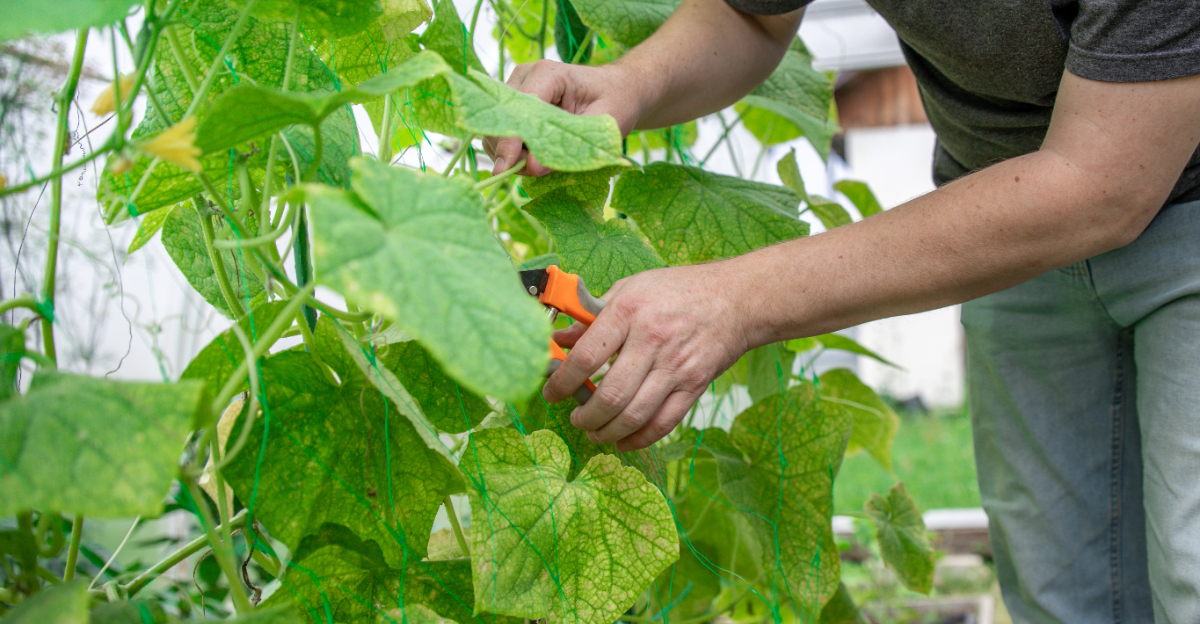
Cucumber vines in Florida don’t sit still for long. One week they’re manageable, the next they’ve turned into a tangled jungle weaving through cages, spilling over paths, and hiding fruit in the mess.
That fast growth is part of the charm, but it also brings a problem many gardeners run into sooner than expected.
Left alone, all that leafy energy goes into vines instead of cucumbers. Fruit can end up smaller, harder to spot, or slower to develop.
Airflow drops, pests find cover, and the whole plant starts working harder than it needs to.
Pruning steps in as the quiet reset button. It helps redirect growth, opens up light and air, and keeps the plant focused on producing instead of just spreading.
In Florida’s warm, humid conditions, that balance can make all the difference between a wild patch of vines and a steady harvest you can actually keep up with.
1. Start Pruning Once Vines Begin To Sprawl
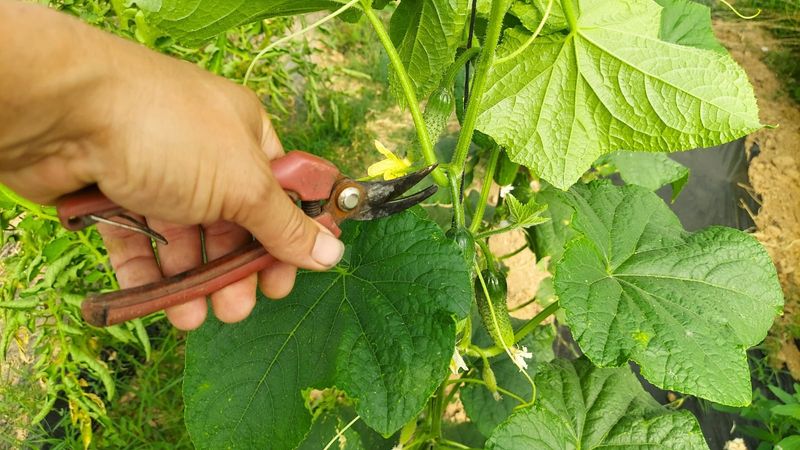
Warm Florida mornings have a way of sneaking up on you, and cucumber vines are no different. One week you have a small, manageable plant, and the next it is running sideways across the ground or tangling into neighboring rows.
That is exactly the moment to start pruning, not because the plant has reached a certain age, but because active, sprawling growth is your cue to step in.
Cucumbers in Florida grow faster than they do in most other states, thanks to the warm temperatures and long growing seasons.
UF/IFAS Extension notes that cucumbers thrive in Florida’s heat but also become prone to overcrowding quickly, which creates the perfect conditions for disease.
Early management keeps vines organized and reduces that risk before it becomes a real problem.
Rather than waiting until the plant looks out of control, watch for the moment vines begin to run or climb aggressively. That is when light pruning makes the biggest difference.
Removing a few wayward shoots early keeps the plant focused on upward growth and fruit production instead of spreading in every direction.
Timing matters more than plant age when it comes to cucumbers in Florida. A plant that has been in the ground for two weeks during a hot spell can sprawl just as aggressively as one that is six weeks old during a cooler stretch.
Follow the plant, not the calendar, and you will stay ahead of the growth curve every single time.
2. Remove Early Growth To Strengthen The Main Vine
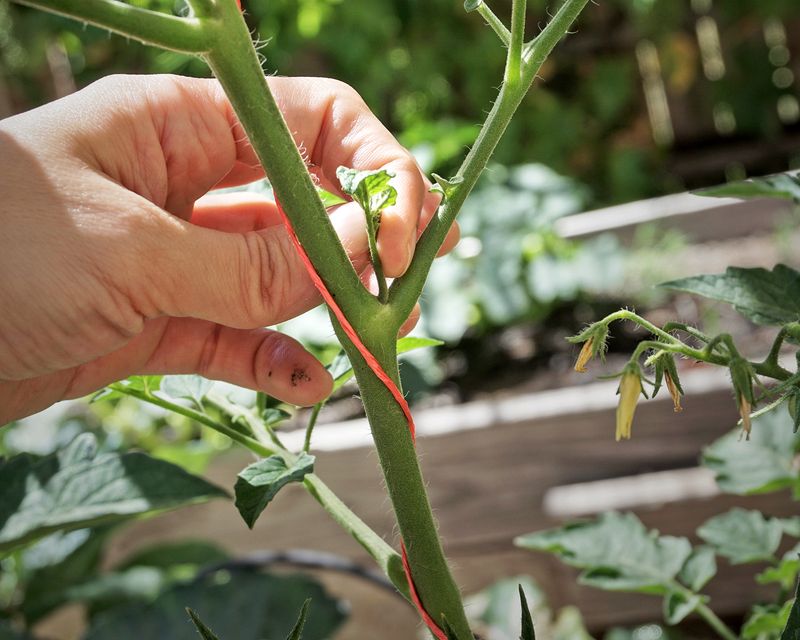
Not every shoot that sprouts from a cucumber plant deserves to stay. Early on, lateral shoots near the base of the plant compete directly with the main vine for water, nutrients, and energy.
Removing them selectively gives the main stem a clear advantage, which is especially important for trellised vining types that you want growing upward with purpose.
Gardenguides.com recommends removing the first four to six lateral branches near the base of the plant to encourage upward growth and direct energy toward fruit production.
Your Florida Garden Changes Every Week. Your Plan Should Too.
Gardening in Florida changes quickly throughout the season. Every Friday you’ll receive a simple weekly plan showing exactly what to plant, prune, fertilize, harvest, and protect so you never miss the right timing.
In Florida, where plants are already working hard just to manage the heat, that redirected energy matters.
A strong main vine produces more fruit over a longer period than a plant that spreads its resources across too many competing shoots.
This does not mean stripping the plant bare from the bottom up. The goal is selective, light removal of the lowest laterals, not aggressive pruning that stresses the plant.
Keep the upper growth intact so the plant still has enough leaf surface to support photosynthesis and shade developing fruit from Florida’s intense afternoon sun.
Bush-type cucumbers generally need less of this treatment since they are naturally more compact. Vining types, on the other hand, respond really well to this early shaping.
Once the main vine is climbing steadily and the lower shoots have been removed, the plant has a clean structure that is easier to manage and far less likely to become a tangled mess as the season moves forward.
3. Pinch Off Side Shoots For Better Airflow
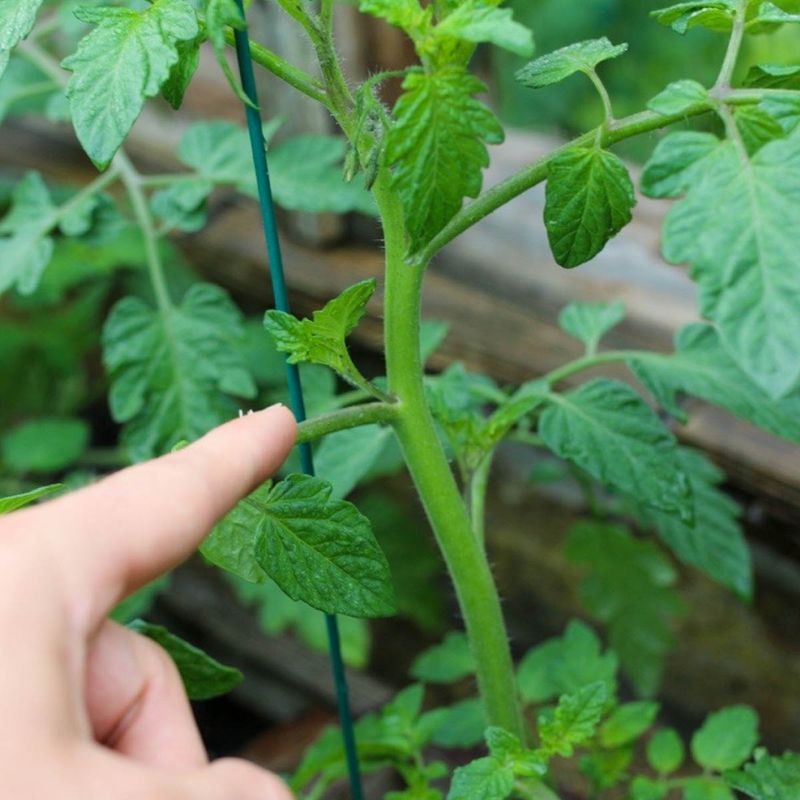
Humidity is the silent troublemaker in Florida vegetable gardens. When air cannot move freely through a cucumber canopy, moisture lingers on leaves and stems for hours, creating exactly the kind of environment that powdery mildew and downy mildew love.
Pinching off excess side shoots is one of the most effective ways to open up that canopy and let air do its job.
UF/IFAS Extension emphasizes proper spacing, trellising, and canopy management as key strategies for reducing fungal disease pressure in Florida cucumbers. Side shoots that grow unchecked fill in gaps between leaves and create dense pockets where airflow stalls.
Even on a well-spaced trellis, a plant loaded with lateral shoots can become an airtight wall of foliage within just a few weeks.
Pinching is simple and does not require tools in most cases. Using two fingers to snap off small side shoots when they are still young causes far less stress to the plant than cutting mature stems later.
Early removal also means smaller wounds, which close faster and give pathogens less opportunity to enter the plant tissue.
Focus on side shoots that are growing inward toward the center of the trellis or crossing over other stems. Shoots that extend outward and have room to grow without overlapping can often stay.
The goal is not to remove every lateral but to thin the canopy enough that you can see light passing through from one side to the other. That visual check is a reliable indicator of good airflow in any Florida cucumber planting.
4. Focus On Lower Leaves That Trap Moisture
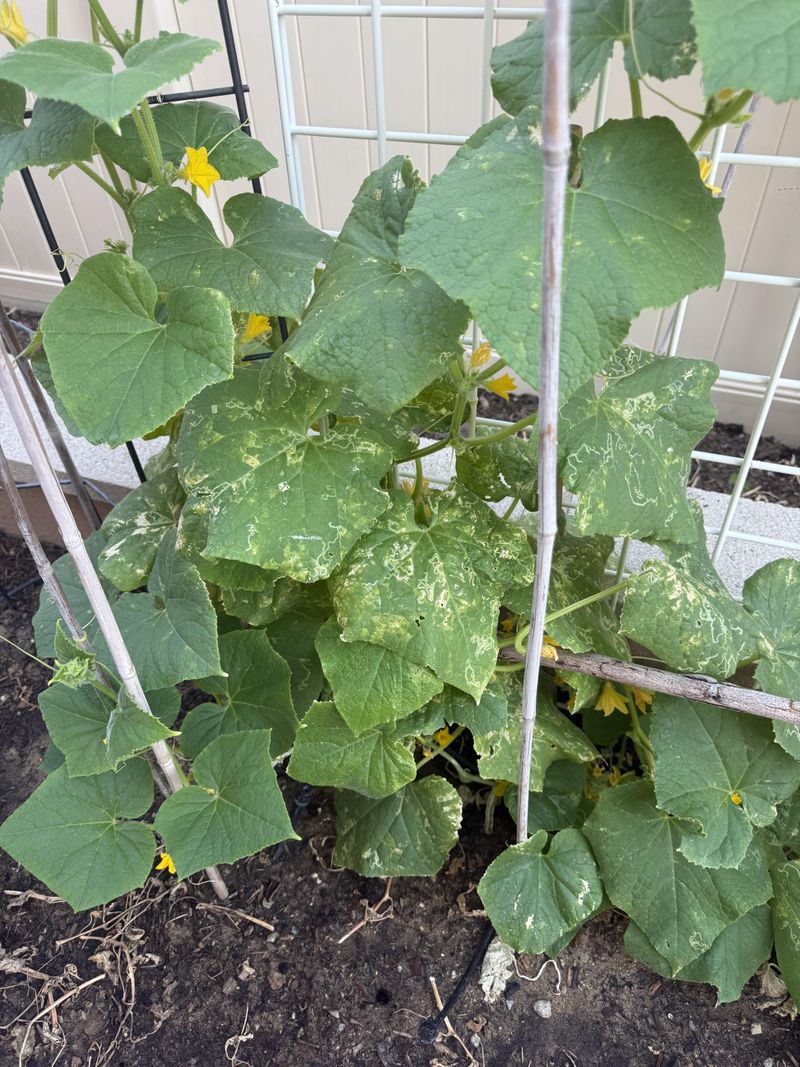
Lower leaves on a cucumber plant live a tough life. They sit close to the soil, get splashed with water during irrigation, and often stay wet long after the upper canopy has dried out.
In Florida, where humidity is already high and afternoon rain is common, those damp lower leaves become a breeding ground for fungal and bacterial diseases that can spread fast.
UF/IFAS Extension highlights the importance of minimizing leaf wetness duration as a core strategy for managing foliar diseases in Florida vegetable crops.
Removing older, crowded, or yellowing lower leaves reduces the surface area that stays wet and improves the environment around the base of the plant.
It also keeps the soil surface better exposed to airflow, which helps it dry more quickly between waterings.
When removing lower leaves, focus on those that are already showing signs of yellowing, spotting, or crowding against neighboring stems.
Healthy green lower leaves that are still contributing to photosynthesis can stay, especially if they are not pressed against the soil or overlapping other leaves in a way that traps moisture.
Always remove lower leaves cleanly at the stem using sanitized shears rather than tearing them off by hand. Torn tissue creates ragged entry points that are harder for the plant to seal.
After removing leaves, avoid overhead watering for at least a day so the cuts can begin to close without being exposed to extra moisture. This small habit can make a noticeable difference in how well your Florida cucumber plants hold up through a long, humid growing season.
5. Train Vines Upward Before Cutting Too Much
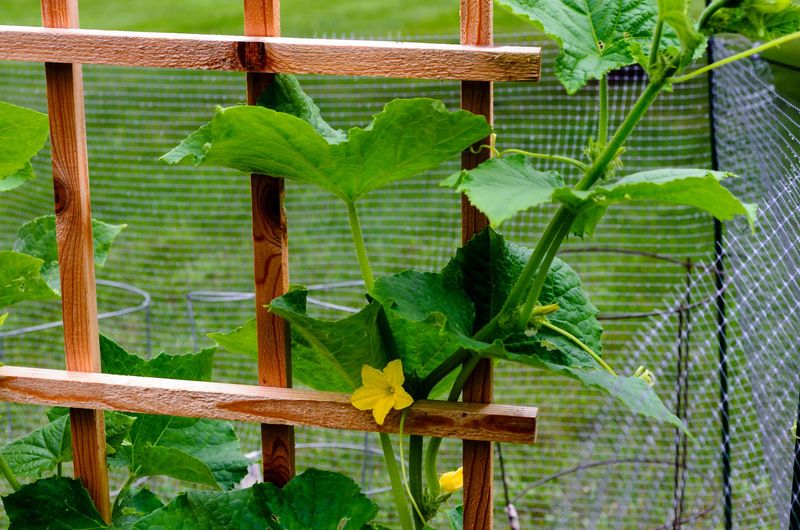
Before reaching for the pruning shears, get the vines pointed in the right direction. Trellising is the foundation of good cucumber management in Florida, and it should come before any serious cutting.
When vines grow vertically, the canopy opens up naturally, airflow improves on its own, and fruit hangs freely where it can be spotted and harvested easily.
UF/IFAS Extension recommends trellising cucumbers as a key practice for improving plant health and fruit quality in Florida.
A vertical structure reduces the amount of foliage touching the ground, keeps fruit clean, and dramatically cuts down on the moisture-related disease issues that are so common in Florida’s climate.
Trellising alone can solve many of the problems that gardeners try to fix with aggressive pruning.
Use soft plant ties, strips of fabric, or garden twine to guide vines upward as they grow. Check the vines every few days during active growth periods because cucumbers in Florida can put on several inches of new growth in a short time.
Gentle guidance early on keeps the vine from tangling or doubling back on itself, which makes later management much easier.
Once vines are climbing steadily and the plant has a clear vertical structure, targeted pruning becomes much more effective. Cutting without training first often leads to regrowth that sprawls in the same direction again.
Think of trellising as the strategy and pruning as the fine-tuning. When both work together, Florida cucumber plants stay organized, healthy, and far more productive throughout the entire growing season.
6. Avoid Over Pruning In Florida Heat
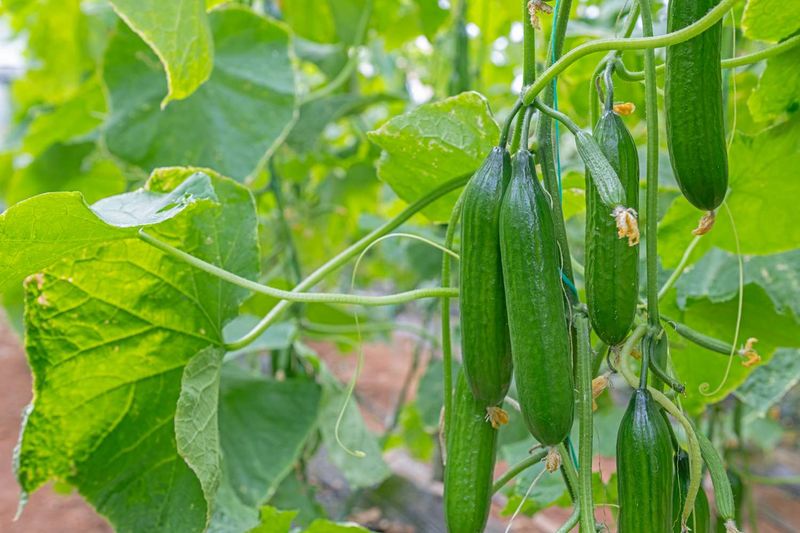
There is a point where pruning helps and a point where it starts to hurt, and Florida’s intense summer heat makes that line easy to cross. Leaves do more than just feed the plant through photosynthesis.
They also shade developing fruit from direct sun exposure. Remove too many of them and you can end up with sunscald on cucumbers that were perfectly healthy just days before.
Sunscald appears as pale, bleached, or papery patches on the skin of the fruit. It happens when cucumbers that were previously shaded by foliage are suddenly exposed to direct Florida sun after overly aggressive pruning.
The fruit itself is still safe to eat in most cases, but the texture and appearance suffer, and the affected area can become an entry point for secondary issues over time.
Balanced pruning means removing what is causing problems, not stripping the plant down to a skeleton.
Aim to maintain a healthy layer of foliage over developing fruit at all times, especially during the hottest parts of the day when afternoon sun in Florida can be particularly intense.
If you are unsure whether a stem or leaf should stay, err on the side of leaving it for now and reassessing in a few days.
Heavy pruning also stresses plants during heat events, slowing fruit set and overall productivity. Florida gardeners who prune lightly and consistently tend to get better results than those who do one big pruning session and then step back.
Small, frequent adjustments keep the plant in balance without pushing it into recovery mode during the hottest stretches of the season.
7. Cut Clean To Prevent Disease Spread
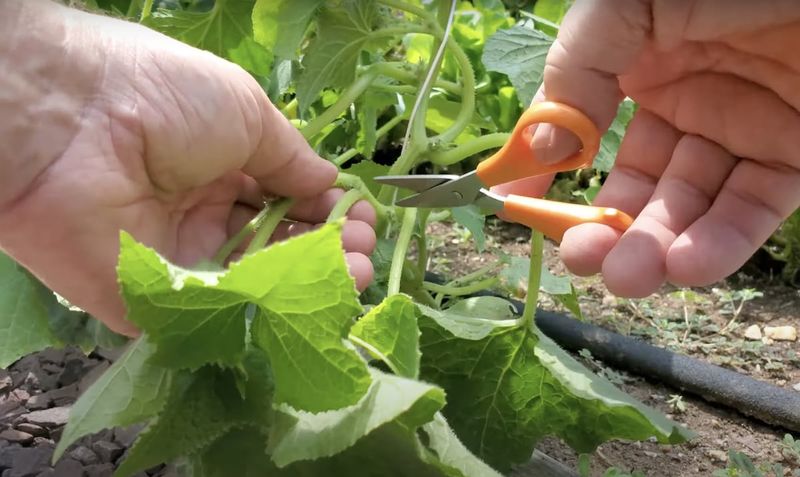
Every cut you make on a cucumber plant is an opening. A clean cut made with a sharp, sanitized tool creates a small, smooth wound that the plant can seal relatively quickly.
A ragged cut made with dull or contaminated shears creates a larger, rougher wound that stays open longer and gives bacteria and fungi a much easier path into the plant’s tissue.
Gardenguides.com recommends sanitizing pruning shears with rubbing alcohol before use to prevent disease spread. In Florida, where bacterial wilt and angular leaf spot are real concerns for cucumber growers, this step is not optional.
Diseases can travel from plant to plant on the blade of a tool faster than most gardeners realize, especially when moving through a garden bed where multiple plants are being worked on in a single session.
Keep a small spray bottle of diluted rubbing alcohol or a container of alcohol wipes nearby when you prune. Wipe the blade between plants, not just at the beginning of the session.
This takes only a few seconds but significantly reduces the chance of spreading a problem from one plant to the rest of the bed.
Beyond tool sanitation, the angle and placement of cuts also matter. Cut lateral shoots as close to the main stem as possible without cutting into it.
Leaving long stubs creates declined tissue that can harbor disease-causing organisms and becomes harder for the plant to manage over time.
A clean, close cut heals faster, looks better, and gives pathogens far less surface area to work with in Florida’s warm, moist growing conditions.
8. Adjust Pruning Timing For North And South Florida
Florida is a long state, and gardening in Pensacola looks very different from gardening in Homestead. North Florida experiences genuine winters with occasional frost, which means spring cucumber planting typically begins in February or March.
South Florida gardeners, on the other hand, can grow cucumbers through the winter months when temperatures stay warm enough to support active growth year-round.
UF/IFAS Extension acknowledges these regional differences and provides planting calendars that vary by zone across the state.
Because pruning timing should follow plant development rather than fixed calendar dates, gardeners in different parts of Florida will find themselves managing their cucumber plants at very different times of year.
A North Florida gardener may be doing their first pruning session in March while a South Florida grower is wrapping up a fall crop in the same month.
The underlying principles of pruning stay the same regardless of location: prune when vines begin to sprawl, remove lower leaves that stay damp, and keep the canopy open for airflow.
What changes is when those moments arrive based on your local planting window and how quickly the plants are growing in your specific climate conditions.
Central Florida gardeners fall somewhere in between, with two main planting windows in spring and fall that mirror the advice UF/IFAS provides for the state overall.
Wherever you garden in Florida, the most reliable approach is to observe your plants closely and let their growth stage guide your pruning schedule.
Plants that are actively growing and beginning to crowd each other are ready to be managed, no matter what month it happens to be.