How To Refresh Mulch In Texas Before Summer (And Finally Win The Weed War)
Texas summers don’t ease in gently, they show up loud and early, and your garden beds feel every bit of it.
One week you’re enjoying a pleasant spring morning outside, and the next you’re staring at cracked soil, patchy mulch, and a weed situation that somehow appeared overnight.
Sound familiar? Refreshing your mulch before the real heat arrives is honestly one of the smartest things you can do for your landscape right now.
But just dumping a fresh bag on top of last year’s mess won’t cut it. Good results come from a little bit of planning, starting with weed removal, nailing the right depth, and matching your mulch to the specific area you’re working with.
Get those steps right and your soil will be in a much stronger position to handle whatever summer throws at it.
1. Clear Existing Weeds Before Mulching
Bare soil in a Texas garden bed is an open invitation for weeds, and no amount of fresh mulch will undo the problem if those weeds are already rooted underneath.
Skipping the clearing step is one of the most common mistakes gardeners make before summer, and it tends to make the weed situation worse over time rather than better.
Weeds that get buried under a new layer of mulch do not simply stop growing. Many of them push right through, especially fast-growing Texas weeds like nutsedge, spurge, and crabgrass.
Pulling them out before you refresh your mulch gives you a much cleaner starting point and helps the new layer actually do its job.
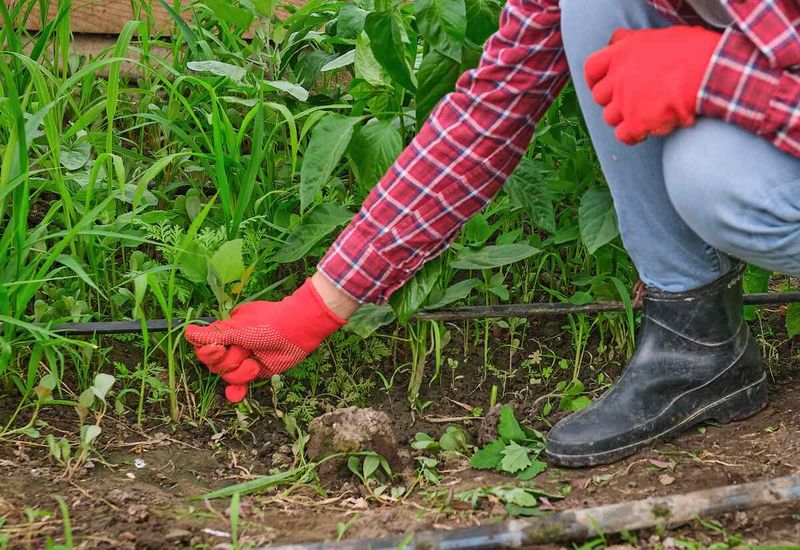
Hand-pulling works well for small beds, and a sharp hoe or cultivator can speed things up in larger areas. For stubborn weeds with deep roots, loosening the soil first makes removal easier and more thorough.
Try to remove the full root when possible, since broken roots can regrow quickly in warm soil.
Once the bed is cleared, take a few minutes to rake out any old clumped mulch, debris, or matted leaves before adding fresh material. Starting with a tidy base helps your new mulch spread more evenly and settle into place faster.
A clean bed also makes it easier to spot new weed growth early so you can stay ahead of the problem through the rest of summer.
2. Refresh Mulch To The Right Depth
Getting mulch depth right matters more than most people realize, and it is one of the details that separates a garden bed that struggles through summer from one that stays manageable.
Too thin, and the mulch dries out fast, lets light reach weed seeds, and offers little protection for the soil underneath.
Too thick, and water has trouble reaching roots, air circulation suffers, and some plants may not thrive.
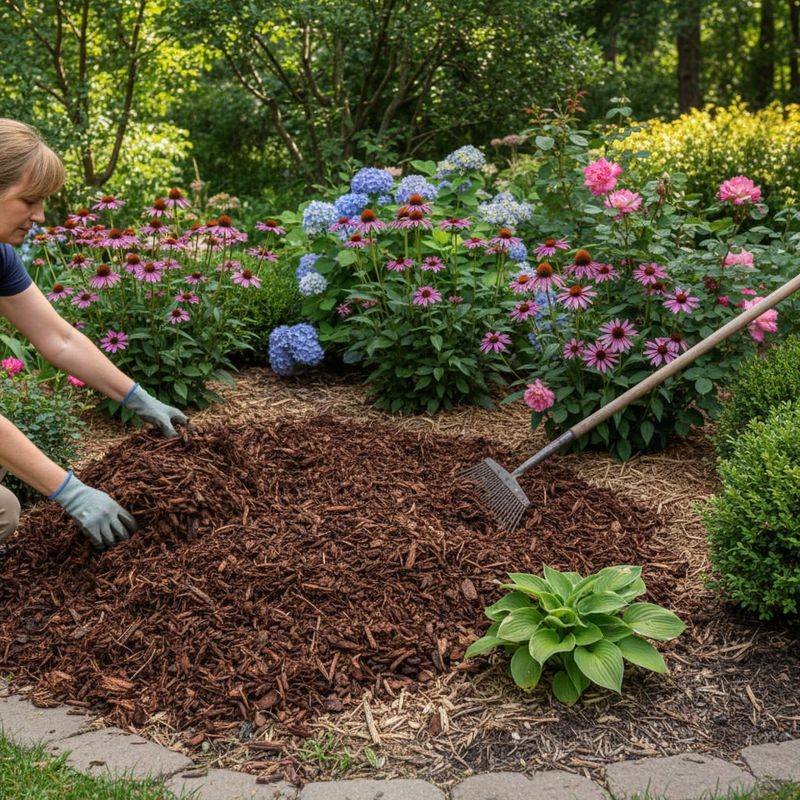
For most landscape beds in Texas, a finished depth of around two to three inches is a practical target.
If your existing mulch has broken down and compacted over the past season, you may only need to add an inch or so of fresh material on top rather than a full new layer.
Your Texas Garden Changes Every Week. Your Plan Should Too.
Gardening in Texas changes quickly throughout the season. Every Friday you’ll receive a simple weekly plan showing exactly what to plant, prune, fertilize, harvest, and protect so you never miss the right timing.
Raking the old mulch lightly before topping it off can help it breathe and accept moisture more easily.
In Texas heat, even a modest mulch layer makes a noticeable difference in how quickly soil dries out between waterings.
Mulch acts as insulation, slowing evaporation and keeping soil temperatures more stable during the intense afternoon heat that builds through June, July, and August.
Measuring as you go is a simple habit worth developing. A ruler or even your hand can give you a rough sense of whether the layer is where it needs to be.
Consistent depth across the whole bed tends to produce more even results than heavy spots mixed with thin patches.
3. Use A Lighter Layer Around Vegetables
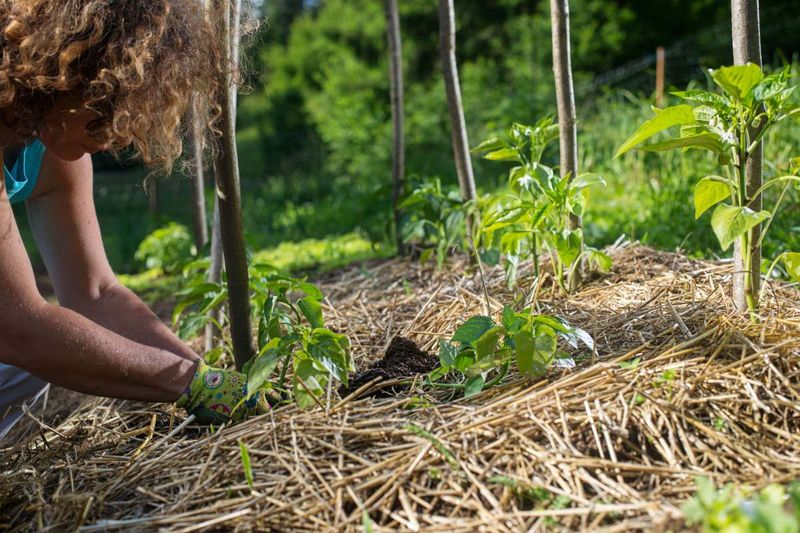
Vegetable gardens have different needs than ornamental beds, and the mulch approach that works well around shrubs or perennials is not always the right fit for a row of tomatoes or a raised bed full of peppers.
Vegetables tend to need more airflow around their stems and more consistent soil moisture without the risk of excess heat buildup at the base of the plant.
A lighter mulch layer of about one to two inches works well in most vegetable beds. Straw, shredded leaves, and fine wood chips are popular choices because they break down gradually and add organic matter to the soil as the season progresses.
Avoid thick layers that could trap moisture against plant stems or make it harder for the soil to warm up evenly in early planting periods.
Mulching vegetable rows also helps reduce the splash of soil onto lower leaves during watering or rain, which can slow the spread of certain soil-borne issues.
Keeping the soil surface covered between plants cuts down on weed competition without creating conditions that work against the vegetables themselves.
In a Texas summer, vegetable beds can dry out surprisingly fast, especially in raised beds where soil tends to warm and drain more quickly than in-ground plantings.
A light, consistent mulch layer helps hold moisture longer between waterings and keeps the soil from forming a hard crust that can make hand-watering less effective.
4. Keep Mulch Off Trunks And Stems
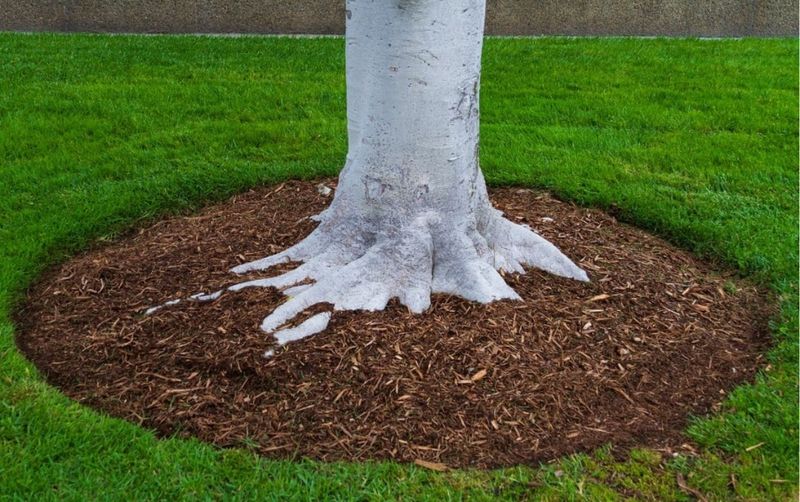
One of the most well-known mulching mistakes is piling material directly against the base of a tree trunk or plant stem, and it is surprisingly easy to do when you are spreading a fresh load of mulch across a bed.
The problem is that constant contact between moist mulch and bark or stems creates conditions where the tissue can soften and become vulnerable to insects, fungal issues, and rot over time.
For trees, the goal is to spread mulch in a wide, flat ring that extends out toward the drip line rather than mounding it up against the trunk. Pulling the mulch back a few inches from the base of the tree is a simple step that makes a real difference.
Mulch rings that cover more ground area do a better job of protecting roots and reducing competition from grass and weeds.
The same principle applies to shrubs, perennials, and young transplants. Keeping mulch an inch or two away from the main stem allows air to circulate and reduces the chance of moisture-related problems developing at the crown of the plant.
In Texas, where summer heat and humidity can fluctuate, that small gap matters more than it might seem.
When refreshing mulch around established plants, take a moment to pull any old material away from stems and trunks before adding the new layer. It only takes a minute and helps keep the planting area healthier as the season heats up across Texas landscapes.
5. Choose Clean Weed-Free Mulch
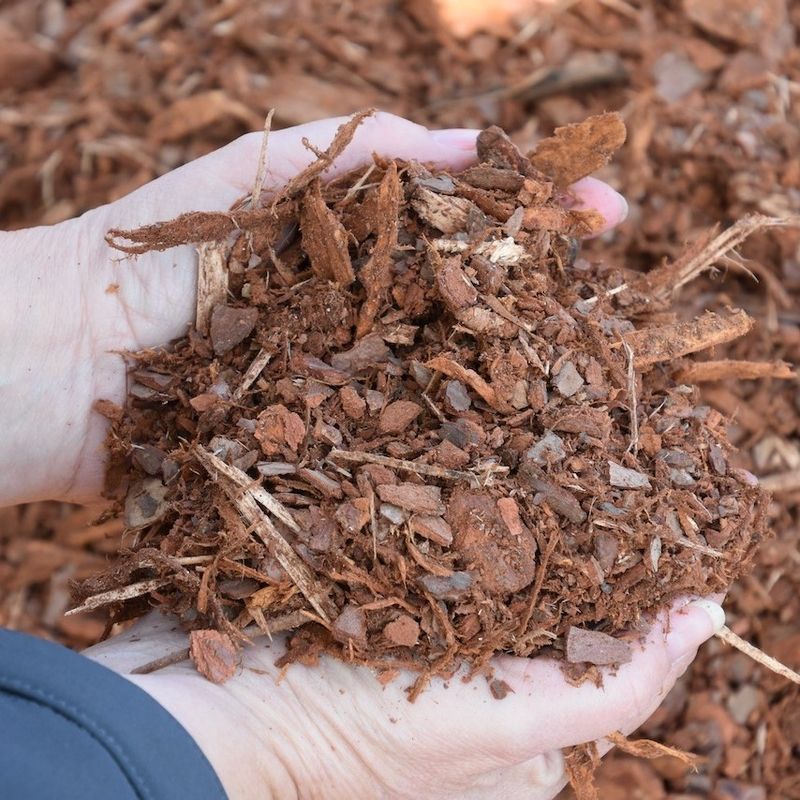
Not all mulch is the same, and the source of your material can have a real impact on how many weeds you end up dealing with later in the season.
Some bulk mulch products, especially those made from mixed yard waste or uncomposted wood material, can carry weed seeds that sprout once they hit warm Texas soil.
Choosing a cleaner product from the start saves a lot of effort down the line.
Bagged mulch products labeled as double-ground or triple-ground hardwood tend to be more processed and less likely to contain viable weed seeds than raw, unscreened material.
Certified or heat-treated compost mulches are another option that can add nutrients to the soil while keeping weed seed introduction low.
Reading the product label or asking your supplier about the source of the material is worth the extra minute it takes.
Pine bark, cedar, and cypress mulches are popular in Texas landscapes and tend to resist compaction reasonably well, which helps maintain airflow and drainage through the summer months.
Each type has a slightly different look, texture, and rate of breakdown, so picking one that matches your bed type and aesthetic makes sense.
Avoid using mulch that smells strongly sour or like vinegar, as this can be a sign that the material went through an anaerobic breakdown process that may harm plant roots.
Fresh, clean-smelling mulch that has been properly processed is a much better choice for garden beds heading into the heat of summer.
6. Use Cardboard In Very Weedy Beds
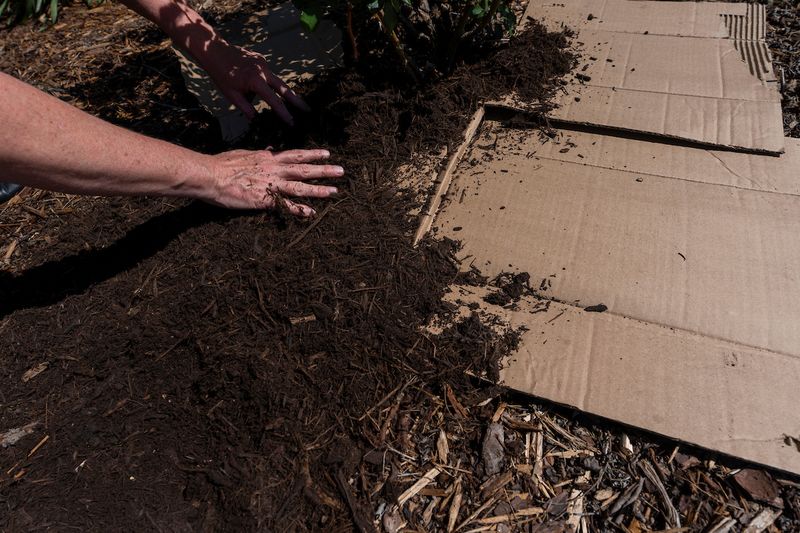
Some garden beds in Texas get so overrun with weeds by late spring that pulling alone feels like a losing battle.
If you have a bed that seems to produce new weeds faster than you can remove them, laying cardboard underneath fresh mulch is a practical way to get ahead of the problem before summer heat makes outdoor work more difficult.
Cardboard works by blocking light from reaching the soil surface, which prevents most weed seeds from sprouting and gradually breaks down existing weed roots that cannot photosynthesize.
It is a method sometimes called sheet mulching, and it can make a meaningful difference in beds with persistent weed pressure.
The cardboard breaks down over several months, adding organic matter to the soil as it goes.
To use this approach, clear as much existing weed growth as you can first, then lay flattened cardboard boxes directly on the soil with the pieces overlapping by several inches so there are no gaps. Remove any tape or staples before laying the cardboard down.
Then cover the cardboard with two to three inches of mulch to hold it in place and give the bed a finished look.
Water the cardboard lightly before adding mulch so it softens and conforms to the soil surface more easily.
In Texas, where certain weeds like bermudagrass and nutsedge are famously persistent, cardboard layering is not a one-season fix, but it does give you a real head start on keeping beds cleaner through the summer months.
7. Refresh Mulch Before Summer Heat
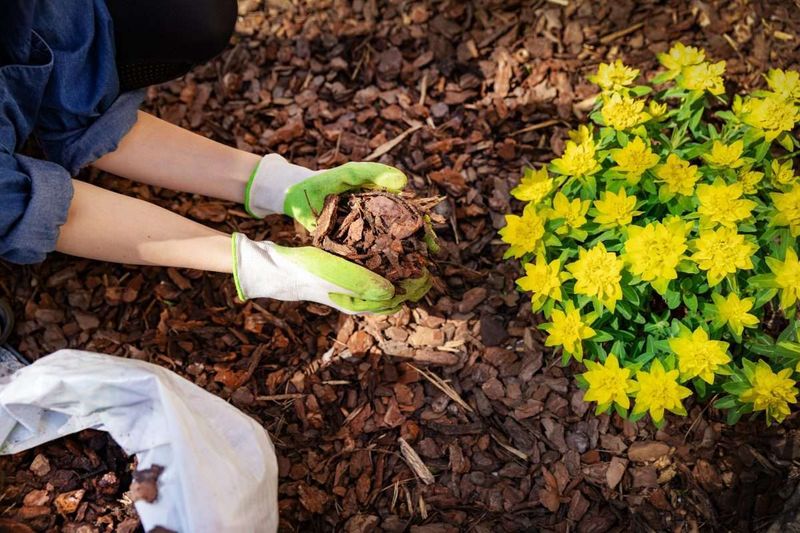
Timing matters when it comes to mulch, and getting a fresh layer down before Texas summer heat peaks gives your garden beds the best possible advantage.
Once temperatures climb into the upper 90s and soil starts baking under direct sun, the ground can lose moisture rapidly and weed seeds that were waiting in the soil find warm conditions very favorable for sprouting.
Late April through mid-May tends to be a good window for refreshing mulch across much of Texas. The soil has warmed enough from winter, spring rains have typically passed, and the worst of summer heat has not yet arrived.
Mulching during this window helps the soil hold onto moisture from spring rainfall and prepares beds for the dry stretches that follow.
Mulch that is refreshed before peak heat also helps moderate soil temperature swings. In Texas, soil surface temperatures on bare ground can climb significantly higher than air temperature on a hot afternoon.
A proper mulch layer cushions that effect and creates a more stable root environment for established plants and new transplants alike.
Waiting until summer is already in full swing means working in uncomfortable heat and trying to manage weeds that have already had weeks to establish.
Getting the mulch refresh done in spring, while conditions are still reasonable, makes the whole process more manageable and sets your beds up for a much smoother growing season through the long summer ahead.
8. Match Mulch Depth To The Bed
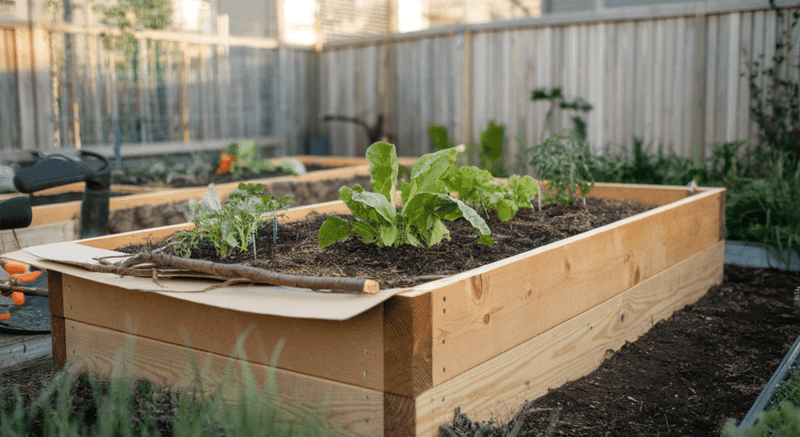
Not every planting area in a Texas yard needs the same amount of mulch, and treating all beds the same way often leads to results that fall short in some spots and cause problems in others.
Matching the mulch depth to the specific type of bed you are working with is a simple habit that leads to noticeably better outcomes over the course of a season.
Established landscape beds with shrubs, ornamental grasses, and perennials can generally handle a two to three inch layer without issue.
That depth is enough to suppress most annual weeds, slow moisture loss, and keep the soil surface from crusting over in dry spells.
Foundation plantings along a home exterior often benefit from this range as well, as long as mulch is kept away from the structure itself.
Raised beds and in-ground vegetable areas tend to do better with a lighter hand.
One to two inches of finer-textured mulch is usually enough to provide moisture retention and reduce weed competition without interfering with planting, watering, or soil temperature.
Raised beds can heat up faster than in-ground beds, so keeping the mulch layer moderate helps prevent the soil from staying too warm for cool-season crops that may still be finishing up.
Around newly planted trees and large shrubs, spreading mulch out wide rather than deep is a better approach.
A broad, shallow ring of mulch covering more root zone area outperforms a small, deep mound every time when it comes to supporting healthy establishment in Texas landscapes.