Texas Container Plants That Stay Gorgeous All Summer, Even If You Forget To Water For A Week
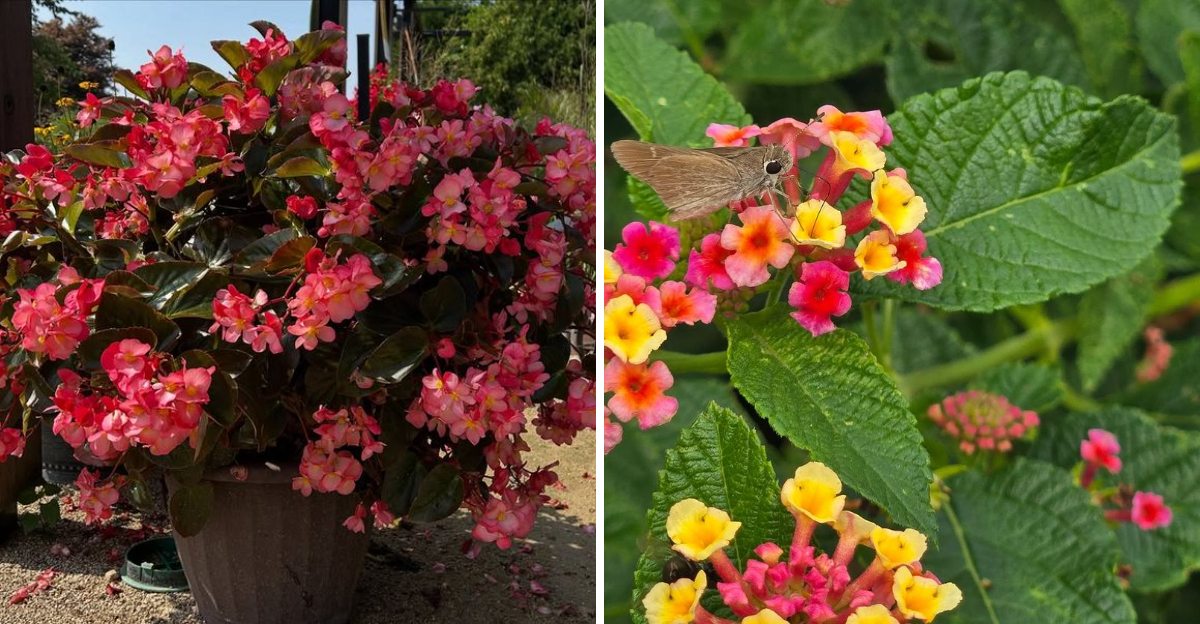
Your patio plants are deceiving you. That sad, droopy mess sitting on your concrete in July?It’s not due to your gardening skills. It’s because someone sold you the wrong plants for your climate, and Texas summers are incredibly harsh.
Triple-digit temperatures, weeks without rain, and soil that turns to dust will ruin anything not designed to withstand this kind of heat. Most container plants just simply aren’t made for it. But some actually are.
Certain plants thrive in 105-degree afternoons. They recover from a missed watering as if nothing happened, continue blooming through August without any fuss, and make your neighbors curious about your secret.
You don’t need to be a gardening expert. You just need the right plants. Specifically, eight of them that Texas A&M AgriLife has backed and confirmed to survive in the exact brutal conditions your patio throws at them.
1. Plant Cora Vinca For Nonstop Summer Color
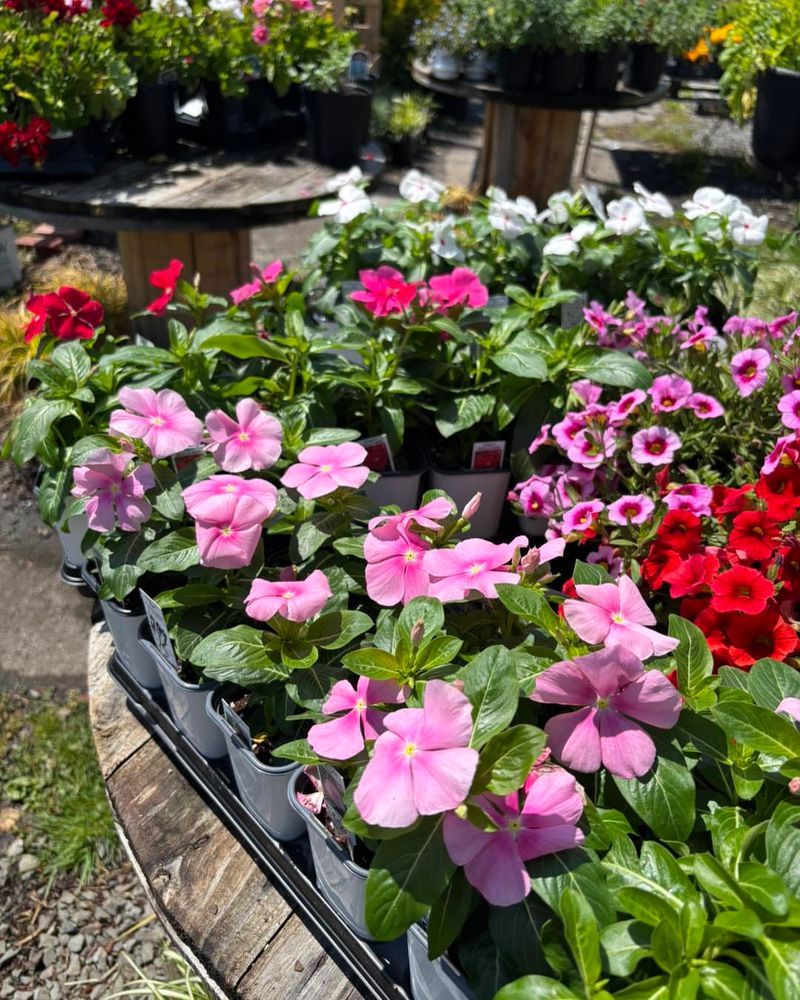
Few container flowers perform as reliably in Texas heat as Cora vinca. Bred for disease resistance and heat tolerance, PanAmerican Seed’s Cora series is a top Texas A&M AgriLife Extension pick for summer containers and landscapes.
These plants thrive in full sun, produce non-stop blooms in shades of pink, red, white, coral, and lavender, and handle both heat and humidity without skipping a beat.
For containers, Cora vinca does best in a well-draining potting mix. Well-draining soil is a must, because soggy roots are about the only thing that can take this tough plant down.
A pot with drainage holes is essential. Once established, Cora vinca is notably drought tolerant, meaning it can handle a missed watering or two without falling apart.
That said, containers dry out faster than in-ground beds, so during peak Texas summer heat, aim to water deeply every two to three days rather than skipping entire weeks.
Cora vinca works beautifully in hanging baskets, window boxes, and large mixed containers. It pairs well with trailing plants like sweet potato vine, which fills out the lower edges of a pot while the vinca stands tall in the center.
Plant it in full sun, at least six hours per day, and you will have bold color from spring straight through fall without much fuss.
2. Let Rock Rose Handle Heat Like A Pro
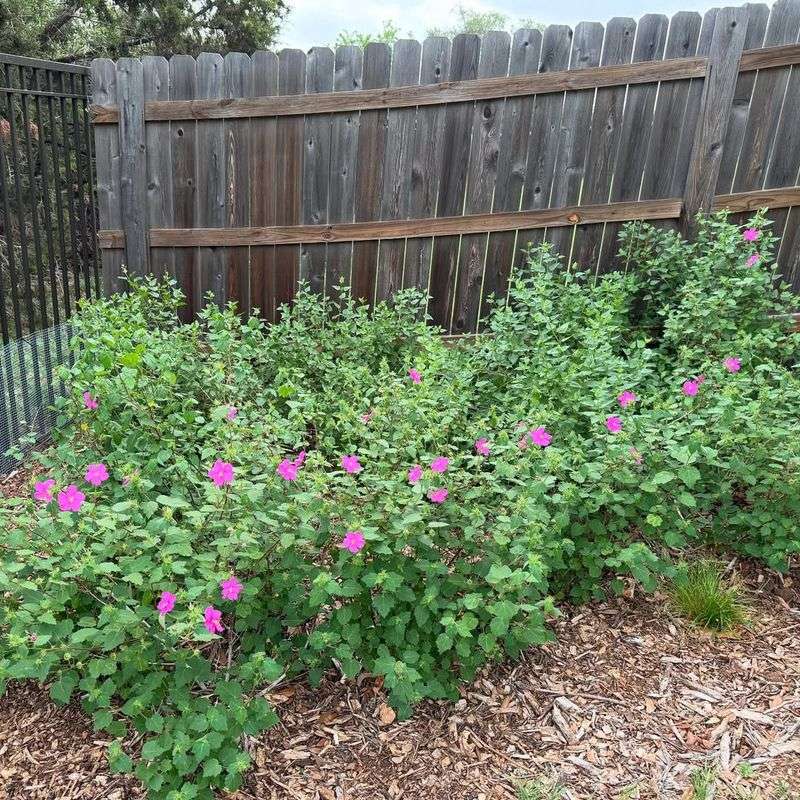
Many gardeners discover rock rose by chance. They notice it flourishing in a neighbor’s garden during a hot July day and wonder “Why does it look so great right now?” That’s the rock rose effect.
Pavonia lasiopetala is a shrub native to Texas that can withstand intense heat and extremely dry conditions without any trouble. Texas A&M AgriLife Extension appreciates it for challenging landscapes, and it surprisingly adapts well to large containers.
The flowers are a soft rosy pink with a texture similar to crepe paper. It has a very cottage garden vibe, which is quite charming.
The flowers bloom in the morning, close by the afternoon, and new ones appear every day throughout the summer. It’s like having a built-in blooming schedule. Rock rose prefers excellent drainage and at least six hours of direct sunlight.
Your Texas Garden Changes Every Week. Your Plan Should Too.
Gardening in Texas changes quickly throughout the season. Every Friday you’ll receive a simple weekly plan showing exactly what to plant, prune, fertilize, harvest, and protect so you never miss the right timing.
Once it’s established, it becomes very drought-tolerant. However, container plants dry out more quickly than those planted in the ground, so giving it a deep watering every few days keeps it content.
Expect it to grow to about two to three feet tall. Provide it with a spacious pot, at least twelve to fourteen inches deep, so the roots have room to grow.
3. Use Firecracker Jatropha For Patio Drama
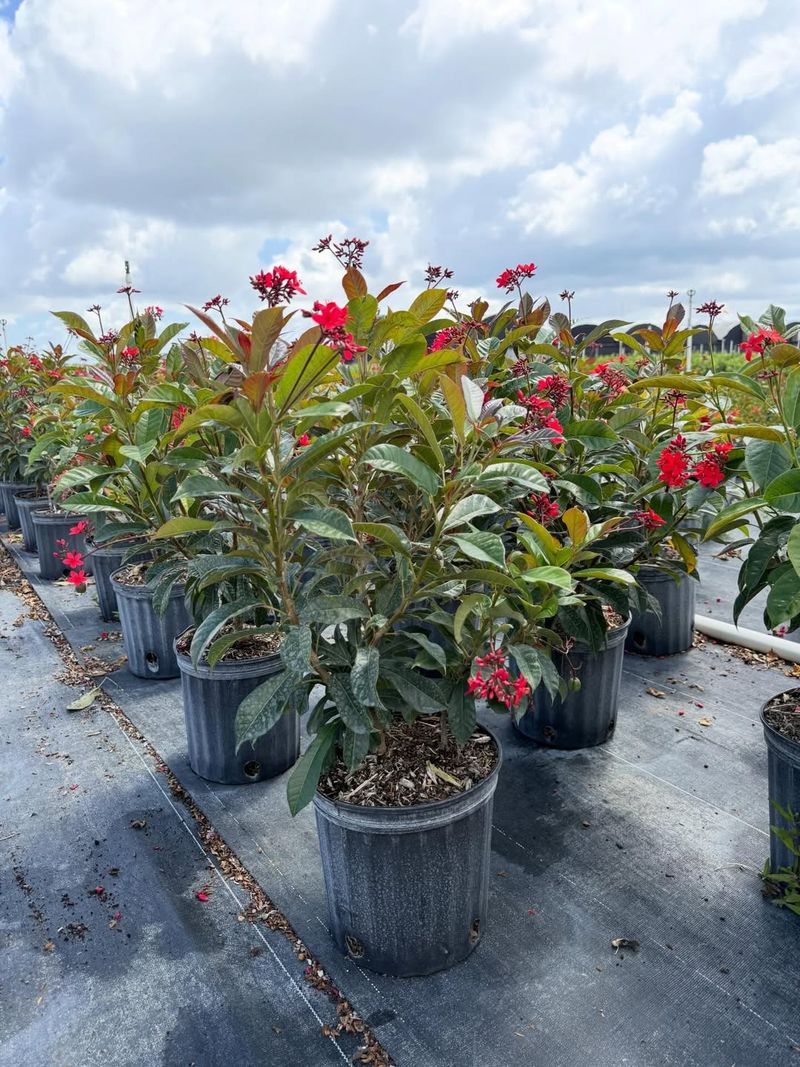
Hey there! Your patio just called. It’s looking for something that really stands out. So, Firecracker jatropha is here to impress.
This plant showcases clusters of bright red flowers, all framed by its unique leaves that give off a tropical vibe. Honestly, it looks like it came from a much more exotic place than your backyard.
Now, here’s the cool part about this plant. It doesn’t just get by in the heat; it actually loves it. When the weather cools down, it slows down, but when the temperatures rise, it perks right back up. Texas summers are pretty much its favorite time of year.
Once it’s established, it handles drought pretty well. Just keep in mind that if you have it in a container, it will dry out quicker than if it’s planted in the ground. However, you can let the soil dry out a bit between waterings, since that’s what it really likes.
Firecracker jatropha can grow to four feet or more in just one season. It needs a pot that’s at least fourteen to sixteen inches wide and deep, and a good-draining soil mix.
One important thing to note: Jatropha seeds are toxic. So, make sure to keep this plant out of reach of small kids and pets. It’s a gorgeous plant, but it can be a real danger if not taken seriously.
4. Add Brazilian Red Hots For Bold Foliage
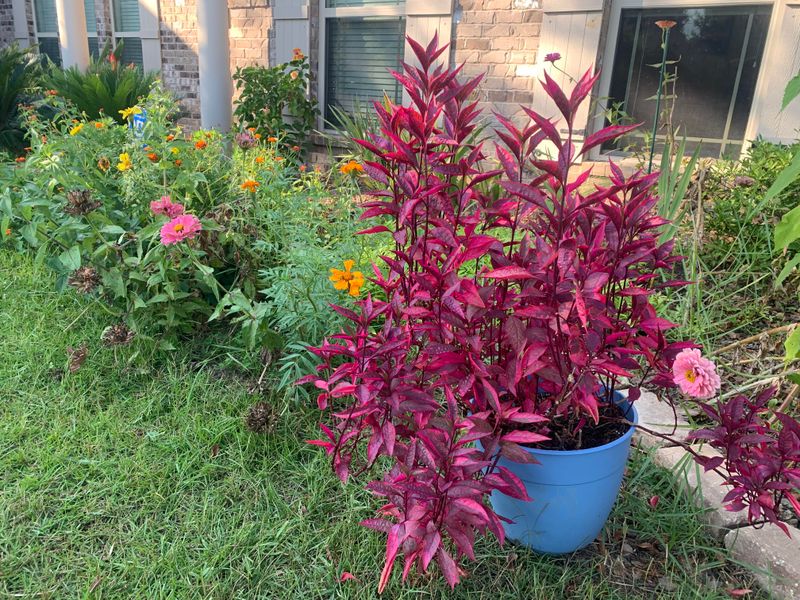
Flowers often steal the spotlight. However, there are times when the most striking pot on the patio has hardly any flowers at all.
Brazilian Red Hots showcases stunning burgundy-red leaves with bright reddish-pink edges. The color is vibrant, consistent, and bold throughout the entire season.
No need to wait for flowers. No off days. Just rich, saturated leaves from May all the way to fall.
While it can thrive in shadier areas, full sun is where this plant truly shines. It has moderate drought tolerance. Keeping it consistently moist will help it stay lush, so be prepared to water every few days during the hottest summer days.
Containers dry out quickly, especially on a scorching Texas patio. In mixed plantings, Brazilian Red Hots serves as a natural focal point. Combine it with white angelonia or pale yellow lantana for a striking contrast.
Make sure your container is at least ten to twelve inches deep. The roots need space to grow, and the plant will reward you for it right up until the first cool snap of fall.
5. Pick Whopper Begonias For Bright Shade Pots
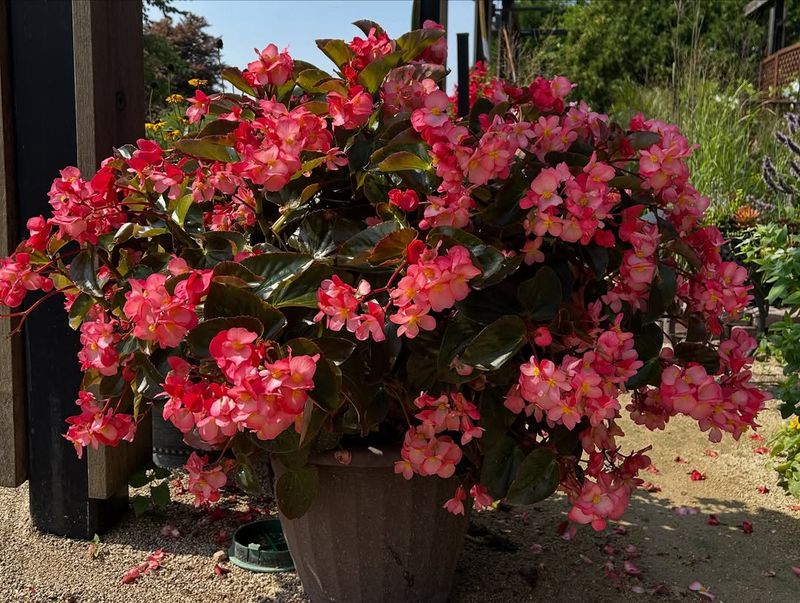
Not every patio in Texas is a blazing sun trap. Covered porches, entries facing east, and shady areas play by different rules. This is precisely where Whopper begonias thrive.
Whopper begonias are a series of heat-resistant wax begonias specifically developed to withstand the Texas summer heat. Their shiny leaves remain robust even in the heat and humidity that would easily damage older types.
They are available in red, pink, and white, with options for green or bronze leaves. But, opt for bronze if you want added durability.
Those varieties maintain their color beautifully, even when light levels increase. However, here’s a straightforward warning. Whoppers do require consistent moisture, but missing a few days of watering isn’t a major issue.
Using a large pot with a moisture-retaining mix gives you extra time between waterings. Also, remember to keep them out of the harsh afternoon sun. It can quickly scorch the leaves and put a lot of stress on the plant.
For a pot in a shaded entryway or covered porch, Whopper begonias provide vibrant color throughout the summer. They feature large blooms, and are much more forgiving than most shade-loving annuals have any right to be.
6. Grow Gold Star Esperanza For Sunny Patio Color
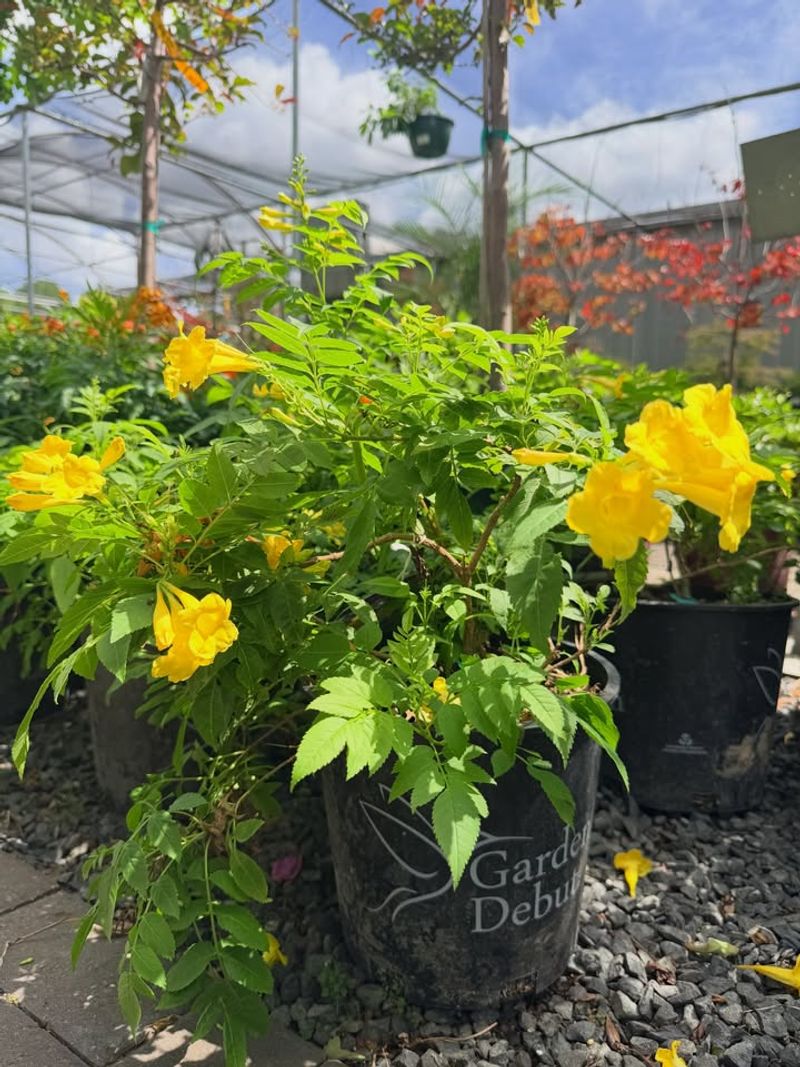
Nonstop golden flowers all through a Texas August. This isn’t a dream. It’s just esperanza doing its thing.
Gold Star Esperanza is native to Texas and produces yellow blooms from late spring all the way to fall. And here’s the best part. While most plants struggle when summer hits its peak, Esperanza blooms even more.
Rising temperatures are basically its signal to shine. Once established, it has strong drought tolerance. However, container plants still require some care.
Giving it a deep watering every few days during the hottest times keeps it thriving and blooming. Make sure to let the top inch or two of soil dry out between waterings. Constantly wet soil is not good for it.
Size is also something to consider. Gold Star Esperanza can grow four to six feet tall and wide in just one season. It needs a big container, at least sixteen to eighteen inches wide and deep.
As a standalone statement plant, it grabs people’s attention. As a focal point in a large mixed container, it ties everything together.
Hummingbirds and butterflies will come around too. At that point, your patio becomes more than just beautiful, right?
7. Plant Texas Lantana For Tough Summer Color
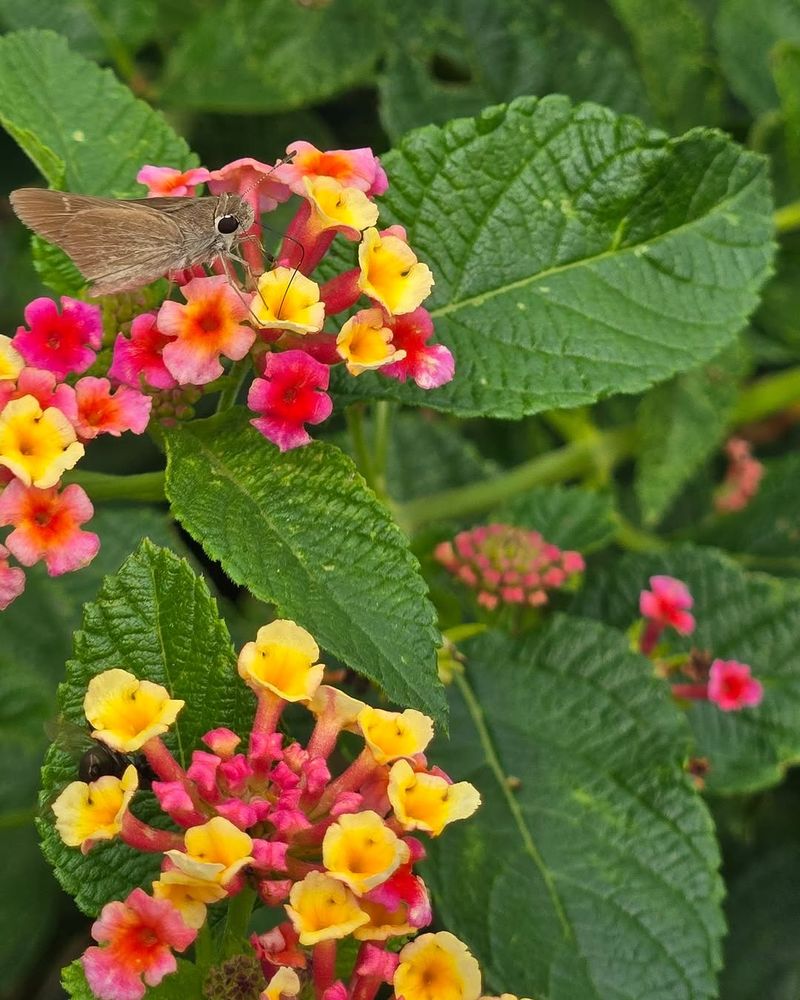
If you take a drive through any neighborhood in Texas during August, you’ll see lantana blooming everywhere.
Lantana urticoides is a native plant and one of the most resilient flowering plants you can grow in a pot. Texas A&M AgriLife Extension and Texas Superstar both endorse it for its heat tolerance and significant appeal to pollinators.
Butterflies, bees, and hummingbirds flock to it like it’s an all-you-can-eat buffet all summer long. The flower clusters change color as they mature, with orange, yellow, and red all appearing on the same plant simultaneously.
Full sun? No problem. Dry spells? No problem. Overwatering, however, is the real danger for lantana. Make sure to use a well-draining soil mix and a pot with good drainage holes. Allow it to dry out a bit between waterings.
However, this is where many people make mistakes. Drought tolerant doesn’t mean drought proof when it comes to containers.
Pots can lose moisture quickly, especially dark ones sitting on hot concrete. A larger pot, at least twelve to fourteen inches wide, helps retain moisture and gives the roots space to grow.
During July and August, water deeply every few days. Occasionally trim the spent blooms, and new flower clusters will emerge right away. They stay tidy, colorful, and incredibly tough all season long.
8. Train Butterfly Vine For Heat-Loving Height
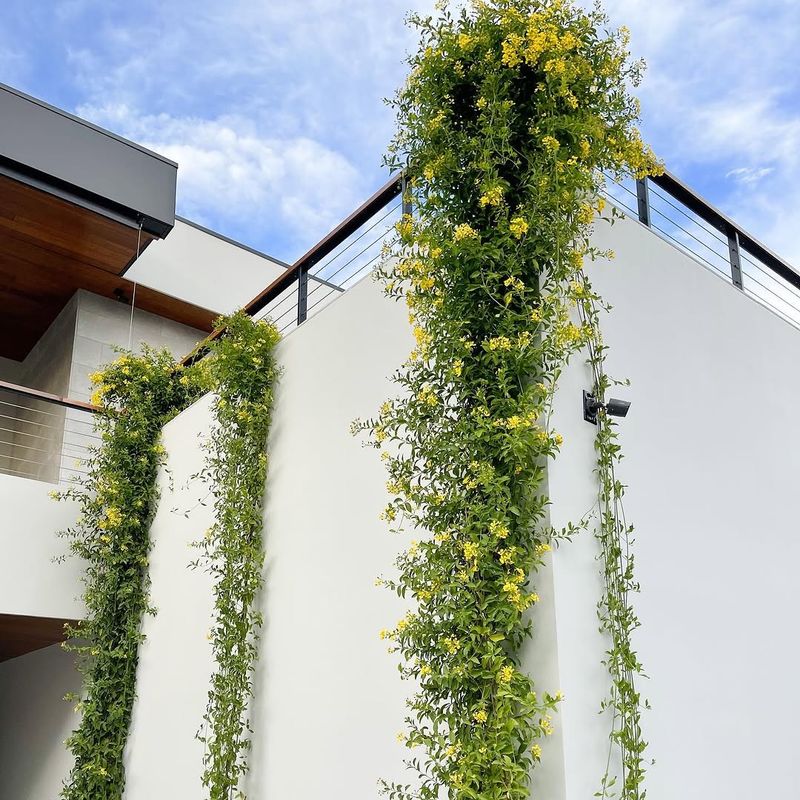
Most container plants either spread out or form mounds. But butterfly vine? It goes straight up.
Mascagnia macroptera is a climber that’s native to Texas and loves full sun and heat. It starts with bright yellow flowers, and then you get these seed pods that are pale green and papery.
No joke, that’s exactly what they look like. Once it’s settled in, it can handle drought pretty well. It’s one of the easier choices for container gardeners who might be away or don’t water regularly.
However, keep in mind that containers on hot patios dry out quickly. You should plan to water every few days during the hottest summer days to keep it climbing and blooming nicely.
Make sure to give it a pot that’s at least fourteen to sixteen inches wide and deep. Place it near a trellis, fence, or railing.
Butterfly vine naturally twines and gets going fast. It needs full sun, so make sure it gets at least six to eight hours of sunlight every day.
The result is a vertical display that few other container plants can match. With its yellow flowers, quirky seed pods, and climbing energy, it beautifully fills vertical space.
It’s surprisingly underused in Texas container gardening. You should look for it at a native plant nursery. Your patio will definitely appreciate it.