How To Store Gladiolus And Canna Bulbs In California This November
A tropical summer bloomer with giant paddle leaves is a distant cousin of bananas and ginger. That warm-climate family tree explains why its thick underground stems sulk in frozen soil.
Coastal and low-elevation California gardens in zones 9 and 10 often let these summer showoffs stay put all winter. Colder inland and mountain areas tell a different story, and soggy clay can rot buried treasures even where freezes are rare.
One mistake I won’t repeat is tossing three colors into identical bags without a single label. You might notice the same spring guessing game if your storage system relies on memory alone.
Plenty of gardeners dig everything up each fall out of pure habit, even where the ground never freezes. A few simple clues in the leaves, the soil, and your local weather could reveal whether yours belong in a cozy box or right where they are.
Those Fading Gladiolus Leaves Hold A Clue About Digging Time
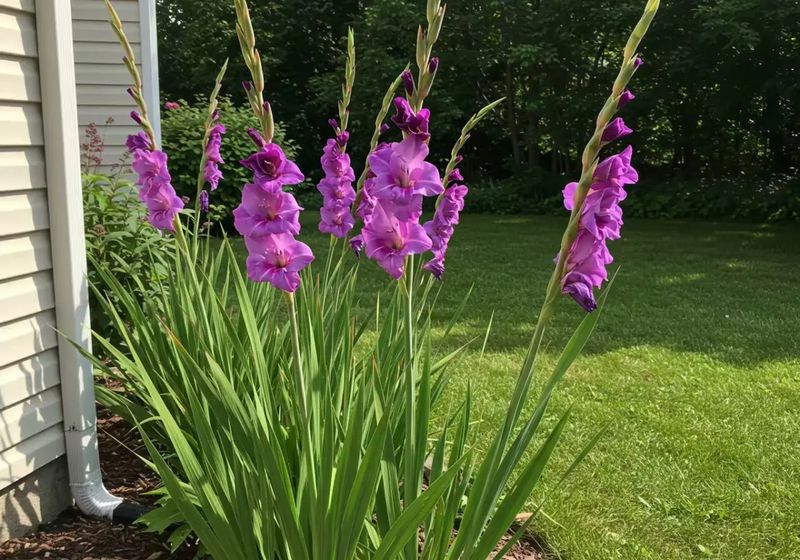
Yellow, floppy leaves on your glads are not a sign of failure. They are a signal that the plant has finished packing food into the new corm below.
Gladiolus corms are usually ready to lift about six weeks after the last flowers fade, once the foliage turns yellow or brown. Many gardeners also wait for a light frost to blacken the leaves, which pushes the plant fully into rest. The goal is to dig before the ground freezes hard.
Here in California, though, most of us rarely see frozen soil. Coastal and low-elevation gardens in USDA zones 9 and 10 often let corms stay in the ground all winter with no trouble. Mountain gardens and colder inland spots in zones 5 through 7 are a different story.
So the first step is honest observation. Check your leaves, check your local frost history, and check how wet your soil stays in winter. Soggy clay can rot corms even where freezing is rare.
Personally, I keep a little notebook with first frost dates for my area. A quick look at it every November saves me from guessing and helps me pick the right weekend to dig.
Lift Gladiolus Corms Gently And Let Them Cure Until Papery
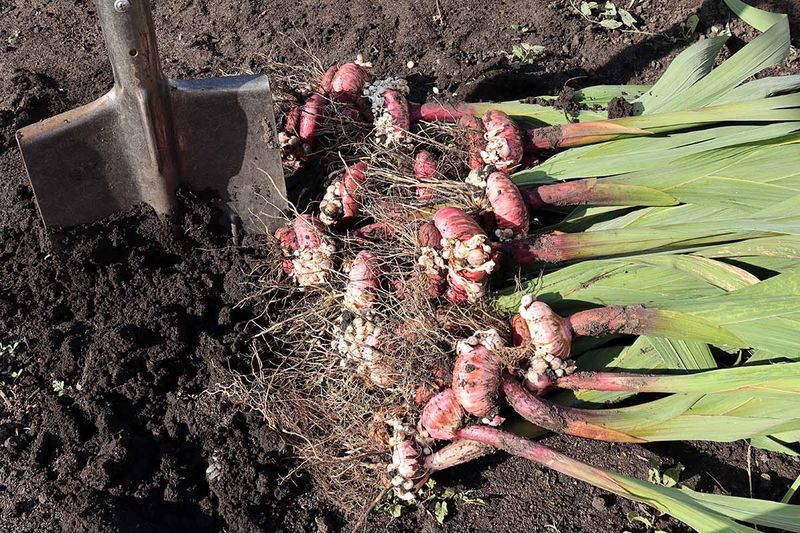
Grab a spading fork instead of a shovel if you have one. The flat tines slip under the corms without slicing them in half.
Start digging about six inches away from the stem, then lift the whole clump. Shake off loose dirt, but skip the hose. Extra water on fresh corms can invite rot later. Trim the stems down to about one or two inches above the corm.
Next comes curing, the step most beginners rush. Spread the corms in a single layer somewhere warm, dry, and airy, around 70 to 80 degrees. A garage shelf, a screen, or an old window frame on bricks works well.
Leave them there for two to three weeks. Turn them every few days so all sides dry evenly. You will know they are ready when the outer husk feels crisp, like onion skin.
After curing, snap off that shriveled old corm at the bottom. It usually pops right off with a gentle twist. Save the tiny cormels too if you like a challenge, since they can grow into flowering plants in a couple of years. Sort out anything soft or moldy right away.
Chunky Canna Rhizomes Need A Slightly Different Routine
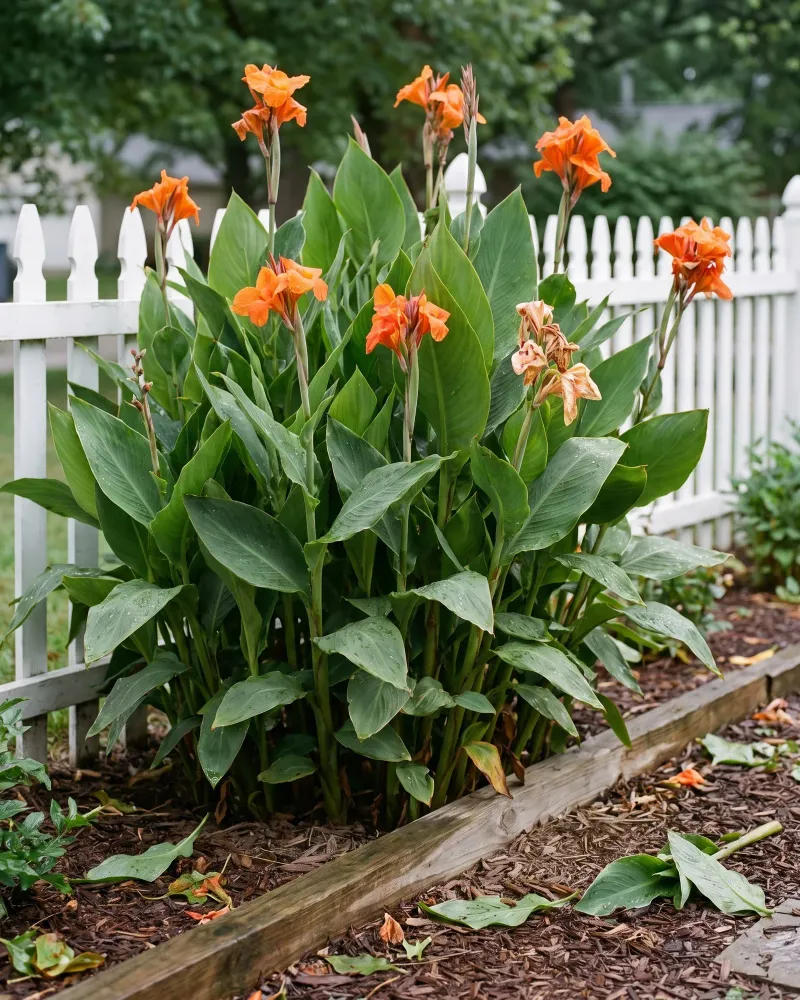
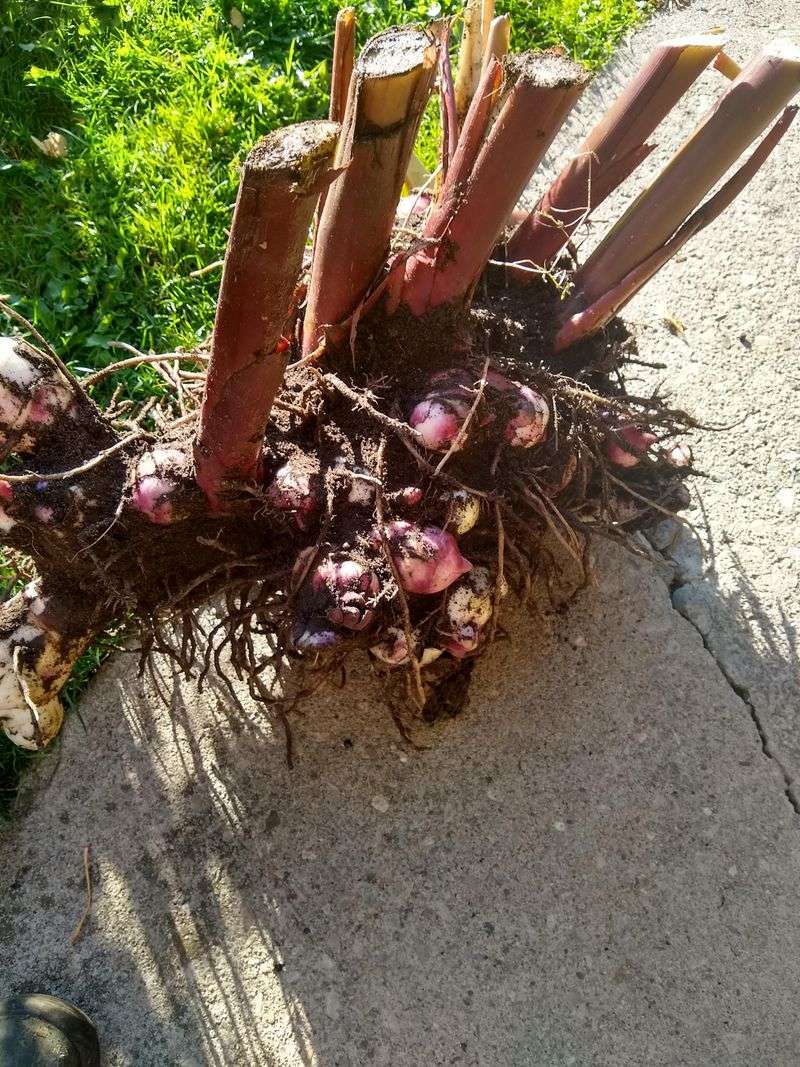
Canna clumps can get surprisingly heavy. One plant can turn into a tangled mass of thick, knobby rhizomes in a single summer.
Wait until frost blackens the leaves or the foliage yellows on its own. Then cut the stems back to about four to six inches. Those short stubs make handy handles when you lift the clump later.
Dig a wide circle around the plant so you do not nick the fleshy roots. Pry the whole clump up and let most of the soil fall away. If you garden in sticky clay, a quick rinse is fine, but dry the rhizomes well afterward.
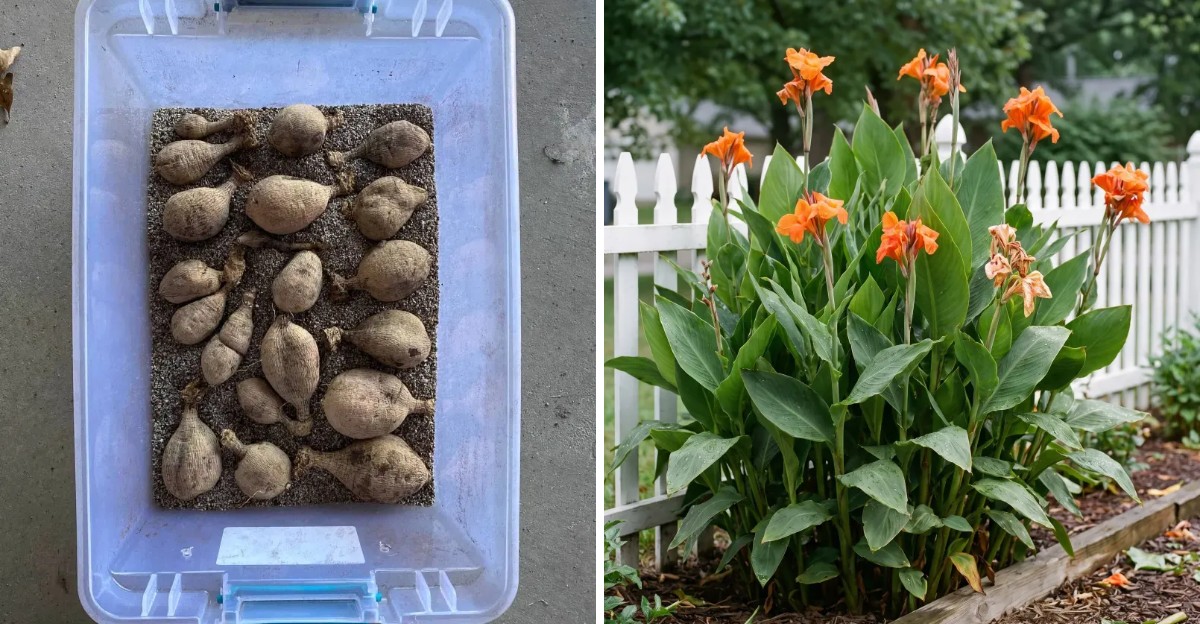
Unlike glads, cannas only need a short drying period. Set them in a shaded, airy spot for a few days, roughly 60 to 70 degrees, until the surface feels dry. A small fan helps on humid days.
Cannas are actually distant cousins of bananas and ginger, both in the same broader plant group. That tropical family tree explains why they sulk in freezing soil. Treat them like guests from a warm climate, and they will reward you with big leaves and bright flowers next summer.
Cool, Dark Storage Spots Keep Corms And Rhizomes Snoozing
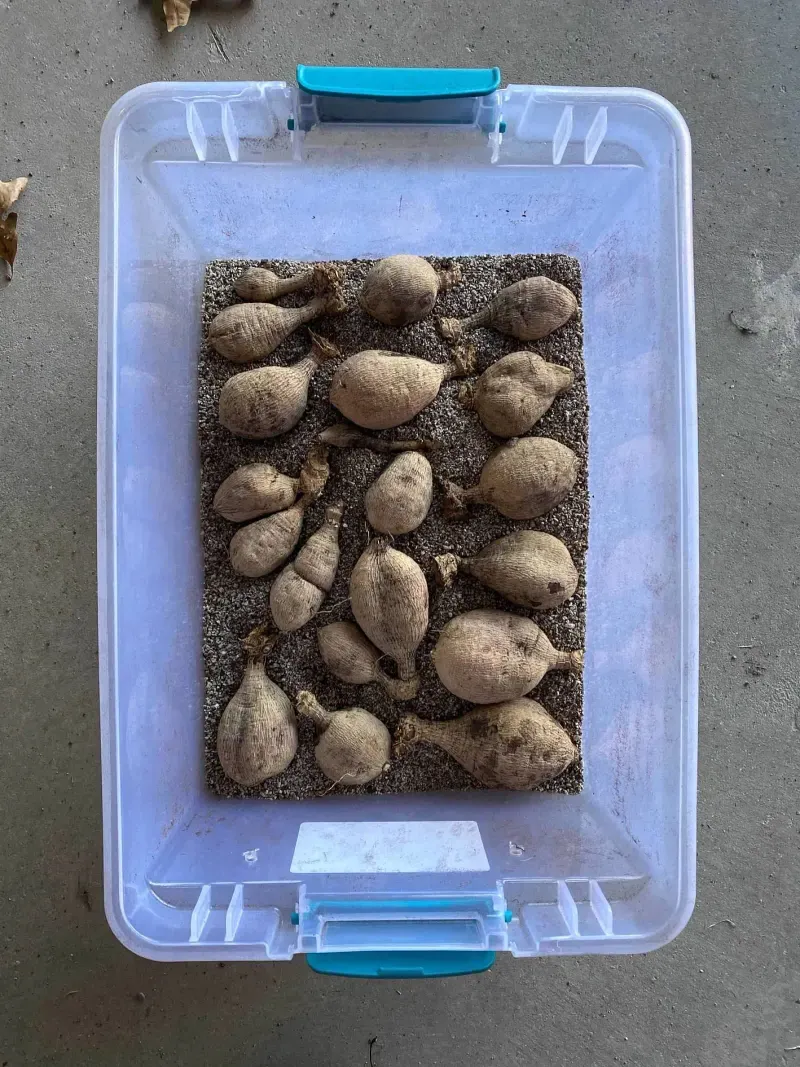
Garages, basements, and unheated closets become secret hotels for bulbs this time of year. The trick is choosing the right room temperature.
Gladiolus corms like it cool, around 35 to 45 degrees. Cannas prefer a bit warmer, roughly 40 to 50 degrees. Both should stay above freezing and away from heat that could wake them up early.
Breathable containers make a big difference. Mesh onion bags, paper bags, and cardboard boxes all let air move around. Sealed plastic tubs trap moisture, and moisture is the enemy of stored bulbs.
For cannas, nestle the rhizomes in slightly dampened peat moss, coir, vermiculite, or wood shavings. That packing keeps them from shriveling during the long rest. Glads usually do fine dry in mesh bags hung from a hook.
Label everything. I once stored three colors of glads in identical bags and spent a whole spring guessing. A marker and a strip of tape solve that problem in seconds.
Keep the bags away from fruit like apples, too. Ripening fruit gives off ethylene gas, which can harm stored bulbs and flower buds.
Coastal California Gardeners May Get To Skip The Shovel

Lucky you, if you live near the beach. Many gardeners in Southern California and the Bay Area leave cannas and glads in the ground year after year.
Mild winters in zones 9 and 10 rarely chill the soil enough to hurt these plants. Cannas simply slow down, and you can cut back the tired stems once they brown. Glads often pop up again in spring without any fuss.
Drainage is the bigger concern in these areas. Winter rain can sit in heavy soil, and soggy corms may rot. If your bed puddles after storms, lifting is still a smart choice.
A layer of mulch about two to three inches deep helps protect roots from the occasional cold snap. Shredded bark or leaf mulch works nicely.
Some gardeners dig their glads anyway every few years. Crowded corms can produce smaller flowers, and lifting lets you check for pests like thrips. Gladiolus thrips can hide on corms and scar next year’s blooms.
So even in easy climates, a little attention pays off. Leaving them in place is fine, but keep an eye on how they perform each season.
Soggy Or Shriveled Bulbs Usually Point To A Moisture Mistake
Mushy brown spots are the most heartbreaking thing to find in a storage box. Most of the time, too much moisture is the cause.
Washing corms, skipping the curing step, or sealing them in plastic can all trap dampness. That damp air invites fungal problems like fusarium and botrytis. One rotten piece can spread trouble to its neighbors quickly.
The opposite problem shows up too. Rhizomes stored in a hot, dry spot can wrinkle like raisins and lose their spark. Cannas are especially prone to drying out, which is why packing material helps them.
Temperature swings cause headaches as well. A garage that bakes on sunny afternoons and chills at night can confuse dormant bulbs. Pick the most stable corner you can find.
Crowding is another sneaky issue. Bulbs piled in a deep heap get poor airflow in the middle. Spread them out or separate layers with newspaper.
Once I learned to dust-check my bins and give them breathing room, my losses dropped a lot. Small habits like these turn bulb storage from a gamble into something you can count on.
A Quick Monthly Check On Stored Glads And Cannas Saves Heartache
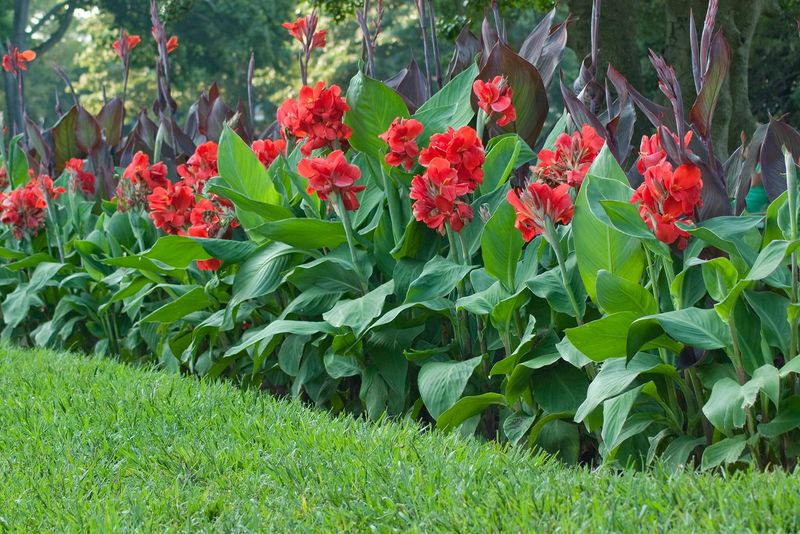
Set a reminder on your phone for the first of each month. Five minutes with your stored bulbs can save a whole season of color.
Open each bag or box and give the contents a gentle squeeze. Healthy corms and rhizomes feel firm, a bit like a raw potato. Anything soft, moldy, or smelly should go straight into the trash, not the compost.
If canna rhizomes look wrinkled, lightly mist the packing material, not the rhizomes themselves. Go easy. A little moisture revives them, while too much brings rot back into the picture.
Watch for early sprouts too. Pale shoots in midwinter mean your storage spot is too warm. Move the box somewhere cooler if you can.
Gladiolus thrips are tiny insects that sometimes hitchhike on stored corms. University of California experts note that keeping corms cool helps limit them. Discard badly scarred, sticky, or damaged corms you spot.
This monthly check feels a little like visiting sleeping pets. I enjoy it more than I expected, and it keeps me excited about spring planting while the garden rests outside.
Spring Replanting Lets Your Canna And Gladiolus Collection Grow
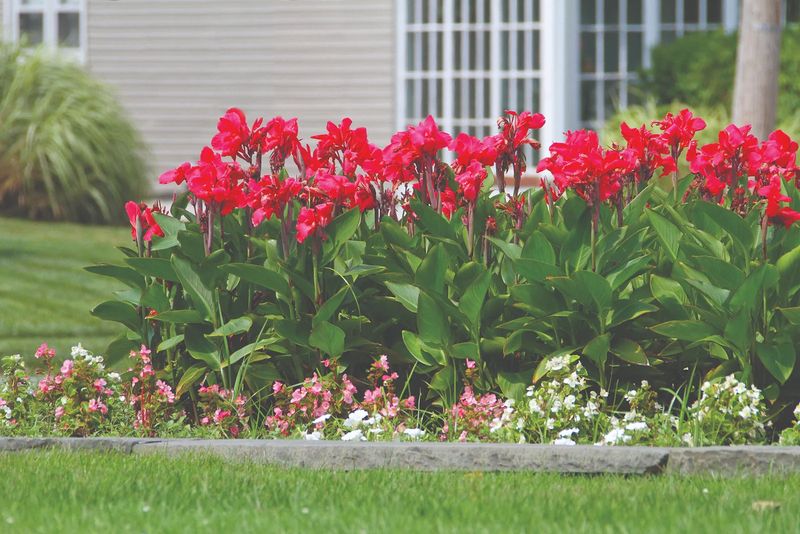
All that winter care pays off once the soil warms. Spring is when stored corms and rhizomes finally get their moment again.
Plant glads after your last frost date, about four to six inches deep with the pointed side up. Staggering plantings every two weeks gives you flowers over a longer stretch of summer. Cannas go in once soil reaches roughly 60 degrees, usually a few inches deep.
Before planting, take a sharp, clean knife to big canna clumps. Divide them into pieces with at least two or three growing eyes each. One large clump can easily become several new plants.
Shared divisions make wonderful gifts. I have handed out canna pieces to neighbors, and now half the street has bright orange blooms in July. It is a fun way to spread garden joy.
Keep notes on which varieties did best and where. Over a few years, you will learn exactly what your yard likes. Storing bulbs well each November turns into a simple yearly rhythm, and the reward is a bigger, brighter garden every single summer.